
Space
Moon Bases
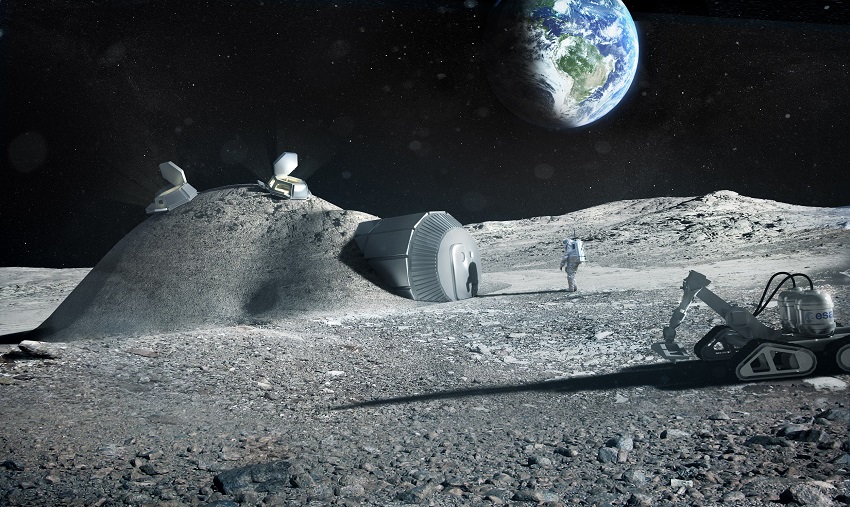
Discovery of water in the soil at the lunar poles by Chandrayaan-1 (ISRO) in 2008–09 renewed interest in the Moon, after NASA missions in the 1990s suggested the presence of lunar ice. Locating a colony at one of the lunar poles would also avoid the problem of long lunar nights—about 354 hours long, half a lunar month—and allow the colony to take advantage of the continuous sunlight there for generating solar power.
Permanent human habitation on a planetary body other than the Earth is one of science fiction’s most prevalent themes. As technology has advanced, and concerns about the future of humanity on Earth have increased, the vision of space colonization as an achievable and worthwhile goal has gained momentum. Because of its proximity to Earth, the Moon is seen by many as the best and most obvious location for the first permanent human space colony. Currently, the main problem hindering the development of such a colony is the high cost of human spaceflight.
There are also several projects that have been proposed for tourism on the Moon in the near future by private space companies.
The notion of a lunar colony originated before the Space Age. In 1638, Bishop John Wilkins wrote A Discourse Concerning a New World and Another Planet, in which he predicted a human colony on the Moon. Konstantin Tsiolkovsky (1857–1935), among others, also suggested such a step.
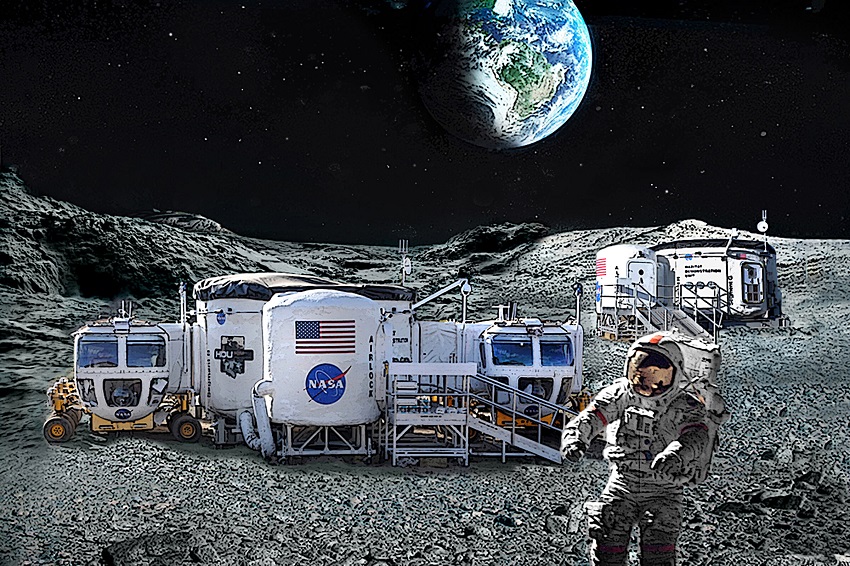
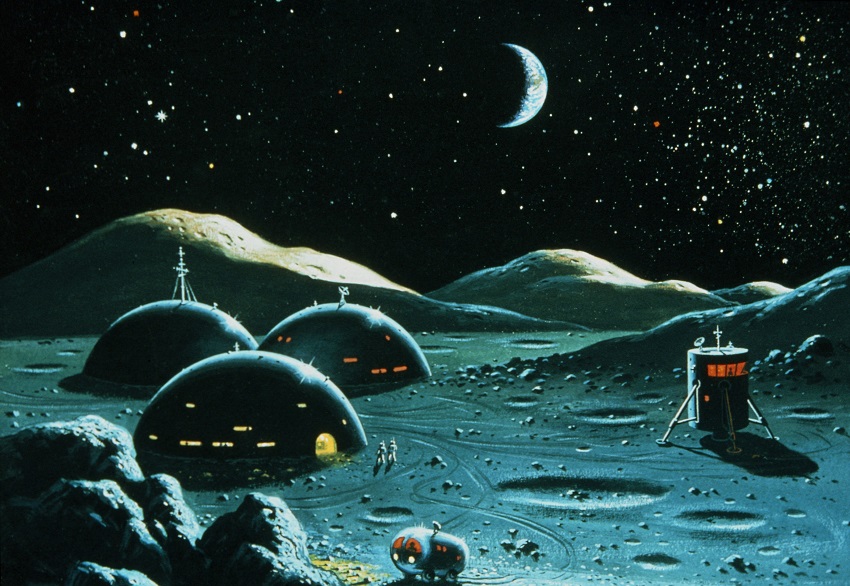
From the 1950s onwards, a number of more concrete concepts and designs have been suggested by scientists, engineers and others. In 1954, science fiction writer Arthur C. Clarke proposed a lunar base of inflatable modules covered in lunar dust for insulation. A spaceship assembled in low Earth orbit would launch to the Moon, and astronauts would set up the igloo-like modules and an inflatable radio mast. Subsequent steps would include the establishment of a larger, permanent dome; an algae-based air purifier; a nuclear reactor for the provision of power; and electromagnetic cannons to launch cargo and fuel to interplanetary vessels in space.
In 1959, John S. Rinehart suggested that the safest design would be a structure that could “[float] in a stationary ocean of dust”, since there were, at the time this concept was outlined, theories that there could be mile-deep dust oceans on the Moon. The proposed design consisted of a half-cylinder with half-domes at both ends, with a micrometeoroid shield placed above the base.
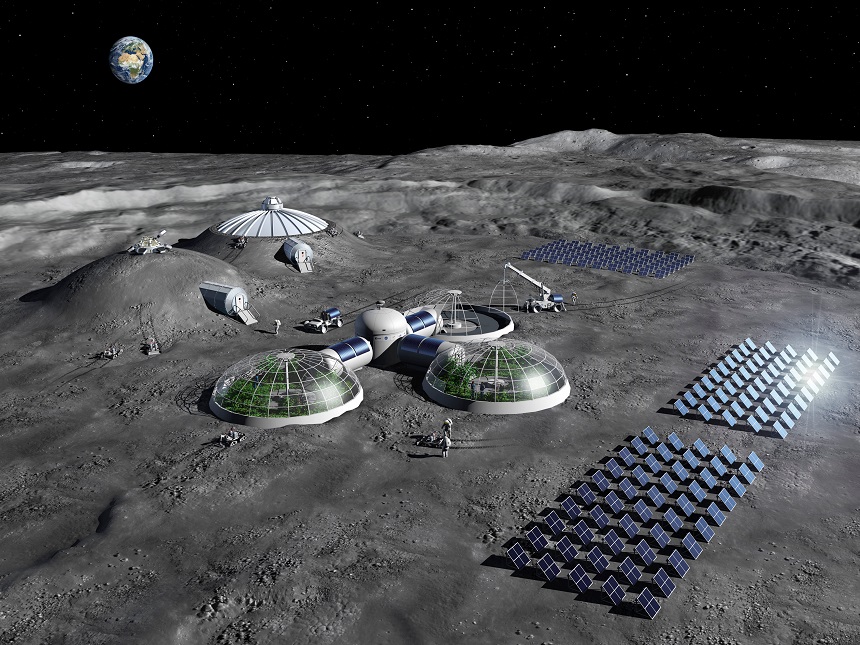
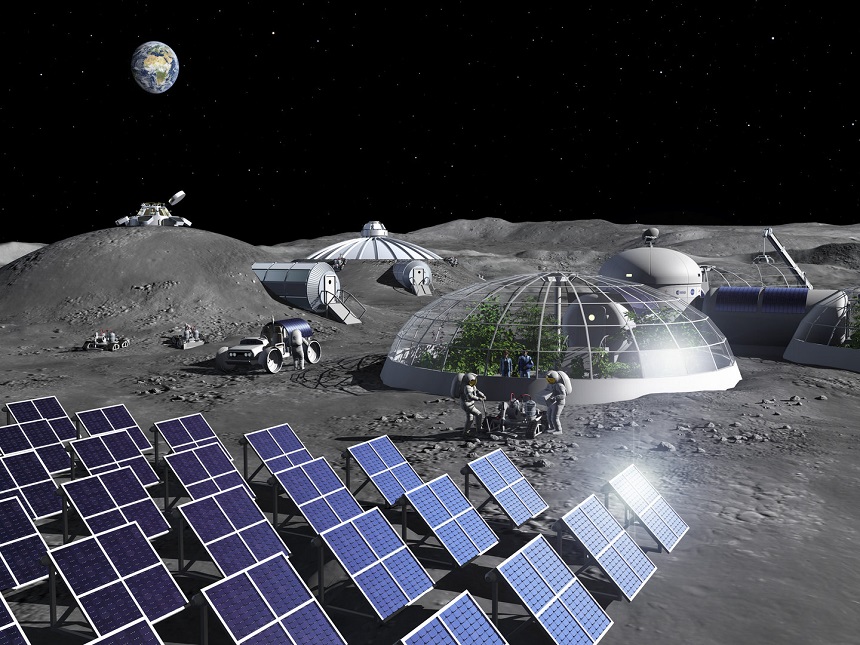
The United States space administration NASA has requested an increase in the 2020 budget of $1.6 billion, in order to make another crewed mission to the Moon by 2024, followed by a sustained presence on the Moon by 2028. NASA is ready to announce plans to bring together a Commercial Human Lander Awards for Artemis Missions on the Moon. This specific program, “The Artemis Program,” encompasses NASA’s overview for lunar exploration plans. This announcement will go over the first in a series of many more to come complex missions. Artemis I will start off as an un-crewed flight test to demonstrate the capabilities of NASA’s Space Launch System (SLS) rocket and Orion spacecraft. The first flight with a crew will be Artemis II, closely followed by Artemis III that will actually land crew on the moon by the end of 2024 using a new commercially-procured Human Landing System (HLS). They hope to develop a sustainable lunar exploration program starting from 2028.
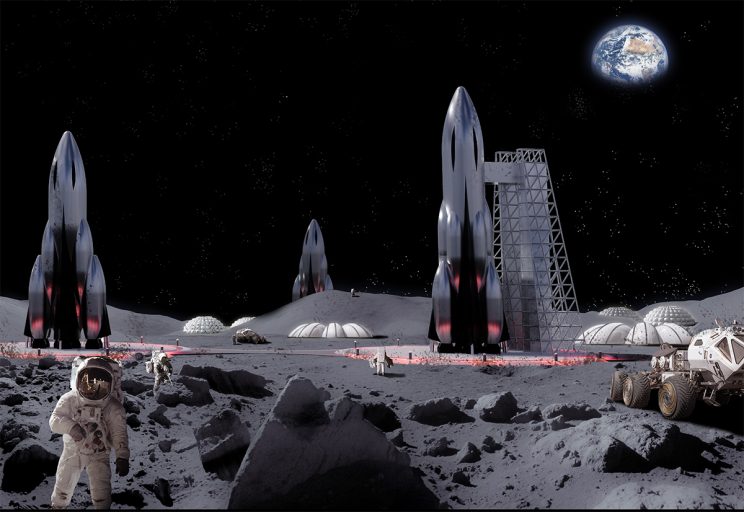
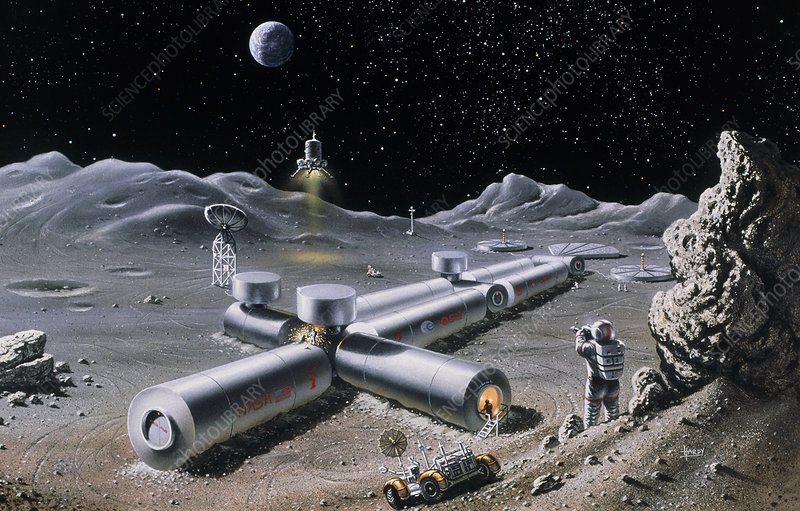
Billionaire Jeff Bezos has outlined his plans for a lunar base in the 2020s. Independently, SpaceX plans to send Starship to the Moon to establish a base.
In March 2019 NASA unveiled the Artemis program’s mission to send a crewed mission to the Moon by 2024, in response to a directive by President Trump, along with plans to establish an outpost in 2028. However, existing plans delay the proposed mission to 2028 with a base established in the 2030s.
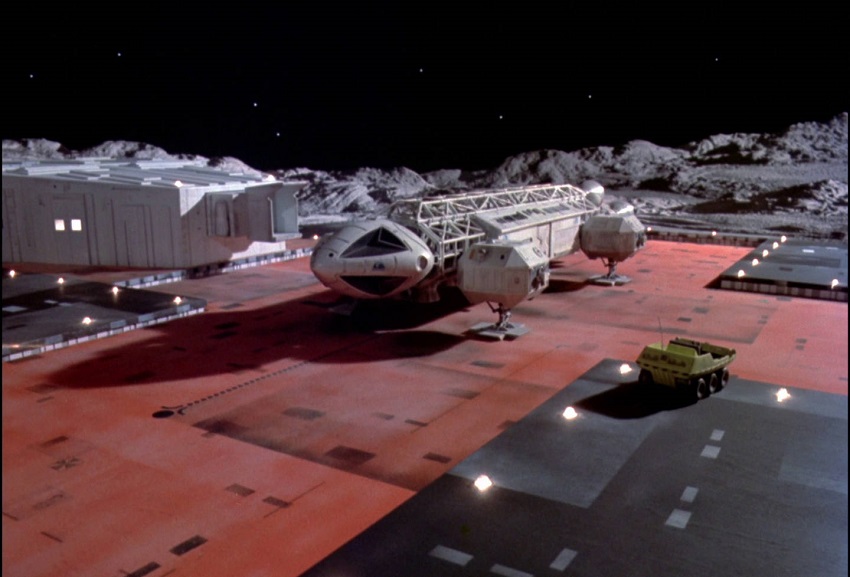
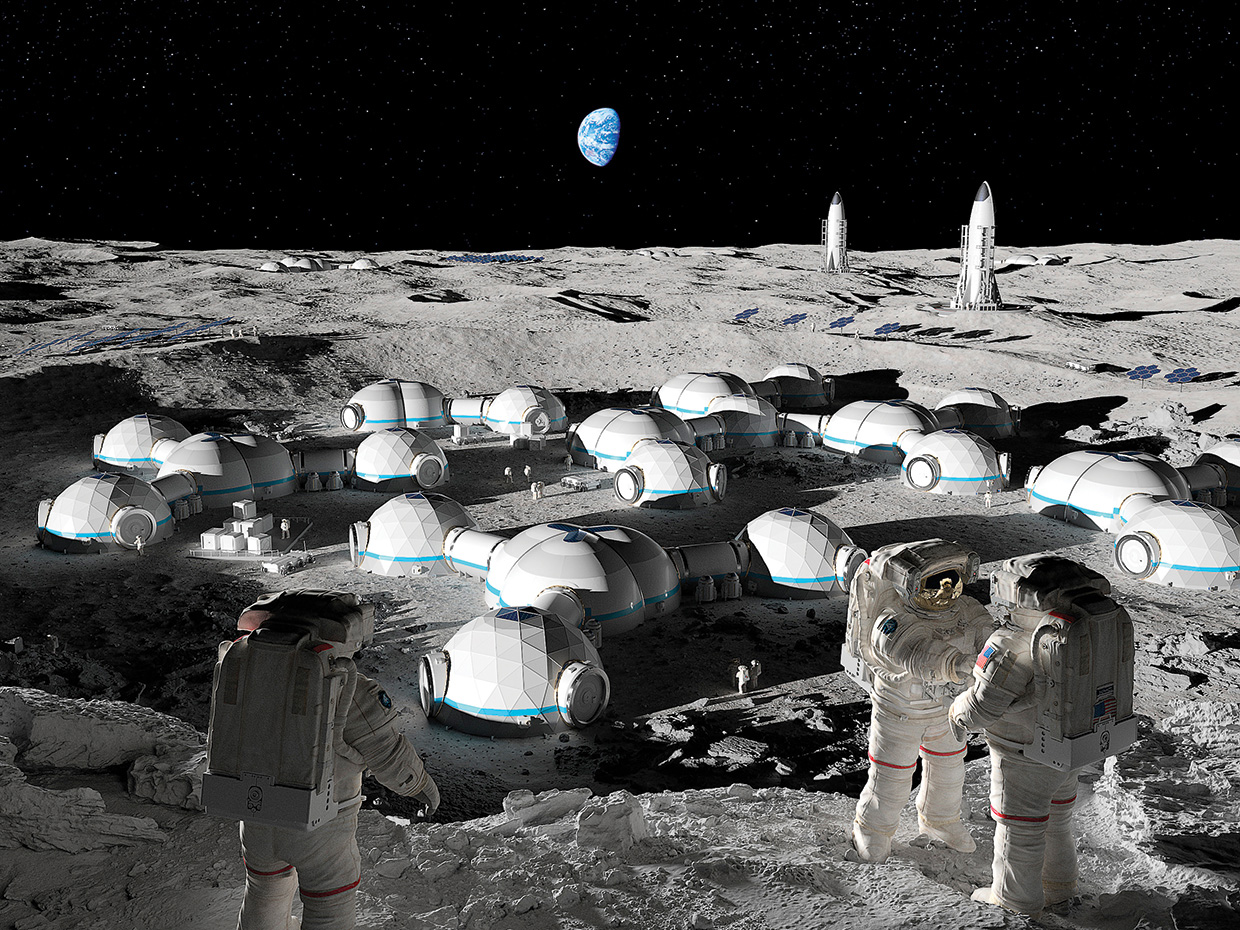
There have been numerous proposals regarding habitat modules. The designs have evolved throughout the years as humankind’s knowledge about the Moon has grown, and as the technological possibilities have changed. The proposed habitats range from the actual spacecraft landers or their used fuel tanks, to inflatable modules of various shapes. Some hazards of the lunar environment such as sharp temperature shifts, lack of atmosphere or magnetic field (which means higher levels of radiation and micrometeoroids) and long nights, were unknown early on. Proposals have shifted as these hazards were recognized and taken into consideration.
Underground colonies
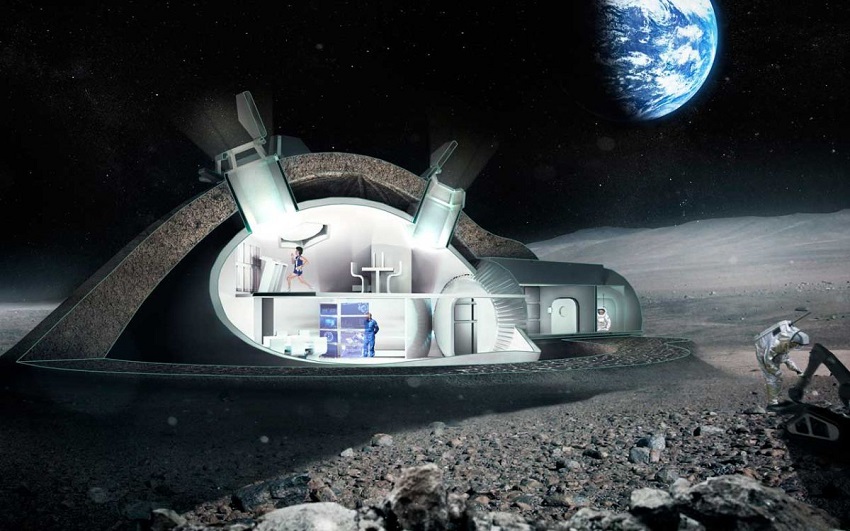
Some suggest building the lunar colony underground, which would give protection from radiation and micrometeoroids. This would also greatly reduce the risk of air leakage, as the colony would be fully sealed from the outside except for a few exits to the surface.
The construction of an underground base would probably be more complex; one of the first machines from Earth might be a remote-controlled excavating machine. Once created, some sort of hardening would be necessary to avoid collapse, possibly a spray-on concrete-like substance made from available materials. A more porous insulating material also made in-situ could then be applied. Rowley & Neudecker have suggested “melt-as-you-go” machines that would leave glassy internal surfaces. Mining methods such as the room and pillar might also be used. Inflatable self-sealing fabric habitats might then be put in place to retain air. Eventually an underground city can be constructed. Farms set up underground would need artificial sunlight. As an alternative to excavating, a lava tube could be covered and insulated, thus solving the problem of radiation exposure. An alternative solution is studied in Europe by students to excavate a habitat in the ice-filled craters of the Moon.
Russian Cosmonaut Causes Stir with Video of ‘Space Guests’
A Russian cosmonaut aboard the International Space Station caused something of a stir when he recorded footage of a series of strange objects which he dubbed ‘space guests.’ The curious clip was reportedly filmed by Ivan Vagner, who was filming aurora borealis over the Atlantic Ocean between Australia and Antarctica when he noticed something peculiar. Posting the time-lapse footage to social media, he noted that there were five objects that suddenly appeared alongside the natural light phenomenon.
Calling the odd objects “space guests,” he asked his followers on Twitter “what do you think those are? Meteors, satellites, or…?” The ‘unspoken’ object being, of course, aliens. Suggesting that authorities in his home country were taking the sighting seriously, Vagner went on to reveal that “information was brought to the notice of Roscosmos management, the materials were sent to TsNIIMash and the Space Research Institute of the Russian Academy of Sciences for further analysis.”
As one might imagine, some UFO enthusiasts wondered if perhaps the cosmonaut had inadvertently captured footage of an alien craft. This speculation was fueled by a subsequent tweet from the Russian space agency in which they noted Vagner’s post and called it an “interesting and at the same time mysterious video.” However, upon further investigation, it would appear that the ‘visitors’ were most likely not of the extraterrestrial variety and, instead, were probably a group of SpaceX’s Starlink satellites which had been launched the day before the cosmonaut’s sighting.
Stunning Views of the Solar Eclipse
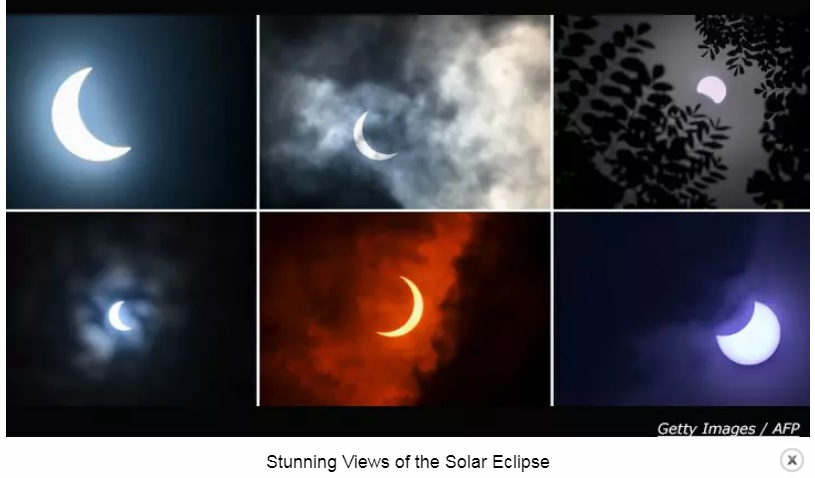
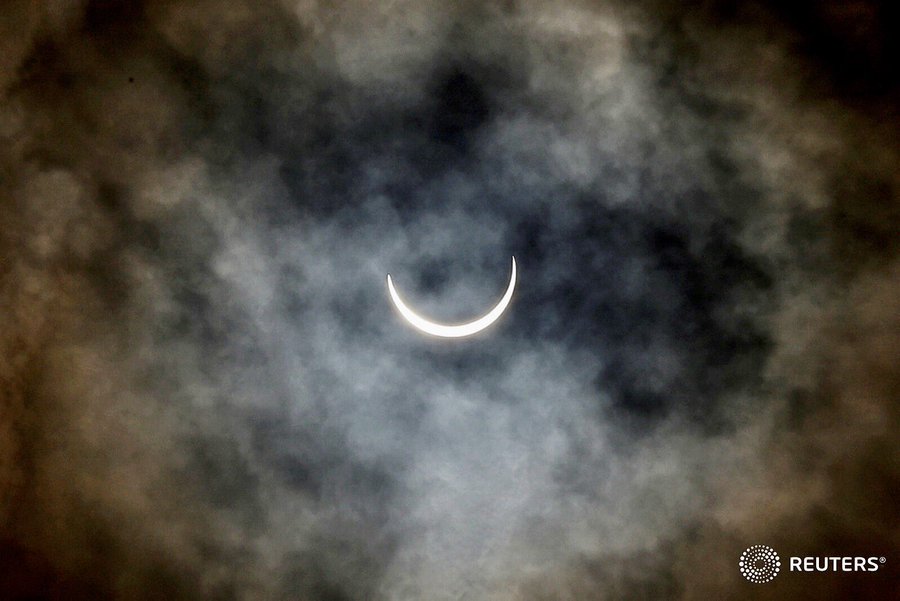
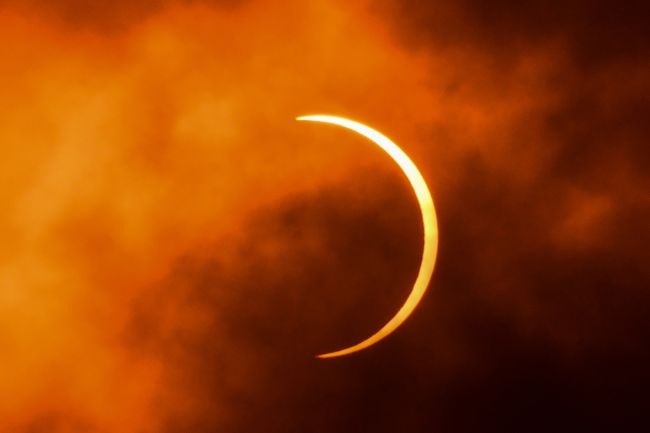
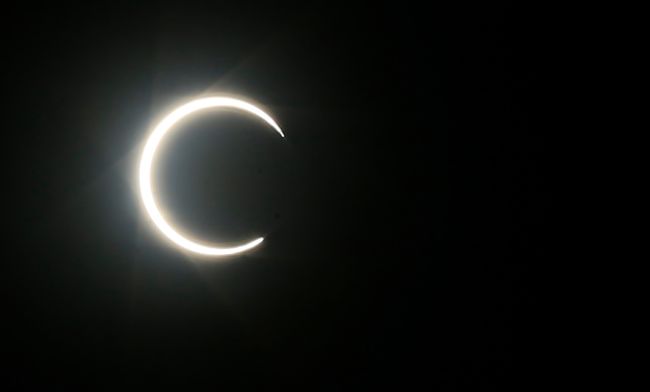
On Sunday, across a pathway that included parts of Africa and Asia, viewers were treated to a stunning “ring of fire” solar eclipse. In this “annular” eclipse which coincided with the Summer Solstice, the Moon passed between the Earth and the sun, revealing a thin outer ring of the fiery solar disc. Skywatchers were not bathed in total darkness, but astronomers have said it was like switching from a 500W bulb to a 30W one.
In the above combination photo, the eclipse is seen in various locations in India: (top L to R) Kurukshetra, Allahabad, Bangalore and (bottom L to R) Kolkata, New Delhi, Bangalore.
Company plans space tourism flights in high-altitude balloon
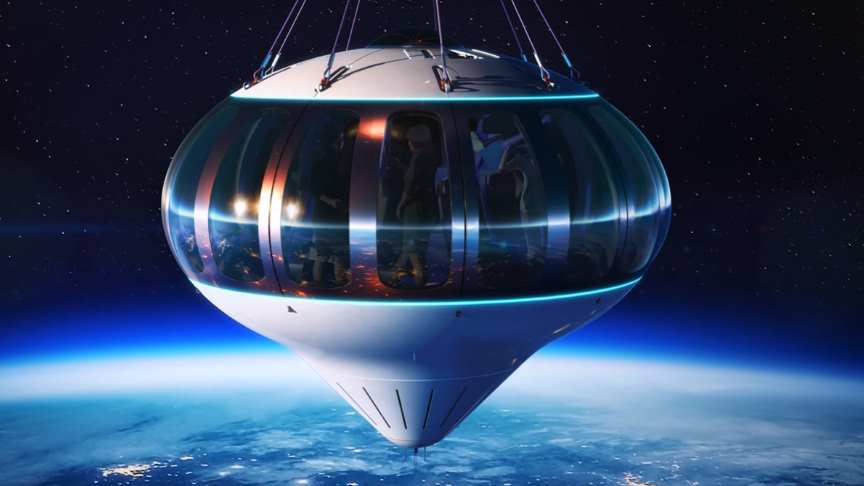
Researchers, armchair astronauts and even brides and grooms looking for an out-of-this-world wedding experience will be able to celebrate, collect data or simply enjoy the view from an altitude of 100,000 feet in a balloon-borne pressurized cabin, complete with a bar and a restroom, a space startup announced Thursday.
“Spaceship Neptune,” operated by a company called Space Perspective from leased facilities at NASA’s Kennedy Space Center, will carry eight passengers at a time on six-hour flights. The passenger cabin, lifted by a huge hydrogen-filled balloon, will climb at a sedate 12 mph to an altitude of about 30 miles high. That will be followed by a slow descent to splashdown in the Atlantic Ocean where a recovery ship will be standing by to secure the cabin and crew.
Test flights carrying scientific research payloads are expected to begin in 2021. The first flights carrying passengers are expected within the next three-and-a-half years or so, with piloted test flights before that.
While the company initially will operate out of the Florida spaceport, the system could be launched from multiple sites around the world, with Hawaii and Alaska near-term possibilities.
Ticket prices for crewed flights have not yet been set, but company officials said Thursday the initial cost will probably be in the neighborhood of $125,000 per passenger. That’s about half what space tourists can expect to pay for sub-orbital flights aboard rocket-powered spaceplanes like those being developed by Virgin Galactic, which are designed to reach altitudes of more than 50 miles.
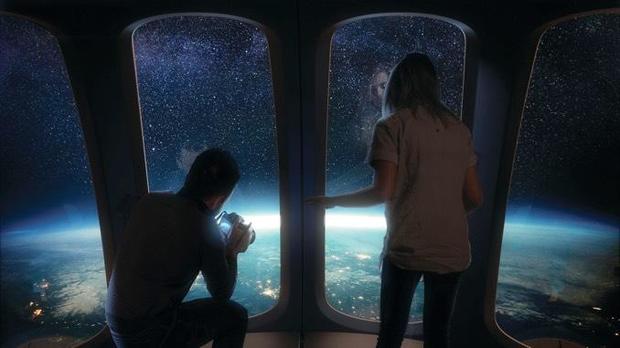
Spaceship Neptune will fly well under that altitude and passengers will not experience weightlessness, but they will still be above 99% of Earth’s atmosphere, nearly twice as high as the supersonic Concorde once flew. And unlike shorter sub-orbital rocket flights that only spend a few minutes at the top of their trajectory, Neptune passengers will enjoy two hours at peak altitude, taking in the view through large, wrap-around windows.
“One of the amazing things about the design we’e been able to work up is the ability to have events, things like weddings, corporate events. I can’t wait to see spiritual leaders flying with political leaders,” said Space Perspective founder and co-CEO Taber MacCallum.
“I think we’re going to see a wide variety of flights. Science flights are going to be really interesting, mixing tourism and science. The imagination runs wild. We’re getting lots of interest in all types of great ideas.”
Space Perspective has signed a Space Act Agreement with NASA and the company has arranged to lease a facility at the 3-mile-long runway once used by returning space shuttles. Neptune flights will be regulated by the FAA’s Office of Commercial Spaceflight.

“Space Perspective is bringing a fundamentally new capability to the Cape, which will enhance the offering we have in Florida for space-related research and tourism,” Space Florida President and CEO Frank DiBello said in a statement. “Its presence here in Florida creates not just job and supply chain opportunities, but opportunities for civilian astronauts to experience this planet Earth from the edge of space, a privilege previously available to only a few.”
MacCallum and co-CEO Jane Poynter said extensive market research showed untapped interest in such flights across a broad spectrum of users.
“When we take all the people that we want to take to the edge of space, we want them to really be able to experience what astronauts talk about, seeing the Earth in space (and) doing it comfortably, gently and accessibly,” Poynter said during a teleconference.
“There’ll be eight people at a time, with a crew member in the capsule. And of course, you’ll be able to connect with your friends on the ground. And we’ll have some really great communication systems so that we can have all kinds of live events up there as well. The whole capsule has been designed to be really flexible to allow for all kinds of things to go on and up in the space environment.”
As for weddings, she said Neptune will provide “the best place to get married, ever.”
cbsnews.com
How the Planets would appear if they were the same distance as the Moon from Earth
Moon

Mercury

Venus

Mars

Jupiter

Saturn

Uranus

Neptune

Dragon Capsule Docks with International Space Station
US astronauts Doug Hurley and Bob Behnken have docked with, and entered, the International Space Station (ISS).
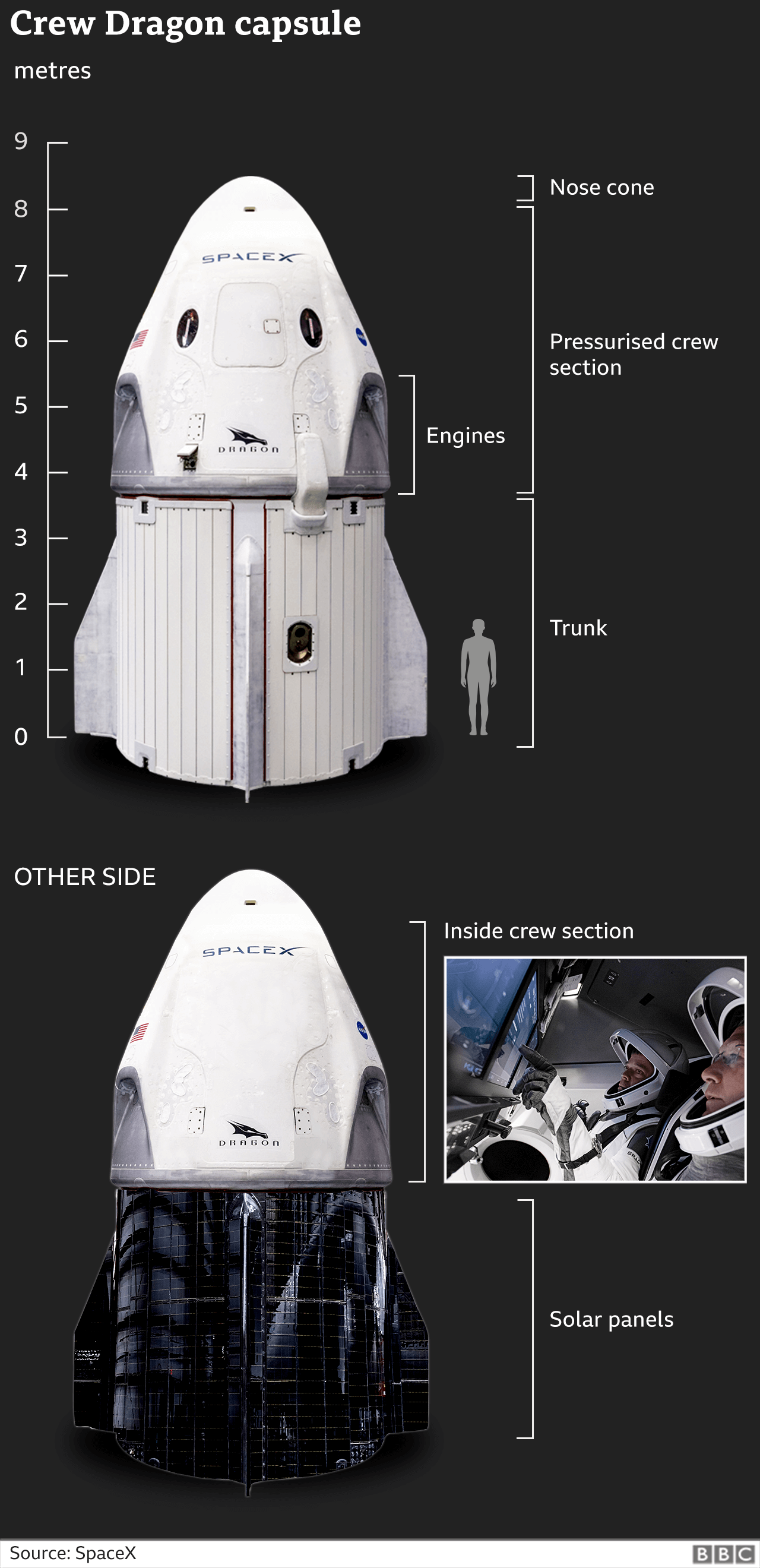
Their Dragon capsule – supplied and operated by the private SpaceX company – attached to the bow section of the orbiting lab 422km above China.
After a wait for leak, pressure and temperature checks, the pair disembarked to join the Russian and American crew already on the ISS.
Hurley and Behnken launched from Florida on Saturday.
Theirs is the first crew outing launched from American soil to orbit since the retirement of the US space agency (Nasa) shuttles nine years ago.
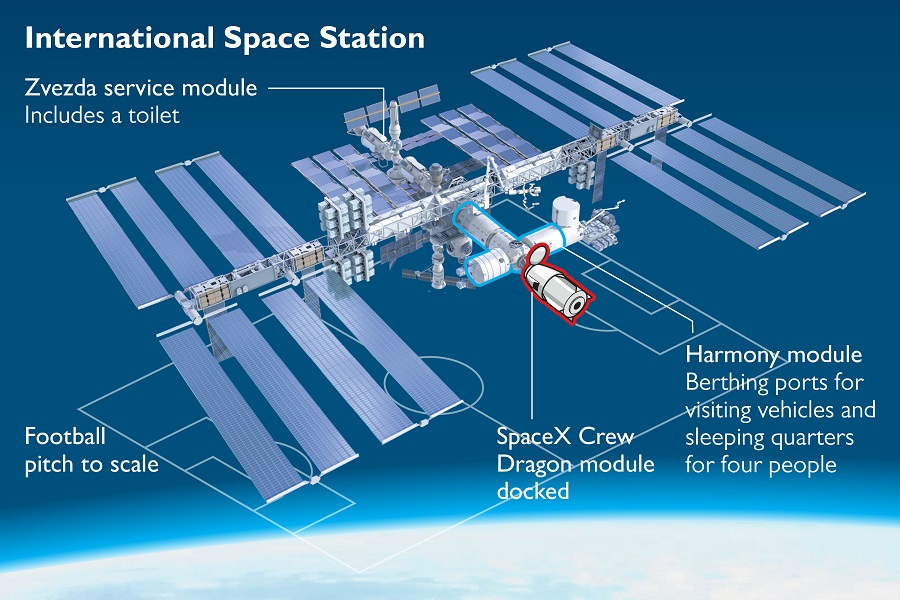
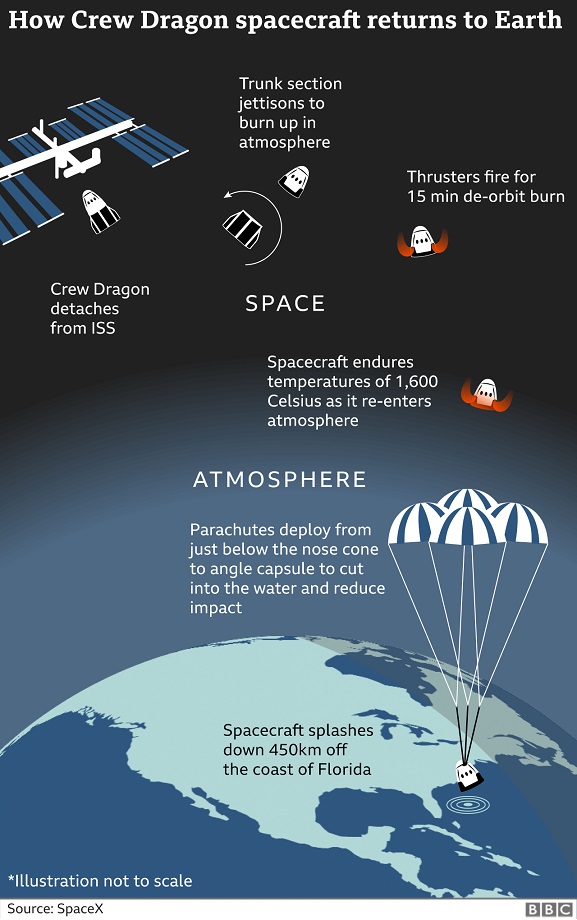
SpaceX Makes History
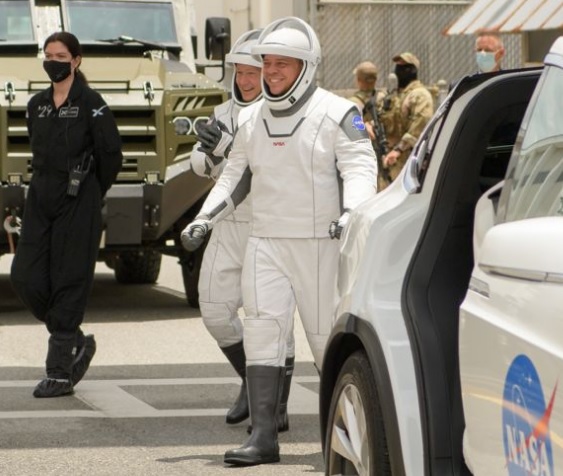
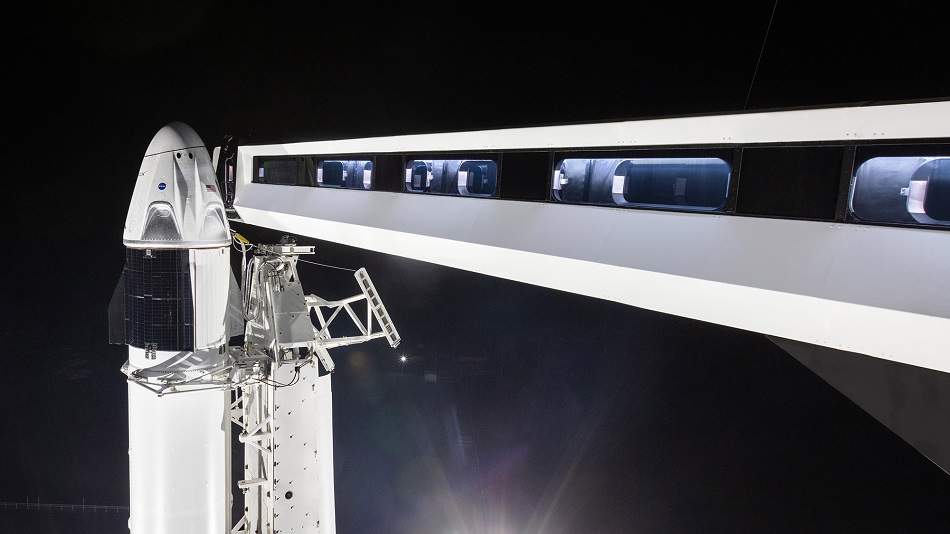
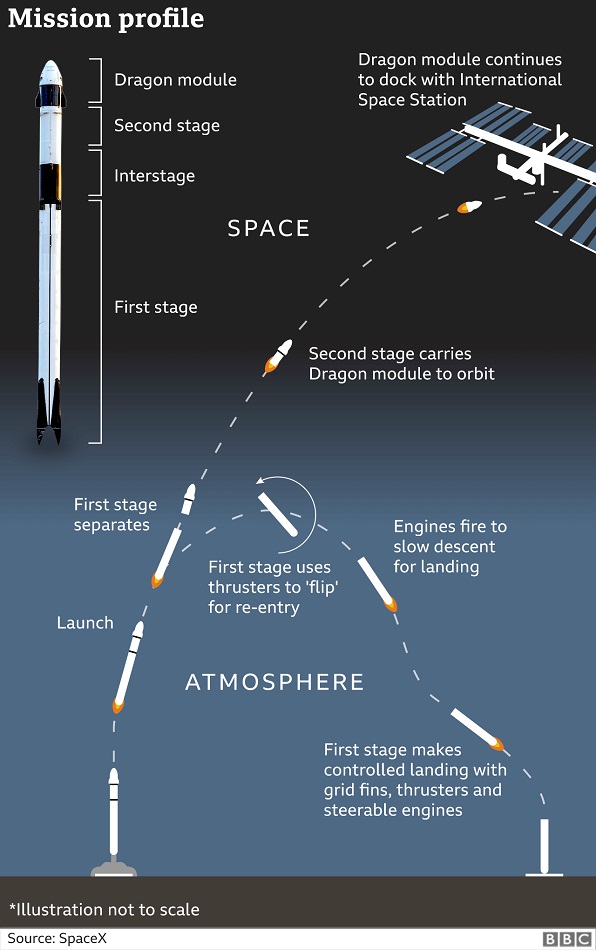
On Saturday afternoon SpaceX and NASA successfully launched a crew of American astronauts aboard a Falcon 9 rocket. There has not been a mission from the Kennedy Space Center to put people into space for almost ten years, since the end of the Space Shuttle program. The launch was also historic for SpaceX as it became the first private company to carry humans into orbit. The Dragon capsule will dock Sunday morning with the International Space Station. The astronauts will stay in space for at least six weeks but possibly up to four months.
NASA Rocket Testing
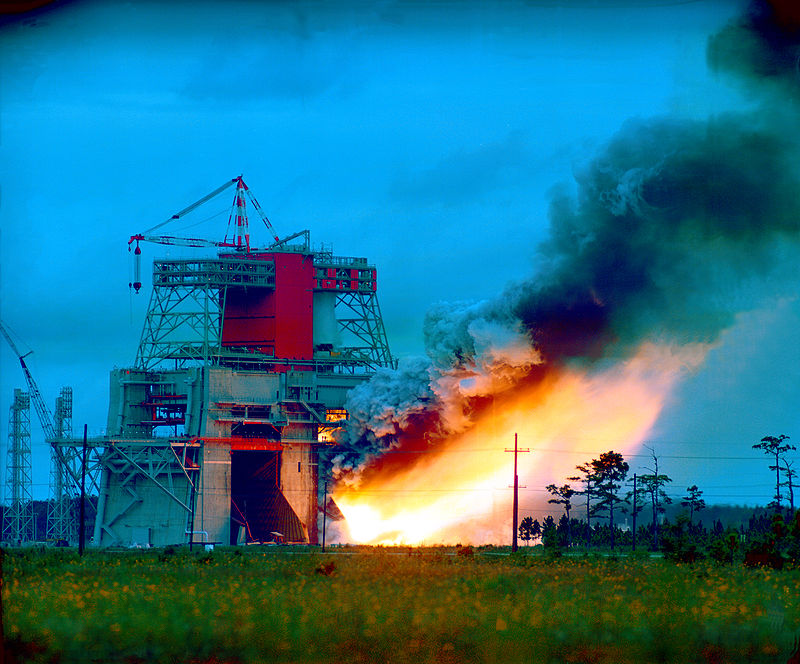
The John C. Stennis Space Center (SSC) is a NASA rocket testing facility. It is located in Hancock County, Mississippi (United States), on the banks of the Pearl River at the Mississippi–Louisiana border. As of 2012, it is NASA’s largest rocket engine test facility. There are over 30 local, state, national, international, private, and public companies and agencies using SSC for their rocket testing facilities.
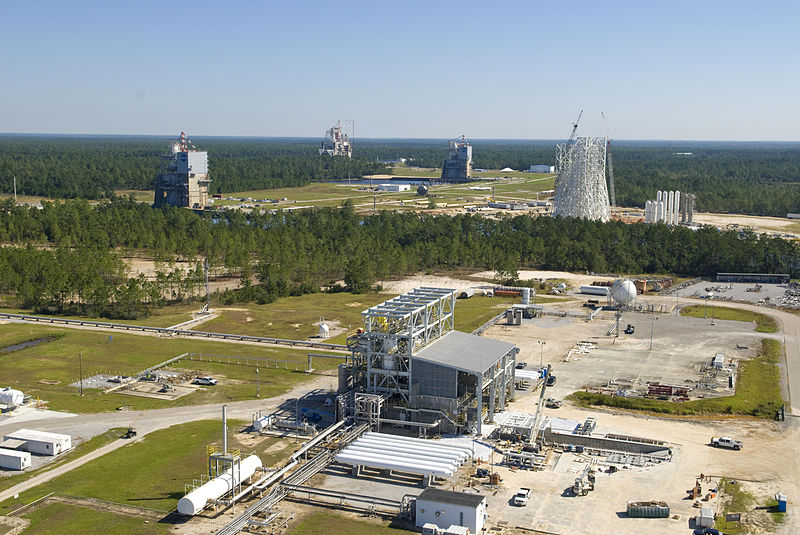
The Rocket Propulsion Test Complex is a rocket testing complex which was built in 1965 as a component of the John C. Stennis Space Center. The Rocket Propulsion Test Complex played an important role in the development of the Saturn V rocket. The A-1, A-2 and B-1/B-2 test stands were declared a National Historic Landmark in 1985. The NASA Engineering & Science Directorate (ESD) at SSC operates and maintains SSC’s rocket test stands.
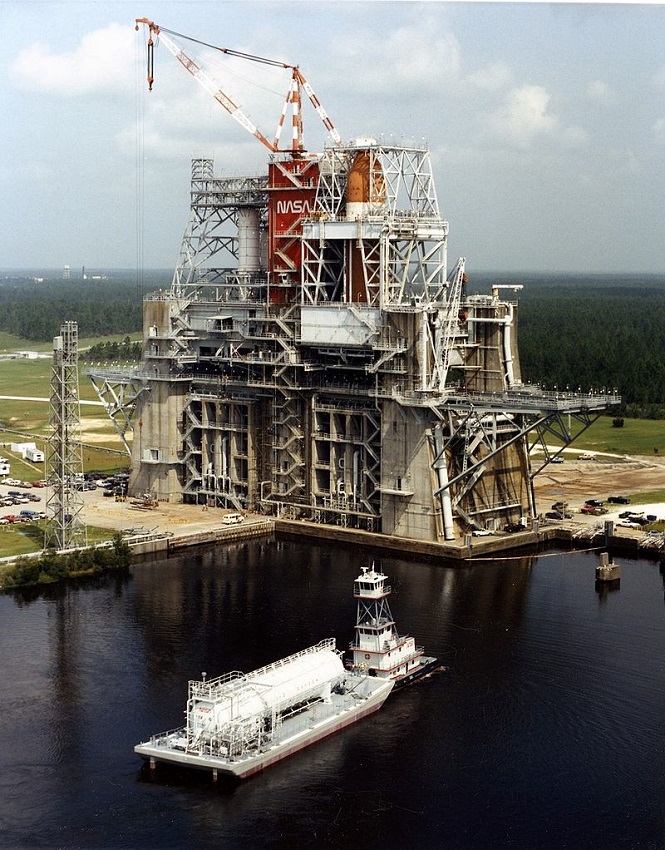
The Rocket Propulsion Test Complex is a rocket testing complex which was built in 1965 as a component of the John C. Stennis Space Center. The Rocket Propulsion Test Complex played an important role in the development of the Saturn V rocket. The A-1, A-2 and B-1/B-2 test stands were declared a National Historic Landmark in 1985. The NASA Engineering & Science Directorate (ESD) at SSC operates and maintains SSC’s rocket test stands.
The test in this video is from a site in the Utah desert.
 The MarkoZen Blog