




Superheros turning into zombies. God help us all!
Welcome to the “Galactic Menagerie,” a whimsical and visually stunning fan-made fake trailer that reimagines the classic Star Wars universe through the eccentric lens of Wes Anderson. This enchanting mashup brings together iconic Star Wars characters with Anderson’s trademark symmetrical compositions, pastel color palettes, and quirky humor. Journey to a galaxy far, far away and experience a unique adventure featuring Luke Skywalker, Princess Leia, Darth Vader, and other fan favorites. Watch as they navigate the Galactic Menagerie, a universe filled with eccentric creatures, charming droids, and peculiar locations reminiscent of Anderson’s beloved films such as “Moonrise Kingdom” and “The Grand Budapest Hotel.”
The ultimate decision to put the original Star Trek series on the air back in 1966 fell into the hands of Lucille Ball. She was a studio executive (Desilu) who wielded power over decisions like which shows will move forward and which shouldn’t. She took the Star Trek plunge, the rest is mega science fiction franchise history.
Lucille Désirée Ball (August 6, 1911 – April 26, 1989) was an American actress, comedienne, model, film studio executive, and TV producer. She was the star of the sitcoms I Love Lucy, The Lucy–Desi Comedy Hour, The Lucy Show, Here’s Lucy, and Life with Lucy.
How Star Trek was launched:
In April 1964, Roddenberry presented the Star Trek draft to Desilu Productions, a leading independent television production company. He met with Herb Solow, Desilu’s Director of Production. Solow saw promise in the idea and signed a three-year program-development contract with Roddenberry.
The idea was extensively revised and fleshed out during this time – ‘The Cage’ pilot filmed in late 1964 differs in many respects from the March 1964 treatment. Solow, for example, added the Star Date concept.
Desilu Productions had a first-look deal with CBS. Oscar Katz, Desilu’s Vice President of Production, went with Roddenberry to pitch the series to the network. They refused to purchase the show, as they already had a similar show in development, the 1965 Irwin Allen series Lost in Space.
In May 1964, Solow, who previously worked at NBC, met with Grant Tinker, then head of the network’s West Coast programming department. Tinker commissioned the first pilot – which became ‘The Cage’. NBC turned down the resulting pilot, stating that it was ‘too cerebral.’ However, the NBC executives were still impressed with the concept, and they understood that its perceived faults had been partly because of the script that they had selected themselves.
NBC made the unusual decision to pay for a second pilot, using the script called “Where No Man Has Gone Before”. Only the character of Spock, played by Leonard Nimoy, was retained from the first pilot, and only two cast members, Majel Barrett and Nimoy, were carried forward into the series. This second pilot proved to be satisfactory to NBC, and the network selected Star Trek to be in its upcoming television schedule for the fall of 1966.
The second pilot introduced most of the other main characters: Captain Kirk (William Shatner), chief engineer Lt. Commander Scott (James Doohan) and Lt. Sulu (George Takei), who served as a physicist on the ship in the second pilot but subsequently became a helmsman throughout the rest of the series. Paul Fix played Dr. Mark Piper in the second pilot; ship’s doctor Leonard McCoy (DeForest Kelley) joined the cast when filming began for the first season, and he remained for the rest of the series, achieving billing as the third star of the series. Also joining the ship’s permanent crew during the first season were the communications officer, Lt. Nyota Uhura (Nichelle Nichols), the first African-American woman to hold such an important role in an American television series; the captain’s yeoman, Janice Rand (Grace Lee Whitney), who departed midway through the first season; and Christine Chapel (Majel Barrett), head nurse and assistant to McCoy. Walter Koenig joined the cast as Ensign Pavel Chekov in the series’ second season.
In February 1966, Star Trek was nearly killed by Desilu Productions, before airing the first episode. Desilu had gone from making just one half-hour show (The Lucy Show), to deficit financing a portion of two expensive hour-long shows, Mission: Impossible and Star Trek. Solow was able to convince LUCILLE BALL that both shows should continue.

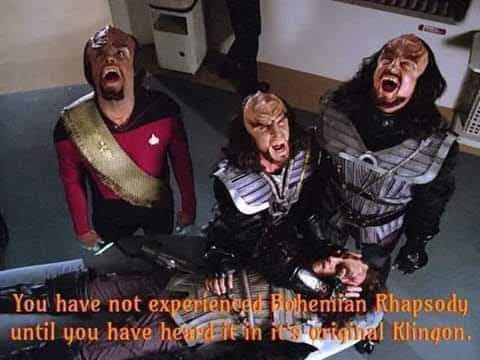
Imagine the world without Trekkies.


The Reptilian alien is a fixture of science-fiction, from H.P. Lovecraft’s tales of Valusians to the Cardassians in Star Trek, to the Visitors of the television series V. But could ancient myths about reptilian creatures provide evidence that they are more than just a pop-culture creation? Legends of serpent beings can be found on every continent. The Bible, the Quran and the ancient texts known as the Nag Hammadi codices all describe reptilian entities interacting with humans. In Central and South America people worship the feathered serpent god called Kulkukan or Quetzalcoatl. In India, the Nagas are half-human half-reptile gods who live underground in a place called Patala. And in China and Japan, many emperors claim to be the descendants of dragons. Could these stories represent real Reptilian beings that people all over the world actually encountered in the ancient past?

The Ancient Aliens hair guy is quite unaware of what is going to hit him.


Not only is having this idea over 50 years ago amazing, but also the fact that they managed to recreate it on film. This must have been difficult without the easy access of video technology.


















 The MarkoZen Blog