They speak for themselves


Manitoba Speed Limit sign

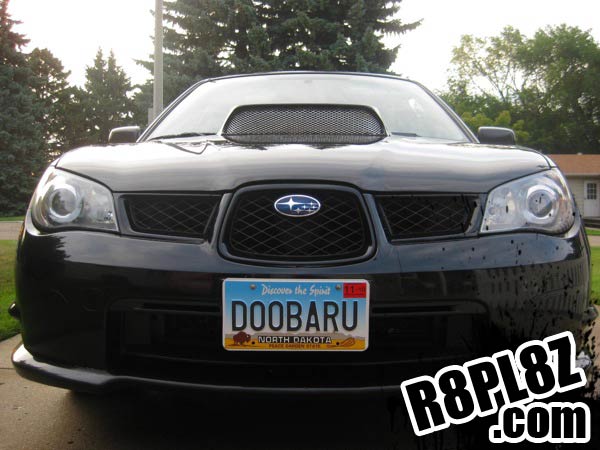
A North Dakota resident found out the hard way this past weekend that kilometres and miles aren’t the same thing.
The driver was hit with a $940 ticket Sunday afternoon after being caught going 100 miles per hour in the RM of Dufferin on Highway 13, RCMP said.
RCMP’s radar gun caught the driver going 168 kilometres per hour, just over 100 mph, in a 100 km/h zone.
“It’s a tad excessive,” RCMP spokesperson Sgt. Paul Manaigre said.
While dangerous driving charges aren’t anticipated, Manaigre said Manitoba has reciprocity agreements with many states including North Dakota, meaning the driver’s licence or insurance could be affected back at home.
“It doesn’t surprise me,” Manaigre told CBC. “I’ve been policing the Emerson detachment for close to 15 years, so I’ve caught quite a few speeders … coming over from the States. You don’t see it often, but it does occur.”

RCMP stopped a North Dakotan driver going 168 km/h in Manitoba Sunday. The driver thought the speed limit meant 100 mph. (RCMP)
100kph= 62.13712mph
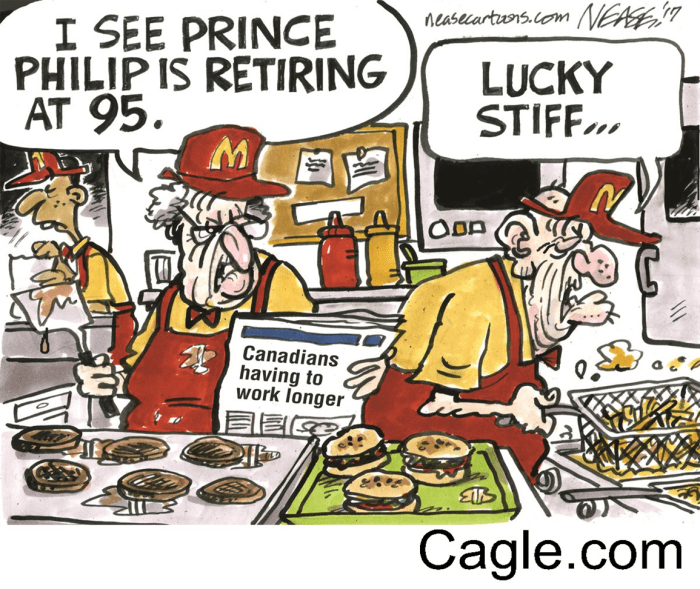
Prince Philip will retire this fall from his royal duties, Buckingham Palace announced Thursday.
Philip, the husband of Queen Elizabeth II, will attend previously scheduled engagements until August, but won’t accept invitations after that, a palace spokesman said, adding the decision was made by the 95-year-old Duke of Edinburgh and supported by the queen. Elizabeth, who is 91, “will continue to carry out a full program of official engagements,” the statement said.
Philip is known for both his off-the-cuff remarks and his sometimes embarrassing gaffes. At an event in London on Wednesday, he referred to himself as the “world’s most experienced plaque unveiler.”
Some of his best quotes:


To President of Nigeria, who was in national dress, 2003: “You look like you’re ready for bed!”

His description of Beijing, during a visit there in 1986: “Ghastly.”

To a tourist in Budapest in 1993: “You can’t have been here long, you haven’t got a pot belly.”

On the Duke of York’s house, 1986: “It looks like a tart’s bedroom.”
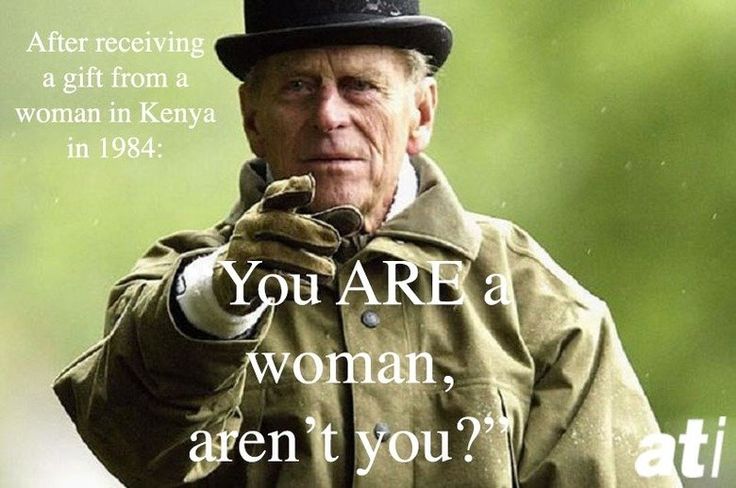
On the 1981 recession: “A few years ago, everybody was saying we must have more leisure, everyone’s working too much. Now everybody’s got more leisure time they’re complaining they’re unemployed. People don’t seem to make up their minds what they want.”
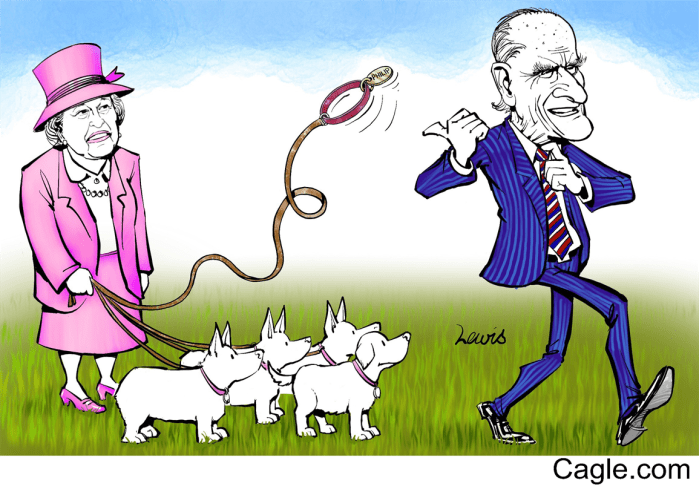
On Tom Jones, 1969: “It’s difficult to see how it’s possible to become immensely valuable by singing what are the most hideous songs.”
To then Paraguay dictator General Stroessner: “It’s a pleasure to be in a country that isn’t ruled by its people.”
To Scottish driving instructor, 1995: “How do you keep the natives off the booze long enough to pass the test?”
To Susan Edwards and her guide dog in 2002: “They have eating dogs for the anorexic now.”
On Princess Anne, 1970: “If it doesn’t fart or eat hay, she isn’t interested.”
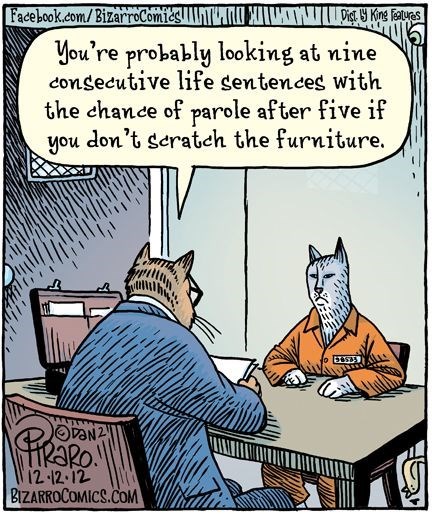

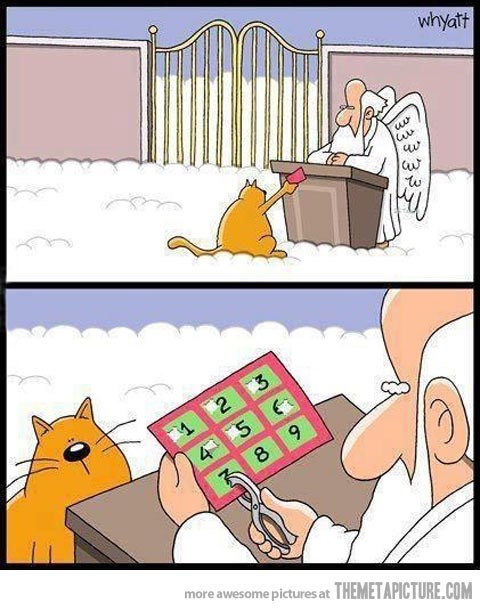
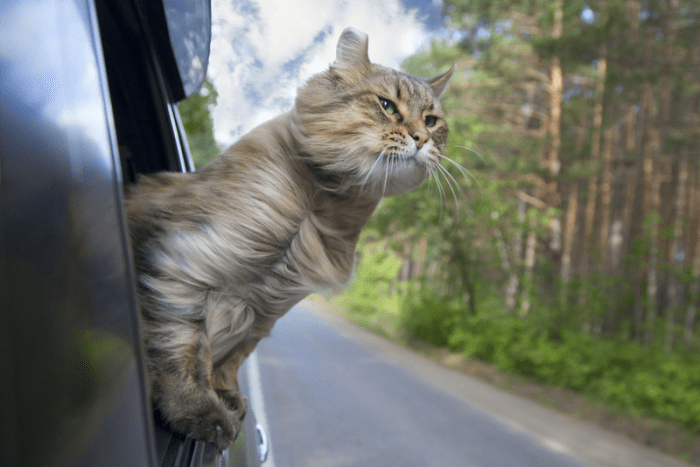
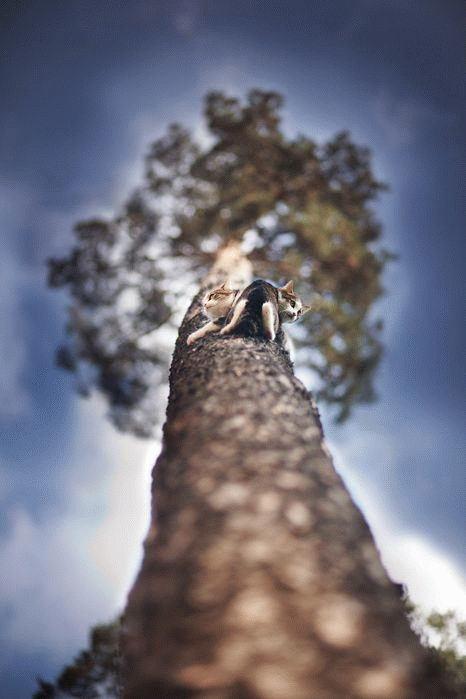
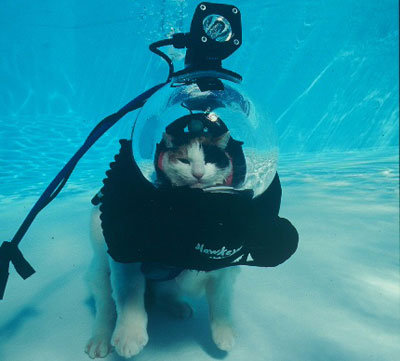
Cool Cat


“Wienermobile” is a series of automobiles shaped like a hot dog on a bun which are used to promote and advertise Oscar Mayer products in the United States. The first version was created in 1936 by Oscar Mayer’s nephew, Carl G. Mayer, and variants are still used by the Oscar Mayer company today. Drivers of the Wienermobiles are known as Hotdoggers and often hand out toy whistles shaped as replicas of the Wienermobile, known as Wienerwhistles.


The Oscar Mayer Wienermobile has evolved from Carl Mayer’s original 1936 vehicle[1] to the vehicles seen on the road today. Although fuel rationing kept the Wienermobile off the road during World War II, in the 1950s Oscar Mayer and the Gerstenslager Company created several new vehicles using a Dodge chassis or a Willys Jeep chassis. One of these models is on display at the Henry Ford Museum in Dearborn, Michigan. These Wienermobiles were piloted by “Little Oscar” (portrayed by George Molchan) who would visit stores, schools, orphanages, and children’s hospitals and participate in parades and festivals.
In 1969, new Wienermobiles were built on a Chevrolet motor home chassis and featured Ford Thunderbird taillights. The 1969 vehicle was the first Wienermobile to travel outside the United States. In 1976 Plastic Products, Inc., built a fiberglass and styrofoam model, again on a Chevrolet motor home chassis.
In 1988, Oscar Mayer launched its Hotdogger program, where recent college graduates were hired to drive the Wienermobile through various parts of the nation and abroad. Using a converted Chevrolet van chassis, Stevens Automotive Corporation and noted industrial designer Brooks Stevens built a fleet of six Wienermobiles for the new team of Hotdoggers.
With the 1995 version, the Wienermobile grew in size to 27 feet long and 11 feet high.[2] The 2004 version of the Wienermobile includes a voice-activated GPS navigation device, an audio center with a wireless microphone, a horn that plays the Wiener Jingle in 21 different genres from Cajun to Rap to Bossa Nova, according to American Eats, and sports fourth generation Pontiac Firebird taillights.


There are currently eight active Wienermobiles, six of which are the full-sized familiar models (the other two are the Mini and the food truck versions) with each assigned a part of the country. The “hotdogger” position of driving the Wienermobile is open to U.S. citizens, and the job lasts from the first of June until the following first of June. Only college seniors who are about to graduate are eligible. Both current hotdoggers and Oscar Mayer recruiters visit college campuses across the country in search of the next round of hotdoggers. Candidates are screened from an average of 2000 applicants. Every March, a pool of thirty final-round candidates are brought to Kraft Foods and Oscar Mayer headquarters in Madison, Wisconsin, for interviews. Each vehicle can hold two hotdoggers, and twelve people are chosen. Currently there are about 300 hotdogger alumni.


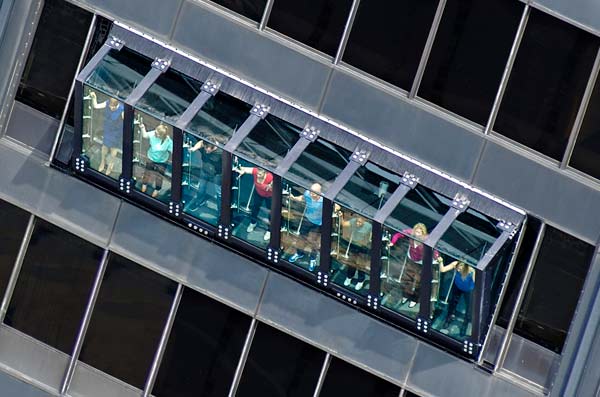
Brave tourists have been trying out Chicago’s newest attraction – a 1000ft-high viewing platform that offers spectacular downward facing views over the city.
TILT is housed in 360 CHICAGO on the 94th floor of the John Hancock Tower and, as the name suggests, the enclosed glass and steel platform tilts visitors forward for a unique perspective of the city’s The Magnificent Mile.



Give me a bloody parachute in case the unexpected happens.
The CN Tower in Toronto opened a bizarre and frightening attraction back in 2011, a chance to show you are brave.
The tower’s EdgeWalk allows thrill-seekers to stroll outside on the world-famous tower on a 1.5 metre ledge that rings the main pod 356 metres (1,168 feet) above the ground.
Opened in August 2011, this walk of wobbly knees sends groups of six to eight people out on the ledge where they walk hands-free while attached to an overhead safety harness.
During the walk, specially trained guides will encourage visitors to push their personal limits, even allowing them to lean out 116 storeys above the city.

The EdgeWalk costs $175. While that may be pricey, CN Tower staff say it doesn’t cost walkers their lives.
“Our facilities and engineering team supervised the EdgeWalk project design and build to ensure that it is both exciting and safe,” said CN Tower chief operating officer Jack Robinson in a news release.
“EdgeWalk is both thrilling and unique and pushes visitors to their limits — literally and figuratively,” said Mark Laroche, president and CEO of Canada Lands Company, which owns and operates the CN Tower. The entire EdgeWalk experience takes about 90 minutes, with the walk itself lasting between 20 to 30 minutes.


They give you a breathalyzer before the walk to make sure you are not under the influence of alcohol. Well there goes my opportunity, I would not touch this Edgewalk unless I had gulped down at least 10 ounces of Canadian rye whiskey.

Have you seen this Alien?
When the US government uses the term “criminal alien”, it means someone who is not a US citizen that has been convicted of a crime.
Twitter, meanwhile, thinks flying saucers and The X-Files.
On Wednesday, the Department of Homeland Security opened a new office, called VOICE, to “serve the needs of crime victims and their families who have been impacted by crimes committed by removable criminal aliens”.
The centrepiece is a new hotline that victims can call for support and assistance. It was set up under the authority of an executive order on immigration from President Trump in January.
People began making clear exactly what people should not be using the line for.





It’s unclear how many people actually placed calls to the hotline, and several Twitter users reported long wait times to get through. But the US Immigration and Customs Enforcement (ICE) agency suggested it had impacted their service.
“There are certainly more constructive ways to make one’s opinions heard than to prevent legitimate victims of crime from receiving the information and resources they seek because the lines are tied up by hoax callers,” a spokesperson told Buzzfeed News
President Trump famously enraged Mexicans by suggesting in June 2015 that the country’s immigrants were criminals and “rapists”, and he has continued to take a tough line on illegal immigration since entering the White House.
Steep decreases in the number of people arrested while illegally crossing the border from Mexico in recent months have been touted by the administration as a sign that Mr Trump’s policies are having the desired effect.
Tales of deportation in Trump’s America
The government says the VOICE office will keep victims of alleged crimes by undocumented migrants updated as the suspect moves through the immigration system, including if they are deported.
Opponents of the administration’s policies and rhetoric focusing on immigrants and crime point out that numerous studies have shown immigrants are less likely to commit serious crimes or be jailed than the native-born population.
The American Immigration Council says this “holds true for both legal immigrants and the unauthorised, regardless of their country of origin or level of education”.
Now here is a very BAD “criminal alien”!

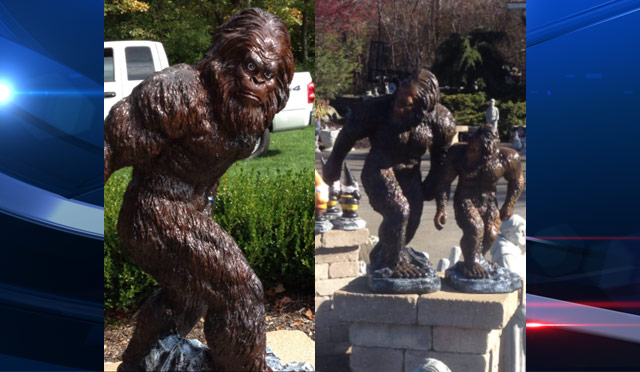
Authorities in Beaver Township, Ohio have embarked on an unexpected search for Sasquatch following a strange theft in the area.
Arlene Fitzer, owner of Farmer Dave’s Gift and Garden Shoppe, reported to police that three hand-painted Bigfoot statues were stolen from in front of their store.
The ne’er-do-wells behind the heist were apparently quite determined to bag the Bigfoot because two of the tributes to the cryptid weighed an incredible 225 pounds!
In keeping with the baffling nature of Bigfoot, Fitzer was mystified that anyone was strong enough to lift the weighty Sasquatch statues.
And with one of the statues measuring nearly four feet tall, she wondered where the thieves planned to hide such a eye-catching piece of artwork.
Nonetheless, Fitzer was rather dismayed that they have gone missing, since the total value of the stolen statues was around $300.
Fortunately, the Beaver Township police department is now on the case and they hope to pull off what so many in reality television have so far failed to do: find Bigfoot or, at least, whoever stole the statues.

Alan Brown, a member of the U.K. parliament from Scotland, reportedly is the first MP ever to be asked to provide translation for the official record. Brown jokes his American wife can understand him.
 The MarkoZen Blog