Music
Louie Louie
and now…the news: louie louie oh baby i gotta go
louie louie oh baby i gotta go
the communist world is fallin apart
the capitalists are just breakin hearts
money is the reason to be
it makes me just wanna sing louie louie louie louie oh baby i gotta go louie louie oh baby i gotta go
a fine little girl is waitin for me but i ‘m as bent as dostoevsky
i think about the meaning of my life again and i have to sing louie louie again
louie louie oh baby i gotta go louie louie oh baby i gotta go let’s give it to’ em right now oh man,
i dunno like…health insurance the homeless & world peace & aids & education … i’ m tryin to do right but. ..hey life after bush & gorbachev the wall is down but something is lost turn on the news it looks like a movie it makes me wanna sing louie louie louie louie oh baby i gotta go let’s go
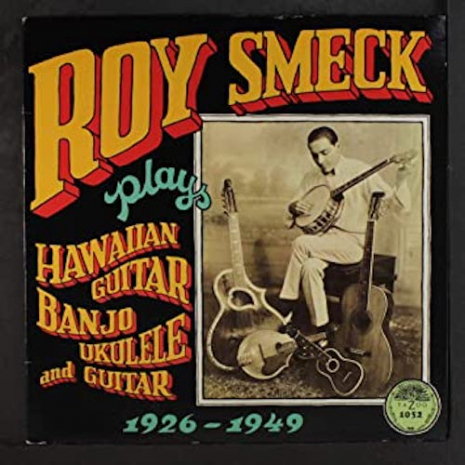
ROY SMECK: THE EDDIE VAN HALEN OF UKULELE PLAYERS

One of the many rumors passed around the Internet (imagine that!) concerns musician and ukulele player Roy Smeck, known as “The Wizard of the Strings.” It turns out that a lot of people seemed convinced that Smeck was actually Eddie Van Halen’s father and an innovator of “two-hand-tapping,” a method of playing a stringed instrument by tapping the strings with an object or your fingers. The technique has been traced back to the late 1700s, but as far as the popularization of two-hand-tapping, that honor belongs to Roy Smeck – a visionary ukulele player who rose to fame as one of vaudeville’s premier attractions. Smeck’s popularity was such that he was invited to play at President Franklin D. Roosevelt’s inauguration celebration in 1933. Getting back to the popular notion Smeck was EVH’s dad…after the devastating loss of Eddie earlier this month, keyboard warriors started sharing videos of Smeck tapping away on his uke with lightning speed, with the caption “this is Eddie Van Halen’s father.” I suppose it was an easy mistake to make, given the skill level Smeck possessed, and its eerie similarity to one of Eddie’s calling cards, his blink-and-you-missed-it guitar tapping wizardry.
Ed’s real father, Jan Van Halen, was, of course, a great musician in his own right and mentor to both Eddie and Alex Van Halen. He was also born twenty years after Smeck in 1920. To my knowledge, Eddie has never credited Smeck as a source of inspiration for his style. Though he has given the nod to another musician known for his finger-tapping innovations, Genesis guitarist Steve Hackett. In a 2012 interview with Ultimate Guitar, Hackett credited himself as being the “inventor of tapping on record,” which isn’t really true as guitarist Jimmie Webster was known for his tapping (or the sexy-sounding “touching”) technique, which you can hear on at least one recording, Webster’s Unabridged, from 1959.

Roy Smeck was born in 1900 in Pennsylvania. Starting at a young age, the future virtuoso would teach himself to play the guitar, steel guitar, banjo, octo-chorda (or “octachorda,” an eight-string steel guitar), jaw harp, harmonica, and his weapon of choice, the ukulele. While still in his early 20s, Smeck would become one of vaudeville’s most successful stars without uttering a single word during his energetic performances. Smeck preferred to dance for his fans while he frantically tapped on his uke. He’d also play it upside down with the same alarming speed and precision. His early exposure in vaudeville would lead to a myriad of incredible opportunities. His music would be featured along with the 1926 film Don Juan—the very first film to use Vitaphone sound-on-disc, which allowed both music and other sounds to be played in sync with the moving picture. His Pastimes, a short preceding Don Juan, featured an electrifying uke performance by Smeck would send his star soaring. The following year, he was approached by Jay Krause, the president of the largest string instrument manufacturer in the U.S. (at the time), the Harmony Company of Chicago. In a 1984 interview with an 84-year-old Smeck, he recalled Krause’s proposal that Smeck “produce” a Hawaiian guitar, uke, banjo, and guitar exclusively for Harmony. Smeck’s bosses at Warner objected to the use of the word Vitaphone for the line. Smeck and Kraus changed directions slightly by naming the various instruments as “The Roy Smeck Vita-Uke,” The Roy Smeck Vita-Guitar,” etc.
Give Me Back My Wig
Who would think up a song like this?
Give me back my wig
Honey, now let your head go bald.
Give me back my wig
Honey, now let your head go bald.
Really didn’t have no business
Honey, buyin’ you no wig at all.
Takin’ me downtown
say four forty nine,
When I get down there
I swear, nine ninety nine.
You just give me back my wig
Honey, now let your head go bald.
Really didn’t have no business
Honey, buyin’ you no wig at all.
Yeah my Mama told me
and your good friend too,
When you get that wig
That’s the way you gonna do.
You just give me back my wig
Honey, now let your head go bald.
Really didn’t have no business
Honey, buyin’ you no wig at all.
Goodbye little more fun
All I got to say.
Give me back my wig and be
On your merry way.
You just give me back my wig
Honey, now let your head go bald.
Really didn’t have no business
Buyin’ you no wig at all
Greenland Whale Fisheries
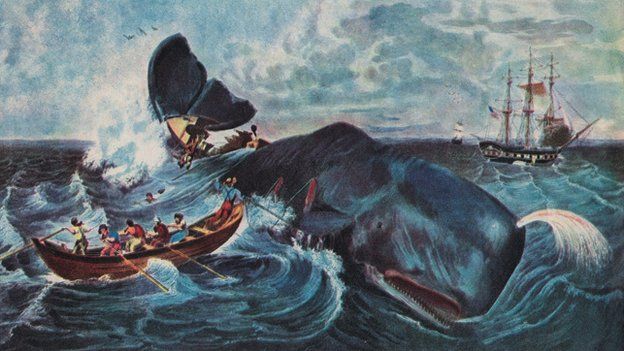
In eighteen hundred and forty-six
And of March the eighteenth day,
We hoisted our colors to the top of the mast
And for Greenland sailed away, brave boys,
And for Greenland sailed away.
The lookout in the crosstrees stood
With spyglass in his hand;
There’s a whale, there’s a whale,
And a whalefish he cried
And she blows at every span, brave boys
She blows at every span.
The captain stood on the quarter deck,
The ice was in his eye;
Overhaul, overhaul! Let your gibsheets fall,
And you’ll put your boats to sea, brave boys
And you’ll put your boats to sea.
Our harpoon struck and the line played out,
With a single flourish of his tail,
He capsized the boat and we lost five men,
And we did not catch the whale, brave boys,
And we did not catch the whale.
The losing of those five jolly men,
It grieved the captain sore,
But the losing of that fine whalefish
Now it grieved him ten times more, brave boys
Now it grieved him ten times more.
Oh Greenland is a barren land
A land that bares no green
Where there’s ice and snow, and the whalefishes blow
And the daylight’s seldom seen, brave boys
And the daylight’s seldom seen.


Black Rock!
Death was a garage rock and protopunk demo band formed in Detroit, Michigan, in 1971 by the brothers Bobby (bass, vocals), David (guitar), and Dannis (drums) Hackney. The African American trio started out as an R&B band but switched to rock after seeing an Alice Cooper show. Music critic Peter Margasak (incorrectly denoting the youngest brother) retrospectively wrote of their musical direction: “The youngest of the brothers, guitarist David, pushed the group in a hard-rock direction that presaged punk, and while this certainly didn’t help them find a following in the mid-70s, today it makes them look like visionaries.” The band broke up by 1977 but reformed in 2009 when the Drag City label released their 70s demos for the first time.
Another Black band that could do searing Rock:
 The MarkoZen Blog