Louie Louie 2 versions

Louie Louie, oh no, you take me where ya gotta go, yeah, yeah, yeah, yeah, yeah, baby
Louie Louie, oh baby, take me where ya gotta go

A fine little girl, she waits for me
Me catch the ship across the sea
Me sailed the ship all alone
Me never think I’ll make it home

Louie Louie, oh no no no, me gotta go, yeah, yeah, yeah, yeah, yeah, baby
Louie Louie, oh baby, me gotta go

Fuck!

Three nights and days I sailed the sea
Me think of girl constantly
On the ship, I dream she there
I smell the rose in her hair

Louie Louie, oh no, me gotta go, yeah, yeah, yeah, yeah, yeah, baby
Louie Louie, oh baby, me gotta go
OK, let’s give it to ’em right now

Me see


and now…the news: louie louie oh baby i gotta go

louie louie oh baby i gotta go

the communist world is fallin apart

the capitalists are just breakin hearts

money is the reason to be

it makes me just wanna sing louie louie louie louie oh baby i gotta go louie louie oh baby i gotta go

a fine little girl is waitin for me but i ‘m as bent as dostoevsky

i think about the meaning of my life again and i have to sing louie louie again

louie louie oh baby i gotta go louie louie oh baby i gotta go let’s give it to’ em right now oh man,

i dunno like…health insurance the homeless & world peace & aids & education … i’ m tryin to do right but. ..hey life after bush & gorbachev the wall is down but something is lost turn on the news it looks like a movie it makes me wanna sing louie louie louie louie oh baby i gotta go let’s go
Slawburgers and Possum Sacks

Nine Pound Hammer is an American cowpunk band formed in 1985 by vocalist Scott Luallen and guitarist Blaine Cartwright (later of Nashville Pussy) in their hometown of Owensboro, Kentucky. Though not recorded until 1988, the band were one of the initial wave of acts to combine the roots sound of country music with punk rock, and became a forerunner to subsequent roots-punk artists.

Hungry now?

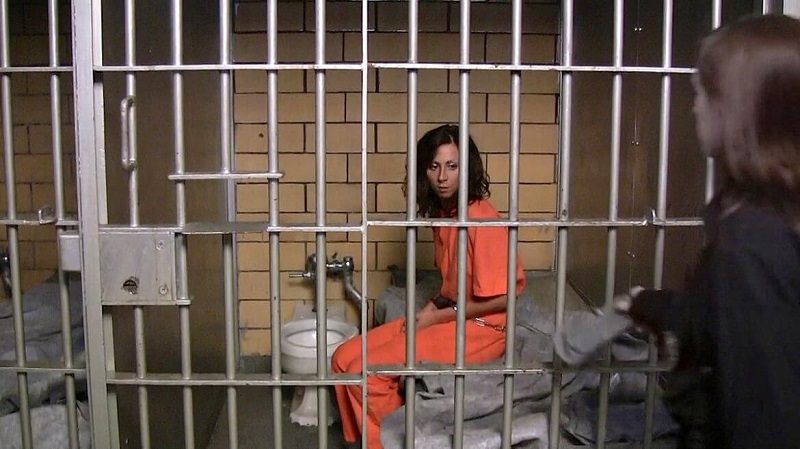
There’s a Riot in Cellblock #9

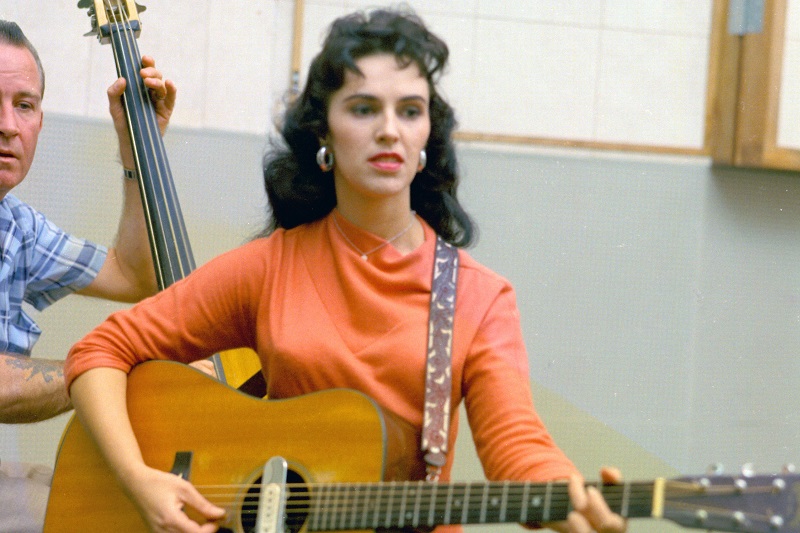
Wanda Lavonne Jackson (born October 20, 1937) is a retired American singer, songwriter, pianist and guitarist who had success in the mid-1950s and 1960s as one of the first popular female rockabilly singers, and a pioneering rock-and-roll artist. She is known to many as the “Queen of Rockabilly” or the “First Lady of Rockabilly”.

Historical Entertainment Technology Leap

“Video Killed The Radio Star”

I heard you on the wireless back in ’52
Lying awake intently tuning in on you
If I was young it didn’t stop you coming through
Oh-a-oh

They took the credit for your second symphony
Rewritten by machine on new technology
And now I understand the problems you can see

Oh-a-oh
I met your children
Oh-a-oh
What did you tell them?

Video killed the radio star
Pictures came and broke your heart
Oh-a-a-a oh

And now we meet in an abandoned studio
We hear the playback and it seems so long ago
And you remember the jingles used to go:

Oh-a-oh
You were the first one
Oh-a-oh
You were the last one

Video killed the radio star
In my mind and in my car
We can’t rewind, we’ve gone too far
Oh-a-a-a oh
Oh-a-a-a oh

Video killed the radio star
In my mind and in my car
We can’t rewind, we’ve gone too far
Pictures came and broke your heart
Put the blame on VTR…

You are the radio star
Video killed the radio star
You are the radio star
Video killed the radio star
You are the radio star
Video killed the radio star
You are the radio star
Video killed the radio star
You are the radio star

Oh-a-oh, oh-a-oh…

Hollywood will try anything once

roy


Now this, I want to see….

Sharp-shooter…

Vagabond…

Roy Orbison is traveling West with 7 of his brand new songs…

The wildness of the times gets into the people themselves, and then…

Anything can happen…

A trunk full of gold…

A wagon full of trouble…

And a head filled with songs makes him…

The Fastest Guitar Alive

Roy Orbison’s 1967 film saw him star as Johnny Banner, a Southern spy, with a bullet-shooting guitar, who has a plan to rob gold bullion from the US Mint, in San Francisco, with the aid of the Confederate army. This was low budget fodder, scripted by Robert E. Kent (best known for Diary of a Madman and Rock Around the Clock) and directed by Michael D. Moore (who later worked as Second Unit Director with Steven Spielberg on Indiana Jones), and is now best known for its 7 songs performed by the the Big “O”.

Rock N’ Roll Forever By Danny & the Juniors

Danny & the Juniors are a doo-wop quartet from Philadelphia comprising Danny Rapp, Dave White, Frank Maffei and Joe Terranova. Formed in 1955, they are most widely recognized for their hit single “At the Hop”, which was released in 1957. They are sometimes erroneously stated as being an Italian-American band (lead singer Danny Rapp was actually of Irish extraction).

Rock, (rock), (rock).Oh, baby, rock, (rock), (rock).
Oh, baby, rock, (rock), (rock).

Oh, baby, rock, (rock), (rock).

Oh, baby, rock and roll is here to stay./(Rock, rock, rock.)
It will never die./(Rock, rock, ro-ah-ah-ock.)
It was meant to be that way,/(Rock, rock, rock.)
Though I don’t know why./(Rock, rock, rock.)
I don’t care what people say,/(Ah-ah-ahh.)
Rock and roll is here to stay./(Rock, rock, rock.)
(We don’t care what people say,)
(Rock and roll is here to stay.)

Rock and roll will always be./(Rock and roll.)
I dig it to the end./(Rock and roll-woh-woh.)
It’ll go down in history,/(Rock and roll.)
Just you watch, my friend./(Rock and roll.)
Rock and roll will always be./(Ah-ahh.)
It’ll go down in history./(Rock and roll.)
(Rock and roll will always be.)
(It’ll go down in history.)

((Everybody rock, everybody rock.))
((Everybody rock, everybody rock. ))
((Rock on, everybody rock.))
Everybody ((rock and roll,))
((Everybody rock and roll-))(oh-oh,)
((Everybody rock and roll,))
((Rock on, everybody rock and roll.))

Rock and roll is here to stay./(Rock, rock, rock.)
It will never die./(Rock, rock, ro-ah-ah-ock.)
It was meant to be that way,/(Rock, rock, rock.)
Though I don’t know why./(Rock, rock, rock.)
I don’t care what people say,/(Ah-ah-ahh.)
Rock and roll is here to stay./(Rock, rock, rock.)

Rock and roll will always be./(Rock and roll.)
I dig it to the end./(Rock and roll-woh-woh.)
It’ll go down in history,/(Rock and roll.)
Just you watch, my friend./(Rock and roll.)
Rock and roll will always be./(Ah-ah-ahh.)
It’ll go down in history./(Rock and roll.)

Now, if you ((don’t like rock and roll,))
Think ((what)) you’ve been missin’.
((But if you like to Bop 1 and Stroll 1 ,))
((Come around and listen.))
((Let’s all start to have a ball,))
((Everybody rock and roll.))

[Outro: Each man in turn:]
Rock, (rock), (rock).
Oh, baby, rock, (rock), (rock).
[Fade.]
Oh, baby, rock, (rock), (rock).

Tribute to Eddie Van Halen

Edward Lodewijk Van Halen (January 26, 1955 – October 6, 2020) was a Dutch-American musician, songwriter, producer, and inventor. He was the main songwriter and lead guitarist of the American rock band Van Halen, which he co-founded in 1972 with his brother, drummer Alex Van Halen, bassist Mark Stone, and singer David Lee Roth. He was best known for popularizing the tapping guitar solo technique, allowing rapid arpeggios to be played with two hands on the fretboard. In 2012, he was voted number one in a Guitar World magazine reader’s poll for “The 100 Greatest Guitarists of All Time”.

Born on January 26, 1955, in Amsterdam, Netherlands, Edward Lodewijk van Halen was the son of Jan van Halen and Eugenia van Halen (née van Beers). Jan was a Dutch clarinetist, saxophonist, and pianist, and Eugenia was an Indo (Eurasian) from Rangkasbitung on the island of Java in the Dutch East Indies (now Indonesia). The family eventually resettled in Nijmegen.

In February 1962, the Van Halen family moved from the Netherlands to the United States, settling in Pasadena, California. Both Eddie and his older brother, Alex van Halen, were naturalized as U.S. citizens. The brothers learned to play the piano as children starting at the age of six. They commuted from Pasadena to San Pedro to study with an elderly piano teacher, Stasys Kalvaitis.


Why Do Fools Fall in Love?


Franklin Joseph Lymon (September 30, 1942 – February 27, 1968) was an American rock and roll/rhythm and blues singer and songwriter, best known as the boy soprano lead singer of the New York City-based early rock and roll group The Teenagers. The group was composed of five boys, all in their early to mid-teens. The original lineup of the Teenagers, an integrated group, included three African-American members, Frankie Lymon, Jimmy Merchant, and Sherman Garnes; and two Puerto Rican members, Joe Negroni and Herman Santiago. The Teenagers’ first single, 1956’s “Why Do Fools Fall in Love,” was also their biggest hit. After Lymon went solo in mid-1957, both his career and that of the Teenagers fell into decline. He was found dead at the age of 25 on the floor of his grandmother’s bathroom from a heroin overdose. His life was dramatized in the 1998 film Why Do Fools Fall In Love.

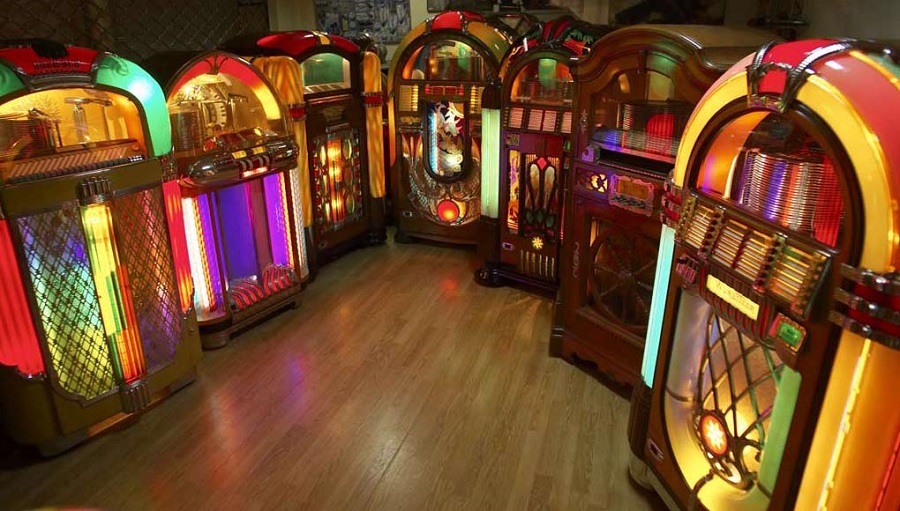
The Jukebox

jukebox2

In San Francisco in 1890, Louis Glass and William S. Arnold invented the nickel-in-the-slot phonograph, the first of which was an Edison Class M Electric Phonograph retrofitted with a device patented under the name of Coin Actuated Attachment for Phonograph. The music was heard via one of four listening tubes.

Early designs, upon receiving a coin, unlocked the mechanism, allowing the listener to turn a crank that simultaneously wound the spring motor and placed the reproducer’s stylus in the starting groove. Frequently, exhibitors would equip many of these machines with listening tubes (acoustic headphones) and array them in “phonograph parlors”, allowing the patron to select between multiple records, each played on its own machine. Some machines even contained carousels and other mechanisms for playing multiple records. Most machines were capable of holding only one musical selection, the automation coming from the ability to play that one selection at will. In 1918 Hobart C. Niblack patented an apparatus that automatically changed records, leading to one of the first selective jukeboxes being introduced in 1927 by the Automated Musical Instrument Company, later known as AMI.


juke box4


The term jukebox came into use in the United States beginning in 1940, apparently derived from the familiar usage “juke joint”, derived from the Gullah word “juke” or “joog” meaning disorderly, rowdy, or wicked. As it applies to the ‘use of a jukebox’, the terms juking (v.) and juker (n.) are the correct expressions.

Song-popularity counters told the owner of the machine the number of times each record was played (A and B side were generally not distinguished), with the result that popular records remained, while lesser-played songs could be replaced.

Wallboxes were an important, and profitable, part of any jukebox installation. Serving as a remote control, they enabled patrons to select tunes from their table or booth. One example is the Seeburg 3W1, introduced in 1949 as companion to the 100-selection Model M100A jukebox. Stereo sound became popular in the early 1960s, and wallboxes of the era were designed with built-in speakers to provide patrons a sample of this latest technology.


juke box6


juke35


Jukeboxes were most popular from the 1940s through the mid-1960s, particularly during the 1950s. By the middle of the 1940s, three-quarters of the records produced in America went into jukeboxes. While often associated with early rock and roll music, their popularity extends back much earlier, including classical music, opera and the swing music era. In 1977, The Kinks recorded a song called “Jukebox Music” for their album Sleepwalker.

Many manufacturers produced jukeboxes, including 1890s Wurlitzer, 1920s Seeburg, 1930s “Rock-Ola” whose name is actually based on that of the company founder, David Cullen Rockola, Sound Leisure and Crosley.

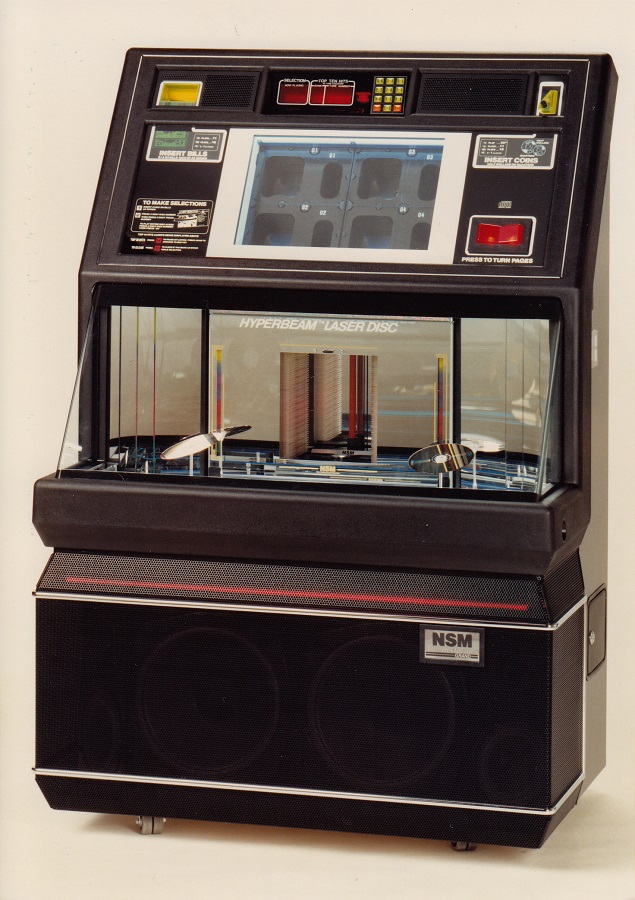
Two companies still remain today in the manufacture of classically styled jukeboxes. Rockola based in California and Sound Leisure based in Leeds in the UK. Both companies manufacture jukeboxes based on a CD playing mechanism however in April 2016 Sound Leisure showed a prototype of the “Vinyl Rocket” at the UK Classic Car Show. It stated that it would start production of the 140 7″ vinyl selector (70records) in summer of the same year.


juke box2


1952 Seeburg M100C – This was the jukebox exterior used in the credit sequences for the sitcom Happy Days in seasons 1-10. It played up to fifty 45 rpm records making it a 100-play. It was a very colorful jukebox with chrome glass tubes on the front, mirrors in the display, and rotating animation in the pilasters.


jukex