The Long Bridge in ‘True Lies’ Arnie Schwarzenegger movie

True lies was one of the Terminator’s better movies. Especially if you are a fighter jet buff. The Marine Corps Harrier jet scenes were really cool. But in the movie what was that awesome bridge? Well it is described below.

Scenes from the movie:

The Harriers moving in to attack the terrorists

lies1

The Harriers evade anti-aircraft missiles fired by the terrorists
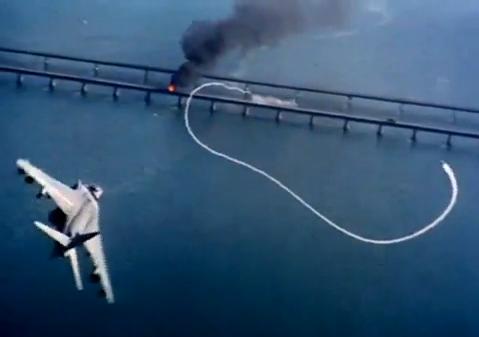
lies2

The terrorists are on their way to fornicate with the virgins and drink free wine in Muslim Martyr heaven. Not to mention play some cards with Osama Bin Laden and watch porn movies.

lies

More on the bridge

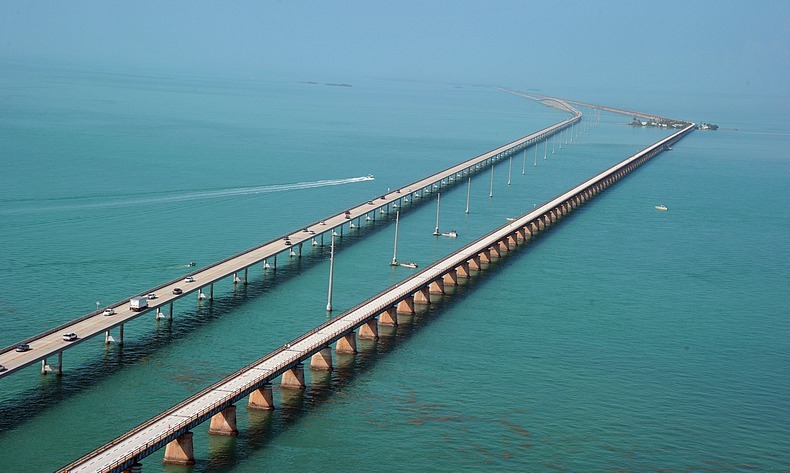
The Seven Mile Bridge is an iconic bridge in the Florida Keys of United States, stretching out into the open sea, connecting Knight’s Key in the Middle Keys to Little Duck Key in the Lower Keys. At the time of its completion in 1982, it was the longest continuous concrete segmental bridge in the world, and is currently one of the longest bridges in America.

Seven Mile Bridge actually consist of two bridges in the same location. The older bridge, originally known as the Knights Key-Pigeon Key-Moser Channel-Pacet Channel Bridge, was constructed from 1909-1912 as part of the Overseas Railroad. After the railroad sustained considerable damage during the Labor Day Hurricane of 1935, the bridge was refurbished for automobile use only. Dismantled tracks was recycled, painted white, and used as guardrails. It had a swing span that opened to allow passage of boat traffic, near where the bridge crosses Pigeon Key – a small island that once served as the work camp for the Florida East Coast Railway. When Hurricane Donna in 1960 inflicted further damage, decision to construct a new bridge was made.
lies5

A new, wider and sturdier Seven Mile Bridge was built right next to it from 1978 to 1982. When that happened, the original Seven Mile Bridge was nudged out of Florida’s transportation system. The vast majority of the original bridge still exists, used as fishing piers and access to Pigeon Key, but the swing span over the Moser Channel of the Intracoastal Waterway has been removed.

The total length of the new bridge is just under seven miles at 6.79 miles (10.93 km), and is shorter than the original. Each April the bridge is closed for approximately 2.5 hours on a Saturday and a “fun run,” known as the Seven Mile Bridge Run, of 1,500 runners is held commemorating the Florida Keys bridge rebuilding project. The event began in 1982 to commemorate the completion of a federally funded bridge building program that replaced spans that oil tycoon Henry Flagler constructed in the early 1900s to serve as a foundation for his Overseas Railroad.

The old bridge is still a popular spot with both locals and tourists, but it’s slowly falling apart. Salt water and storms are eroding the bridge faster than the state can afford to repair it. Much of the bridge is now closed – only a 2.2 mile section of the Old Seven Bridge is still open to pedestrians and cyclists.

Two years ago, a nonprofit community group called “Friends of Old Seven” was formed to try to preserve, and if possible, repair the bridge. The Florida Department of Transportation, which owns the bridge, cannot afford to sink a lot of money into the bridge’s upkeep, but is still willing to donate half of the $18 to $20 million required to repair the bridge. The community is now working hard to put up the other half.

lies6
lies7
lies8
lies9
lies10
lies11
bridge

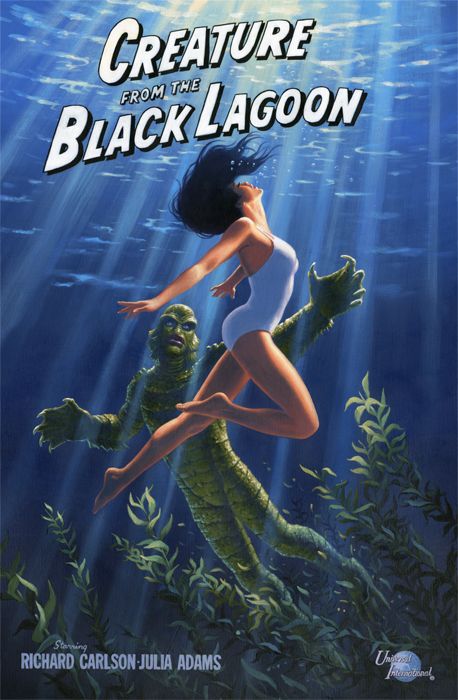
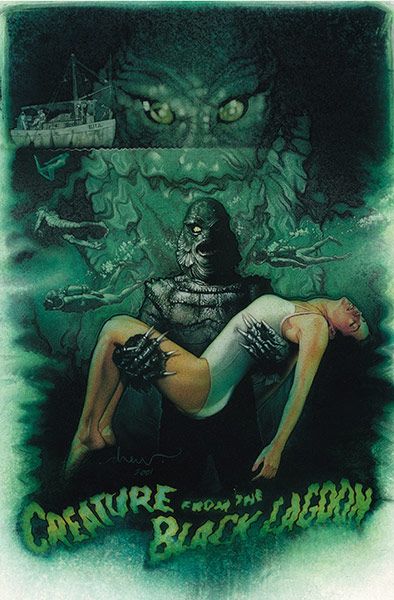
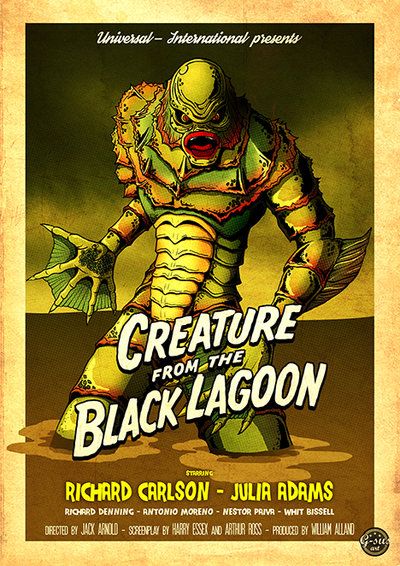
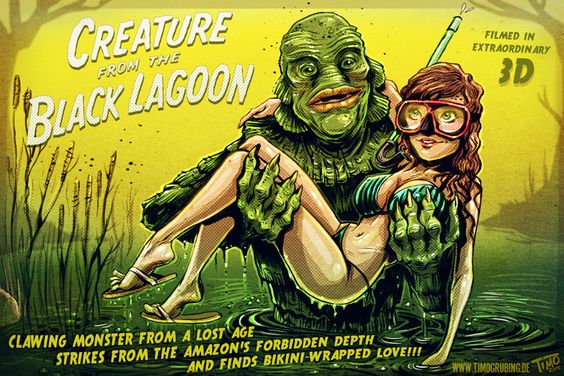
Creature From The Black Lagoon Posters

Creature from the Black Lagoon is a 1954 American black-and-white 3D monster horror film from Universal-International, produced by William Alland, directed by Jack Arnold, and starring Richard Carlson, Julie Adams, Richard Denning, Antonio Moreno, Nestor Paiva, and Whit Bissell. The Creature was played by Ben Chapman on land and by Ricou Browning underwater. The film premiered in Detroit on February 12 and was released on a regional basis, opening on various dates.

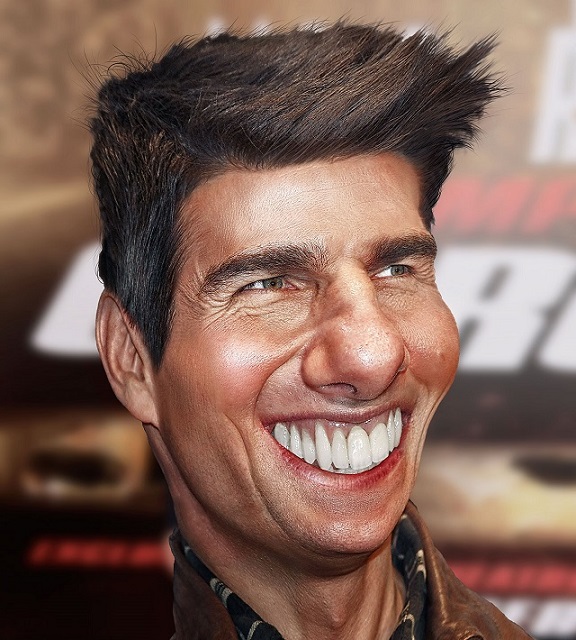
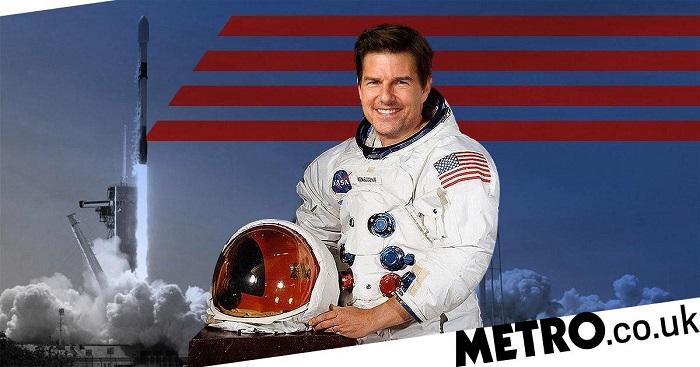
Tom Cruise: Filming in space and four of his other memorable stunts

Tom Cruise is hoping to blast into the Hollywood record books by shooting the first action movie in space.

Nasa is working with Cruise to film aboard the International Space Station.

There are no details of the film, but Deadline – which first reported the story – said it would not be a new instalment of Mission: Impossible.

The report also said Cruise, 57, is also working with Elon Musk’s SpaceX, which will transport two US astronauts to the ISS for Nasa later this month.

Nasa administrator Jim Bridenstine wrote on Twitter: “Nasa is excited to work with Tom Cruise on a film aboard the Space Station!”

Musk replied to say the project “should be a lot of fun!”

Cruise played an astronaut in 2013 film Oblivion, when he safeguarded Earth’s natural resources from alien invaders.

He also narrated the 2002 Imax documentary Space Station 3D. It’s not known when the star will blast off to the ISS for real.

Risky business: 4 daredevil stunts from Cruise’s career

By Ian Youngs, entertainment reporter

As well as being one of Hollywood’s most popular action heroes, Cruise is known as a daredevil who does many of his own stunts.

In an interview about his new Top Gun sequel, co-star Miles Teller says: “I think when Tom hears that something’s impossible or can’t be done, that’s when he gets to work.”

That sounds not unlike his Mission: Impossible character Ethan Hunt, who has been seen in many of the most daring scenes.

1. Leaping off a roof (and breaking an ankle)

In 2017, he broke his ankle while jumping from one rooftop to another (attached to a cable) for Mission: Impossible – Fallout.

Despite instantly knowing he was injured, he carried on by hauling himself onto the roof and running off.

“I knew it was broken,” he later told The Graham Norton Show. “I just said, ‘Ugh,’ and I ran past the camera. We got the shot, it’s in the movie.”

His co-star Simon Pegg joked: “Everyone said, when you got up and ran out of shot, ‘Oh, that’s so him. To complete the shot with your foot hanging off – that’s so him.'”

2. Climbing a skyscraper

In 2011’s Mission: Impossible – Ghost Protocol, Hunt is seen scaling the Burj Khalifa in Dubai – the world’s tallest building – from the outside.

Although Cruise trained for four months and was wearing a harness – which was edited out – he said he struggled with crosswinds as he tried to swing in through a window.

“It took a while to work out how not to come slamming into the building head first,” he said.

3. Hanging off a plane during take-off

In Mission: Impossible – Rogue Nation, Cruise hangs from the side of a plane by his fingertips as it takes off. It was really him, and it was a real plane.

He performed the stunt four times over two days, again wearing a harness, but the crew had to scour the runway for the tiniest items that could have been thrown up and hit him.

“While we are going down the runway, we’re worried about bird strikes, any kind of particle that the propellers could pick up, any kind of stone,” Cruise told USA Today.

“I remember I got hit by a stone that was so tiny, you cannot believe. I thought it broke my rib. Lucky it went to my vest and not my hands or my face, it would have penetrated and gone right through.”

4. Falling off a cliff

One of his other famous stunts appears in the opening scene of Mission: Impossible 2, where Hunt climbs – and then almost falls off – a vertigo-inducing cliff, apparently with no ropes.

Cucumber-cool Cruise was actually attached to a thin safety wire, which was later erased – but that did little to calm director John Woo’s nerves.

“I was really mad that he wanted to do it, but I tried to stop him and I couldn’t,” he told Entertainment Weekly. “I was so scared I was sweating. I couldn’t even watch the monitor when we shot it.”

BBC

James Bond’s Coolest Cars

#1

1963 Aston Martin DB5

Mary Evans / Ronald Grant-Everett Collection

The ne plus ultra of James Bond’s automobiles, the Aston Martin DB5 was introduced in 1964’s Goldfinger, and came equipped with all the extras a spy could ask for—including rotating license plates, machine guns, a radarscope, and of course, an ejector seat. To show how far product placement in the movies has come, Aston Martin owner David Brown (the “DB” in DB5) originally asked the film’s producers to pay to use the car because he didn’t want to damage a £4,500 vehicle. Though destroyed in Goldfinger, the car lived more than once in Bond films—it most recently made a cheeky cameo in Casino Royale, when Daniel Craig’s 007 wins a 1963 Aston Martin DB5 in a poker game. The classic car also reportedly will appear in the 23rd Bond movie, Skyfall, opening in December.

#2

1971 Ford Mustang Mach 1

beaulieu.co.uk

In a classic chase scene from Diamonds Are Forever, Sean Connery’s Bond gets behind the wheel of Tiffany Case’s 1971 Ford Mustang Mach 1, and the two evade police in Las Vegas—until he heads down a dead end. Thinking fast, they lean over, and then the car defies several laws of physics by driving down a narrow alley on two wheels. The iconic scene also contains a major Bond blooper—when they enter the alley, the Mustang is on its right tires, when they exit safely on Fremont Street, it’s driving on its left side.

#3

1974 AMC Hornet X Hatchback

Mary Evans / Ronald Grant-Everett Collection

Though not nearly elegant enough to be issued to Bond by Q branch, the AMC Hornet was practical enough to steal when Roger Moore needed to chase Scaramanga through Thailand in The Man With the Golden Gun. The comical scene also features a return cameo for Southern Sheriff J.W. Pepper (from Live and Let Die), who rides shotgun with 007 for the most dramatic moment: when the car does a 360-degree mid-air corkscrew.

#4

1999 BMW Z8

BMW

Bond is notoriously hard on his cars, but no 007 vehicle met quite as painful an end as the BMW Z8 Pierce Brosnan drove in The World Is Not Enough. It was sliced in half by a helicopter equipped with a tree-cutting saw. When the blade meets the car, Bond quips, “Q’s not going to like this.”

#5

1969 Mercury Cougar XR7

Everett Collection

James Bond loves cars almost as much as he enjoys women, so it is fitting that the only love he marries—Diana Rigg’s Tracy Draco in On Her Majesty’s Secret Service—has a superb set of wheels. Tracy first drives the red Mercury Cougar XR7 onto a beach in Portugal before attempting suicide at the beginning of the movie, and it’s used later in the film when 007 is trying to escape Blofeld. Mr. and Mrs. Bond drive off in a different car, however, following their wedding—naively believing they have all the time in the world.

#6

2002 Aston Martin V12 Vanquish

Dave Hogan / Getty Images

After a three-picture deal with BMW, Pierce Brosnan’s James Bond went back to an Aston Martin in 2002’s Die Another Day. And while the V12 Vanquish was equipped with some classic refinements—machine guns, rocket launchers, an ejector seat, and retractable spikes in the tires for driving on ice—it was car’s “adaptive camouflage” system that went a bit too far, even for a Bond film. The car disappears with push of a button, which is why the Vanquish’s MI6 codename is the “Vanish.”

#7

Bentley Mark IV

In three of Ian Fleming’s novels, James Bond drove a 1933 Bentley “blower” convertible, equipped with a 4.5-liter engine and an Amherst-Villiers supercharger. (It also happened to be the very car Fleming himself drove—and posed with for the cover of Life magazine in October 1966.) But the Bentley only makes one appearance in the Bond film canon—when 007 takes Sylvia Trench on a picnic it’s in a Bentley Mark IV, a model that Fleming made up. And it’s equipped with a truly futuristic gadget for 1963: a car phone.

#8

1937 Rolls Royce Phantom III

beaulieu.co.uk

Strictly speaking, this is not James Bond’s car—it belonged to Auric Goldfinger—but the 1937 Rolls Royce Phantom III is one of the most beautiful vehicles ever to appear in a Bond film, and it plays an important role in the movie’s plot. The car’s bodywork is made of 18-karat gold, allowing Goldfinger to melt it down and smuggle his favorite substance across borders without suspicion.

#9

Aston Martin DB

beaulieu.co.uk

S V12What was intended to be a Ford GT for the opening chase scene in Quantum of Solace, evolved into an Aston Martin DBS, the same car Daniel Craig’s Bond drove in Casino Royale. It was a costly choice. Three Aston Martins—valued at $300,000 each—were destroyed during the filming of Casino Royale and six more reportedly were killed during the making of Quantum of Solace.

car4

#10

1976 Lotus Esprit S1

After the Aston Martin DB5, no Bond car had more imaginative modifications than the Lotus Esprit S1 from The Spy Who Loved Me. When Roger Moore’s 007 drives the Lotus off a pier while being chased, the white sports car instantly transforms into a submarine, equipped with fins, a periscope, and a surface-to-air-missile. In 2008, “Wet Nellie” sold at auction for £111,500.

That mysterious lake in the Clint Eastwood movie High Plains Drifter

High Plains Drifter is a classic Eastwood movie from the early seventies.  I think I have seen the movie 7 or 8 times.  And every time I watch it I am mesmerized by that beautiful lake.

High Plains Drifter is a 1973 American Western film, directed by and starring Clint Eastwood and produced by Robert Daley for The Malpaso Company and Universal Pictures. Eastwood plays a mysterious gunfighter hired by the residents of a corrupt frontier mining town to defend them against a group of criminals.

mono5

The film was shot on location on the shores of Mono Lake, California.

Mono Lake is a large, shallow saline soda lake in Mono County, California, formed at least 760,000 years ago as a terminal lake in a basin that has no outlet to the ocean. The lack of an outlet causes high levels of salts to accumulate in the lake. These salts also make the lake water alkaline.

This desert lake has an unusually productive ecosystem based on brine shrimp that thrive in its waters, and provides critical nesting habitat for two million annual migratory birds that feed on the shrimp.

mono

Mono Lake

Max. length15 km (9.3 mi)
Max. width21 km (13 mi)
Surface area45,133 acres (182.65 km2)
Average depth17 m (56 ft)
Max. depth48 m (157 ft)
Water volume2,970,000 acre·ft (3.66 km3)
Surface elevation6,383 ft (1,946 m) above sea level
IslandsTwo major: Negit Island and Paoha Island; numerous minor outcroppings (including tufa rock formations). The lake’s water level is notably variable.

Clint riding into the town of Lago, on the shore of Mono Lake.

mono2
mono3
mono4

In the movie they paint the town red to try and disorient the killers who are on their way.

mono1

The movie set (town of Lago) in the first picture, and the same location with the town gone in the second.

mono6
mono7
Map_mono_lake

The most unusual feature of Mono Lake are its dramatic tufa towers emerging from the surface. These rock towers form when underwater springs rich in calcium mix with the waters of the lake, which are rich in carbonates. The resulting reaction forms limestone. Over time the buildup of limestone formed towers, and when the water level of the lake dropped the towers became exposed.

mono-lake-4[2]
mono-lake-16[6]
mono-lake-11[2]
mono-lake-17[5]

Ray Harryhausen: The Film-Maker Who Made The Impossible Possible

Raymond Frederick Harryhausen (June 29, 1920 – May 7, 2013) was an American artist, designer, visual effects creator, writer and producer who created a form of stop motion model animation known as “Dynamation”.

His works include the animation for Mighty Joe Young (1949), with his mentor Willis H. O’Brien, for which he won the Academy Award for Best Visual Effects; his first color film, The 7th Voyage of Sinbad (1958); and Jason and the Argonauts (1963), which featured a sword fight with seven skeleton warriors. His last film was Clash of the Titans (1981), after which he retired.

Dangerous Minds

If it wasn’t a monster movie, then it wasn’t worth watching. That was my narrow view of films when I was a child. There was the usual list of werewolves, and vampires, and stitched-together cadavers from Frankenstein’s lab, but there was nothing quite as thrilling as seeing Ray Harryhausen’s name on a film.

Harryhausen’s name meant memorable special effects that made any film extraordinary. Before VHS or DVD recorders, we memorized those key scenes to replay in our heads, and discuss at our leisure. The ghoulish, resurrected skeletons that fought Jason and the Argonauts; the Rhedosaurus that tore up New York in The Beast from 20,000 Fathoms; the Terradactyl  that terrorized Raquel Welch in One Million Years B.C.; the sinewed goddess Khali that fought Sinbad; these were memories that made many a childhood special – mine included.

It was seeing the original version of King Kong that started Harryhausen off on his career. His ability to duplicate some of Willis O’Brien’s groundbreaking effects led the young Harryhausen to meet and then work with his idol on Mighty Joe Young, in 1949. Their collaboration won an Oscar, and set Harryhausen off on his career. This is Ray Harryhausen interviewed in 1974, discussing his designs and the techniques used on some of his greatest films.