‘Russian Rhapsody’ Crazy Merrie Melodies Anti-Hitler Propaganda Cartoon  

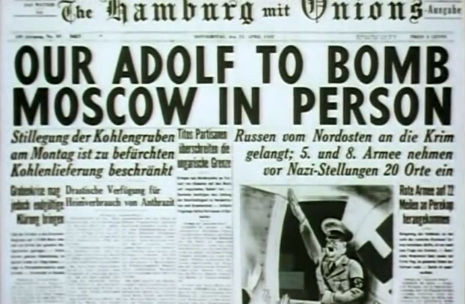
Depictions of Russia in American propaganda had some wild vacillation before the Cold War. The first Red Scare followed the Russian Revolution, and anti-communist sentiment really found purchase around 1919. Leftists in the US (many of them immigrants) became a force to be reckoned with, and bitter labor conflicts (plus some radical terrorism) seemed to suggest a Bolshevik revolution was imminent in the Americas. There’s the period however, during World War II, before Truman decided to wave his nuclear dick at Stalin, when Russians were still our Nazi-fighting Allies, and 1944’s Merrie Melodies production “Russian Rhapsody” is a fascinating artifact of that ambivalence America had towards the Soviets.

danger1

Of course, the cartoon doesn’t quite portray Russians as “dignified.” Rather than some cartoon-friendly version of Red Army soldiers fighting Nazis in the snow, they’re literal “gremlins”—tiny things that are only really capable of sabotaging a plane. (The title was originally “Gremlins from the Kremlin,” but Disney was developing an animated version of Roald Dahl’s The Gremlins at the time and Roy Disney pressured Warner Brothers to change the name.) Regardless, the gremlins are clearly the good guys, whipping out a mask of Stalin to frighten Der Führer.

danger2

In addition to being a really beautiful (and profoundly weird) piece of animation, “Russian Rhapsody” has some great dog whistles. The cartoon starts out with Hitler delivering a speech that’s a direct reference to a scene from Leni Riefenstahl’s Triumph of the Will. As an inside joke, some of the gibberish German Hitler spouts is actually the names of animators and studio staff. The gremlin faces are actually based on caricatures of Warner Brothers legends like Chuck Jones, Robert Clampett, Friz Freleng, and Leon Schlesinger. The berserk musical score was provided by the great cartoon composer Carl Stalling.

American Idiots

The idiot above committed one of the greatest geopolitical blunders in history. The Iraq invasion in 2003 was uncalled for and completely unnecessary. Saddam was no threat to the U.S. The invasion and subsequent war cost tens of thousands of lives and caused that area of the Middle East to headlong into chaos, extreme hardship and indescribable violence . The invasion is still felt in the region to this day.

Green Day released this song in 2005.

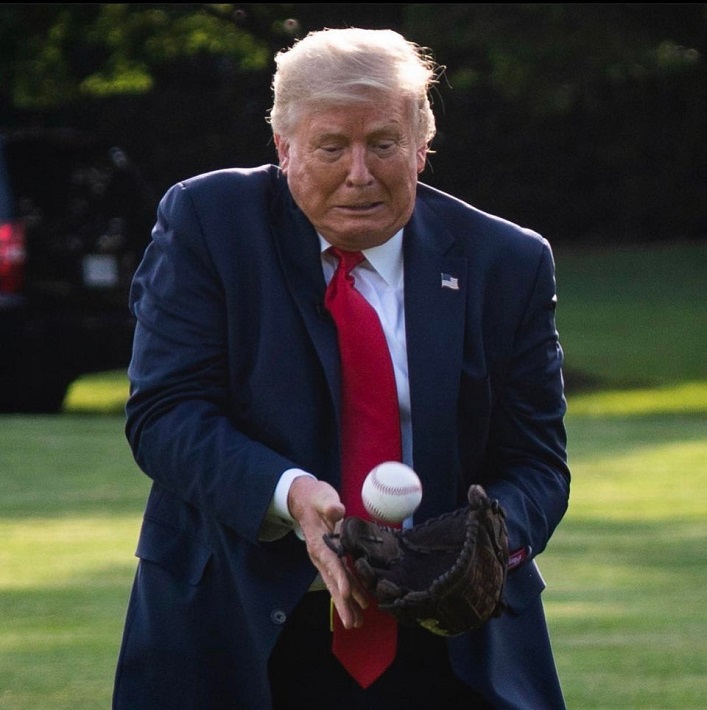
This idiot attempted a coup D’etat against the fairly elected president of the United States in 2021. He continues to say that he actually won the 2020 presidential election without any concrete evidence whatsoever. He also pulled the United States out of climate agreements and a nuclear deal with Iran. He imposed tariffs on friendly countries and harshly criticised and slandered NATO. He also divided the American nation like no other president. His lies have created a deep ideological rift within the very fabric of American culture and society. Let’s hope and pray that this idiot fades away and gets sequestered into a deep cesspool within American history.

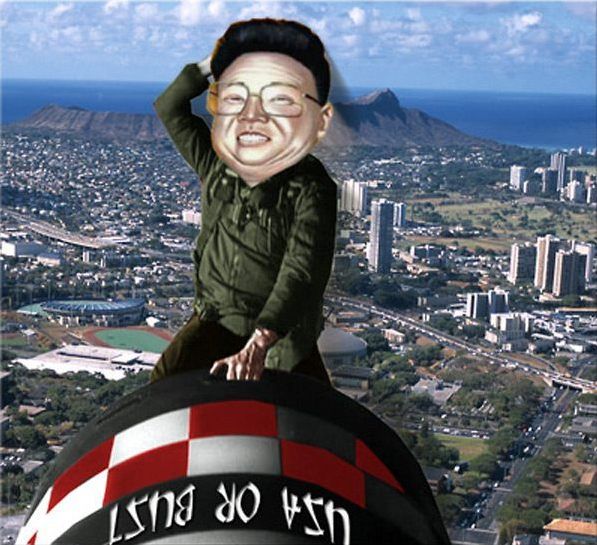
North Korea launches ballistic missile at North America

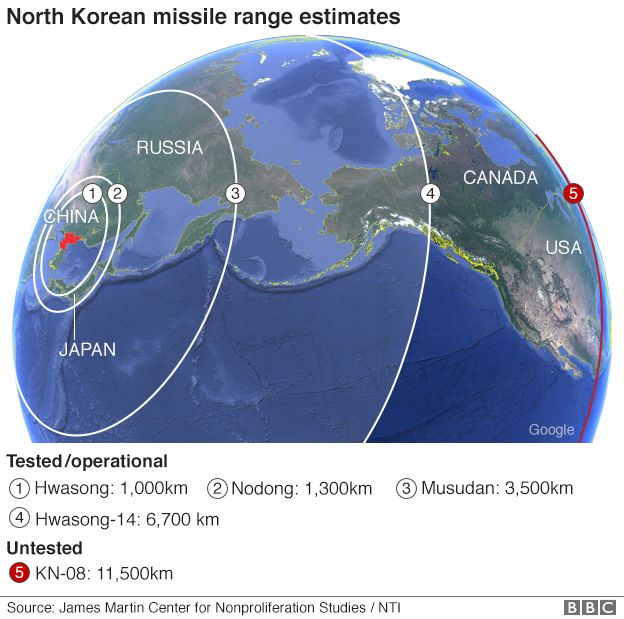
After doing some bad methamphetamine, Kim Jong Un and his brown nosing generals decide to hit the U.S. with their new long-range missile the KN-08. The intended target was either Los Angeles or San Francisco according to RAND Corporation analysts.

koreax

The missile guidance system fails, as predicted by Stephen Colbert, and lands a thousand miles to the north. The missile and its nuclear warhead land in southern Alberta, Canada. Barley missing blowing up a herd of 10,000 black Angus cattle.

angusx

It is time Canada gets on board with the U.S. anti-ballistic missile defense system.

North Korea: Soldiers smash bricks, bend iron rods in combat display

North Korean state media has aired footage of soldiers putting on a display of their combat prowess and ability to smash various objects with their bare hands.

The performance was staged at a defence exhibition in Pyongyang, and watched by leaders including Kim Jong-un.

Besides destroying bricks and tiles, soldiers were seen lying on beds of glass shards and iron nails, with concrete slabs sledgehammered to bits onto their bodies.

The finale showed men bending iron rods with their necks and breaking out of chains.

North Korea media said it was to show enemies that their soldiers had “iron fists to protect the peace of the country”.

Though it goes without saying, it’s probably best to avoid trying any of these stunts at home.

Amazing Photos from National Geographic

Baseball in Cuba

ng baseball cuba

Bixby Bridge, Big Sur, California

ng bixby bridge big sur ca

Booth Island, Antarctica

ng booth island antarctica

Café in Paris

ng cafe paris

Chicken farm in Pennsylvania

ng chicken farm penn

Fishing in Indonesia

ng indonesia

Beach in New Jersey

ng nj beach

Shelf cloud in Saskatchewan

ng shelf cloud sask

Skating in Sweden.  The saying goes that there was a hockey game being played here a while back, one guy got a break away and was never heard from again.

ng skater sweden

Waves, Iceland

ng waves iceland

New housing development outskirts of Mexico City.  This really reminds me of the old song Rise Against – Little Boxes.

ng mexico city outskirts


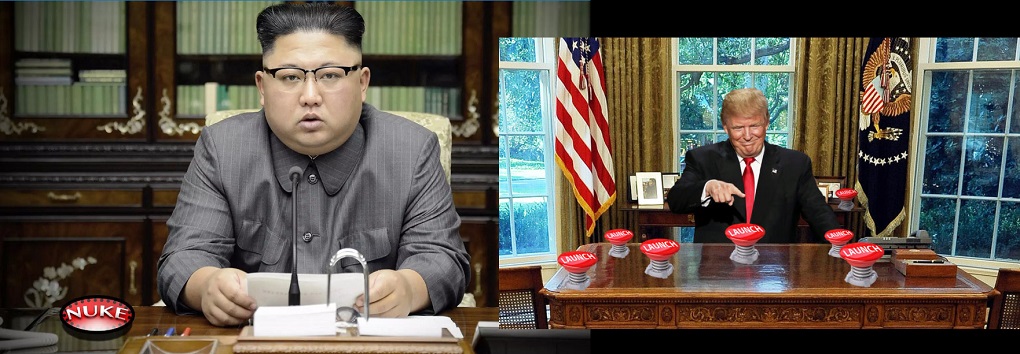
Trump once suggested all of Seoul’s 10 million residents move to avoid North Korean threat

Long before President Donald Trump called North Korean leader Kim Jong Un “Little Rocket Man” or met him in person, Trump had an idea to safeguard millions of South Koreans from the dictator’s wrath: Move them. Move them all.

According to an excerpt from Peter Bergen’s new book Trump and His Generals: The Cost of Chaos, posted by Time on Thursday morning, the president made a startling comment during a mid-April 2017 briefing on North Korea.

After seeing a satellite image showing that Seoul — South Korea’s capital, home to 10 million inhabitants — sits just 15 miles south of the country’s heavily militarized border with the North, Trump asked, “Why is Seoul so close to the North Korean border?”

He then made a rather unorthodox suggestion: “They have to move,” Trump said, referring to the city’s residents. “They have to move!” he repeated. Those in attendance at the Oval Office briefing were uncertain whether or not Trump was joking, Bergen writes.

Trump, Bergen notes, had already been briefed numerous times on the danger Seoul faces every day. The city is in direct firing range of thousands of pieces of North Korean artillery that are already lined up along the border between the two countries, also known as the demilitarized zone (DMZ). Around 70 percent of North Korea’s ground forces are within 90 miles of the DMZ, presumably ready to move south at a moment’s notice.
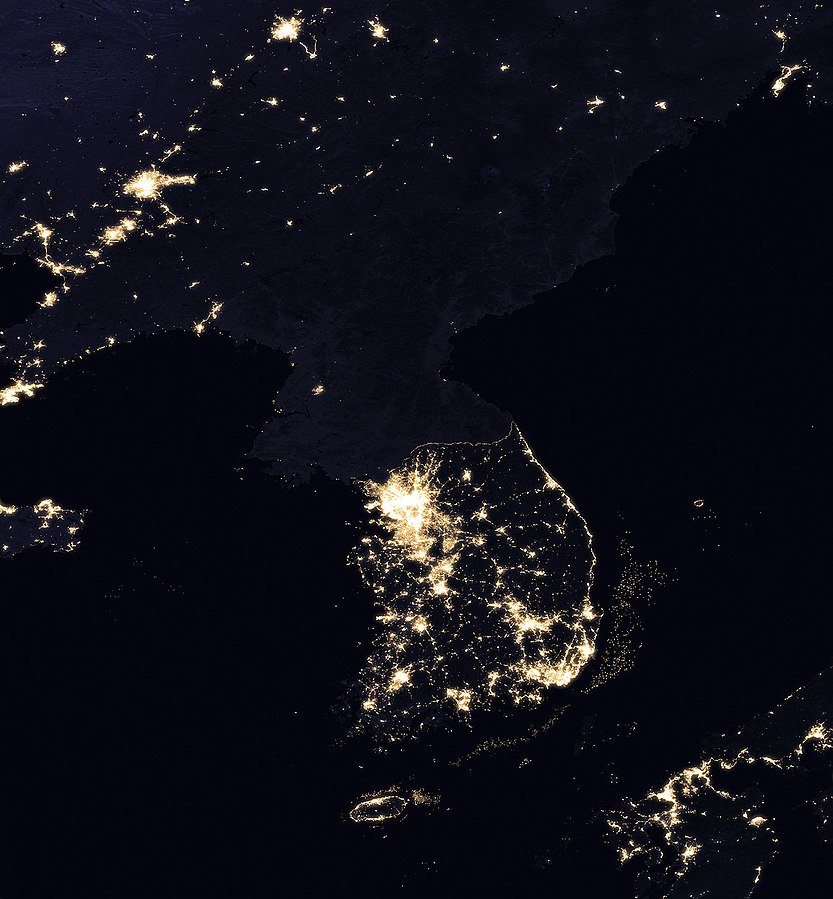
 

Seoul is the big bright spot middle to the left.  South Korea is immersed in lights throughout the country. North Korea has no lights.  The one small light on the left is the capital city Pyongyang.


Simulations of a large-scale artillery fight between the North and South produce pretty bleak results. One war game convened by the Atlantic magazine back in 2005 predicted that a North Korean attack would kill 100,000 people in Seoul in the first few days alone. Others put the estimate even higher. A war game mentioned by the National Interest predicted Seoul could “be hit by over half-a-million shells in under an hour.”

Evidently, Trump hadn’t realized just how vulnerable the city’s 10 million citizens were until he saw that satellite photo. So his alarm is understandable. And sure, perhaps he was kidding. But given Trump’s history of suggesting wildly infeasible or downright illegal policy ideas, it’s also entirely possible he was serious.

Pushing 10 million people — roughly the population of the entire country of Sweden — further south on the peninsula would be a nearly impossible exercise. It’s just too many people to move and would cost a fortune in both transportation and relocation, and of course North Korea would notice such a mass migration.

What’s more, North Korea has weapons that can reach all of South Korea, meaning Seoul’s dwellers would need to leave the country entirely to be safer. Now that North Korea has shown it has a missile that could reach the US — potentially carrying a nuclear bomb — it’s hard to fathom where those millions could go to avoid any danger.

While there’s no question Seoul remains a major target and could be decimated in a war with North Korea, the city’s location remains a sticky reality.

The comment is “uniquely Trumpy,” says Catholic University US foreign policy expert Justin Logan, “but it’s a reminder that the nuclear issue, which is all we talk about, is one part of a larger security problem on the [Korean] Peninsula. A nuclear deal wouldn’t deal with the geography or artillery.”

It’s a problem that even Steve Bannon, Trump’s former lead strategist, lamented in an August 2017 interview with the American Prospect. “Forget it,” he said. “Until somebody solves the part of the equation that shows me that ten million people in Seoul don’t die in the first 30 minutes from conventional weapons, I don’t know what you’re talking about, there’s no military solution here, they got us.”

Trump has changed his tune since the early days of his presidency. He no longer calls for drastic measures like a mass movement of civilians, instead preferring to engage Kim directly to convince him to dismantle his nuclear program. That effort has sputtered, and it appears that unless real progress is made soon, North Korea will abandon diplomacy in favor of further ramping up its weapons development.

“The dialogue touted by the US is, in essence, nothing but a foolish trick hatched to keep the DPRK bound to dialogue and use it in favor of the political situation and election in the US,” Ri Thae Song, vice minister in charge of US affairs, told the state-run Korean Central News Agency this week, using the initials for North Korea’s official name.

“The DPRK has heard more than enough dialogue rhetoric raised by the US whenever it is driven into a tight corner,” Ri continued. “So, no one will lend an ear to the US any longer.”

So if Trump wants to avoid a turbulent 2020, he’ll have to come up with a new idea — and fast.