The Lakes of Afghanistan

The name Afghanistan invokes images of a dry and arid country with mountainous terrain, endless desert, thorn bushes and mud houses. But at the center of this depressing landscape is a series of spectacular lakes with water so blue that it looks almost like ink.

Band-e Amir is a series of six incredibly deep blue lakes in the heart of the central Afghanistan. The lakes are situated in the foothills of the Hindu Kush, the second highest mountain range in the world, 80 kilometers from the ancient town of Bamiyan, where the Taliban destroyed the world’s tallest Buddha statues in 2001. Surrounded by pink towering limestone cliffs almost in complete lack of vegetation, the stunning lakes seems totally out of place.

The beautiful lakes were created by the carbon dioxide rich water that is drawn from the spring melt-water in the surrounding mountains and came out from faults and cracks in the rocky landscape. This outflow of water percolates slowly through the underlying limestone, dissolving its principal mineral, calcium carbonate. Over time, the water deposited layers of hardened mineral (travertine), which created dams that trap water in increasingly large basins. These dams are usually about 10m high and 3m wide. Water cascades from one lake to the other near travertine terraces serving as massive natural dams between the lakes.


The deep blue color of the lakes is due to the clarity of the air as well as the purity of the water. The high mineral content of the lakes also causes the intense and varying colors of the lake waters.

Of the six lakes, Band-e Panir is the smallest, with a diameter of approximately 100m (330ft). The largest is Band-e Zulfiqar, which measures some 6.5km (4mi) in length. The most accessible of the lakes is Band-e-Haibat, literally translated as Dam of Awe.

Band-e-Amir had been a destination for travelers since the 1950s. The lakes became a national park only in 2009, although their beauty was recognized much earlier, in 196o. But due to the instability of the government at that time, it wasn’t recognized as a national park. Covering approximately 230 square miles, Band-e Amir is Afghanistan’s first and only national park and it also features on UNESCO World heritage list.


Lake Chargoggagoggmanchauggagoggchaubunagungamaugg

No, the cat didn’t jump on the keyboard. It’s an actual name for a lake that is located in the town of Webster in Massachusetts, United States. Some people call it by its alternate name – Lake Chaubunagungamaug, while others prefer to call it simply Lake Webster, after the name of the town. The 45-letter name for this body of fresh water is often cited as the longest place name in the United States and one of the longest in the world. The name is so bizarre that even the authorities couldn’t spell it. Many road signs pointing to Lake Chargoggagoggmanchauggagoggchaubunagungamaugg have spelling mistakes in them.

The lake has been known, from early times, by various names such as ChabanaguncamogueChaubanagogum, and Chaubunagungamaug. Historians agree that all these names bear the same meaning – “Fishing Place at the Boundary”. For this great pond, divided by narrow channels into three larger bodies of water, was famed throughout the area and was the central gathering place for the Nipmuc Indians and their friends.

lake2


The name came to its current form once the English colonists arrived in the area. At that time an Englishman named Samuel Slater began operating a mill at the nearby village of Manchaug, a corrupted version of “Monuhchogoks”. The Indians started calling the lake Chargoggaggoggmanchoggagogg which meant “Englishmen at Manchaug.” Soon after, the name found its way into the map of 1795 that showed the town of Dudley. In 1831, both Dudley and Oxford, which adjoined the lake, filed maps listing the name of the pond as Chargoggagoggmanchoggagogg, but a survey of the lake done in 1830 lists the name as Chaubunagungamaugg, the ancient name.

Then later, someone decided to add the original Indian descriptive name Chaubunagungamaug to the newer name Chargoggagoggmanchoggagogg, and the entire designation becomes “Englishmen at Manchaug at the Fishing Place at the Boundary” or Chargoggagoggmanchauggagogg chaubunagungamaugg.

The late editor of The Webster Times, Laurence J. Daly, once humorously called the lake “You fish on your side, I fish on my side, and nobody fish in the middle.”

The Lake was formed by the retreat of glaciers during the last ice age and is replenished from underwater springs and streams. Visiting the area is a great way to spend some time with nature. There is a hiking trail called the Walkabout Trail in the area with some great views. Tourists often enjoy the swamps around the edges of the lake as good spots to look for wildlife. Swimming and boating are very popular activities on the lake.


lake3


lake5

The Surreal Landscape of Deadvlei, Namibia

The picture below is not that of a painting. It was taken inside the Namib-Naukluft Park in Namibia, in a strange and alien landscape called Dead Vlei. Although sounds similar to “dead valley”, Dead Vlei is not an actually valley. The term means “dead marsh” (from English dead, and Afrikaans vlei, a lake or marsh in a valley between the dunes).

Deadvlei is a white clay pan located near the more famous salt pan of Sossusvlei, scattered with hundreds of dead Acacia trees that once thrived when water from the Tsauchab River soaked this piece of land. Some 900 years ago the river diverted its course, leaving Dead Vlei literally high and dry. Dead Vlei has been claimed to be surrounded by the highest sand dunes in the world, the highest reaching 300-400 meters which rest on a sandstone terrace.


adeadvlei-17[6]


adeadvlei-8[2]


adeadvlei-9[5]


adeadvlei-16[2]

The Southern Namib desert is home to some of the tallest and most spectacular dunes of the world, ranging in color from pink to vivid orange. These dunes continue right to the edge of the Atlantic Ocean. The cold waters of the sea brushing against the dunes of the Namib desert is one of the most surreal sights.

While the sea coast extends for hundreds of miles, one of the best places to see these dunes is at Swakopmund. Known as Swakop in Namibia, it is the country’s biggest coastal town and a mecca for Namibians on holiday. The city’s German origins are quite pronounced in beautiful old German Colonial buildings throughout the city, making an even starker contrast for this town sitting at the edge of the Namib Desert.


namib


namib1


namibia-region-map


namib2


namib3

namib4


namib5

Mount Thor

thor


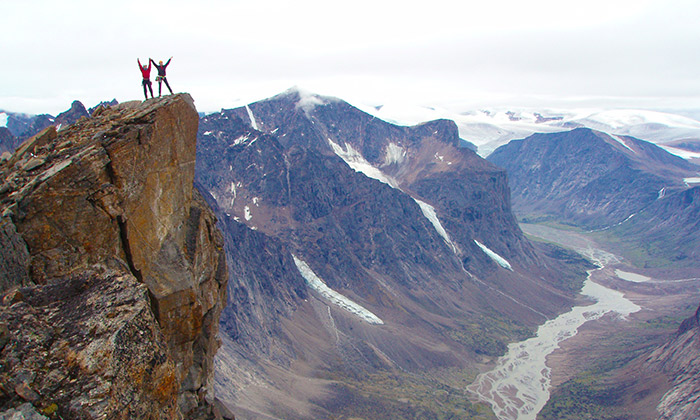
Mount Thor, officially gazetted as Thor Peak, is a mountain with an elevation of 1,675 metres (5,495 ft) located in Auyuittuq National Park, on Baffin Island, Nunavut, Canada. The mountain is located 46 km (29 mi) northeast of Pangnirtung and features Earth’s greatest vertical drop of 1,250 m (4,101 ft), with the cliff overhanging at an average angle of 15 degrees from vertical. Despite its remoteness, this feature makes the mountain a popular rock climbing site. Camping is allowed, with the only official site being at the entrance to the Akshayuk Valley near Overlord Peak.

I don’t know about climbing it, maybe a parachute jump from the top.

thor1

thor2


thor3


thor4

thor

USS Dwight D Eisenhower Aircraft Carrier arrives in Halifax

aircraft-carrier-visit-20170628

HALIFAX — The FA-18 Super Hornet revs its engines to maximum thrust, and the jet fighter’s nose wheel is locked into a steam-powered catapult on the aircraft carrier’s flight deck.

The thunderous noise reaches an overwhelming, bone-jarring intensity, and in less than three seconds, the jet is gone — hurled over the bow of the ship at 200 kilometres per hour.

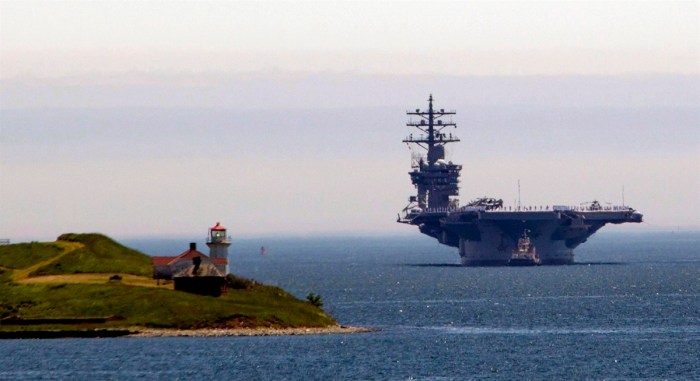
That was the scene aboard the USS Dwight D. Eisenhower on Tuesday as the U.S. navy played host to a select group of Canadian journalists, politicians and military officials in advance of the ship’s week-long visit to the port city, which started Wednesday.

carrier

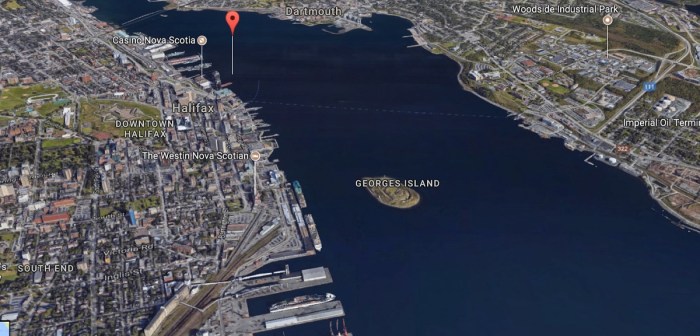
The ‘IKE’ approacing Georges Island in Halifax harbor.

carrier2

Unexploded Bombs Find Everyday Use in Laos’ Villages

The Vietnam War ended 40 years ago, but left a deadly legacy, especially in Laos. The US military dropped more than 2 million tons of bombs on the country during the war between 1964 and 1973, making Laos the most heavily bombed country in the world on a per capita basis. There were more than 580,000 bombing missions on Laos, equivalent to one bombing mission every eight minutes, 24 hours a day, for nine years. Not all of those bombs did what they were supposed to do. An estimated 30 percent of ordnance failed to explode, remaining live in the ground years after the war. They continue to detonate at unexpected places and at unexpected times, such as when children are playing.

bomb

Boats made out of fuel tanks that were ejected from U.S. bombers.

A major cause of casualties, however, is villagers attempting to open the big bombs to sell the metal and the explosives inside to scrap dealers. A high quality bomb casing weighing up to 2,000 pounds can fetch more than $100. Empty bomb casings that once contained deadly explosives are visible all across the country in new forms — from hollowed out canoes and containers, to props holding houses above flood.

When photographer Mark Watson took a bicycle trip across the country, he was surprised to see these lethal devices being reused in extraordinary ways. “Scrap from such widespread bombing has been utilized in people’s homes and villages,” Watson said, “for everything from house foundations to planter boxes to buckets, cups and cowbells.”

Gathering bomb scraps is a deadly occupation, but the people were forced into the trade by poverty.

“Lots of agricultural land is denied to people because of the presence of UXO (unexploded ordnance), and this is the main problem. It prolongs poverty because people can’t do what they need to do. If they know that UXO is present, they will not plow deeply enough to get a good quality crop,” said David Hayter, of Mines Advisory Group (MAG), an NGO working to detect and remove mines and bombs.

But progress is slow and their budget limited. Meanwhile, people continue to get killed and injured by accidental detonation of live ordnance. As of 2012, at least 29,000 people have died from such accidents.

bomb1

Children pose near unexploded bombs recovered from around the village.

bomb2

A house in village uses a bomb casing as a garden decoration.

bomb3

Bomb casing used as a planter.

bomb4

Casings used as support stilts for a house.

bomb5

Metal recovered from bomb casing shaped into cow bells.

bomb6

A bomb casing turned into a boat.

Cratered rice field.

Phonsavanh, Laos.


War of the Worlds in Slovakia

This structure in Slovakia has an uncanny resemblance to the giant creatures from War of the Worlds.

bufo2

By Kaushik

The Bridge of the Slovak National Uprising, commonly known as Most Slovenského národného povstania or Most SNP in short, is a road bridge over the Danube river in Bratislava, the capital city of Slovakia. The bridge was built in late 1960s and early ’70s at the height of Communist excess, in honor of the 1944 resistance movement against the Nazi forces. The very retro-futuristic SNP Bridge was inspired by the optimistic futurism of the 1960s, evident from the flying saucer-shaped structure at the top of the bridge’s only pylon. The UFO structure actually houses a restaurant reached using an elevator and offers a beautiful panoramic view of Bratislava.

bufo

The asymmetrical cable-stayed bridge is 431 meters long with a main span length of 303 m. Indeed, it’s the world’s longest cable-stayed bridge to have one pylon and one cable-stayed plane. The restaurant is located some 90 meters above the river below.

Although officially the bridge has been renamed to “New Bridge”, it’s still referred to by its old name of Most SNP or the UFO bridge.

bufo3

bufo5.

bufo6

bufo4

bufo1

The Mother of all Swimming Pools

Years ago I was a swimming pool attendant.  Great job, sun, sweet smell of chlorine, bikinis and I got to operate an underwater vacuum cleaner.  Ever since then I have had a thing for swimming pools.  And this one really caught my eye.

Already drawing the crowds in the South American resort of San Alfonso del Mar in Chile, this artificial lagoon and swimming pool is eight hectares in size and contains an incredible 250,000 cubic meters of water. Acknowledged by Guinness World Records as being the world’s largest swimming pool, the lagoon trounces all other record holders in the category, including the Orthlieb pool in Casablanca, Morocco, itself a huge 150 meters by 100 meters – the San Alfonso pool is 1km in length. The revolutionary clear water artificial lagoons, transparent to a depth of 35 meters and unprecedented in design and construction methods, are the brainchild of Crystal Lagoons founder, biochemist and Chilean businessman Fernando Fischmann. Equivalent in size to an incredible 6,000 standard domestic pools, details of its technology have yet to be disclosed.


Contrast that blue lagoon with this little rooftop pool in New York City.

The Pristine Beauty of Iceland

iceland

No neighbours to worry about

iceland1

iceland1a

iceland2

iceland3

The famous black sand

iceland4

Creative hydro towers

iceland5

iceland6

The Island country is on a major earthquake fault intersection

iceland14

iceland8

iceland9

iceland10

iceland11

iceland12

iceland13


Capital
and largest city
Reykjavík
64°08′N 21°56′W / 64.133°N 21.933°W / 64.133; -21.933
Official language
and national language
Icelandic
Ethnic groups (2014)
  • 93.01% Icelandic
  • 3.13% Polish
  • 3.84% other
Religion Evangelical Lutheranism
Demonym Icelander
Government Unitary parliamentary constitutional republic
 – President Ólafur Ragnar Grímsson
 – Prime Minister Sigmundur Davíð Gunnlaugsson
 – Speaker of Parliament Einar Kristinn Guðfinnsson
 – President of Supreme Court Markús Sigurbjörnsson
Legislature Althing
Formation
 – Settlement 9th century
 – Commonwealth 930–1262
 – Union with Norway 1262–1814
 – Danish monarchy 1380–1944
 – Constitution 5 January 1874
 – Kingdom 1 December 1918
 – Republic 17 June 1944
Area
 – Total 102,775 km2 (108th)
39,699 sq mi
 – Water (%) 2.7
Population
 – 1 January 2015 estimate 329,100 (182nd)
 – Density 3.2/km2 (233rd)
8.29/sq mi
GDP (PPP) 2015 estimate
 – Total $14.488 billion (142nd)
 – Per capita $44,575 (23rd)