Environment
The beauty of Japan’s lonely vending machines
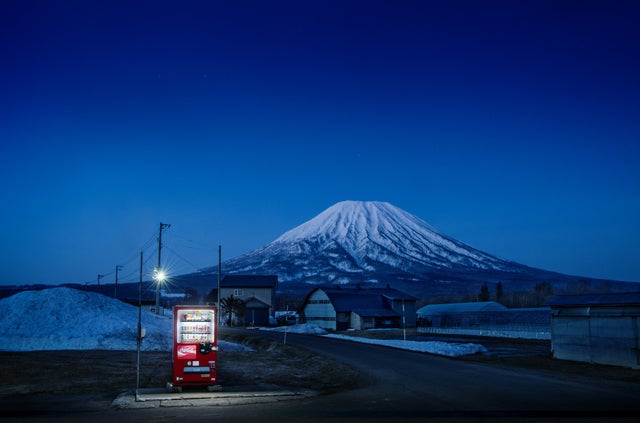
Vending machines are a mainstay of Japanese culture. There are over 5.5 million in the country — one for every 23 people, the highest ratio in the world.
They’re ubiquitous and almost always outdoors, making them immediately stand out to anyone visiting Japan. They sell nearly everything — including some rather peculiar items. Most are stocked with hot and cold drinks. Some have funny English names, like “Pocari Sweat” or “Calpis Water.”
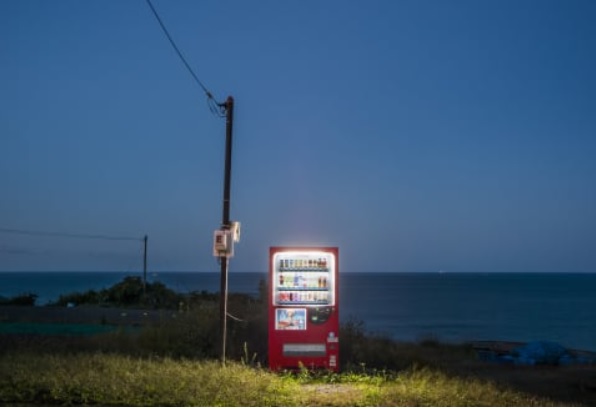
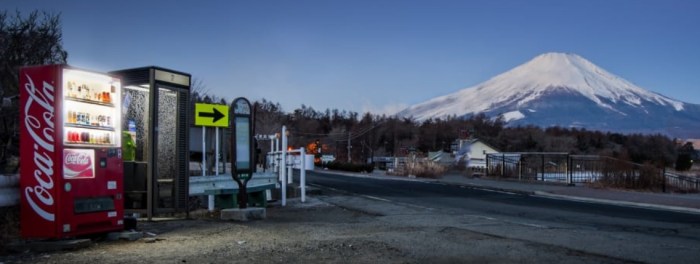
At night, rather than switching off, the machines come to life with vibrant colors and bright lights. Photographer Eiji Ohashi has spent years photographing them across Japan in the dead of the night, and now he has brought the images together in a book titled “Roadside Lights.”
For Ohashi, the machines once served as beacons: “I started this project nine years ago, when I noticed a shiny vending machine near my home as I was coming back from my night shift,” he said in an email interview. “At the time, I was living in a town in the north of Japan that would get hit by terrible blizzards during the winter months. I’d drive my car in (these) conditions and use the light of the vending machines to guide me.”
Japanese culture has an appreciation for process. Signs explaining how to queue, how to get a haircut or how to use the toilet are posted everywhere. Guesswork is loathed.
As such, vending machines offer certainty. Their mechanism only allows one possible course of action. Like smartphones, they provide a shield from personal interactions. They are also ingrained in tradition: In rural areas, at the side of the road, it’s still possible to find unmanned wooden stalls where farmers place fruit, vegetables and other goods which can be purchased by leaving the correct amount of cash.
Perhaps this could only work in a country with a crime rate among the lowest in the world. Vending machines in Japan are rarely robbed or vandalized. In fact, they are well taken care of, meaning that they always work — which further contributes to customer satisfaction.
–
–
–
–
For Ohashi, this is one of the reasons behind their popularity.
“You can put them anywhere and they won’t be stolen or harmed,” he said. “Furthermore, they work even when they’re buried in snow as they are maintained regularly — something which shows how methodical Japanese people are.”
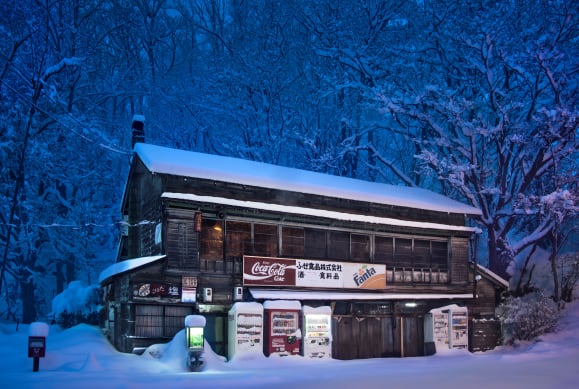
This particular vending machine sits next to a store that was first opened 100 years ago, juxtaposing the old and the new. Credit: Eiji Ohashi
Another reason for their popularity, Ohashi says, is that Japanese people love convenience: “I don’t think anyone in Japan would think that a vending machine could disturb a town’s scenery. We’re always thinking of ways to make life more convenient. I think that the vending machine is a symbol of that.”
Interestingly, the photographer claims that many of the machines look the same: “The shape of the machine and the products it sells are quite similar throughout Japan.”
Identical everywhere, the vending machines may bring some sense of comfort to those who travel to different parts of the country, Ohashi suggests: “I wanted to capture the standardized form of the vending machines. I thought you could see the differences between the regions through the scenery around them.”
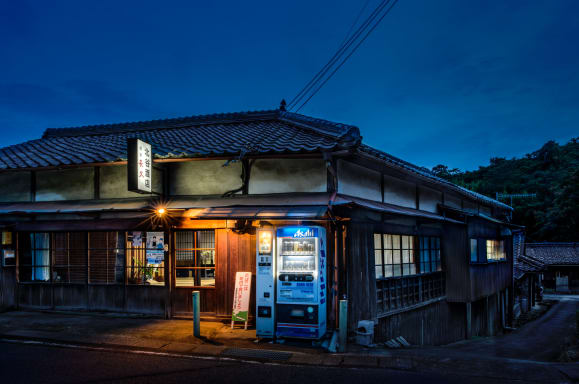
Eiji Ohashi
Ohashi’s photographs convey a sense of loneliness by showing the machines in remote locations at night. In a photo that Ohashi names as his favorite, the snowy Mount Yotei is pictured behind a vending machine that sits alone in a spot where there used to be two: “The profits were low and one was removed,” he said.
“I think in some ways I’m comparing modern-day people to vending machines. In our daily lives, we are also like vending machines that can withstand blizzards but ultimately go unrewarded.”
Environment Concern Song from 1971.
Woo ah, mercy mercy me
Ah things ain’t what they used to be, no no
Where did all the blue skies go?
Poison is the wind that blows from the north and south and east
Woo mercy, mercy me, mercy father
Ah things ain’t what they used to be, no no
Oil wasted on the ocean and upon our seas, fish full of mercury
Ah oh mercy, mercy me
Ah things ain’t what they used to be, no no
Radiation under ground and in the sky
Animals and birds who live nearby are dying
Oh mercy, mercy me
Ah things ain’t what they used to be
What about this overcrowded land
How much more abuse from man can she stand?
Oh, na na…
My sweet Lord… No
My Lord… My sweet Lord
Lyrics by Marvin Gaye. Released 1971.
Delhi smog: Foul air came from India’s farming revolution

If there was a gold medal for bad air, Delhi would be hard to beat.
Yet, despite high levels of air pollution, more than 30,000 people, many wearing masks, took part in the capital’s half marathon on Sunday. Organisers said they used devices on the route to transmit radio frequency waves to clear the air, but scientists were sceptical of these claims.
Delhi’s marathon, ironically, marked the beginning of the city’s smog season. But it has been creeping up on the capital for a few weeks now.
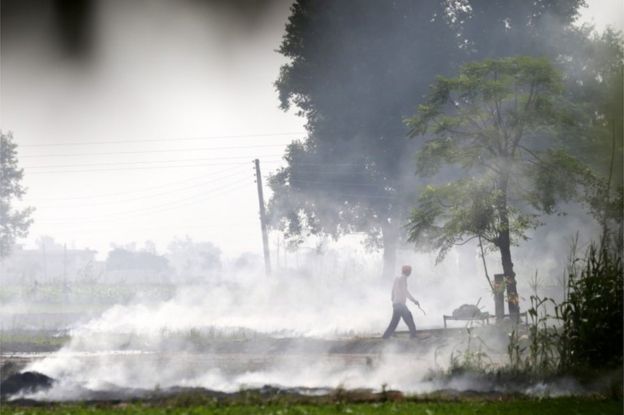
A fortnight ago, Nagendar Sharma was returning to Delhi from the hill station city of Shimla when he spotted smoke rising from the farms alongside the highway.
It looked like someone had picked up a box of matches and set the earth on fire. Lack of winds meant that the acrid smoke hung in the air.
Mr Sharma, the Delhi-based media adviser to the capital’s chief minister, was driving through Haryana, barely 70km (43 miles) from the capital.
When he stopped his vehicle to investigate he found that the farmers had begun to burn the stubble left over from harvesting rice. They said they had to remove the residue in three weeks to prepare the farms to sow wheat. They were burning the crop stubble as they could not afford the expensive machines that would remove them.
“It’s the same old story. Every year,” Mr Sharma said.
Every year, around this time, residents of Delhi wake up to a blanket of thick, grey smog. Pollution levels reach several times the World Health Organisation’s recommended limit. Last year, doctors declared a state of “medical emergency”; and hospitals were clogged with wheezing men, women and children.
Levels of tiny particulate matter (known as PM 2.5) that enter deep into the lungs reached as high as 700 micrograms per cubic metre in some areas. The WHO recommends that the PM2.5 levels should not be more than 25 micrograms per cubic metre on average in 24 hours.
Last winter Air Quality Index (AQI) recordings consistently hit the maximum of 999 – exposure to such toxic air is akin to smoking more than two packs of cigarettes a day. The city becomes what many call a “gas chamber”.
“This marks the beginning of the Great Smog that goes on to last for about three months, even though the crop residue burning lasts a few weeks. It is during this period that air quality indices hit their maximum possible limits, when visibility drops drastically, when regions even far away – such as Delhi – smell of burning gas,” says Siddharth Singh, energy expert and author of a book soon to be published, The Great Smog of India.
And although there are other reasons – construction dust, factory and vehicular emissions – it’s mainly crop residue that has emerged as one of the main triggers for the smog.
More than two million farmers burn 23 million tonnes of crop residue on some 80,000 sq km of farmland in northern India every winter.
BBC
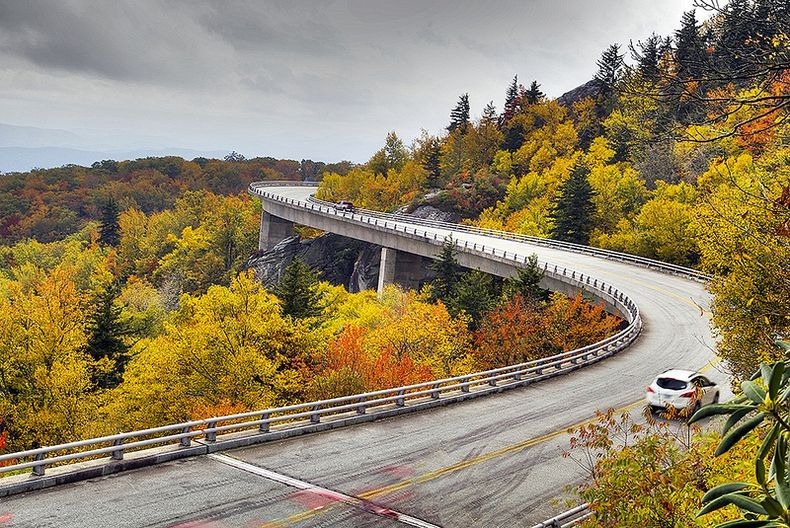
Linn Cove Viaduct
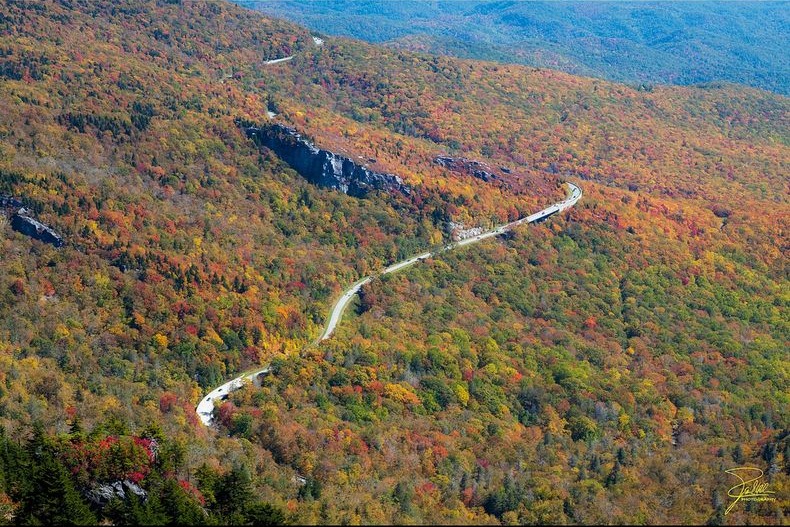
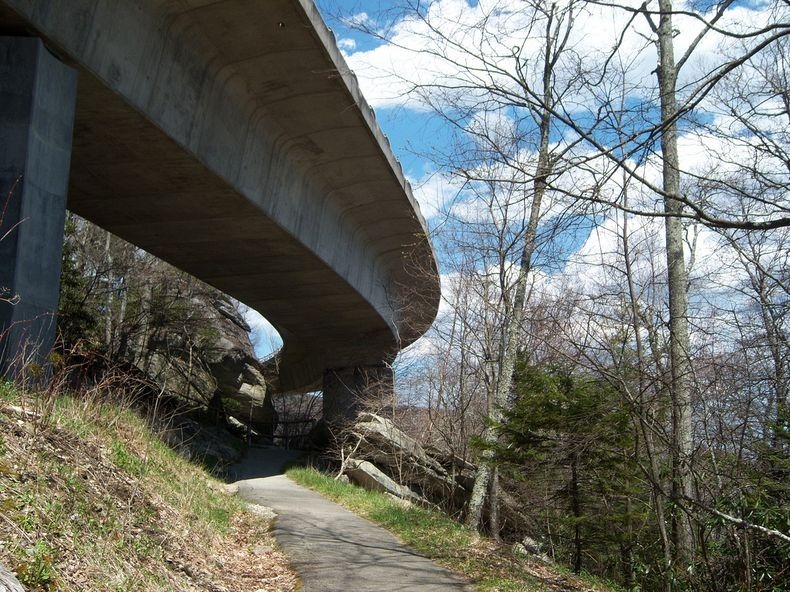
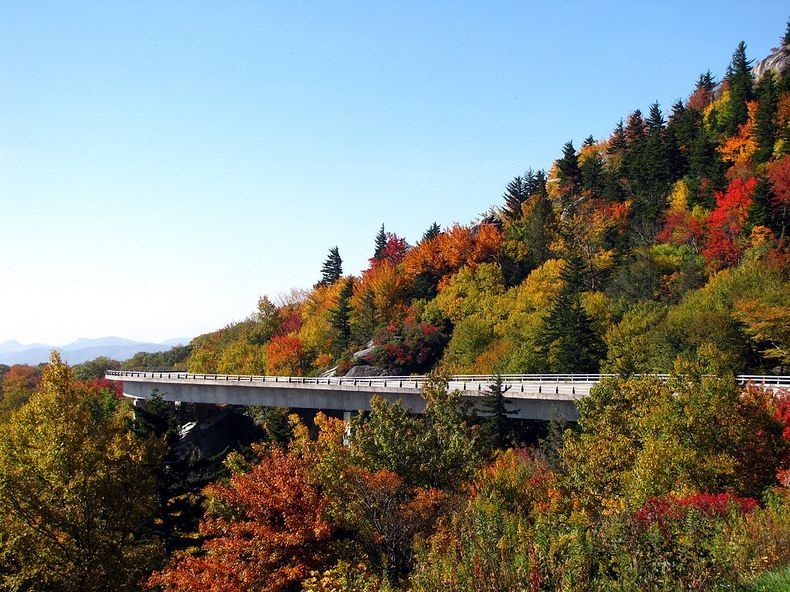
The viaduct was built to minimize the damage that a traditional cut-and-fill road would have caused to Grandfather Mountain. Supported by seven massive pillars, the viaduct almost floats in the air without disturbing the land below. To eliminate damage to the environment, no access roads were built for transporting heavy equipment on the ground. The bridge’s segments were precast at an indoor facility and transported to the bridge site, where each section was lowered into place by a custom crane placed on either edge of the existing structure. The only construction that occurred at ground level was the drilling of foundations for the seven permanent piers on which the Viaduct rests. Exposed rock was covered to prevent staining from concrete, epoxy, or grout. The only trees cut were those directly beneath the superstructure.
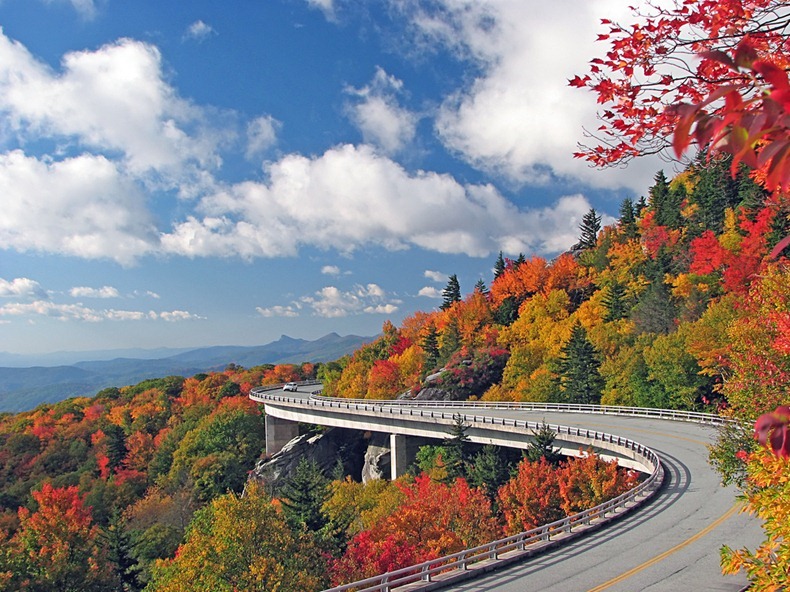
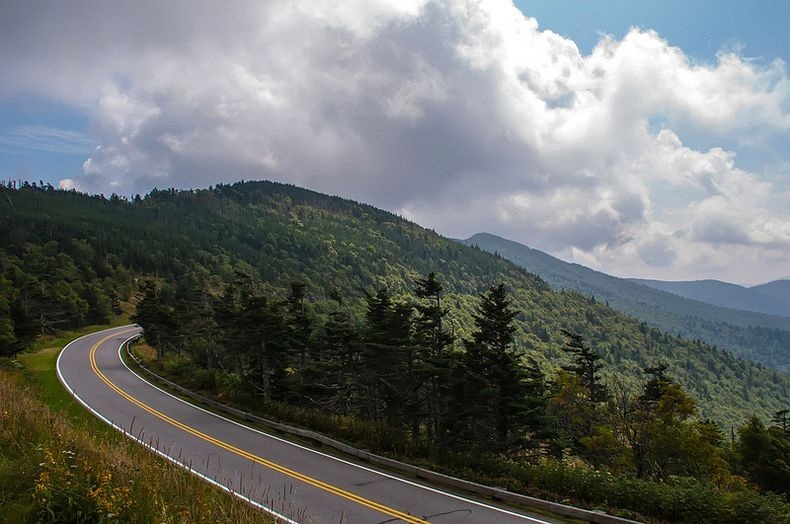
When engineers began constructing the Blue Ridge Parkway in 1935, they knew that building the Parkway that fit the terrain, particularly the Black Rock area of Grandfather Mountain, would be tricky. The whole area consisted of one large mass of boulders, cracked and loose, so conventional road-building practices would not have worked.
A key factor in this controversy was environmental concern. Engineers were faced with a serious question: How to build a road at an elevation of 4,100 feet without damaging one of the world’s oldest mountains? Studies and engineering schemes were done through the early 1970s in search of a plan for routing the Parkway through that area. Finally, the National Park Service landscape architects and Federal Highway Administration engineers agreed the road should be elevated or bridged, where possible, to eliminate massive cuts and fills.
The Linn Cove Viaduct is only the second bridge in history to be built from the end of a span, called a cantilever, which is anchored only at one end. In this case, the cantilever was the road itself. To protect the fragile terrain, all construction was done from the top down and no machinery was allowed more than 50 feet from the base of the piers.
Segments were trucked from a nearby storage area over the completed portion of the bridge to the end of the cantilever. There a stiff-leg crane lifted the segment, swung it out and lowered it to within six inches of the cantilever end. Epoxy was then applied to the joint face and the segment was moved to the cantilever end where the temporary thread bars were installed and stressed.
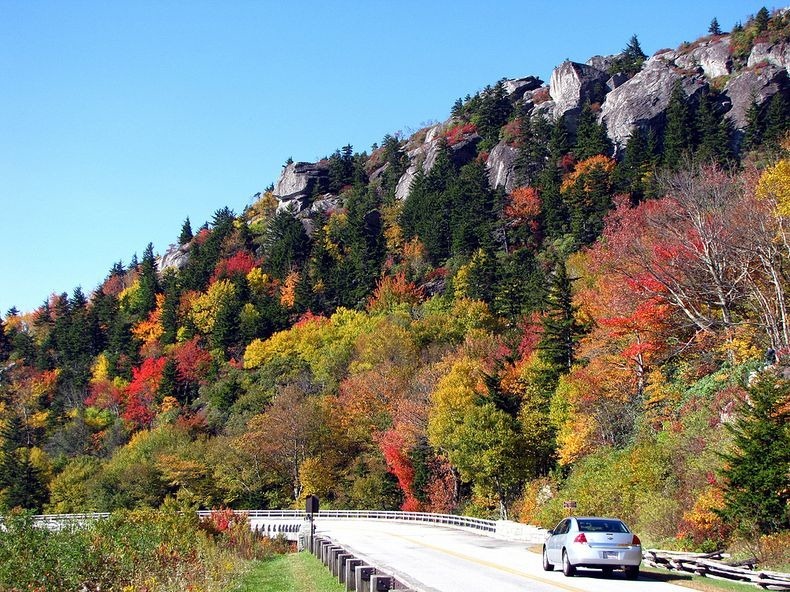
The contractors developed a special heating system to heat joints for the work to continue through the winter. The concrete used in making the Viaduct was tinted with an iron oxide pigment developed specifically for this project so that the color of the finished bridge would match the color of the one-billion-year-old boulders and cliffs that surround it.
The bridge was completed in November 1987 at a final cost of $10 million. Since then, the bridge has received eleven design awards.




Greta Thunberg’s Speech At The UN Climate Summit Is Going Viral Along With Her Death Stare Directed At Trump
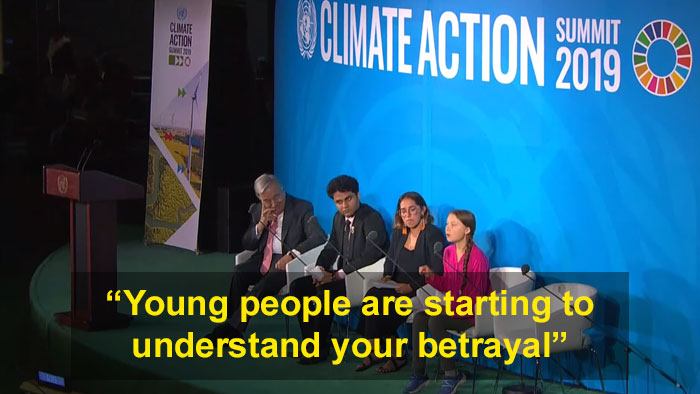
Climate activist Greta Thunberg is making headlines again. On Monday, she accused world leaders of failing her generation and did so with a charismatic speech at the United Nations Climate Action Summit.
Thunberg emphasized that the science behind climate change has been “crystal clear” for more than 30 years, and yet the most powerful people on Earth had failed to take meaningful action. “You are still not mature enough to tell it like it is,” she said. “You are failing us. But the young people are starting to understand your betrayal.”


Donald Trump appears to have noticed it, tweeting a video of an emotional Thunberg with a sarcastic comment: “She seems like a very happy young girl looking forward to a bright and wonderful future. So nice to see!”


Thunberg, who started the global School Strike movement with her weekly Friday school strikes in Sweden, has been in New York for the climate summit and briefly crossed paths with Donald Trump at the as he arrived to a meeting on religious freedom.
When Thunberg came to New York, she said she had little hope she would be able to convince the president to take action on the climate emergency: “I say ‘listen to the science’ and he obviously does not do that. If no-one has been able to convince him about the climate crisis and the urgency, why would I be able to?” the activist said.









Fire Glass
Fire glass is tempered glass manufactured as a medium to retain and direct heat in fireplaces and gas fire pits. Fire glass does not burn, but retains heat and refracts light as a result of burning gas. Fire glass, like artificial logs and stones, is additionally used to obscure the gas plumbing inherent in gas fireplaces or stoves.

A vast assortment of fire glass shapes, sizes and colors are available to match a wide variety of contemporary décors. During the manufacturing process, sheets of glass are tempered to withstand heat. This process prevents the glass from “popping” when used in a fire and negates the threat of sparking seen in traditional wood-burning fireplaces or fire features. These tempered sheets of glass are then shattered. and professionally packaged. Although a variety of fire glass types exist, variations are purely aesthetic, and all varieties serve the same purpose within a fire feature.

Fire glass leaves no trace of ash, soot, grease or discernible odor when used as a medium. Flames produced using natural gas do not produce any smoke, produce less toxic gases and leave no trace of residual pollutants such as tar within the home. The combination is considered an eco-friendly burning solution. Additionally, fire glass is often made from recycled glass, making for a “green” fire media option.

Industrial Landscapes
Edward Burtynsky is a Canadian photographer and artist who has achieved international recognition for his large-format photographs of industrial landscapes. Burtynsky’s most famous photographs are sweeping views of landscapes altered by industry: mine tailings, quarries, scrap piles. The grand, awe-inspiring beauty of his images is often in tension with the compromised environments they depict. He has made several excursions to China to photograph that country’s industrial emergence, and construction of one of the world’s largest engineering projects, the Three Gorges Dam. His work is housed in more than fifteen major museums including the Guggenheim Museum, the National Gallery of Canada, and the Bibliothèque Nationale, Paris.
Freeways in Los Angeles, California


Houston, Texas

Scrap Auto Engines, Hamilton, Ontario, Canada

SOCAR Oil Fields Baku, Azerbaijan

Oil fields, Belridge, California

Oxford Tire Pile, Westley, California, USA


Silver Lake Operations, Lake Lefroy, Western Australia

C.N. Track, Skihist Provincial Park, British Columbia

Active Section, E.L. Smith Quarry, Barre, Vermont

Flood Forecast for Manitoba 2019
Below normal temperatures in mid-April might not appeal to Manitobans, but the slower warming trend has its benefits in fighting floods.
Thanks to the cold, the melting process has been slowed. As a result, the anticipated flood level has been lowered to something on par with what the province experienced in 2011 — or even slightly less — and well below the 2009 level predicted earlier.
The revised forecast was released Tuesday afternoon.
Prior to that, the province was expecting the Red River to crest around 32.5 feet in the Red River Valley, south of Winnipeg. Now it should be closer to 30 feet.
Inside Winnipeg — which is protected by the 47-kilometre floodway that diverts part of the Red River’s flow around the east side of the city — the crest was expected to reach 20.5 feet at the James Avenue pumping station.
Now, officials are expecting it to be closer to 19.5 feet.
The crest of the Red River is expected at the border, in Emerson, between April 16 and 19, and in Winnipeg between April 20 and 23.
The province expects to begin using the floodway between April 12 and 14, a news release said.
South of the city, where there is no floodway, a warning has been issued all the way to the international border.
Provincial crews have been deployed in a number of communities to prepare for potential ring dike closures. A partial ring dike closure is currently underway at Emerson, but the community remains accessible by road.
As for other river systems prone to flooding, the province says the Assiniboine, Qu’Appelle and Souris river basins have peaked in all but a couple of locations.
Images from the 2011 flood
The towns shown are St. Jean Baptiste and Morris. Both located south of Winnipeg.


 The MarkoZen Blog