
Why one family would need a residence this big boggles the mind. But when you have 2 billion dollars in the bank, creative spending is needed. To build something like this in a city that has hundreds of thousands of homeless people doesn’t seem appropriate. The building has approximately the same floor space as a 30 story office building.
Antilia is the name of a twenty-seven floor personal home in South Mumbai belonging to India’s richest man, businessman Mukesh Ambani, the billionaire Chairman of Reliance Industries. There will be 600 full-time staff to maintain the residence, which is considered the most expensive home in the world with a price over US$ 1 billion dollars. Its also been described as the “Taj Mahal of 21st century India”.
The home will house Ambani, wife Nita, their three children and Ambani’s mother.

| Location | Mumbai, Maharashtra, India |
|---|---|
| Status | Completed |
| Constructed | 2007-2010 |
| Use | Residential |
| Height | |
| Roof | 173 metres (568 ft) |
| Technical details | |
| Floor count | 27 (equivalent to 60 floors tower) |
| Cost | US$50-70 million est. yearly maintenance |
| Companies involved | |
| Architect(s) | Perkins & Will |


The structure was designed by U.S. architects using principles of Vaastu, Indian traditional geomancy akin to Chinese feng shui, to maximize “positive energy.” No two floor plans are alike, and the materials used in each level vary widely.
The home will include:


Some Indians are proud of the “ostentatious house,” while others see it as “shameful in a nation where many children go hungry.” Dipankar Gupta, a sociologist at New Delhi’s Jawaharlal Nehru University, opined that “such wealth can be inconceivable” not only in Mumbai, “home to some of Asia’s worst slums,” but also in a nation with 42 percent of the world’s underweight children younger than five.
Blade Runner is a 1982 American tech noir science fiction film directed by Ridley Scott, and starring Harrison Ford, Rutger Hauer, Sean Young, and Edward James Olmos. The screenplay, written by Hampton Fancher and David Peoples, is a modified film adaptation of the 1968 novel Do Androids Dream of Electric Sheep? by Philip K. Dick.
2019 is the year where the events of Blade Runner take place. The specific month, November, is given after the opening titles and crawl of the movie have played. The city of Los Angeles of 2019 is depicted as an technologically advanced society.


Beijing is the capital of the People’s Republic of China and one of the most populous cities in the world, with a total population of 21,150,000 as of 2013. The city proper is the 3rd most populous in the world. It has giant screens on the side of buildings.


Tokyo

Blade Runner 2019 is here!
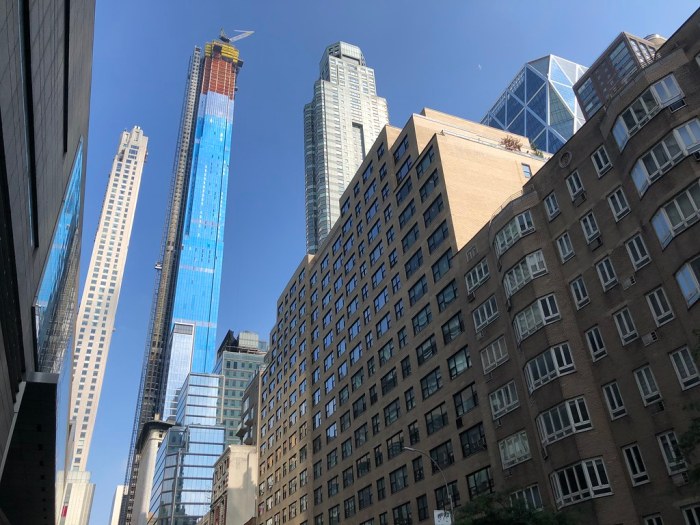
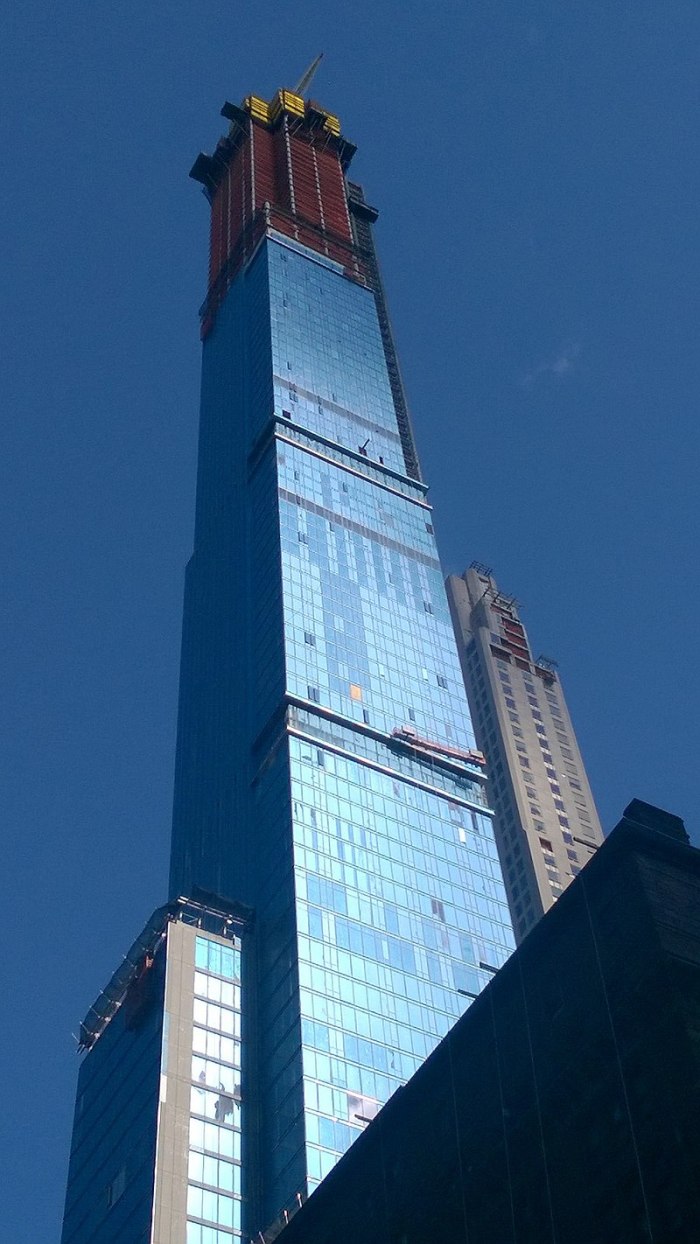
Central Park Tower (also known as the Nordstrom Tower) will be a supertall mixed-use commercial/residential project being developed by the Extell Development Company and Shanghai Municipal Investment Group in Midtown Manhattan, New York City, in the U.S. state of New York. The building will rise 1,550 feet (472 m) to the roof. Upon completion, Central Park Tower will become the second-tallest skyscraper in the United States and the Western Hemisphere and the tallest by roof height of a building outside of Asia, surpassing the Willis Tower by around 95 feet.



Rainier Tower is a 31-story, 156.67 m (514.0 ft) skyscraper in the Metropolitan Tract of Seattle, Washington, at 1301 Fifth Avenue. It was designed by Minoru Yamasaki, who designed the World Trade Center in New York City as well as the IBM Building, which is on the corner across the street from Rainier Tower to the southeast. Its construction was completed in 1977.
The skyscraper has an unusual appearance, being built atop an 11-storey, 37 m (121 ft) concrete pedestal base that tapers towards ground level, like an inverted pyramid.

The tower occupies only 25% of its site at ground level, with a normal-sized tower balanced on an extremely narrow pedestal.


The total external length of the building, including the Lady Chapel (dedicated to the Blessed Virgin), is 207 yards (189 m) making it the longest cathedral in the world; its internal length is 160 yards (150 m). With a height of 331 feet (101 m) it is also one of the world’s tallest non-spired church buildings and the third-tallest structure in the city of Liverpool.


It is the tallest church in the world, and the 4th tallest structure built before the 20th century, with a steeple measuring 161.5 metres (530 ft) and containing 768 steps.


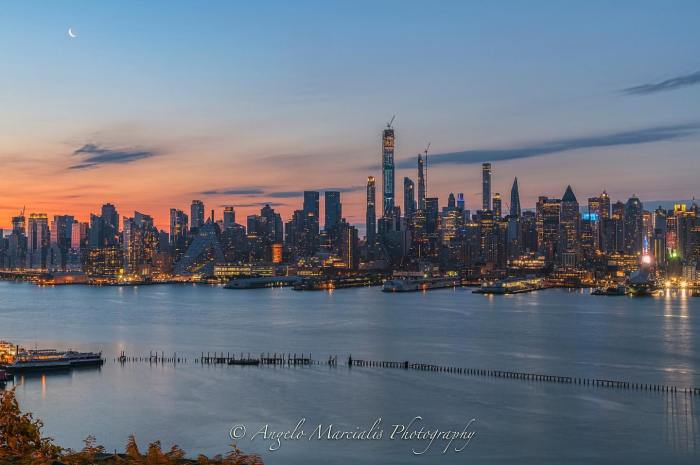
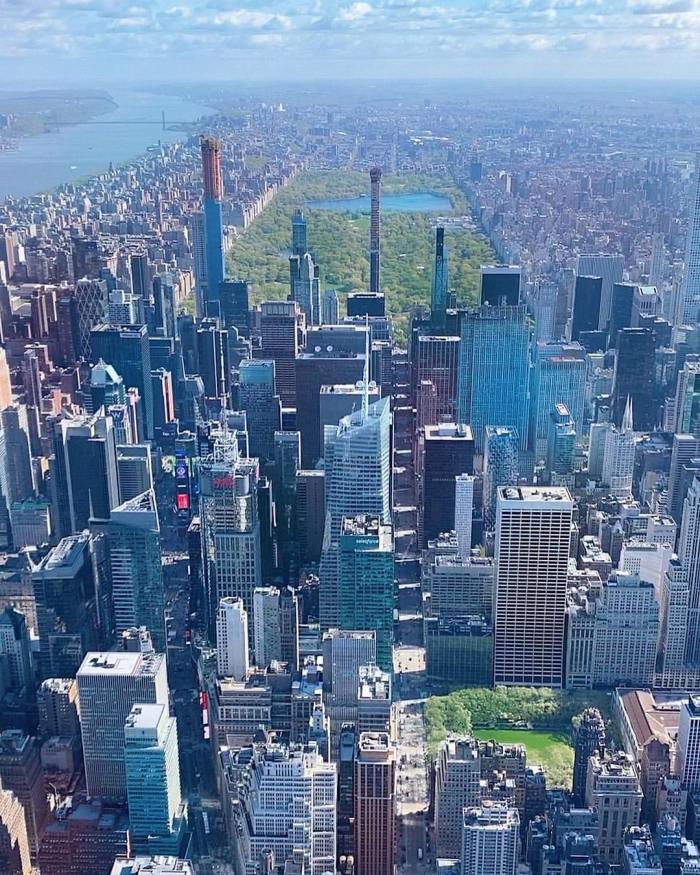
432 Park Avenue is a residential skyscraper in New York City that overlooks Central Park. Originally proposed to be 1,300 feet (396.2 meters) in 2011, the structure topped out at 1,396 ft (425.5 m). It was developed by CIM Group and features 125 condominium apartments. Construction began in 2012 and was completed on December 23, 2015.

The building consists of 89 floors. Considering the height of the building, the low floor count is due to the 12 foot high ceilings. The tower’s condominium units range from a 351-square-foot studio to a six-bedroom, seven-bath penthouse with a library, already under agreement for $95 million.

Talk about living in luxury. What the almighty money can’t buy.


| Status | Built |
|---|---|
| Type | Hotel, Residential |
| Location | 432 Park Avenue New York City, United States |
| Construction started | foundation phase: Sept 2011 construction phase: May 2012 |
| Opening | Topped out: Early 2015 Completion: mid-2015 Occupancy: late 2015 or early 2016 |
| Height | |
| Roof | 1,398 feet (426.1 m) |

Stretching for over three miles along the white sandy beach on Germany’s Baltic Sea island of Ruegen, lies the world’s biggest hotel with 10,000 bedrooms all facing the sea. But for 70 years since it was built, no holiday maker has ever stayed there. This is hotel Prora, a massive building complex built between 1936 and 1939 by the Nazis as part of their “Strength through Joy” (“Kraft durch Freude,” KdF) programme. The aim was to provide leisure activities for German workers and spread Nazi propaganda. Locals call Prora the Colossus because of its monumental structure.
Prora lies on an extensive bay between the Sassnitz and Binz regions, known as the Prorer Wiek, on the narrow heath (the Prora) which separates the lagoon of the Großer Jasmunder Bodden from the Baltic Sea. The complex consist of eight identical buildings that extend over a length of 4.5 kilometres and are roughly 150 metres from the beach. A workforce of 9,000 took three years to build it, starting in 1936, and the Nazis had long-term plans for four identical resorts, all with cinema, festival halls, swimming pools and a jetty where Strength Through Joy cruise ships would dock.
![prora-16[6]](https://markosun.files.wordpress.com/2013/01/prora-166.jpg)
Dr. Robert Ley envisaged Prora as a parallel to Butlins – British “holiday camps” designed to provide affordable holidays for the average worker. Prora was designed to house 20,000 holidaymakers, under the ideal that every worker deserved a holiday at the beach. Designed by Clemens Klotz (1886–1969), all rooms were planned to overlook the sea, while corridors and sanitation are located on the land side. Each room of 5 by 2.5 metres (16’5″ x 8’3″) was to have two beds, an armoire (wardrobe) and a sink. There were communal toilets and showers and ballrooms on each floor.
Hitler’s plans for Prora were much more ambitious. He wanted a gigantic sea resort, the “most mighty and large one to ever have existed”, holding 20,000 beds. In the middle, a massive building was to be erected. At the same time, Hitler wanted it to be convertible into a military hospital in case of war. Hitler insisted that the plans of a massive indoor arena by architect Erich Putlitz be included. Putlitz’s Festival Hall was intended to be able to accommodate all 20,000 guests at the same time. His plans included two wave-swimming pools and a theatre. A large dock for passenger ships was also planned.
During the few years that Prora was under construction, all major construction companies of the Reich and nearly 9,000 workers were involved in this project. With the onset of World War II in 1939, building on Prora stopped and the construction workers transferred to the V-Weapons plant at Peenemünde. The eight housing blocks, the theatre and cinema stayed as empty shells, and the swimming pools and festival hall never materialised. During the Allied bombing campaign, many people from Hamburg took refuge in one of the housing blocks, and later refugees from the east of Germany were housed there. By the end of the war, these buildings housed female auxiliary personnel for the Luftwaffe.

In 1945 the Soviet Army took control of the region and established a military base at Prora. The Soviet Army’s 2nd Artillery Brigade occupied block 5 of Prora from 1945 to 1955. The Soviet military then stripped all usable materials from the building. In the late 1940s two of the housing blocks – one on the North and one on the South – were demolished and the remains mostly removed.
In the late 1950s the East German military rebuilt several of the buildings. Since the buildings had been stripped to the bare brick in the late 1940s, most of the exterior and interior finish that can be seen today was done under East German control. After the formation of the German Democratic Republic’s (GDR’s) National Peoples Army in 1956, the buildings became a restricted military area housing several East German Army units. The most prominent were the elite 40. Fallschirmjägerbataillon Willi Sänger (40th Parachute Battalion “Willi Sänger”) which was housed in block 5 from 1960 to 1982. Block 4 on the north side was used for urban combat training by the Parachute Battalion and others. Large sections remain as ruins to this day. Also housed in the building from 1982 to 1990 was the East German Army Construction Battalion “Mukran”, where conscientious objectors served as noncombatant Construction Soldiers (Bausoldaten) to meet their military service obligation. A part of the building also served as the East German Army’s “Walter Ulbricht” convalescent home.
![prora-3[2]](https://markosun.files.wordpress.com/2013/01/prora-32.jpg)
![prora-13[5]](https://markosun.files.wordpress.com/2013/01/prora-135.jpg)
In 2013, a German company, Metropole Marketing, bought the rights to refurbish Prora and market the units as summer homes. By that year, refurbished apartments in the so-called Colossus were on sale for as much as 700,000 euros ($900,000) apiece. The completion date was estimated as 2016. In 2016, the first of the new apartments opened in Block 1. The Prora Solitaire hotel in Block 2 opened in time for summer 2016, and some reconstructed flats were for sale in that Block by mid 2017. At that time, four of the buildings were in the process of redevelopment, a fifth was used as a youth hostel while the remaining three remained in ruins.
A November 2017 update indicated that most of the units (flats) in Block 1 had been sold, having been marketed as summer homes for those who live in Hamburg and Berlin. Many were listed by owners as short term rentals on sites such as Airbnb and HomeAway.
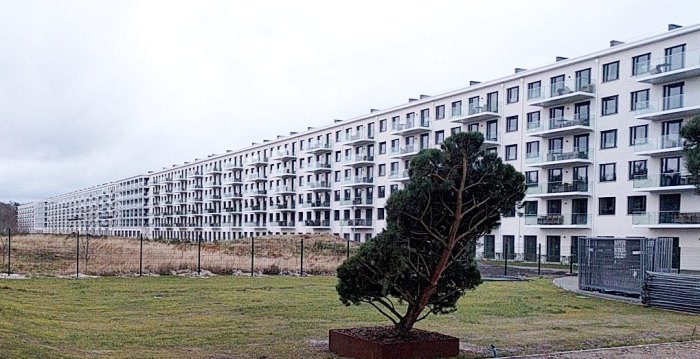
Renovated part in 2016


There are 48 floors, 15 passenger elevators, 3 freight elevators, and 3,678 windows.
Because of the shape of the building, the majority of the windows can pivot 360 degrees so they can be washed from the inside.

The decorative aluminum spire at the top is 212-feet tall – roughly 20 stories.

The conference room (with 360 degree views of the city) is located on the 48th floor and can be booked for $400-600 dollars…an hour.

The building is covered in crushed white quartz, giving it its pure white color.
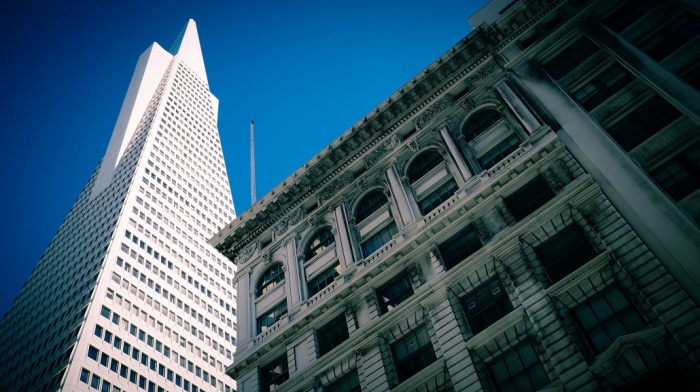
It takes 18,000 work hours to get “brightened” every 10 years, last occurring in 2007.

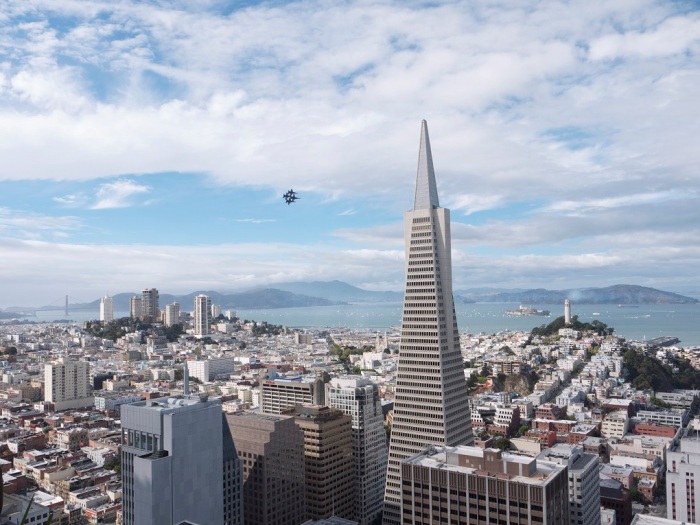
The building is a tall, four-sided pyramid with two “wings” to accommodate an elevator shaft on the east and a stairwell and a smoke tower on the west.

 The MarkoZen Blog