
Japan

Thailand

Greece

Abandoned temple Thailand

Tibet cave temple

Japan

Burma

India

Unknown location

Unknown location

Unknown location

Japan

China

Indonesia

India

Japan

Winnipeg
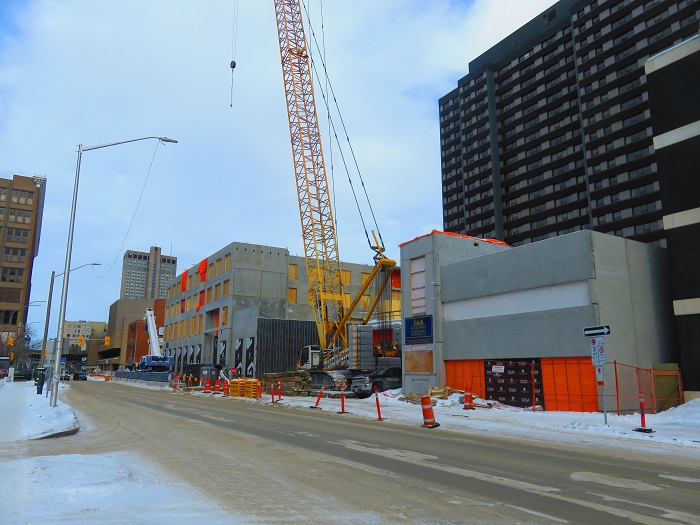
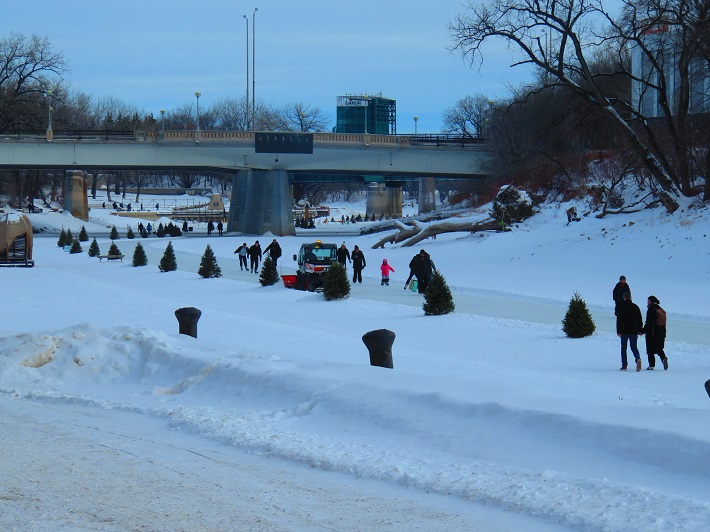
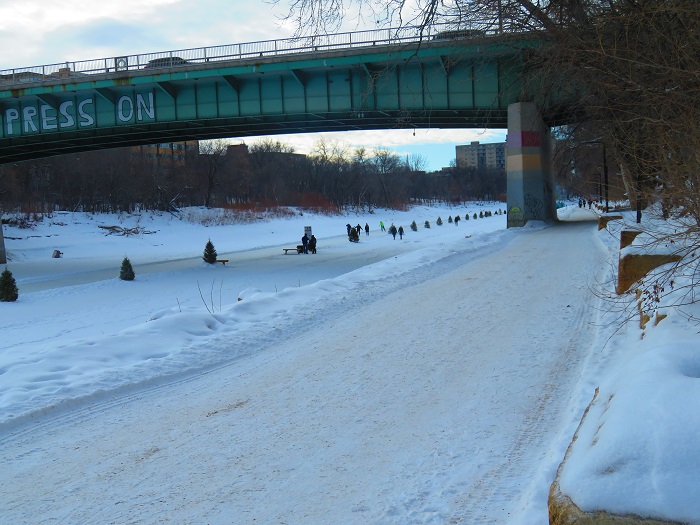
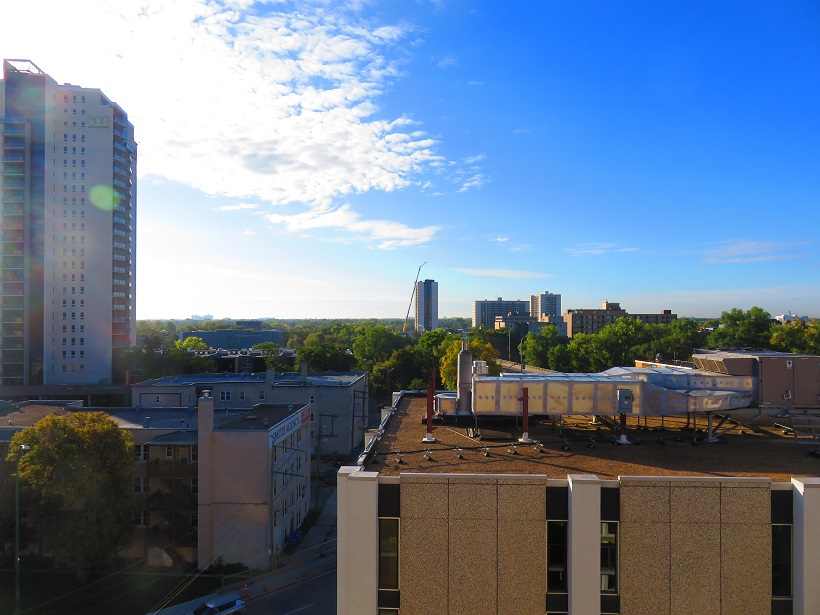
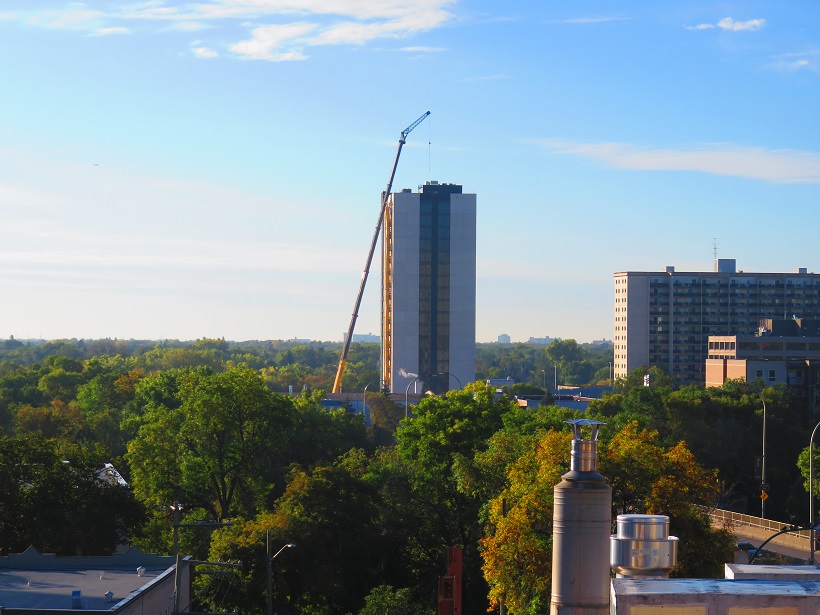
Downtown Winnipeg. A new apartment building going up and the skating trail on the Assiniboine River.


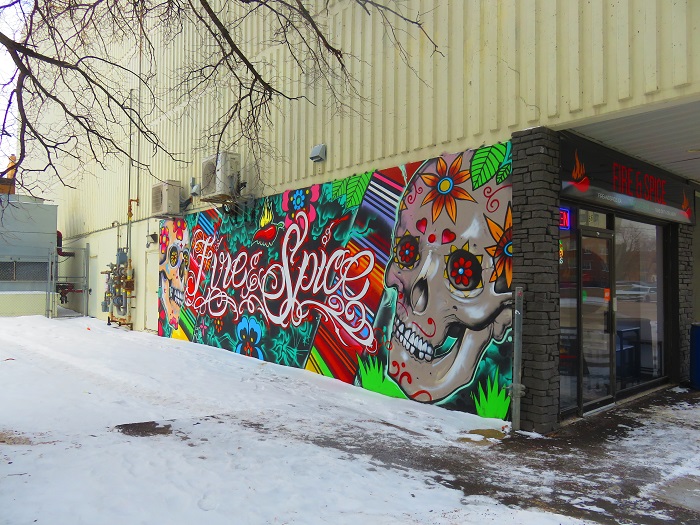
A cool mural painted on the wall of a restaurant called Fire & Spice.

In August 2023 a relatively new high-rise apartment building in Winnipeg had its roof engulfed in flames. It was deemed an electrical fire. The water damage forced all the tenants out, and to this day it is still undergoing repairs. The name of the building is “The Spot in the East Village.”

AN AMBITIOUS building that was meant to break major records has now become the world’s tallest “ghost scraper”.
Dubbed “The Walking Stick” because of the structural shape, Goldin Finance 117 would have been the fifth-tallest building in the world, if finished.


But all it could become was a hollow tube of steel and concrete that had been left deserted for years in China.
Eerie pictures now show the tall, abandoned building sitting empty after construction was stopped in 2015.
Goldin Finance 117 was part of an ambitious project worth a whopping £8billion.
Construction began in 2008, when cities across the country were vying for their place on the world stage.
The abandoned tower, sitting idle near China’s Tianjin business district, was topped at the height of 1,957 ft – with a total of 128 floors planned to go for housing, hotels, and commercial space.
It was supposed to be the centrepiece of billionaire Pat Sutong’s “Goldin Metropolitan” scheme – a high-end residential and central business district near downtown Tianjin.
The ambitious skyscraper was aimed at the super-rich – with multiple residential and commercial towers, French and Italian-style manors, a wine museum, extensive gardens, and even a polo club, on offer.
But all it could become was a hollow tube of steel and concrete that had been left deserted for years in China.
Eerie pictures now show the tall, abandoned building sitting empty after construction was stopped in 2015.
But all it could become was a hollow tube of steel and concrete that had been left deserted for years in China.
Eerie pictures now show the tall, abandoned building sitting empty after construction was stopped in 2015.
The Kunsthaus Graz Art Museum in Graz, Austria, is a gigantic blob-shaped building with a dozen or so tube like nozzles, acting as windows, that stick out from its curved roof, giving the structure an undeniable alien creature like look. Indeed, its designers, London architect Peter Cook and Colin Fournier, have themselves named the building the “Friendly Alien”. Inside the beast’s belly are two huge floors for modern art exhibitions.
Located on the west bank of the River Mur in the historic center, the Graz Art Museum was built as part of the European Capital of Culture celebrations in 2003, and has since become an architectural landmark in Graz.
The building’s roof is made from thousands of acrylic glass panels that generates energy with built-in photovoltaic panels. The outer skin is embedded with some nine-hundred fluorescent rings that can be individually programmed, creating a work of art on the structure itself.


One of the latest design trends that seems to have found appeal among some architects is a towering skyscraper that twists its way up to the top. Possibly the first, modern, twisted skyscraper constructed was the Turning Torso in Malmö, Sweden. The residential building is constructed in nine segments of five-story pentagons that twist as it rises, with the topmost segment twisted 90 degrees with respect to the ground floor. The construction of this building was featured on Discovery Channel’s “Extreme Engineering” TV program. The tower received some more publicity when on 18 August 2006, Austrian skydiver Felix Baumgartner jumped off it and parachuted to the ground.
After the successful completion of the Turning Torso, designers started proposing similar audacious structures elsewhere. Many projects got shelved, others were passed and built, and a handful of them are currently under construction. Here we explore some of the most twisted skyscraper designs around the world, but first, a few pictures of the tower that started it all.

The project was designed by the Spanish architect Santiago Calatrava and officially opened on 27 August 2005. The tower reaches a height of 190 metres (623 feet) with 54 stories – 147 apartments, relax/lounge/spa, wine cellar followed by around-the-clock Concierge service 365 days a year. Each floor consists of an irregular pentagonal shape rotating around the vertical core, which is supported by an exterior steel framework. Completed in 2005, the Turning Torso is the tallest skyscraper in Sweden and all the Nordic countries, and presently the third tallest residential building in Europe.


Infinity Tower is 306 metres (1,004 ft) tall with 76 stories and is under construction in Dubai, United Arab Emirates, which when completed, will become the world’s tallest high rise building with a twist of 90˚. The tower is designed by Skidmore, Owings and Merrill SOM architectural group, the same group who built the Burj Khalifa also in Dubai and Trump Tower in Chicago.
Construction of the building began in February 2006 and by 2012, the intended height was reached. Unlike the Turning Torso, which is a series of cantilevered plates rotated about a straight structure, Infinity Tower’s much larger floor plates actually require the structure to be twisted as it raises from level to level. Each floor is rotated by 1.2˚ to achieve the full 90˚ spiral, creating the shape of a helix. The tower will have residential apartments, conference rooms, tennis courts, pools, a state of the art gymnasium, a nursery and a spa.


Absolute World is a residential twin tower skyscraper complex in Mississauga, Ontario. One is 179 meters tall while the other stands at 161 meters. Both towers twist 209 degrees from the base to the top. The building has been nicknamed the “Marilyn Monroe” tower due to its curvaceous, hourglass figure likened to actress Marilyn Monroe.


Kuwait Trade Center, also known as Al Tijaria Tower, is a magnificent 218 meter tall tower in Kuwait City and currently the tallest building in Kuwait.


The Revolution Tower is a controversial “corkscrew” tower complex of modern offices in Panama City, just a few minutes away from the banking center. The 242-meter reinforced concrete tower consist of 52 floors and makes a 360 degree turn as it rises up.


Mode Gakuen Spiral Towers is a 170-meter, 36-storey educational facility located on a busy main street of Nagoya City in front of Nagoya Station in Nakamura-ku, Nagoya, Aichi, Japan. The towers’ wing-like shape, narrow at the top, changes the rotation axis as they rise and create an organic curve. Spiral Towers appears to change shape slightly when viewed from different angles, giving an elegant yet dynamic impression. The strong inner truss tube is visible through gaps between the three wings, highlighting the bold design and structure while demonstrating the overall consistency.
The towers are highlighted with many ecological features, such as a double-glassed air flow window system and a natural air ventilation system.


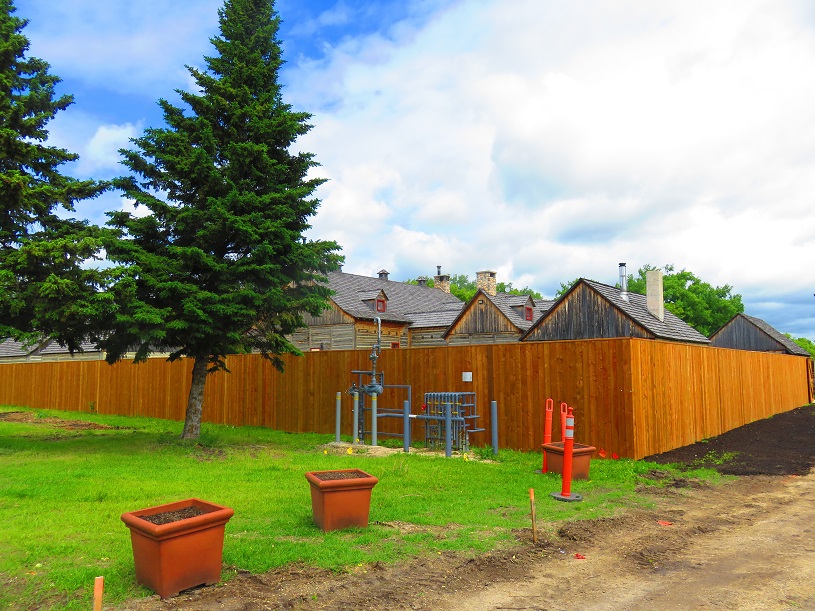
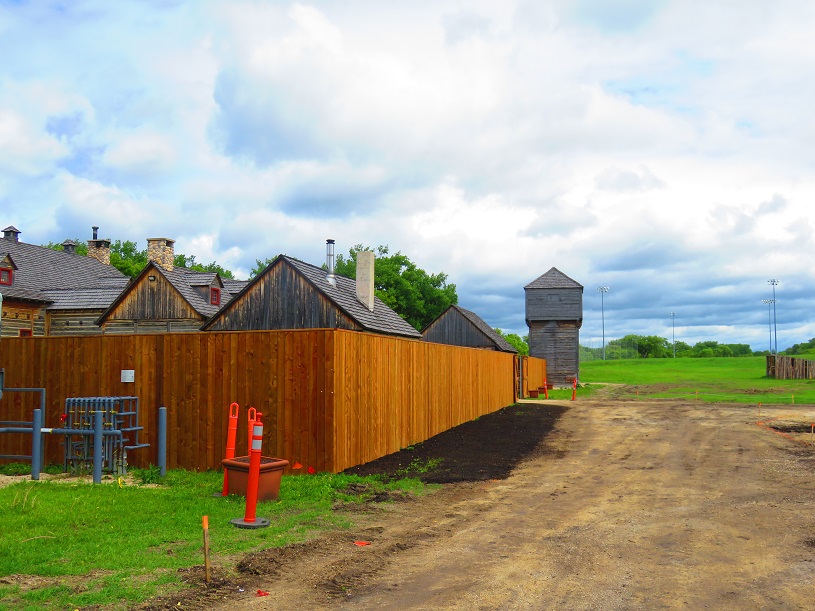
Fort Gibraltar is a replica fort in Winnipeg. The old walls were torn down after an inspection deemed them to be unsafe. New temporary walls have been put up that are 8 feet high. The old walls were 16 feet high.
Some history:
Fort Gibraltar was founded in 1809 by Alexander Macdonell of Greenfield of the North West Company in present-day Manitoba, Canada. It was located at the confluence of the Red and Assiniboine rivers in or near the area now known as The Forks in the city of Winnipeg. Fort Gibraltar was renamed Fort Garry after the merger of North West Company and the Hudson’s Bay Company in 1821, and became Upper Fort Garry in 1835.

Currently:
Old wall

Temporary wall




The tallest tower in the complex stands as the tallest building in Saudi Arabia, with a height of 601 metres (1,972 feet). Currently it is the second tallest building in the world, surpassing Taipei 101 in Taipei, Taiwan. The structure has surpassed Dubai International Airport in having the largest floor area of any structure in the world with 1,500,000 m2 (16,150,000 sq ft) of floorspace.
The site of the complex is located across the street to the south from an entrance to the Masjid al Haram mosque, which houses the Kaaba. To accommodate worshipers visiting the Kaaba, the Abraj Al-Bait Towers has a large prayer room capable of holding more than 10,000 people. The tallest tower in the complex also contains a five-star hotel, operated by Fairmont Hotels and Resorts, to help provide lodging for the millions of pilgrims that travel to Mecca annually to participate in the Hajj.
In addition, the Abraj Al-Bait Towers has a 20 story shopping mall (the Abraj Al Bait Mall) and a parking garage capable of holding over a thousand vehicles. Residential towers house permanent residents while two heliports and a conference center are to accommodate business travelers. In total, up to 100,000 people could be housed inside the towers. The project uses clock faces for each side of the hotel tower. The highest residential floor stands at 450 metres (1,480 feet), just below the spires. The clock faces are 43 m × 43 m (141 ft × 141 ft), the largest in the world. The roof of the clocks is 530 metres (1,740 feet) above the ground, making them the world’s most elevated architectural clocks. A 71-metre-tall spire (233 ft) has been added on top of the clock giving it a total height of 601 metres (1,972 feet), which makes it the second tallest building in the world, surpassing Taipei 101 in Taiwan. The tower also includes an Islamic Museum and a Lunar Observation Center which will also be used to sight the moon during the Holy Months.


The Pantheon is a building in Rome, Italy, on the site of an earlier building commissioned by Marcus Agrippa during the reign of Augustus (27 BC – 14 AD). The present building was completed by the emperor Hadrian and probably dedicated about 126 AD. He retained Agrippa’s original inscription, which has confused its date of construction.
The building is circular with a portico of large granite Corinthian columns (eight in the first rank and two groups of four behind) under a pediment. A rectangular vestibule links the porch to the rotunda, which is under a coffered concrete dome, with a central opening (oculus) to the sky. Almost two thousand years after it was built, the Pantheon’s dome is still the world’s largest unreinforced concrete dome. The height to the oculus and the diameter of the interior circle are the same, 43.3 metres (142 ft).

The 4,535 metric tons (4,999 short tons) weight of the Roman concrete dome is concentrated on a ring of voussoirs 9.1 metres (30 ft) in diameter that form the oculus, while the downward thrust of the dome is carried by eight barrel vaults in the 6.4 metres (21 ft) thick drum wall into eight piers. The thickness of the dome varies from 6.4 metres (21 ft) at the base of the dome to 1.2 metres (3.9 ft) around the oculus. The materials used in the concrete of the dome also varies. At its thickest point, the aggregate is travertine, then terracotta tiles, then at the very top, tufa and pumice, both porous light stones. At the very top, where the dome would be at its weakest and vulnerable to collapse, the oculus actually lightens the load.

No tensile test results are available on the concrete used in the Pantheon; however, Cowan discussed tests on ancient concrete from Roman ruins in Libya, which gave a compressive strength of 20 MPa (2,900 psi). An empirical relationship gives a tensile strength of 1.47 MPa (213 psi) for this specimen. Finite element analysis of the structure by Mark and Hutchison found a maximum tensile stress of only 128 kPa (18.5 psi) at the point where the dome joins the raised outer wall.

The stresses in the dome were found to be substantially reduced by the use of successively less dense aggregate stones, such as small pots or pieces of pumice, in higher layers of the dome. Mark and Hutchison estimated that, if normal weight concrete had been used throughout, the stresses in the arch would have been some 80% greater. Hidden chambers engineered within the rotunda form a sophisticated structural system. This reduced the weight of the roof, as did the elimination of the apex by means of the oculus.

One World Trade Center (also known as the Freedom Tower, 1 World Trade Center, One WTC and 1 WTC) is the main building of the rebuilt World Trade Center complex in Lower Manhattan, New York City. It is the tallest building in the Western Hemisphere, and the fourth-tallest in the world. The supertall structure has the same name as the North Tower of the original World Trade Center, which was completely destroyed in the terrorist attacks of September 11, 2001. The new skyscraper stands on the northwest corner of the 16-acre (6.5 ha) World Trade Center site, on the site of the original 6 World Trade Center. The building is bounded by West Street to the west, Vesey Street to the north, Fulton Street to the south, and Washington Street to the east.

In early 2010, Eastern Concrete Materials, a U.S. Concrete company, began producing high-strength concrete for One World Trade Center (WTC). Within three years, the New York City-based producer had supplied 150,000 cubic yards of ready-mix for the tower’s superstructure—with a concrete strength that has never been used on such a scale in building construction. Collavino Construction Co. then pumped this mix as high as 103 stories.

Construction began in 2006 and was completed in 2014. Its supporting columns are made of steel and concrete ranging in strength from 8600 psi to 14,000 psi. Columns on the first 40 floors are made from 12,000-14,000-psi concrete and the upper floors with 8,600–10,000-psi mix designs.
The ready-mixed concrete was pumped by Collavino’s crews to the highest elevation to which concrete has ever been pumped in the Americas. Because the mix design was so workable, pumping was accomplished with a single pump that moved the concrete directly from the ground to the top story, instead of to an intermediate station where it would have been remixed before being transferred to a second pump.
The Trump World Tower, the tallest all-residential building in the world when completed in 2001 and the tallest in New York until the 76-story Beekman Tower, engineered by WSP Cantor Seinuk, brought another technological marvel to New York: “super” cement. The super or high-strength concrete is produced by blending fly ash, slag cement and silica fume with concrete. Super high-strength concrete cannot be produced with only concrete.
Typically, the high-strength concrete used in skyscraper cores (in the 1990’s) would have a compressive strength of 8,000 to 10,000 pounds per square inch (psi). Because Trump World Tower is a rather slender high-rise, WSP Cantor Seinuk specified concrete compressive strength of 12,000psi for the first time in New York City.
“On One World Trade Center WSP Cantor Seinuk’s engineers worked on specifying the compressive strength and modulus of elasticity,” says Marcus. “But we needed even higher compressive strength—14,000 psi—for the taller One World Trade building.”

View from the top
Most of the concrete has gone into the tower’s monolithic pedestal. From a footprint of 200-by-200 feet, it rises up for 70 feet. Above ground, this has specially reinforced concrete to defend the building from the blast of a street-level bomb. Below grade, the reinforced-concrete structure is engineered to protect the tower’s structural integrity from a bomb even bigger than the one that exploded in 1993 in the World Trade Center’s parking garage.

Winnipeg has a building with a very rare and unique design. The Canadian Grain Commission Building on Main near Portage has a bulge that makes the top floors wider than the bottom floors. According to Wikipedia it is called “Setfront design.”


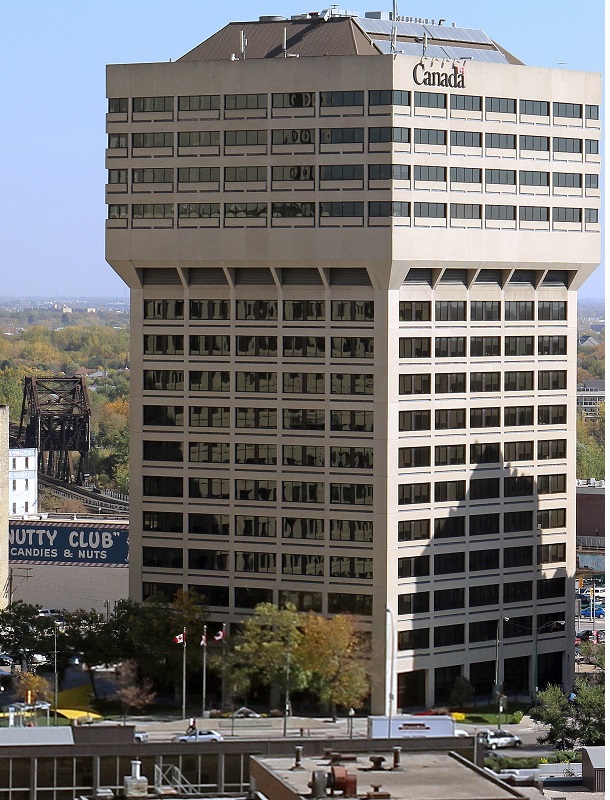
Ernest J. Smith of Smith Carter was the principal architect of the Grain Commission’s current headquarters, nicknamed the “mushroom building”, the structure itself is a notable example of a Canadian skyscraper displaying Brutalist elements. The building’s “extended cap” was designed because of a space needed between the upper and lower floors for specialized mechanical equipment used to transport grain to an upper-level flour mill and test brewery. Smith remarked on the challenges involved:
Mixing two different functions in a vertical building is difficult. Normally construction would be separated horizontally. In this case, we worked out two separate modules for offices and lab space, [and] found we needed greater depth in the lab and rationalized the present form.
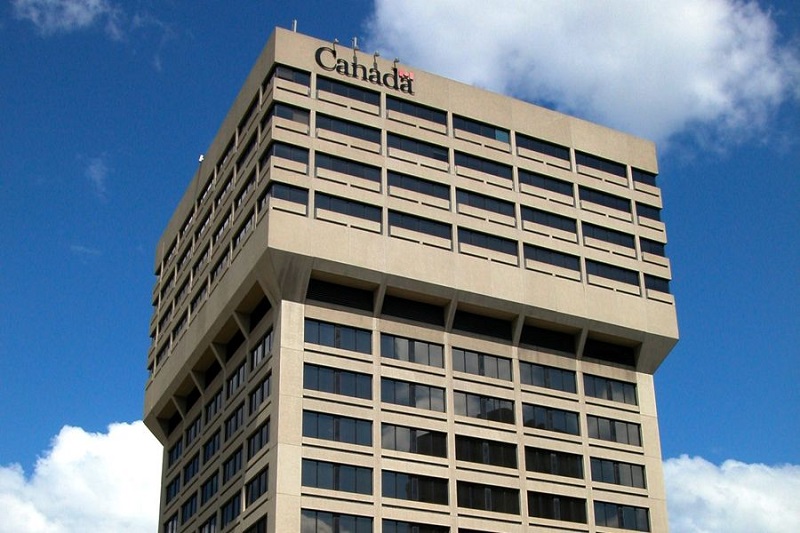
I surf tall building websites quite often. Mainly Skyscraperpage.com. In searching cities across North America and the world I have found only one other building with this setfront design.
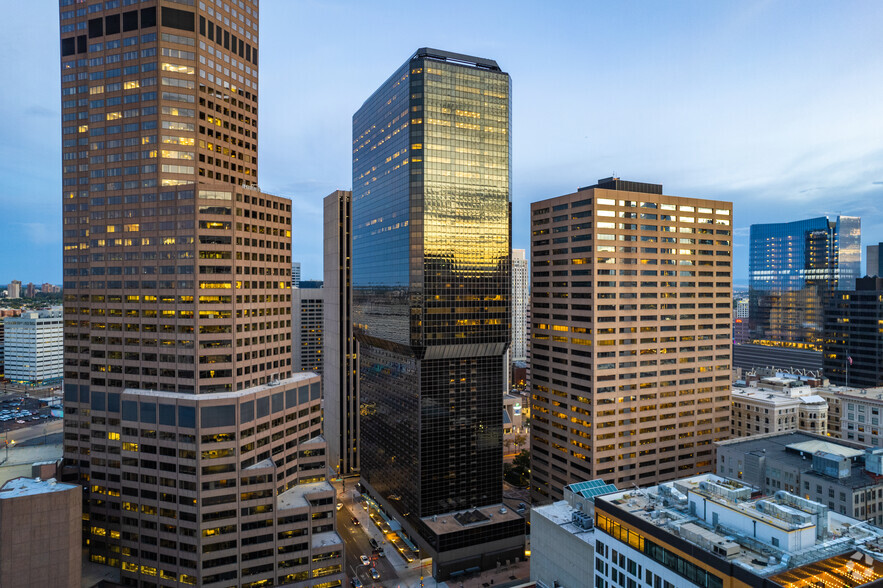
It’s in Denver, 707-17th street. It has 42 stories compared to the Grain Commission at 17. Grain Commission is 220 feet tall while 707-17th is 550 feet. Only two buildings. And one in The Peg.
707-17th:


 The MarkoZen Blog
