Police in Norfolk, Nebraska pulled over a car for having a huge bull standing in its passenger seat.
The car had half of its roof cut off in order to fit the animal.
The man driving the car was given a warning by police, and was ordered to take the bull back home. No-one was injured in the process.
News Channel Nebraska overheard on a police scanner that officers would be attending the scene, so rushed out to capture the moment on camera.
The Ankole-Watusi derives from cattle of the Ankole group of Sanga cattle breeds of east and central Africa. Some of these were brought to Germany as zoo specimens in the early twentieth century, and from there spread to other European zoos. Some were imported to the United States, and in 1960 a herd was started in New York State by cross-breeding some of them with an unrelated Canadian bull. A breed society, the Ankole Watusi International Registry, was set up in 1983, and in 1989 a breed standard was drawn up. In 2016 the total number for the breed was thought to be approximately 1500 head, some 80% of them in the United States. The Ankole-Watusi may be a number of different colors, but is usually red. The horns are unusually large, with a wide spread and the largest circumference found in any cattle breed. Guinness World Records lists a bull named CT Woodie with a horn circumference of 103.5 cm (40.7 in) and a steer named Lurch, with horns measuring 95.25 cm (37.50 in), as record-holders.
No matter what your opinion is of American foreign policy, these huge carriers and their F/A-18’s are a formidable big stick in terms of 21st century gunboat diplomacy.
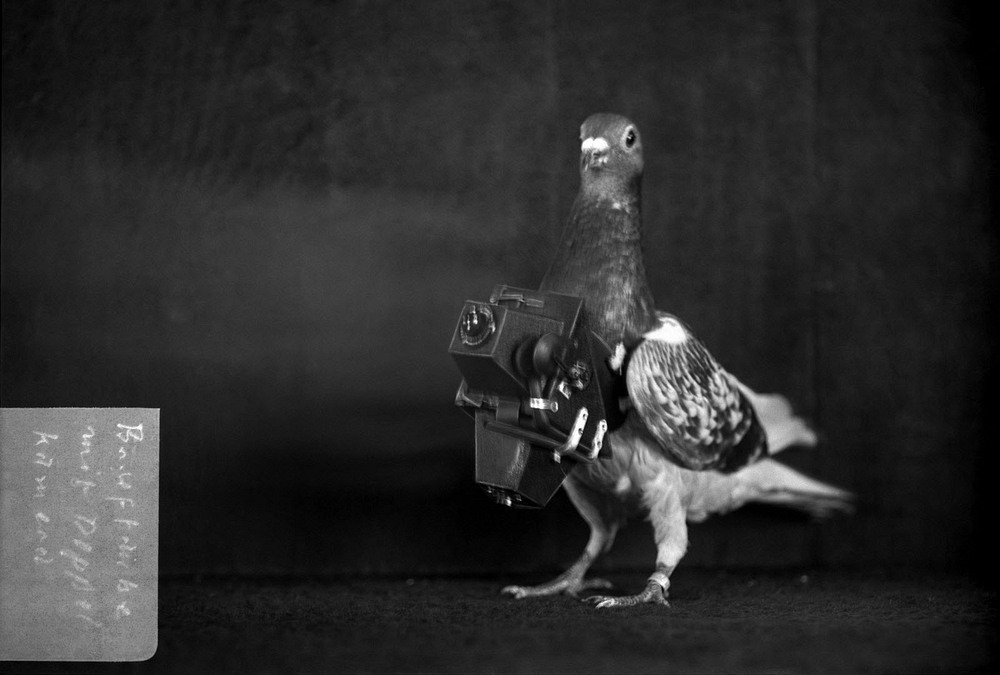
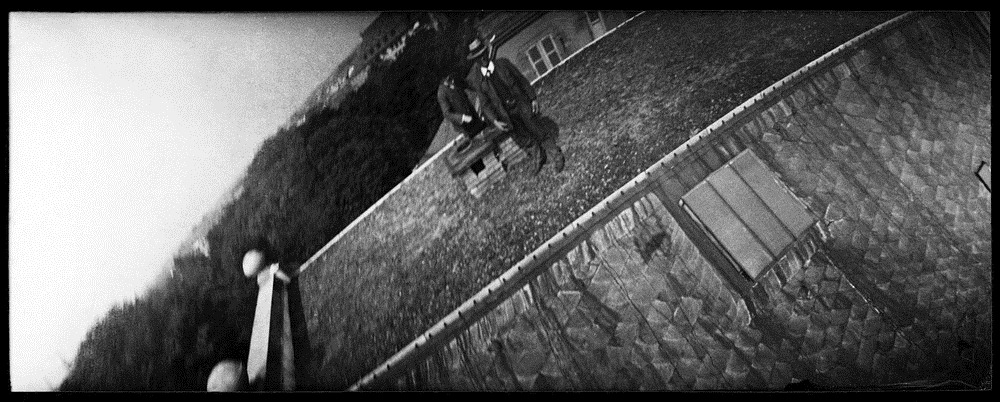
At the turn of the last century, when aviation was still in its infancy, a German named Julius Neubronner submitted a patent for a new invention—a miniature camera that could be strapped to the breast of a pigeon so that the bird could take flight and snap pictures from the air.
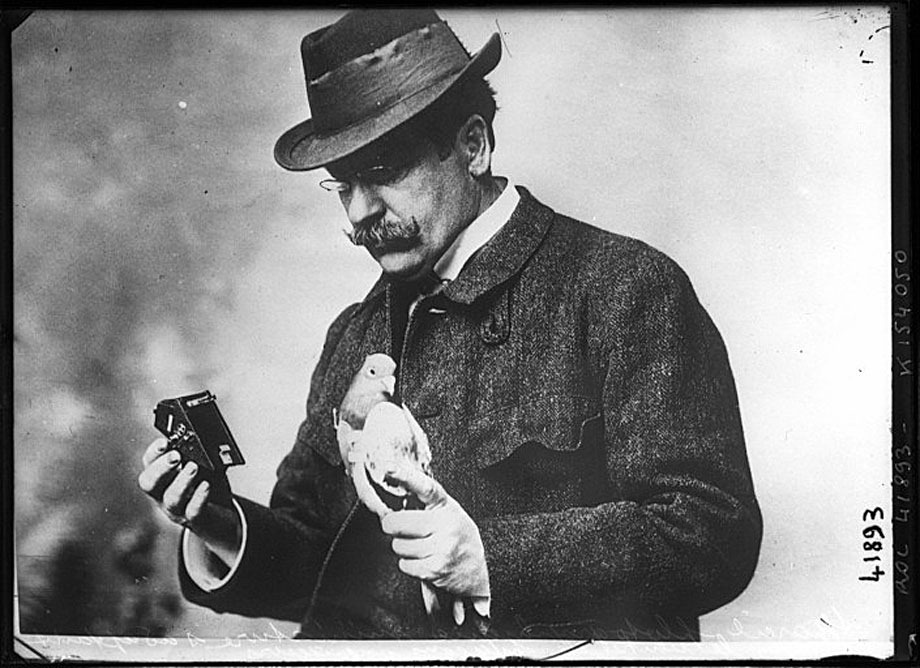
Julius Neubronner was an apothecary who employed pigeons to deliver medications to a sanatorium located near his hometown Kronberg, near Frankfurt. An apothecary is one who makes medicines. A pharmacist is a more modern word, but in many German speaking countries, such as Germany, Austria and Switzerland, pharmacies are still called apothecaries.
Apothecary was Julius Neubronner’s family profession. His father was an apothecary, and so was his grandfather. In those days, homing pigeons were used extensively to carry messages and small supplies. It was Julius’s father’s idea to use pigeons to receive prescriptions from the sanatorium and send out medicinal supplies in a hurry—a practice that continued for more than half a century until the sanatorium closed.
One day, Neubronner let out a pigeon on an urgent errand but it didn’t return. When several days passed and there was still no sign of the bird, Neubronner assumed the pigeon was lost, or it got caught and killed by predators. A month later, the lost messenger showed up unexpectedly at Neubronner’s place. The bird appeared well fed, which got Neubronner into thinking. Where had he gone? Who had fed him?
Neubronner decided that he would start tracking his pigeons’ future travels.
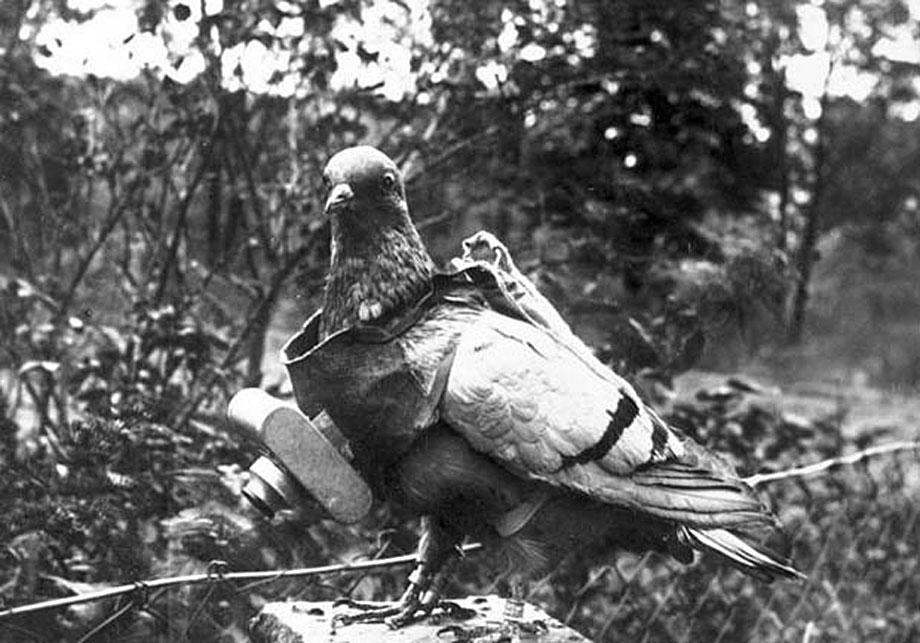
Julius Neubronner with one of his pigeons.
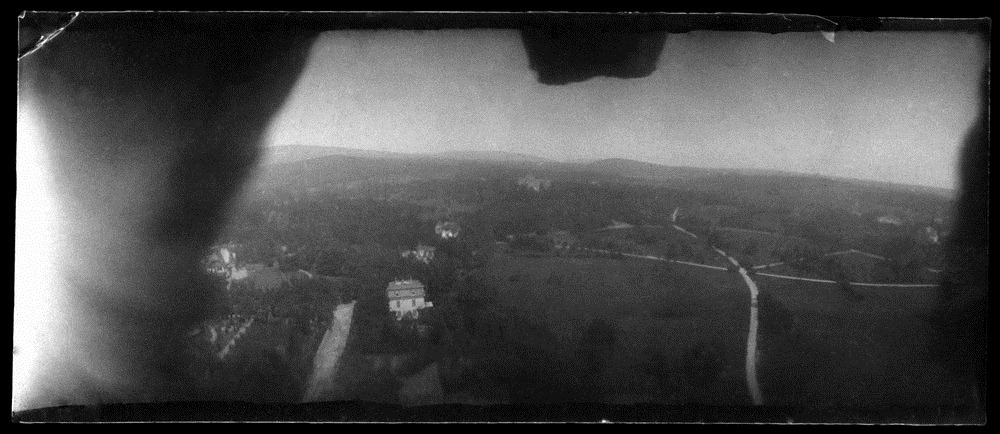
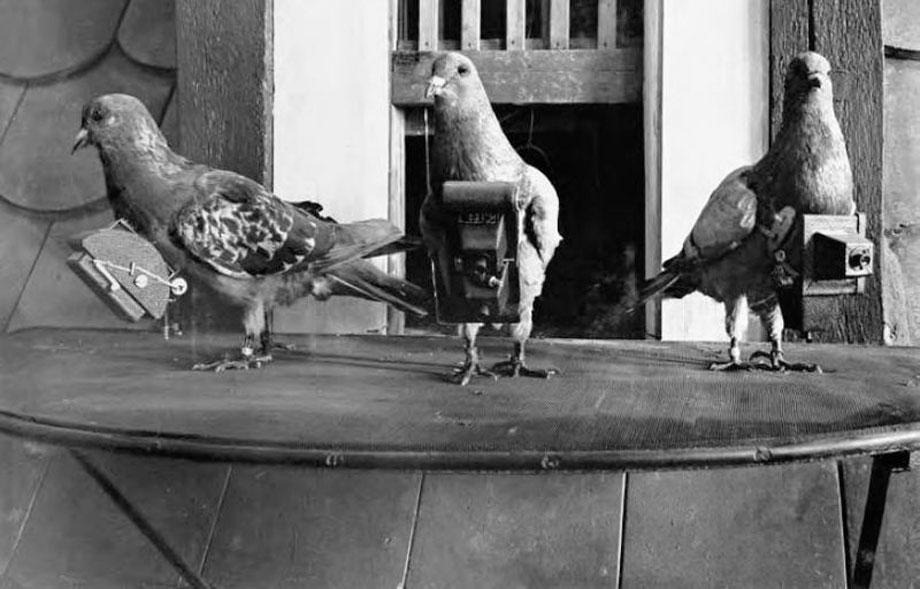
Being a passionate do-it-yourself amateur photographer, it didn’t take long for Neubronner to fashion a miniature wooden camera which he fitted to the pigeon’s breast by means of a harness and an aluminum cuirass. A pneumatic system in the camera opened the shutter at predetermined intervals and the roll of film, which moved along with the shutter, took as many as thirty exposures in a single flight. The entire rig weighed no more than 75 grams—the maximum load the pigeons were trained to carry.
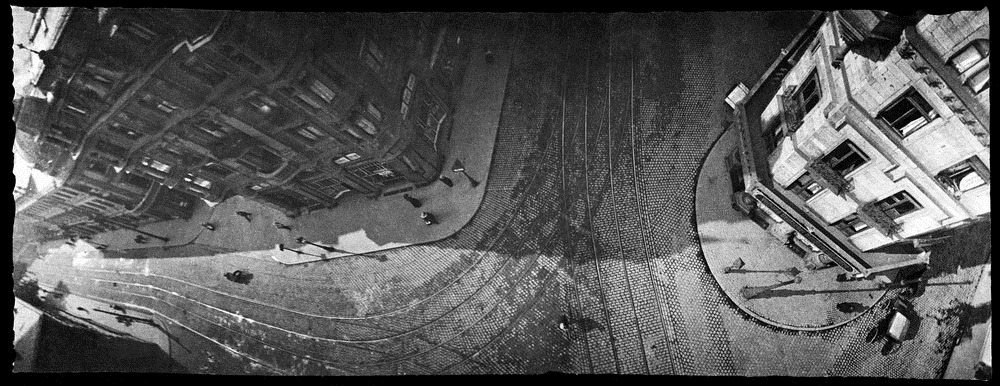
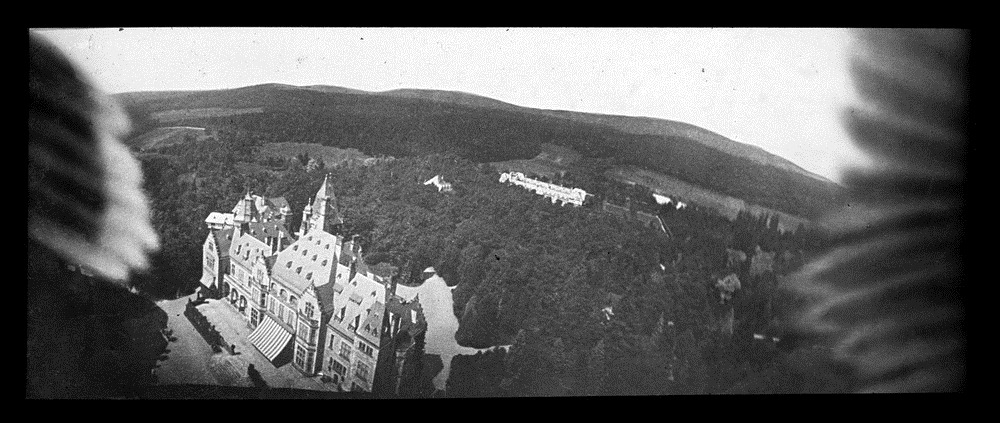
The pictures turned out so good that Neubronner started making different models. One system, for instance, was fitted with two lenses pointing in opposite directions. Another one took stereoscopic images. Eventually, Neubronner applied for a patent, but the patent office threw out his application citing that such a device was impossible as they believed a pigeon could not carry the weight of a camera. But when Neubronner presented photographs taken by his pigeons, the patent was granted in 1908.
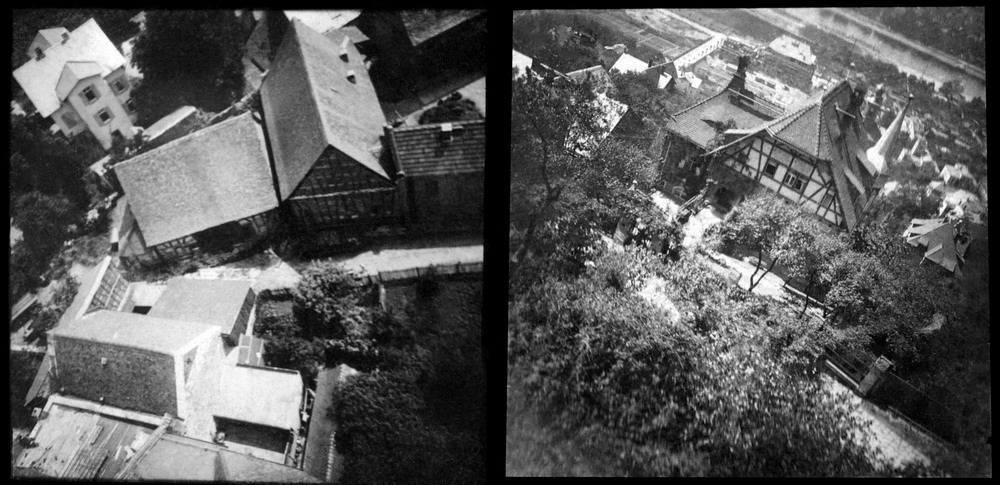
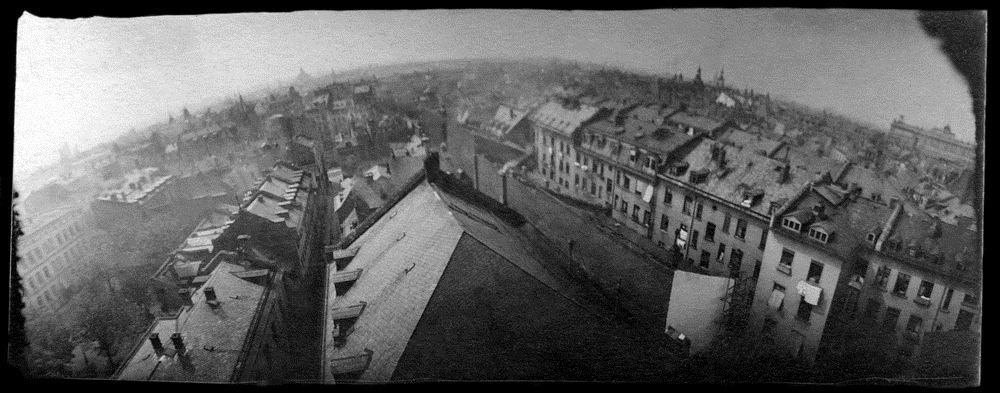
Aerial photograph of Frankfurt.
Aerial photograph of Schlosshotel Kronberg.
Neubronner exhibited his photographs in several international photographic exhibition gaining him accolades. In one such exhibition in Dresden, spectators watched as the camera-equipped carrier pigeons arrived at the venue, and the photos were immediately developed and turned into postcards which they could purchase.
The technology was soon adapted for use during the First World War, despite the availability of surveillance aircraft then. Pigeons drew less attention, could photograph enemy locations from a lower height, and were visibly indifferent to explosions on a battlefield.
Neubronner’s avian technology saw use in the Second World War too. The German army developed a pigeon camera capable of taking 200 exposures per flight. The French too claimed they had cameras for pigeons and a method to deploy them behind enemy lines by trained dogs. Around this time, Swiss clockmaker Christian Adrian Michel perfected a panoramic camera and an improved mechanism to control the shutter. Pigeon photography was in use as late as the 1970s, when the CIA developed a battery-powered pigeon camera, though the details of the camera’s use are still classified.
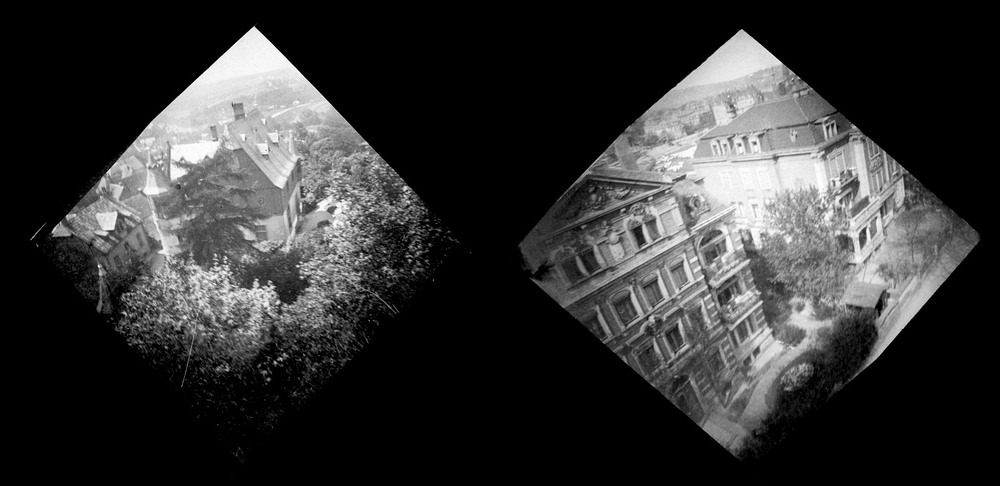
Aerial photographs of Dresden.
Today, aerial photography has been replaced by aircrafts, satellites, and more recently, by affordable drones. But the legacy of Julius Neubronner’s pigeon photography lives on in these images which are among the very early photos taken of Earth from above.
Bonus fact: So what happened to Neubronner’s pigeon who stayed away from the owner for a month and returned fattened up? It had flown away to Wiesbaden, some twenty kilometers away, and was taken care of by a restaurant chef.
The United States bomber described below is one of the most remarkable aircraft ever developed. It could fly very high and very fast. However, the introduction of high-altitude surface to air missiles (SAM’s)made the deployment of such a bomber impractical. The project was cancelled with only two prototype aircraft built. These bombers were the most sleek looking big aircraft ever built.
The North American Aviation XB-70 Valkyrie was the prototype version of the proposed B-70 nuclear-armed deep penetration bomber for the United States Air Force’s Strategic Air Command. Designed by North American Aviation in the late 1950s, the Valkyrie was a large six-engined aircraft able to fly Mach 3+ at an altitude of 70,000 ft (21,000 m), which would have allowed it to avoid interceptors, the only effective anti-bomber weapon at the time.
The introduction of effective high-altitude surface-to-air missiles, the program’s high development costs, and changes in the technological environment with the introduction of ICBMs led to the cancellation of the B-70 program in 1961. Although the proposed fleet of operational B-70 bombers was cancelled, two prototype aircraft were built as the XB-70A and used in supersonic test flights from 1964 to 1969. One prototype crashed following a midair collision in 1966; the other is on display at the National Museum of the United States Air Force in Ohio.
Designed for high-altitude flight, the B-70 lost this edge to improved Soviet high-altitude, anti-aircraft missiles. The aircraft would become increasingly vulnerable at high altitudes as newer missile systems were introduced, and at low altitudes it lost its supersonic performance and range. Using the original Mach 3 high altitude mission profile, the aircraft had a design range of 6,447 nmi (7,419 mi, 11,940 km) without refueling, but flying over the target area “on-the-deck” at Mach 0.95 reduced range to 5,312 nmi (6,113 mi, 9,838 km), even with in-flight refueling. Realizing that the bomber would not be practical combined with high cost overruns President Eisenhower cancelled the project in 1959. Both Presidents Kennedy and Johnson subsequently left the program cancelled.
The experimental XB-70As were used for the advanced study of aerodynamics, propulsion, and other subjects related to large supersonic transports. The production order was reduced to three prototypes in March 1961 with the third aircraft to incorporate improvements from the previous prototype. The crew was reduced to only the pilot and co-pilot for the XB-70; the navigator and bomb-aimer were not needed. The first XB-70 was completed on 7 May 1964 (the second on 15 October 1964), and XB-70A #1 was displayed on 11 May 1964 in Palmdale, California. One report claimed “nothing like it existed anywhere“. The planned third prototype was canceled in July 1964 while being built. The first XB-70 had its maiden flight in September 1964 and flight testing followed.
The XB-70 flight test data and materials development aided the later Rockwell B-1 Lancer supersonic bomber program, the US supersonic transport program and, through intelligence, the Soviet Tupolev Tu-144. The development of the US U-2 and SR-71 reconnaissance aircraft along with the B-70 bomber led the Soviet Union to design and develop the MiG-25 interceptor.
The Valkyrie was designed to be a high-altitude bomber-sized Mach 3 aircraft with six engines. Harrison Storms (engineer who designed the command module for the Apollo program) shaped the aircraft with a canard surface and a delta wing, which was built largely of stainless steel, sandwiched honeycomb panels, and titanium. The XB-70 was designed to use supersonic technologies developed for the Mach 3 Navaho, as well as a modified form of the SM-64 Navaho’s all-inertial guidance system.
The XB-70 used compression lift, which was generated from a prominent wedge at the center of the engine inlets that created a shock wave below the aircraft. The wing included inboard camber to more effectively use the higher pressure field behind the strong shock wave (the airflow at the XB-70 wing’s leading edge was subsonic). The compression lift increased the lift by five percent. Unique among aircraft of its size, the outer portions of the wings were hinged, and could be pivoted downward by up to 65 degrees. This increased the aircraft’s directional stability at supersonic speeds, shifted the center of lift to a more favorable position at high speeds, and strengthened the compression lift effect. With the wingtips drooped downwards, the compression lift shock wave would be further trapped under the wings.
On 8 June 1966, XB-70A #2 was in close formation with four other aircraft (an F-4, F-5, T-38, and F-104) for a photoshoot at the behest of General Electric, manufacturer of the engines of all five aircraft. With the photoshoot complete, the F-104 drifted into contact with the XB-70’s right wing, flipped over and rolled inverted over the top of the Valkyrie, striking the vertical stabilizers and left wing of the bomber. The F-104 exploded, destroying the Valkyrie’s rudders and damaging its left wing. With the loss of both rudders and damage to the wings, the Valkyrie entered an uncontrollable spin and crashed into the ground north of Barstow, California. NASA Chief Test Pilot Joe Walker (F-104 pilot) and Carl Cross (XB-70 co-pilot) were killed. Al White (XB-70 pilot) ejected, sustaining serious injuries, including one arm being crushed as it was caught in the clamshell-like escape capsule as it closed around him just before ejection from the aircraft.
The formation of aircraft shortly after the collision on 8 June 1966.
General characteristics
Crew:2
Length: 185 ft 10 in(56.6 m)
Wingspan:105 ft 0 in (32 m)
Height:30 ft 9 in (9.4 m)
Wing area:6,296 ft² (585 m²)
Airfoil:Hexagonal; 0.30 Hex modified root, 0.70 Hex modified tip
Empty weight: 210,000 lb(93,000 kg)
Loaded weight:534,700 lb (242,500 kg)
Max takeoff weight:550,000 lb (250,000 kg)
Powerplant:6 × General Electric YJ93-GE-3 afterburning turbojet
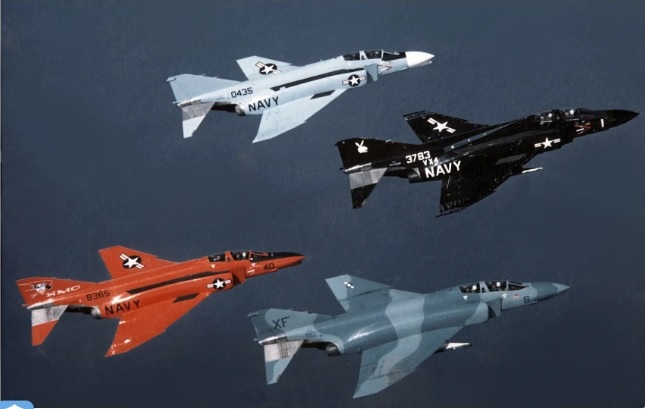
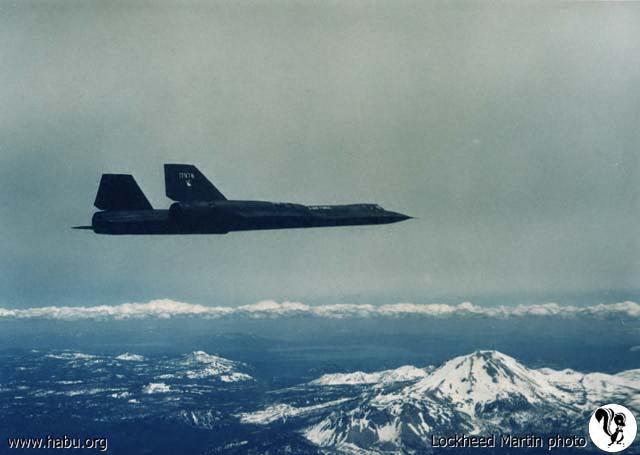
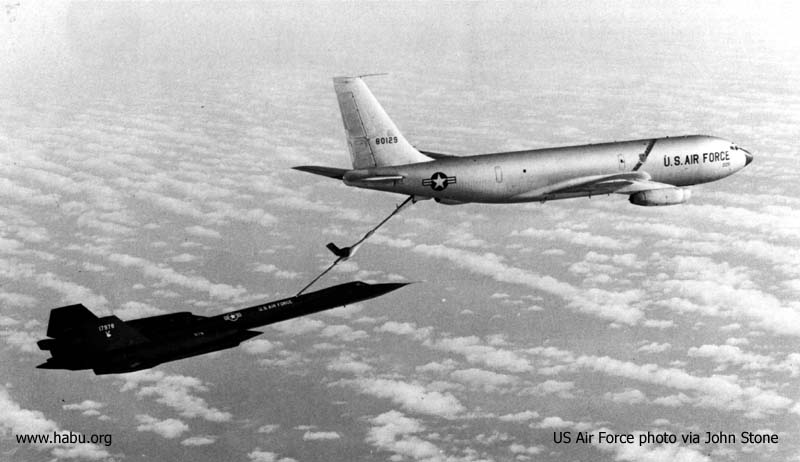
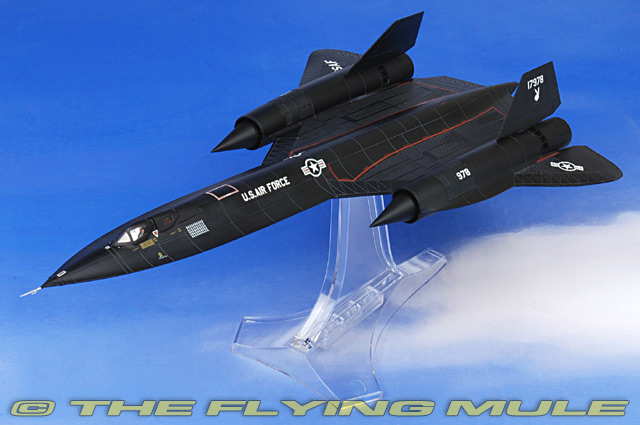
The first documented usage of rabbit head tail codes on military aircraft dates back to 1953 with Marine Squadron VMCJ-2 “The Playboys”. This squadron, based in MCAS Cherry Point, continues to uphold the tradition of the bunny on combat deployments to overseas location. Additionally, the US Air Force incorporated the image on the SR-71 Blackbird.
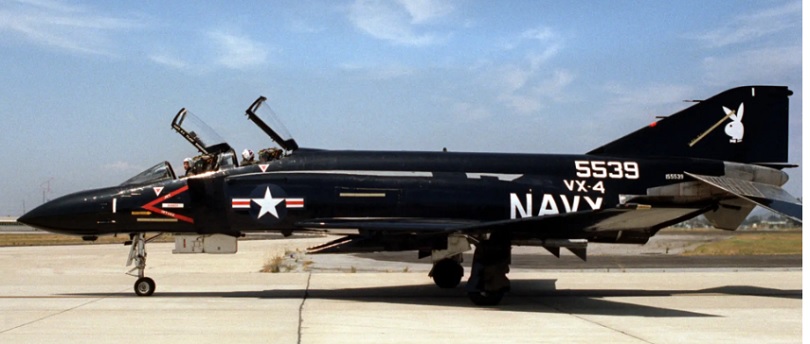
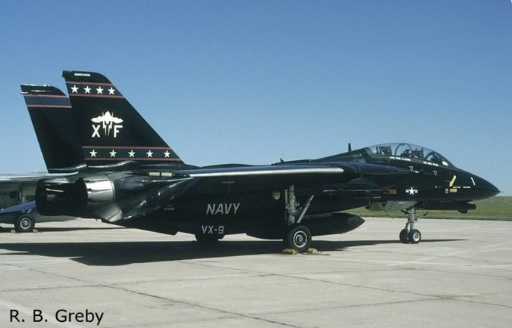
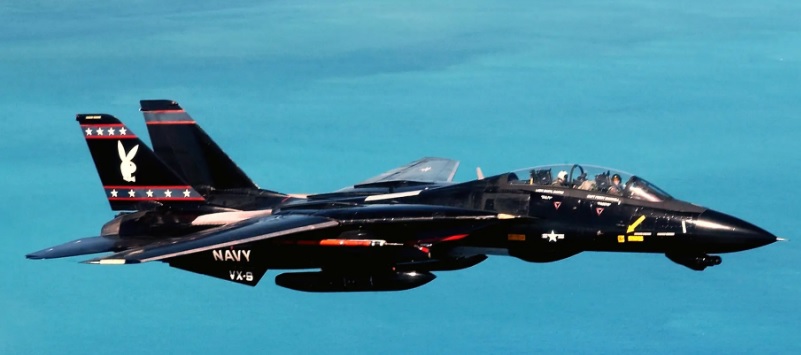
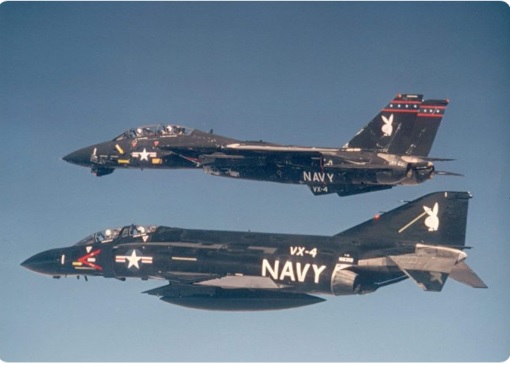
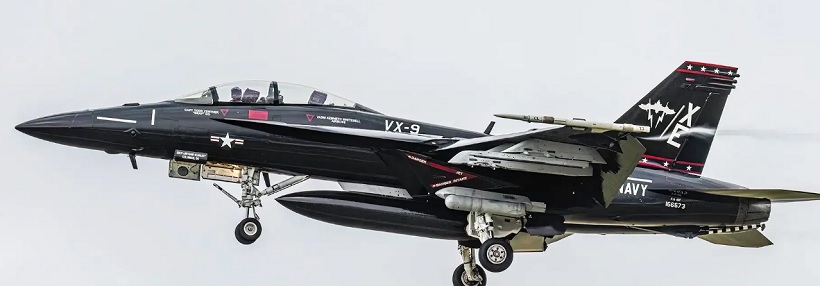
The most notable, and famous, use of the bunny image came from the Navy’s Air Test and Evaluation Squadron Four (VX-4) based out of NAS Point Mugu, CA. This squadron is charged with the operational testing of advanced aircraft systems. In this capacity, the rabbit head adorned the tail of some of the Navy’s most legendary fighter jets including the F-4 Phantom II, F-14 Tomcat, F/A-18 Hornet and the newest F-18 E/F Super Hornet. According to Navy lore the first rabbit appeared on the black F-4 Phantom II in 1969 during night testing and was referred to either as “Black Bunny” or “Vandy One”.
That same year, Playboy Enterprises bought a black Douglas DC-9 known as the “Big Bunny”. Shortly after this, a famous picture started to circulate featuring the Navy’s “Black Bunny” at NAS Point Mugu, CA in October 1971. The squadron received a letter from Playboy Enterprises, Inc stating that the bunny head was unofficial and warned of potential legal action. However, Playboy Enterprises stated no legal action would be taken if the squadron used an official Playboy stencil to ensure authenticity and accuracy. Thereafter official stencils were delivered to the Navy to match Playboy’s own design.
An alleged spy balloon spotted over the US is a Chinese “civilian airship” which had deviated from its planned route, China says.
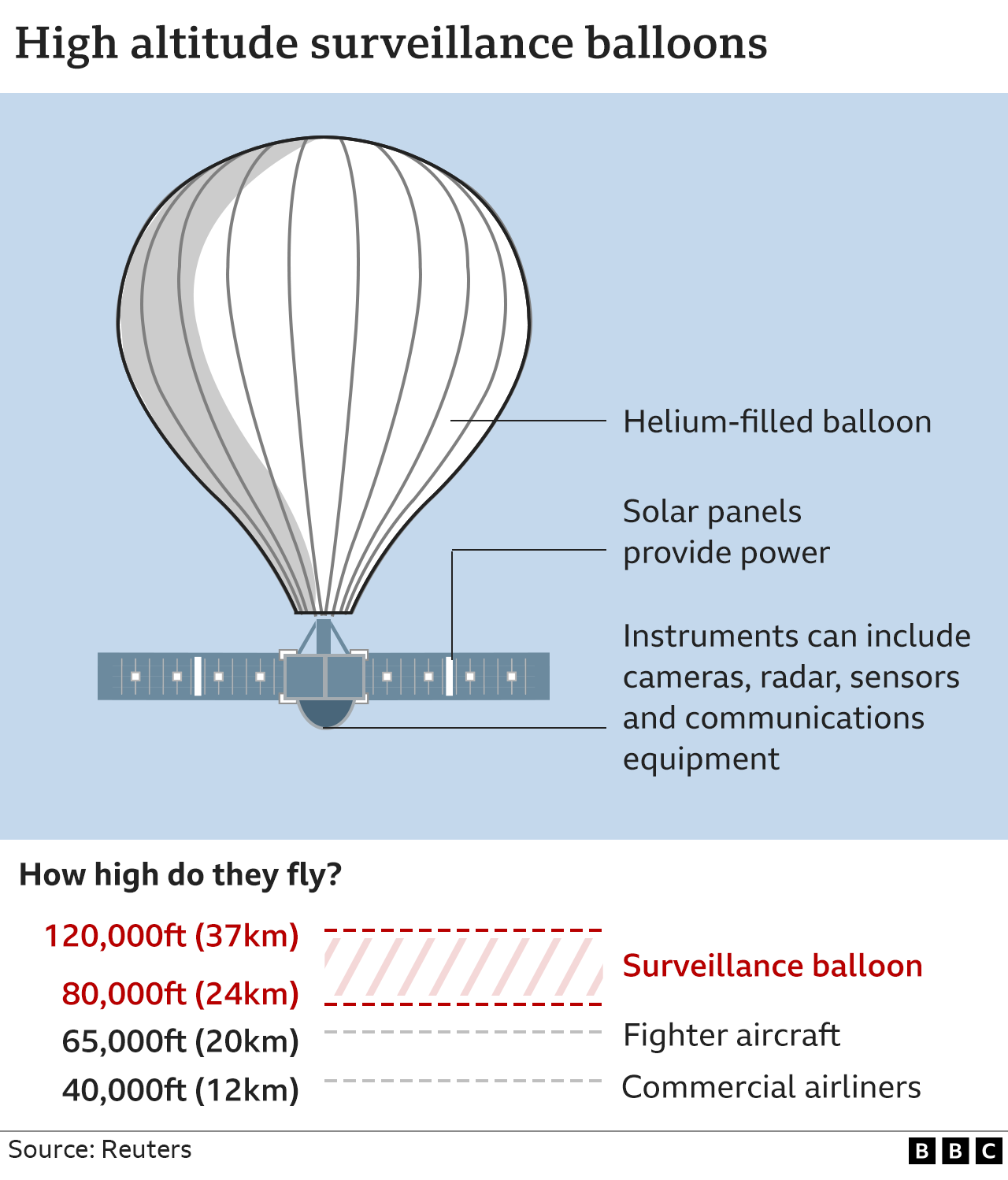
US defence officials said they believed the balloon, seen above sensitive areas in recent days, was in fact a “high-altitude surveillance” device.
But in a statement, China’s foreign ministry said it was used for “mainly meteorological” purposes.
China “regrets the unintended entry” of the balloon into US airspace, it added.
The object flew over Alaska’s Aleutian Islands and through Canada before appearing over the city of Billings in Montana on Wednesday, according to officials.
Montana is home to some of the US’s nuclear missile silos.
The US decided not to shoot down the balloon because of the danger posed by falling debris, and the limited use of any intelligence the device could gather, a US defence official said.
However, the government prepared fighter jets in case the object had to be shot down.
The Chinese statement said the balloon had been blown off-course by unexpected winds.
“Affected by the Westerlies and with limited self-steering capability, the airship deviated far from its planned course.
“The Chinese side regrets the unintended entry of the airship into US airspace due to force majeure.”
The statement referred to the incident as an “unexpected situation” and said Beijing would continue to communicate with the US side.
On Friday, Canada said it had summoned China’s ambassador over the incident and will continue to “vigorously express” its position to Chinese officials.
The balloon has been reported in US media as being about the size of three buses.
During Thursday’s briefing at the Pentagon, US defence officials declined to disclose the aircraft’s current location and did not give information on where it was launched from.
They added that the balloon was “appearing to hang out for a longer period of time” than others tracked by the US over the past several years.
The unfamiliar sight caused confusion as the balloon hovered above Montana, with some people posting images of the pale round object high above the Earth’s surface.
China initially warned against “conjectures and hyping up the issue” while it worked to “verify” the reports of the balloon, with state media outlet the Global Times accusing the US of aggravating tensions between the two countries.
Despite China’s explanation, the incident is likely to increase tensions ahead of US Secretary of State Antony Blinken’s visit to China next week. It will be the first visit to the country by a Biden administration cabinet secretary.
The top US diplomat will be in Beijing to hold talks on a wide range of issues, including security, Taiwan and Covid-19.
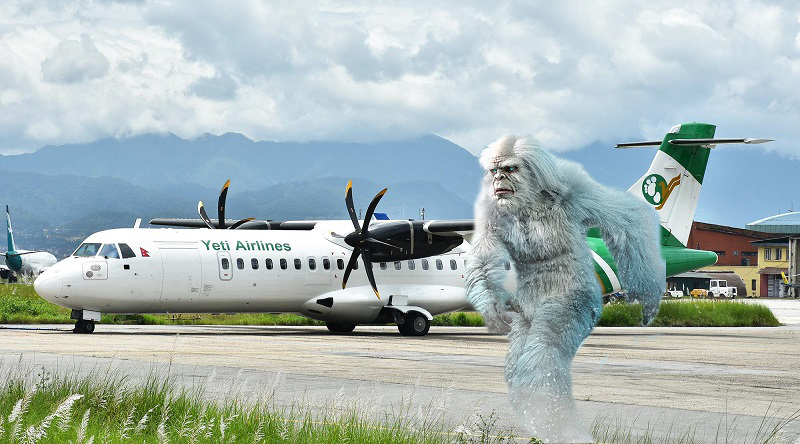
Yeti Airlines Pvt. Ltd. (Nepali: यती एअरलाइन्स) is an airline based in Kathmandu, Nepal. The airline was established in May 1998 and received its air operator’s certificate on 17 August 1998. It is the parent company of Tara Air. As of 2021, Yeti Airlines was the second largest domestic carrier in Nepal, after Buddha Air.
Yeti Airlines Operations Manager Bhavraroopa Biswabandita investigating a lost luggage complaint at Kathmandu International Airport.
Company president Indragop Rakshek holding a news conference with the local media. He is known to get quite animated and emotional when discussing his airline.
A Boeing executive making a sales pitch to Acquisition manager Gianprakash Tribikram.
The American system of measurement and its units—feet, miles, pounds, and gallons—are quite bizarre. They are random, unintuitive and have no logical relationship to one another, which makes conversion from one type to another a nightmare. In the 1970s, the United States tried to push the country to metric and even passed a law that directed federal agencies to adopt the metric system. But the legislation was not strong enough and many industries chose not to convert. However, some industries, having realized the benefit of the metric system, decided to switch on their own volition.
Now there are two different systems at work, and anytime two different industries using two different system of measurement have to coordinate, extra care needs to be taken to ensure the units are correctly converted. Otherwise the results could be disastrous, just like Air Canada found out in 1983.
Air Canada Boeing 767 C-GAUN, “the Gimli Glider”, taxing at San Francisco International in February 1985.
On the evening of July 22, 1983, an Air Canada Boeing 767 C-GAUN arrived in Edmonton, Alberta, following a flight from Toronto and spent the night at the tarmac. During the stopover, a technician performing a routine check of the airplane and discovered that the plane’s fuel gauges were not working. The technician tracked the problem down to a defective channel in the fuel-quantity indication system (FQIS), a computer that takes reading from the fuel sensors in the tank and converts it into the various units required by other aircraft systems, including the fuel gauges. The FQIS uses two redundant channels, but a failure in only one channel causes the entire FQIS to fail. The technician managed to solve the problem by disabling the faulty channel, and the gauges blinked back to life. The technician logged the temporary fix in the aircraft’s logbook, and also left instruction that the fuel levels need to be checked manually, as the protocol required as additional safety measures since one of the processor channels was inoperative.
The next morning, Captain John Weir and co-pilot Captain Donald Johnson were told about the problem. Since the FQIS was operating on a single channel, a manual fuel drip measurement was taken to double check the amount of fuel in the tanks, and no discrepancy was found. The plane flew to Toronto and then to Montreal without incident.
At Montreal, the airplane was taken over by Captain Bob Pearson and First Officer Maurice Quintal. Before handing over the airplane, Weir described the problem to Pearson, but the latter got the impression that not only the FQIS was at fault, but the gauges themselves had been blank.
As they waited for a dripstick test, a ground engineer climbed into the cockpit to inspect the FQIS. He found the circuit breaker that the technician at Edmonton had pulled out to disable the faulty channel, and in order to check his diagnosis, pushed the breaker back into channel 2. Immediately, the fuel gauges went offline. The technician logged his observation in the logbook, but before he could pull out the circuit breaker, he was called back out of the aircraft to assist in the drip check currently in progress. The technician left the craft forgetting to return the circuit breakers to their original positions. When Captain Pearson and his First Officer Maurice Quintal arrived in the cockpit minutes later, they found the fuel gauges blank, as they had expected.
The dripstick test involves pulling out a hollow tube from the underside of the fuel tank located on the wings of an aircraft. When the top of the dripstick is withdrawn below the level of the fuel, fuel enters it and drips through a hole in the cap. Graduations on the tube indicate the depth of the fuel in the tank in centimeters. This value is converted into volume in liters and then into kilograms by multiplying this figure by the density of jet fuel. Traditionally, on all Air Canada aircrafts, the density was measured in pounds per liter, but this particular aircraft, the 767, was an entirely new model to enter service which used the metric system instead of imperial. But the technicians didn’t know that.
During calculation, the fueler consulted his documentation, which still reported all figures in the Imperial system, and found that the density of jet fuel was 1.77 pounds/liter. Using that conversion factor, the technicians calculated that the airplane needed 4,917 liters of additional fuel for the flight from Montreal to Ottawa to Edmonton. The correct conversion factor should have 0.803 kg/liter, which would have yielded a figure of 20,088 liters. The dripstick check found that 7,682 liters of fuel were already in the tanks, which meant that when the plane took off from Montreal on July 23, 1983, it had less than half the amount required to reach their destination. A working fuel gauge would have shown the discrepancy, but the fuel gauges were offline and without them there was no other way for the pilots to know the real amount of fuel the airplane was carrying.
The plane reached Ottawa without incident. Some passengers disembarked, others boarded, and again the ground technicians carried a fuel check, making the same exact error. Everything was found to be in order, and the air traffic controller gave the go ahead, and once again the plane took off destined for Edmonton.
Shortly after 8 pm, when Flight 143 was cruising over Red Lake, Ontario, at 41,000 feet the plane ran out of fuel. At first the pilots assumed an instrumentation error and turned off the alarms. But minutes later, both the engines flamed out. The 767 was one of the first jets to use an electronic instrument system powered by its engines. This meant that when the engines stopped working, all the instruments went dark. However, the jet was equipped with a ram air turbine (RAT) that dropped out of the fuselage and generated enough power to function emergency instruments and also provided some hydraulic support for the crew to be able to maneuver the plane.
Pearson and Quintal decided to divert the plane to Winnipeg, 65 miles away. But after making some calculation, Quintal announced that they would never make to Winnipeg. Instead, he suggested that they try to land at a decommissioned military airbase in the town of Gimli, some 45 miles from their position, near the shores of Lake Winnipeg.
Gimli had two 7,200-foot runways, but the pilots did not know that the runways had been converted to a race track complex, now known as Gimli Motorsports Park. It included a road race course, a go-kart track, and a dragstrip. As fate would have it, it was race day and the track was full of cars and campers.
Without main power, the pilots used a technique called ‘gravity drop’ to lower the landing gear and lock it into place. The main gear locked into position, but the nose wheel was too light to drop by gravity alone and was only partially extended.
As the plane approached the runway, the pilots realized they were coming in too high and fast. If they didn’t loose altitude fast, they would overshoot the runway entirely. The pilots briefly considered making a 360° loop to reduce speed and altitude, but they decided that they did not have enough altitude for the maneuver. Pearson, an experienced glider pilot, decided to execute a forward slip to increase drag and reduce altitude. A forward slip is a technique commonly used in gliders and light aircraft to descend more quickly without increasing forward speed. It is almost never used in large jet airliners. Admiral Cloudberg explains how a slip can be executed:
A slip can be induced on any aircraft by steering the nose in one direction with the rudder, while banking in the opposite direction with the ailerons to compensate. This allows the plane to maintain its present course while skidding or slipping with one side facing into the oncoming air and the forward wing pointed at the ground. Pointing the side of the fuselage into the airstream in this manner generates enormous drag which will cause the plane to descend while also keeping its forward airspeed in check.
With both of its engines dead, the plane made hardly any noise as it approached the drag strip. Pearson could only hope people got out of the way. As the gliding plane closed in on the decommissioned runway, the pilots noticed two boys were riding bicycles within 1,000 feet of the projected point of impact. Captain Pearson later said that the boys were so close that he could see the looks of sheer terror on their faces as they realized that a large aircraft was bearing down on them.
As the plane touched down, the nose gear collapsed back into the wheel well, causing the aircraft’s nose to slam into the tarmac and then scrap along the ground. The friction helped slow the plane down and kept it from crashing into the crowds surrounding the runway. All 61 people on board survived.
After an investigation by Air Canada, Captain Pearson was demoted for six months, and First Officer Quintal was suspended for two weeks for their role in the fuel miscalculation and making the erroneous and reckless decision to fly with blank fuel gauges. These suspensions were overturned following an appeal. Two years later, Pearson and Quintal were awarded the first ever Fédération Aéronautique Internationale Diploma for Outstanding Airmanship.
The airplane was repaired and returned to service with Air Canada, where it continued to fly for 25 years until its decommission in 2008. The Gimli Glider was scrapped in 2014.
Drones go where no one has gone before, and in this video one caught someone sunbathing high atop a colossal wind turbine in Rhode Island. The pilot planned to only film the turbine, but his camera noticed something odd. There was a man napping, catching some rays high atop the turbine, 200 feet up! Roused by the rotary blades of the drone, the sunbathing gentleman woke from his nap and then sat, sat up and cheerily waved.











 The MarkoZen Blog