





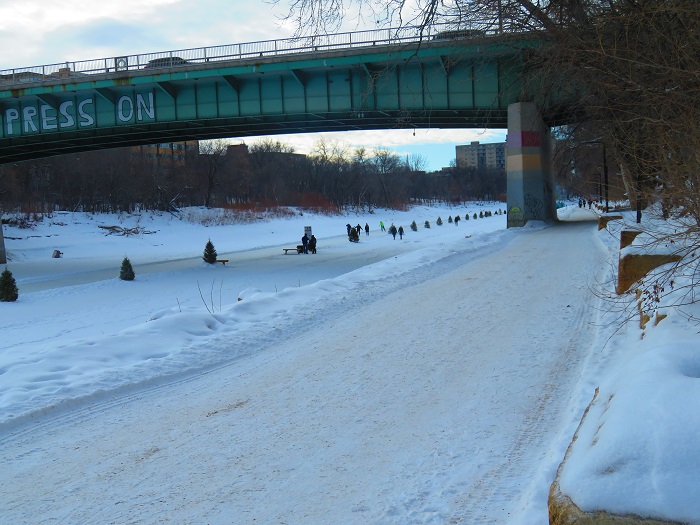
Downtown Winnipeg. A new apartment building going up and the skating trail on the Assiniboine River.



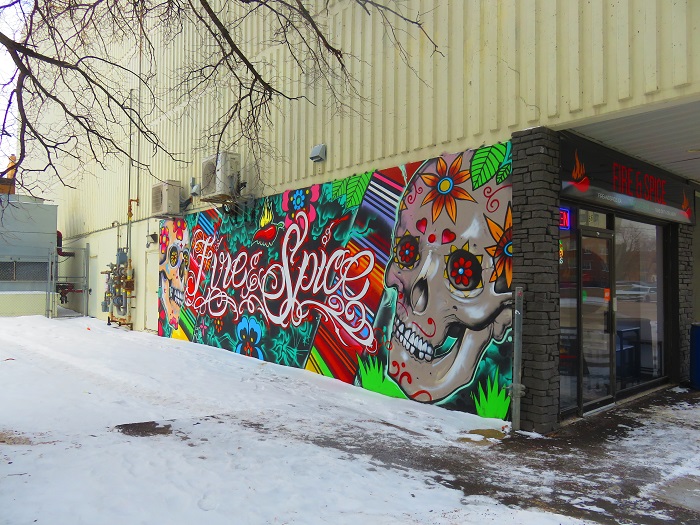
A cool mural painted on the wall of a restaurant called Fire & Spice.

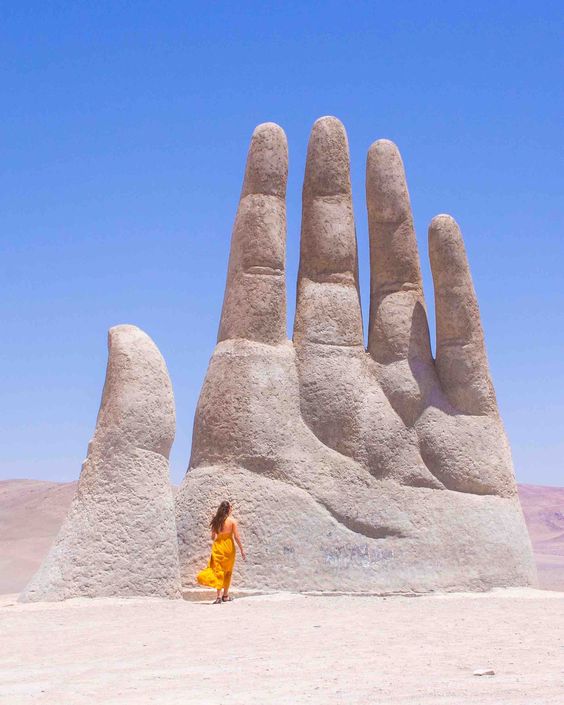
The Mano del Desierto is a large-scale sculpture of a hand located in the Atacama Desert in Chile, about 60 km to the south and east of the city of Antofagasta, on the Panamerican Highway. The nearest point of reference is the “Ciudad Empresarial La Negra” (La Negra Business City). It lies between the 1309 and 1310 km marker points on the highway. It was created to represent the awful Human Rights Chileans were going through in the past.

The sculpture was constructed by the Chilean sculptor Mario Irarrázabal at an altitude of 1,100 meters above sea level. Its exaggerated size is said to emphasize human vulnerability and helplessness. The work has a base of iron and concrete, and stands 11 metres (36 ft) tall. Funded by Corporación Pro Antofagasta, a local booster organization, the sculpture was inaugurated on 28 March 1992.
It has since become a point of interest for tourists traveling Route 5, which forms part of the Pan-American Highway. It is an easy victim of graffiti and is therefore cleaned occasionally.
To get to the sculpture from Antofagasta, take Route 28 going East until the road joins Route 5 at La Negra (industrial complex) (distance from Route 1 in Antofagasta to the junction at La Negra approximately 16 kilometres (9.9 mi)). Take Route 5 going South for another 48 kilometres (30 mi), where a dirt road turns right (West) towards the sculpture. The sculpture is 450 metres (1,480 ft) from the main road. Clear signposts are placed on the road, although the sculpture can already be seen from quite a distance away.
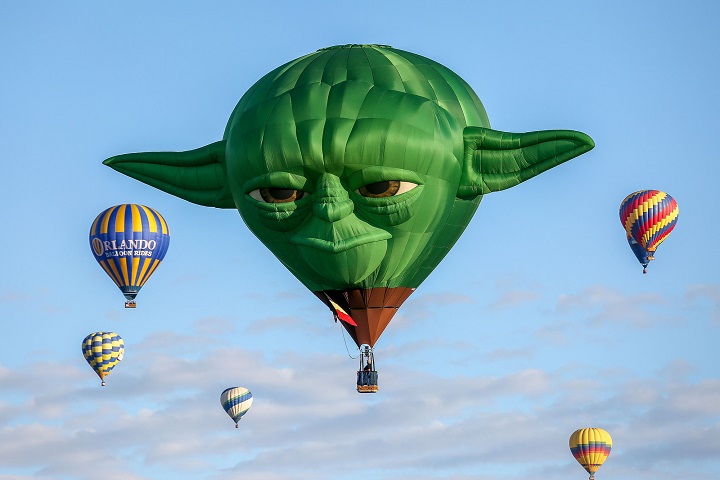
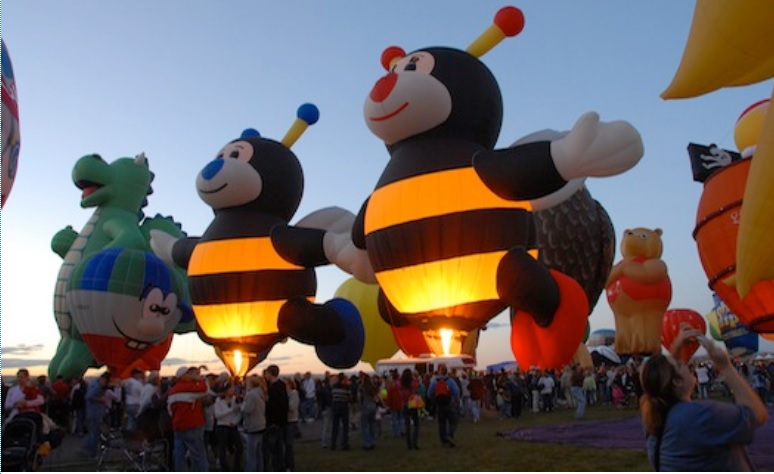
The Albuquerque International Balloon Fiesta is a yearly hot air balloon festival that takes place in Albuquerque, New Mexico, during early October. The Balloon Fiesta is a nine-day event occurring in the first full week of October, and has over 500 hot air balloons each year far from its humble beginnings of merely 13 balloons in 1972. The event is the largest balloon festival in the world, followed by the Grand Est Mondial Air in France.

In these trying times I am continually looking out for news that might bring some fun into the world and in so doing, brighten up your day. There is a farmer in Bathgate in Scotland who came up with a novel idea for brightening up the day for motorists who drive by his farm on the M8 motorway.
This story all started back in 2007 when a Scottish farmer named Andrew Jack decided to color his sheep blue to celebrate the Scottish national St Andrew’s Day holiday. Don’t worry the sheep didn’t get hurt as he used a special animal friendly spray paint. The effect was quite stunning don’t you think?
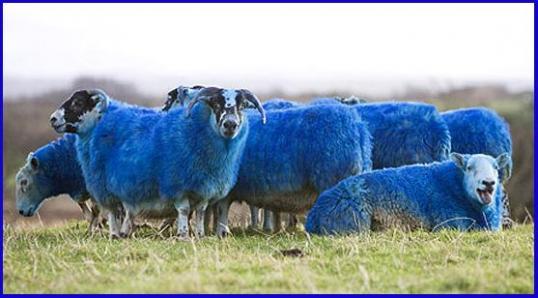
The reaction to his blue sheep was tremendous. When asked for his reaction, Bob Carruth of the National Farmers’ Union Of Scotland commented “It’s a very patriotic gesture and it also reminds people how important sheep are to our agriculture” This support encouraged Jack and he decided to also add a few red ones to his growing flock of funky sheep.

According to Jack he liked the idea of the funky sheep as it was his way to “Spice Things Up A Bit” so people could smile on their way to and from work while driving on the motorway. Once again the reaction was overwhelming and the drive past Jack’s farm became a bit of a tourist attraction.
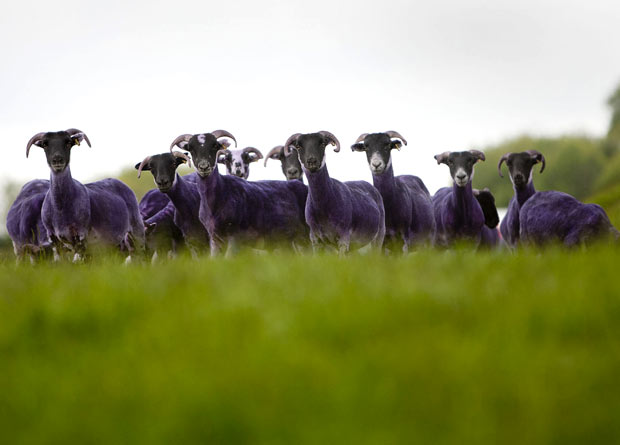
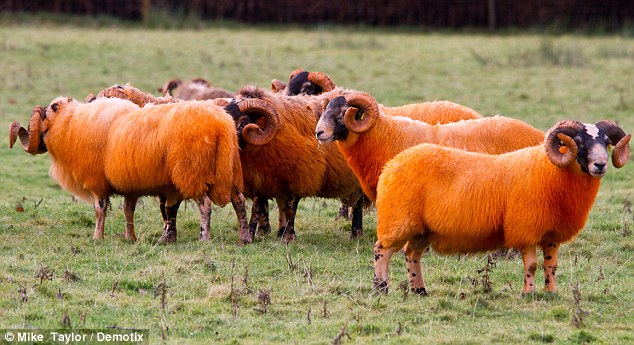
Jack’s reaction to the publicity was to expand his color range even further and today if you pass the M8 you will most likely see a rainbow effect of colorful, funky , Scottish sheep all diligently brightening up the day for all the folks who drive by and It may look something like this.

Jack frequently re-sprays his sheep and they remain colorful until it is time for shearing. If you are still concerned about the effect of the paint on the animals, the editor of “Sheep” magazine, Nathan Griffith states that it is not harmful to dye sheep with the right products, and that many sheep farmers count and identify their flocks by color coding their fleeces.




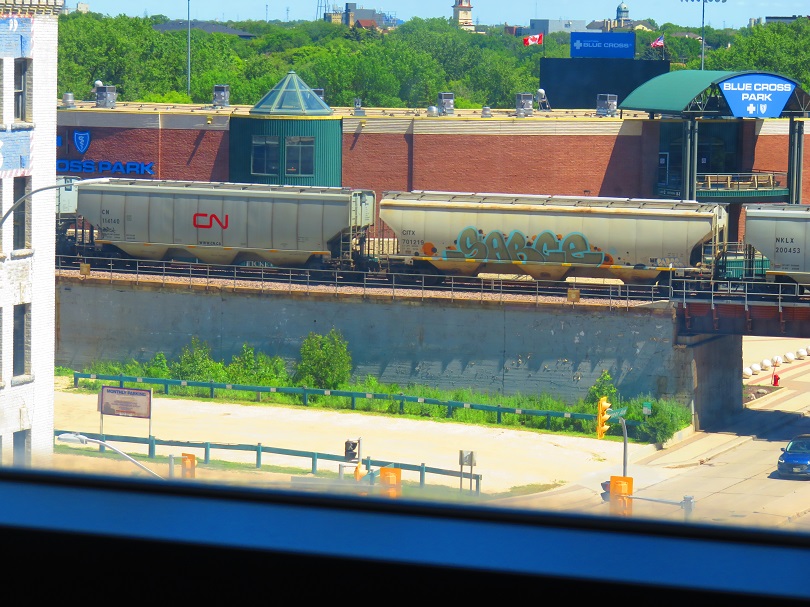
The Canadian National (CN) main line through downtown Winnipeg.

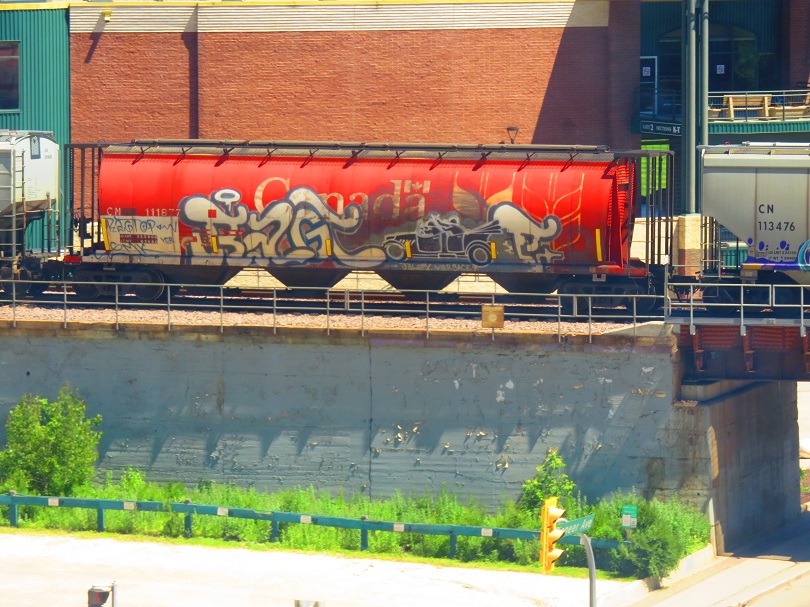
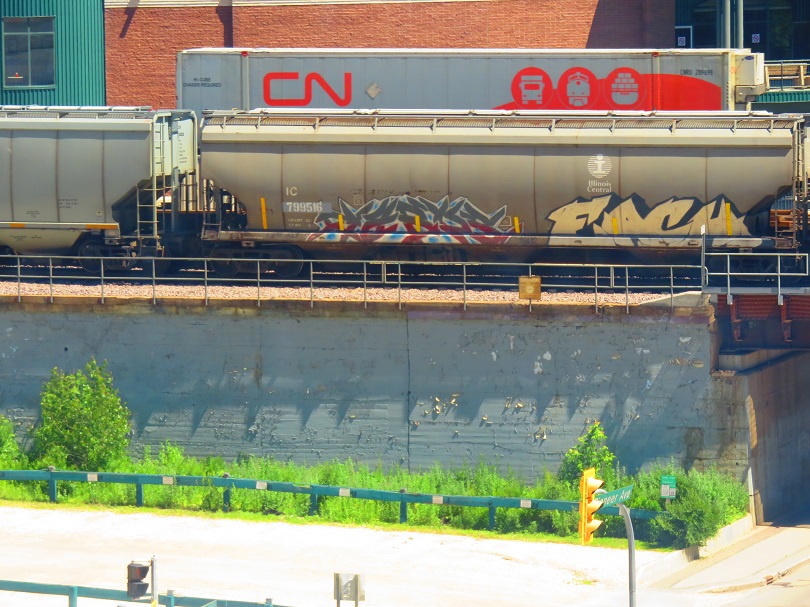
Some of this graffiti is actually pretty good.


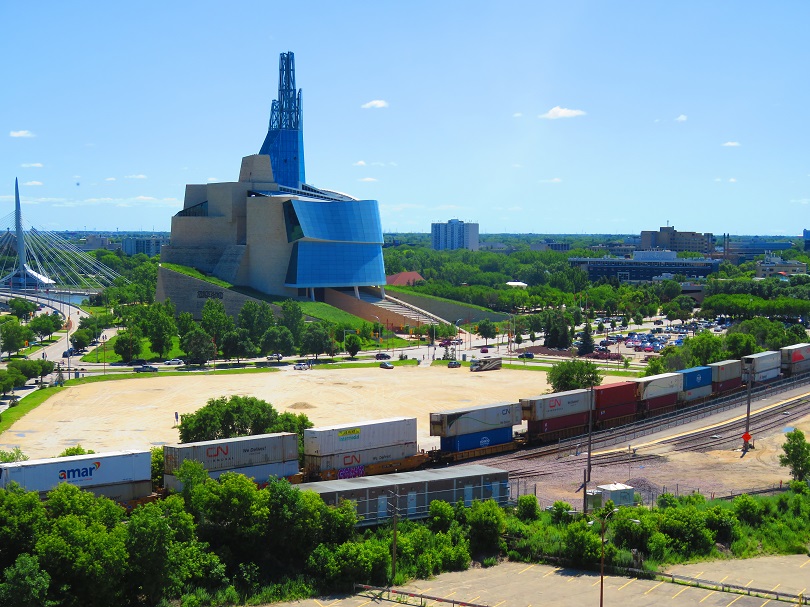
The VIA passenger train.


The circus, as it we think of it today, originated in Britain in 1768 by inventor Philip Astley. Astley presented shows that included horse riding tricks, acrobats, music and clowns. None of these elements were new to the British public, but Astley was the first to combine them into a single show.
Astley did not call his “Amphitheatre of Equestrian Arts” a circus. That title was awarded to a later rival’s show in 1782, and became the generic term.
In 1793 Englishman John Bill Ricketts brought the circus to the U.S., opening in Philadelphia.
The traveling circus tent was invented by American Joshua Purdy Brown, replacing the usual wooden construction with a full canvas tent. His system became commonplace by the mid 1830s.
The unique character of the American circus emerged: a traveling tent-show coupled with a menagerie and run by businessmen. It was very different model from European circuses, which for the most part remained under the control of performing families.
P. T. Barnum improved on the circus format, introducing circus trains as transport between towns. He also introduced the “freak” show, exhibiting people who were excessively tall or short, fat or thin, or with medical conditions that gave them unusual appearances. Barnum’s format became popular in Europe around the 1900s.
The number of horse riding performances gradually declined in favor of clowns, acrobats, gymnasts and jugglers, stunt acts such as fire eaters and acts involving animals. The incorporation of animals in circus acts or in menageries has almost ceased after concerns over the standards of their accommodation, training and elements of their performances.
These posters, drawn from the Circus Museum in the Netherlands, demonstrate some of the wide-ranging themes used by European circuses across the 20th century.


1915
“Circus Strassburger”


1923
“Circus Busch. The Sensational! Marino, Destroyer of cars. The strongest driver in the world.”

Circa 1918


1932
“Looping the loop in the open ring. Laughing in the face of death! The World Champion Nic. Diavolo. Circus Maxo.”







 The MarkoZen Blog