Areas of the World where there are no Snakes

Growing up on a farm in rural Manitoba I encountered garter snakes many times. Even though the little varmints are harmless as a flea, I would almost jump out of my skin when I noticed the creepy crawly.  It was the slippery motion through the grass that was so bizarre and unsettling.  It would take 5 minutes before my nerves settled.  However I found out that there are places on the planet with no indigenous snakes. Snake-less nirvana.


Top places with no snakes:


Newfoundland

asnake1


Newfoundland, the remote province on the Canadian east coast, is a great place to go because it’s blessed with no native snakes whatsoever. The island was completely frozen over during the last ice age and so had to go through a big phase of species recolonization in its aftermath. Many animals came to Newfoundland and prospered, snakes however did not. Several garter snakes have been spotted in recent times unfortunately but it is unclear whether they were introduced, maybe as an extravagant pet or snuck in in crates or imported hay bales.


Hawaii

asnake2


Hawaii is a snake-haters paradise. Beautiful rainforests and warm climates are normally laden with snakes, but not in Hawaii. The islands may be a U.S. state but they’re very remote geographically, making it impossible for snakes to slither/swim there That was until a few decades ago anyway. Pre-1980s Hawaii was excellent for avoiding snakes, 1980s Hawaii onwards not so much. An increased number of imports at that time resulted in some unwelcome stowaways arriving in shipping containers and inadvertently Hawaii welcomed species like the poisonous brown tree snake to its shores. There’s actually also one native snake but it’s not on land, the yellow-bellied sea-snake is occasionally recorded off the Hawaiian coast although chances of seeing one is unlikely.


Ireland

asnake3


The lack of snakes in Ireland isn’t just common knowledge, it’s legendary. According to folklore, St Patrick supposedly chased all the snakes out in around A.D. 400 and made quite a name for himself in the process. Scientists will tell a different story, something to do with an ice age, a vanishing land bridge and snakes being cut-off in Scotland by the sea. The 90’s messed that up however, snakes became popular as status symbols in the good times but when the economic downturn hit, many were simply released into the wild. Yet despite the odd news story surfacing about a rogue tame rattlesnake or viper slithering around, Ireland is a good place to be for snake-fearers. There’s actually only one reptile native to the entire Emerald Isle, the harmless viviparous lizard.


Cape Verde and the Azores

asnake4


In the North Atlantic, there are two great candidates for snake-free paradises. Sovereign state Cape Verde and the Portuguese-governed Azores are blessed with no native snakes, despite their sunny climate and tropical vibes. This is entirely down to their distance from the mainland, Cape Verde is far enough west of Africa to not have any snake infestations while the Azores are far enough west of the European mainland. So what’s the catch? Well, there isn’t one. Not yet anyway. But stories from similar islands serve as a warning about what could happen if controls don’t hold firm, the Canary Islands for instance being blighted by a major influx of imported Californian king snakes.


New Zealand

asnake5


Remarkably, despite its size and subtropical climate, New Zealand is completely absent of snakes on land. This is down to the islands’ very remote nature, continental drift pushed the country far out into the Pacific many millions of years ago, well out of the reach of the serpents lingering on big land masses like Australia. In order to preserve its fragile endemic wildlife, the New Zealand authorities make sure to keep it that way and take their no snakes policy very seriously. It’s strictly prohibited for anyone to keep a snake and a jail sentence may await for anyone looking to rebel. Regrettably, although the land laws are very much anti-snake, not much can be done about any sea snakes lurking around the coasts. Thankfully though sightings are rare and only two species have ever been recorded in New Zealand’s oceans, the yellow-bellied sea snake is seen infrequently and the other, the banded sea krait, is incredibly rare.

This is strange considering New Zealand’s neighbour to the northeast, Australia, is infested with every type of poisonous killer snake ever imagined. The poor Aussies also have to deal with big fat grumpy pythons that bite and try to strangle people to death.


Iceland

asnake6


A small, isolated, island nation in the Atlantic, Iceland is one of the very few places on Earth that never encounters a wild snake. That is unless you choose to believe in the mythical serpent-like Lagarfljótsormur creature of course, which has supposedly been spotted swimming around the country’s lakes since A.D. 1345. Tall tales aside, Iceland is probably never going to have any snakes and if any did somehow make it there, it’s not likely they’d survive long in the cool climate. Escaped pets aren’t even an issue here, exotic animals (and therefore reptiles) are banned and it’s a law that’s rarely broken.


Antarctica

asnake7


Perhaps an obvious number one but for good reason. The only continent without reptiles, Antarctica is the coldest place on Earth and so not exactly the most welcoming of environments. There’s no way a snake could warm itself up there (even at the height of summer) and because there are no resident human populations on Antarctica, there are no homes from snakes to escape from. The difficult thing (aside form the cold) is finding a way of being able to stay there. The only people really able to enjoy the 365-day a year snake-free lifestyle are scientists so if you’re desperate enough to avoid snakes, a career in glaciology or polar biology is probably the best way to go.


Check out any of these places if you want to avoid snakes.  No worries about dying a brutally painful death from toxic poison. Or meeting your maker in the manner below:


anaconda-1997-movie-review-jon-voight-serone-eaten-by-snake


Giant Bird Snags Shark-Like Fish

Tourists visiting Myrtle Beach in South Carolina could not believe their eyes when they spotted a giant bird soaring through the air with what appeared to be a shark in its claws. The jaw-dropping scene was reportedly captured on film by Ashley White, who saw the remarkable moment from the 17th floor of the hotel where she was staying last week. In the video, a massive bird of prey can be seen clutching onto the rather sizeable denizen of the deep as it valiantly undulates in an attempt to escape the perilous predicament.

White’s footage was subsequently posted to social media and quickly went viral with many people jokingly comparing the video to something from the Sharknado film series. As one might imagine, all manner of armchair wildlife enthusiasts and genuine experts offered opinions as to the nature of the two creatures seen in the video. Based on where the footage was filmed, it was ultimately determined that the bird was most likely an osprey and the fish was either a ladyfish, which resembles a shark, or an Atlantic Spanish Mackerel.

Sheep in Scotland

Scotland has more sheep than people. In June 2013 the sheep population was 6.57 million on about 14,800 farms, according to the Scottish government.

Ewes used for breeding in the previous season accounted for 40% of the total, with rams to be used for breeding just 1%. Lambs made up the largest proportion with 47%, other sheep over one year old accounted for 12%.

Scotland has 5.3 million people according to the latest Census figures.


Scottish Blackface Domestic sheep (Ovis gmelini aries) in a meadow off mountain range, Isle of Sky, Scotland, United Kingdom, Europe

According to the FAOSTAT database of the United Nations Food and Agriculture Organization, the top five countries by number of heads of sheep (average from 1993 to 2013) were: mainland China (146.5 million heads), Australia (101.1 million), India (62.1 million), Iran (51.7 million), and the former Sudan (46.2 million). Approximately 540 million sheep are slaughtered each year for meat worldwide.

In 2013, the five countries with the largest number of heads of sheep were mainland China (175 million), Australia (75.5 million), India (53.8 million), the former Sudan (52.5 million), and Iran (50.2 million). In 2018 Mongolia has 30.2 million sheep. In 2013, the number of heads of sheep were distributed as follows: 44% in Asia, 28.2% in Africa; 11.2% in Europe, 9.1% in Oceania, 7.4% in the Americas.

Tiger-Dog and Dog-Pandas, only in China.

The Chinese are a very innovative people.  They are known for many inventions.  They invented gunpowder, printing, paper and the compass to name a few.  Now they have come up with a completely novel innovation.  Painting pets to look like other animals.  The unsuspecting canine below is an example of this latest craze in the land of the Great Wall.


Here are more painted and strangely groomed critters.

Buffalo/Bison

Horse

Camel

Panda again

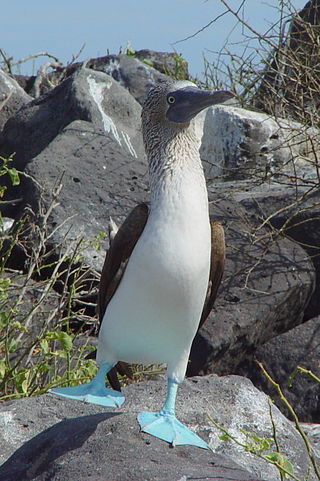
The Blue-footed booby

The blue-footed booby (Sula nebouxii) is a marine bird native to subtropical and tropical regions of the eastern Pacific Ocean. It is one of six species of the genus Sula – known as boobies. It is easily recognizable by its distinctive bright blue feet, which is a sexually selected trait. Males display their feet in an elaborate mating ritual by lifting them up and down while strutting before the female. The female is slightly larger than the male and can measure up to 90 cm (35 in) long with a wingspan of up to 1.5 m (5 ft).

The natural breeding habitats of the blue-footed booby are the tropical and subtropical islands of the Pacific Ocean. It can be found from the Gulf of California down along the western coasts of Central and South America down to Peru. Approximately one half of all breeding pairs nest on the Galápagos Islands. Its diet mainly consists of fish, which it obtains by diving and sometimes swimming underwater in search of its prey. It sometimes hunts alone, but usually hunts in groups.

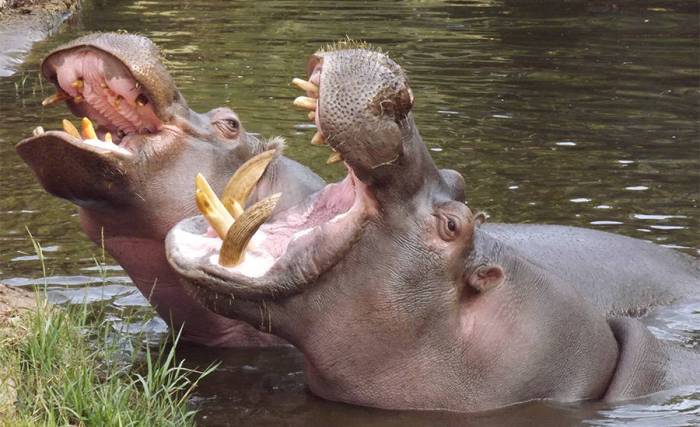
Cocaine Hippos

Could Pablo Escobar’s escaped hippos help the environment?

Colombia’s “cocaine hippos” are making waves in their new home, but whether that’s a good thing or not depends on who you ask.

WHEN THE NOTORIOUS drug lord Pablo Escobar was shot dead in 1993, the Colombian government took control of his luxurious estate in northwestern Colombia, including his personal zoo. Most of the animals were shipped away, but the four hippopotamuses—of which Escobar was especially fond—were left to fend for themselves in a pond. Now, there are dozens and dozens of them.

For over a decade the Colombian government has been pondering how to best curb the growing population, a strategy largely supported by conservation experts. But not everyone is on board. Without direct evidence that the animals are doing harm, some ecologists argue that there’s no reason to cull or relocate them. Indeed, the hippos could fill in for species that humans pushed to extinction thousands of years ago—an idea known as rewilding.

When the hippos were left behind, it accidentally kicked off a rewilding experiment that’s now been running for more than 25 years. The first results of this experiment are trickling in and much like the large animals, they’re muddying the waters.

Known unknowns

The hippos have escaped Escobar’s former ranch and moved into Colombia’s main river, the Magdelena. Spread over a growing area, nobody knows exactly how many there are—but estimates indicate there may be a total population between 80 and 100, says Jonathan Shurin, an ecologist with University of California San Diego who studies the animals.

That’s at least a couple dozen higher than estimates just two years ago. Given that there were four in 1993, the population appears to be growing exponentially. “Within a couple of decades, there could be thousands of them.”

The hippos present quite a problem for the government. David Echeverri, a researcher with the Colombian government’s environmental agency Cornare, which is overseeing management of the animals, says he has no doubt they act like an invasive species. If allowed to remain unchecked, they will displace endemic animals like otters and manatees, he says. They also pose a danger to local residents since they can be territorial and aggressive, though no serious injuries or deaths have occurred as yet.

After one hippo was killed in 2009, there was a quick public outcry, quashing any plans to cull them. Instead, the government has been investigating ways to sterilize the creatures, or to move them out of the wild into captive facilities, Echeverri says. But the animals weigh thousands of pounds and aren’t exactly fond of human handling, so relocating or castrating them is both dangerous, difficult, and expensive. One juvenile hippo was successfully moved to a Colombian zoo in September 2018, but it cost 15 million pesos (about $4,500 USD).

South America lost dozens of giant herbivore species in the last 20,000 years or so, including the somewhat hippo-esque toxodons, which may have been semi-aquatic, as well as water-loving tapirs. Although several tapir species remain today, all are declining. “Hippos could likely contribute a partial restoration of these effects, likely benefitting native biodiversity overall,” Svenning says. He’d let the hippos be for now, while monitoring the creatures to ensure they don’t become a problem.

Jonathan Shurin, an ecologist with University of California San Diego who studies the animals notes that the animals may be providing a valuable service for native plants that once relied on large, now-extinct mammals to disperse their seeds. “We’re planning to look at their poop and see what’s in there,” he says.

But while he says it’s possible they’re stepping into roles that have been vacant for millennia, that may not be something the humans in the area ultimately want. No one really knows how native wildlife like manatees, river turtles, and otters will be affected by that kind of rewilding, and more hippos may mean increased conflict with people.

“Right now, the people are just coexisting with them,” he says. But that could change if this population of notoriously disagreeable animals grows exponentially. “There’s concern about public safety.”

They also attract tourists and tourism dollars, which my help offset some concerns about the animals. Upwards of 50,000 tourists visit Hacienda Napoles every year, according to some estimates.

For now, without immediate plans to relocate or sterilize all the animals, the creatures will continue to fend for themselves and expand. Shurin looks forward to studying the long-term impacts of their residency, assuming they indeed remain. “It’s a big experiment,” says Shurin—and “we’re going to find out.”

National Geographic

Japanese spa offers ‘exorcism’ for your dog

Rascal, a Chinese Crested, is poses for a portrait after competing in the World's Ugliest Dog Competition in Petaluma, California on June 26, 2015. Quasi Modo went on to win first prize as the ugliest dog in the competition.  AFP PHOTO/JOSH EDELSON        (Photo credit should read Josh Edelson/AFP/Getty Images)


A Japanese dog spa has taken pet pampering to a whole new level by offering “exorcisms” for their furry guests.

The D+Kirishima spa not only offers the latest in formal kaiseki doggy-owner dinners and spa baths together (yes, together in the same bath), but also a package called the “Pet Dog Exorcism Plan.”

A senior Shinto priest will come to the spa to conduct a ceremonial blessing to rid your pup of bad spirits and pray for its future health.

The ceremony is especially suggested for dogs in their “unlucky health years.”

“Seven-year-old, 10-year-old, and 13-year-old dogs need to be careful of their health, as it’s easier in those years for them to gets diseases of aging,” according to the spa’s pitch for the package.

“The exorcism for your dog is celebrated along with its owner at the Shingariyu shrine within the hotel.”

It only takes 30 minutes, according to the site. And it costs $430 — room and pet-owner dinner included.


dog


dogs


The Japanese must have something similar for cats. Some need help.


cats