Animals





Serbian Influencer Narrowly Escapes Empty Bear’s Den When Creature Comes
A Serbian influencer is lucky to be alive after he foolishly climbed into an empty bear’s den and had to deftly escape from the predicament when the sizeable creature returned home. Stefan Jankovic reportedly shared footage of the unnerving misadventure, which unfolded in the village of Gornja Paklenica, on social media over the weekend. In the video, the young man crouches down inside the cavernous den before turning his camera to the entrance to show the unsettling animal looking down into the darkness and sniffing as if it can detect the undoubtedly terrified interloper.
Fortunately, the bear opted not to charge down and confront the trespassing young man. That said, Jankovic found himself stuck as the only means of escape meant exiting through the hole where the creature stood guard. Amazingly, that’s precisely what the influencer did, slowly clamoring out of the cavern past the animal, which sniffed at his head and camera. During the incredibly close encounter, Jankovic looked terrified as the bear was mere inches from his face, though thankfully he was allowed to peacefully pass by the creature without being attacked. While the stunt wound up receiving worldwide attention, the influencer would probably be wise not to tempt fate with a sequel to the widely seen video.
Beluga Whales, Dolphins, Cats and Ravens, all Top Secret Spies
Russian ‘spy whale’ was shot, animal groups say
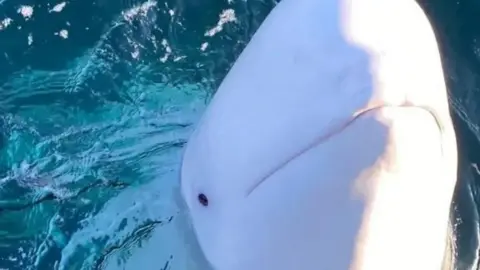
The mammal was known locally as Hvaldimir, a pun on the Norwegian word for whale, “hval,” and Russian President Vladimir Putin’s first name
A beluga whale suspected of being a Russian spy found dead off the Norwegian coast was shot, animal rights activists have claimed.
The body of the otherwise healthy and relatively young animal – nicknamed Hvaldimir – was found floating in a bay off the country’s south-western coast.
Animal rights groups said the whale was found with bullet wounds and had been shot in a “heinous crime”.
“We will pursue justice for Hvaldimir,” One Whale founder Regina Haug vowed in a statement on social media.
One Whale was founded to track the beluga, which rose to fame after being spotted in Norwegian waters five years ago.
The pale whale was seen with a GoPro camera attached to a harness that read “Equipment of St Petersburg” – sparking speculation that the curious mammal could be engaged in espionage.
It became known locally as Hvaldimir, a pun on the Norwegian word for whale, “hval,” and Russian President Vladimir Putin’s first name.
The Arctic mammal’s body was found floating off the south-western town of Risavika on 1 September and taken to the nearest port for examination.
Noah and One Whale said they had filed a complaint with Norwegian police asking them to open a criminal investigation.
“He had multiple bullet wounds around his body,” Ms Haug from One Whale said via its official Instagram account after viewing the body on Monday.
Photographs published by One Whale on social media appear to show what they say are bullet wounds in Hvaldimir’s bloodied body.
“The injuries on the whale are alarming and of a nature that cannot rule out a criminal act – it is shocking,” said Noah director, Siri Martinsen.
Cats, dolphins and one smart raven: the CIA’s secret animal spies
Washington (AFP) – In early 1974, Do Da was top in espionage class, on the way to becoming a high-flying CIA agent: he handled himself better in the rough, carried heavier loads, and could brush off attackers.
But on his toughest-yet spy school test, he disappeared — done in by some of his own kind: ravens.
The bird was a central figure in a decade-long US Central Intelligence Agency program to train animals as agents, helping Washington fight the Cold War against the Soviet Union.
On Thursday, the CIA released dozens of files from its tests on cats, dogs, dolphins and on birds from pigeons to some of the smartest: ravens and crows.
It studied cats as possible loose-roaming listening devices — “audio surveillance vehicles” — and put electrical implants in dogs’ brains to see if they could be remotely controlled.

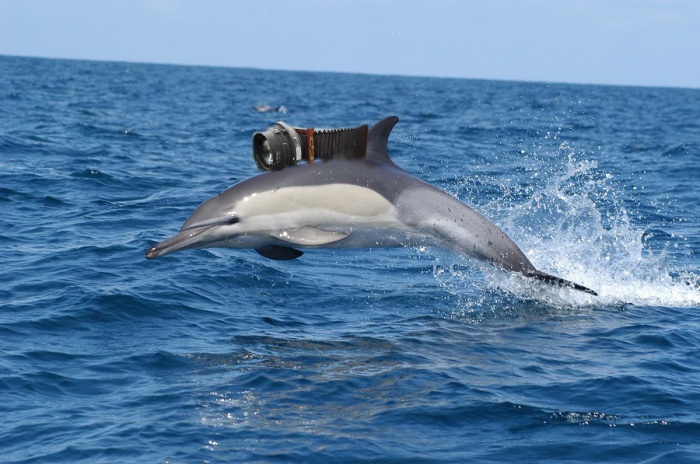
Neither of those programs went very far. More effort was put into training dolphins as potential saboteurs and helping spy on the Soviet Union’s development of a nuclear submarine fleet, perhaps the most potent challenge to US power in the mid-1960s.
Projects Oxygas and Chirilogy sought to see if dolphins could be trained to replace human divers and place explosives on moored or moving vessels, sneak into Soviet harbors and leave in place acoustic buoys and rocket detection units, or swim alongside submarines to collect their acoustic signatures.
Those programs, too, were given up, left to the US Navy which to this day makes use of dolphins and seals.
– Hawks and owls –
But what also grabbed the US spy chiefs’ imagination in the Cold War days was birds — pigeons, hawks, owls, crows and ravens, and even flocks of wild migratory birds.
For the latter, the agency enlisted ornithologists to try to determine which birds regularly spent part of the year in the area of Shikhany in the Volga River Basin southeast of Moscow, where the Soviets operated a chemical weapons facility.
The CIA saw the migratory birds as “living sensors” which, based on their feeding, would reveal what kinds of substances the Russians were testing, in their flesh.
In the early 1970s, the CIA turned to birds of prey and ravens, hoping they could be trained for “emplacement” missions like dropping a listening device on a windowsill, and photo missions.
In project Axiolite, bird trainers working on San Clemente island off southern California taught the birds to fly miles over the water between a boat and land.
If the training went well, a chosen candidate would have a tough mission: being smuggled to Soviet Russia, where it would be released secretly in the field, tasked to fly 15 miles (25 kilometers) carrying a camera to snap pictures of a radar for SA-5 missiles, and fly back.
They had red-tailed and Harris’s hawks, great horned owls, a vulture, and a cockatoo.
It was not easy. A cockatoo was “a clever flyer” but “maybe too slow to avoid gull attacks.”
Two falcons died from illness; another promising candidate lost feathers and trainers had to wait for it to molt and grow them back.
– ‘Star’ of the project –
The most promising flyer was Do Da, the raven. In just three months, Do Da went from a successful 3/4-mile trip to six miles from shore to boat, and then four miles back to shore on the same day.
He was the most promising candidate for the Russia mission, the “star of this project,” one scientist wrote, who figured out the right altitudes in the right winds, and acquired “sufficient guile to outwit the native ravens and gulls,” which hid for attacks on him.
But on a training mission he was attacked by “the usual pair” of ravens — and was not seen again.
The scientists were deeply dismayed. “He had a large bag of tricks and was loved by all,” one wrote.

Manatee mummy and calf charm wildlife photo judges

A manatee and its calf drift underwater in Hunter Springs, Florida.
An algal bloom in the area had caused a decline in the eelgrass beds that provide them with food, but the local community restored the habitat, resulting in more manatees being recorded than ever before.
The photo taken by Dr Jason Gulley, who is also a geologist, is among several highly commended in this year’s Wildlife Photographer of the Year.
Twist and Jump by Jose Manuel Grandío, Spain

Jose saw this stoat jump mid-air as an “expression of exuberance” as the small mammal hurled itself around in a fresh snowfall.
Highly Commended, Behaviour: Mammals
Location: Athose, Bourgogne-Franche-Comté, France
Deadly Bite by Ian Ford, UK
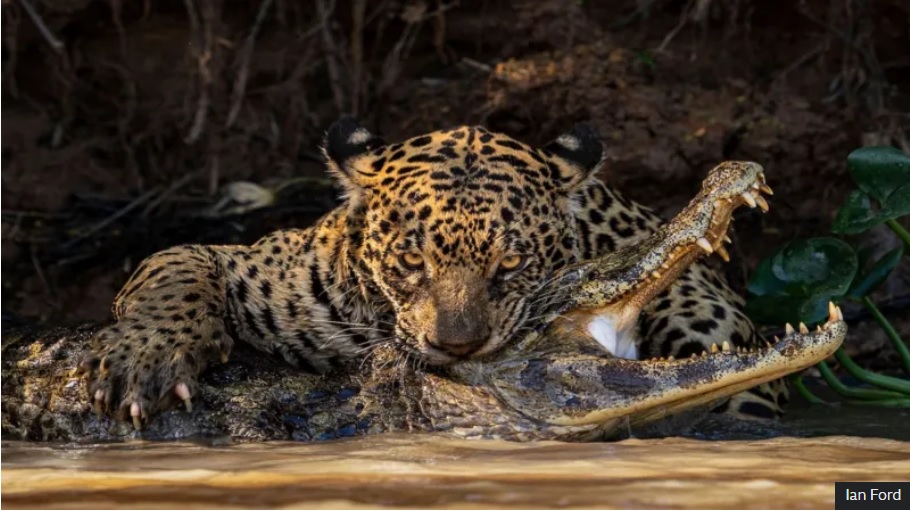
The radio alerted Ian that a jaguar had been spotted prowling a tributary of the São Lourenço river. Kneeling in the boat, he was in the perfect position when the cat delivered the skull-crushing bite to the unsuspecting yacare caiman.
Highly Commended, Behaviour: Mammals
Location: Pantanal, Mato Grosso, Brazil
Going with the Floe by Tamara Stubbs, UK
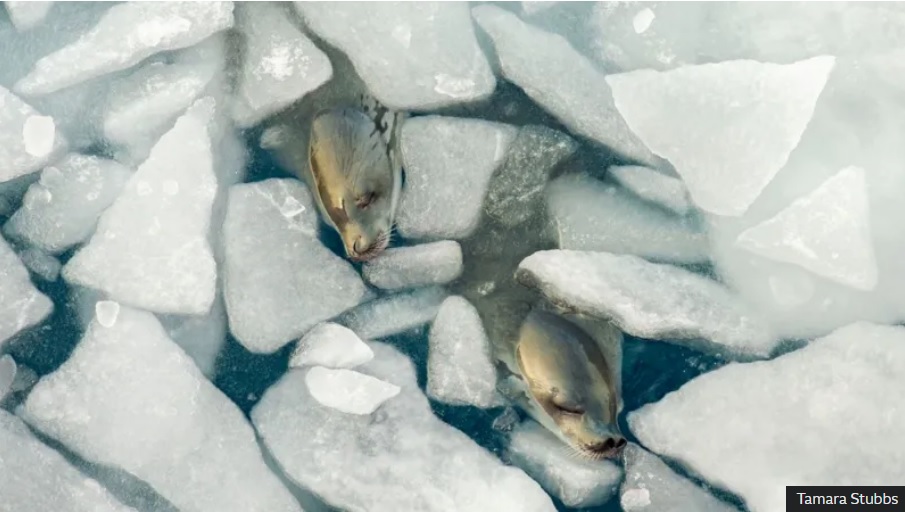
A standout moment on Tamara’s nine-week expedition in Antarctica’s Weddell Sea was when two seals bobbed up to the surface to take a deeper breath after falling asleep alongside the ship.
Highly Commended, Animals in their Environment
Location: Weddell Sea, Antarctica
Water Cats
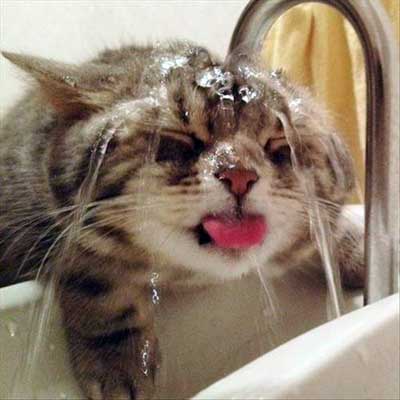
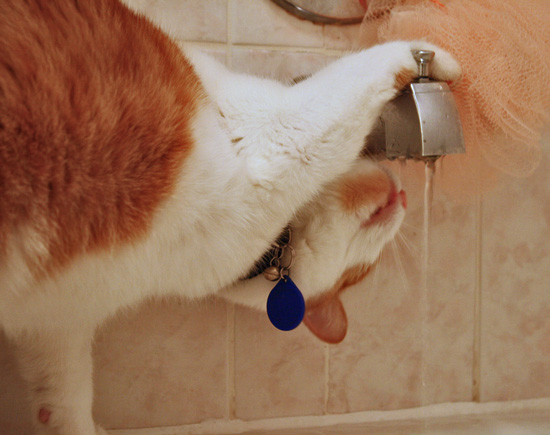
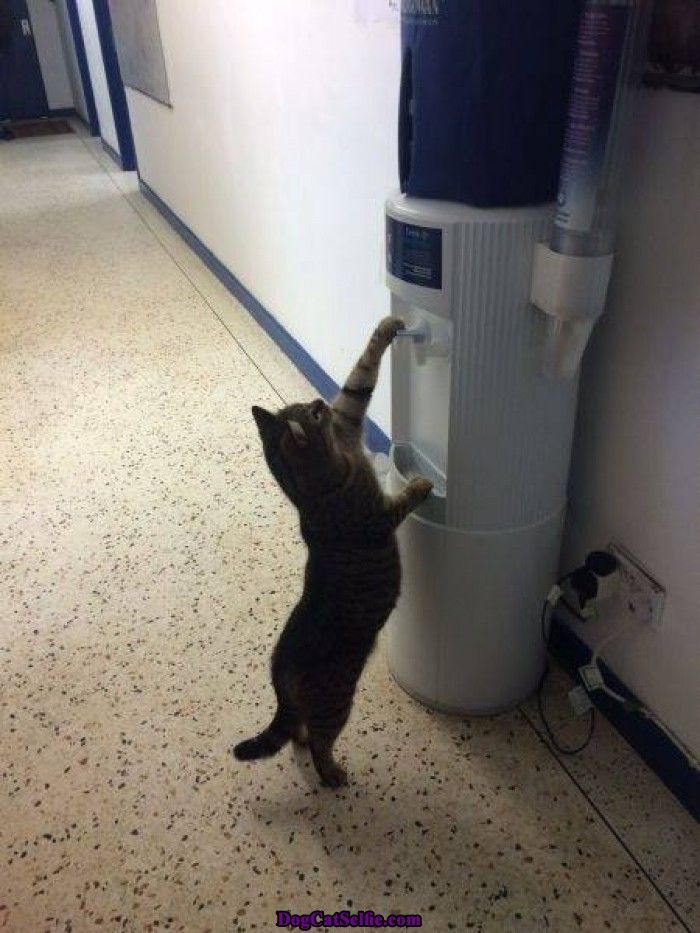
Cats do have a fascination with sinks and tubs, not to mention taps, faucets and even water coolers. And they say cats are afraid of the water.




Animal Kingdom
Stare down

Three faces in one

Best friend up early watching the bison
From wet to fluffy

Melissa and Gooch

No comment

Buddies


Great new day

Another load of tourists

Doesn’t even have to get its snout wet
Shark Seen Swimming in River Thames?
A pair of friends walking along Britain’s River Thames could not believe their eyes when they spotted what appeared to be a shark swimming in the iconic waterway. The wild sighting reportedly occurred earlier this week as Olivia Kaliszewska and Charlotte Webb were crossing the Hammersmith Bridge in London. To their profound surprise, when they looked down, they caught sight of a peculiar shape resembling a fin that had popped out of the water. Fortunately, Webb managed to capture footage of the odd form and subsequently posted it online, where it has unsurprisingly sparked a debate as to what the two friends had seen.
Webb believes that the fin belonged to a five-foot-long tope shark, that are known to live in the Thames estuary approximately forty miles away. That said, in a testament to the uncertainty surrounding the sighting, fellow witness Kaliszewska was skeptical of that assessment and joked that it could have been an alligator. Similarly split are experts in England as the Port of London Authority told the BBC that it was “unlikely that any sharks would swim that far upstream.” Meanwhile, a spokesperson with the London Wildlife Trust agreed with Webb’s tope theory and marveled at the duo’s “amazing and uncommon sighting of a rare and endangered fish.”
Pigs and Tigers, absolutely bizarre!
It is absolutely amazing that the Tiger’s instincts didn’t kick in and cause the big cat to feast on the piglets. These piglets should consider themselves fortunate. On the other hand, having worked on a large hog farm and seeing many strange things indeed, I’m surprised the big sow pig didn’t eat the tigers. m
Sai Mai, a 26-month-old female tiger, plays with baby pigs at a zoo in Thailand’s Chonburi province, 80 kilometers (50 miles) east of Bangkok, on May 7, 2004?. The Royal Bengali tigress was born in captivity and breast-fed by a female pig for four months after her birth.
The zoo is trying to boost visitor numbers by teaching domestic animals such as pigs, and wild animals such as tigers, to live together in harmony from an early age.


 The MarkoZen Blog