Three Little Pigs

apig

Little Boy Blue come and blow your horn
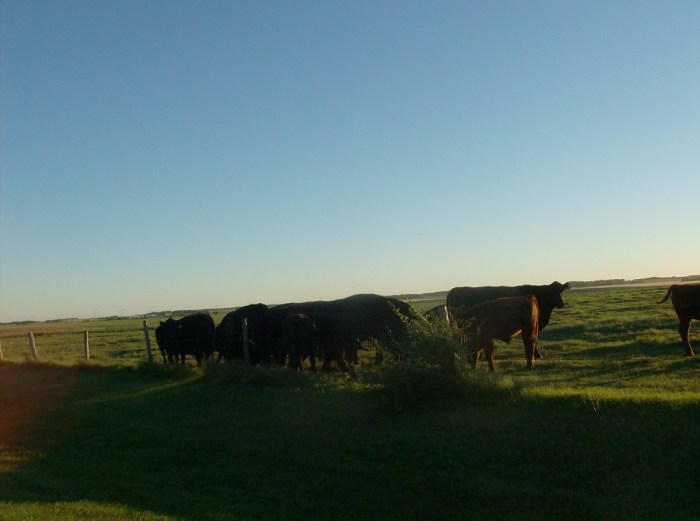
Sheep’s in the meadow, and the cow’s in the corn.
All the king’s horses and all the king’s men
Say they love the way you play that thing.

The king’s slave is a busy man,
But he loves the sound of your rock ‘n’ roll band.
The sheeps get a rhythm, and the cows get the tune.
Ain’t nobody out, “Go, Little Blue!”

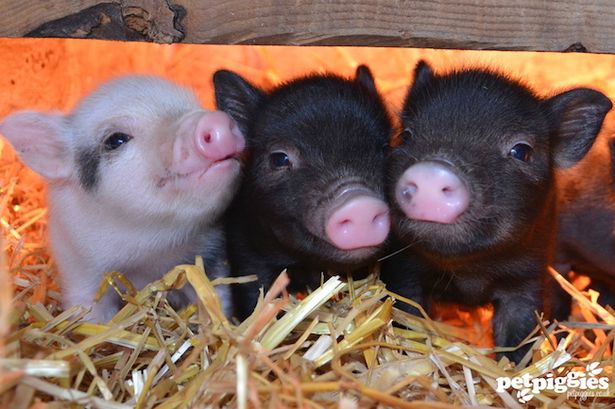
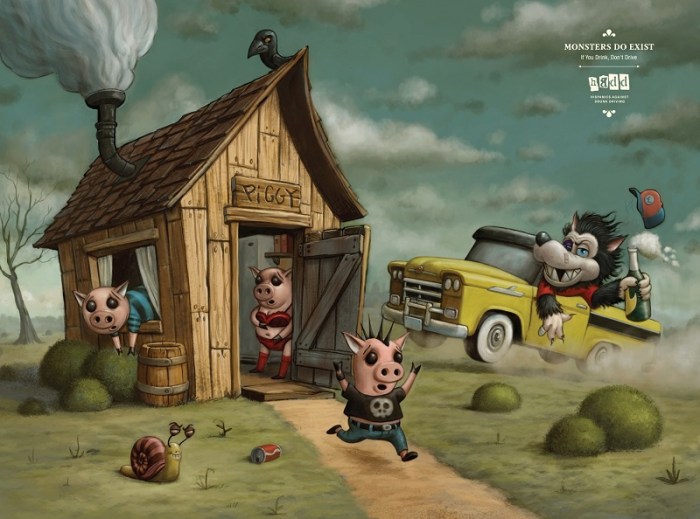
Three Little Pigs were going to the hop,
But the Big Bad Wolf wouldn’t let them stop.
Little Boy Blue played a crazy beat,
And knocked the Big Bad Wolf off his feet.
[Instrumental Interlude]

Little Boy Blue played a crazy sound.
The whole castle come a-rocking down.
Wise men, old men, Cinderella, too.
They all got together in the Ballroom ado.

Three Little Pigs were going to the hop,
But the Big Bad Wolf wouldn’t let them stop.
Little Boy Blue played a crazy beat,
And knocked the Big Bad Wolf off his feet.
Little Boy Blue made the whole town dance,
The swingin’est shepherd in all the land.
The Queen calls down, “Award him with a kiss.”
“Ah, your highness, ain’t nothing to this.”

Three Little Pigs were going to the hop,
But the Big Bad Wolf wouldn’t let them stop.
Little Boy Blue played a crazy beat,
And knocked the Big Bad Wolf off his feet.

apig1

One Hell of a Snail

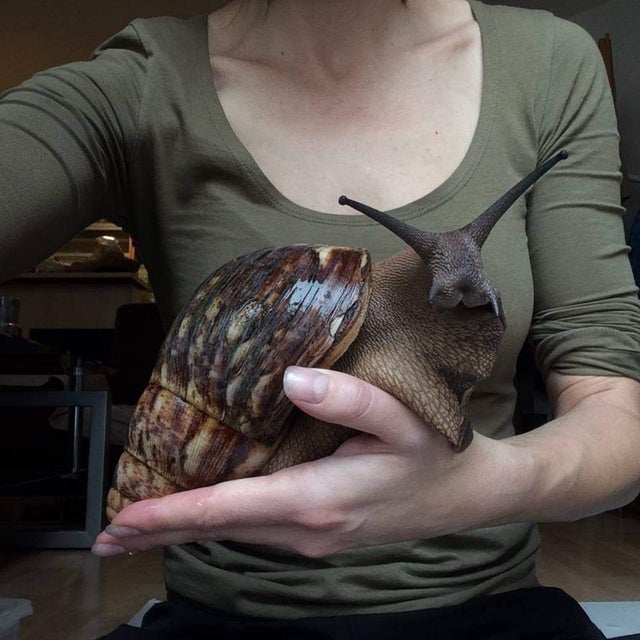
Achatina fulica is a species of large land snail that belongs in the family Achatinidae. It is also known as the Giant African land snail. It shares the common name “giant African snail” with other species of snails such as Achatina achatina and Archachatina marginata.

This snail species has been considered a significant cause in pest issues around the world. Internationally, it is the most frequently occurring invasive species of snail.

Outside of its native range, this snail thrives in many types of habitat in areas with mild climates. It feeds voraciously and is a vector for plant pathogens, causing severe damage to agricultural crops and native plants. It competes with native snail taxa, is a nuisance pest of urban areas, and spreads human disease. This snail is listed as one of the top 100 invasive species in the world.

The species is native to East Africa, but it has been widely introduced to other parts of the world through the pet trade, as a food resource, and by accidental introduction.

This species has been found in China since 1931 and its initial point of distribution in China was Xiamen. The snail has also been established on Pratas Island, of Taiwan, throughout India, the Pacific, Indian Ocean islands, Southeast Asia and the West Indies. The species was established in the United States in 1936. They were brought to the U.S. through imports. They were intended to be used for educational uses and to be pets. Some were also introduced because they were accidentally shipped with other cargo. Eradication is currently underway in Florida.

The adult snail is around 7 cm (2.8 in) in height and 20 cm (7.9 in) or more in length.

The shell has a conical shape, being about twice as high as it is broad. Either clockwise (dextral) or counter-clockwise (sinistral) directions can be observed in the coiling of the shell, although the dextral cone is the more common. Shell colouration is highly variable, and dependent on diet. Typically, brown is the predominant colour and the shell is banded. The shell is particularly tough and has the highest heavy metal content of any snail species.

Canadian “Raccoon Whisperer” Has Been Feeding Wild Raccoons Every Night for Over 20 Years

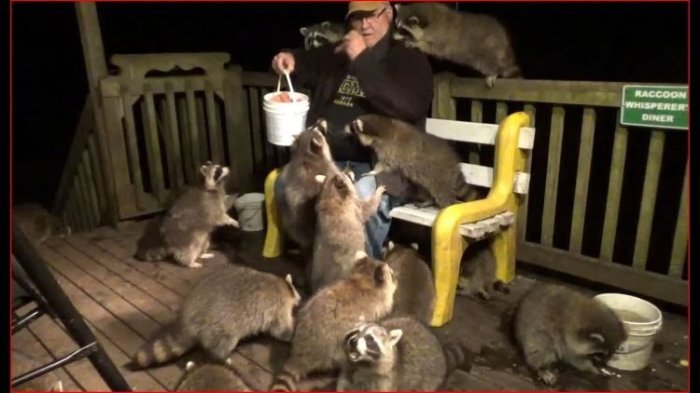
James Blackwood, a retired Mounted Police Officer from Nova Scotia, calls himself a “Raccoon Whisperer”, a worthy title, considering that he has been feeding dozens of them every night, for over two decades.

Blackwood and his furry friends recently became the talk of the interwebs, after a video showing the pensioner getting mobbed by a about two dozen raccoons, as he feeds them grapes and hot-dogs. This one video has been viewed 10 million times on YouTube, in the last two weeks, and has turned the retired RCMP officer into an overnight sensation. Truth be told, he already a healthy following on YouTube, with over 200,000 subscribers, but those were mainly racoon and animal lovers, now the whole world knows about the Racoon Whisperer.

It all started in 1999, when James’ late wife brought home a raccoon injured after being hit by a car near their property. She nursed it back to health and released it into the wild, only to have it return for snacks, only with a cub and more friends. The furry rodents have been lining up outside their home for food every evening since.

When Blackwood’s wife passed away in 2003, she made him promise to take care of the cats they had, and continue feeding their adorable forest friends. He kept his word, feeding the raccoons all sorts of treats every evening, and even posting videos of their feast on his YouTube channel, aptly named James Blackwood – Raccoon Whisperer.

According to Blackwood, the raccoons usually live in the forest around his property, and come out in the evening, around feeding time. They don’t just wait for him to call out for them to come get some treats, they literally stand outside his front door, sometimes making it hard for him to open the door.

While most viewers have described James Blackwood’s daily routine as “wholesome”, there were those who expressed concern about the raccoon’s health, as the pensioner isn’t always serving them healthy treats. However, the Raccoon Whisperer explained that the raccoons that end up on his doorstep routinely change, as the rodents move away to other areas, leaving their territory to other groups, so it’s not like they spend their whole lives feasting in his treats.

Apparently, James routinely gets offered donations by like minded animal lovers, but he always refuses, instead asking people to donate to their local animal rescue and welfare organizations.

Chimp is nanny to tiger cub

This two year old chimpanzee called Do Do is showing off a motherly instinct to rival even the most maternal of mankind. They were photographed at Samut Prakan Crocodile Farm and Zoo on the outskirts of Bangkok, Thailand. The farm doesn’t just contain crocodiles. Monkeys and tigers also live there, alongside elephants, lions, horses and hippopotamuses. These adorable images reveal the close bond that has formed between chimpanzee and a two month old tiger cub called Aorn.