Gigantic Gorilla

Gigantopithecus blacki (Greek and Latin for “Black’s giant ape”) is an extinct species of ape.

The only known fossils of G. blacki, or “Giganto,” are a few teeth and mandibles found in cave sites in Southeast Asia. As the name suggests, these are appreciably larger than those of living gorillas, but the exact size and structure of the rest of the body can only be estimated in the absence of additional findings. Recent research using high-precision absolute-dating methods has shown that after existing for about a million years, G. blacki died out as recently as 100,000 years ago. This means that it coexisted with (anatomically) modern humans (Homo sapiens) for a few dozen thousands of years, and with the most immediate ancestors of H. sapiens before that.

Based on the fossil evidence, paleontologists speculate that Gigantopithecus had an adult standing height of over three meters (ten feet) and a weight of 550 kg (1200 lb), and was thus much larger and heavier than current-day gorillas.

The species lived in Asia and probably inhabited bamboo forests, since its fossils are often found alongside those of extinct ancestors of the panda. Most evidence points to Gigantopithecus being a plant-eater. Some believe that being a plant-eating species, G. blacki was placed at the losing end of the evolutionary competition with humans.

The species’ method of locomotion is uncertain, as no pelvic or leg bones have been found. The dominant view is that it walked on all fours like modern gorillas and chimpanzees. However, a minority opinion favors bipedal locomotion, most notably as championed by the late Grover Krantz. It should be noted that this assumption is based only on the very few jawbone remains found, all of which are U-shaped and widen towards the rear. This widening, in Krantz’s view, allowed room for the windpipe to be positioned within the jaw, allowing the skull to sit squarely upon a fully-erect spine like modern humans, rather than roughly behind it, like the great apes.

Krantz’s studies of Bigfoot, which he called “Sasquatch,” (an Anglicization of the Halkomelem word sásq’ets meaning “wild man”)  led him to believe that this was an actual creature. He theorized that sightings were due to small pockets of surviving gigantopithecines, with the progenitor population having migrated across the Bering land bridge, which was later used by humans to enter North America. (Gigantopithecus lived alongside humans but is thought to have gone extinct 300,000 years ago in eastern Asia).

Dr. Grover Krantz was the most vocal supporter of the theory that Gigantopithecus blacki traversed the ice bridge from Asia to North America and exists today as the creature known as bigfoot.

After seeing footage stills of the Patterson-Gimlin film which appeared on the February 1968 cover of Argosy, Krantz was skeptical, believing the film to be an elaborate hoax, saying “it looked to me like someone wearing a gorilla suit”  and “I gave Sasquatch only a 10 percent chance of being real.”  After years of skepticism, Krantz finally became convinced of Bigfoot’s existence after analyzing the “Cripplefoot” plaster casts gathered at  Bossburg, Washington in December 1969. Krantz later studied the Patterson-Gimlin film in full, and after taking notice of the creature’s peculiar gait and purported anatomical features, such as flexing leg muscles, he changed his mind and became an advocate of its authenticity.  While in Bossburg, he also met John Willison Green and the two remained friends until Krantz’s death.

The Cripplefoot tracks, left in snow, purportedly showed microscopic dermal ridges (fingerprints) and injuries tentatively identified as clubfoot by primatologist John Napier.  Krantz asked Dutch professor A.G. de Wilde of the University of Groningen to examine the prints, who concluded that they were “not from some dead object with ridges in it, but come from a living object able to spread its toes.”  Krantz also attempted to have both the FBI and Scotland Yard study the dermal ridge patterns, and was told by renowned fingerprint expert John Berry, an editor of the journal Fingerprint Whorld, that Scotland Yard had concluded the prints were “probably real.” To his disappointment, a subsequent 1983 article in the journal Cryptozoology, titled “Anatomy and Dermatoglyphics of Three Sasquatch Footprints,”  was largely ignored.

Patterson-Gimlin Film

Giant ‘kraken’ carcass with dinner plate-size eyes washes ashore in South Africa

The massive, sucker-covered carcass of a giant squid washed onto the rocky shore of Scarborough Beach in Cape Town, South Africa, Tuesday (Aug. 16). The beast, which measured nearly 14 feet (4.3 meters) long, was the second giant squid to crop up on a beach in the region this year, according to the South African news site news24(opens in new tab).

The last known giant squid (Architeuthis dux) to wash ashore near Cape Town showed up about 6 miles (10 kilometers) northwest of Scarborough Beach, on Long Beach in Kommetjie, on April 30, Live Science previously reported. That cephalopod measured roughly 11.5 feet (3.5 m) long. For comparison, the largest giant squid ever seen measured a whopping 43 feet (13 m) long, and some studies suggest that the creatures could potentially reach 66 feet (20 m) long, although no squid of such size has ever been spotted.

The squid that washed onto Scarborough Beach this week seemed to be another A. dux specimen, said Mike Vecchione, a National Oceanic and Atmospheric Administration invertebrate zoologist stationed at the Smithsonian’s National Museum of Natural History in Washington, D.C. “Although other large squids exist, I am fairly certain this is a true giant squid,” he told Live Science in an email. 

Without an examination of its internal organs, it’s difficult to guess how the Scarborough Beach squid perished, Vecchione said. “Note that most of the skin has abraded and some of the arms are broken off, but this (especially the skin abrasion) can result from washing up on the rocky shore.” The remaining skin on the squid’s mantle — the muscular sheath that houses its organs — gleamed ghostly white in the sun.

It may be that the squid ventured into shallow, near-shore waters to feed and got struck by a ship propeller, “but this is difficult to prove without witnesses,” Dylan Clarke, a marine scientist and curator at Iziko South African Museum, told news24. “The literature … suggests that they come up into shallower waters because they display a behaviour called diel vertical migration. In other words, they venture into shallower waters during the evening to feed and migrate back to deeper waters during the day.”

Giant squid generally live in frigid waters some 1,640 to 3,280 feet (500 to 1,000 m) beneath the ocean surface, and they use their dinner plate-size eyes to peer through the inky darkness, according to the Smithsonian. Based on where the animals have washed ashore, scientists think the squids may inhabitat all the world’s oceans, but they’re most frequently seen on the shores of New Zealand and Pacific islands, on the east and west sides of the North Atlantic, and in the South Atlantic along the African coast.

“Strandings of Architeuthis on South African shores are not unusual at all,” Vecchione told Live Science. “It is one of several places around the world where they show up regularly.”

Officials gathered tissue samples from the squid carcass on Scarborough Beach, and these will soon be examined by researchers at the Iziko South African Museum, Gregg Oelofse, the City of Cape Town coastal manager, told news24. Scientists could use such samples to sequence the animal’s DNA and run chemical analyses to detect pollutants and stable isotopes — nonradioactive chemical elements with varying numbers of neutrons in their nuclei — in its flesh, Vecchione said. The isotope analysis would provide hints about the squid’s feeding history, as would an examination of the animal’s digestive system.

In addition, scientists could determine how old the squid was based on its reproductive organs and statoliths, small mineralized masses that sit inside sensory organs in the squid’s head and accumulate “growth rings” over time, Vecchione said. Past studies of these statoliths suggest that giant squid can live to be about 5 years old, according to the Smithsonian.

“The availability of information on giant squids is relatively poor and is either based on dead or dying animals that have been washed ashore or captured in commercial trawl nets,” Clarke told news24. The newfound Scarborough Beach squid will join a collection of giant squid specimens at the Iziko South African Museum that were largely acquired through such strandings or incidental catches during bottom trawls, he said.

The Bears of Summer

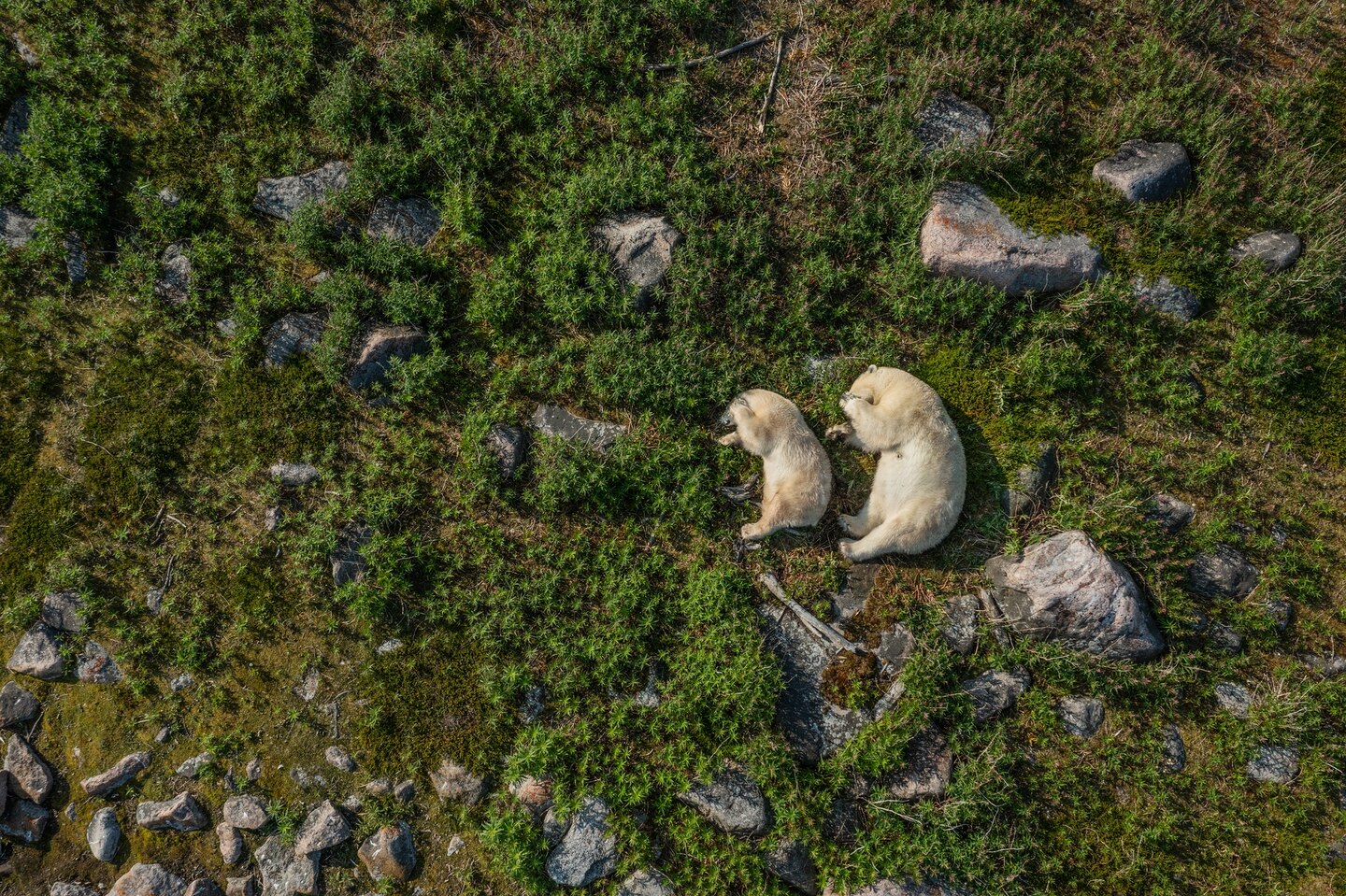
Even as a drone hovered above to get this shot, a large male polar bear that photographer Martin Gregus, Jr., calls Scar never stirred in this bed of fireweed. Gregus says he named many of the bears in hopes it would help people relate to them as individuals needing protection.

Picture of bear sleeping on its side on blooming fireweeds.

Snoozing in flower beds? Behold the bears of summer

A photographer spends two months in the Canadian Arctic and reveals a softer side of the world’s largest terrestrial predator.

Even as a drone hovered above to get this shot, a large male polar bear that photographer Martin Gregus, Jr., calls Scar never stirred in this bed of fireweed. Gregus says he named many of the bears in hopes it would help people relate to them as individuals needing protection.

Picture of two bears playing in the intertidal.

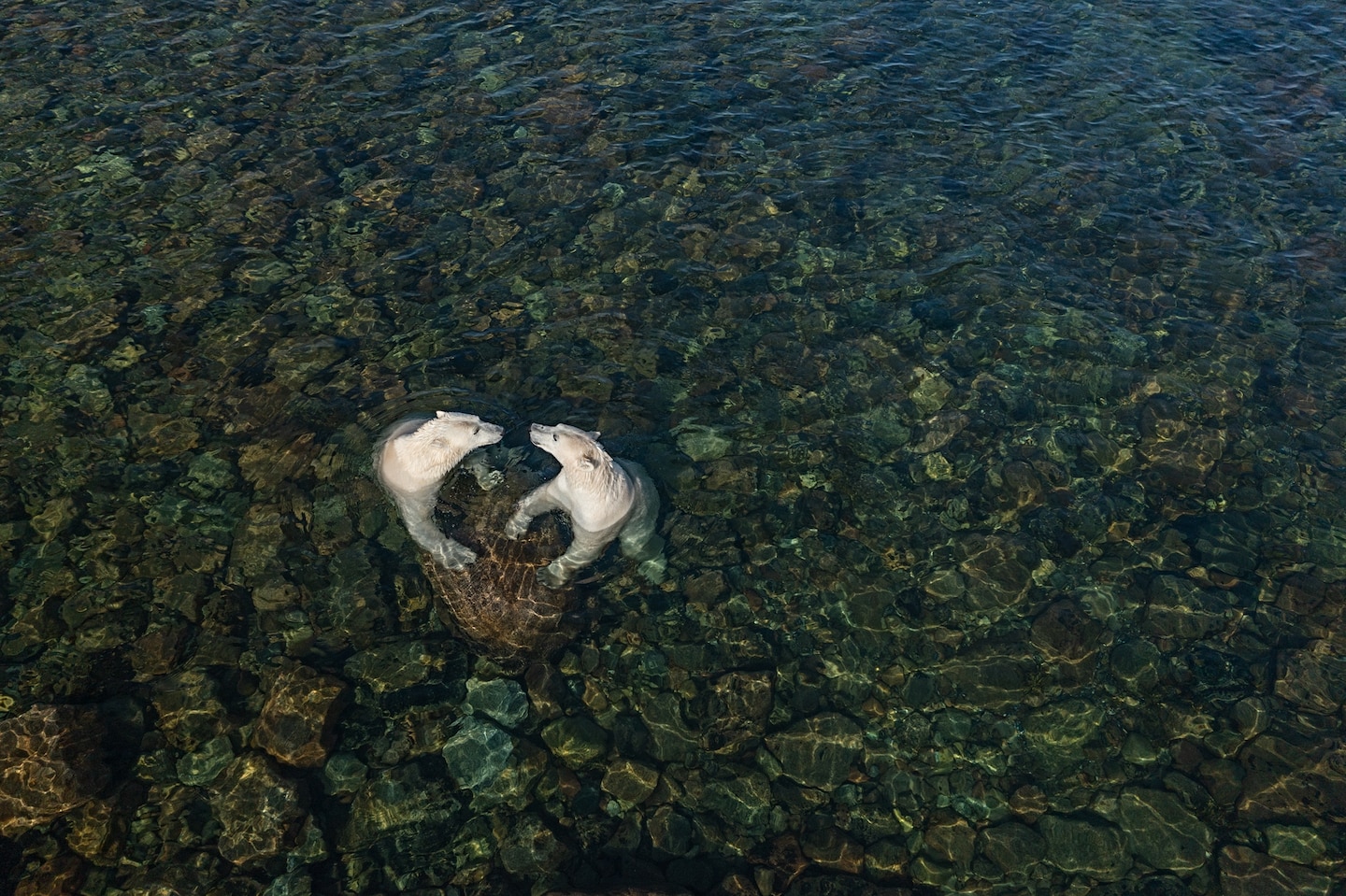
The bears that Gregus calls Betty and Veronica wrestled over this boulder for nearly an hour before he caught them forming the shape of a heart. The two seemed inseparable, often playing and hunting together.

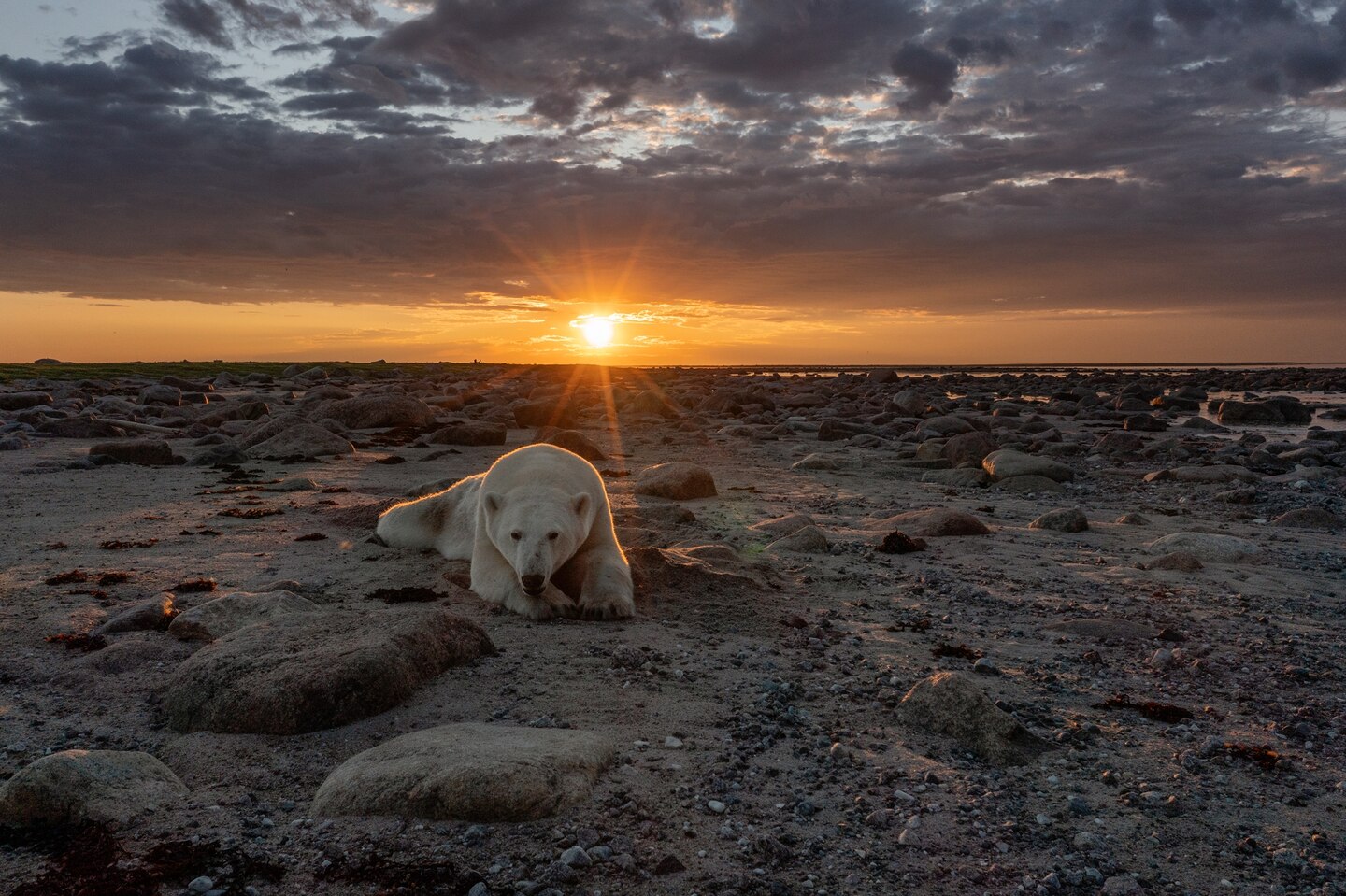
“You always see polar bears on ice and snow,” says photographer Martin Gregus, Jr. “But it’s not like they stop living in the summertime.” Determined to reveal this less depicted angle on the bears, he constructed a field station on the back of a small boat and spent 33 days north of Churchill, Manitoba, in the summers of 2020 and 2021. 

Picture of mother bear behind two grown-up kinds.
Picture of mom bear and her baby cub take shelter from a large storm.

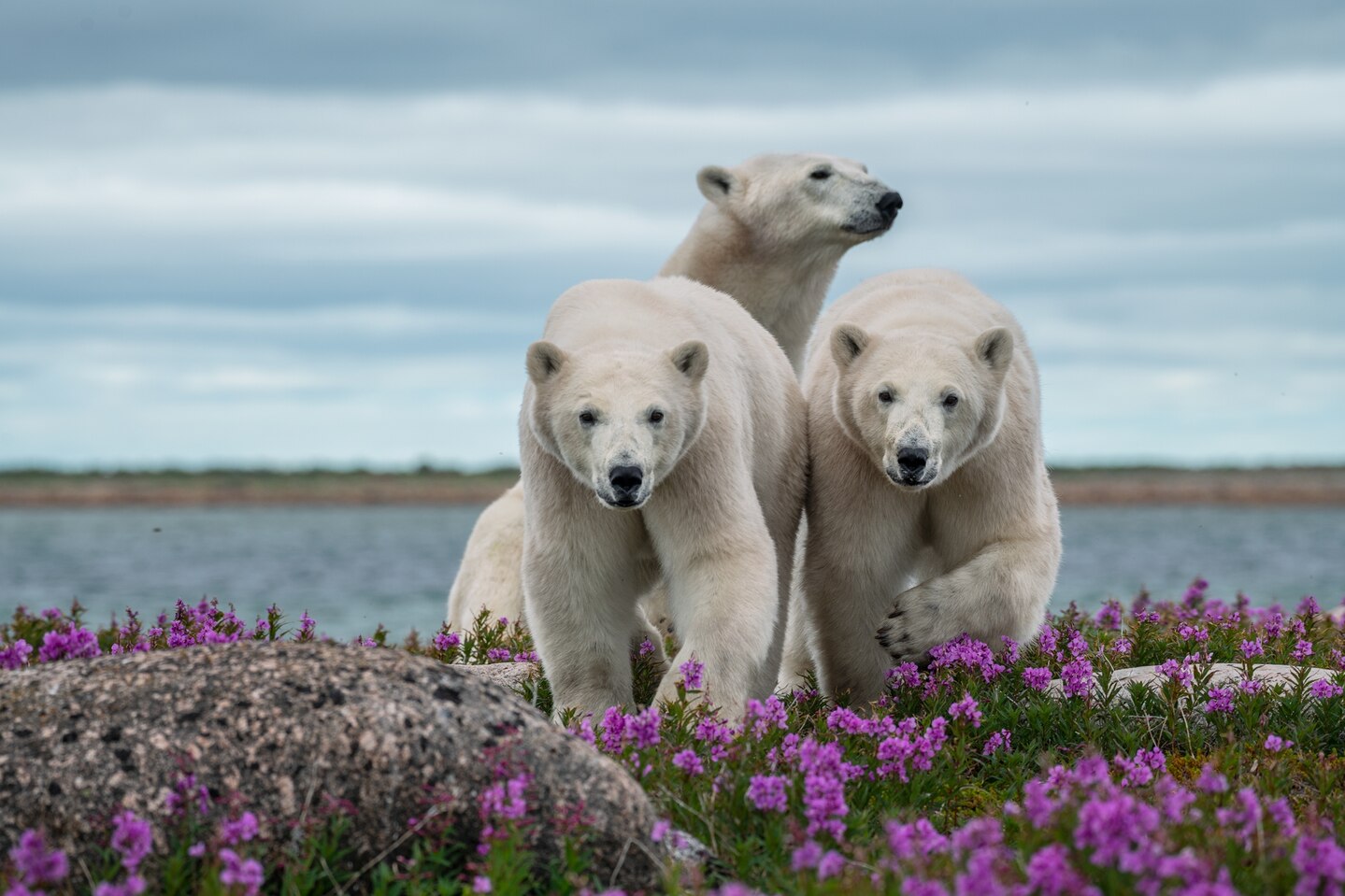
Top: Two large cubs appear to guard their mother while a male passes by, just out of the frame. For Gregus, the image recalls Cerberus, the multiheaded dog of Greek mythology.

Bottom: Aurora and her cub, Beans, hunker down as a storm approaches. Thunder and lightning have recently become more frequent in this region as a result of climate change, Gregus says. Every time the sky cracked, the bears started shaking, like dogs hearing fireworks.

Picture of swimming underwater bear from behind.

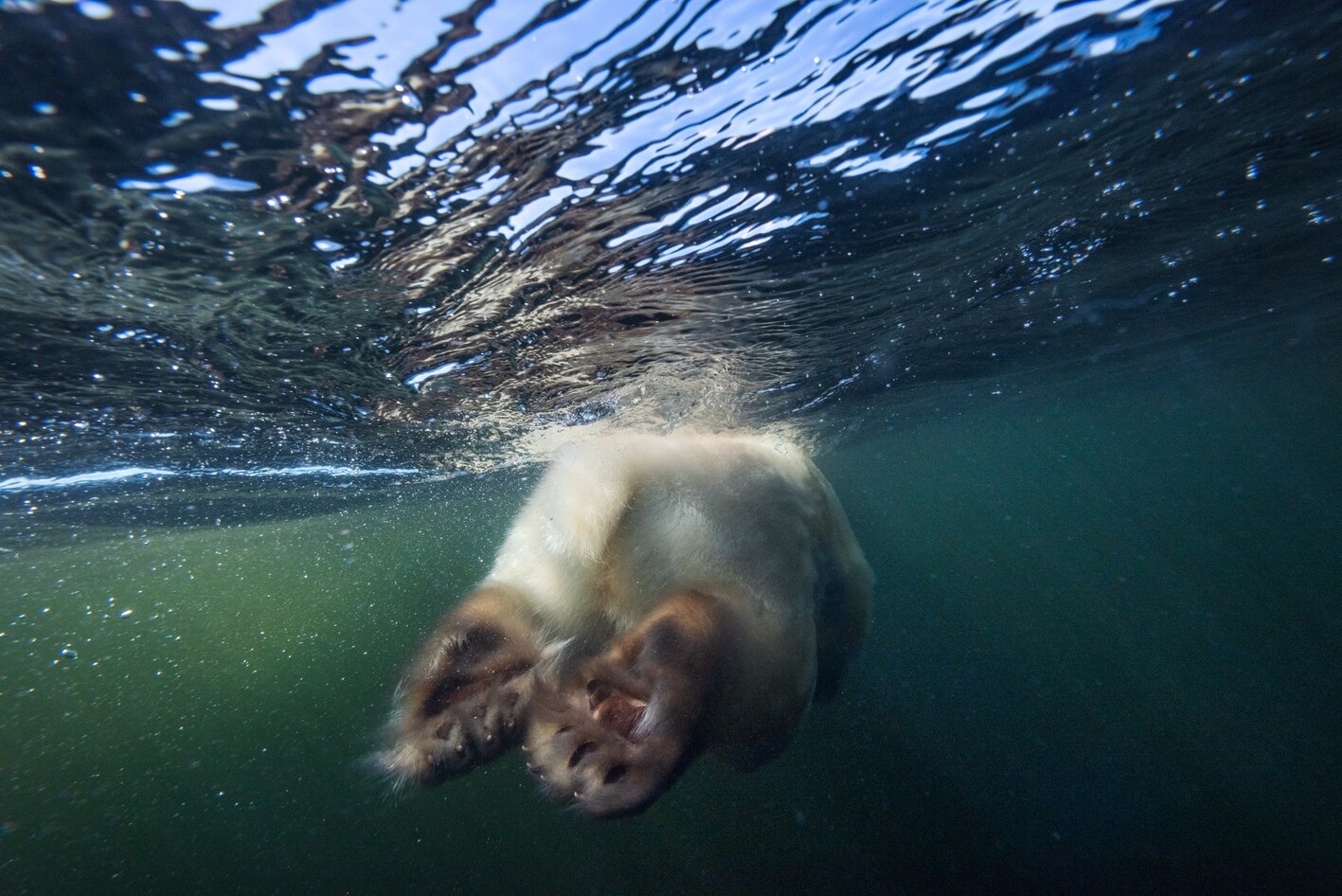
Polar bears spend so much time in the water that many scientists consider them to be marine mammals. In some cases, they’ve been recorded swimming for more than a week straight and clocking over 400 miles. To get underwater images like this one of a polar bear moving from melting sea ice onto dry land, Gregus developed camera rigs and techniques that allowed him to get close to the animals without being seen by them.

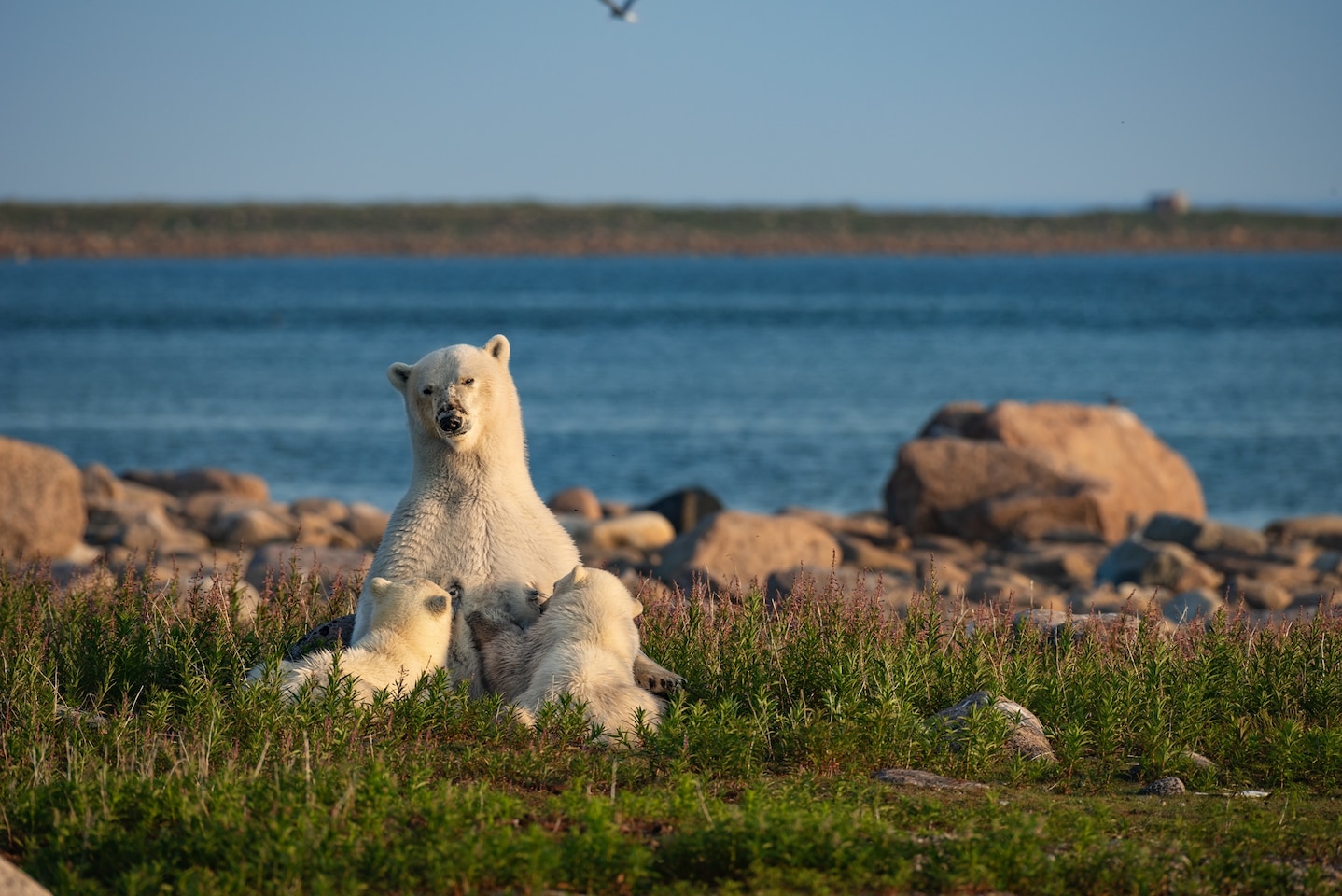
The more Gregus studied the bears, the more he learned of their personalities. There was the persistent cub he named Hercules. He lost a leg yet managed to survive his first two summers. An enormous female, Wanda, seemed to be feared by other bears but spent her days doing yoga-like stretches in the fireweed. Another female, Wilma, appeared to be so comfortable with Gregus that she’d nurse her cubs, Pebbles and Bamm-Bamm, close enough for him to hear their purring. Gregus also witnessed behaviors he’d rarely seen before, such as bears grazing on plants and hunting tern chicks by chasing them into the surf. For now, actions like those may be helping this polar bear population cope with the effects of climate change—but others elsewhere are starving.

“All of these pictures show bears that are fat, healthy, and playful,” Gregus says. So although from a global perspective everything may be going wrong for polar bears, “obviously something’s going right here.”

Picture of large bear in its back looking at the camera from tall grass.

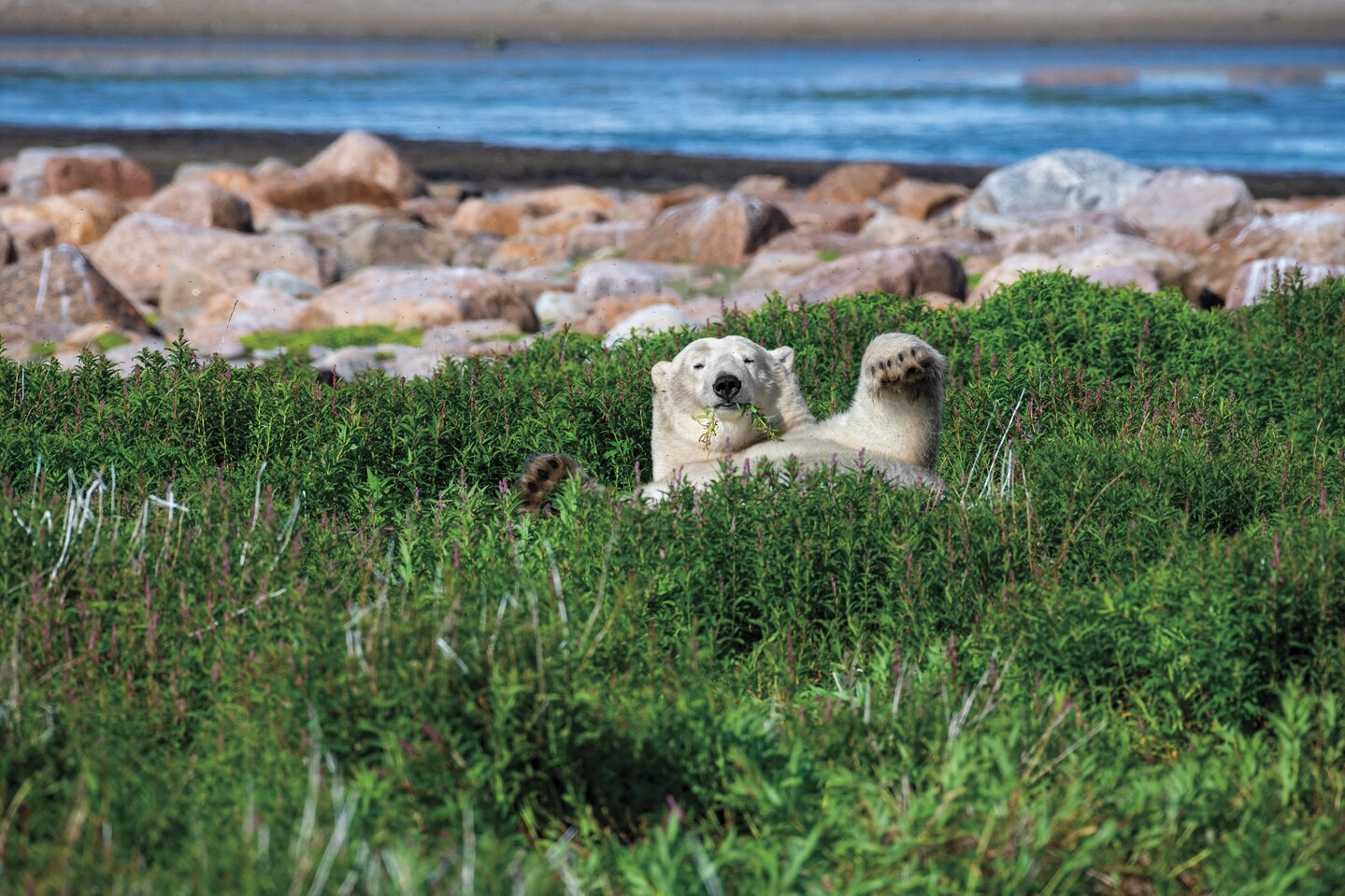
“We’d look around and say, ‘Where’s Wanda?’ Because if she was there, we didn’t have to worry about any other bears,” says Gregus, of the large but laid-back female.

Cubs weigh just one pound at birth, but a diet of milk that is extremely rich in fat helps them bulk up quickly. Each cub will nurse for at least 20 months, and they usually stay by their mother’s side for two years.
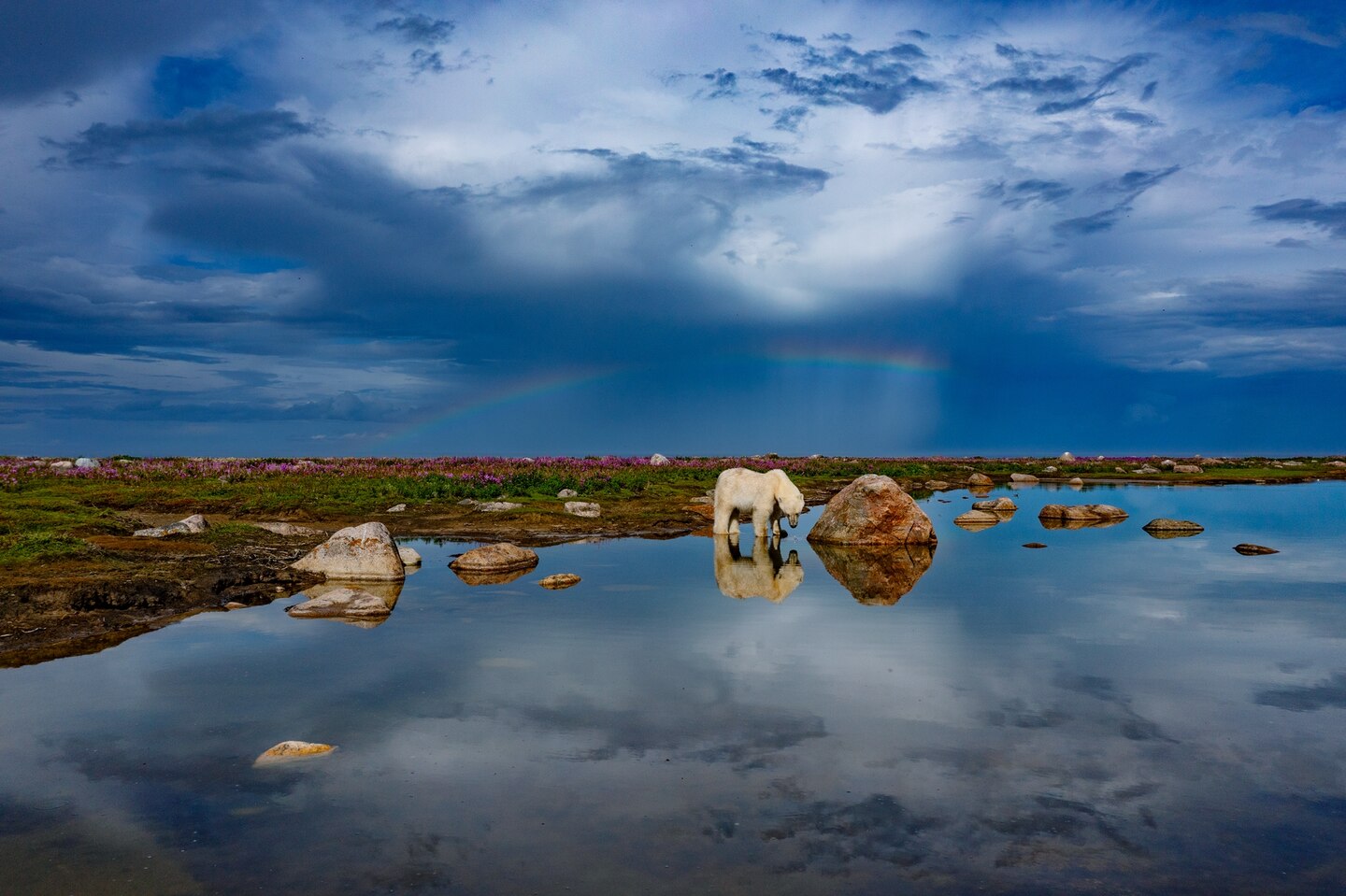
Following a colossal rainstorm, Gregus went searching for this shot while his crew bailed water out of the boat. “I looked outside and saw the rainbow, and I thought, OK, now I just need to find a bear,” he says.
Athena lounges with her three-legged cub, Hercules. Gregus can’t say for sure how the limb was lost, but he suspects an encounter with wolves may be the cause. The bears’ den is in wolf territory.
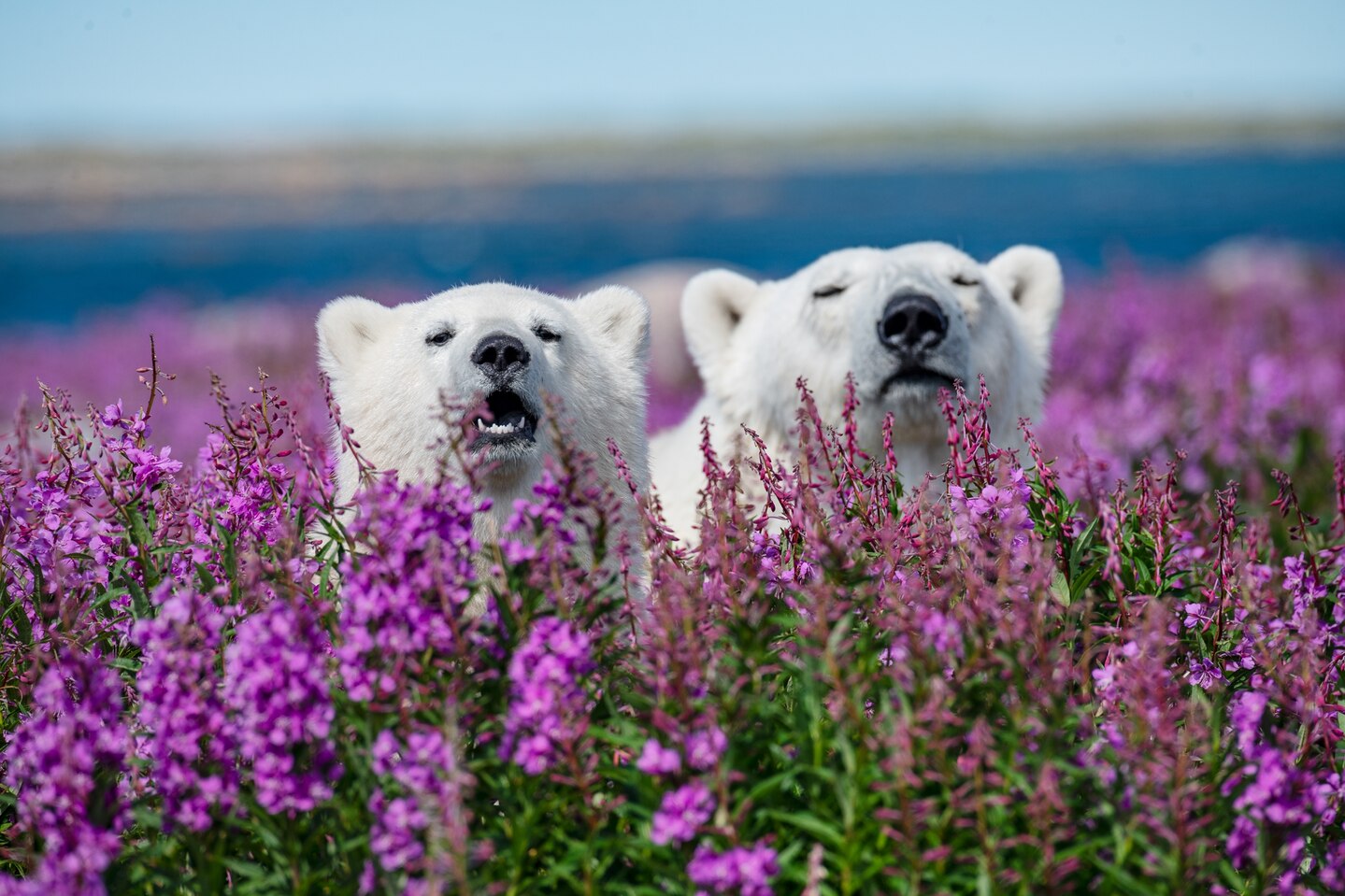
Beans and Aurora poke their heads above the blooming fireweed. Summer in the Arctic is vividly colorful.
“These bears are really thriving and adapting to the environment,” Gregus says. “But they’re not adapting fast enough in certain places, because the ice is melting too fast.”

Cubs weigh just one pound at birth, but a diet of milk that is extremely rich in fat helps them bulk up quickly. Each cub will nurse for at least 20 months, and they usually stay by their mother’s side for two years.

Cubs weigh just one pound at birth, but a diet of milk that is extremely rich in fat helps them bulk up quickly. Each cub will nurse for at least 20 months, and they usually stay by their mother’s side for two years.

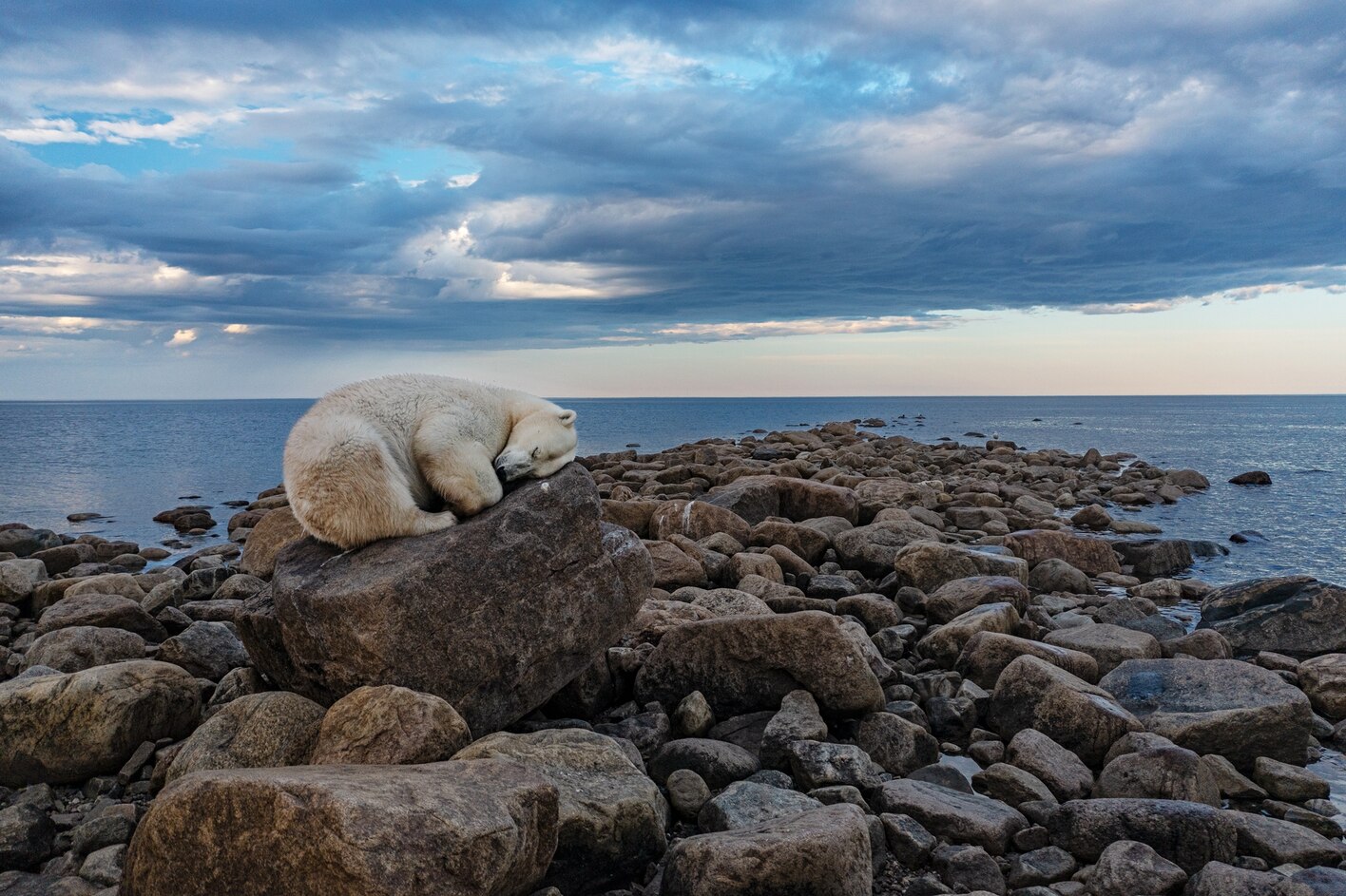
Picture of bear curls up on large rock.

In this part of the Arctic, everything’s flat, Gregus says. That means even a small boulder can provide a better view—if a bear hasn’t succumbed to sleep, that is. The bears, including Veronica (shown), often stood on this rock, scouring the area for seals to eat or bears to avoid. Gregus hopes to return to this coast, where he sees the bears “thriving and adapting to the environment.” But he knows that in most of their range, polar bears are suffering from the warming temperatures.

National Geographic

Mr. Ed the Talking Horse plays tricks on Clint Eastwood

Mister Ed is an American television sitcom produced by Filmways that aired in syndication from January 5 to July 2, 1961, and then on CBS from October 1, 1961, to February 6, 1966. The show’s title character is a talking horse which originally appeared in short stories by Walter R. Brooks.

Mister Ed is one of the few series to debut in syndication and be picked up by a major network for prime time. All 143 episodes were filmed in black and white.

The girlfriend in the clip is actress Donna Douglas who played Elly May Clampett in the Beverly Hillbillies TV series.

A Rare Situation where a Girl gets to Ride her Pet  

Hannah Simpson, of Southland, New Zealand, rides a 7-year-old dairy cow most days. It started when her parents said she wasn’t allowed to have a horse, the then-11-year-old got creative. Now she and Lilac race across fields and master jumps, as documented on Simpson’s Instagram page. Simpson, who works at a dairy farm, says she’s tried to ride other cows but has only had one other that could jump. While Simpson admits she was a particularly adventurous kid when she started, she wouldn’t necessarily advise other people to try riding cows.

cow1
cow2
cow

cow3

In the United States some rodeos have cow riding for women. These are not docile dairy cows, but mean ornery spinster cows. Hannah should consider joining the circuit. 

cow-riding

Bear rings doorbell at South Carolina home

July 27 (UPI) — A South Carolina woman’s security camera captured video of the moment a bear strolled onto her front porch and rang the doorbell in the middle of the night.

Wendy Watson said the doorbell camera at her Greenville County home started recording about 3:30 a.m. Tuesday, triggered by the motion of a bear that wandered up to her front door.

The video shows the bear reach out with its paw to ring the doorbell.

“The bear kind of ambled up on the porch and was reaching up around the doorbell and there was a little nose print on the window that you can see,” Watson told WHNS-TV.

“He looked around a little bit and went back down. and while he was out here, he ate a lot of bird seed.”

Watson said the bear is a regular visitor to her neighborhood and has destroyed two of her bird feeders.

More bear action: