Author: Markozen.com
Beluga Whales, Dolphins, Cats and Ravens, all Top Secret Spies
Russian ‘spy whale’ was shot, animal groups say
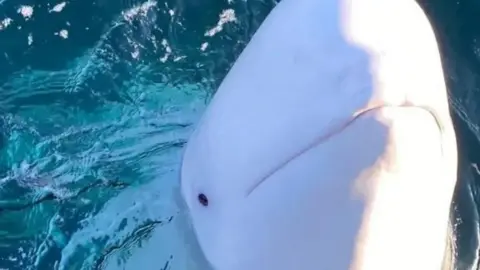
The mammal was known locally as Hvaldimir, a pun on the Norwegian word for whale, “hval,” and Russian President Vladimir Putin’s first name
A beluga whale suspected of being a Russian spy found dead off the Norwegian coast was shot, animal rights activists have claimed.
The body of the otherwise healthy and relatively young animal – nicknamed Hvaldimir – was found floating in a bay off the country’s south-western coast.
Animal rights groups said the whale was found with bullet wounds and had been shot in a “heinous crime”.
“We will pursue justice for Hvaldimir,” One Whale founder Regina Haug vowed in a statement on social media.
One Whale was founded to track the beluga, which rose to fame after being spotted in Norwegian waters five years ago.
The pale whale was seen with a GoPro camera attached to a harness that read “Equipment of St Petersburg” – sparking speculation that the curious mammal could be engaged in espionage.
It became known locally as Hvaldimir, a pun on the Norwegian word for whale, “hval,” and Russian President Vladimir Putin’s first name.
The Arctic mammal’s body was found floating off the south-western town of Risavika on 1 September and taken to the nearest port for examination.
Noah and One Whale said they had filed a complaint with Norwegian police asking them to open a criminal investigation.
“He had multiple bullet wounds around his body,” Ms Haug from One Whale said via its official Instagram account after viewing the body on Monday.
Photographs published by One Whale on social media appear to show what they say are bullet wounds in Hvaldimir’s bloodied body.
“The injuries on the whale are alarming and of a nature that cannot rule out a criminal act – it is shocking,” said Noah director, Siri Martinsen.
Cats, dolphins and one smart raven: the CIA’s secret animal spies
Washington (AFP) – In early 1974, Do Da was top in espionage class, on the way to becoming a high-flying CIA agent: he handled himself better in the rough, carried heavier loads, and could brush off attackers.
But on his toughest-yet spy school test, he disappeared — done in by some of his own kind: ravens.
The bird was a central figure in a decade-long US Central Intelligence Agency program to train animals as agents, helping Washington fight the Cold War against the Soviet Union.
On Thursday, the CIA released dozens of files from its tests on cats, dogs, dolphins and on birds from pigeons to some of the smartest: ravens and crows.
It studied cats as possible loose-roaming listening devices — “audio surveillance vehicles” — and put electrical implants in dogs’ brains to see if they could be remotely controlled.

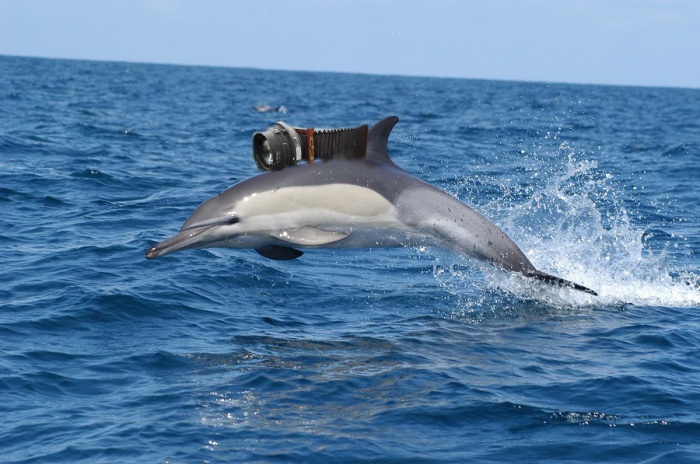
Neither of those programs went very far. More effort was put into training dolphins as potential saboteurs and helping spy on the Soviet Union’s development of a nuclear submarine fleet, perhaps the most potent challenge to US power in the mid-1960s.
Projects Oxygas and Chirilogy sought to see if dolphins could be trained to replace human divers and place explosives on moored or moving vessels, sneak into Soviet harbors and leave in place acoustic buoys and rocket detection units, or swim alongside submarines to collect their acoustic signatures.
Those programs, too, were given up, left to the US Navy which to this day makes use of dolphins and seals.
– Hawks and owls –
But what also grabbed the US spy chiefs’ imagination in the Cold War days was birds — pigeons, hawks, owls, crows and ravens, and even flocks of wild migratory birds.
For the latter, the agency enlisted ornithologists to try to determine which birds regularly spent part of the year in the area of Shikhany in the Volga River Basin southeast of Moscow, where the Soviets operated a chemical weapons facility.
The CIA saw the migratory birds as “living sensors” which, based on their feeding, would reveal what kinds of substances the Russians were testing, in their flesh.
In the early 1970s, the CIA turned to birds of prey and ravens, hoping they could be trained for “emplacement” missions like dropping a listening device on a windowsill, and photo missions.
In project Axiolite, bird trainers working on San Clemente island off southern California taught the birds to fly miles over the water between a boat and land.
If the training went well, a chosen candidate would have a tough mission: being smuggled to Soviet Russia, where it would be released secretly in the field, tasked to fly 15 miles (25 kilometers) carrying a camera to snap pictures of a radar for SA-5 missiles, and fly back.
They had red-tailed and Harris’s hawks, great horned owls, a vulture, and a cockatoo.
It was not easy. A cockatoo was “a clever flyer” but “maybe too slow to avoid gull attacks.”
Two falcons died from illness; another promising candidate lost feathers and trainers had to wait for it to molt and grow them back.
– ‘Star’ of the project –
The most promising flyer was Do Da, the raven. In just three months, Do Da went from a successful 3/4-mile trip to six miles from shore to boat, and then four miles back to shore on the same day.
He was the most promising candidate for the Russia mission, the “star of this project,” one scientist wrote, who figured out the right altitudes in the right winds, and acquired “sufficient guile to outwit the native ravens and gulls,” which hid for attacks on him.
But on a training mission he was attacked by “the usual pair” of ravens — and was not seen again.
The scientists were deeply dismayed. “He had a large bag of tricks and was loved by all,” one wrote.

Australian Cops Use Helicopter to Locate Stolen Gorilla Statue
By way of a helicopter cruising over his property, authorities in Australia busted a sticky-fingered ne’er-do-well who stole a sizeable gorilla statue that serves as something of a mascot for a retirement community. The weird case reportedly began back in June when Matthew Newbould stopped by the site to purchase some furniture from one of the residents. During the visit, he noticed the life-size gorilla statue, known affectionately as Garry, on the grounds of the retirement community and tossed the 45-pound piece in his truck before leaving the property.
The theft of the statue from the retirement community understandably caused considerable outrage, though Garry was thankfully not gone for very long as someone spotted Newbould cruising around with the faux gorilla and promptly reported the strange sighting to the police. Shortly thereafter, in a testament to the seriousness with which authorities treated the case, police actually flew a helicopter over the man’s property, where the replica was seen stashed away in his backyard. After being taken into custody, Newbould role in the caper was confirmed when a search of his cell phone revealed a text message wherein he coldly remarked to a friend “LOL, I stole a gorilla, so what?”
At a court hearing last week, his attorney insisted that her client had simply made a very misguided spur-of-the-moment decision that he now deeply regrets. This was echoed by Newbould himself, who told the judge that “it was very silly” to have taken the piece. Although his attorney requested a sentence of community service or perhaps a small fine, the judge in the case demurred at the proverbial slap on the wrist since the defendant not only stole the statue, but he did so while driving without a license. Newbould’s punishment for the crime will be handed down at another hearing set for later this month. As for Garry, no worse for wear from the wild misadventure, the beloved gorilla statue has since been returned to its home at the retirement community.
Pressure
It is you (oh, yeah)
It is you, you (oh, yeah)
It is you (oh, yeah)
I say, a pressure drop, oh pressure
Oh yeah, pressure drop, a drop on you
I say, a pressure drop, oh pressure
Oh yeah, pressure drop, a drop on you
I say, and when it drops, oh, you gonna feel it
Know what you were doing’s wrong
I say, when it drop, oh, you gonna feel it
Know what you were doing’s wrong
I say, a pressure drop, oh pressure
Oh yeah, pressure drop, a drop on you
I say, a pressure drop, oh pressure
Oh yeah, pressure drop, a drop on you
It is you (oh, yeah)
It is you, you (oh, yeah)
It is you, you (oh, yeah)
I say, a pressure drop, oh pressure
Oh yeah, pressure drop, a drop on you
I say, a pressure drop, oh pressure
Oh yeah, pressure drop, a drop on you
I say, and when it drops, oh, you gonna feel it
Pressure, pressure, pressure, pressure
Pressure drops, oh pressure, pressure, pressure, pressure, pressure
I say, a pressure drop, oh pre-, oh-oh
Pressure, pressure, pressure, pressure
Pressure, pressure gonna drop on you, you, you, you
Pressure…

Magnum P.I. Theme song
I was watching Magnum P.I. TV show reruns from the early 1980’s the other day and realized how great that theme song is.
The original theme music for the opening credits of the pilot episode was a mid-tempo jazzy piece by Ian Freebairn-Smith. This music was also used for the next nine regular episodes.
Beginning in Episode 12, it was replaced by a more up tempo theme typical of 1980s action series by Mike Post and Pete Carpenter with guitar by Larry Carlton. This theme had been used during the show and over the closing credits from Episode 8. A longer version of this second theme (“Theme from Magnum P.I.”, 3:25 in duration) credited to Post was released as a single by Elektra Records in 1982 and featured on the Billboard Hot 100 chart that same year, peaking at No. 25 on May 8, 1982. This version also appeared on Post’s 1982 album Television Theme Songs.
Extended version:


The Hellish Gold Mine that was Serra Pelada

August 1985, Brazil — Thousands of saqueiros (sack carriers) working on the Serra Pelada gold mine, which was known rather descriptively as “the Ant Hill”. The mine was closed down at the end of the 1980s. Brazil. — Image by © Stephanie Maze/CORBIS

In 1979, Genésio Ferreira da Silva, a farmer in the remote interior of Brazil, discovered a nugget of gold on his property and hired a geologist to see whether there was more to find.
Within days, word had spread and a gold rush had begun. After five weeks, 10,000 speculators were scratching through the soil and finding nuggets as large as 13 pounds.
By May 1980, 4,000 miners had laid claim to two-by-three-meter plots in the rapidly deepening and expanding hole in the ground. Workers known as garimpeiros collected the muddy soil into 40-pound sacks, which they then carried up hundreds of feet of rickety wood and rope ladders to the lip of the mine for sifting.
At its peak, an estimated 100,000 garimpeiros worked in the yawning mine. A shantytown sprung up near the chasm, where some 60 to 80 murders went unsolved every single month.
In 1986, flooding forced mining operations to end. In six years, the officially recorded yield was 44.5 tons of gold — but it was estimated that as much as 90 percent of the gold found was smuggled out and sold on the black market.
Today, the mine is a small, polluted lake, which still sits on top of tons of undiscovered precious metal.

Mine surveyors measure off a single plot 2 metres by 3metres


August 1985, Brazil — 70,000 workers or hormigueros, “ants”, carry sacks of dirt down the mountain at the Serra Pelada, or Naked Mountain, gold mine in Brazil. The dirt is sifted at the bottom of the mountain for gold nuggets. — Image by © Stephanie Maze/CORBIS


As Colonel Kurtz from Apocalypse Now said: “The Horror, The Horror!”


Crazy and Strange Products as Advertised on TV

Kush Support
The weight of one massive jug on top of the other has been plaguing big-breasted side sleepers for ages. Or so the makers of this item claim.

Fridge Locker
Contain your lunch and expose your OCD.

The Better Marriage Blanket
Protect yourself from deadly farts with “the same fabric used by the military to protect against chemical weapons.”

The Backup
A bedside gun rack so you can shoot an intruder without hesitating long enough to notice it’s just your girlfriend.

FIR-Real Portable Sauna
Leave a little bit of your ball sweat every place you visit with this traveling torture chamber.

The GoPilot Portable Urinal
This product for the prostate challenged was recently included in a Father’s Day Gift Guide … written by the worst son ever.

Gangnam Style Singing Toothbrush
Hear this maddening tune two times a day for two minutes straight and try not to kill yourself. It’s like Fear Factor.

The Tush Turner
A lazy Suzan for your fat ass that’s guaranteed to make it even fatter.

The UroClub
Douse your friends in urine when you accidentally swing this pee-filled tube instead of your three iron.

The Fat Magnet
Suck the grease—and fun—out of every meal.

Hand Fitness Trainer
Type so hard you break the goddamn keys!

Bigfoot Garden Yeti
A sculpture that ensures a neighbor will never come knocking.

Organic Woombie Baby Swaddle
Finally, a newborn straitjacket!
Manatee mummy and calf charm wildlife photo judges

A manatee and its calf drift underwater in Hunter Springs, Florida.
An algal bloom in the area had caused a decline in the eelgrass beds that provide them with food, but the local community restored the habitat, resulting in more manatees being recorded than ever before.
The photo taken by Dr Jason Gulley, who is also a geologist, is among several highly commended in this year’s Wildlife Photographer of the Year.
Twist and Jump by Jose Manuel Grandío, Spain

Jose saw this stoat jump mid-air as an “expression of exuberance” as the small mammal hurled itself around in a fresh snowfall.
Highly Commended, Behaviour: Mammals
Location: Athose, Bourgogne-Franche-Comté, France
Deadly Bite by Ian Ford, UK
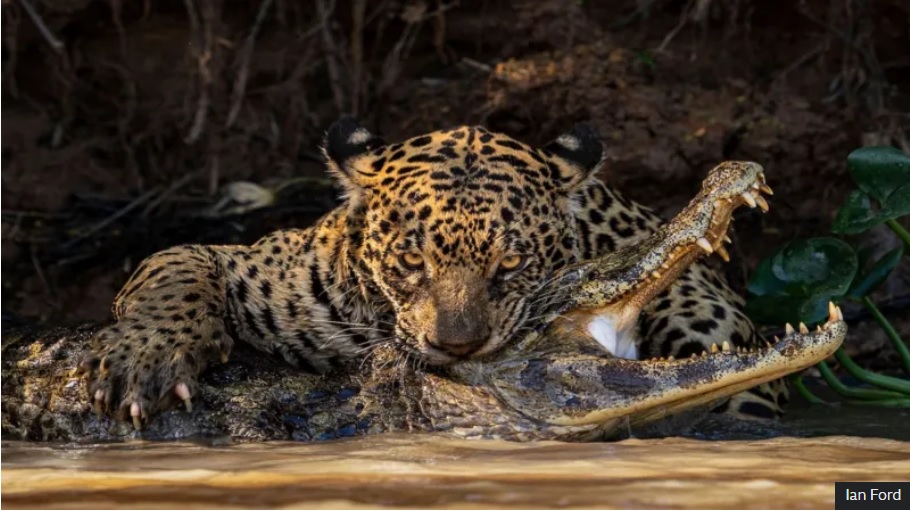
The radio alerted Ian that a jaguar had been spotted prowling a tributary of the São Lourenço river. Kneeling in the boat, he was in the perfect position when the cat delivered the skull-crushing bite to the unsuspecting yacare caiman.
Highly Commended, Behaviour: Mammals
Location: Pantanal, Mato Grosso, Brazil
Going with the Floe by Tamara Stubbs, UK
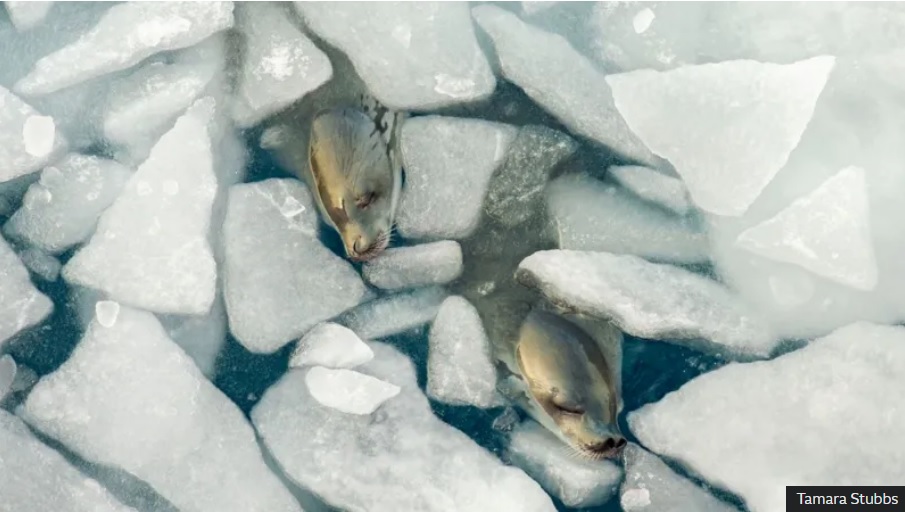
A standout moment on Tamara’s nine-week expedition in Antarctica’s Weddell Sea was when two seals bobbed up to the surface to take a deeper breath after falling asleep alongside the ship.
Highly Commended, Animals in their Environment
Location: Weddell Sea, Antarctica
 The MarkoZen Blog