Like Father like Son. Maybe not all the time. Steve Irwin, the Crocodile Hunter, used to bulldog giant salt water crocodiles and handle the deadliest snakes in the world.
His son, Robert Irwin, is tracking Golden Retrievers!

Like Father like Son. Maybe not all the time. Steve Irwin, the Crocodile Hunter, used to bulldog giant salt water crocodiles and handle the deadliest snakes in the world.
His son, Robert Irwin, is tracking Golden Retrievers!
The Pukatawagan Song causes many different reactions from listeners. From folk song, party music, incomprehensible noise to What The F#@K is this, this song is one of a kind.
Pukatawagan is a First Nations community in northern Manitoba. Sidney Castel was a hometown hero with this gem of a tune.
Lets get some dancing into the mix.
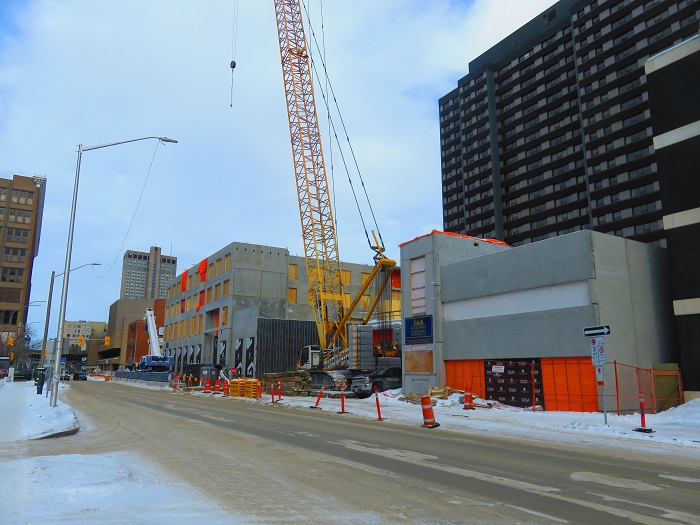
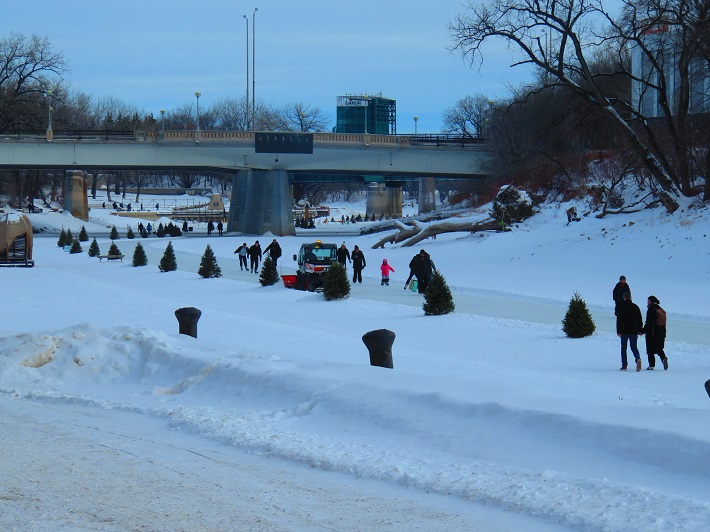
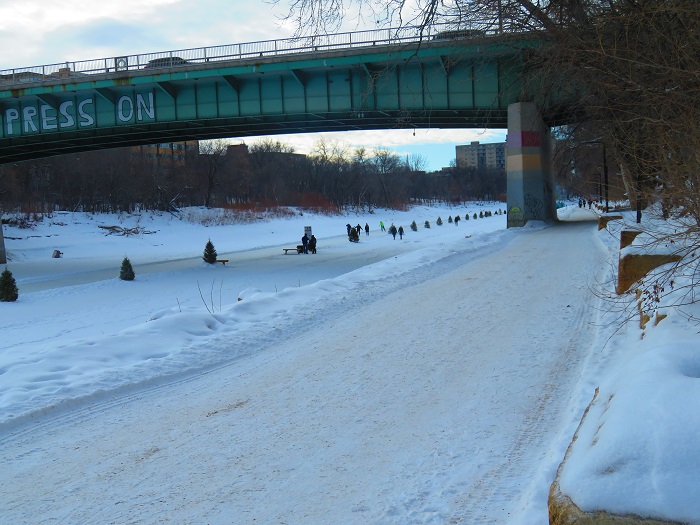
Downtown Winnipeg. A new apartment building going up and the skating trail on the Assiniboine River.


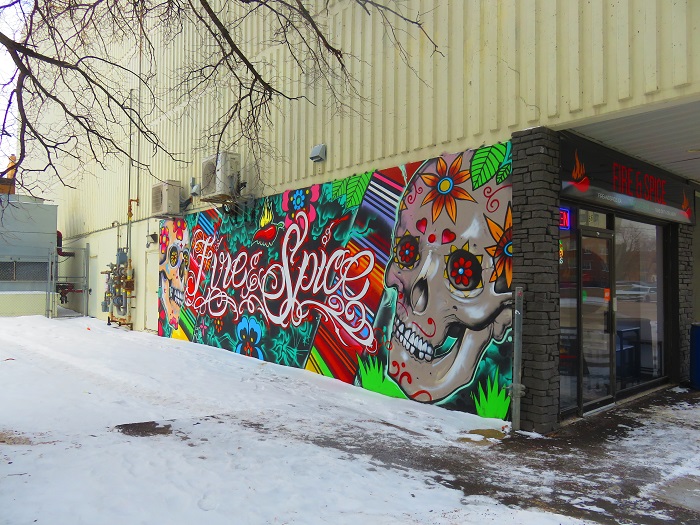
A cool mural painted on the wall of a restaurant called Fire & Spice.


In response to an unsettling increase in demand for exorcisms in Italy, the Vatican has announced plans for a new course to better train priests to perform the practice.
The week-long event to be held in April was detailed by Italian priest and exorcist Benigno Palilla in an interview with Vatican Radio.
According to Palilla, requests for exorcisms from the Church have skyrocketed in Italy over the last few years with experts estimating an astounding 500,000 such cases being reported.
Although the priest acknowledged that not all of these events are genuinely connected to an actual possession, he cautioned that the jaw-dropping number of exorcisms indicated that there is some sort of sinister surge happening.
As to what may be behind this spike, Palilla pointed to the popularity of fortune tellers, tarot card readers and other soothsaying mystics in Italy.
He warned that partaking in such ‘sorcery’ unwittingly “opens the door to the devil and possession.”
Additionally, Palilla expressed concern that the whopping number of exorcism cases in the country has led to inexperienced priests being enlisted to perform the ritual.
Calling for a proverbial apprenticeship for exorcists, he lamented that the phenomenon of possession is often verboten during the process of preparing for the priesthood, leaving newcomers overwhelmed when they are called to confront the issue.
By holding this new course on the subject later this year, Palilla hopes to strip away some of the sensationalism surrounding exorcisms and better prepare priests for the various cases they may encounter.

What is behind all this is the Vatican trying to scare people back to the pews. The church is losing believers en masse. Another attempt to get more money in the collection baskets.
A viral video said to show the examination of a crashed UFO in Arizona is actually a fantastic and somewhat troubling creation of artificial intelligence. The remarkable scene, which features people in hazmat suits studying the craft as a group of military personnel watch from a distance, was crafted by a digital artist dubbed SYBERvisions using the image generative program Midjourney. Posted online last week with the purpose of showcasing the awesome ability of AI, the production has since been repurposed and spread on social media by unscrupulous individuals and pranksters claiming that it is genuine footage of a downed UFO.
While, of course, that is not the case, one can be forgiven if they were initially fooled by the ‘footage’ considering how real it appears. To that end, the video is a rather worrisome testament to how far artificial intelligence has advanced as differentiating between genuine media and fabulous fabrications has become an increasingly difficult task that will only become even more challenging in the future. That said, perhaps the skeptical approach to paranormal videos will wind up applying to similarly wondrous scenes created by AI in that if it is too good to be true, it probably isn’t.

Politics and government are the main economic activities in Astana the capital, which also forms a Special Economic Zone. Astana has seen one of the world’s greatest building projects, as oil money has been spent on government buildings, a massive home for the president, a mosque, and numerous parks and monuments. The project is designed to make the town the centre of not only Kazakhstan, but all of Central Asia.
After Kazakhstan gained its independence in 1991, the city and the region were renamed “Aqmola”, literally meaning “White Shrine”.
In 1995, the city was designated as the future capital of the newly-independent country, and the capital was officially moved from Almaty on December 10, 1997. The new name, Astana, was bestowed in 1998.
Government officials cited several problems with keeping the capital in Almaty, such as the city’s risk of seismic activity, insufficient room for expansion, and proximity to international borders. Additionally, parts of northern Kazakhstan are populated primarily by ethnic Russians, which raised fears of possible irredentist activity. Moving the capital to this area may have been an attempt to anchor it more closely with the rest of the country.
To some Kazakhs, the move remains controversial. Critics cite the city’s isolated location in the center of the Kazakh steppe and the forbidding climate in winter. Financially, some resent the massive expenditure of public funds to build the new government complexes, as well as the continuing cost of airfare and hotel expenses for the many government workers who still live in Almaty.

Floral flourishes decorate Nurzhol Boulevard, or “Radiant Path.”

The Baiterek, towering over Astana’s central promenade, flares green against a dappled evening sky. Intended as a symbol of the new capital, the 318-foot monument evokes a giant tree with a golden egg in its branches. In the Kazakh myth of Samruk, a sacred bird lays a golden egg in the branches of a poplar each year.

A flock of giant doves flutters on a stained-glass conference room ceiling at the Palace of Peace and Harmony. The 203-foot-high pyramid designed by Norman Foster provides spaces for worshippers of all religions.


Kazakhstan’s new capital is the opposite of understated. After dark, government buildings change hues as the night progresses, creating a theme park atmosphere. The presidential palace suggests a gaudy version of the White House. Prize-winning British architect Norman Foster is one of many foreigners who helped shape the city. His purple Khan Shatyr shopping mall has an indoor sand beach and wave pool on the top floor.

Flanked by traditional Kazakh dancers, a bride awaits her formal unveiling at an opulent wedding palace, where she has just been married in a ceremony capped by the release of two white doves. The revelry begins when the veil is lifted.

McMansions that could have been airlifted from any American suburb are among the more incongruous sights in Astana, whose architectural style is nothing if not eclectic.

Like thousands of educated young professionals in Astana, these cardplayers at a riverside park grew up in other parts of Kazakhstan and moved to the new capital for the opportunities it promised. A baby boom has accompanied the influx.


 The MarkoZen Blog
