This is how to fly, if you have the big money. 

In the compendium of complaints about air travel, we have not yet encountered “I do not have an unencumbered, horizon-to-horizon view of the entire planet.” At some point, we surmise, someone must have shared that frustration, because Windspeed Technologies has come up with a solution.

The company’s SkyDeck is a clear bubble that pokes up out of the top of an airplane. One or two passengers access this viewing dome via a staircase, or (rather showily) in an elevator. Once they are head and shoulders above the fuselage, they may rotate their seats to view some particular object — the sunset, or a constellation, or a cloud that looks a lot like a bunny. The bubble is made of the same material as the canopies of a supersonic fighter jet, and it’s a teardrop shape mounted just before the tail to have the smallest possible effect on aerodynamics. Its feasibility has been studied a thousand different ways, patents and trademarks have been applied for, and an aircraft manufacturer has begun offering it as an option on its custom builds — though there are not yet reports of orders taken.

Windspeed-Technologies

windspeed

Does the SkyDeck seem a bit… erm… over the top? Yes, but certainly that is the point. Windspeed identifies business and VIP aircraft as their primary market, where amenities like the SkyDeck make sense because airplanes made of solid gold are too heavy to fly. But the company also sees a commercial application, where, they say, “Current in-flight entertainment offerings have not changed much over the decades” (as if SkyDeck were the logical successor to seatback entertainment systems). In this bright future, airlines would charge passengers for a trip up to the SkyDeck, providing an additional revenue stream for beleaguered airlines that have not yet found enough things to charge for.

Still, it’s awesome. To merely propose cutting a hole in the top of a jet — and then actually figuring out how to make it happen — is an admirable engineering feat. And who hasn’t imagined what the view might be like the outside of a plane, rather than through the tiny windows we’re now supposed to keep shuttered so as not to interfere with the seatback entertainment systems? Given the chance, we’d certainly spend a few minutes enjoying a 360° at 36,000 feet — though we admit to having some concerns about the availability of beverage service up there.

windspeed1

Photos from the 2023 Miss Camel Beauty Contest 

camel-beauty-contest-734-1450888522-size_1000

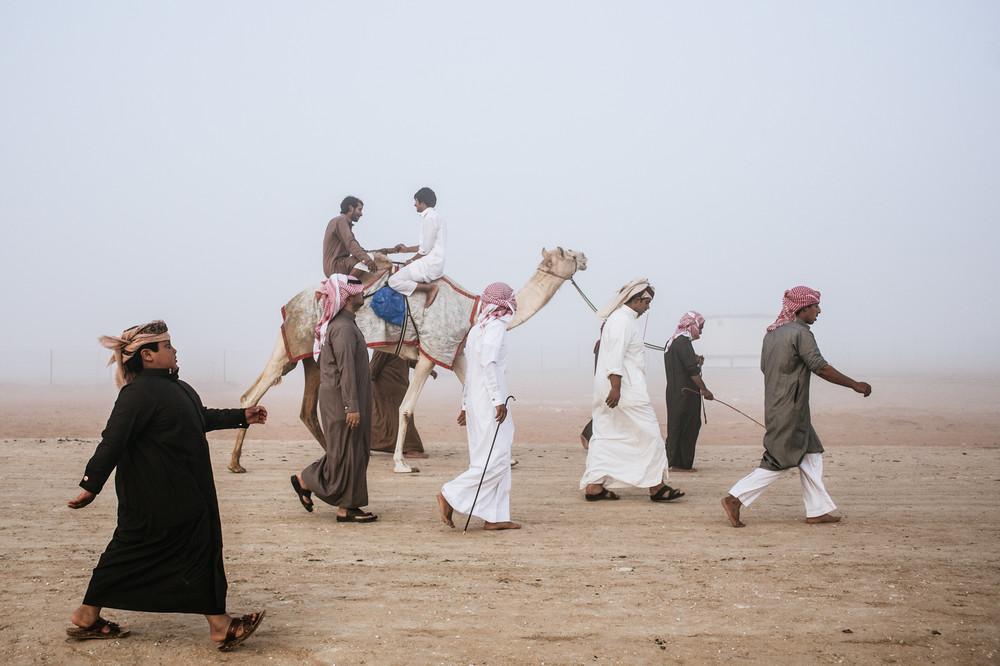
Miss Universe wasn’t the only beauty pageant to take place this week. In the hinterlands of the UAE, Bedouin tribes from Oman, Saudi Arabia, Kuwait, and the Emirates are currently gathering at Al Dhafra Festival—an annual meeting best known for its Camel Mazayna, or “beauty contest.”

Men parade their finest dromedaries at auctions, races, and best-in-show events, and prizes are given for the fastest, “milkiest,” and most beautiful creatures. Less fortunate camels are served for dinner at a nightly majlis.

The festival, which runs through December 30, is a celebration of the Empty Quarter’s traditional heritage and way of life—a far cry from the contemporary turbo-Gulf culture seen nearby in Dubai or Abu Dhabi. That said, there’s still big bucks to be made: Prizes totaling Dh55 million (around $14.9 million) are up for grabs.

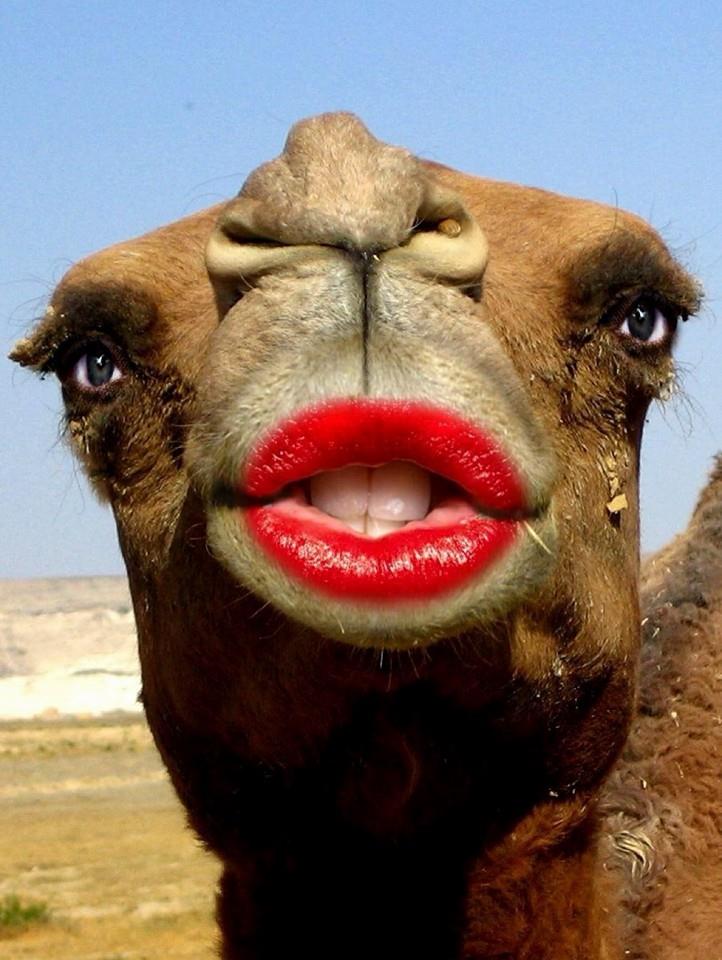
Despite a last-minute hairspray of humps seen here and there, judges are on the lookout for natural beauties this year. “Camels that are found with drugs in the lips, shaved, dyed in any parts of the body, or with changes from natural form are not allowed [sic],” states the entrants’ handbook.

camel-beauty-contest-200-1450888528-size_1000

camel-beauty-contest-336-1450888556-size_1000

camel-beauty-contest-569-1450888552-size_1000

camel-beauty-contest-482-1450888568-size_1000

camel-beauty-contest-625-1450888515-size_1000

Beauty

camel-beauty-contest-738-1450888514-size_1000

camel

This guy had enough of the camels and decided to take a selfie and upload it to Facebook.

And the Winner is:

From the Oblivion Desert, Miss Abu Omani, Two Hump Gazelda!

camel1

Irresistible!

If it wasn’t for Lucille Ball, there wouldn’t be any Trekkies

The ultimate decision to put the original Star Trek series on the air back in 1966 fell into the hands of Lucille Ball. She was a studio executive (Desilu) who wielded power over decisions like which shows will move forward and which shouldn’t. She took the Star Trek plunge, the rest is mega science fiction franchise history.

Lucille Désirée Ball (August 6, 1911 – April 26, 1989) was an American actress, comedienne, model, film studio executive, and TV producer. She was the star of the sitcoms I Love LucyThe Lucy–Desi Comedy HourThe Lucy ShowHere’s Lucy, and Life with Lucy.

How Star Trek was launched:

In April 1964, Roddenberry presented the Star Trek draft to Desilu Productions, a leading independent television production company. He met with Herb Solow, Desilu’s Director of Production. Solow saw promise in the idea and signed a three-year program-development contract with Roddenberry.

The idea was extensively revised and fleshed out during this time – ‘The Cage’ pilot filmed in late 1964 differs in many respects from the March 1964 treatment. Solow, for example, added the Star Date concept.

Desilu Productions had a first-look deal with CBS. Oscar Katz, Desilu’s Vice President of Production, went with Roddenberry to pitch the series to the network. They refused to purchase the show, as they already had a similar show in development, the 1965 Irwin Allen series Lost in Space.

In May 1964, Solow, who previously worked at NBC, met with Grant Tinker, then head of the network’s West Coast programming department. Tinker commissioned the first pilot – which became ‘The Cage’. NBC turned down the resulting pilot, stating that it was ‘too cerebral.’ However, the NBC executives were still impressed with the concept, and they understood that its perceived faults had been partly because of the script that they had selected themselves.

NBC made the unusual decision to pay for a second pilot, using the script called “Where No Man Has Gone Before”. Only the character of Spock, played by Leonard Nimoy, was retained from the first pilot, and only two cast members, Majel Barrett and Nimoy, were carried forward into the series. This second pilot proved to be satisfactory to NBC, and the network selected Star Trek to be in its upcoming television schedule for the fall of 1966.

The second pilot introduced most of the other main characters: Captain Kirk (William Shatner), chief engineer Lt. Commander Scott (James Doohan) and Lt. Sulu (George Takei), who served as a physicist on the ship in the second pilot but subsequently became a helmsman throughout the rest of the series. Paul Fix played Dr. Mark Piper in the second pilot; ship’s doctor Leonard McCoy (DeForest Kelley) joined the cast when filming began for the first season, and he remained for the rest of the series, achieving billing as the third star of the series. Also joining the ship’s permanent crew during the first season were the communications officer, Lt. Nyota Uhura (Nichelle Nichols), the first African-American woman to hold such an important role in an American television series; the captain’s yeoman, Janice Rand (Grace Lee Whitney), who departed midway through the first season; and Christine Chapel (Majel Barrett), head nurse and assistant to McCoy. Walter Koenig joined the cast as Ensign Pavel Chekov in the series’ second season.

In February 1966, Star Trek was nearly killed by Desilu Productions, before airing the first episode. Desilu had gone from making just one half-hour show (The Lucy Show), to deficit financing a portion of two expensive hour-long shows, Mission: Impossible and Star Trek. Solow was able to convince LUCILLE BALL that both shows should continue.

ballx3

Imagine the world without Trekkies.

trekx

trekkies

Roswell-Bound ‘Flying Saucer’ Stopped Again

A pair of UFO buffs’ road trip to Roswell has become an unforgettable journey as their ‘flying saucer’ car is back in the headlines after being pulled over by the cops for a second time. The curious ‘craft’ popped up in the news earlier this week when the Crawford County Sheriff’s Office in Missouri took to social media with the account of how one of their deputies had encountered the odd vehicle as it cruised along the highway. Weirdly enough, just as the amusing photos from the odd traffic stop were going viral, the ‘flying saucer’ found itself yet again on the side of the road after catching the attention of authorities.

Also detailing the stop on social media, the Oklahoma Highway Patrol shared photos of the peculiar car and marveled that “it’s not every day you pull over a UFO.” They went on to recount how the out-of-this-world vehicle had been stopped by a trooper when he noticed that it had an obstructed tag. While the post made no mention of the fact that this was the same flying saucer that was pulled over in Missouri days earlier, it undoubtedly was and, just as in that instance, the UFO buffs were given a warning after they explained that they were headed for Roswell for this weekend’s festivities. Similarly, the second traffic stop has also gone viral, extending the car’s fifteen minutes of fame by a few more days.

It is uncertain where the flying saucer might currently be on its sojourn to Roswell, though one would not be surprised if it winds up being pulled over yet again before making it to New Mexico since it’s certainly not flying under the radar of police. However, when the UFO buffs finally do arrive at the festivities, they are likely to receive a hero’s welcome thanks to its headline-making journey that unfolded over the past week. That said, they might want to fix whatever issue keeps getting them pulled over, since cops may be less forgiving of the ‘craft’ when it’s on the way home from the big event.