Month: April 2024
Another Secret U.S. Base, What in the Wild World of Sports are they Up To?
Forget Area 51, America has an EVEN MORE secretive military test site named Area 6

A TOP secret airbase more mysterious than Area 51 has been spotted in the Nevada desert on Google Earth.
Area 6, a shielded airbase used for testing unmanned aircraft, has got conspiracy theorists wondering what the US Government might be hiding at such a remote location.
The site is roughly 12 miles northeast of Area 51 and is part of the Nevada National Security Site, where 1,000 nuclear tests were carried out between 1945 and 1995.
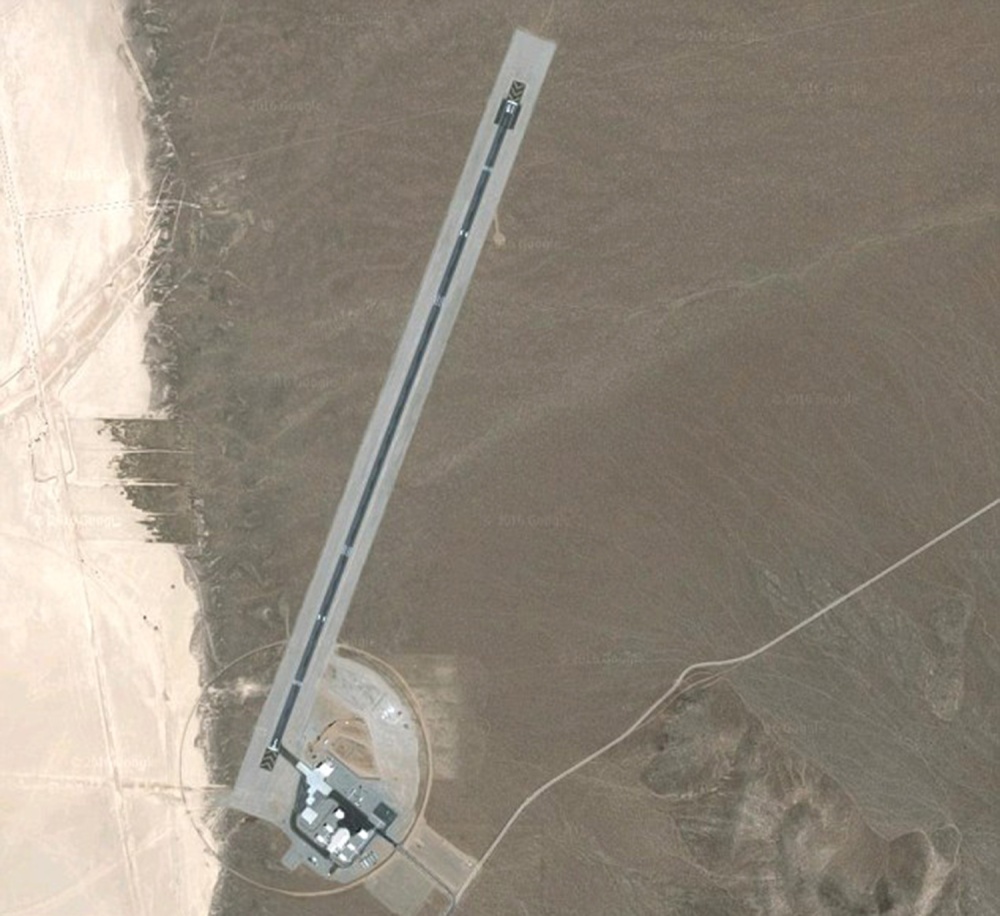
Six nuclear tests and four detonations have been completed in Area 6 according to the US Department of Energy.
The mysterious airbase has a 5,000ft runway used by federal agencies to carry out aircraft tests, the Las Vegas Review-Journal reported.
Its secretiveness has quickly led to comparisons with Area 51, where some conspiracy theorists believe the wreckages of crashed UFOs are stored and studied.
National Nuclear Security Administration spokesman Darwin Morgan told the Las Vegas Review-Journal: “We have controlled airspace and that gives them opportunities to test various types of platforms.
“We do a wide variety of work for others – supporting people with sensor development activities.
“It evolved from the nuclear testing program. We had to have very good sensors to collect data in a split second before they were obliterated.”
The Nevada National Security Site is run by the National Nuclear Security Administration’s field office in the state, which works with other agencies to develop ways of tackling terrorism.
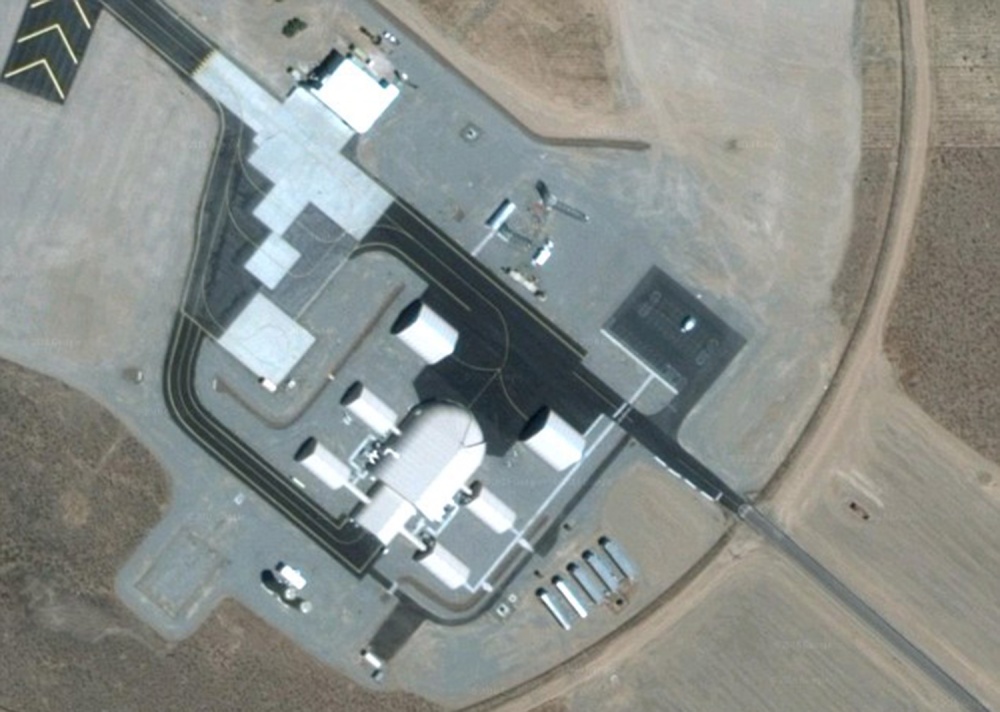

Could they be interrogating the Grays at Area 6?
See also: https://markozen.com/2021/07/21/nuclear-bomb-craters-in-nevada-2/
Vladimir Putin and Power Dog
The similarities are uncanny.

Putin was swimming in a river on the Kamchatka peninsula when a huge grizzly jumped in the water.


Ukraine war: Could Russia use tactical nuclear weapons?

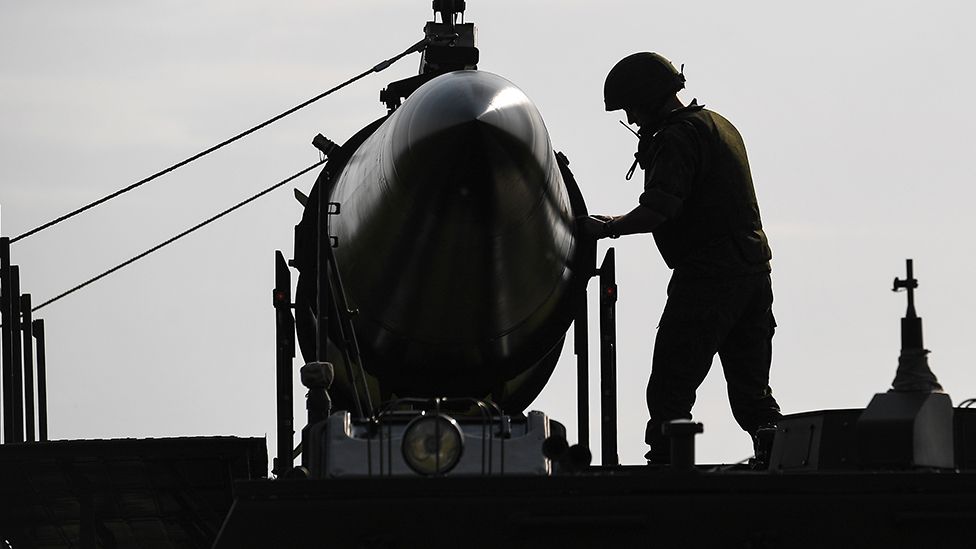
Russia’s President Vladimir Putin has said he’s ready to use nuclear weapons to defend Russian territory, raising the fear he might use a small, or “tactical” nuclear weapon in Ukraine.
US President Joe Biden has warned him that doing so would be the most serious military escalation since World War II.
What are tactical nuclear weapons?
Tactical nuclear weapons are small nuclear warheads and delivery systems intended for use on the battlefield, or for a limited strike.
They are designed to destroy enemy targets in a specific area without causing widespread radioactive fallout.
The smallest tactical nuclear weapons can be one kiloton or less (producing the equivalent to a thousand tonnes of the explosive TNT). The largest ones can be as big as 100 kilotons.
Strategic nuclear weapons are larger (up to 1,000 kilotons) and are launched from longer range.
By comparison, the atomic bomb the US dropped on Hiroshima in 1945 was 15 kilotons.
What tactical nuclear weapons does Russia have?
According to US intelligence, Russia has about about 2,000 tactical nuclear weapons.
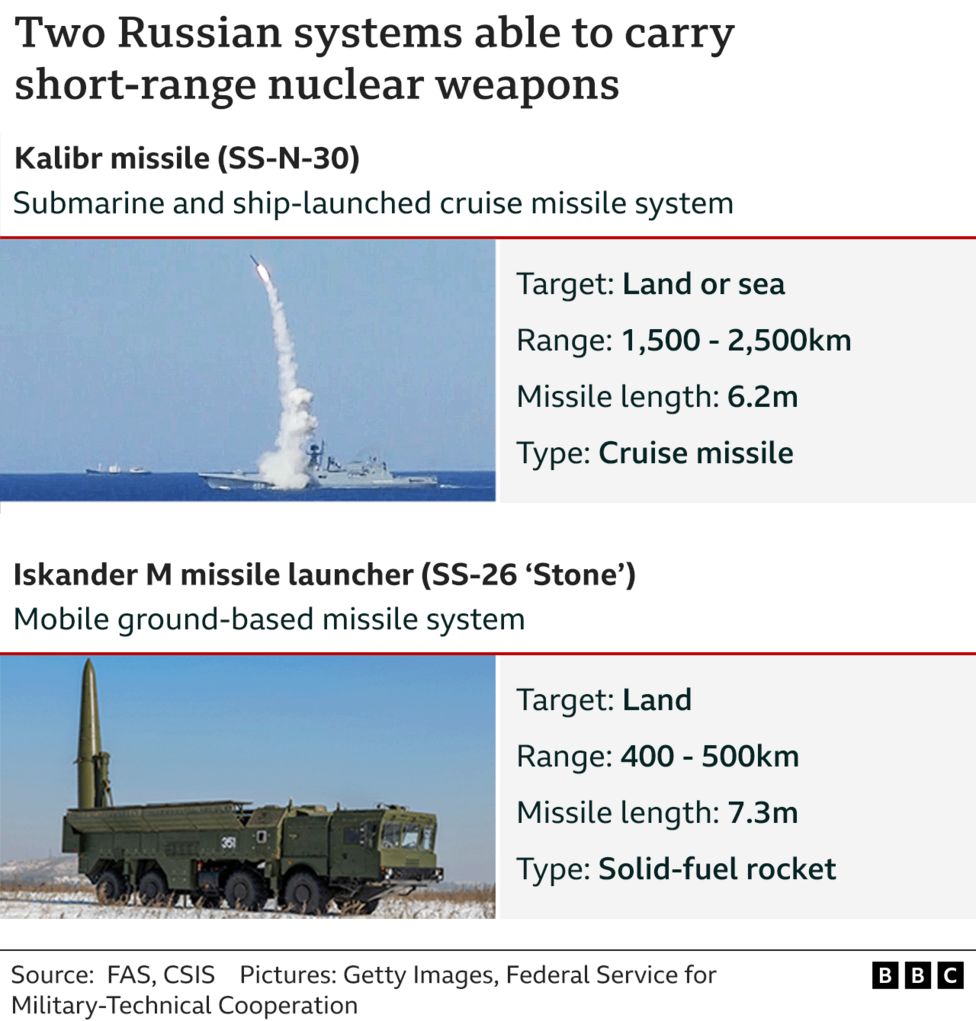
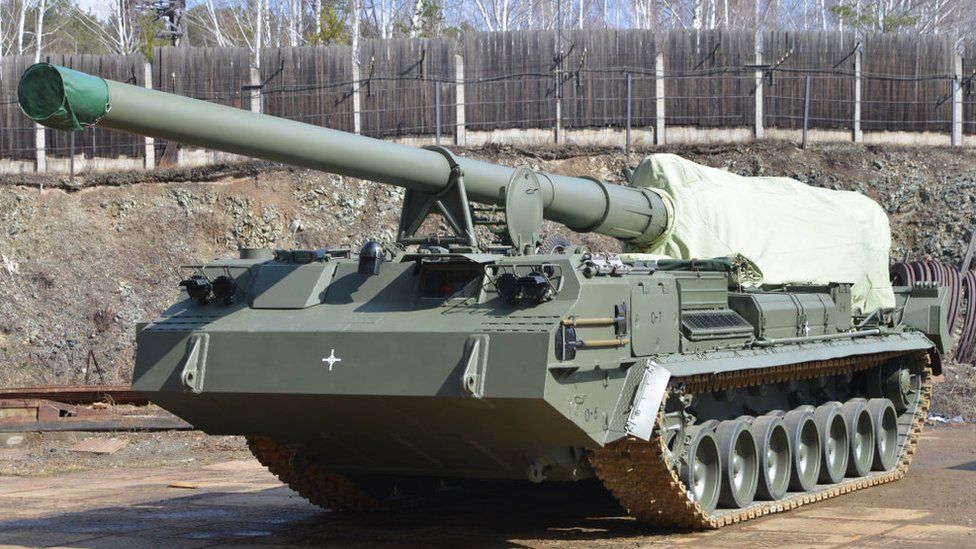
Its tactical nuclear warheads can be placed on various types of missiles which are normally used to deliver conventional explosives, such as cruise missiles and artillery shells.
Tactical nuclear weapons can also be fired from aircraft and ships – as anti-ship missiles, torpedoes and depth charges.
The US says Russia has recently been investing heavily in these weapons to improve their range and accuracy.
Have tactical nuclear weapons ever been used before?
Tactical nuclear weapons have never been used in conflict.
Nuclear powers such as the US and Russia have found it equally effective to destroy targets on the battlefield by using modern conventional munitions.
In addition, no nuclear-armed country has so far been willing to risk unleashing all-out nuclear war by employing tactical nuclear weapons.
However, Russia might be more willing to use smaller tactical weapons than larger strategic missiles.
“They might not see it as crossing this big nuclear threshold,” says Dr Patricia Lewis, head of the international security programme at the Chatham House think tank.
“They could see it as part of their conventional forces.”
Are Putin’s nuclear threats a real cause to worry?
In February 2022, shortly before invading Ukraine, President Putin placed Russia’s nuclear forces at “special combat readiness” and held high-profile nuclear drills.
More recently, he said: “If the territorial integrity of our country is threatened, we will without a doubt use all available means to protect Russia and our people. This is not a bluff.”
Russia is planning to annex the regions of southern and eastern Ukraine it has occupied after holding self-styled referendums. President Putin says he is ready to defend the “territorial integrity” of the regions “by all means.”
US intelligence see this as a threat to the West not to help Ukraine try and retake these territories, rather than as a sign that he is planning a nuclear war.
But others worry that Russia, if it suffers further setbacks, might be tempted to use a smaller tactical weapon in Ukraine as a “game changer”, to break a stalemate or avoid defeat.
James Acton, a nuclear expert at the Carnegie Endowment for International Pace in Washington DC, says: “I am legitimately worried that in that circumstance, Putin might use a nuclear weapon – most likely on the ground in Ukraine to terrify everyone and get his way. We are not at that point yet.”
How has the US responded?

US President Joe Biden has warned Russia not to use nuclear weapons in the war in Ukraine.
Speaking during an interview with CBS News, Mr Biden said such action would “change the face of war unlike anything since World War Two,” adding: “It’ll be consequential.”
How the US and Nato would respond to any nuclear use is hard to predict. They may not want to escalate the situation further and risk all-out nuclear war but they also might want to draw a line.
However, Russia might also be deterred from using tactical nuclear weapons by another power – China.
“Russia is heavily dependent on Chinese support,” says Dr Heather Williams, nuclear expert at Kings College London.
“But China has a ‘no first use’ nuclear doctrine. So if Putin did use them, it would be incredibly difficult for China to stand by him.
“If he used them, he would probably lose China.”
BBC

The Surreal Landscape of Deadvlei, Namibia
The picture below is not that of a painting. It was taken inside the Namib-Naukluft Park in Namibia, in a strange and alien landscape called Dead Vlei. Although sounds similar to “dead valley”, Dead Vlei is not an actually valley. The term means “dead marsh” (from English dead, and Afrikaans vlei, a lake or marsh in a valley between the dunes).
Deadvlei is a white clay pan located near the more famous salt pan of Sossusvlei, scattered with hundreds of dead Acacia trees that once thrived when water from the Tsauchab River soaked this piece of land. Some 900 years ago the river diverted its course, leaving Dead Vlei literally high and dry. Dead Vlei has been claimed to be surrounded by the highest sand dunes in the world, the highest reaching 300-400 meters which rest on a sandstone terrace.
.
![adeadvlei-17[6]](https://markozen.com/wp-content/uploads/2023/07/adeadvlei-176.jpg)
![adeadvlei-8[2]](https://markozen.com/wp-content/uploads/2023/07/adeadvlei-82.jpg)
![adeadvlei-9[5]](https://markozen.com/wp-content/uploads/2023/07/adeadvlei-95.jpg)
![adeadvlei-16[2]](https://markozen.com/wp-content/uploads/2023/07/adeadvlei-162.jpg)
 Abgestorbene Akazien im Dead vlei, Namibia

The Heights of Hollywood celebrities and World leaders
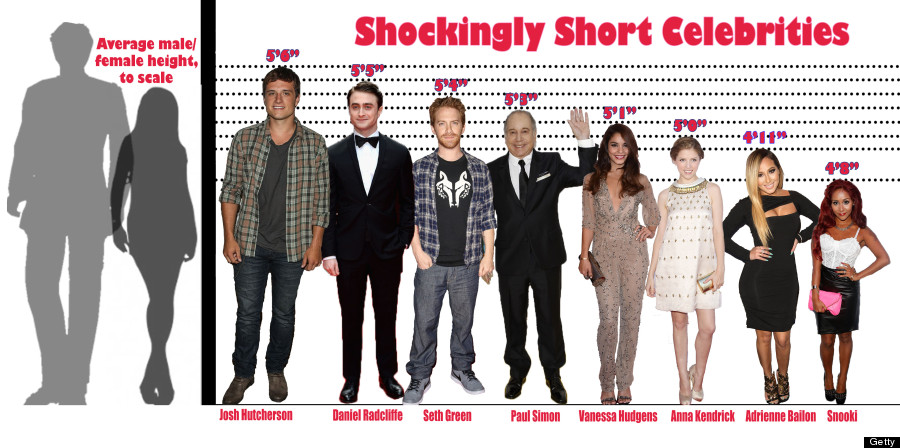
Tall, small, big, short, it makes no difference. Unless of course you are a middle linebacker or a jockey. Despite the trivial nature of this post, there are some surprising revelations here. Never realized Snooky was 4’8″, and Seth Green was 5’4″.
There is a bit of redundancy here, it was necessary to include as many people as possible.



World leaders

Canada’s current Prime Minister Justin Trudeau is 6’2″.


Tennessee Passes Geoengineering “Chemtrail” Ban

Tennessee House lawmakers last week passed a ban on geoengeering – or the process of impacting the climate by injecting chemicals or other substances into the atmosphere – after the Senate passed the bill the previous week. Geoengeering has been suggested by some as a solution to global warming; for instance, by injecting small reflective particles into the upper atmosphere to reflect some sunlight and heat back into space before it can reach the Earth’s surface. The Tennessee bill specifically focused on the “intentional injection, release, or dispersion, by any means, of chemicals, chemical compounds, (or) substances,” into the atmosphere.
Critics of the move, though, say there are no large scale plans to do so by local or federal governments, and that the legislature is wasting time better spent on other issues; like economic development, job growth and creation, and reducing the cost of living. Some opposition politicians mocked it by linking it to protections for “Yetis, or Sasquatch, or Bigfoot.” But the bill’s sponsor, Monty Fritts, said the bill was a “common-sense” approach, stating, “Everything that goes up, must come down, and those chemicals that we knowingly and willingly inject into the atmosphere simply to control the weather, or the climate, are affecting our health.”
It was this language, and language from other supporters of the bill, which linked it directly to ideas about chemtrails. While some used the term to make fun of the legislation, tying it to conspiracy theories, others were sincere in their belief that chemicals are being purposely injected into the atmosphere for any of various reasons, and that doing so should be regulated.
Senator Frank Niceley, during a hearing for the bill last month, told colleagues, “This will be my wife’s favorite bill of the year. She has worried about this, I bet, ten years. It’s been going on a long, long time.” Niceley referenced the criss-cross of contrails that could be seen in the skies on some days, adding, “For years they denied they were doing anything.


Very strange looking aircraft
Men and their flying machines. Giant ones, tiny ones, some with forward-swept wings, all kinds of strange aircraft have been invented. Here are some of the strangest looking ones I have found.

The Spruce Goose above flew only once in 1947 and was designed to carry over 700 people. It was actually a wooden heavy transport aircraft designed and built by the Hughes Aircraft company. It was built by the U.S. War Department because of wartime raw material restrictions on the use of aluminum. Its official name is Hughes H-4 Hercules but Spruce Goose somehow stuck. This heavy transport flying boat is the largest flying boat ever built, and has the largest wingspan of any aircraft in history with span exceeding the length of a football field. It is currently housed in Evergreen Aviation Museum in McMinnville, Oregon, USA.

This over-eating plane, officially, the Boeing 747 Large Cargo Freighter, is a wide-body cargo aircraft and the world’s longest cargo loader constructed by drastic modifications to an existing Boeing 747-400. Boeing uses this plane to bring in aircraft parts from suppliers around the world. Only 4 of the type have been built.

Pregnant Guppy
As weird as its name, this plane was a large, wide-bodied cargo aircraft built in the United States by Aero Spacelines and used for ferrying outsized cargo items, most notably NASA’s components of the Apollo moon program. Infact, the Dreamlifter was inspired from this beauty. Only 1 unit if this aircraft was ever built and it served a good 15 years, starting in 1962.


Northrop Tacit Blue
Before you start laughing, do understand that this aircraft was a pioneer in stealth technology. There was only one produced, by the U.S. Air Force, in 1982, which was meant to demonstrate that a stealth low observable surveillance aircraft with a low probability of intercept radar and other sensors could operate close to the forward line of battle with a high degree of survivability. The pioneer plane is currently housed at the National Museum of the US Air Force.

Horten HO 229
Designed by Horten brothers of Germany this plane was a late-World War II prototypefighter/bomber. Its odd shape can be attributed to the fact that it was designed to be more difficult to detect with radar. Horten Ho 229 never made it to actual war and was only flown as a prototype.

Officially, the Vought V-173 was designed by Charles H. Zimmerman. It was an American experimental test aircraft built as part of the Vought XF5U “Flying Flapjack” World War II United States Navy fighter aircraft program and without doubt it is one of the most strangest planes ever built.
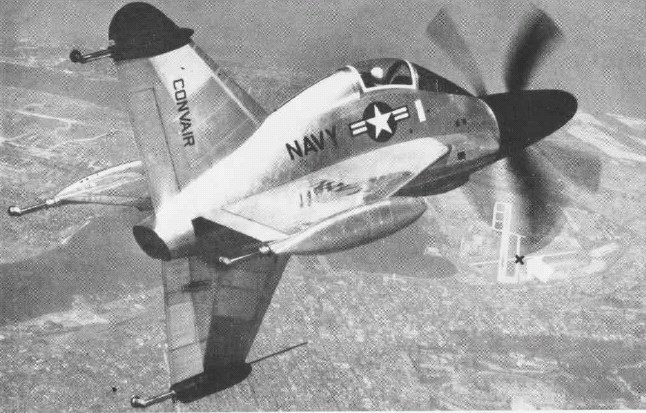

The Convair XFY Pogo tailsitter was an experiment in vertical takeoff and landing. The Pogo had delta wings and three-bladed contra-rotating propellers powered by a 5,500 hp (4,100 kW) Allison YT40-A-16 turboprop engine. It was intended to be a high-performance fighter aircraft capable of operating from small warships. Landing the XFY-1 was difficult as the pilot had to look over his shoulder while carefully working the throttle to land.

The Grumman X-29 was an experimental aircraft that tested a forward-swept wing, canard control surfaces, and other novel aircraft technologies. The aerodynamic instability of this arrangement increased agility but required the use of computerized fly-by-wire control. Composite materials were used to control the aeroelastic divergent twisting experienced by forward-swept wings, also reducing the weight. Developed by Grumman, the X-29 first flew in 1984 and two X-29s were flight tested over the next decade.

The Russians had their version as they always do.
The Sukhoi Su-47 Berkut (Russian: Су-47 Беркут – Golden Eagle) (NATO reporting name Firkin), also designated S-32 and S-37 (not to be confused with the single-engined delta canard design offered by Sukhoi in the early 1990s under the designation Su-37) during initial development, was an experimental supersonic jet fighter developed by Sukhoi Aviation Corporation. A distinguishing feature of the aircraft was its forward-swept wing, similar to that of the Tsybin’s LL-3., that gave the aircraft excellent agility and maneuverability. While serial production of the type never materialized, the sole aircraft produced served as a technology demonstrator prototype for a number of advanced techhnologies later used in the 4.5 generation fighter SU-35BM and current Indo-Russian 5th generation fighter prototype Sukhoi PAK FA.

The Hawker Siddeley Nimrod was a military aircraft developed and built in the United Kingdom. It is an extensive modification of the de Havilland Comet, the world’s first jet airliner. It was originally designed by de Havilland’s successor, Hawker Siddeley, now part of BAE Systems.
It was designed with an extended nose for radar, a new tail with electronic warfare (ESM) sensors mounted in a bulky fairing, and a MAD (Magnetic anomaly detector) boom. After the first flight in May 1967, the RAF ordered 46 Nimrod MR1s. The first example (XV230) entered service in October 1969. Five squadrons were eventually equipped with the MR1.

Aircraft with huge rotating radar domes.
The Grumman E-2 Hawkeye is an American all-weather, aircraft carrier-capable tactical airborne early warning (AEW) aircraft. This twin-turboprop aircraft was designed and developed during the late 1950s and early 1960s by the Grumman Aircraft Company for the United States Navy as a replacement for the earlier E-1 Tracer, which was rapidly becoming obsolete. E-2 performance has been upgraded with the E-2B, and E-2C versions, where most of the changes were made to the radar and radio communications due to advances in electronic integrated circuits and other electronics. The fourth version of the Hawkeye is the E-2D, which first flew in 2007.

XF-107A Experimental Fighter Bomber
The air intake was in the unusual dorsal location as the USAF had required the carriage of an underbelly semi-conformal nuclear weapon. The original chin intake caused a shock wave that interfered in launching this weapon. The implications this had for the survivability of the pilot during ejection were troubling. The intake also severely limited rear visibility. Nonetheless this was not considered terribly important for a tactical fighter-bomber aircraft, and furthermore it was assumed at the time that air combat would be via guided missile exchanges outside visual range.
See a SpaceX rocket photobomb the moon in incredible award-winning shot
An exceptionally skillful photograph of a SpaceX Falcon Heavy rocket passing in front of the moon took home top prize at the Sony World Photography Awards 2024.

A SpaceX Falcon Heavy rocket transits the full moon during the launch of USSF-52, Dec. 28, 2023. (Image credit: Pascal Fouquet, United States, Winner, National Awards, Sony World Photography Awards 2024)
A rocket transiting the moon is a pretty rare sight. Capturing a good photo of that kind of transit takes some serious skill.
That skill is worthy of some major praise. Pascal Fouquet, a photographer from Orlando, Florida, captured such a shot, and was chosen as the United States’ National Award first place winner for the Sony World Photography Awards 2024. The awards program comes out of a partnership between Sony and the World Photography Organization, and receives hundreds of thousands of photo submission from across the globe.
Fouquet captured his winning shot of a SpaceX Falcon Heavy rocket passing in front of the moon just before the new year, when SpaceX launched the United States Space Force X-37B spaceplane on the USSF-52 mission. The uncrewed X-37B spacecraft lifted off atop Falcon Heavy from NASA’s Kennedy Space Center (KSC) in Florida on Dec. 28, at 8:07 p.m. EST (0107 GMT on Dec. 29).

 The MarkoZen Blog