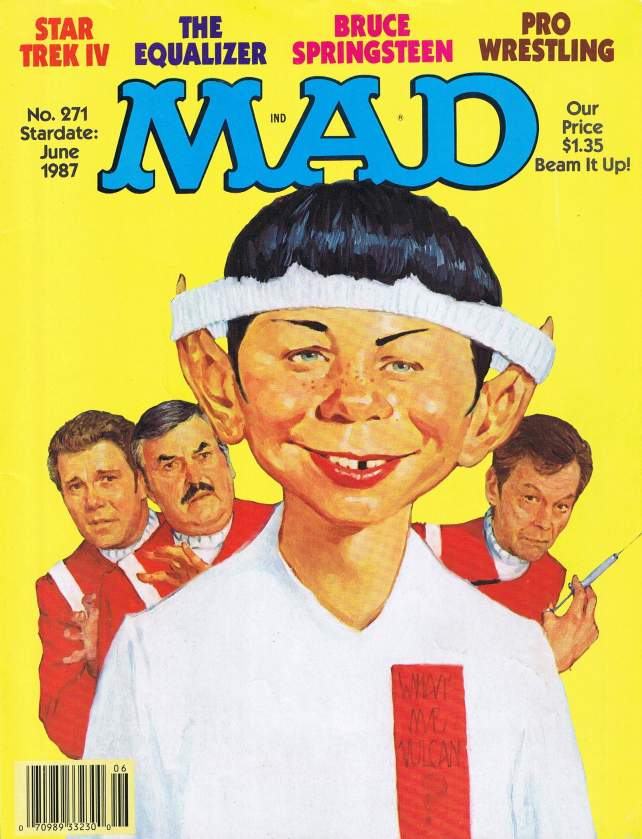
Mad (stylized as MAD) is an American humor magazine founded in 1952 by editor Harvey Kurtzman and publisher William Gaines, launched as a comic book before it became a magazine. It was widely imitated and influential, affecting satirical media, as well as the cultural landscape of the 20th century, with editor Al Feldstein increasing readership to more than two million during its 1974 circulation peak. From 1952 until 2018, Mad had published 550 regular issues, as well as hundreds of reprint “Specials”, original-material paperbacks, reprint compilation books and other print projects. The magazine reverted back to 1 with its April 2018 issue.
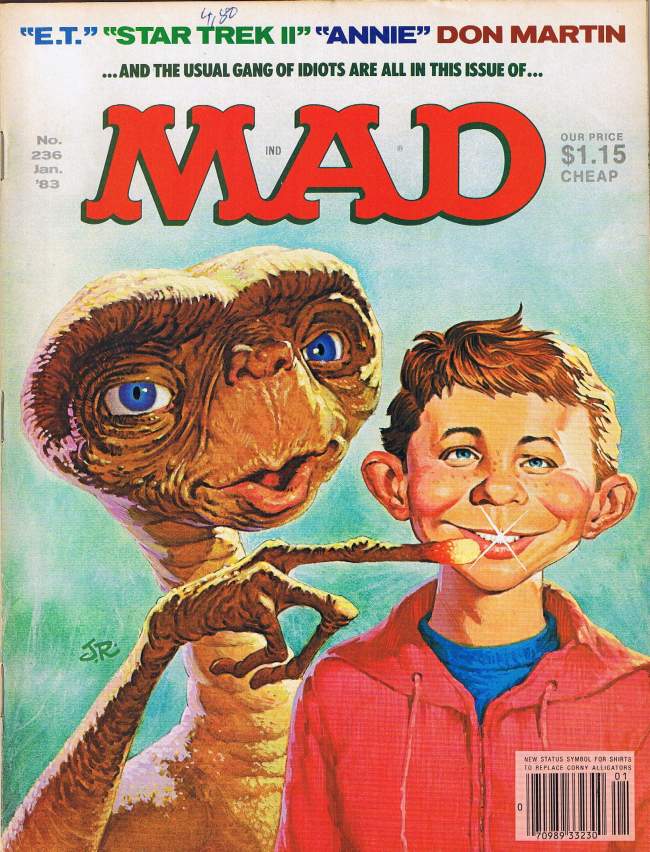
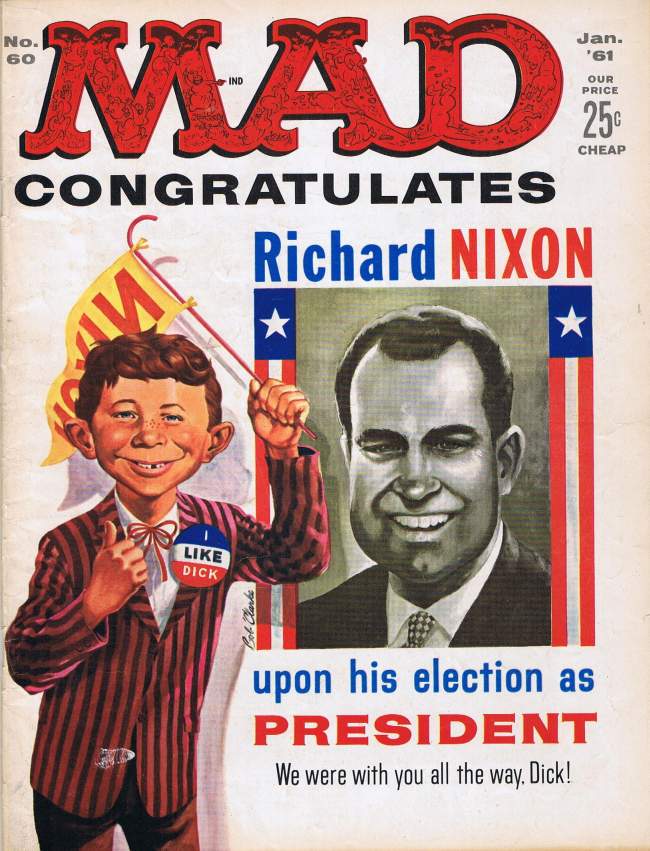
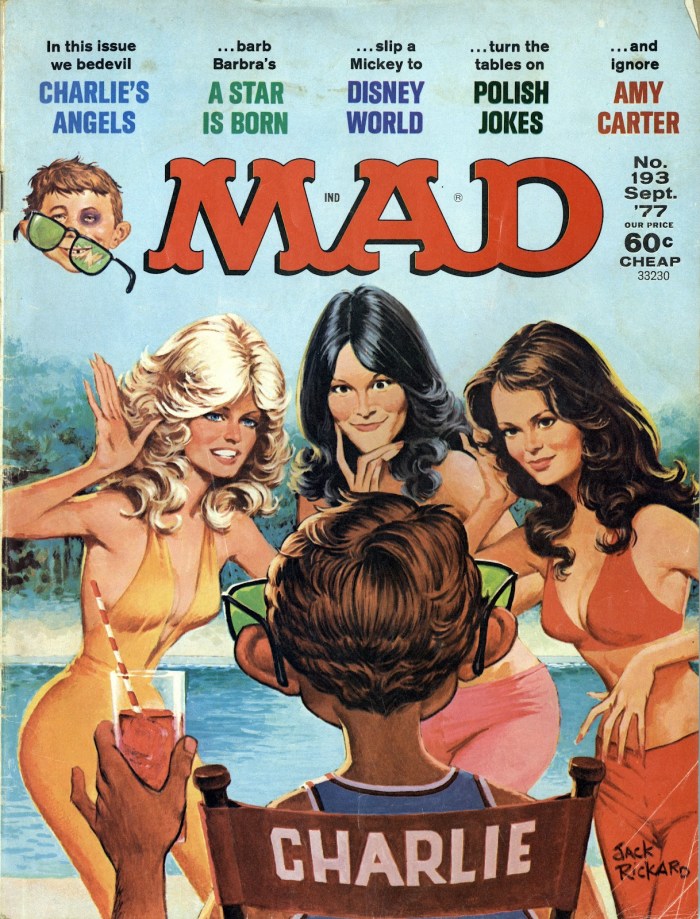
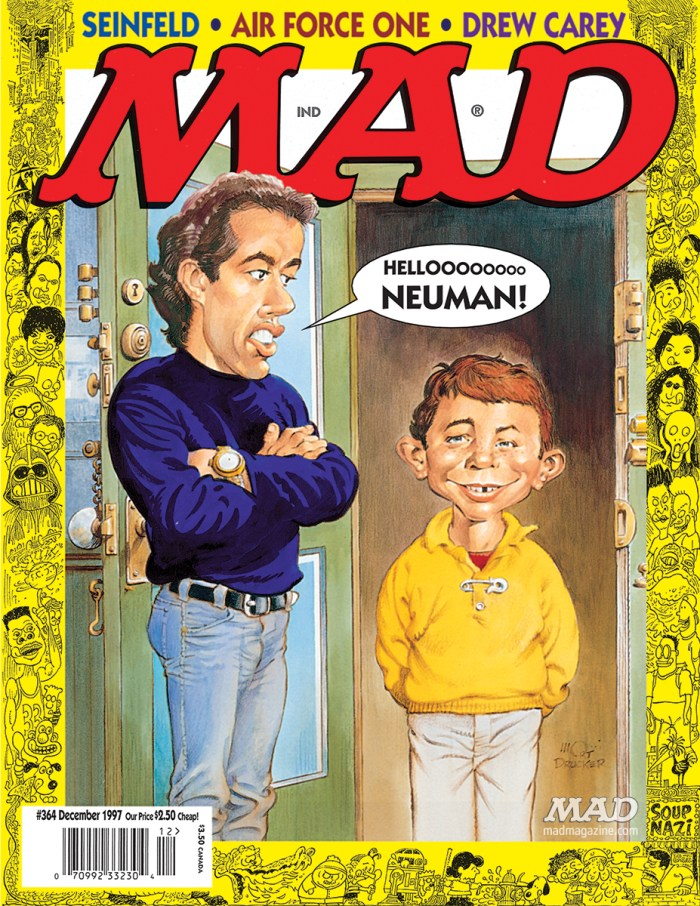
Mad’s mascot, Alfred E. Neuman, is typically the focal point of the magazine’s cover, with his face often replacing that of a celebrity or character who is lampooned within the issue.
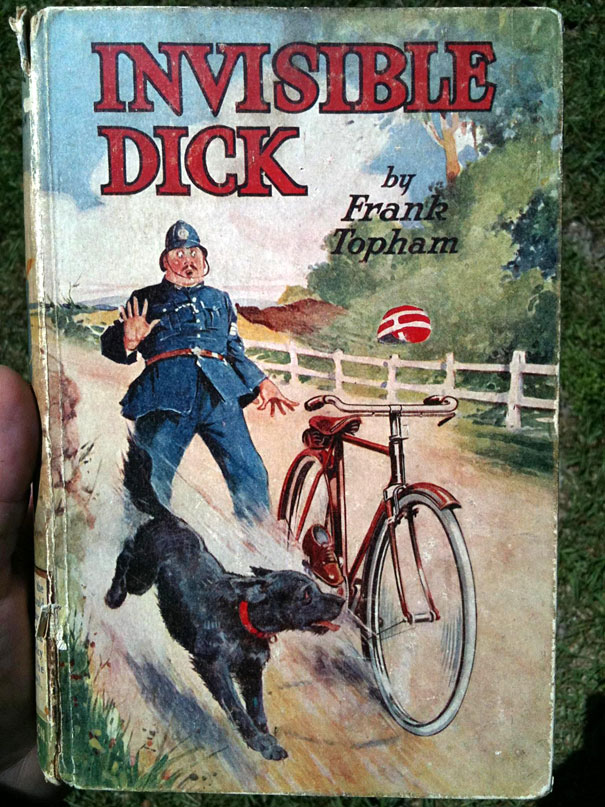
Most of these bizarre titles are likely buried in the back of second-hand bookstores. Although there is a good possibility that some eccentric university professor is teaching a class on the content of these books that have really bad titles.
it makes me just wanna sing louie louie louie louie oh baby i gotta go louie louie oh baby i gotta go
a fine little girl is waitin for me but i ‘m as bent as dostoevsky
i think about the meaning of my life again and i have to sing louie louie again
louie louie oh baby i gotta go louie louie oh baby i gotta go let’s give it to’ em right now oh man,
i dunno like…health insurance the homeless & world peace & aids & education … i’ m tryin to do right but. ..hey life after bush & gorbachev the wall is down but something is lost turn on the news it looks like a movie it makes me wanna sing louie louie louie louie oh baby i gotta go let’s go
The biggest dust storm in living memory rolls into Phoenix on July 5, 2011, reducing visibility to zero. Desert thunderstorms kicked up the mile-high wall of dust and sand.
Fortified by a levee, a house near Vicksburg survives a Yazoo River flood in May 2011. Snowmelt and intense rains—eight times as much rainfall as usual in parts of the Mississippi River watershed—triggered floods that caused three to four billion dollars in damages.
Lightning cracks during an eruption of Iceland’s Eyjafjallajökull volcano in 2010.
The eruption of Hawaii’s Kilauea volcano inspires the formation of a waterspout in this undated photo.
A Lake Michigan lighthouse takes the brunt of a frigid winter in Saint Joseph, Michigan.
A funnel cloud rips through a trailer park near Cheyenne, Wyoming, in this undated photo. The photographer snapped this shot from a quarter mile away before taking cover in his basement.
A waterspout parallels a lightning strike over Lake Okeechobee in Florida. A sister of the tornado, waterspouts are generally less powerful.
A tornado heads toward two cars on a country road near Campo, Colorado.
In a dramatic display of summer atmospheric conditions, lightning marks the end of an impressively long shelf cloud in the Midwestern U.S.
Dark clouds loom over a beach on Grand Cayman Island.
Landslide rubble buries a car in northern India’s Doda district in 2011. The devastating erosion was the result of a downpour that washed soil, rocks, and other debris onto the Doda-Batote highway.
One of the many rumors passed around the Internet (imagine that!) concerns musician and ukulele player Roy Smeck, known as “The Wizard of the Strings.” It turns out that a lot of people seemed convinced that Smeck was actually Eddie Van Halen’s father and an innovator of “two-hand-tapping,” a method of playing a stringed instrument by tapping the strings with an object or your fingers. The technique has been traced back to the late 1700s, but as far as the popularization of two-hand-tapping, that honor belongs to Roy Smeck – a visionary ukulele player who rose to fame as one of vaudeville’s premier attractions. Smeck’s popularity was such that he was invited to play at President Franklin D. Roosevelt’s inauguration celebration in 1933. Getting back to the popular notion Smeck was EVH’s dad…after the devastating loss of Eddie earlier this month, keyboard warriors started sharing videos of Smeck tapping away on his uke with lightning speed, with the caption “this is Eddie Van Halen’s father.” I suppose it was an easy mistake to make, given the skill level Smeck possessed, and its eerie similarity to one of Eddie’s calling cards, his blink-and-you-missed-it guitar tapping wizardry.
Ed’s real father, Jan Van Halen, was, of course, a great musician in his own right and mentor to both Eddie and Alex Van Halen. He was also born twenty years after Smeck in 1920. To my knowledge, Eddie has never credited Smeck as a source of inspiration for his style. Though he has given the nod to another musician known for his finger-tapping innovations, Genesis guitarist Steve Hackett. In a 2012 interview with Ultimate Guitar, Hackett credited himself as being the “inventor of tapping on record,” which isn’t really true as guitarist Jimmie Webster was known for his tapping (or the sexy-sounding “touching”) technique, which you can hear on at least one recording, Webster’s Unabridged, from 1959.
Roy Smeck was born in 1900 in Pennsylvania. Starting at a young age, the future virtuoso would teach himself to play the guitar, steel guitar, banjo, octo-chorda (or “octachorda,” an eight-string steel guitar), jaw harp, harmonica, and his weapon of choice, the ukulele. While still in his early 20s, Smeck would become one of vaudeville’s most successful stars without uttering a single word during his energetic performances. Smeck preferred to dance for his fans while he frantically tapped on his uke. He’d also play it upside down with the same alarming speed and precision. His early exposure in vaudeville would lead to a myriad of incredible opportunities. His music would be featured along with the 1926 film Don Juan—the very first film to use Vitaphone sound-on-disc, which allowed both music and other sounds to be played in sync with the moving picture. His Pastimes, a short preceding Don Juan, featured an electrifying uke performance by Smeck would send his star soaring. The following year, he was approached by Jay Krause, the president of the largest string instrument manufacturer in the U.S. (at the time), the Harmony Company of Chicago. In a 1984 interview with an 84-year-old Smeck, he recalled Krause’s proposal that Smeck “produce” a Hawaiian guitar, uke, banjo, and guitar exclusively for Harmony. Smeck’s bosses at Warner objected to the use of the word Vitaphone for the line. Smeck and Kraus changed directions slightly by naming the various instruments as “The Roy Smeck Vita-Uke,” The Roy Smeck Vita-Guitar,” etc.































 The MarkoZen Blog