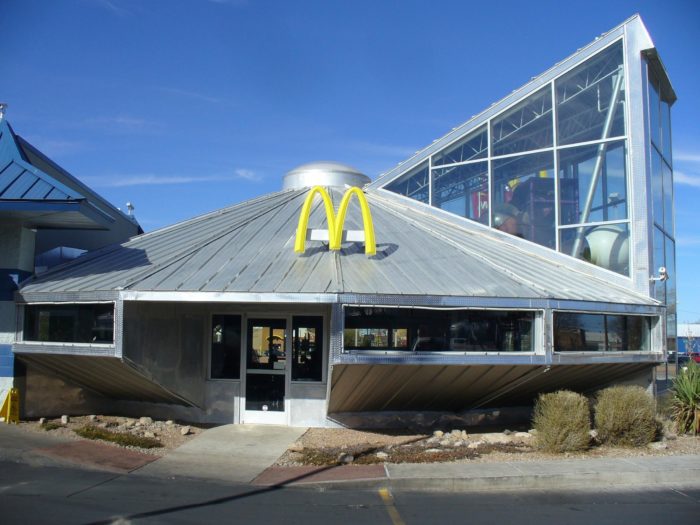
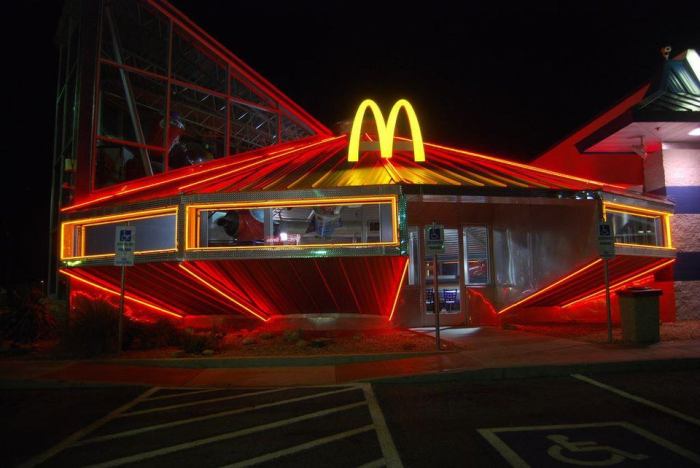
This is the world’s only McDonald’s shaped like a flying saucer. Its aerodynamic qualities have been compromised by its need to enclose a Playland, but there’s no mistaking its distinctive saucer shape, enhanced during daylight by its metal skin and at night by its judicious used of neon piping around its window frames and ridge lines.
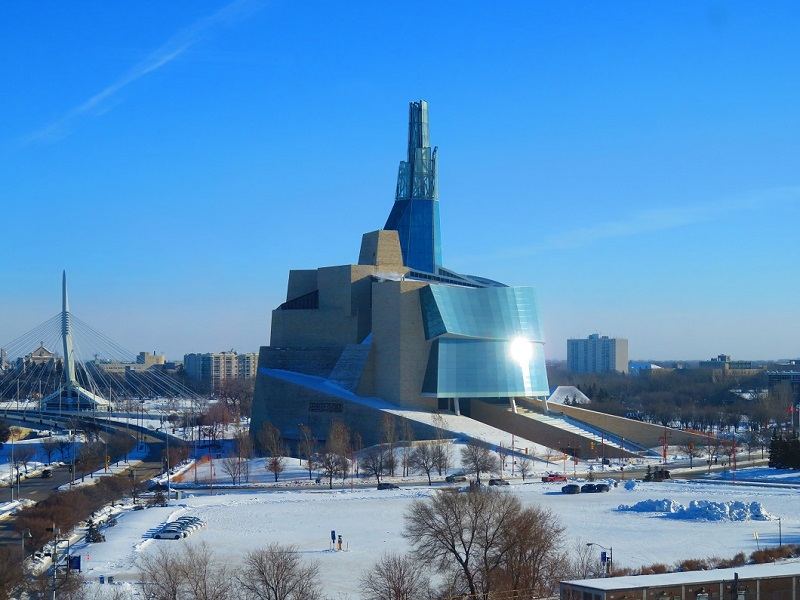
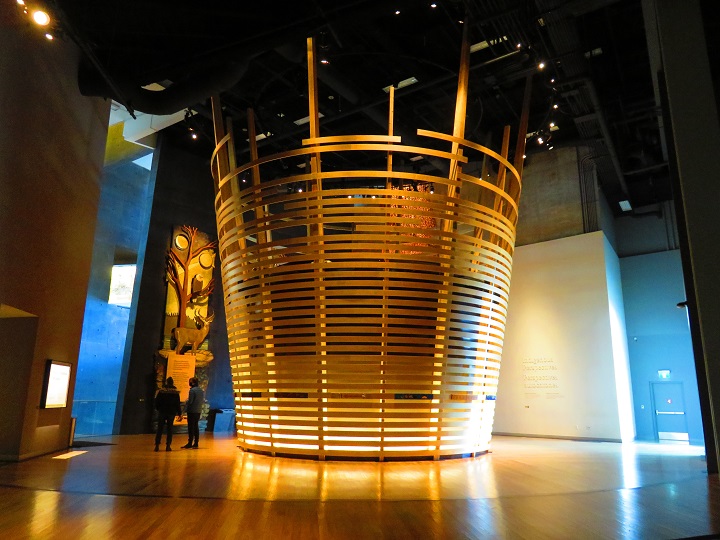
The Canadian Museum for Human Rights is a Canadian Crown corporation and national museum located in Winnipeg, Manitoba, adjacent to The Forks. The purpose of the museum is to “explore the subject of human rights with a special but not exclusive reference to Canada, to enhance the public’s understanding of human rights, to promote respect for others and to encourage reflection and dialogue.”
Established in 2008 through the enactment of Bill C-42, an amendment of The Museums Act of Canada, the CMHR is the first new national museum created in Canada since 1967, and it is Canada’s first national museum ever to be located outside the National Capital Region. The Museum held its opening ceremonies on 19 September 2014.
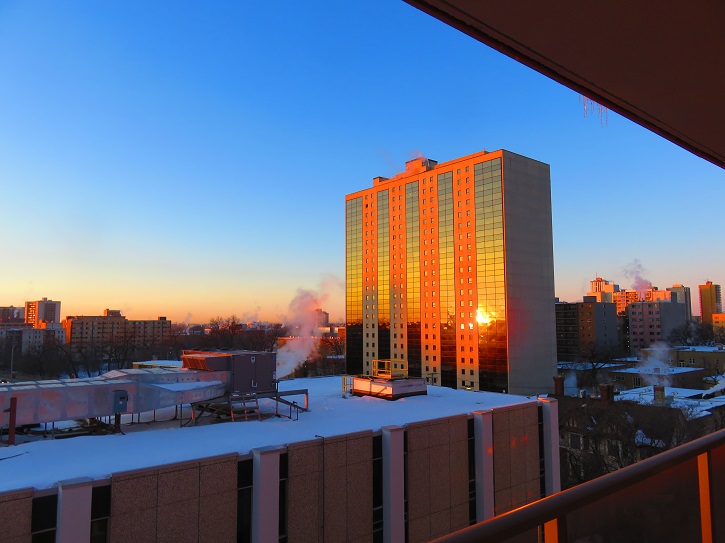
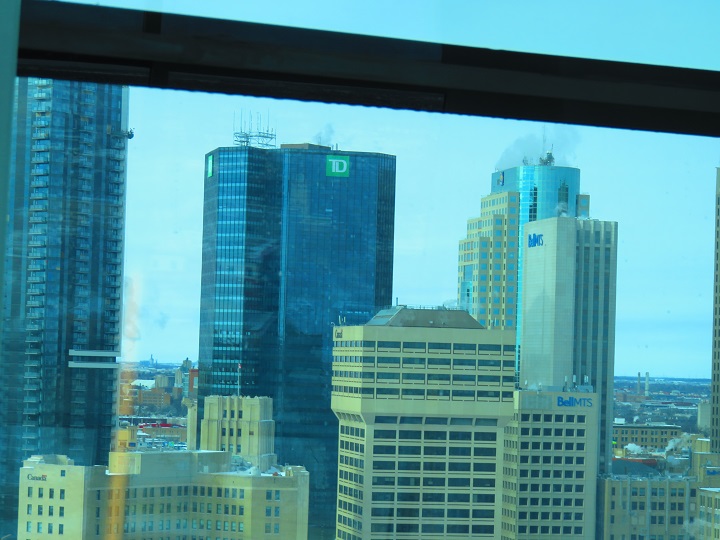
View from the 8th floor. Roughly 220 feet above street level.
Well, come on, baby, I’ll show you how Come on, baby, I’ll show you how We’ll do it hot and we’ll do it fast We’ll do it hot and we’ll do it fast Come on, baby, do the chicken-chicken walk
Quiver yourself from head to toe Do your stuff wherever you go Do your stuff up on the floor Do your stuff wherever you go Come on, baby, do the chicken-chicken walk
Push in and a-push out Push in and a-push out Push in and a-push out Push in and a-push out Push in and a-push-push-push-push out Yeah, let’s walk, walk, walk, baby
Quiver yourself from head to toe Do your stuff up on the floor Do your stuff wherever you go Do your stuff wherever you go Come on, baby, do the chicken-chicken walk
Push in and a-push out Push in and a-push out Push in and a-push out Push in and a-push out Push in and a-push-push-push-push out Yeah, let’s walk, walk, walk, walk, walk, baby
MOSCOW — “Gentlemen. You can’t fight in here. This is the war room!”
It could have beena scene straight out of “Dr. Strangelove” when President Vladimir V. Putin steppedinto the Russian Ministry of Defense’s brand new, three-tiered, multibillion-dollar controlcenterthis week, fora warbriefing that had its fair share of movie-like pageantry.
On movie-theater-size screens, live broadcasts showed long-range strategic bombers taking off from Russian air bases to fly sorties over Syria. Putin instructed commanders in Syria to “make contact with the French and work with them as allies” as Russia seeks a central role in a proposed anti-terrorist coalition.
But the real star of the show may have been the building itself, which is designed to bea new nerve center for the Russian military that will coordinate military action around the world, includingballistic missile launches and strategic nucleardeployments.
The buildingis roughly the equivalent oftheU.S. National Military Command Centerused…
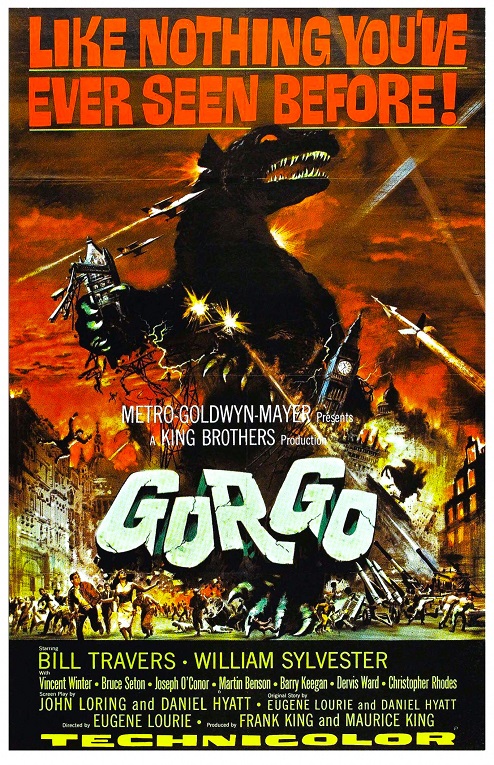
Two Godzilla movies had been made before the Brits got monster fever and unleashed the Beast Gorgo!
Gorgo is a 1961 science fiction giant monster film directed by Eugène Lourié, an international co-production of the United Kingdom, the United States, and Ireland. The story is about a ship’s captain and his pearl diving crew who, with other fishermen on an island and an orphaned boy, discover and capture a gigantic amphibious sea creature and take it to London for public exhibition. This results in the creature’s much larger mother invading London in search of her offspring, causing catastrophic destruction across the city.
The film was originally intended to be set in Japan as an homage to Godzilla; the setting was then changed to France, and then finally to the British Isles. According to Bill Warren’s film book Keep Watching the Skies, southern Australia was also considered for a locale, but the producers supposedly decided that audiences “wouldn’t care” if a monster attacked Australia; its alleged lack of worldwide recognisable landmarks for Gorgo to destroy was also cited as a consideration.
The location where Gorgo first appears, the fictional Nara Island, is an anagram of the Aran Islands, off Ireland’s west coast. The exterior scenes set in Ireland were filmed at Bulloch Harbour and Coliemore Harbour, both near the County Dublin town of Dalkey. Other scenes were filmed at the MGM-British Studios in Borehamwood, Hertfordshire.
Scenes where Gorgo is driven through the streets of London were shot on a Sunday morning, when there was little other traffic. The film studio wanted Gorgo to fight the military, despite director Eugène Lourié’s objections.
Gorgo’s special effects were achieved by suitmation and miniaturisation, a technique pioneered in the Godzilla films. The younger Gorgo was smaller than most giant monsters, so the sets around him were built to a larger scale, leading to an enhanced sense of realism. The creatures were also shot with then-pricey slow-motion cameras to create a sense of scale. The effects were complex and are well respected by special effects artists and fans. The film is also sometimes praised for its innovative ending, in which, unusually for such films, the monsters survive and prevail.
Police in the Chinese city of Chongqing has begun using specially-trained squirrels in their war against drug traffickers.
The Police Dog Brigade of the Criminal Police Detachment in Hechuan District, Chongqing has successfully bred the first batch of drug-sniffing squirrels in China. The breakthrough was part of the country’s national key research and development project, which sought, among others, the creation of new training methods for anti-drug animals. Apparently, scientists have been aware of squirrels’ keen sense of smell for a long time, but rodent training methods were apparently not advanced enough until now.
Chinese news outlets recently reported that the Police Dog Brigade of Hechuan District had successfully trained six drug-detecting squirrels which will soon start working alongside police, helping them find hidden forbidden substances.
Yin Jin, the lead trainer of the Hechuan police dog brigade, told journalists that he and his team managed to train the six squirrels using internally-developed technology and training methods. The rodents were reportedly trained to scratch at the place where they detected drugs.
Tests showed that not only are the squirrels just as efficient as sniffer dogs at detecting drugs, but they also have the added advantage of being smaller, faster, and the ability to reach high places that dogs could never check.
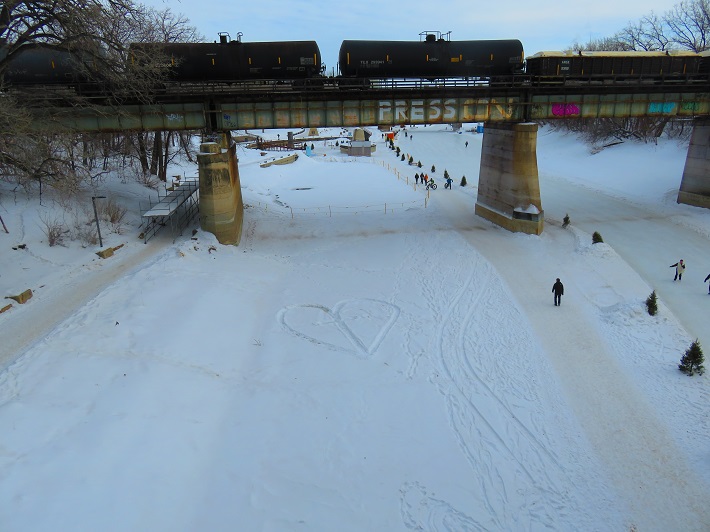
Canadian Museum For Human Rights and CN Rail main line.
Snowmobiles on the Red River. This is rare to see. As far as I could determine it is illegal to ride off road vehicles within Winnipeg city limits, this includes snowmobiles.
Hardcore Christmas decorations on an apartment balcony.


































 The MarkoZen Blog