Now you, too, can be a dog… Image Credit: Facebook / Zeppet Workshop
Ever wanted to be a dog ? Japanese company Zeppet Workshop will turn you into one… for the right price.Taking the idea of roleplaying one step further than anyone thought possible, the company, which specializes in special effects and modeling, hit the headlines back in 2022 when it was revealed that it had created an ultra-realistic Collie costume for a customer who wanted to become a dog.
Footage of the client wearing the costume (see below), which reportedly cost around $15,000, quickly went viral.
More recently, Zeppet was tasked with creating something even more challenging – a wolf costume.
“Because of my love for animals since childhood and some realistic animal suits appearing on TV, I dreamed of being one someday,” the client was quoted as saying.
“At the final fitting, I was amazed at my transformed self in the mirror. It was a moment when my dream come true.”
The resulting outfit, which cost a whopping $23,000, was even more convincing than the last one, demonstrating, if nothing else, just how skilled the firm’s employees are at making costumes.
The process took around 50 days and involved carefully examining images of real wolves to get all the details right.
Other costume designs built by Zeppet over the years include a bear, a panda and various mascots.
Bosco Verticale (Vertical Forest) is a pair of residential towers in the Porta Nuova district of Milan, Italy, between Via Gaetano de Castillia and Via Federico Confalonieri near Milano Porta Garibaldi railway station. They have a height of 110 metres (360 ft) and 76 metres (249 ft) and will host more than 900 trees (approximately 550 and 350 trees in the first and second towers respectively) on 8,900 square metres (96,000 sq ft) of terraces. Within the complex is also an 11-story office building; its facade does not host plants.
The towers were designed by Boeri Studio (Stefano Boeri, Gianandrea Barreca and Giovanni La Varra). It also involved input from horticulturalists and botanists.
The building was inaugurated in October 2014.
The project was designed as part of the rehabilitation of the historic district of Milan between Via De Castillia and Confalonieri. It consists of two residential towers of which the largest is 26 floors and 110 meters high (called Torre E) and the smaller tower is 18 floors and 76 meters high (called Torre D). It contains 400 condominium units priced from 3,000 – 12,000 Euro per square metre.
It is called Bosco Verticale because each tower houses trees between three and six meters which help mitigate smog and produce oxygen. It is also used to moderate temperatures in the building in the winter and summer. The plants also attenuate noise. The design was tested in a wind tunnel to ensure the trees would not topple from gusts of wind. Botanists and horticulturalists were consulted by the engineering team to ensure that the structure could bear the load imposed by the plants. The steel-reinforced concrete balconies are designed to be 28 cm thick, with 1.30 metre parapets.
The construction of the towers began in late 2009 and early 2010, involving 6,000 onsite construction workers. Between mid-2010 and early 2011 construction progressed very slowly and the towers rose by only five floors while the core rose to the seventh floor. Construction progressed throughout 2011, and by the beginning of 2012 the structures were completed, and construction of the facades and installation of the plants began on 13 June 2012. The building was inaugurated in October 2014.
On April 11, 2012, one of the buildings was used as a temporary art gallery and opened to the public for an art exhibition hosted during Milan Fashion Week.
The two buildings have 730 trees (480 large, 250 small), 5,000 shrubs, and 11,000 perennials and ground cover on its facades. The original design had specified 1,280 tall plants and 920 short plants encompassing 50 species. Overall, the vegetation is the equivalent of that found in a one hectare woodlot. The innovative use of heat-pump technology is helping to slash heating and cooling costs.
On November 19, 2014, Bosco Verticale won the International Highrise Award, prestigious international competition bestowed every two years, honouring excellence in recently constructed buildings that stand a minimum of 100 meters (328 feet) tall. The five finalists were selected from 26 nominees in 17 countries.
On the 12th of November 2015, the Council on Tall Buildings and Urban Habitat (CTBUH) Awards Jury selected Bosco Verticale, Milan, as the overall “2015 Best Tall Building Worldwide” at the 14th Annual CTBUH International Best Tall Building Awards Symposium, Ceremony & Dinner, celebrated at the Illinois Institute of Technology, Chicago.
Living in a home surrounded by greenery is on every person’s wish list, but someone very clearly said, ‘be careful what you wish for’. An experimental green housing project in a Chinese megacity had residents overjoyed with the fact that they have their own thriving green patch to live around. This complex is Chengdu’s Qiyi City Forest Garden that takes pride in standing tall as a vertical forest. All of the 826 apartments were sold out by April of 2020. The apartment highlight is the balcony area that’s fitted with as many as 20 types of plants that provide lush greenery and filters air and noise pollution too.
In only a matter of a few months, this Chinese complex went from eco-paradise to veritable hell. The apartments that are left unoccupied by tenants have been occupied by hoards of pesky insects that have completely ruined the facade of the building making it look like a desolate, run-down facility. The infestation of mosquitoes has kept tenants away and only about 10 families have moved in. The remaining eight towers of 30 floors each have been overrun by their own plants causing the mosquito invasion. What could be a vision in green if pruned and cared for properly is seen rotting in neglected balconies, with branches hanging over railings all over the towers making them look nightmarish so much that some plants have completely swallowed some balconies?
Chengdu is one of the major cities in China with a severe smog problem. This vertical forest idea was a way of combating everyday battles that comes with air and noise pollution but guess mosquitoes didn’t feature in the scheme of things. The project developer said in response that they will provide maintenance four times a year and will also step up pest control efforts.
The Consumer Product Safety Commission (CPSC) recalls millions of toys every year but is stretched too thin to guard against all dangers. In the face of such risks, parents have come to rely on consumer groups for warnings and the civil justice system as an enforcement mechanism against negligent corporations. Here are the ten most dangerous toys of all time:
1. CSI: Asbestos
The CSI Fingerprint Examination Kit – a toy based on the hit CBS show CSI: Crime Scene Investigation – allowed children to look for fingerprints with a special powder and brushes. The powder in question turned out to contain up to five percent asbestos. The alarm was sounded in November 2007, but the toy’s maker, CBS Consumer Products, decided to leave it on shelves in the run up to Christmas. Rather than wait for the CPSC to negotiate a recall, the Asbestos Disease Awareness Organization filed a civil action to stop sales of the kit.
2. Magnetix
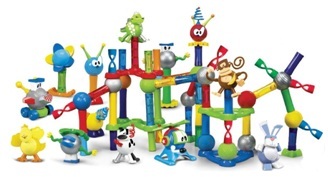
Magnetix building sets featured plastic pieces that could break open, spilling small, powerful magnets that were easily swallowed by curious toddlers. Unlike most small objects swallowed in this manner, the magnets don’t pass through the digestive system. Instead they connect with each other through tissue walls, sometimes forming large masses that twist intestines and cut off blood supply to vital organs. The result can be a painful death within hours. In 2005, when 22-month old Kenny Sweet died after 9 tiny magnets reattached inside his bowels, Magnetix manufacturer Mega Bloks released a statement saying it had “no record or knowledge of a similar occurrence involving this toy.” In fact, the company had received several complaints of magnets falling out of the plastic pieces and knew of at least one case in which a 10-year-old had suffered life-threatening intestinal injuries. Three million Magnetix sets sat on store shelves for four months after Kenny Sweet’s death. When they were finally recalled in 2006, at least 34 more children were known to have been injured. Mega Bloks rebranded the toy MagNext in 2008.
3. Inflatable Baby Boats
Aqua-Leisure’s various Inflatable Baby Boat were supposed to be a fun way for a baby or toddler to float safely in a pool. The problem was the boats’ leg straps were prone to tear, causing the baby or toddler in question to slip through. In 2009, four million of the boats were recalled after more than 30 infants nearly drowned. It turned out, Aqua-Leisure had been aware of the problem for at least six years and the Consumer Product Safety Commission (CPSC) ultimately fined the company $650,000.
4. Hannah Montana Pop Star Card Game
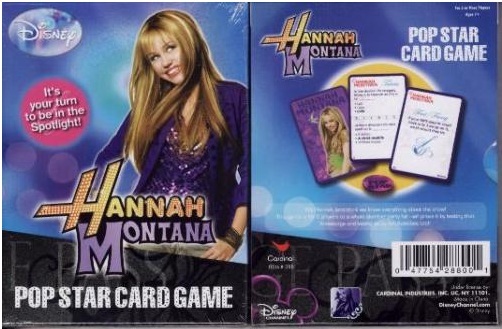
After arsenic, lead is the second-most deadly household toxin in existence. The American Academy of Pediatrics recommends that no toy contain more than 40 parts per million lead. Which is why it was so alarming when lab tests revealed The Hannah Montana Pop Star Card Game contained lead at 75 times that level – a whopping 3,000 parts per million. Hanna Montana wasn’t the only toxic sensation in 2007. One study found that 35 percent of all toys on the shelves contained high levels of lead, and nearly 5 percent contained arsenic or toxic cadmium. By year’s end there had been 42 recalls involving 6 million toys for excessive lead levels. But Hanna Montana stayed on shelves because the lead was found in its vinyl, not in paint, and thus was not covered by regulations.
5. Aqua Dots (aka Date Rape Drugs)
One of 2007’s more popular toys, Aqua Dots were small, colorful beads that could be arranged into different designs and then permanently set with a sprinkle of water. The water activated a glue in the coating of the beads, which fused them together. Innocent enough, but reports surfaced almost immediately of children vomiting and lapsing into comas after swallowing the beads. Why? Because scientists discovered that the glue contained chemicals that metabolized into gamma-hydroxybutyrate, otherwise known as GHB – the date rape drug. The toy’s makers, Canadian-based Spin Master and Australian based Moose Enterprises, blamed Chinese subcontractors, before eventually agreeing to recall all 4.2 million Aqua Dots kits. The following year Spin Master rebranded Aqua Dots as “Pixos” and they remain on shelves to this day.
6. Snacktime Cabbage Patch Doll
The Cabbage Patch dolls were the must-have toy of their time, sparking department store fights and pulling in billions of dollars in sales. The Snacktime edition pulled in more than just money however, as its mechanical jaws tried to consume the fingers and hair of inquisitive and unlucky children. The Snacktime’s mechanism was a one-way battery-powered roller with no off switch. It was supposed to be activated by the accompanying snacks, but the little tykes made no distinction between “food” and fingers. The dolls were eventually pulled from the shelves… after the Christmas season.
7. Mini Hammocks
You know that scene in the movies when an unsuspecting individual steps on an apparently innocuous cargo net, only to be hoisted into the air by what turned out to be a trap? Someone decided to market them as hammocks for kids. Ten different manufacturers eventually had to recall over 3 million mini hammocks, after at least 12 children died between 1984 and 1995, and many more were injured. The hammocks did not feature spreader bars to keep them open, resulting in a twisting mess that risked strangulation every time a kid tried to get in or out.
8. Lawn Darts
It doesn’t take much imagination to see why steel missiles with weighted skewers could make for a dangerous toy. Originally designed to pierce lawns in a game similar to horseshoes, children found different ways to use the darts. After the deaths of at least three children lawn darts were banned by the CPSC. The agency also recommended the destruction of existing sets.
9. The Austin Magic Pistol
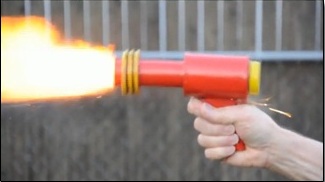
In the 1950’s, when BB guns weren’t considered particularly dangerous, it took something special for a gun to stand out. The Austin Magic Pistol managed to do that with its gas-powered combustion. The gun used what the manufacturer called “magic crystals” made from calcium carbide – a hazardous material. When mixed with water the crystals would explode and fire a plastic ball 70 feet or more.
10. Gilbert U-238 Atomic Energy Lab
Maybe you think it’s obvious that including uranium in a child’s toy isn’t an especially good idea. But apparently that never occurred to the makers of the Gilbert Atomic Energy Lab. Described when it was sold in the early 1950s as “the most elaborate Atomic Energy educational set ever produced” it featured four Uranium bearing ore samples and a preformatted order form for more. Even in an age when science sets routinely came with substances like potassium nitrate (a component of gunpowder) and sodium ferrocyanide (these days classified as poison), the Atomic Energy Lab was positively glowing with danger.
The Gilbert U-238 Atomic Energy Lab was a toy lab set that was produced by Alfred Carlton Gilbert, who was an American athlete, magician, toy-maker, business man, and inventor of the well-known Erector Set. The Atomic Energy Lab was released by the A. C. Gilbert Company in 1950. The kit’s intention was to allow children to create and watch nuclear and chemical reactions using radioactive material.
Background and development Gilbert believed that toys were the foundation in building a “solid American character”, and many of his toys had some type of educational significance to them. Gilbert was even dubbed “the man who saved Christmas” during World War I when he convinced the US Council of National Defense not to ban toy purchases during Christmas time.
The Atomic Energy Lab was just one of a dozen chemical reactions lab kits on the market at the time. Gilbert’s toys often included instructions on how the child could use the set to put on his own “magic show”. For parents, he pushed the idea that the sets’ use of chemical reactions directed their children toward a potential career in science and engineering.
In 1954, Gilbert wrote in his autobiography, The Man Who Lives in Paradise, that the Atomic Energy Laboratory was “the most spectacular of [their] new educational toys”. Gilbert wrote that the Government encouraged the set’s development because it believed the lab would aid public understanding of atomic energy and emphasize its constructive aspects. Gilbert also defended his Atomic Energy Laboratory, stating it was safe, accurate, and that some of the country’s best nuclear physicists had worked on the project.
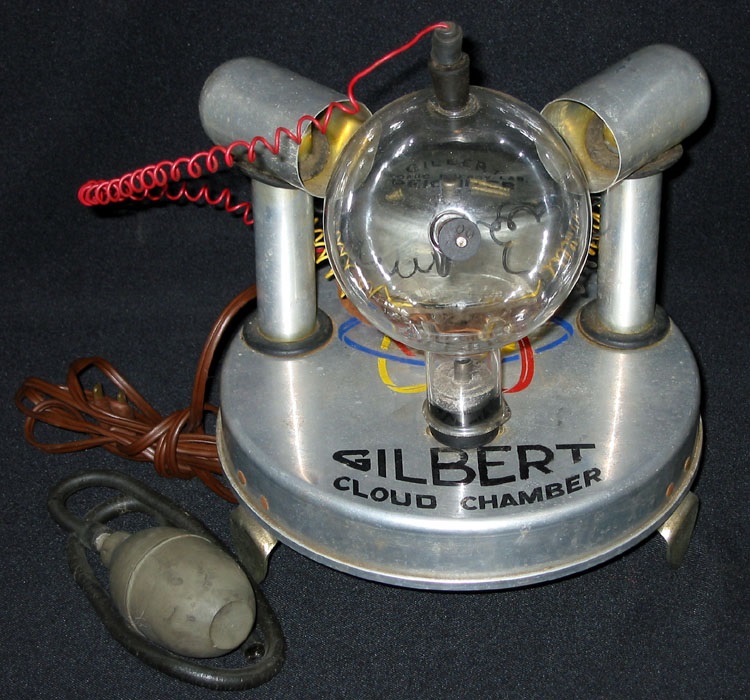
The lab contained a cloud chamber allowing the viewer to watch alpha particles traveling at 12,000 miles per second (19,000,000 m/s), a spinthariscope showing the results of radioactive disintegration on a fluorescent screen, and an electroscope measuring the radioactivity of different substances in the set.
Gilbert’s original promotions claimed that none of the materials could prove dangerous. The instructions encouraged laboratory cleanliness by cautioning users not to break the seals on three of the ore sample jars, for “they tend to flake and crumble and you would run the risk of having radioactive ore spread out in your laboratory. This will raise the level of the background count”, thus impairing the results of experiments by distorting the performance of the Geiger counter.
The Gilbert catalog copy included the reassurance that “All radioactive materials included with the Atomic Energy Lab have been certified as completely safe by Oak-Ridge Laboratories, part of the Atomic Energy Commission.”
The set originally sold for $49.503 (equivalent to $560 in 2021) and contained the following:
Battery-powered Geiger–Müller counter Electroscope Spinthariscope Wilson cloud chamber with short-lived alpha source (Po-210) in the form of a wire Four glass jars containing natural uranium-bearing (U-238) ore samples (autunite, torbernite, uraninite, and carnotite from the “Colorado plateau region”) Low-level radiation sources: beta-alpha (Pb-210) pure beta (possibly Ru-106) gamma (Zn-65) “Nuclear spheres” for making a model of an alpha particle Gilbert Atomic Energy Manual — a 60-page instruction book written by Dr. Ralph E. Lapp Learn How Dagwood Split the Atom — comic book introduction to radioactivity, written with the help of General Leslie Groves (director of the Manhattan Project) and John R. Dunning (a physicist who verified fission of the uranium atom) Prospecting for Uranium — a 1949 book published jointly by the Atomic Energy Commission and the United States Geological Survey Three C batteries 1951 Gilbert Toys catalog A product catalog described the set as follows: “Produces awe-inspiring sights! Enables you to actually SEE the paths of electrons and alpha particles traveling at speeds of more than 10,000 miles per SECOND! Electrons racing at fantastic velocities produce delicate, intricate paths of electrical condensation – beautiful to watch. Viewing Cloud Chamber action is closest man has come to watching the Atom! Assembly kit (Chamber can be put together in a few minutes) includes Dri-Electric Power Pack, Deionizer, Compression Bulb, Glass Viewing Chamber, Tubings, Power Leads, Stand, and Legs.”
Among other activities, the kit suggested “playing hide and seek with the gamma ray source”, challenging players to use the Geiger counter to locate a radioactive sample hidden in a room.
Criticism In 2006, the pop culture publication Radar Magazine called the lab set one of “the 10 most dangerous toys of all time, … exclud[ing] BB guns, slingshots, throwing stars, and anything else actually intended to inflict harm”, because of the radioactive material it included (it was number 2 on the list; number 1 was lawn darts).
The professional journal IEEE Spectrum published a more-detailed review in 2020, discussing the kit in the context of the history of science education kits and safety concerns. It described the likely radiation exposure as “minimal, about the equivalent to a day’s UV exposure from the sun”, provided that the radioactive samples were not removed from their containers, in compliance with the warnings in the kit instructions.
The Bulletin of the Atomic Scientists published a brief article on the web, which featured Voula Saridakis, a curator at the Museum of Science and Industry (Chicago) hosting a detailed video tour of the Atomic Energy Lab components. She concluded by saying that the kit failed to sell because of its high price, and not due to any safety concerns at the time.
Legacy Unlike other A.C. Gilbert Company chemistry sets, the Atomic Energy Lab was never popular and was soon taken off the shelves. Fewer than 5,000 kits were sold, and the product was only offered in 1950 and 1951. Gilbert believed the Atomic Energy Lab was commercially unsuccessful because the lab was more appropriate for those who had some educational background rather than the younger crowd that the A.C. Gilbert Company aimed for. Columbia University purchased five of these sets for their physics lab.













 The MarkoZen Blog