Ukraine war: Could Russia use tactical nuclear weapons?

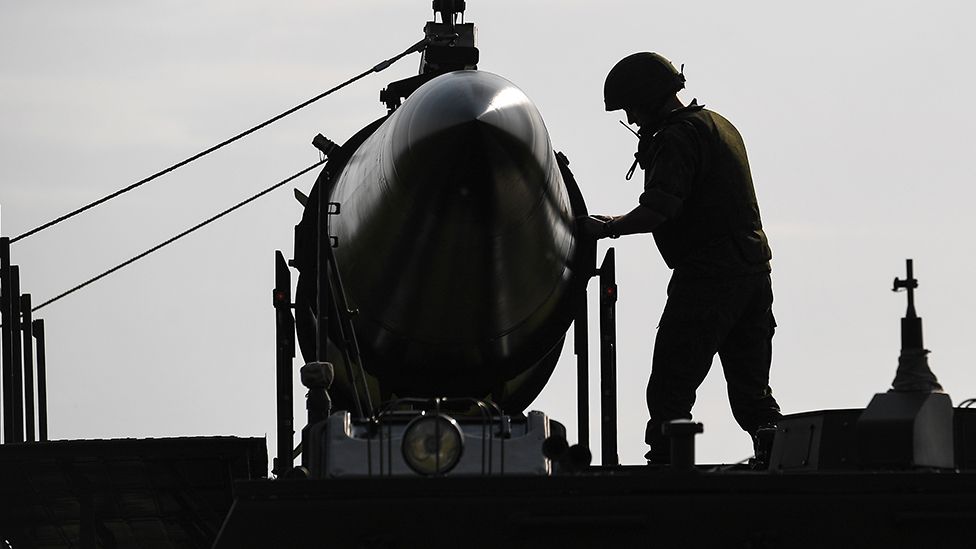
russian soldier with Iskander missile

Russia’s President Vladimir Putin has said he’s ready to use nuclear weapons to defend Russian territory, raising the fear he might use a small, or “tactical” nuclear weapon in Ukraine.

US President Joe Biden has warned him that doing so would be the most serious military escalation since World War II.

What are tactical nuclear weapons?

Tactical nuclear weapons are small nuclear warheads and delivery systems intended for use on the battlefield, or for a limited strike.

They are designed to destroy enemy targets in a specific area without causing widespread radioactive fallout.

The smallest tactical nuclear weapons can be one kiloton or less (producing the equivalent to a thousand tonnes of the explosive TNT). The largest ones can be as big as 100 kilotons.

Strategic nuclear weapons are larger (up to 1,000 kilotons) and are launched from longer range.

By comparison, the atomic bomb the US dropped on Hiroshima in 1945 was 15 kilotons.

What tactical nuclear weapons does Russia have?

According to US intelligence, Russia has about about 2,000 tactical nuclear weapons.

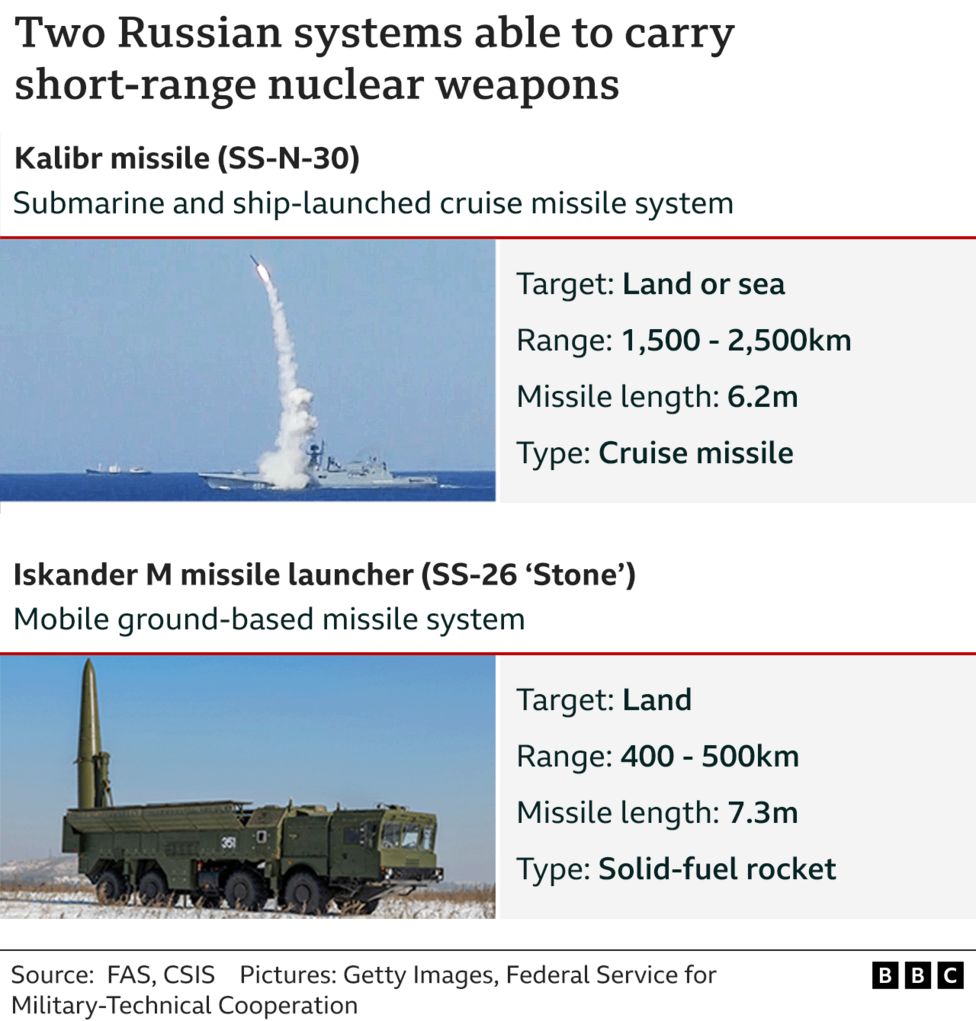
Its tactical nuclear warheads can be placed on various types of missiles which are normally used to deliver conventional explosives, such as cruise missiles and artillery shells.

Tactical nuclear weapons can also be fired from aircraft and ships – as anti-ship missiles, torpedoes and depth charges.

The US says Russia has recently been investing heavily in these weapons to improve their range and accuracy.
Have tactical nuclear weapons ever been used before?

Tactical nuclear weapons have never been used in conflict.

Nuclear powers such as the US and Russia have found it equally effective to destroy targets on the battlefield by using modern conventional munitions.

In addition, no nuclear-armed country has so far been willing to risk unleashing all-out nuclear war by employing tactical nuclear weapons.

However, Russia might be more willing to use smaller tactical weapons than larger strategic missiles.

“They might not see it as crossing this big nuclear threshold,” says Dr Patricia Lewis, head of the international security programme at the Chatham House think tank.

“They could see it as part of their conventional forces.”
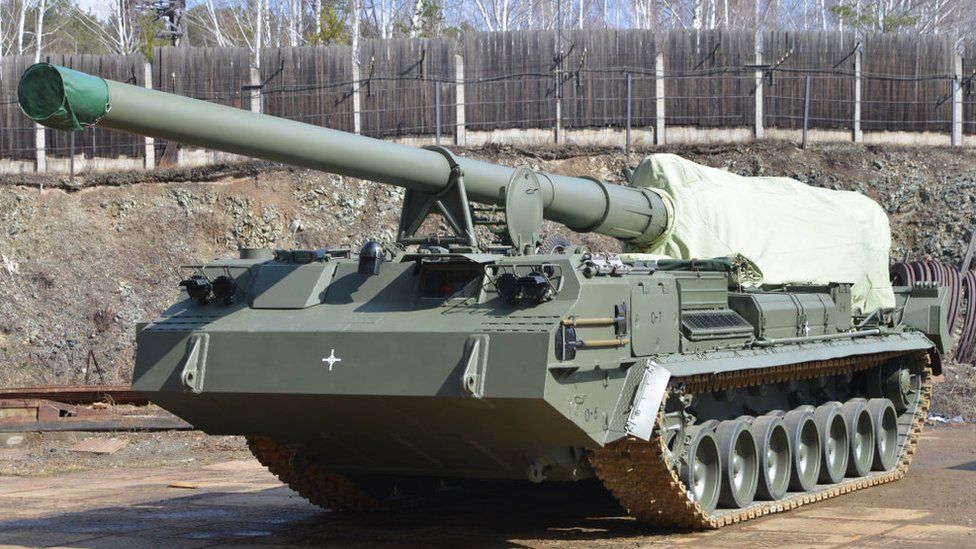
MOSCOW, RUSSIA - APRIL 15, 2020: The first upgraded 203 mm 2S7M Malka self-propelled artillery vehicle delivered by Uraltransmash (a subsidiary of Uralvagonzavod, part of the Rostec State Corporation) to the Russian Defence Ministry. The modernised model shows better performance thanks to a new running gear and improved electronics. Rostec Press Office/TASS (Photo by Rostec Press Office\TASS via Getty Images)
Russian forces can fire small nuclear warheads using conventional artillery, such as the “Malka” self-propelled gun

Are Putin’s nuclear threats a real cause to worry?

In February 2022, shortly before invading Ukraine, President Putin placed Russia’s nuclear forces at “special combat readiness” and held high-profile nuclear drills.

More recently, he said: “If the territorial integrity of our country is threatened, we will without a doubt use all available means to protect Russia and our people. This is not a bluff.”

Russia is planning to annex the regions of southern and eastern Ukraine it has occupied after holding self-styled referendums. President Putin says he is ready to defend the “territorial integrity” of the regions “by all means.”

US intelligence see this as a threat to the West not to help Ukraine try and retake these territories, rather than as a sign that he is planning a nuclear war.

But others worry that Russia, if it suffers further setbacks, might be tempted to use a smaller tactical weapon in Ukraine as a “game changer”, to break a stalemate or avoid defeat.

James Acton, a nuclear expert at the Carnegie Endowment for International Pace in Washington DC, says: “I am legitimately worried that in that circumstance, Putin might use a nuclear weapon – most likely on the ground in Ukraine to terrify everyone and get his way. We are not at that point yet.”

How has the US responded?

US President Joe Biden has warned Russia not to use nuclear weapons in the war in Ukraine.

Speaking during an interview with CBS News, Mr Biden said such action would “change the face of war unlike anything since World War Two,” adding: “It’ll be consequential.”

How the US and Nato would respond to any nuclear use is hard to predict. They may not want to escalate the situation further and risk all-out nuclear war but they also might want to draw a line.

However, Russia might also be deterred from using tactical nuclear weapons by another power – China.

“Russia is heavily dependent on Chinese support,” says Dr Heather Williams, nuclear expert at Kings College London.

“But China has a ‘no first use’ nuclear doctrine. So if Putin did use them, it would be incredibly difficult for China to stand by him.

“If he used them, he would probably lose China.”

BBC

Iranian Women Under Siege

This is what bravery looks like. Iranian women protesting for their human rights!

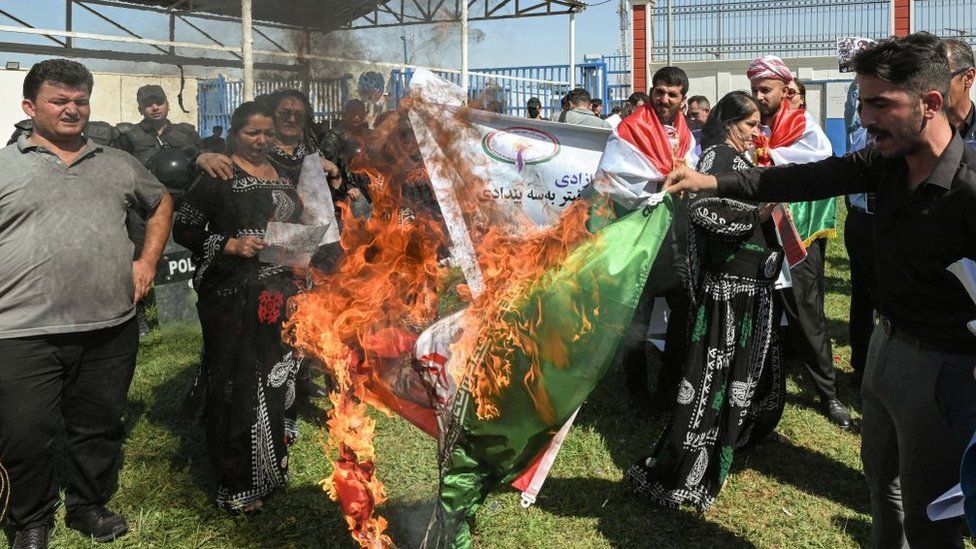
Protesters burn an Iranian flag
Image caption,Much of the country has seen protests following the death of a young woman in custody

Iran’s president has vowed to take action against protesters after more than a week of anti-government demonstrations.

President Ebrahim Raisi pledged to “deal decisively” with the protests, which have now spread to most of Iran’s 31 provinces.

Officials say some 35 people have been killed since protests broke out over the death of Mahsa Amini in police custody.

Clashes continue in several cities.

Ms Amini had been detained for allegedly breaking headscarf rules. Officers reportedly beat her head with a baton and banged her head against one of their vehicles. The police have said there is no evidence of any mistreatment and that she suffered “sudden heart failure”.

And while Mr Raisi says her death will be investigated, his Interior Minister Ahmad Vahidi has insisted that Ms Amini was not beaten.

People gather in protest against the death of Mahsa Amini on September 24, 2022 in Rome, Italy

On Saturday people joined protests in several cities across the world including Rome, Athens and Stockholm

‘Godzilla’ lizard found climbing on Florida home’s window

Sept. 22 (UPI) — A Central Florida family captured video when they had an unusual visitor — a large monitor lizard climbing on a window.

Jocelyn Penson, who posted the video to Facebook, said the footage was filmed at the home of her son, Frank Crowder, in Apopka, Fla.

The video shows the lizard climbing on the window in an apparent attempt to find its way into the house. The reptile ends up flopping off the window and down to the ground.

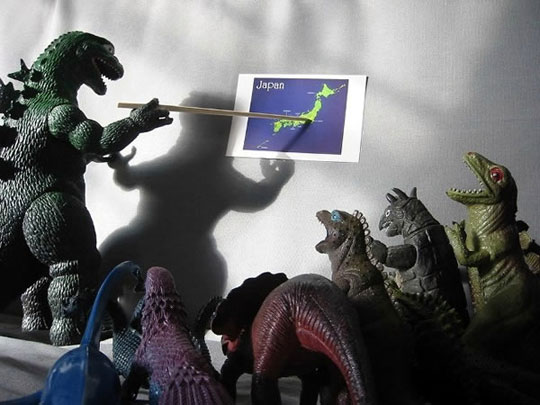
“Looks like Godzilla to me!” Penson wrote.

Penson’s family initially said the animal appeared to be a tegu lizard, but Ron Magill, a wildlife expert with Zoo Miami, said the reptile is a water monitor lizard from Sub-Saharan Africa.

“It’s a lizard that could be anywhere between 3 and 5 feet, generally speaking,” he told WSVN-TV.

Magill said the lizard was likely a former pet that either escaped or was abandoned into the wild by its owner.

Blue Lagoon Spa – Reykjavik, Iceland

The Blue Lagoon geothermal spa is one of the most visited attractions in Iceland, and certainly always one of my favourite things to do when visiting the country. The spa is located in a lava field in Grindavik on the Reykjanes Peninsula, southwestern Iceland. Although it’s location looks like a setting from another planet, it’s surprisingly easy to reach. Just a 20 minute drive from Keflavik airport, and a 40 minute drive from Reykjavik.

Blue Lagoon, Iceland

Driving on Iceland’s smooth roads is an utter joy as the traffic is always extremely light. We find it always makes sense to plan a visit, either on your way into town, or on your way back to the airport. This time, having come to Reykjavik to see Yoko Ono switch on the Imagine Peace Tower (see here), we squeezed in a visit en route back to the airport.

The warm water is a distinct milky blue colour due to its rich content of minerals such as silica and sulphur, which have been proven to help certain skin disorders, including psoriasis. In fact, the Blue Lagoon operates a research and development centre and clinic to help find cures for skin ailments using the mineral-rich water – which in the bathing areas – averages 37–39 °C. The separate clinic has 15 spacious double rooms and a private lagoon.

The lagoon is fed by the water output of the nearby geothermal plant and is renewed every two days. Superheated water is vented from the ground near a lava flow and used to run turbines that generate electricity. After going through the turbines, the steam and hot water passes through a heat exchanger to provide heat for a municipal water heating system. Then the water is fed into the lagoon for recreational and medicinal users to bathe in.

Cool Hotdog Cars

“Wienermobile” is a series of automobiles shaped like a hot dog on a bun which are used to promote and advertise Oscar Mayer products in the United States. The first version was created in 1936 by Oscar Mayer’s nephew, Carl G. Mayer, and variants are still used by the Oscar Mayer company today. Drivers of the Wienermobiles are known as Hotdoggers and often hand out toy whistles shaped as replicas of the Wienermobile, known as Wienerwhistles.

Wienermobile_OURDOG_plate
wiener2

The Oscar Mayer Wienermobile has evolved from Carl Mayer’s original 1936 vehicle to the vehicles seen on the road today. Although fuel rationing kept the Wienermobile off the road during World War II, in the 1950s Oscar Mayer and the Gerstenslager Company created several new vehicles using a Dodge chassis or a Willys Jeep chassis. One of these models is on display at the Henry Ford Museum in Dearborn, Michigan. These Wienermobiles were piloted by “Little Oscar” (portrayed by George Molchan) who would visit stores, schools, orphanages, and children’s hospitals and participate in parades and festivals.
In 1969, new Wienermobiles were built on a Chevrolet motor home chassis and featured Ford Thunderbird taillights. The 1969 vehicle was the first Wienermobile to travel outside the United States. In 1976 Plastic Products, Inc., built a fiberglass and styrofoam model, again on a Chevrolet motor home chassis.
In 1988, Oscar Mayer launched its Hotdogger program, where recent college graduates were hired to drive the Wienermobile through various parts of the nation and abroad. Using a converted Chevrolet van chassis, Stevens Automotive Corporation and noted industrial designer Brooks Stevens built a fleet of six Wienermobiles for the new team of Hotdoggers.
With the 1995 version, the Wienermobile grew in size to 27 feet long and 11 feet high. The 2004 version of the Wienermobile includes a voice-activated GPS navigation device, an audio center with a wireless microphone, a horn that plays the Wiener Jingle in 21 different genres from Cajun to Rap to Bossa Nova, according to American Eats, and sports fourth generation Pontiac Firebird taillights.

wienermobile1
Wienermobile-NAIAS-2005
Wienermobile-2

There are currently eight active Wienermobiles, six of which are the full-sized familiar models (the other two are the Mini and the food truck versions) with each assigned a part of the country. The “hotdogger” position of driving the Wienermobile is open to U.S. citizens, and the job lasts from the first of June until the following first of June. Only college seniors who are about to graduate are eligible. Both current hotdoggers and Oscar Mayer recruiters visit college campuses across the country in search of the next round of hotdoggers. Candidates are screened from an average of 2000 applicants. Every March, a pool of thirty final-round candidates are brought to Kraft Foods and Oscar Mayer headquarters in Madison, Wisconsin, for interviews. Each vehicle can hold two hotdoggers, and twelve people are chosen. Currently there are about 300 hotdogger alumni.

wiener1
wiener3

They apparently come in all sizes.