Aircraft carriers have always evoked awe and amazement with their size and capabilities of launching airplanes from their giant decks. Today the giant carriers that patrol the oceans belong to the United States Navy. These ships displace 100,000 tons and are over a thousand feet long. The U.S. currently has 11 of these super carriers with another under construction. Other countries have aircraft carriers but nothing approaching the size of the American ships.
France has carriers less than half the size of the U.S. carriers. The U.K. has carriers with a displacement of 65,000 tons. Other than the U.K and France there a few other countries with smaller carriers. But there are two countries with very big carriers. Not as big as the U.S. but bigger than the U.K and French ships. Russia has one and China has another one.
Admiral Kuznetsov is the Russian carrier. It displaces 65,000 tons and does limited patrolling in the Mediterranean.
There was a second carrier of the same design that apparently has landed up in the hands of the People’s Liberation Army Navy of China, the Varyag.
Varyag being towed in Istanbul.
Varyag was to be an Admiral Kuznetsov class multirole aircraft carrier of the Soviet Union. She was known as Riga when her keel was laid down at Shipyard 444 (now Nikolayev South) in Nikolayev December 6, 1985. Design of the carrier was undertaken by the Nevskoye Planning and Design Bureau. She was launched December 4, 1988, but she was renamed Varyag (Varangian) in late 1990, after the famous Russian cruiser.
Construction stopped by 1992, with the ship structurally complete but without electronics. With the dissolution of the Soviet Union, ownership was transferred to Ukraine; the ship was laid up, unmaintained, then stripped. In early 1998, she lacked engines, a rudder, and much of her operating systems, and was put up for auction.
It was purchased at auction for US$20 million by Chong Lot Travel Agency, a company widely believed to be a front for Chinese People’s Liberation Army Navy (PLAN) Chong Lot stated that the ship would become a floating entertainment center and casino in the Chinese SAR of Macau. However, this has been proven incorrect as the ship is docked in Dalian and painted PLAN grey. The Chinese Navy has reportedly named the carrier Shi Lang and received delivery of the ship in October 2010. Defense News and Intelligence sources claim that the ship has been refitted and will be put through Sea Trials in the summer of 2011.
Now that China is about to have an aircraft carrier in its inventory, there are some futuristic concept carrier designs showing up on-line with Chinese colours and aircraft.
This catamaran design would be very fast in the water and allows for basically 2 carrier megastructures to be fused together.
These giant ships would be giant targets also. The enemy would throw everything they had at the beast. These ships would be very susceptible to U.S. cruise missiles and torpedoes.
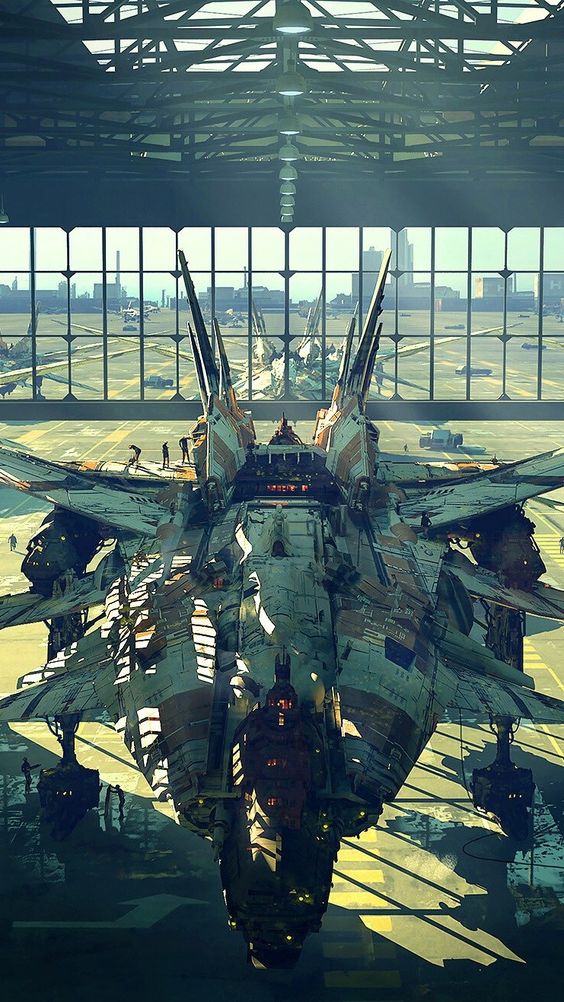
Taking the futuristic carrier concept to a whole new level is the idea of an aircraft carrier that could fly itself. A big nuclear powered platform that could fly at high altitude and launch fighter jets and helicopters while airborne.
These renderings show the power plants as giant fans along the sides of these leviathans. It would be a lot of tonnage to keep in the sky for extended periods.
These giant flying ships would also be very detectable to radar and other sensors. But maybe they would have a cloaking capability, which would allow them to pass into enemy airspace undetected and unleash the wrath of the fighter bombers zooming off the decks.
The one below has the power fans running down the centre of the ship. It looks like a Chinese design.





























 The MarkoZen Blog