Boy, six, finds giant megalodon shark tooth on Bawdsey beach

Sammy Shelton
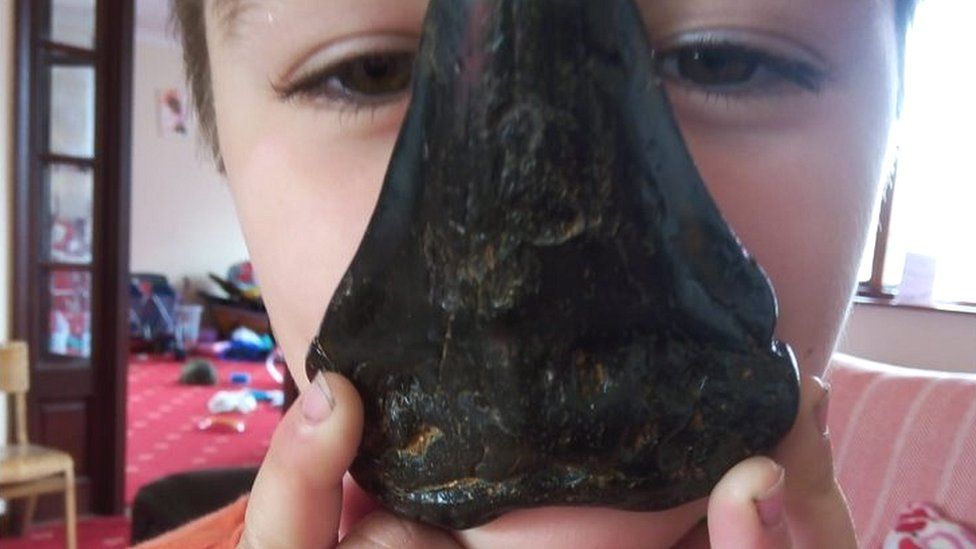
Image caption,Sammy Shelton found the giant tooth on a Suffolk beach

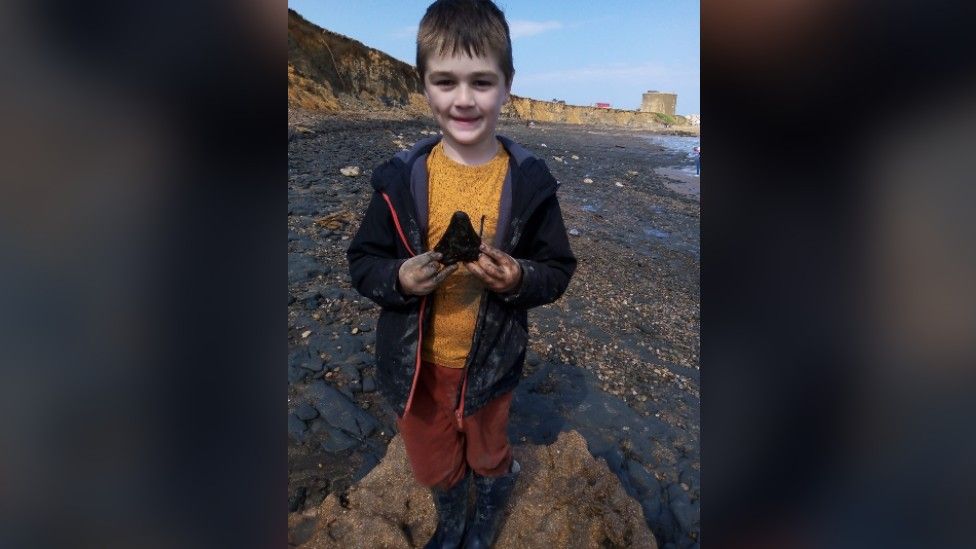
A six-year-old boy has found a shark tooth belonging to a giant prehistoric megalodon that could be up to 20 million years old.

Sammy Shelton found the 10cm-long (4in) tooth on Bawdsey beach in Suffolk during a bank holiday break.

It has been confirmed as belonging to a megalodon – the largest shark that ever existed – by expert Prof Ben Garrod.

His dad Peter Shelton said Sammy was sleeping with it near his bed as he was “very attached to it”.

The pair, from Bradwell near Gorleston-on-Sea in Norfolk, were searching for fossils when they came across the giant shark’s tooth, as first reported in the Great Yarmouth Mercury.

“Sammy was very excited as we’d seen fragments of shark teeth on the beach, but nothing as big and heavy as this,” Mr Shelton said.
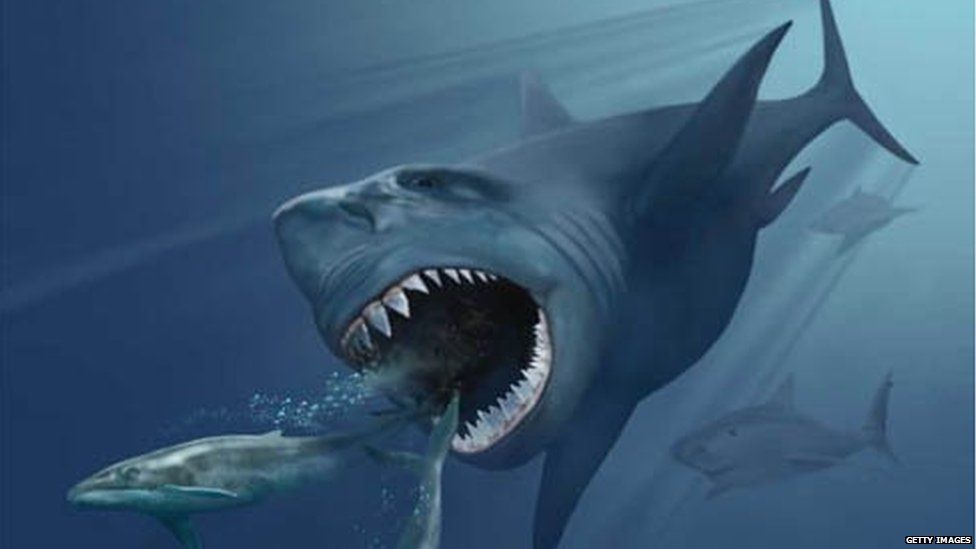
Artist's impression of a megalodon
Image caption,Megalodon was a giant and dwarfed all other sea creatures
Sammy Shelton holding a shark's tooth on a beach
Image caption,Sammy found the tooth on the beach beneath Bawdsey’s eroding sandy cliffs while on holiday on 30 May

Photographs of the find were sent to Prof Garrod, a broadcaster and evolutionary biologist at the University of East Anglia in Norwich.

“It belonged to a megalodon, the largest ever shark – and its teeth are not often found around the UK coastline,” he said.

“Maybe just a handful a year, but this is a particularly good example, in really good condition, whereas they are usually quite worn when found.”
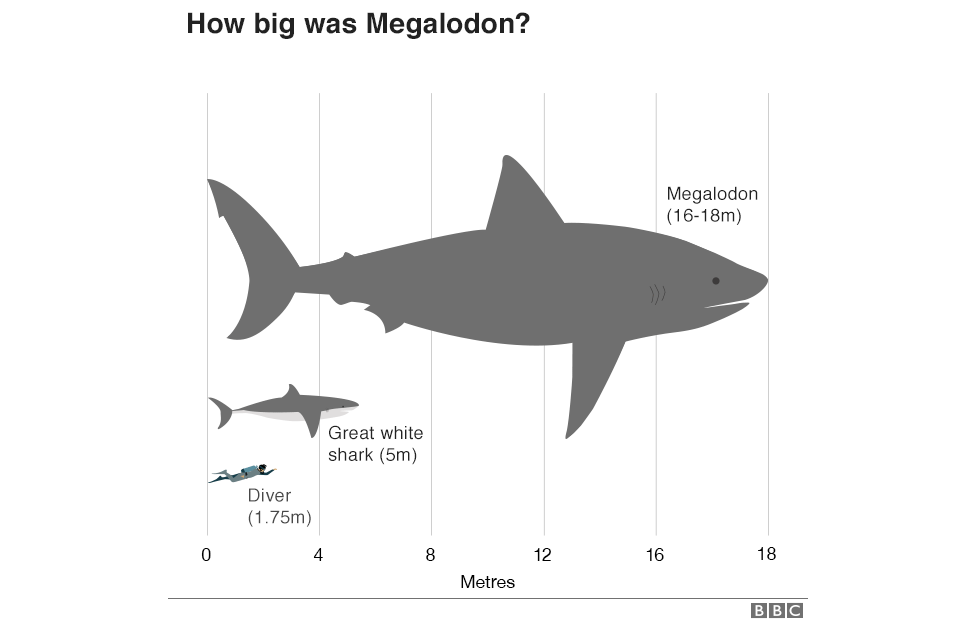
Megalodon was a maximum of 16 - 18 metres long, great white sharks are 5 metres and humans about 1.75 metres

The megalodon could grow up to 18m (60ft) in length, scientists estimate, and weigh up to 60 tonnes, he said.

Dwarfing anything else swimming in the waters at the time, these were “specialist whale eaters – they were ambush hunters,” Prof Garrod said.
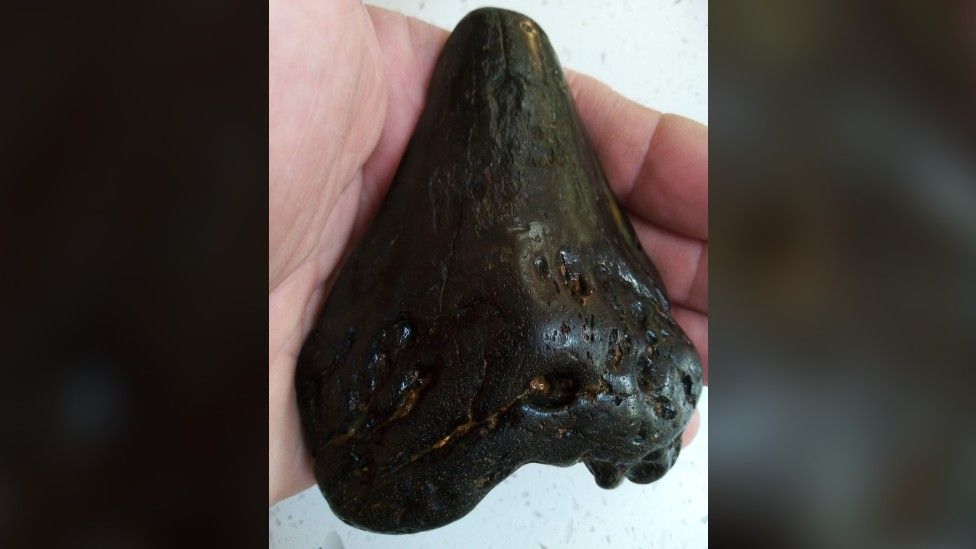
Shark's tooth in a hand
Image caption,The tooth was said to be in very good condition

The megalodon dominated all the seas around the world other than those parts of the oceans surrounding Antarctica.

presentational grey line

The megalodon

  • The cartilaginous fish (whose skeleton is made of cartilage rather than bone) was a carnivore and had no known predators
  • It could eat anything it liked, but its favourite food was whales, although seals would also have been on the menu
  • Most of this shark’s hunting was in the open sea (juveniles lived closer to shore) and it attacked its prey near the surface, when it came up for air
  • Megalodon could swim at high speed in short bursts so tended to rush its prey from beneath
  • It would first aim to disable its prey by injuring a flipper or the tail, then once unable to swim properly, the victim would be easy to finish off
  • Lived from about 20 million years ago, long after the dinosaurs became extinct 65 million years ago

Source: BBC Science

presentational grey line

The name means “big tooth” and the giants were active from about 22 million years ago until about three million years ago when they became extinct.

Sammy’s find was “a really big thing” for the little boy, Prof Garrod said.

“Not many people who look for a megalodon tooth actually find one,” he said.

“I know – I’ve been searching since I was a child and I knew all the beaches around the area – but I still haven’t found my megalodon.”
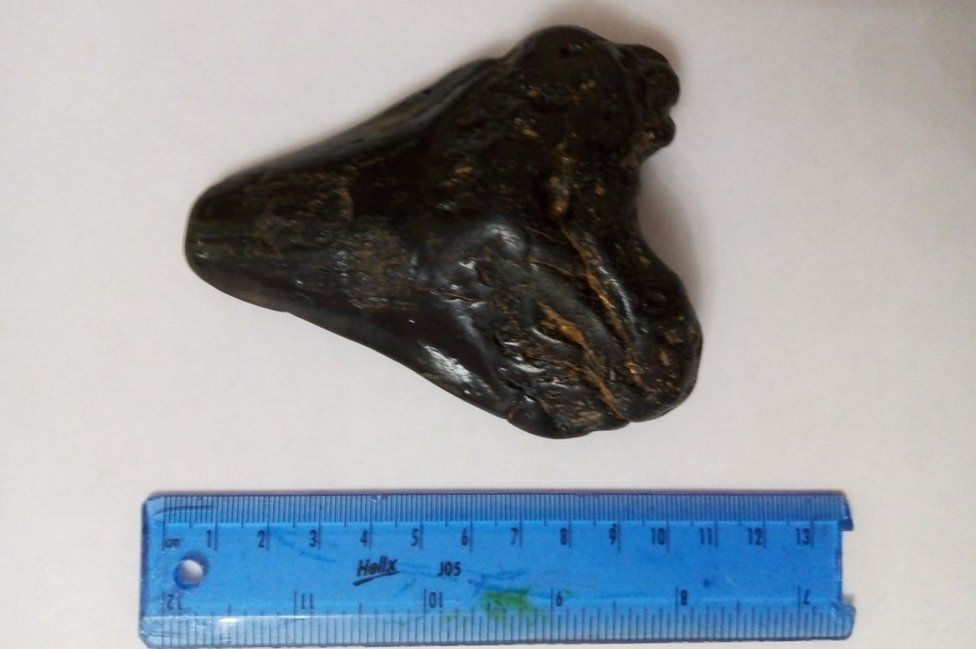
Shark's tooth next to a ruler
Image caption,The tooth measures about 10cm

Sammy’s excitement has been shared with his friends at school, and he took the tooth to his beaver cubs group, after which he was awarded his explorer badge, his father said.

Sammy described the “massive” tooth as his best-ever find, and said it was just lying there on the sand and pebbles.

BBC

Elon Musk says he would allow Donald Trump back on Twitter

Trump was barred from the platform in January 2021 in the final days of his presidency amid unrest following the Jan. 6 attack on the U.S. Capitol.

Tech billionaire Elon Musk said Tuesday that he would allow former President Donald Trump back on Twitter after Musk completes his plan to buy the company, giving the most concrete example yet of how his vision of social media would play out in reality.

Musk said at an event sponsored by The Financial Times that it was “morally bad” and “foolish in the extreme” for Twitter to “permanently suspend” Trump in January 2021 after Trump’s supporters violently stormed the U.S. Capitol, according to a video of the event posted online.

“I do think that it was not correct to ban Donald Trump,” Musk, the CEO of Tesla, said at the newspaper’s Future of the Car event by remote video.

“I think that was a mistake, because it alienated a large part of the country and did not ultimately result in Donald Trump not having a voice,” he said, citing Trump’s newly launched tech platform, Truth Social.

“I would reverse the permanent ban,” Musk said.

The heavyweight Cattle breed in the World

Chianina

The Chianina is an Italian breed of cattle, formerly principally a draught breed, now raised mainly for beef. It is the largest and one of the oldest cattle breeds in the world. The famous bistecca alla fiorentina (‘beefsteak Florentine style’) is produced from its meat.

One of the oldest breeds of cattle, the Chianina originates in the area of the Valdichiana, from which it takes its name, and the middle Tiber valley. Chianina cattle have been raised in the Italian regions of Tuscany, Umbria and Lazio for at least 2200 years.

Chianina_Bulle

The Chianina is both the tallest and the heaviest breed of cattle. Mature bulls stand up to 1.8 m (5 ft 11 in), and castrated oxen may reach 2 m (6 ft 7 in). It is not unusual for bulls to exceed 1,600 kg (3,500 lb) in weight. Males standing over 1.51 m (4 ft 11 in) at 12 months are considered top-grade. A Chianina bull named Donetto holds the world record for the heaviest bull, reported by one source as 1,740 kg (3,840 lb) when exhibited at the Arezzo show in 1955, but as 1,780 kg (3,920 lb) and 1.85 m (6 ft 1 in) tall at the age of 8 by others including the Tenuta La Fratta, near Sinalunga in the province of Siena, where he was bred. Cows usually weigh 800–900 kg (1,800–2,000 lb), but commonly exceed 1,000 kg (2,200 lb); those standing over 1.65 m (5 ft 5 in) are judged top-grade. Calves routinely weigh over 50 kg (110 lb) at birth. The coat of the Chianina is white; very slight grey shading round the eyes and on the foreparts is tolerated. The skin, muzzle, switch, hooves and the tips of the horns are black.

At the end of 2010 there were 47,236 head registered in Italy, of which more than 90% were in Tuscany, Umbria and Lazio; it is, after the Marchigiana, the second indigenous beef breed of Italy.

Chianina1

Don’t want one these beasts to get agitated when you are nearby.

Chianina2
Chianina3

Their history as draft animals means that Chianinas were bred for docile temperaments, as they had to work closely with people. That good disposition is important in a cow as large as the Chianina.

Chianina4

US NAVY SHOWS OFF NEWEST LASER WEAPON

Navy Laser

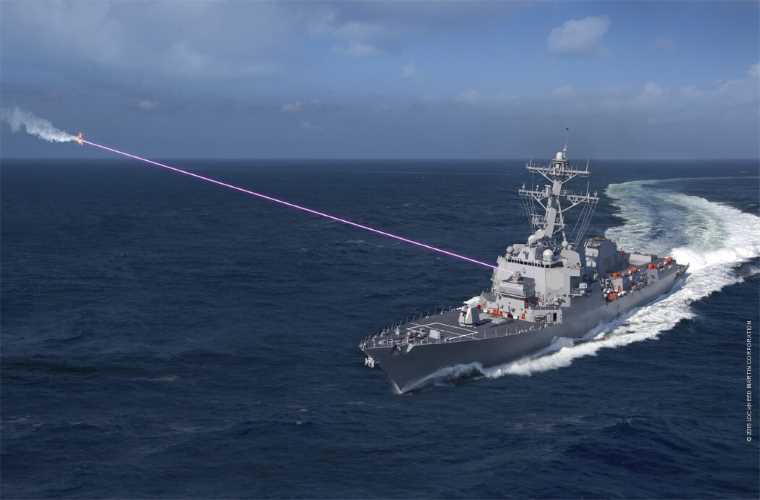
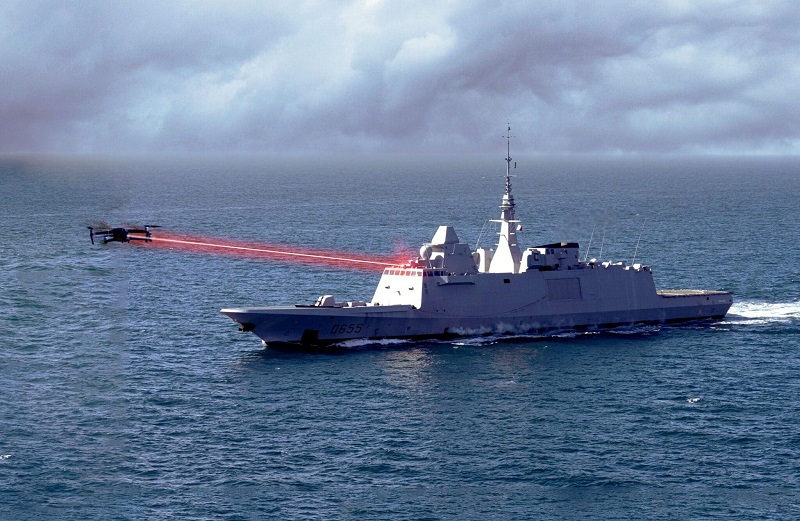
Artist rendering of LLD laser mounted on a ship. Credit: Lockheed Martin

The US Navy Office of Naval Research has successfully tested an all-new, fully electric laser weapon system. Designed to fry aerial threats like drones and missiles, the new weapon system is entirely electric, so it doesn’t require chemicals.

WEAPONIZED LASER SYSTEM DEVELOPMENT INCREASING

Around the world, military forces are increasingly testing and deploying laser systems. The Debrief recently reported on the Iron Beam weapon system successfully tested by the Israeli Defense Ministry. The U.S. military has also tested several laser-based weapons systems with varying degrees of success, including a ship-mounted laser that blasted an incoming surface drone to pieces.

laser

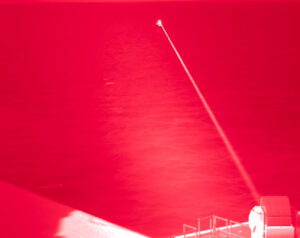
211214-N-VQ947-1142 GULF OF ADEN (Dec. 14, 2021) — Amphibious transport dock ship USS Portland (LPD 27) conducts a high-energy laser weapon system demonstration on a static surface training target, Dec. 14, while sailing in the Gulf of Aden. During the demonstration, the Solid State Laser – Technology Maturation Laser Weapons System Demonstrator Mark 2 MOD 0 aboard Portland successfully engaged the training target. (U.S. Navy photo illustration by Mass Communication Specialist 2nd Class Devin Kates)

NAVY LASER BLASTS ALL TARGETS FROM THE SKY

Dubbed the Layered Laser Defense system (LLD) by the Office of Naval Research (ONR), the Lockheed Martin designed laser weapon marks a significant technological breakthrough. Unlike laser weapons systems designed and tested in the 1980s, the LLD is entirely electric. As such, the LLD system carries no chemicals or propellants, dramatically improving safety and cost concerns. Also, since the final model is designed for on-ship deployment, the LLD could theoretically operate with unlimited ammunition as long as the ship can provide electrical power.

“The Navy performed similar tests during the 1980s but with chemical-based laser technologies that presented significant logistics barriers for fielding in an operational environment,” said Dr. Frank Peterkin, the ONR’s directed energy portfolio manager. “And, ultimately, those types of lasers did not transition to the fleet or any other service.”

There is also a cost-savings benefit to the Navy for this type of system. For example, Israel’s Iron Dome costs upwards of $150,000 to bring down a single incoming missile, while a disabling shot from their Iron Beam laser system costs at most a few hundred dollars. According to a report in New Atlas, the LLD is expected to cost around a dollar per shot.

The system offers other advantages as well. For example, it is equipped with a high-resolution telescope that lets operators identify and assess the weapon’s effectiveness. The system can also adjust its power output, which can disable and not destroy specific targets the Navy may not want to destroy. The system can also target surface threats like fast attack boats or water-borne drones.

In February, the Office of Naval Research carried out the LLD system tests at the US Army’s High Energy Laser Systems Test Facility at White Sands Missile Range in New Mexico. According to a report by TechSpot, “the LLD was tested against a wide range of targets, including unmanned fixed-winged aerial vehicles and quadcopters as well as the high-speed drones that acted as subsonic cruise missile replacements.” All tests were a success, with the LLD system downing every target.

Road Construction Season in Winnipeg

There is an old saying that goes “in Winnipeg you have two seasons winter and construction.” As soon as the intense freeze ends the weather allows for road construction. And do they construct. Many roads, streets and highways are inundated with machinery that tear up the asphalt and lay down new pavement.

Below is Smith Street, a major artery that leads straight into downtown. It’s now down to one lane and the gridlock looks painful.