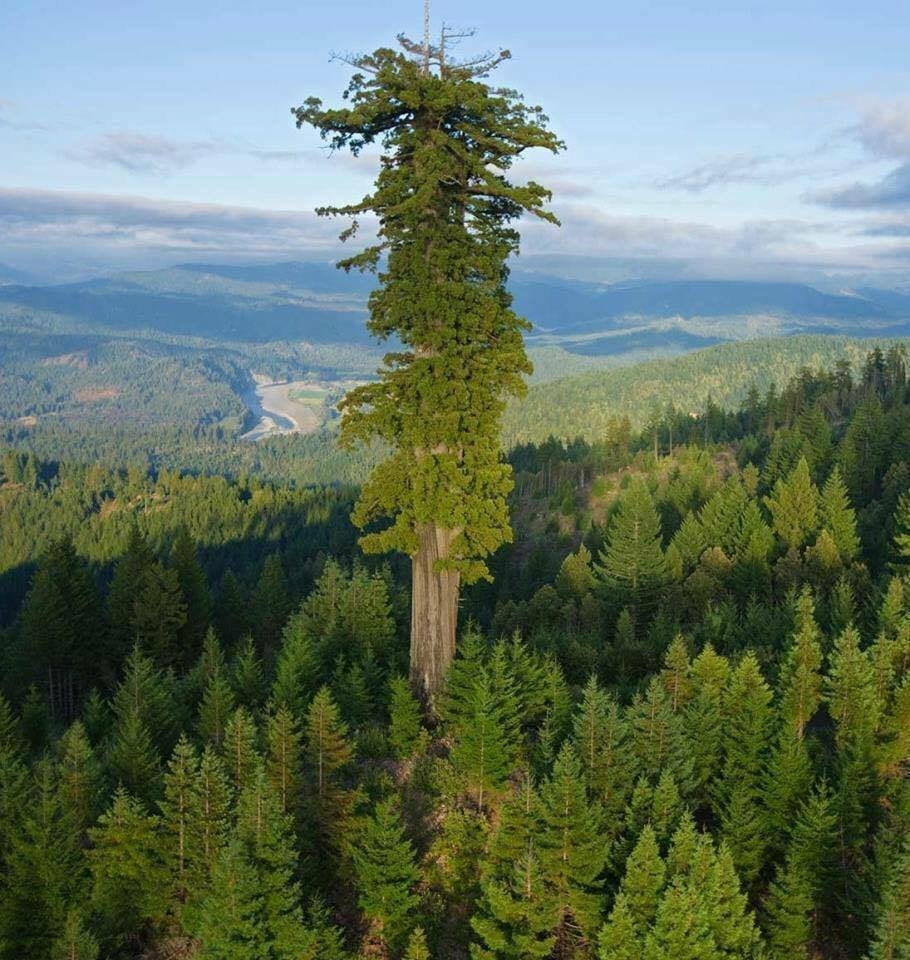


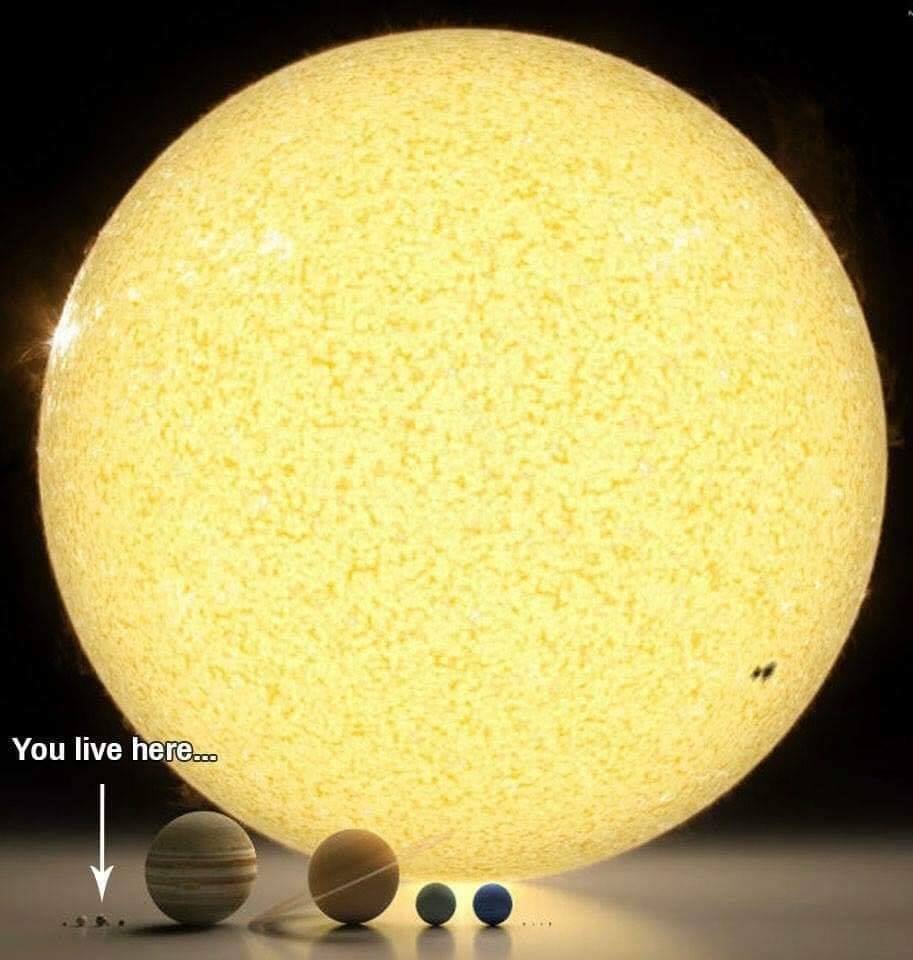


 as seen from a plane









 as seen from a plane





BBC
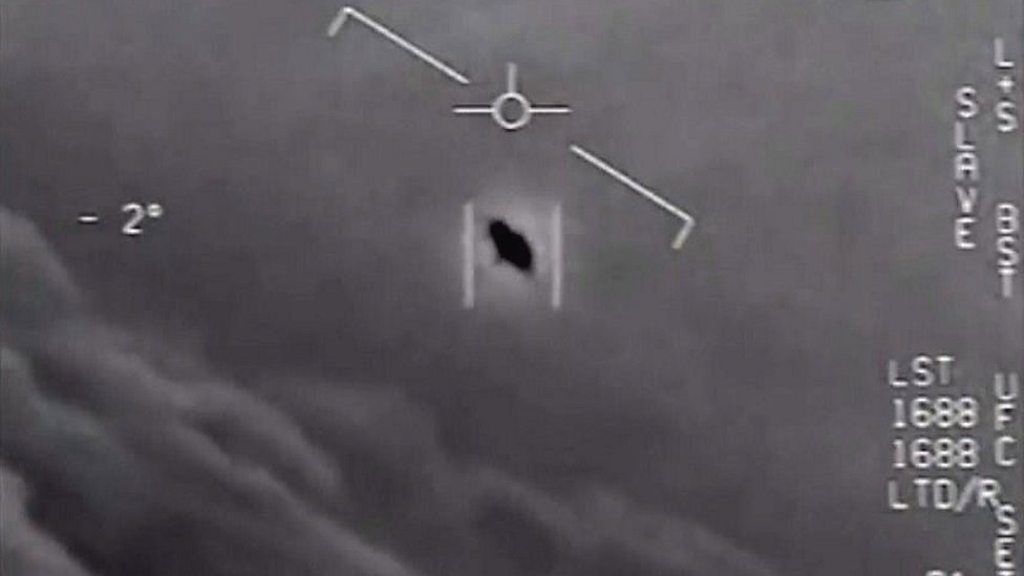
The first public congressional hearing into UFO sightings in the US in over 50 years is being held on Tuesday.
The highly-anticipated testimony from two top military officials tasked with probing the sightings will be closely watched after decades of secrecy.
The Pentagon brass are expected to say that it has been a struggle to unearth witness accounts from government workers concerned about job security.
The hearing is being held in the House Intelligence Counterterrorism, Counterintelligence, and Counterproliferation Subcommittee.

The two officials testifying are Ronald Moultrie – the Pentagon’s top intelligence official – and Scott Bray, the deputy director of naval intelligence.
The officials will describe US efforts to investigate Unexplained Aerial Phenomena (UAPs) – the government’s term for UFOs – in a public hearing.
“The American people expect and deserve their leaders in government and intelligence to seriously evaluate and respond to any potential national security risks — especially those we do not fully understand,” Representative André Carson said in a statement.
Following the public hearing, the committee will close its doors for a private classified session with lawmakers.
Ahead of the hearing, scientists and experts have written draft questions that they hope lawmakers will ask the witnesses.
Christopher Mellon, a former top Pentagon intelligence official and critic of the government’s handling of UAP evidence, said that the most important question to ask is whether any have been observed outside Earth’s atmosphere.
“If members can confirm UAP in space, they’ll make history and help to eliminate an entire category of potential explanations having to do with atmospheric phenomenon, Chinese lanterns, civilian drones, etc,” he wrote on his blog.

Ronald Moultrie, the Pentagon’s top intelligence official, oversees the UFO inquiry office
Public fascination with flying saucers, glowing lights and otherworldly aircrafts has been ongoing for generations.
The last public hearings into the issue began in 1966, when Republican congressman – and future president – Gerald Ford convened a pair of hearings to discuss a UFO sightings following one in Michigan that was observed by over 40 people, including a dozen policemen.
The Air Force officials attributed the incident to “swamp gas”, leading Ford to deride their description as “flippant” .
In 1969, an Air Force investigation into UFOs called Project Blue Book closed after determining that no flying object had ever been confirmed or deemed a threat to US national security.
Blast forward to 2017, when US media reported on the Pentagon’s secretive efforts to probe testimony from pilots and other US military members who had reported seeing strange objects in the sky.
The reports included footage of the UFOs, and descriptions of how they seemed to fly in unexpected ways, including hovering in place during high winds and changing elevation rapidly.
Pilots described seeing them on an almost “daily basis” outside military bases, and one whistleblower described how UAPs had interfered with US nuclear weapons facilities, even forcing some offline.
In 2020, a Covid relief bill signed by Donald Trump included a provision requiring US intelligence agencies to deliver an unclassified report on UAPs within 180 days.
In June 2021, the US Director of National Intelligence released a report saying it had no explanation for dozens of unidentified flying objects related to 144 incidents dating back to 2004. Only one could be easily explained as a deflating balloon, while the others were labelled “largely inconclusive”.
“Most of the UAP reported probably do represent physical objects,” the report stated, adding that 80 of them were detected on multiple advanced military sensors and radar systems.
The June 2021 report failed to reach any conclusive answers in regards to what the objects are, or how they function. It called for expanded investigation and better data collection, given the stigma government workers may have against their describing unexplained encounters.
Last December, Democrats succeeded in including a stronger disclosure requirement in the annual National Defense Authorization Act signed by Joe Biden.
The law requires the military to establish a permanent office on UAP research – now called the Airborne Object Identification and Management Synchronization Group.
A peculiar piece of footage from Canada shows an odd triangular object silently cruising across the sky and some suspect that the eerie anomaly could be some kind of clandestine military aircraft. The intriguing video was reportedly filmed in Ontario by an individual named Michael and an unidentified female companion as they were out for a walk around sunset. Alas, as is often the case with UFO footage that pops up online, the specific location and date of the strange sighting are unknown. Be that as it may, the video is rather compelling by virtue of the object at the center of the weird scene.
In the video, a triangular object sporting a light on each of its three points as well as red illumination in its center can be seen gliding through the sky while making no noise. “It doesn’t look like a plane,” exclaims Michael, while his friend echoes that bewilderment, marveling “that’s unusual. That is weird.” Fortunately, the footage captured by the couple provides a fairly clear look at the unknown object, although what it could have been remains a matter of conjecture.
Setting aside an extraterrestrial scenario, one popular and almost equally fantastic suggestion put forward by people online is that the UFO could be a clandestine military aircraft, specifically the apocryphal TR-3B, which is believed to be a secret spy plane that is said to be triangular shaped and, some say, powered by anti-gravity technology gleaned from a downed alien vehicle. More skeptical observers, however, argue that the object seen over Ontario was simply a drone.
Looks like a drone to me. Space Aliens wouldn’t have a red light blinking on their extrastellar spaceship.

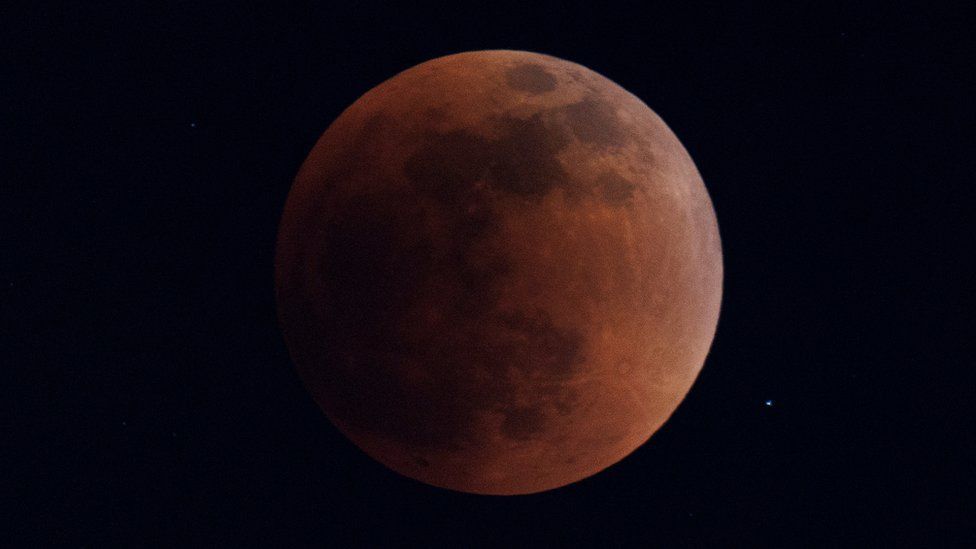
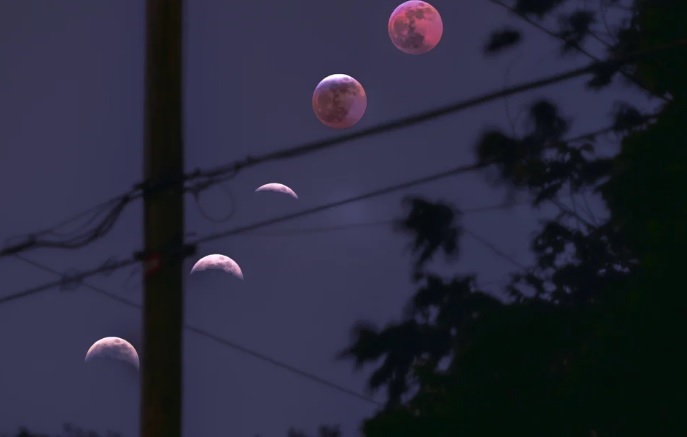
Stargazers have been treated overnight to a stunning and unusual sight – a super blood Moon.
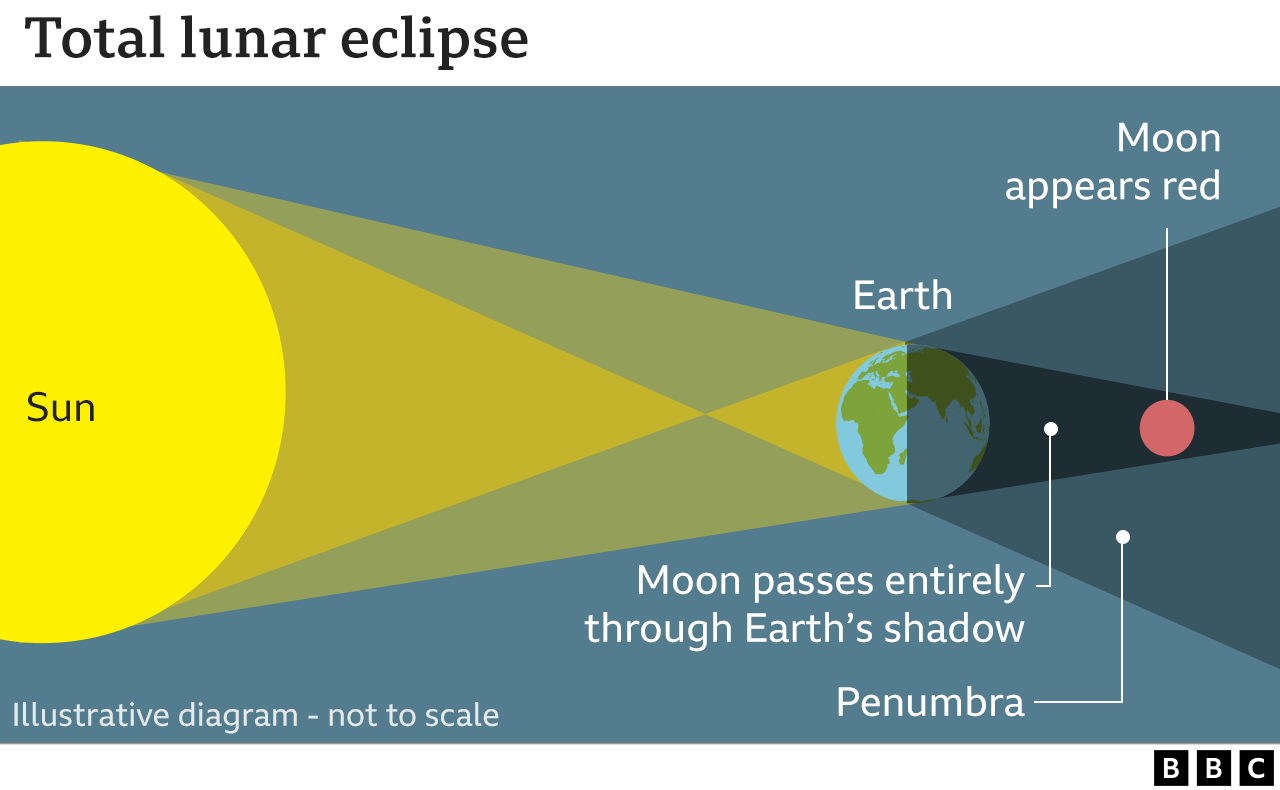
Shortly after 03:30 GMT on Monday, Earth’s orbit meant that for several minutes our planet was positioned directly between the Sun and the Moon.
In that time the Moon fell completely into Earth’s shadow – temporarily turning it a dusky shade of dark red.
Its hue was created by sunlight being projected through Earth’s atmosphere onto the Moon’s shadowed surface.
The lunar eclipse coincided with a separate event – a super Moon. This is when the Moon is at its closest point to Earth in its orbit and so appears larger than usual.
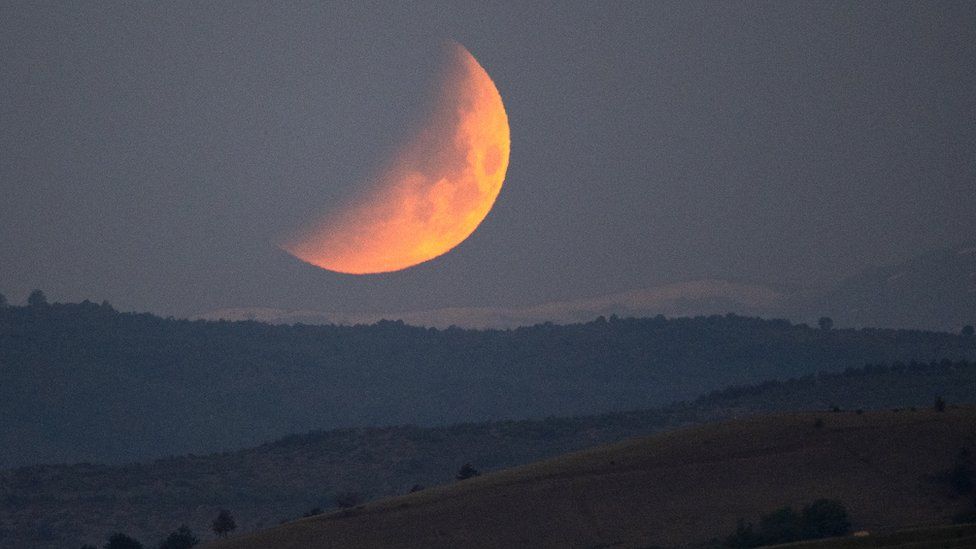
Those watching out for the resulting super blood Moon got the best view from 03:29 GMT, the moment the full lunar eclipse started and the event became visible in the Western hemisphere.
For almost one and a half hours afterwards, the only sunlight reaching the Moon had passed through the Earth’s atmosphere turning it red.

In Europe, the phenomenon was only visible for some of that time because of the Moon beginning to set. But in the Americas areas under clear skies were treated to the full spectacle.
“If you were an astronaut standing on the Moon, looking back towards Earth, you’d see a red ring running around the outside of our planet,” he told the BBC.

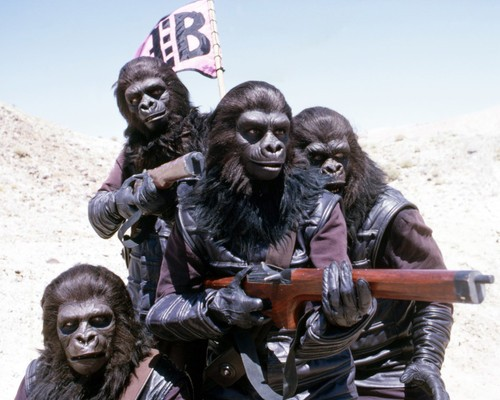
Planet of the Apes is a 1968 American science fiction film directed by Franklin J. Schaffner, based on the 1963 French novel La Planète des singes by Pierre Boulle. The film stars Charlton Heston, Roddy McDowall, Maurice Evans, Kim Hunter and Linda Harrison. It was the first in a series of five films made between 1968 and 1973, all produced by Arthur P. Jacobs and released by 20th Century Fox.

The film tells the story of an astronaut crew who crash-land on a strange planet in the distant future. Although the planet appears desolate at first, the surviving crew members stumble upon a society in which apes have evolved into creatures with human-like intelligence and speech. The apes have assumed the role of the dominant species and humans are mute creatures wearing animal skins.

Some set scenes from the movie:
The human spaceship crash lands in a desert lake. The lake used in the film was Lake Powell on the Utah Arizona border.
The spaceship model.


This shot may have been from the sequel, “Beneath the planet of the Apes”


In 2017, bike sharing took off in China, with dozens of bike-share companies quickly flooding city streets with millions of brightly colored rental bicycles. However, the rapid growth vastly outpaced immediate demand and overwhelmed Chinese cities, where infrastructure and regulations were not prepared to handle a sudden flood of millions of shared bicycles. Riders would park bikes anywhere, or just abandon them, resulting in bicycles piling up and blocking already-crowded streets and pathways. As cities impounded derelict bikes by the thousands, they moved quickly to cap growth and regulate the industry. Vast piles of impounded, abandoned, and broken bicycles have become a familiar sight in many big cities. As some of the companies who jumped in too big and too early have begun to fold, their huge surplus of bicycles can be found collecting dust in vast vacant lots. Bike sharing remains very popular in China, and will likely continue to grow, just probably at a more sustainable rate. Meanwhile, we are left with these images of speculation gone wild—the piles of debris left behind after the bubble bursts.

A worker rides a shared bicycle past a huge pile of unused shared bikes in a vacant lot in Xiamen, Fujian province, China, on December 13, 2017.

Shared bikes stored and piled in Shanghai on February 1, 2018.

A worker untangles a rope amid piled-up bicycles in a lot in Xiamen, Fujian province, China, on December 13, 2017.

A parking lot is seen packed with tens of thousands of shared bikes belonging to the Chinese bike-sharing firm Bluegogo in Beijing’s Chaoyang District on March 5, 2018. Bluegogo, once China’s third-largest bike-rental service, ceased operations last November having run out of money, leaving tens of thousands of its bicycles in limbo. Bluegogo was recently acquired by Didi, another bike-share company, which says it plans to replace some of the older Bluegogo bikes with its own.

Thousands of illegally parked share bikes are temporary detained in a sports field in Hefei, Anhui, China, on August 17, 2017.

Bicycles from various bike-sharing services sit in a lot in an urban village in Hangzhou, Zhejiang province, China, on September 7, 2017.

A man walks past piles of share bikes outside a repair shop in Beijing on April 13, 2017.

Shared bicycles block a pathway in Jiuxianqiao, Chaoyang district, Beijing, on July 14, 2017.

Bicycles of various bike-sharing services completely fill a large lot in Shanghai, China, on November 23, 2017.

In Death Valley National Park, north of Barstow, California, is Rainbow Canyon. It’s not especially remarkable, just one canyon in an area full of them, all but indistinguishable from its neighbors in an area populated mainly by snakes. But stand on one of the canyon tops for long enough and a fighter jet will suddenly roar into the valley below you, flying fast and very, very low. It will be visible for only a few seconds before it turns hard and disappears behind the next hill. But during those few moments, anyone with a camera has a brief chance to take a spectacular picture. Rainbow Canyon (or Star Wars Canyon, as some call it) is part of the R-2508 restricted airspace complex, host to a busy, low-level training route for combat aircraft.
Military pilots train to fly low and fast, hiding behind hills to fool radar and going fast enough that they can’t be shot at. Since flying is a perishable skill, every fighter or attack pilot periodically has to practice such low-level flights. Rainbow Canyon is in the desert of eastern California, where the population is sparse and the airspace wide open. It’s also surrounded by military bases, bombing ranges, maneuvering grounds and radars—an ideal spot for military pilots to hone their skills. Among the nearby facilities are Edwards AFB, Naval Air Station China Lake, and Plant 42 (where Lockheed and Northrop build advanced aircraft).
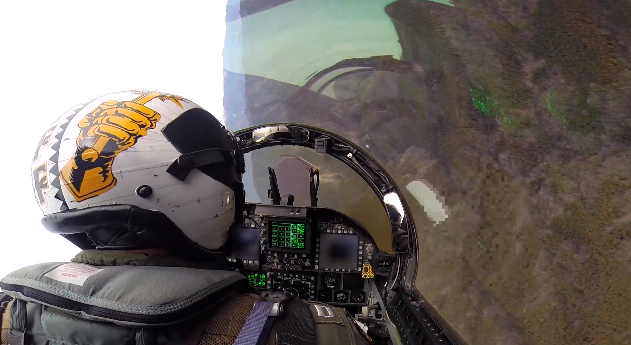

Photos are taken on a high ridge above the jets



Thunderbird
Marine Harrier


F-18 Hornet with brown camo.

THE RULES OF TIME TRAVEL
We quizzed physicists and engineers about the best movie and TV time machines.
WE ALL KNOW THERE’S NO SUCH THING AS A TIME MACHINE, BUT THAT’S NEVER STOPPED HOLLYWOOD FROM BUILDING THEM.
These time-defying contraptions fill us with wonder because, while we’re innately curious with a desire to explore, we also love fawning over shiny screens and elaborate gadgetry. Humans are hardwired to push any button we see. No matter the ramifications.
H.G. Wells invented one of fiction’s first time machines in his 1895 novel — later visualized in two movies. Since then, we’ve seen time-traveling cars, boxes, phone booths, and more. Each has a unique build and hand-wavy explanation of how it “works.”
To understand the fictional mechanics of time-travel tech, Inverse spoke to astrophysicists, engineers, and philosophers about movie time machines. We discovered which films they love and loathe, from those cloaked as the mundane to the realistic and even the fantastic.
WHAT IT DOES: It takes you to another realm that enables you to move through time (the circuits of time).
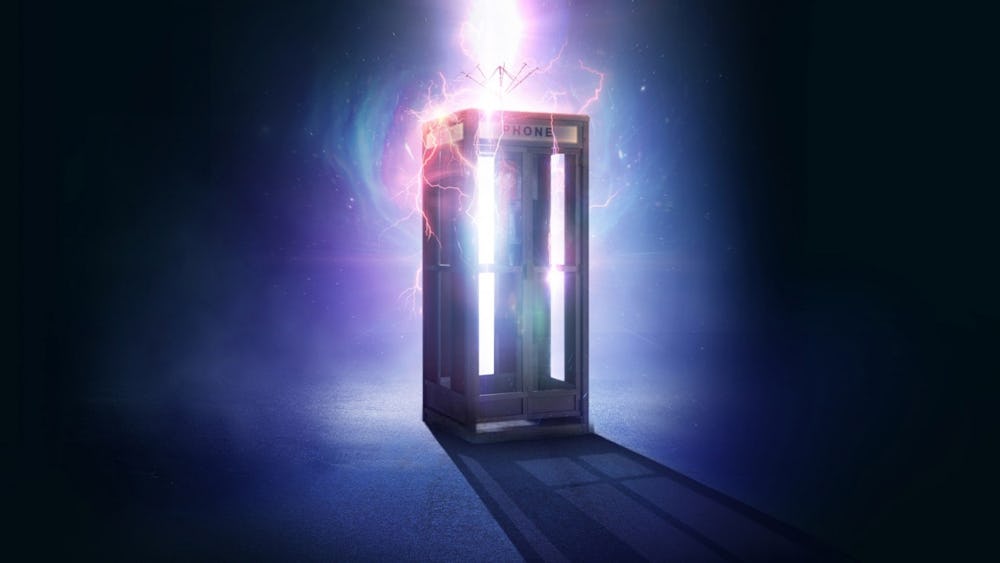
Yes, it might seem silly, but the phone booth in the Bill & Ted movies is a much-loved time machine.
Stuart Davie, a computational physicist and the vice president of data science at AI startup Peak, thinks the design makes this contraption so appealing.
“It really sits at the intersection of technical authenticity and the human-machine experience, grounding the whole movie series,” Davie tells Inverse. “It reminds the viewer that this is humanity’s story of self-salvation, not that of a benevolent alien overlord.”
Roberto Casula, the lead technologist at a software developer, is interested in how the phone booth is steered to its destination by The Circuits of Time Directory, in which numbers punched into the keypad are 14 digits long and must specify time and space — otherwise the booth would never leave San Dimas.
“We assume time travel is restricted to only a few tens of thousands of years into the past rather than billions,” Casula says. “Even then only to a few key locations in space.”
“Perhaps the time machine is anchored in a 24-hour endless cycle, allowing travel backward and forward but only in increments of one day,” he adds. “But it’s probably best not to analyze too hard.”
7. TENET’S TURNSTILE
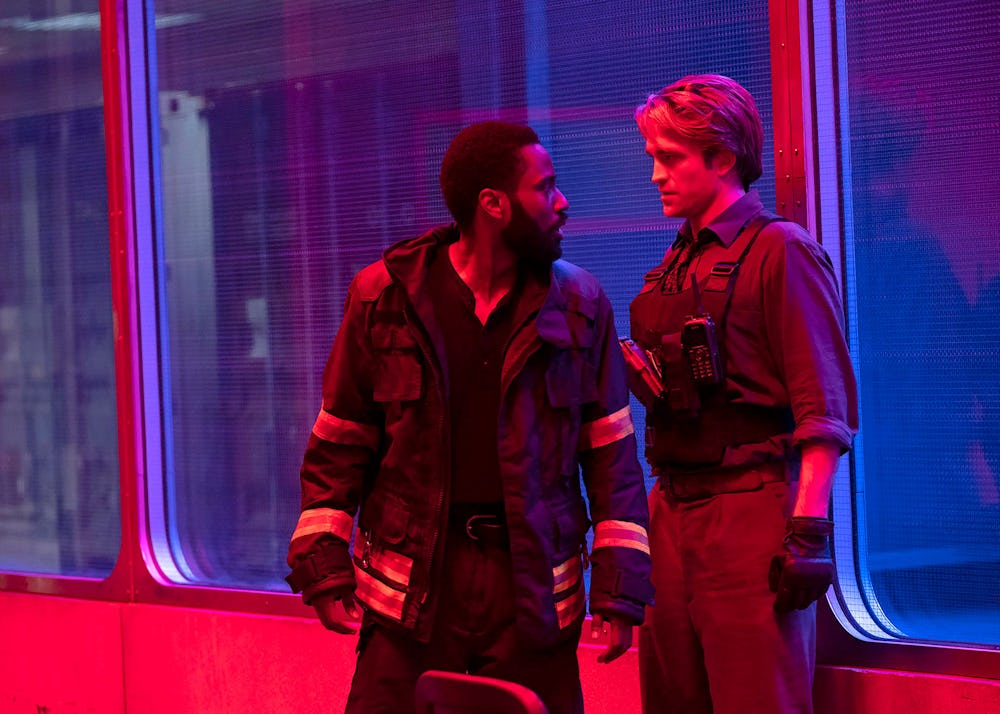
Tenet’s time machine is a huge turnstile — which turns one way or another, inverting and reverting the way you (or objects and even cars) travel through time.
But what about the science?
According to Dr. Nikk Effingham, a philosopher at the University of Birmingham specializing in metaphysics and the philosophy of time travel, Tenet’s time machine is based on the idea thermodynamics is reversible
“This is great for film but a terrible interpretation of physics,” Effingham says. “It makes it sound like which way you’re traveling through time is some fundamental physical property we can dick around with in the same way that we can dick around with whether you’re magnetically charged or not, but that’s not what thermodynamics says.”
The time-travel mechanics in Tenet are grounded in the idea that the arrow of time (the direction we’re going in) isn’t a fundamental property. That’s why we see objects moving “forward” in Tenet and others – bullets, guns, and the time-reversed people – moving “backward.”
“That there might be bits of space-time where entropy is increasing for some objects and decreasing for others is possible given thermodynamics, but super unlikely,” Effingham says.
6. DOCTOR WHO’S TARDIS

Everyone we spoke to mentioned this iconic machine, which looks like an old, blue, British police box.
“What other time machine gets a decorating job every few years, keeps updating its canon, and has an Olympic-sized swimming pool? Or even a personality?” Šiljak says. “The way the TARDIS operates and interacts with the Doctor is also a great suspension of disbelief catalyst that allows me to enjoy a plot that has holes.”
Its properties are bizarre, but its time-travel abilities are appealing to real scientists.
“The core of the TARDIS is a tesseract, which is a four-dimensional cube,” says Dr. Erin Macdonald, an astrophysicist, writer, producer, and Star Trek science advisor. “The reason this is great scientifically is our universe is four-dimensional, but we can only control three of those dimensions (space, not time). It logically makes sense that if we had an object that had four dimensions, that extra dimension could be time and could have more control than just space.”
Jan J. Eldridge, a theoretical astrophysicist and associate professor in the physics department at the University of Auckland, New Zealand, adds that the TARDIS’ ability to travel freely through both space and time also helps explain another of its key features: the interior doesn’t match the exterior.
“Any technology that allows you to bend space-time to travel through time would also leave you with the ability to stretch and square space-time itself,” she says.
5. BACK TO THE FUTURE’S DELOREAN
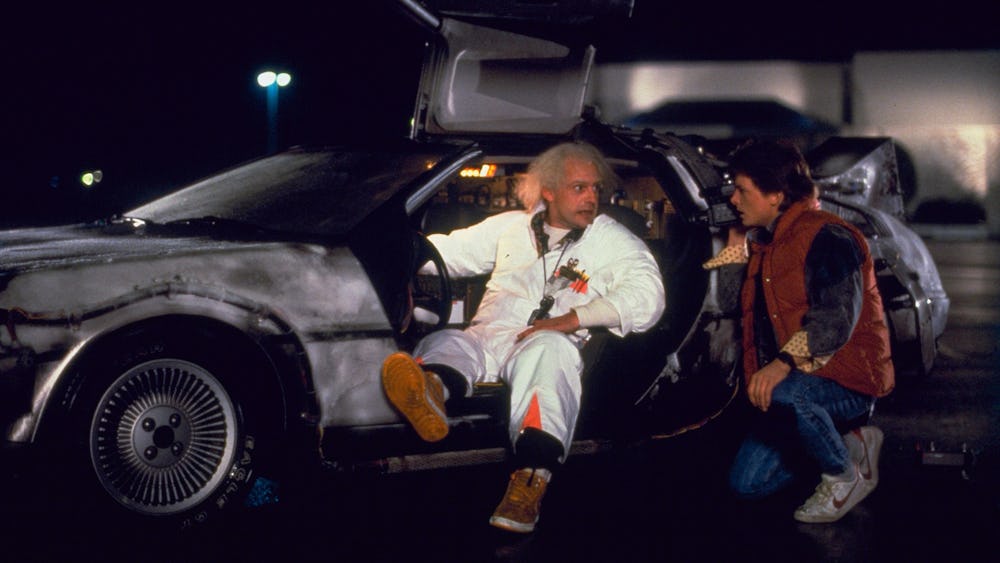
What about the mechanics of Doc’s invention?
Casula says that the idea of a “flux capacitor” technically makes sense since a capacitor is just an electronic device that stores energy while flux refers to anything that flows. Combined, the two words suggest a machine that can store and then release the flow of time. “But really, it’s just techno-babble… and we don’t care!”
That’s because regardless of the techno-babble, Back to the Future’s time travel is cohesive.
“It’s a classic because it establishes clear rules for how the time-travel mechanism works,” Star Trek advisor Macdonald says. “You have to be going at a specific speed, at a specific moment, with a specific amount of energy. It also establishes the impact of changing anything in the past, and what ripple effect it has in the future.”
“IT’S A CLASSIC.”
4. H.G. WELLS’TIME MACHINE
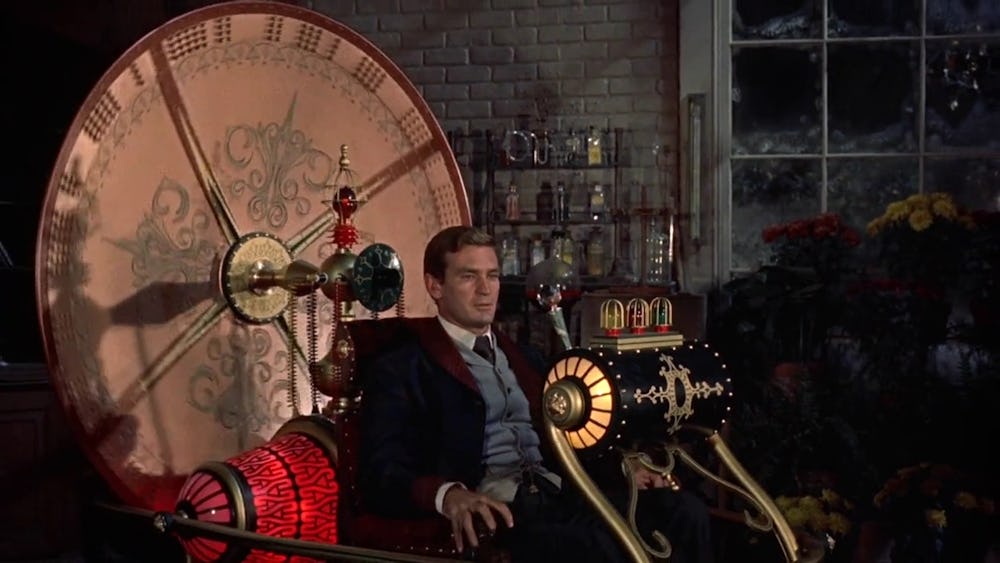
Although Wells didn’t describe his time machine in much detail in the book, the version imagined in the 1960 movie looks perfect for the era.
“H.G. Wells’ time machine from the 1960 movie is stylistically my favorite,” Laurence Maroney, lead artificial intelligence advocate at Google, tells Inverse. “Its cyberpunk awesomeness is mindblowing. I love the spinny wheel at the back with a compass rose. They just don’t make them like that anymore!”
“ITS CYBERPUNK AWESOMENESS IS MINDBLOWING.”
The way it works and moves through time is also different from most present-day depictions of time travel. The most memorable scenes in the movie take place when it remains static and the world flashes by — buildings and cities rise and fall in seconds from the perspective of the time traveler (a visual trick borrowed decades later in Futurama).
“Back in the day, time machines always went through time backwards in the same way they went through it forwards,” Effingham says. “Occupying regions of space-time in between rather than simply ‘teleporting’ there. It becomes less popular later on.”
3. PRIMER’S BOX
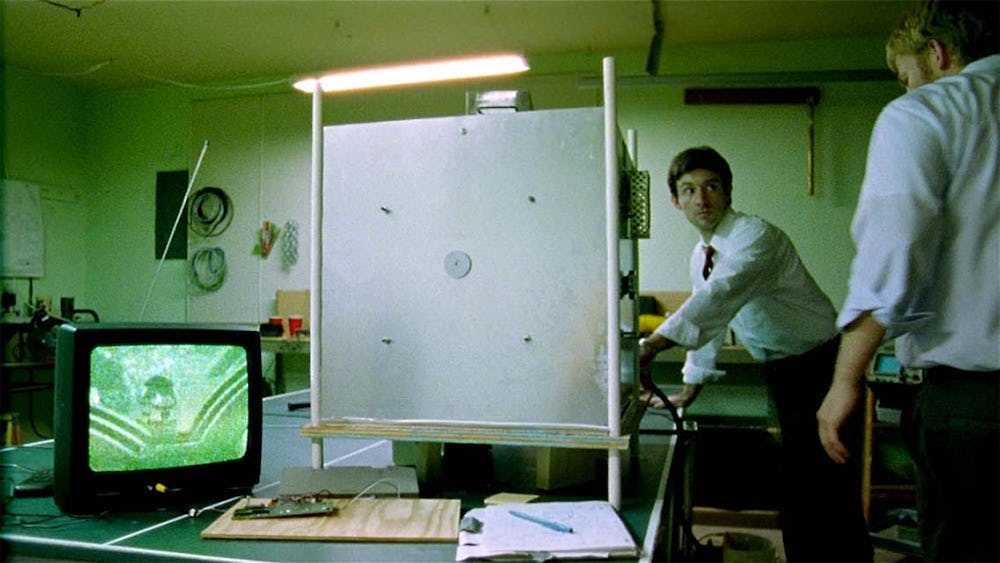
Everyone expert we interviewed mentioned Primer (some even showed us diagrams of its labyrinthine time loops).
“It’s the most deliciously confusing time-travel film,” says Dr. Darian Raad, a research and development data scientist at AI company Peak. “It features a single looping, overlapping timeline that allows the characters to interact with continually multiplying copies of themselves.”
Primer, for those who haven’t seen it, features two, person-sized time machine boxes. Main characters Aaron and Abe use them to travel six hours into the past. But as tensions rise, timelines get messy, and they eventually rely on additional “failsafe” boxes to travel further through time to try to resolve the issues the shorter trips create.
“The beauty of a film like Primer is it makes perfect sense to you while you’re watching it,” Macdonald says.
“…REMINDS ME OF A SMALL-SCALE MANHATTAN PROJECT.”
Effingham says Primer is actually a plausible example of time travel.
“By ‘plausible,’ I don’t mean ‘this could happen,” he clarifies. “It just runs less roughshod over the laws of physics than many other ideas.”
This hint of plausibility seems to make Primer’s time machines a firm favorite.
“The concept in Primer has a structure I like in hard science fiction: some legit maths wrapping around a speck of made-up science,” Šiljak says. “The particular flavor of ‘a garage project’ that’s reminiscent of early personal computer development and a fundamental natural concept, which reminds me of a small-scale Manhattan project, was appealing.”
2. PLANET OF THE APES’ ICARUS
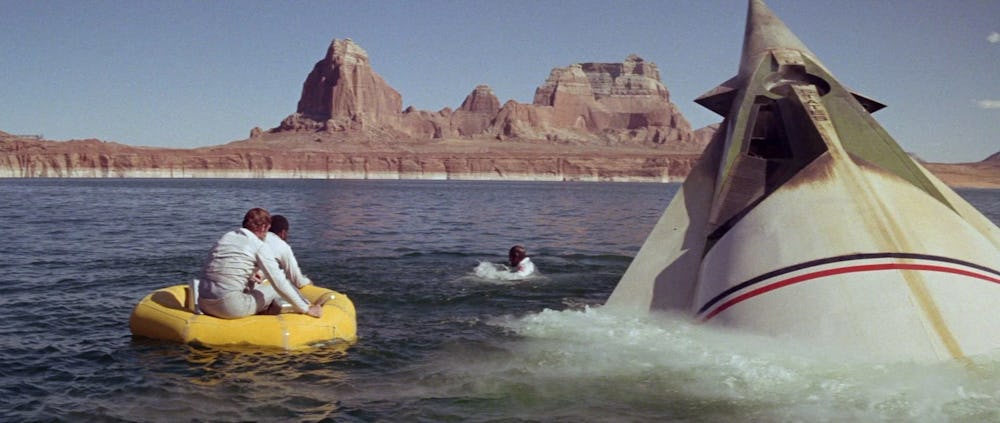
The Icarus/Liberty 1 spacecraft isn’t technically a time machine but it inadvertently becomes one. Several experts tell us it’s one of the most realistic depictions of time travel in film.
Dr. Ronald L. Mallett, professor emeritus of physics at the University of Connecticut and author of Time Traveler: A Scientist’s Personal Mission to Make Time Travel a Reality, says the original Planet of the Apes movie features his favorite time machine because it’s the only one that seems possible.
To understand how the spacecraft in Planet of the Apes can travel through time, we need to look to Einstein’s special theory of relativity and a complicated idea called time dilation — basically, that time passes differently for someone who is moving extremely fast compared to someone who is staying still.
”If you were on a rocket traveling close to the speed of light when you returned to Earth, only a few years might have passed for you, but decades could have passed on Earth,” Mallett says. “Since time is running at a normal rate for everyone else.”
That’s what happens in Planet of the Apes, causing the ship’s crew to arrive on Earth in an unrecognizable distant future.
1. TERMINATOR’S TIME DISPLACEMENT EQUIPMENT
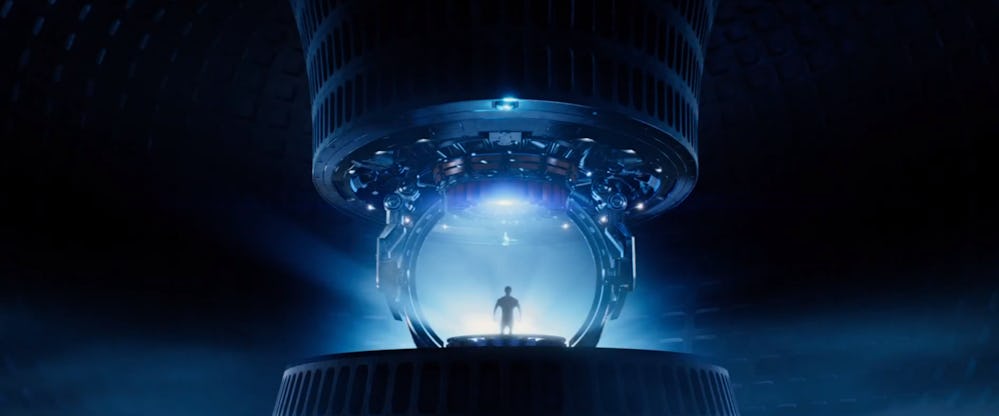
The Terminator movies are all about time travel, but we don’t get a good look at the Time Displacement Equipment that sends both cybernetic assassins and human soldiers to the past until Terminator Genisys in 2015. Until then, we only know there is a time machine because naked dudes keep dropping in from the future.
But when we do see it, boy does it bring the futuristic drama. Huge rotating rings! Lightning!
It’s also responsible for one of the most confusing and memorable time-travel loops in cinema history. In the original movie, John Connor sends Kyle Reese back in time to save Sarah Connor so Reese can… become John Connor’s father.
Effingham describes this as self-consistent: “The actions of the time travelers bring about the effects that cause the time traveler to go back in time.”
However, he sees the way the machine is used is bafflingly inconsistent.
“Skynet doesn’t seem to realize you can’t change the past and that whatever you do brings about the future that you’re in,” Effingham says. “Some rudimentary testing would be a dead giveaway that you couldn’t go back in time and change the past, no matter how hard you tried.”
It’s this conundrum that underpins the whole series. Without Reese and the first Terminator, there would be no John Connor and no Skynet, and the future never exactly gets rosier, though the people in the new futures don’t seemingly realize what has changed.
Of course, this is all scrapped in Terminator: Dark Fate. This movie rejects that time travel can only happen in a closed loop and instead introduces the idea that new, different timelines are created with each decision. For this to make sense you have to forget everything that happened after Terminator 2: Judgment Day — but that’s probably a good idea anyway.
Inverse.com

 The MarkoZen Blog
