Amsterdam

Chicago

Tulip fields in The Netherlands

Dubai showing the many designs of its artificial islands

Shanghai

Moscow

Vancouver

Seattle

Sydney

Barcelona

Mexico City

Central Park New York City

Venice

Winnipeg

Amsterdam
Chicago
Tulip fields in The Netherlands
Dubai showing the many designs of its artificial islands
Shanghai
Moscow
Vancouver
Seattle
Sydney
Barcelona
Mexico City
Central Park New York City
Venice
Winnipeg
The Ubari Sand Sea is a vast area of towering sand dunes in the Fezzan region of south-western Libya. But 200,000 years ago, this was a wet and fertile region with plenty of rainfall and flowing rivers. These rivers fed a vast lake, the size of Czech Republic, in the Fezzan basin called Lake Megafezzan. During humid periods the lake reached a maximum size of 120,000 square kilometers. Climate change caused the region, a part of Sahara, to gradually dry up and between 3,000 to 5,000 years ago, the lake evaporated away into thin air. Traces of this great lake still exist today in the form of micro lakes scattered among the towering dunes like wet patches in the desert. Currently there are about 20 lakes in the Ubari Sand Sea – beautiful palm-fringed oases that appear like anomalies in the harsh desert environment.

Among the most picturesque of the lakes are Gaberoun and Umm al-Maa (the Mother of Water). Located besides the ruins of the old village, Gaberoun is the one tourists mostly visit. There is a rudimentary tourist camp on the shore, including an open patio, sleeping huts, and a souvenir shop. There are two more beautiful lakes – Umm al-H’isan (the Mother of the Horse), also spelt as Oum El Hassan, located north of Gaberoun; and another one at Tarhouna, about 11km from Umm al-H’isan. These are, however, rarely visited by tourists.
The Ubari lakes are very salty. This is due to the fact that these lakes are being continuously evaporated and have no rivers replenishing them (Libya has no perennial rivers that persist year-round). This has caused the dissolved minerals in the lake waters to become concentrated. Some of these lakes are nearly five times saltier than seawater. Some take on blood-red hue from the presence of salt-tolerant algae.
Although the Ubari Lakes are not exactly shallow, ranging from 7 to 32 meters in depth, they are at the risk of drying out. The waters in Sahara’s underground aquifers, that were deposited tens of thousands of years ago in much wetter times, is limited and this is already declining thanks to the increasing use of aquifer water by growing human populations. About three decades ago the Libyan government undertook an ambitious project called Great Man-Made River, aimed at drawing water from the aquifers beneath the Fezzan region via a network of underground pipes to make the desert bloom. The project, if successful, will drain these enormous reserve of fresh water in just 50 to 100 years.


Joe Biden meeting with U.S. paratroopers in Europe last week.

Putin with a couple of his military guys few days ago.

Word is Putin is terrified of covid and never gets too close to anybody.


Kirill Vselensky perches on a cornice in Moscow as Dima Balashov gets the shot. The 24-year-olds, risktakers known as rooftoppers, celebrate their feats on Instagram.
This photo was originally published in “Why Many Young Russians See a Hero in Putin,” in December 2016.

As an evening storm lights up the sky near Wood River, Nebraska, about 413,000 sandhill cranes arrive to roost in the shallows of the Platte River.
This photo was originally published in “What Happens to the U.S. Midwest When the Water’s Gone?,” in August 2016.

Ye Ye, a 16-year-old giant panda, lounges in a wild enclosure at a conservation center in China’s Wolong Nature Reserve.
This photo was originally published in “Pandas Get to Know Their Wild Side,” in August 2016.

Tempted by the fruit of a strangler fig, a Bornean orangutan climbs 100 feet into the canopy. With males weighing as much as 200 pounds, orangutans are the world’s largest tree-dwelling animals.
This photo was originally published in “Inside the Private Lives of Orangutans,” in December 2016.

In Flint, Michigan, siblings Julie, Antonio, and India Abram collect their daily allowance of bottled water from Fire Station #3, their local water resource site.
This photo was originally published in “Intimate Portraits of Flint Show Frustration, Fear, Perseverance,” in February 2016.
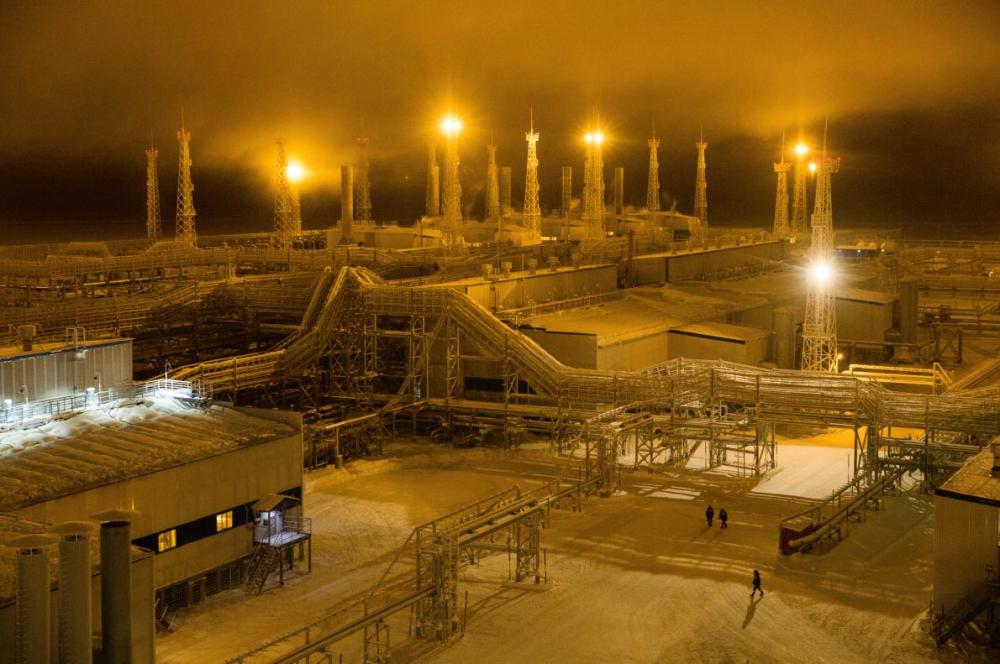
Russia’s Bovanenkovo natural gas field, on the Yamal Peninsula, was deemed too expensive to develop until President Vladimir Putin made it a priority.
This photo was originally published in “In the Arctic’s Cold Rush, There Are No Easy Profits,” in March 2016.
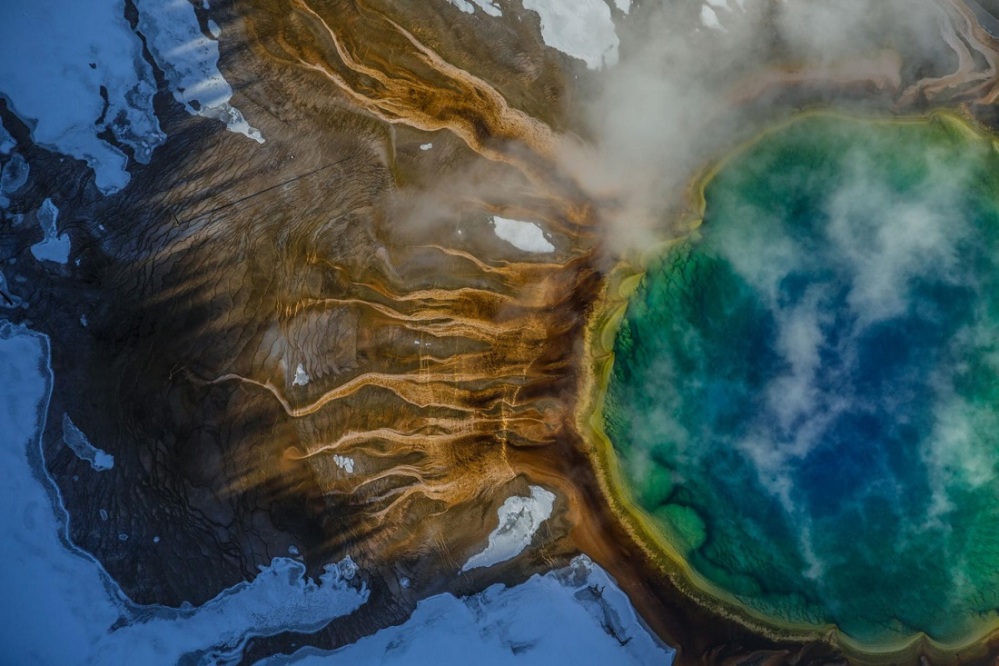
The colors of Grand Prismatic Spring in Yellowstone come from thermophiles: microbes that thrive in scalding water.
This photo was originally published in “Learning to Let the Wild Be Wild in Yellowstone,” in May 2016.

Steven Donovan, flipping into a pool, took a seasonal job at Glacier National Park to sharpen his photography skills.
This photo was originally published in “Can the Selfie Generation Unplug and Get Into Parks?” in October 2016.

Kirk Odom was convicted of rape after an expert testified that a hair on the victim’s nightgown matched his. He spent years in prison before DNA tests proved his innocence.
This photo was originally published in “How Science Is Putting a New Face on Crime Solving,” in July 2016.

In Alaska, a mother grizzly and her cubs cause a “bear jam” on Denali’s 92-mile-long Park Road, open to private vehicles only five days each summer.
This photo was originally published in “How Can 6 Million Acres at Denali Still Not Be Enough?” in February 2016.

On a mountainside in Yosemite National Park, photographer Stephen Wilkes took 1,036 images over 26 hours to create this day-to-night composite.
This photo was originally published in “How National Parks Tell Our Story—and Show Who We Are,” in January 2016.

Dressed for Mars, space engineer Pablo de León tests a prototype space suit at NASA’s Kennedy Space Center, where fine soil and fans simulate conditions on the red planet.
This photo was originally published in “Mars: Inside the High-Risk, High-Stakes Race to the Red Planet,” in November 2016.

Villagers in Bagaran, Armenia, sing of cultural endurance and survival while picnicking at night beneath apricot trees—and a giant cross that shines defiantly into Turkey.
This photo was originally published in “A Century Later, Slaughter Still Haunts Turkey and Armenia,” in April 2016.
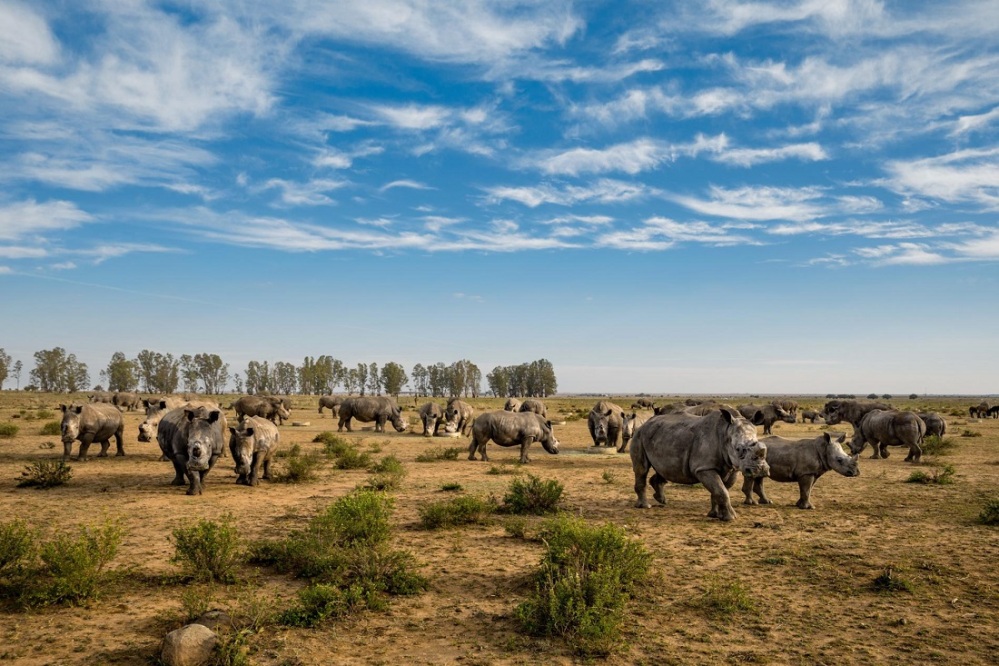
These rhinos on a South African ranch have recently had their horns trimmed. Unlike elephant ivory, rhino horn grows back when cut properly. The rancher is stockpiling the horn in hopes that selling it will soon be legal.
This photo was originally published in “Special Investigation: Inside the Deadly Rhino Horn Trade,” in October 2016.

On their first migration to their summer range in southeastern Yellowstone, three-week-old calves of the Cody elk herd follow their mothers up a 4,600-foot slope.
This photo was originally published in “The Yellowstone We Don’t See: A Struggle of Life and Death,” in May 2016.

Summer attracts sunbathers—clothed and otherwise—to the grassy banks of Munich’s Schwabinger Bach. The meadows here have been popular with nudists since the 1970s.
This photo was originally published in “How Urban Parks Are Bringing Nature Close to Home,” in April 2016.

A panda keeper in China uses a stuffed leopard to train young pandas to fear their biggest wild foe. A cub’s reactions help determine if the bear is ready to survive on its own.
This photo was originally published in “Pandas Get to Know Their Wild Side,” in August 2016.

Lounging in inches of warm water, blacktip reef sharks wait for the tide to refill the lagoon at Seychelles’ Aldabra Atoll.
This photo was originally published in “In the Seychelles, Taking Aim at Nature’s Bullies,” in March 2016.
/cdn.vox-cdn.com/uploads/chorus_image/image/46154008/3098732719_b0d5d40125_o.0.0.jpg)
They’re tall. They’re totally absurd. And they’re everywhere.
Over the past few decades, as cellphone networks have grown, thousands of antenna towers designed to look vaguely like trees have been built across the United States. Although these towers are intended to camouflage a tower’s aesthetic impact on the landscape, they typically do the opposite: most look like what an alien from a treeless planet might create if told to imagine a tree.
:no_upscale()/cdn.vox-cdn.com/uploads/chorus_asset/file/3618342/161320313.0.jpg)
A “pine” in Colorado. (Brian Brainerd/the Denver Post via Getty Images)
In the 1980s, soon after cellphone companies started building antennas in the United States, they sought to hide them, as well, often in response to aesthetic complaints from local residents.
Initially, most concealed antennas were simply hidden on church steeples or water towers, but in 1992, a company called Larson Camouflage — which had previously made fake habitats for Disney World and museums — built a “pine” tower in Denver. The world was changed forever.
Soon afterward, companies in South Carolina and South Africa began building similar “trees.” In the US, the Telecommunications Act of 1996 restricted municipalities’ ability to block tower construction, so as demand for cell service spread, it meant that towers would inevitably be built in historic districts and other areas where locals might object.
:no_upscale()/cdn.vox-cdn.com/uploads/chorus_asset/file/3618364/1326219.0.jpg)
A “tree” in Cambridge, Massachusetts. (Darren McCollester/Getty Images)
Still, municipalities have often tried to block construction, leading companies to offer “trees” instead of towers as a compromise. Some localities even require new towers be camouflaged as part of their zoning requirements.
There’s no good data on how many of these “trees” now exist, but in 2013, Mergen estimated there were between 1,000 and 2,000 nationwide. The company Stealth Concealment says it builds about 350 new “trees” per year. They’re most often built in suburbs, where residents have the time and urge to war with companies over new towers, and there’s enough incentive for carriers to invest in “trees.”
There are actually good reasons why these towers seldom actually look like real trees.
One is height. Towers are built to hold antennas higher than surrounding structures to ensure good reception, so they have to be taller than what’s nearby. This is why you often see surreally tall “pines” or “palms” towering over normal trees.
:no_upscale()/cdn.vox-cdn.com/uploads/chorus_asset/file/3618352/2263592418_d62d8c669b_o.0.jpg)
Another is cost. These “trees” are normal cellphone towers, which are then sent to companies like Larson or Stealth Concealment for plastic, fiberglass, or acrylic “bark,” “branches,” and “needles” to be added. This process is customized and expensive: it can add $100,000 or so to the baseline $150,000 cost of a tower.
As Ryan McCarthy of Larson told Bernard Mergen, “A pine tree that has 200 branches will be more appealing than one of the same height that has 100. However, the customer will not only incur the cost of 100 extra branches, but the extra wind load from the branches will also require that the pole be designed more stoutly.”
:no_upscale()/cdn.vox-cdn.com/uploads/chorus_asset/file/3618360/8576531832_70a13ceba8_o.0.jpg)
This is also why you so seldom see towers designed as deciduous trees, even in areas where they’re much more common than pines — their branching structure makes them more complex and more expensive to build. Pines, palms, and cacti are much easier to approximate in plastic and fiberglass.
In terms of blending in, the most successful towers are probably “saguaros,” which can plausibly be built in deserts where there are no trees that they have to tower over — and don’t have expensive branches or needles that need to be attached.
:no_upscale()/cdn.vox-cdn.com/uploads/chorus_asset/file/3618380/14298850772_97c14a3774_o.0.jpg)

Vox.com
The SpaceX Dragon Capsule containing the first all-private crew, Axiom Mission 1 astronauts Michael Lopez-Alegria, Larry Connor, Eytan Stibbe, and Mark Pathy, arrived at the International Space Station at 8:29 a.m. EDT Saturday, April 9. The spacecraft and station were flying 260 miles above the Atlantic Ocean during the docking procedure, which was delayed by 45 minutes due to troubleshooting the capsule’s centerline camera. The Axiom crew will join the Expedition 67 crew members already onboard the ISS, and spend more than a week in the orbiting laboratory.
The first all-private team of astronauts ever launched to the International Space Station (ISS) were welcomed aboard the orbiting research platform on Saturday to begin a weeklong science mission hailed as a milestone in commercial spaceflight.
Their arrival came about 21 hours after the four-man team representing Houston-based startup company Axiom Space Inc lifted off on Friday from NASA’s Kennedy Space Center, riding atop a SpaceX-launched Falcon 9 rocket.
The Crew Dragon capsule lofted into orbit by the rocket docked with the ISS at about 8:30 a.m. EDT (1230 GMT) on Saturday as the two space vehicles were flying roughly 250 miles (420 km) above the central Atlantic Ocean, a live webcast of the coupling from the National Aeronautics and Space Administration showed.
The final approach was delayed for about 45 minutes by a technical glitch with a video feed used to monitor the capsule’s rendezvous with the ISS, but it otherwise proceeded smoothly.
April 9 (Reuters) – The first all-private team of astronauts ever launched to the International Space Station (ISS) were welcomed aboard the orbiting research platform on Saturday to begin a weeklong science mission hailed as a milestone in commercial spaceflight.
Their arrival came about 21 hours after the four-man team representing Houston-based startup company Axiom Space Inc lifted off on Friday from NASA’s Kennedy Space Center, riding atop a SpaceX-launched Falcon 9 rocket.Report ad
The Crew Dragon capsule lofted into orbit by the rocket docked with the ISS at about 8:30 a.m. EDT (1230 GMT) on Saturday as the two space vehicles were flying roughly 250 miles (420 km) above the central Atlantic Ocean, a live webcast of the coupling from the National Aeronautics and Space Administration showed.
The final approach was delayed for about 45 minutes by a technical glitch with a video feed used to monitor the capsule’s rendezvous with the ISS, but it otherwise proceeded smoothly.Report ad
The multinational Axiom team, planning to spend eight days in orbit, was led by retired Spanish-born NASA astronaut Michael Lopez-Alegria, 63, the company’s vice president for business development.
His second-in-command was Larry Connor, a real estate and technology entrepreneur and aerobatics aviator from Ohio designated as the mission pilot. Connor is in his 70s, but the company did not provide his precise age.
Rounding out the Ax-1 crew were investor-philanthropist and former Israeli fighter pilot Eytan Stibbe, 64, and Canadian businessman and philanthropist Mark Pathy, 52, both serving as mission specialists.
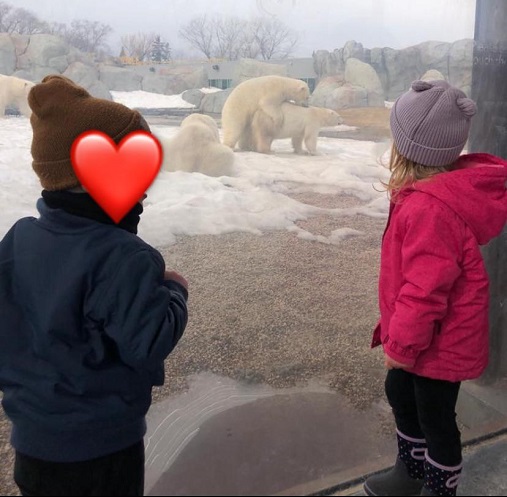
Parent takes her kids to the zoo in Winnipeg and visits the polar bears.
AIRED June 17, 2018 9:00 PM on CNN
In this celebration of Louisiana’s Cajun culture, complete with Zydeco music and a crawfish boil, Bourdain goes off the beaten path and takes part in the less familiar Mardi Gras traditions of the region’s history stemming from the French Middle Ages. Donning a conical hat, mask and colorful fringed costume, the host participates in the day long Courir de Mardi Gras in Mamou. Meals include a home cooked meal in Grand Coteau, lunch at Laura’s 2 in Lafayette with creole cowboys, and boudin & cracklings at Billy’s in Opelousas.
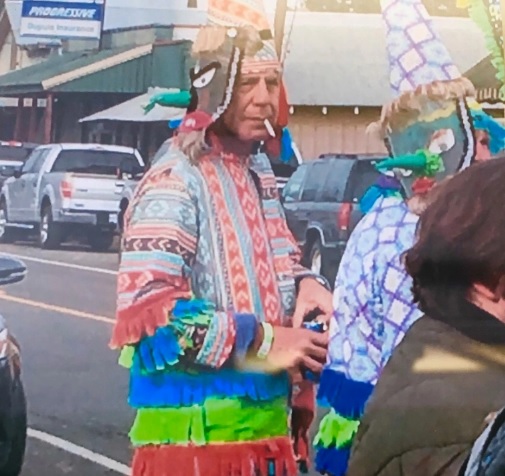
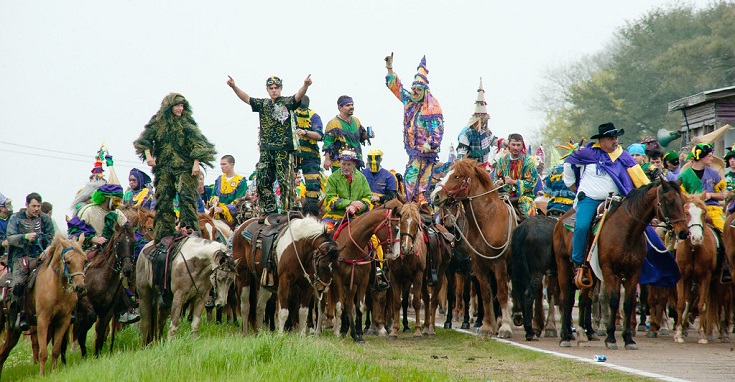
Crazy costumes, horse riding and powerful drinking in this episode. After the celebration the next morning Anthony was too hungover to even eat. He said it was one of the worse hangovers he ever experienced.


The extremely inebriated Cajuns still had the ability to ride their ponies standing up.

In yet another sad case of Bigfoot banditry, some sticky-fingered ne’er-do-wells swiped a sizeable Sasquatch lawn ornament from outside of a home in Michigan and the hunt for the miscreants has reached all the way to the state police. According to a local media report, the seven-foot-tall sheet metal depiction of the iconic cryptid was stolen on March 22nd from Mike and Donna Kinne’s yard in the community of Park Township. The caper was particularly curious to the couple as, by virtue of its size and construction, procuring the lawn ornament undoubtedly proved to be a rather onerous challenge for the individuals behind the Bigfoot heist.
Explaining that the thieves likely needed a truck to transport the stolen Sasquatch as well as bolt cutters to get through the heavy chain that had secured the lawn ornament, Mike also noted that “I’ve never handled him without having my leather gloves on because he’s very sharp.” As such, Donna observed that the Bigfoot bandits “had to want him bad,” since they somehow managed to make off with the piece unnoticed. Like so many other instances of Sasquatch artwork taken from homes and businesses around the country, the Kinne’s loss initially seemed to be a matter for local authorities. However, the case took a rather surprising turn on Thursday when the Michigan State Police announced an investigation into the brazen Bigfoot banditry.
In an official bulletin issued by the department, they described the pilfered piece as being “a rusty brown color with various sharp edges to detail the fur of the Sasquatch” and advised local residents to be on the lookout for out-of-place “white panel van with dark driver and passenger side windows” that was spotted in the area at the time of the heist. Suggesting that the vehicle could very well be the proverbial getaway car of the Bigfoot bandits, they indicated that it had actually been seen turning around in the Kinne’s driveway around the time of the caper, quite possibly with the stolen piece already in tow.
As for who could have been behind the theft, the Kinnes were at a loss for potential suspects, because the Bigfoot had become something of a neighborhood fixture with residents decorating the piece for the holidays. With that in mind, Donna mused that “I’m hoping there’s been some 18-year-old naughty boy that’s been eyeballing Sasquatch for a while, because somebody had to come prepared.” Should that be the case, the hypothetical youngster behind the heist now finds themselves with a Bigfoot-sized problem on their hands as the whole community, including the state police, are looking for the stolen piece.





 The MarkoZen Blog