Scientists Solve Mystery of Rabbit Breed’s Bizarre Walk

Genetic researchers have reportedly solved a longstanding mystery surrounding a strange breed of rabbit that walks on its two front feet rather than hopping. The curious creatures, which were first found in France back in the 1930s, are a domesticated species known as ‘sauteur d’Alfort.’ For reasons heretofore unknown, the bunnies are unable to jump and, instead, employ a bizarre method of locomotion wherein they lift themselves up on their front feet and walk. As one might imagine, their odd gait has puzzled scientists for nearly a century, but a new study appears to have determined the cause of their unique way of moving.

In a newly published paper, genetic researchers Miguel Carneiro and Leif Andersson explained how they bred a sauteur d’Alfort with a more traditional New Zealand white rabbit. The resulting slew of offspring, comprised of 52 in total, allowed them to pinpoint a specific genetic mutation that causes a malfunction in the muscle coordination of the creature and prevents it from being able to jump. Faced with that obstacle, the sauteur d’Alfort in turn naturally adopts the unorthodox style of walking as a means of compensating for its otherwise hindered mobility. By solving this mystery, the researchers were also able to, for the first time, identify the specific genes which make jumping possible for rabbits and similar animals which hop as a form of locomotion.

National Geographic Nature Photos

ng african-elephant-queleas

Elephant and Queleas, Tanzania

ng base-jumping-yosemite

Base jumping, Yosemite national park, California

ng boy-buffaloes-india

Water Buffalo India

ng cage-divers-great-white

Great White checking out the shark cage

ng cheetah 2

Cheetahs in Kenya checking out the tourists

ng cheetah and leopard botswana

Leopard (left) stealing a Cheetahs kill

ng elephants-serengeti-

Elephants moving through the Serengeti

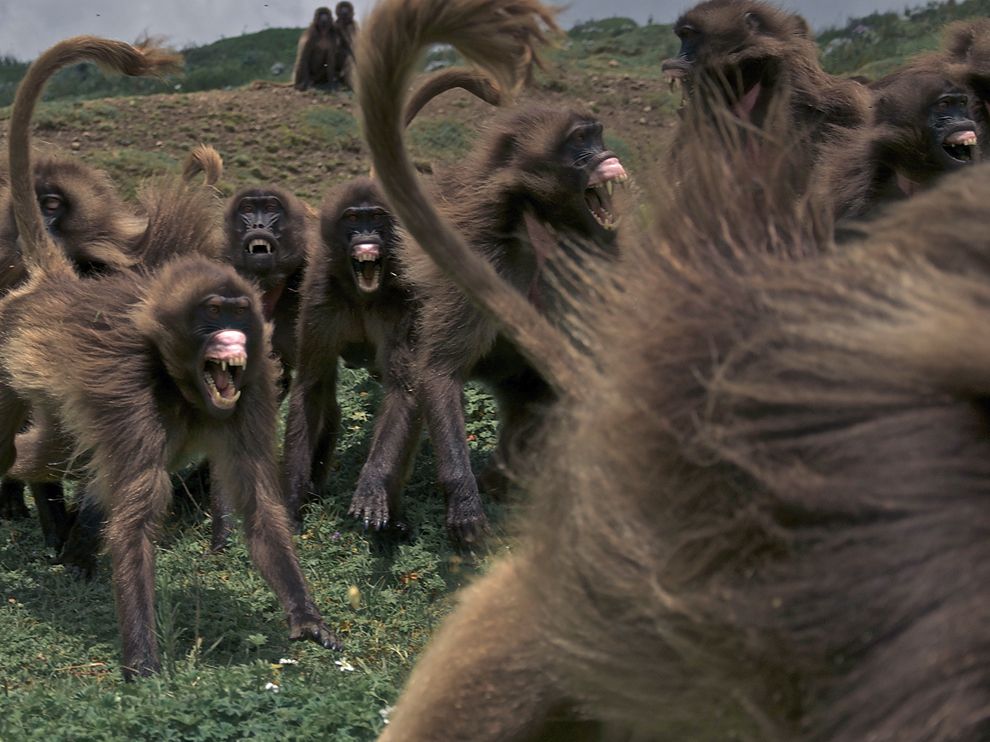
ng gelades ethiopia

Geladas monkeys Ethiopia

ng giraffes-gazelles-namibia_

Giraffes and Gazelles Namibia

ng hmong-child-buffalo_vietnam

Child and buffalo in Vietnam

ng kash flowers India

Harvesting Kash flowers India

ng kyrgyz-girls-afghanistan

Kyrgyz girls Afghanistan

ng mountain-gorillas-africa-sartore

Mountain gorilla and baby

ng penn chicken farm

Chicken farm Pennsylvania

ng redwood tree

Climbing redwood trees in California

ng serengeti

Lions in the Serengeti

ng south africa

Sleeping white lion South Africa

ng tigers-watering-hole-winter_ india

Tigers India

ng -yosemite-falls

Free rock climbing Yosemite California

nglake-wakatipu-new-zealand

Lake Wakatipu New Zealand

ngresting-lions-tanzania_56400_990x742

Lions chilling out in Tanzania

National Geographic Travel Photos

The Storr is part of the Trotternish geologic formation in the northeast corner of the Isle of Skye, Scotland. The largest of the monoliths is called The Old Man of Storr. To the south are the Cuillins of southern Skye.

Like a castle in ruins, the Old Man of Storr rock formation guards the landscape on Isle of Skye in Scotland. Fifty meters high, the Old Man is a weathered piece of the larger rocky ridge known as the Storr. The area has such an otherworldly look that Ridley Scott filmed scenes from his 2012 movie Prometheus there.

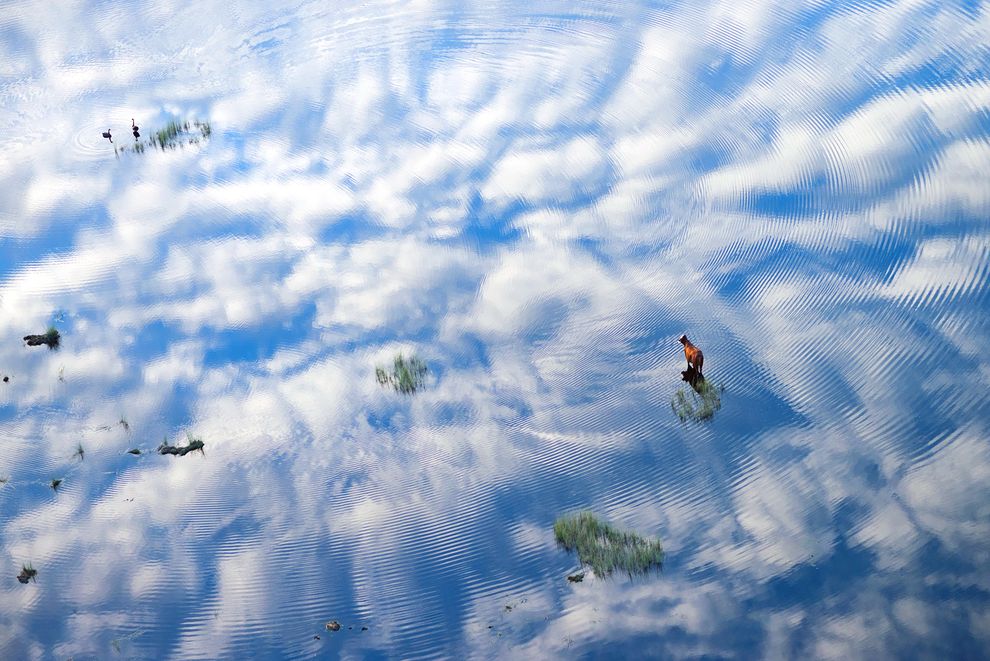
nat geo1

This cow isn’t floating in the sky—it’s standing alone in shallow waters in the coastal town of Laurieton in the Mid North Coast region of New South Wales, Australia. Laurieton, with a population of less than 2,000 people, is actually the largest town in the Camden Haven district.

EMERPC Crowds gather under the Martin Luther King, Jr. Memorial in West Potomac Park in Washington DC.

Visitors take in the solid-granite tribute to civil rights movement leader Martin Luther King, Jr., at the Martin Luther King, Jr., Memorial in Washington, D.C. In his “I Have a Dream” speech, delivered on August 28, 1963, King addressed the 250,000 people who gathered on the National Mall in D.C., close to where this monument stands today.

Playing winter hockey in Banff National Park, Alberta, Canada

Where there’s a puck, there’s a way. A group of Canadian hockey players proves that little will stop them from playing their nation’s favorite (although not national) sport, clearing snow off a pond in 1.6-million-acre Banff National Park. They couldn’t have picked a much more scenic spot to play: This game is taking place in the shadow of Mount Rundle, Banff’s iconic 9,600-foot peak.

Tibetan horsemen display their skills at a government-organized horse festival in Yushu, China, July 26, 2015. These days, horse festivals on the Tibetan plateau are not just about equestrian prowess, but political affairs with a propaganda goal ? to signal that traditional Tibetan culture is thriving, contrary to what the Dalai Lama and other critics say. (Gilles Sabrie/The New York Times)

In Yushu, an autonomous prefecture in China’s Qinghai Province, riders participate in the Yushu Horse Festival. The summer event is held annually beginning July 25 and features colorful displays of traditional Tibetan costumes and culture, as well as horse races and athletic competitions.

A tourist boat with restaurant aboard, especially designed for winter rivers, cruises the frozen Moskva River in Moscow, Russia, Monday, Jan. 4, 2016. Temperatures dipped to -18 C (-0,4 F) in Moscow and -20 C (-4 F) in surrounding regions. (AP Photo/Alexander Zemlianichenko)

A boat navigates the icy river Moskva (or Moscow River) in Moscow, Russia, offering sightseers protection from the cold and a unique view of the city—including, perhaps, a glimpse of the famous Gorky Park, which stretches some 300 acres along the river. Even in winter, Moscow, Russia’s political, cultural, and commercial center and home to a population of about 12 million, is worth a visit.

A cave explorer looks down into a large cave passage from the second doline in Hang Son Doong. The second doline is a large hole in the ceiling of the cave giving plant life the sunlight they need to grow.

Vietnam’s Hang Son Doong stands as proof that the world still has wonders yet to be uncovered. First explored in 2009, the colossal cave is big enough to house an entire city block of 40-story buildings and has an underground river and jungle. Part of the reason the cave’s ecosystem is able to function is this doline, or sinkhole, that allows sunlight to enter.

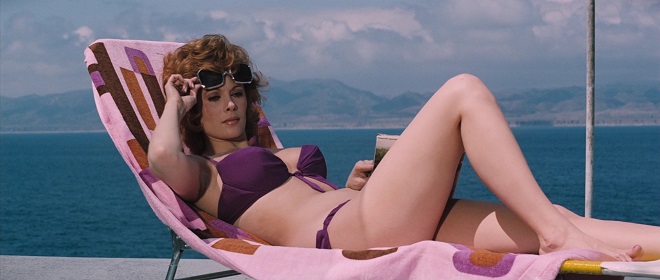
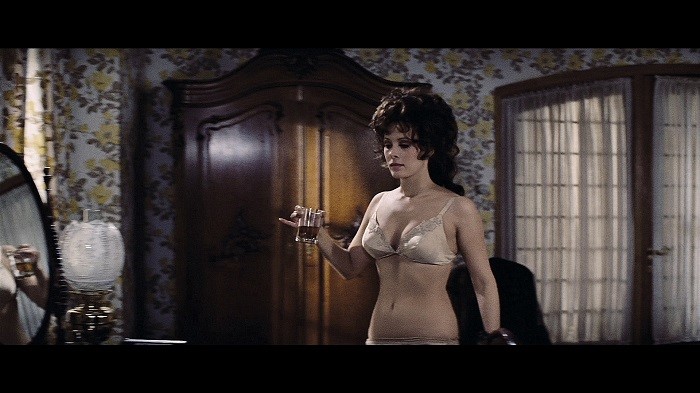
Diamonds are Forever, Jill St.John

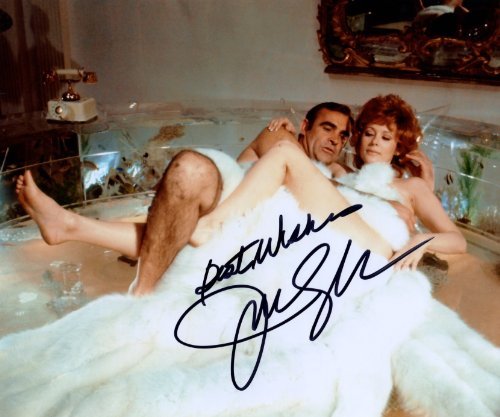
Diamonds Are Forever is a 1971 spy film, the seventh in the James Bond series produced by Eon Productions. It is the sixth and final Eon film to star Sean Connery, who returned to the role as the fictional MI6 agent James Bond, having declined to reprise the role in On Her Majesty’s Secret Service (1969).

Tiffany Case is a fictional character in the 1956 James Bond novel Diamonds Are Forever and its 1971 film adaptation. A “Bond girl”, she was portrayed by Jill St. John in the film. In the novel, the story of her name is that when she was born, her father Case was so embittered she was not a boy that he gave her mother a thousand dollars and a powder case from Tiffany’s and walked out. In the film it is stated that she was named after her accidental preterm birthplace, Tiffany & Co., where her parents were going through a choice of wedding bands, to which Bond dryly jokes that she was lucky that it had not happened at Van Cleef & Arpels.

Scottish actor Sean Connery lies in bed kissing American actor Jill St. John in a Las Vegas hotel room in a still from the film, ‘Diamonds Are Forever,’ directed by Guy Hamilton, 1971. (Photo by United Artists/Fotos International/Courtesy of Getty Images)