


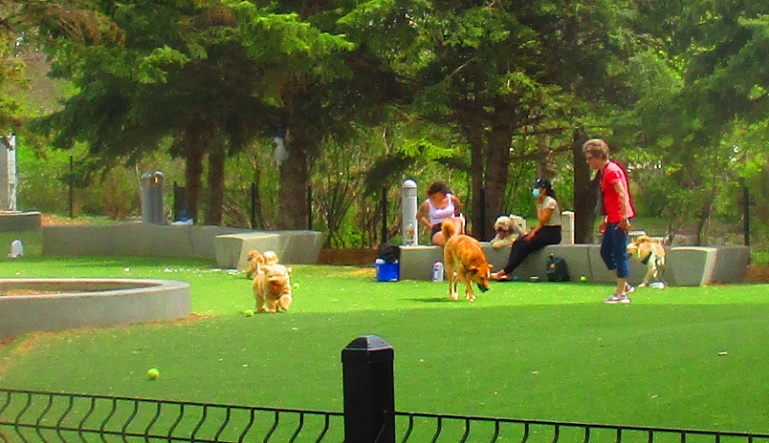
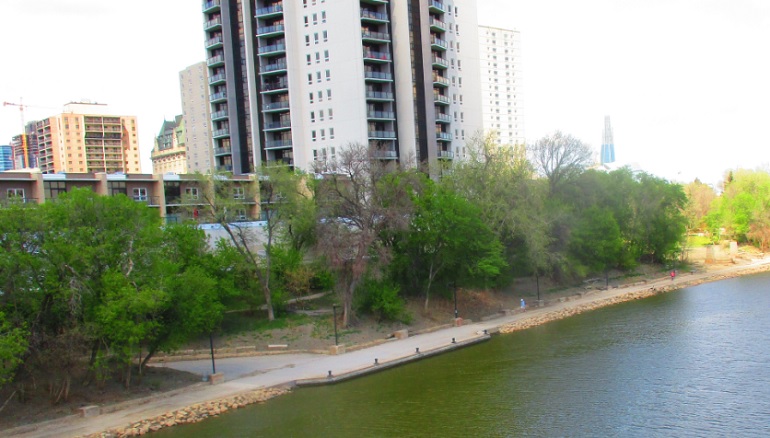
Small leash free dog park in downtown Winnipeg. From 80 pound boxers to 5 pound chihuahuas, they all play together. I have never seen a fight.
A golden lab playing along the river.
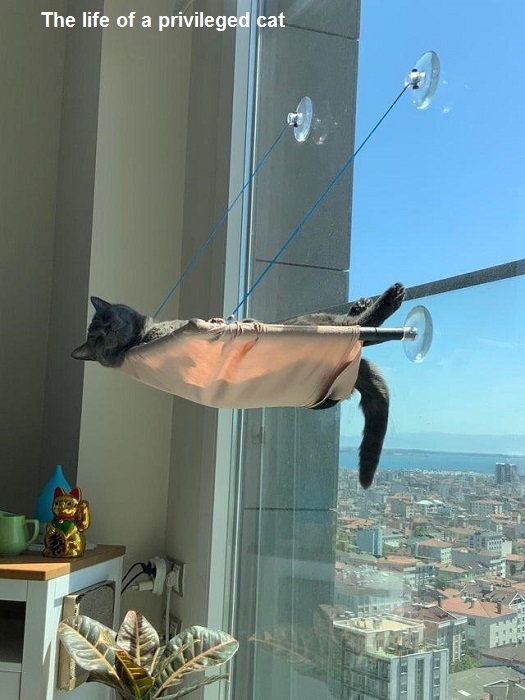
And then there is the life of cats.
Peter Pumpkinhead came to town
Spreading wisdom and cash around
Fed the starving and housed the poor
Showed the Vatican what gold’s for
But he made too many enemies
Of the people who would keep us on our knees
Hooray for Peter Pumpkin
Who’ll pray for Peter Pumpkinhead?
Peter Pumpkinhead brought to shame
Governments who would slur his name
Lusts and sex scandals failed outright
Peter merely said, “Any kind of love is all right”
But he made too many enemies
Of the people who would keep us on our knees
Hooray for Peter Pumpkin
Who’ll pray for Peter Pumpkinhead?
Peter Pumpkinhead was too good
Had him nailed to a chunk of wood
He died grinning on live TV
Hanging there he looked a lot like you, and an awful lot like me!
But he made too many enemies
Of the people who would keep us on our knees
Hooray for Peter Pumpkin
Who’ll pray for Peter Pumpkinhead?
Hooray for Peter Pumpkin
Who’ll pray for Peter Pumpkin?
Hooray for Peter Pumpkinhead
Oh my, oh my, don’t it make you want to cry, oh
I always liked horror movies. There is some weird perversion where many people enjoy getting scared, I am one of those people.



The Chemosphere is a strange looking house located in the San Fernando Valley area of Los Angeles. It was built in 1960 by by American architect John Lautner. It is a one story octagon with around 2200 square feet (200m2) of living space. Most distinctively, the house is perched atop a concrete pole nearly thirty feet high. This innovative design was Lautner’s solution to a site that, with a slope of 45 degrees, was thought to be practically unbuildable. Access is by a long stairway and a cable railway.
Because of a concrete pedestal, almost 20 feet (6.1 m) in diameter, buried under the earth and supporting the post, the house has survived earthquakes and heavy rains.
The building was first used in a dramatic film as a futuristic residence in the 1964 ABC-TV program “The Outer Limits: The Duplicate Man,” based on a science fiction story by American author Clifford D. Simak. Exterior scenes for the television episode were shot on location; a detailed sound-stage set of the house’s interior was built.


The lot had been given to a young aerospace engineer by his father-in-law; despite his own limited means, the engineer, Leonard Malin, was determined to live there. Malin had US $30,000 to spare. The cost to build Chemosphere, US $140,000 (equivalent to $1.21 million in 2019), was subsidized partly by barter with two sponsoring companies, the Southern California Gas Company and the Chem Seal Corporation. Chem Seal provided the experimental coatings and resins to put the house together and inspired the name Chemosphere. (Lautner originally wanted to call the house Chapiteau.) In the end Malin paid US$80,000 in cash. The Malins and their four children lived there until rising costs and the demise of the aerospace industry forced them to sell in 1972.
In 1976, the house’s second owner, Dr. Richard Kuhn, was stabbed to death at his home in a robbery by two men, who were subsequently convicted and sentenced to life in prison.
By 1997, the interior had become run down; for over 10 years it had been rented out and used for parties and as a result the interior finishes had undergone major and anachronistic alteration.[1] Because of its unique design it proved to be a difficult sell and sat on the market for most of its time as a rental property.
Since 1998, it has been the Los Angeles home of Benedikt Taschen, of the German publishing house Taschen, who has had the house restored; the only current problem with the residence is the relatively high cost of maintenance. The recent restoration, by Escher GuneWardena Architecture, won an award from the Los Angeles Conservancy. Preservation architect Frank Escher wrote the first book on Lautner a few years after moving to Los Angeles in 1988, and oversees the John Lautner Archives. During restoration the architects added details that were unavailable 40 years before, as the technology simply did not exist. The gas company tile was replaced by random-cut slate, which could not be cut thin enough in 1960, despite Lautner’s desire for such a finish. The architects also replaced the original thick framed windows with frameless glass. The owners commissioned a pastiche rug by German painter Albert Oehlen and a hanging lamp of bent plexiglas strips by Jorge Pardo, a Los Angeles artist.


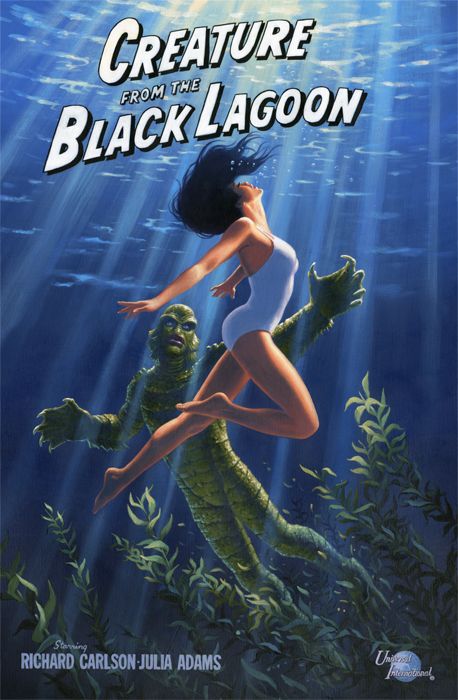
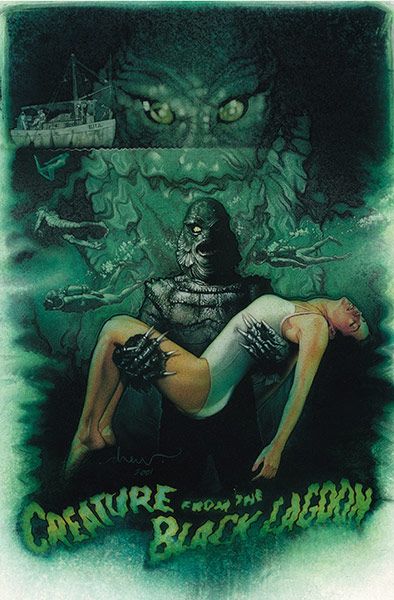
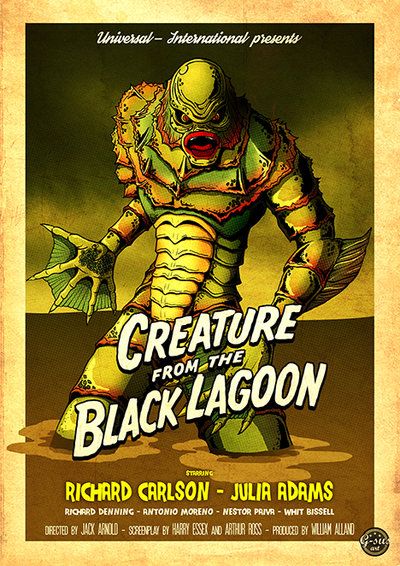
Creature from the Black Lagoon is a 1954 American black-and-white 3D monster horror film from Universal-International, produced by William Alland, directed by Jack Arnold, and starring Richard Carlson, Julie Adams, Richard Denning, Antonio Moreno, Nestor Paiva, and Whit Bissell. The Creature was played by Ben Chapman on land and by Ricou Browning underwater. The film premiered in Detroit on February 12 and was released on a regional basis, opening on various dates.










 The MarkoZen Blog
