‘Missing’ Turkish Man Unknowingly Joins Search Party Looking for Himself

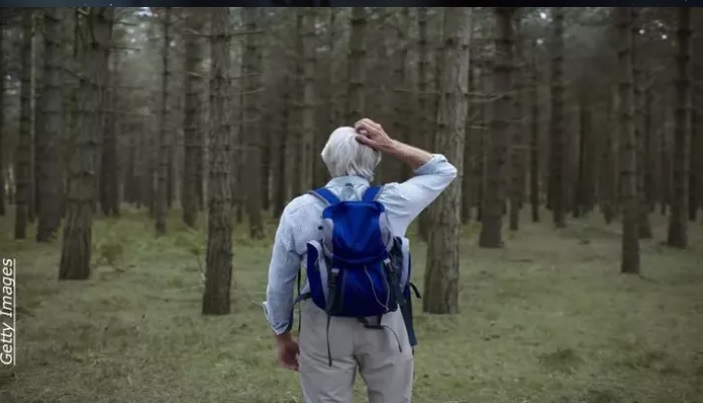
A Turkish man who had been reported missing by his family was understandably quite embarrassed when he stumbled upon a search party looking for him and joined in the effort for hours until he realized that they were trying to find him. According to a local media report, the odd misadventure occurred on Tuesday evening in the village of Cayyaka when Beyhan Mutlu went out for a few drinks with some friends. At the conclusion of the evening, the tipsy Turk wound up wandering off into a forest where he seemingly got lost. Concerned that Mutlu had not returned home, his family phoned the local police, who set about enlisting help from the community in searching for the man.

As the group of concerned cops and citizens combed the woods looking for Mutlu, the inebriated man spotted the peculiar gathering and wandered over to lend them a hand. For the next several hours, they continued looking for the ‘missing’ drinker with no idea that the search was moot. Finally, when Mutlu heard one of the people in the group shout his name, the confused man responded “I am here.” It was then that everyone realized that the person they were looking for had been with them the whole time. Upon being questioned by police, the red-faced Mutlu reportedly pleaded with police “don’t punish me too harshly, officer. My father will kill me.” Cops subsequently dropped him off at his home, where he presumably sobered up and then tried to live down any lingering embarrassment from the previous night.
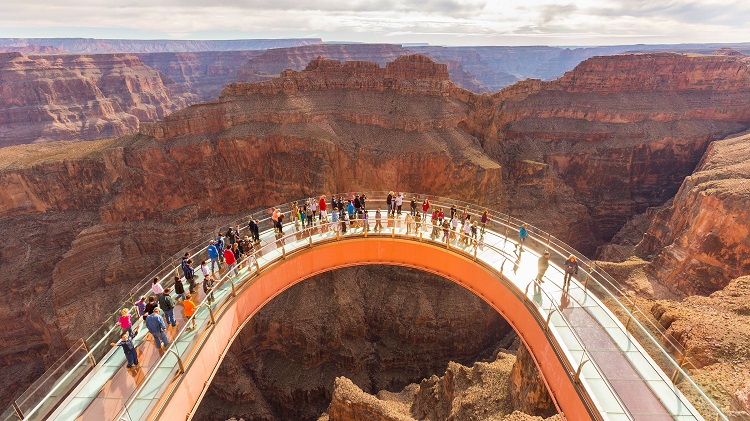
Grand Canyon Skywalk

The Grand Canyon Skywalk is a horseshoe-shaped cantilever bridge with a glass walkway at Eagle Point in Arizona near the Colorado River on the edge of a side canyon in the Grand Canyon West area of the main canyon. USGS topographic maps show the elevation at the Skywalk’s location as 4,770 ft (1,450 m) and the elevation of the Colorado River in the base of the canyon as 1,160 ft (350 m), and they show that the height of the precisely vertical drop directly under the skywalk is between 500 ft (150 m) and 800 ft (240 m). In 2015 the attraction passed one million visitors.

Commissioned and owned by the Hualapai Indian tribe, it was unveiled March 20, 2007, and opened to the general public on March 28, 2007. It is accessed via the Grand Canyon West Airport terminal or a 120-mile (190 km) drive from Las Vegas. The Skywalk is east of Meadview and north of Peach Springs with Kingman being the closest city of some size.

Three men face federal charges for approaching bears eating in Brooks River at Katmai National Park

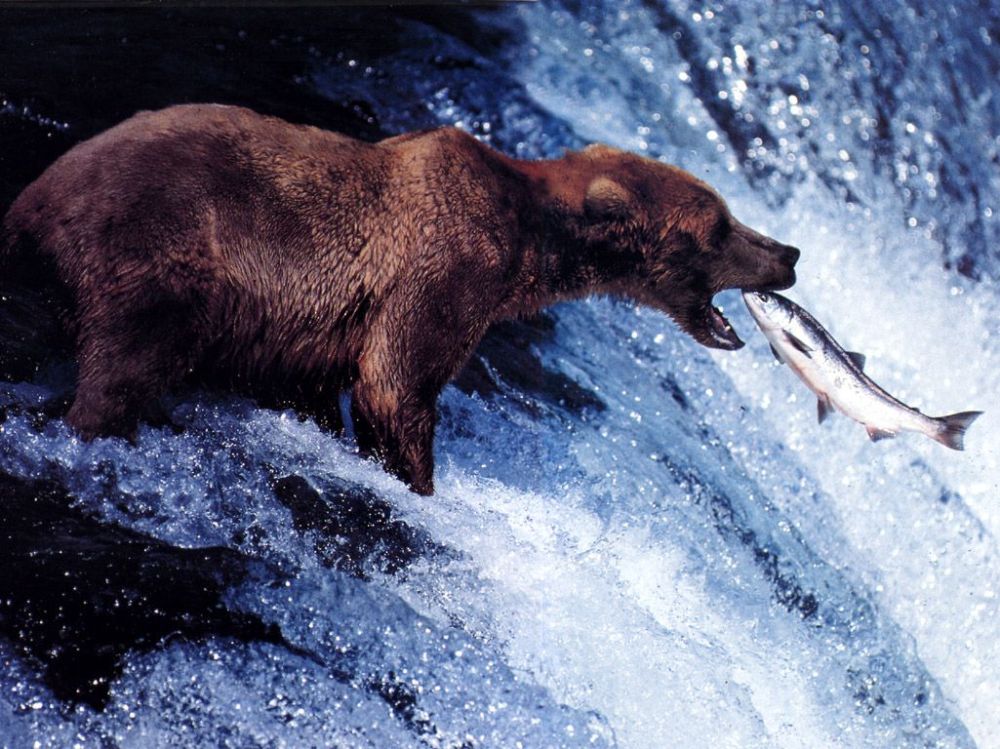
ANCHORAGE, Alaska (KTUU) – Three men face federal charges for stepping into a closed area of Brooks River at Brooks Falls, Katmai National Park to capture up-close photographs of brown bears in the river.

The incident happened in 2018, according to a press release from the U.S District Attorney’s Office of the District of Alaska.

On Aug. 9, 2018, 56-year-old David Engelman of Sandia Park, New Mexico; 54-year-old Ronald J. Engleman II of King Salmon; and 30-year-old Steven Thomas of King Salmon allegedly “left the authorized Brooks Falls viewing platform” and jumped into the Brooks River to approach brown bears “feeding on and in the Brooks River just below the falls,” according to the press release.

The national park is a “safe zone” for the numerous bears that roam the Brooks Camp area, requiring visitors to follow specific rules and regulations to protect any bears or people. The release stated the men created a “hazardous condition” when the they allegedly “came within 50 yards of the brown bears.”

The three men were recently charged with creating a hazardous condition in a closed area and approaching within 50 yards of brown bears. If convicted, they could each face a maximum sentence of six months in prison, a $5,000 fine and a year of probation, according to the release.

The National Park Service is still investigating the case.

These guys are idiots.

Africa’s week in pictures: 17-23 September 2021

BBC

A selection of the best photos from the African continent and beyond.

Short presentational grey line
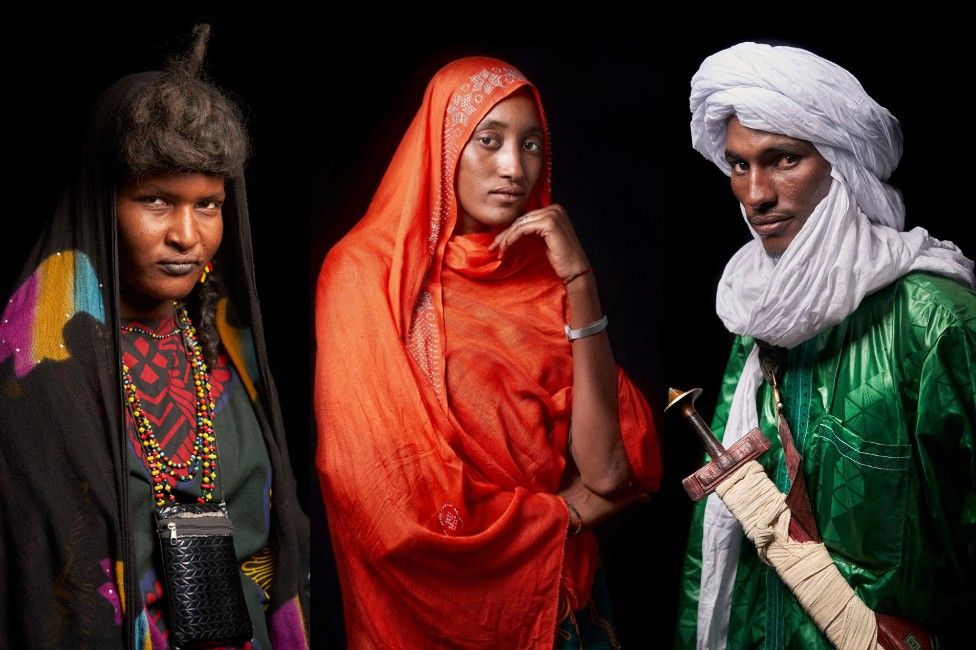
A BBC composite of three individual photo portraits that were taken by AFP.
image caption,Fifteen-year-old Nobe Nobe from Ago, 17-year-old Djanje Haiballa from Fouduk, plus 28-year-old Veli Rabeo also of Fouduk pose for individual portraits on Friday at the Cure Salee festival in Niger…
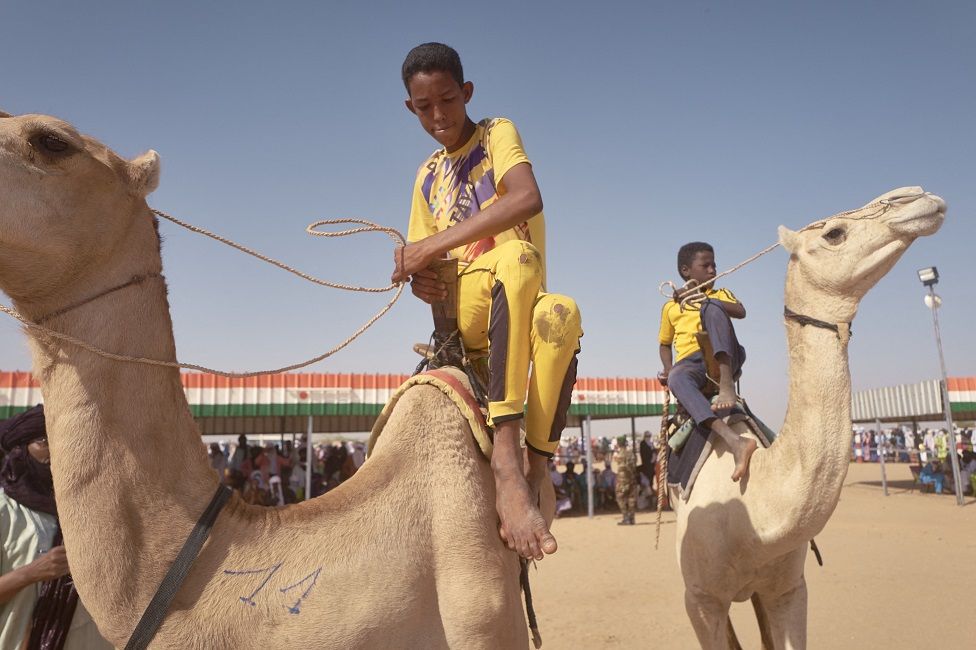
Two boys who raced in the final on 18 September.
image caption,Thousands of people from nomadic herding communities attend the three-day festival which includes a high-stakes camel race…
A group of Wodaabe men rest after dancing during the Cure Salee, in Ingall, northern Niger, on 18 September.
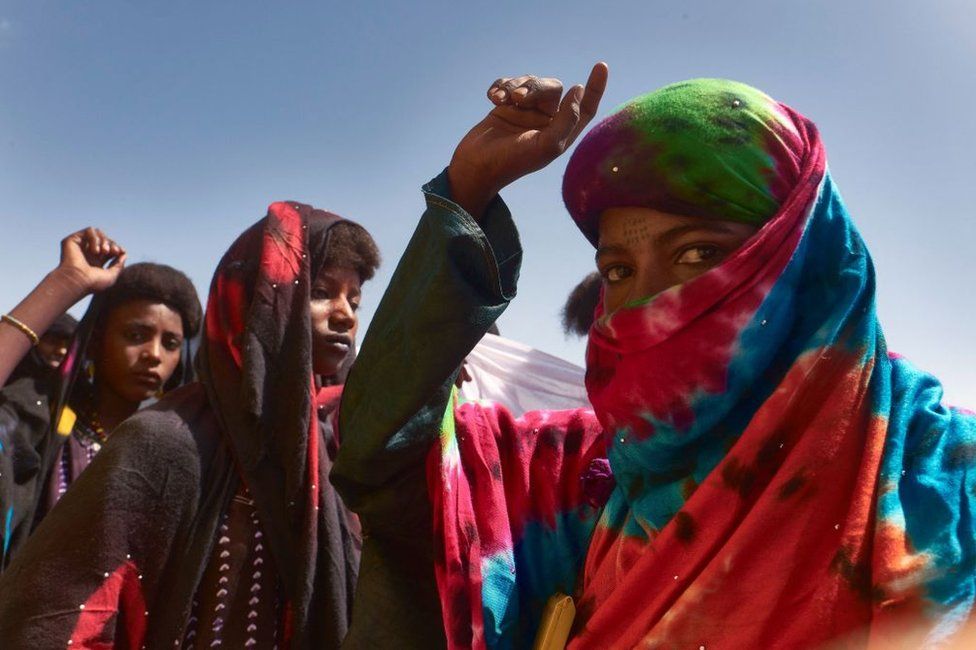
image caption,… as well as dancing.
Women dance during the annual Cure Salee festival.
image caption,The annual festival takes place at the end of the rainy season in September…
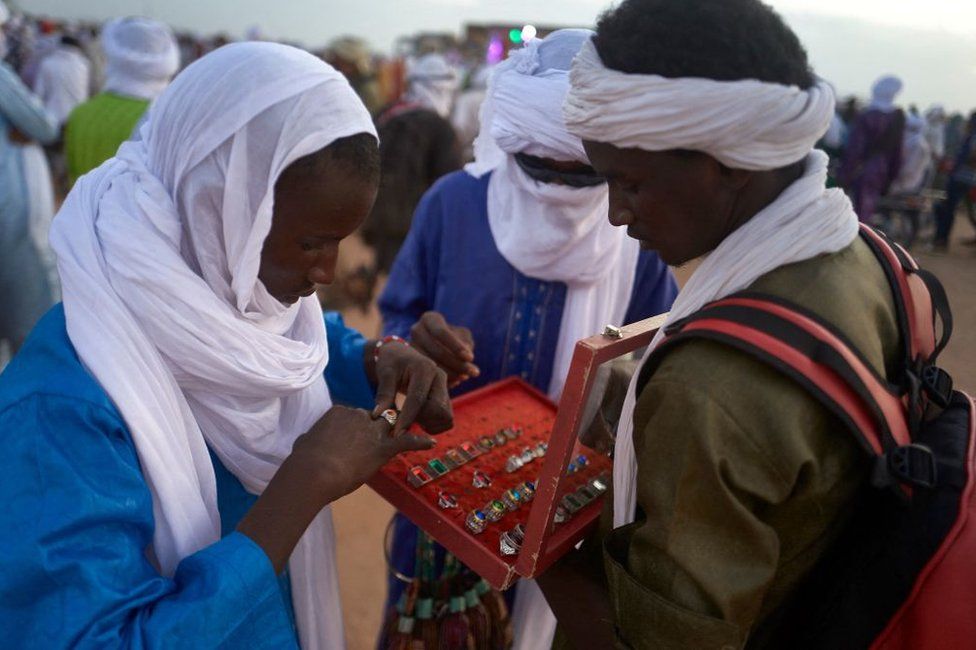
Men try on rings during the annual festival.s.
image caption,… and attracts visitors from all over the Sahel.
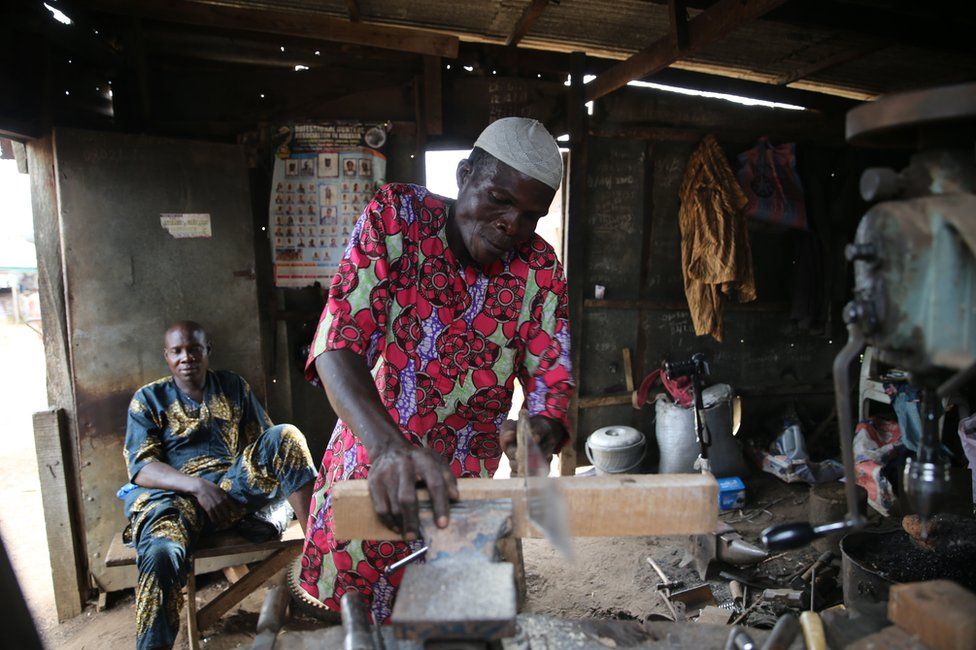
A blacksmith at work.
image caption,In neighbouring Nigeria on Tuesday, blacksmith Anjorin Jimoh is busy in his workshop in Lagos.
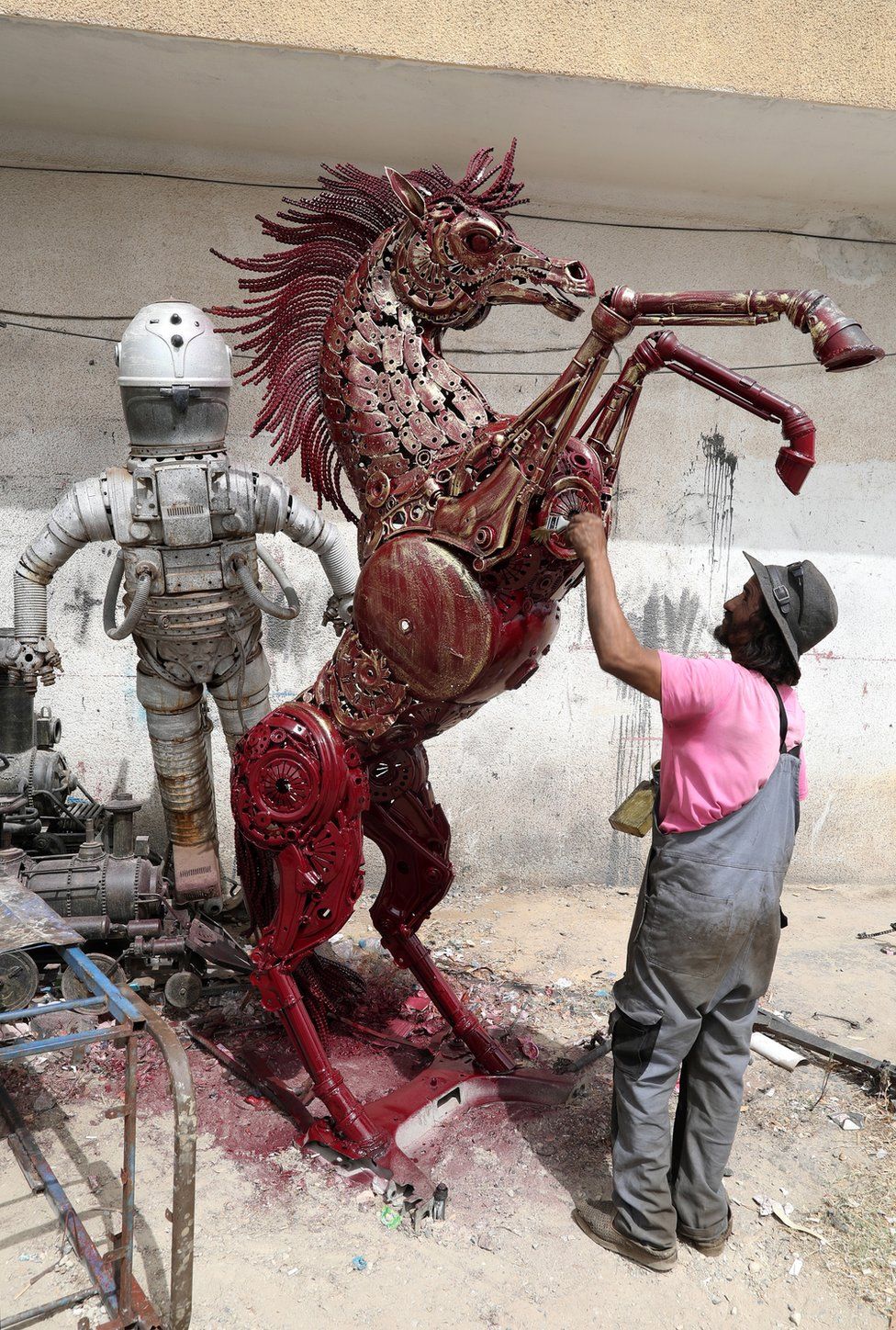
A man works on a metal sculpture of a horse.
image caption,In Tunisia on Friday, artist Mohamed al-Sharaiti makes sculptures from the spare parts of cars.
The eco-afrofuturist punk band Fulu Miziki pose at the International Festival of Performing Arts.
image caption,Congolese band Fulu Miziki, whose instruments and clothes are made from recycled items, appear at a music festival in Spain on Tuesday.
Thuso Mbedu poses with US actress Mychal-Bella Bowman on the red carpet.
image caption,South African actress Thuso Mbedu (R) poses with US actress Mychal-Bella Bowman on the red carpet at the Emmy Awards in Los Angeles on Friday.
Ditebogo Ledwaba receiving her award on stage in Johannesburg, South Africa.
image caption,Actress Ditebogo Ledwaba wins the gong for Outstanding Young Performer at South Africa’s Royal Soapie Awards on Saturday.
South African couple Letoya Makhene and Lebo Keswa.
image caption,Actress Letoya Makhene and businesswoman Lebo Keswa, who married last year, were also at the television awards.
Viewers wait for the first screening of Somali films at The Somali National Theatre in Mogadishu.
image caption,On Wednesday, Somalia hosted its first public film-screening in 30 years – raising hopes of a cultural revival amid the country’s decades-long security crisis. Filmgoers had to pass through several checkpoints to reach the theatre.
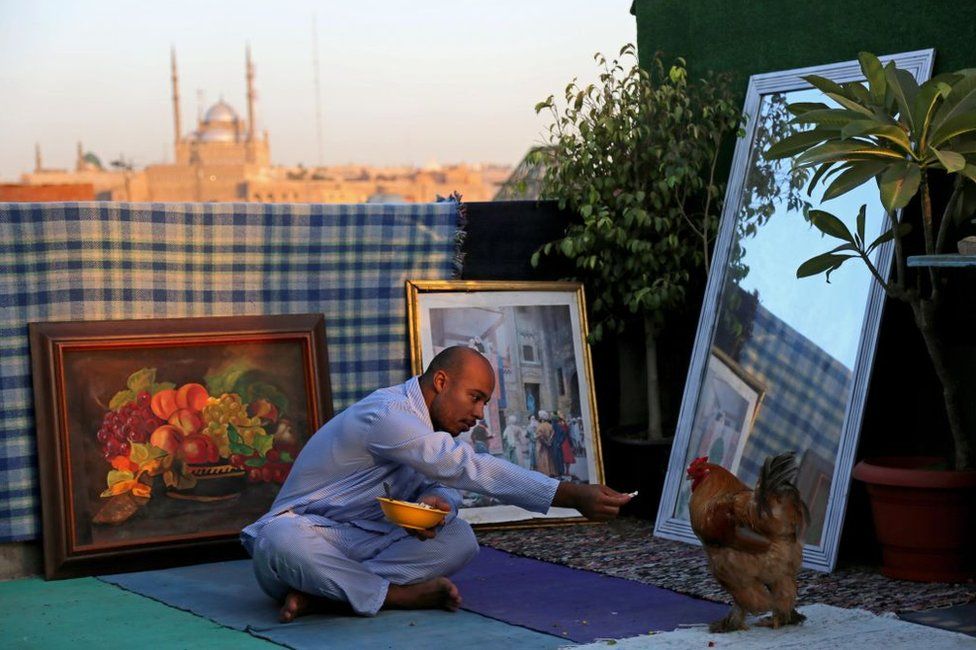
A man feeding a chicken.
image caption,On the same day in Egypt’s capital Cairo, Taha Obeid feeds his pet chicken, Jafar, at his rooftop home.
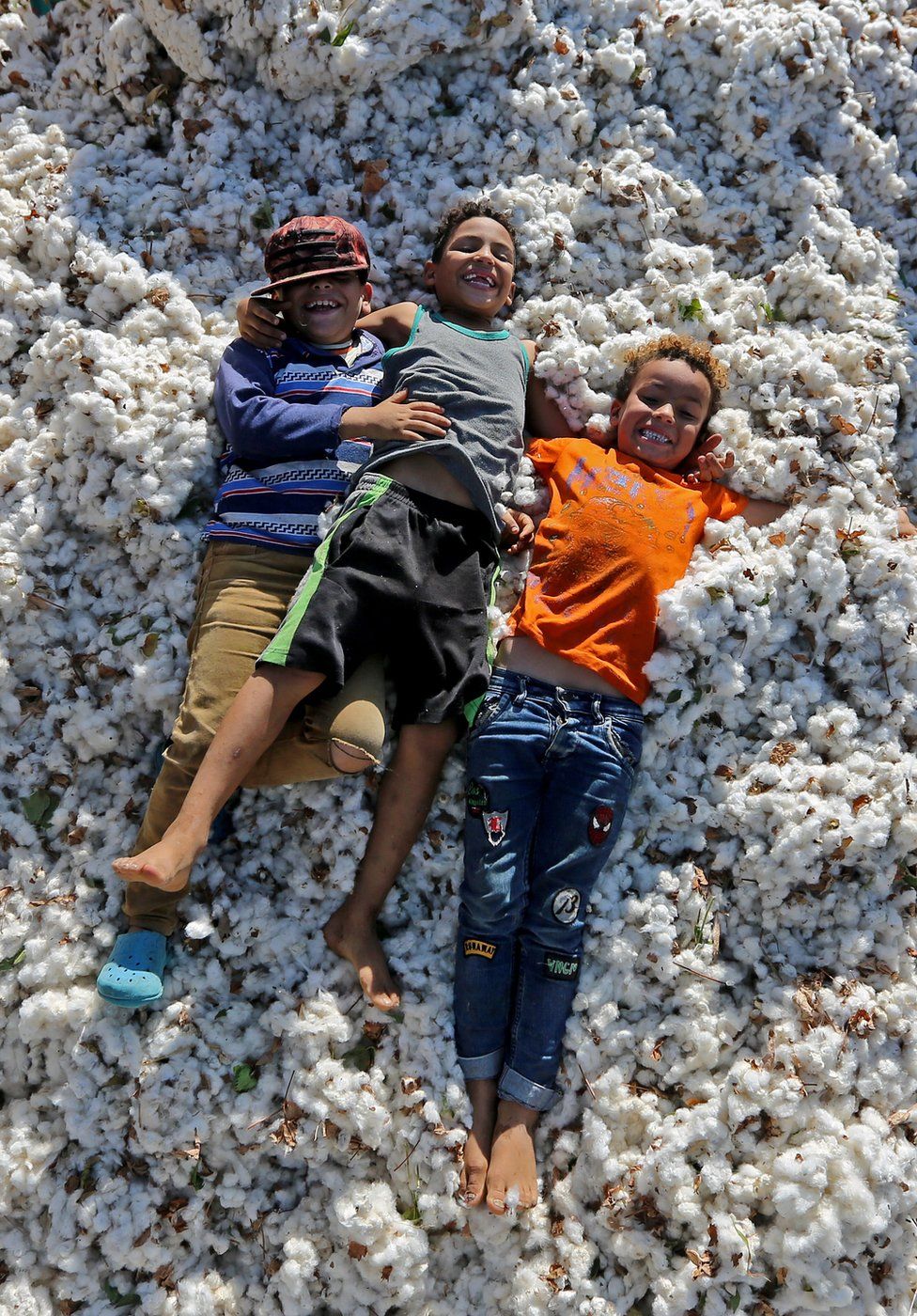
Children play on top of cotton bolls.
image caption,Also in Egypt, cotton harvesting is under way – these children play on a pile of picked bolls on Sunday.
Ibrahim Bilal, an Egyptian artist, presents finished sculptures of Ancient Egyptian figurines, a book, a mosque, and other shapes.
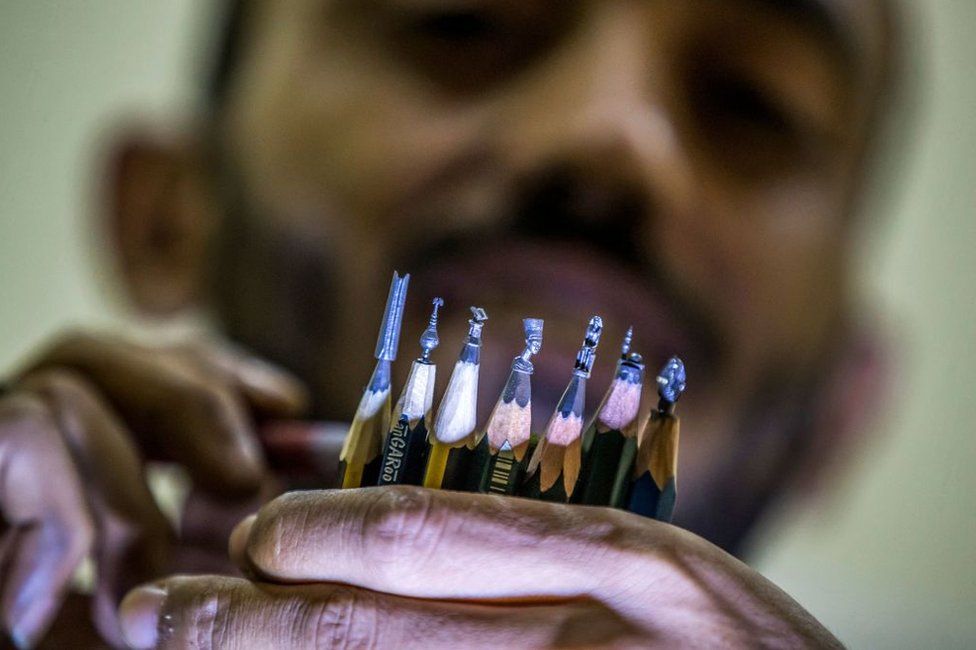
image caption,Days earlier in northern Egypt, artist Ibrahim Bilal presents miniature sculptures carved into pencil tips.
Tafon Nchukwi of Cameroon punches Mike Rodriguez in a light heavyweight fight during the UFC Fight Night event at UFC APEX on September 18, 2021 in Las Vegas, Nevada.
image caption,Cameroonian mixed martial arts fighter Tafon Nchukwi lands a punch on Mike Rodriguez, winning their UFC bout on Saturday in Las Vegas in the US.
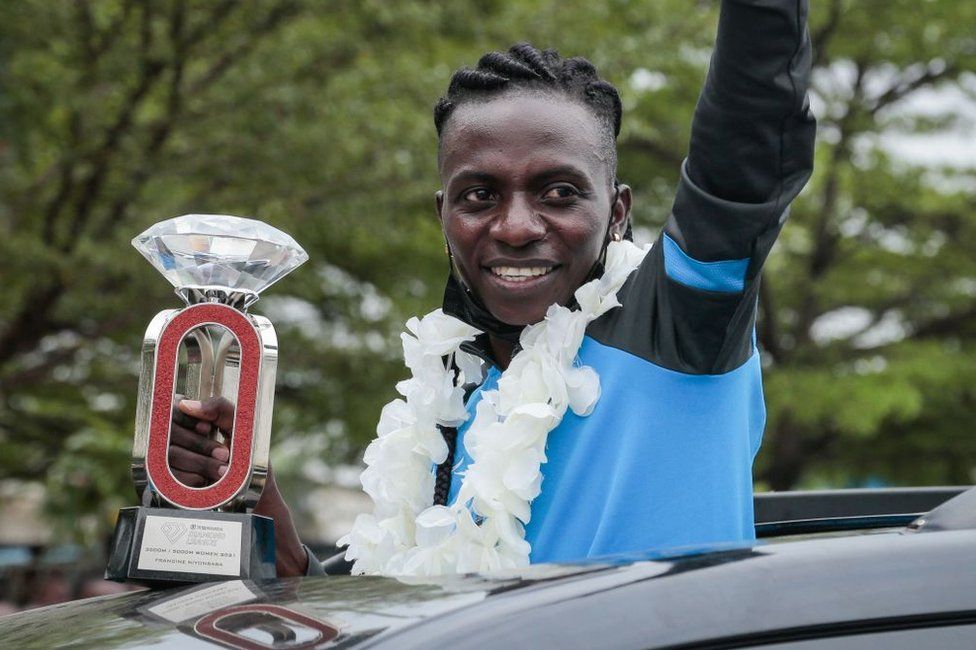
Burundian athlete Francine Niyonsaba who set new world record of women's 2000m with 5 minutes 21 seconds and 56 hundredths of a second reacts to people from a car in Bujumbura, Burundi.
image caption,Burundian athlete Francine Niyonsaba returns home to a hero’s welcome on Tuesday after setting a new world record in the women’s 2,000 metres.
Kenya's Clement Langat Kiprono crosses the finish line to win the Rome Marathon on September 19, 2021 in Rome.
image caption,And on Saturday in Italy, Kenya’s Clement Langat Kiprono wins the Rome Marathon.
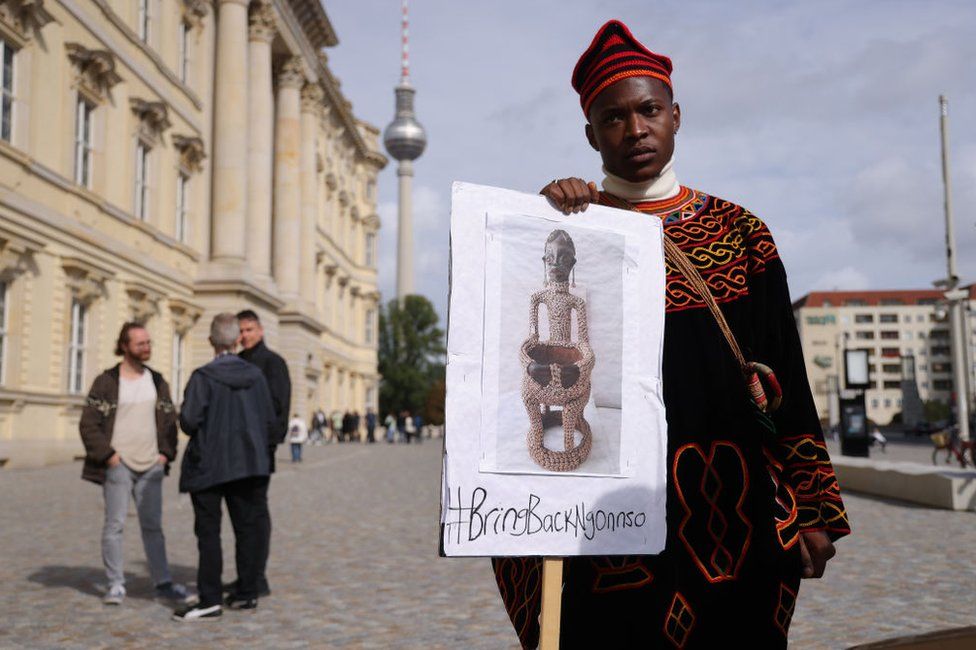
A protester from Cameroon seeking the return of the Ngonnso statue stands outside the Humboldt Forum during the opening of the Humboldt's Ethnological Museum and the Museum for Asian Art. A small group of protesters from Cameroon stood outside the Humboldt Forum to demand the return of the statue, which they say is a sacred, spiritual artefact of the Nso people and which they say was looted by Germany in 1902 while Cameroon was a German colony.
image caption,On Wednesday, Cameroonian protesters demand the return of an artefact from former colonial ruler Germany. They say the Ngonnso statue was looted by the Germans in 1902 and is of significant spiritual value.
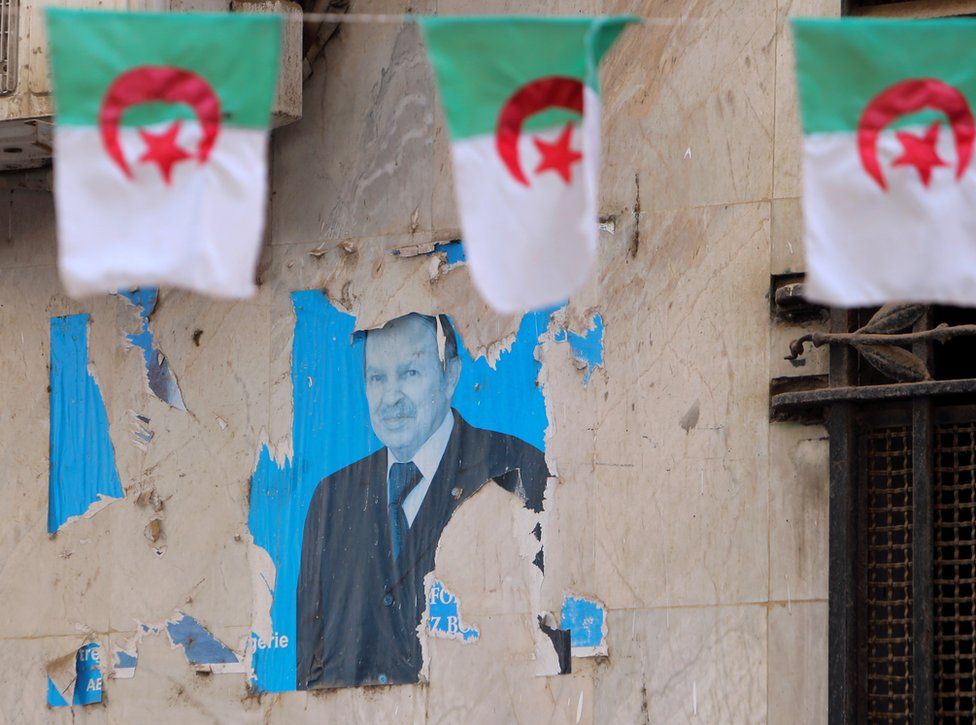
A views shows an old poster of former Algerian President Abdelaziz Bouteflika.
image caption,Remnants of a poster showing former Algerian President Abdelaziz Bouteflika are seen on Saturday, following his death at the age of 84.
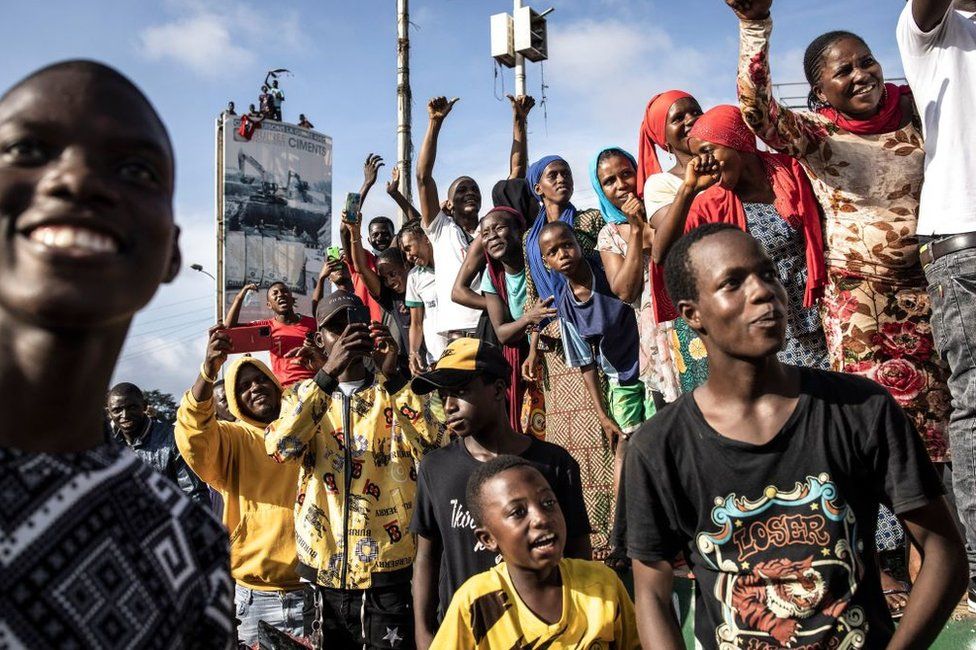
Supporters cheer as exiled activists arrive in Conakry on September 18, 2021.
image caption,On the same day in Guinea’s capital, Conakry, supporters cheer the return of exiled political activists who had fled the rule of President Alpha Condé.
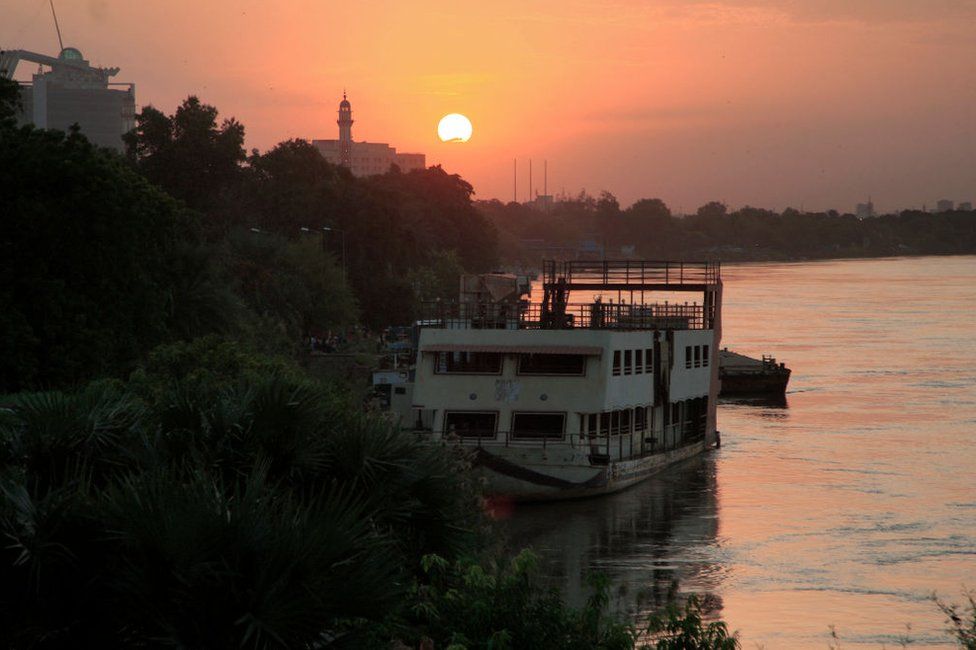
A view of the Blue Nile river waterfront in the north of Sudan's capital Khartoum at sunset.
image caption,And on Tuesday, the sun sets over the Blue Nile in Sudan hours after an attempted coup was foiled.

Subway Pushers of Japan

Encore post.

The Japanese rail network is known throughout the world for its superiority and punctuality. In the capital city Tokyo, nearly 40 million passengers ride the rail every day, heavily outweighing other modes of transport like buses and private cars. Of these, 22% or 8.7 million take the subway.

The Tokyo subway network is a transportation marvel. On most lines, trains come every 5 minutes apart, on average, and during peak times, they tend to run every 2-3 minutes. That’s about 24 trains per hour going in one direction. Despite so many trains, the subway is extremely overcrowded, especially during rush hour. This page from the Ministry of Land, Infrastructure and Transport has data (from 2007) detailing the level of congestion at different stations of Tokyo’s subway. As you can see, nearly all of them run at over capacity with a few running at 200% over rated capacity.

push

“Oshiya” or “pushers” at Tokyo’s Shinjuku station trying to pack as many passengers as possible into the carriages during rush hour in 1967. Photo credit: CNN

Just like sardines.

In order to fit twice the number of passengers into a subway carriage, the stations employ uniformed staff known as oshiya or “pusher”, whose goal is to cram as many people as possible into the subway tram. These white glove-wearing personal actually pushes people into the train, so the doors can be shut. This is so surreal, it has to be seen to be believed.

push1

When pushers were first brought in at Tokyo’s Shinjuku Station, they were called “passenger arrangement staff” and were largely made up of students working part-time. Nowadays, there are no dedicated “pushers”. The station staff and part-time workers fill these roles during rush hours.

Although a Japanese phenomenon now, subway pushers were an American invention and originated in New York City, nearly a century ago. They were not very well-liked because they were known to push and shove passengers with hostility. The vigor with which the guards often did their job earned them the reputation as “sardine packers”. Their brutality sometimes made national headlines. “The Anxious Subway Guard Who Guillotines His Passengers” —screamed a headline, and “Long Suffering New York Subway Riders Cheer Man Who Hit Guards” —reported another.

Pushers became out of fashion with the introduction of automatic door controls and automatic turnstiles. As the sadistic sardine packers began to lose their job in the 1920s, their demise were mourned briefly. Several movies about subway workers came out during this period including Subway Sadie (1926), Wolf’s Clothing (1927), The Big Noise (1928), Love Over Night (1928) and so on. Subway pushers were also depicted in a 1941 biographical movie called Pusher — the story takes place during World War 1.

More recently, in 2012, Hong Kong- based photographer Michael Wolf created a photo series named Tokyo Compression, where he captured the traumatized and pained expression of commuters as their faces were crushed against the windows. These pictures show how horrible and shameful the situation inside the subway is. Bodies are squished so tightly against one another that most people can’t physically move. Short persons suffer the risk of getting smothered against the coat of their fellow passenger. Getting off at the right station require strength and determination, and fire hazards and emergency evacuation are serious issues. The subways are also fertile grounds for pickpockets and gropers.

push2
push3
push4
push5
push6

Japanese commuters wait in line for the next train, while people pushers push passengers onto the Yamanote line subway train during the morning rush hour at Shinjuku station in Tokyo, Japan. The daily ritual is performed to maximize the number of commuters on trains.

Japanese commuters wait in line for the next train, while people pushers push passengers onto the Yamanote line subway train during the morning rush hour at Shinjuku station in Tokyo, Japan. The daily ritual is performed to maximize the number of commuters on trains.

“Be Kind; Everyone You Meet is Fighting a Hard Battle.” Plato.

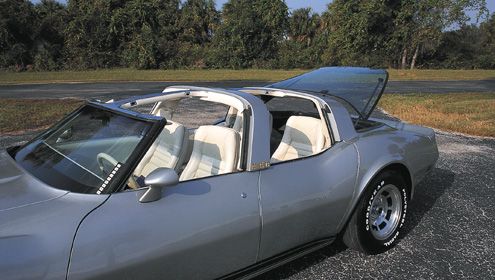
The very rare 1980 4-door Chevrolet Corvette

Back in 1980, California Custom Coachworks did a limited run of just five Chevrolet Corvette sedans for customers (a total of six were produced, one of them being a prototype). They took the stock body Corvettes, lengthened them by 30 inches, adding a significant 500-lb weight gain to the body. The result however was a very rare four-door Corvette that featured four seats and a very peculiar design.

corvette
corvette1

There is something just not right about this.

corvette2
corvette3

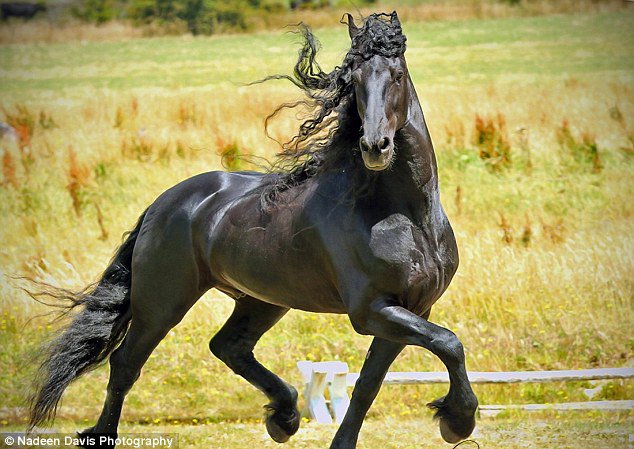
World Horse Population by Country

horse1

The United States has, by far, the most horses in the world — approximately 9.5 million, according to the 2006 Global Horse Population report from the Food and Agriculture Organization of the United Nations. It shows 58,372,106 horses in the world.

Nine other countries have horse populations of more than a million. They are: China (7,402,450), Mexico (6,260,000), Brazil (5,787,249), Argentina (3,655,000), Colombia (2,533,621), Mongolia (2,029,100), Ethiopia (1,655,383) Russian Federation (1,319,358) and Kazakhstsan (1,163,500). Guam (20) and Grenada (30) had the lowest totals.

Two countries, Rwanda and St. Helena, reported no horses.

A separate independent study by the American Horse Council (AHC) in 2005 (based on 2004 statistics) showed a U.S. horse population of 9,223,000, which would indicate that U.S. equine numbers rose by nearly 300,000 in just over a year.

Among U. S. states, the AHC report puts Texas in the lead with 978,822 horses, followed by California with 698,345, Florida with 500,124, Oklahoma with 326,134, Kentucky with 320,173, Ohio with 306,898 and Missouri with 281,255.

Rhode Island had the fewest horses, with 3,059, followed by the District of Columbia, reporting a fluctuating total of about 33.

The AHC says the horse industry has a direct impact of $39 billion on the U. S. economy and an overall impact of $102 billion when factoring in indirect and induced spending.

horse2
horse
horse3