The Ili pika (Ochotona iliensis) is a species of mammal in the family Ochotonidae, endemic to northwest China. After its discovery in 1983, it was not documented again until 2014. Its population is declining due to largely unknown causes, and it is currently considered to be endangered.
The Ili pika somewhat resembles a short-eared rabbit. It is large for a pika, with a length of 20.3–20.4 cm and a weight of up to 250 g. It has brightly colored hair and displays large rusty-red spots on forehead, crown, and the sides of the neck.
It is endemic to the Tian Shan mountains of northwest Chinese province Xinjiang. A recent census indicated that the Ili pika may have been extirpated from the Jilimalale and Hutubi South Mountains.
Almost nothing is known about the ecology or behavior of the species. The Ili pika has low population densities. It is mostly a diurnal species, but may exhibit nocturnal activity. Only one to two litters are produced each year, but litter size for this species is unknown.
Above photo has nothing to do with this story. Just wanted to use the pic.
In an incredible video from Ireland, a sleeping tiger at the Dublin Zoo had a ferocious reaction to being woken up by its fellow feline.The footage from a family’s visit to the zoo begins innocently enough, with a young girl mimicking a tiger as it comes prowling towards the glass.But when the tiger rouses its companion from a serene slumber, the scene becomes rather unsettling and the toddler reels back in terror as the two big cats prepare to do battle.Fortunately, it appears the tigers were able to work out their issues without resorting to violence, despite some tense moments when it appeared the conflict could get ugly.While the incident may have been a surprise to the little girl, for anyone who has ever been woken up by an annoying roommate, it probably looked all too familiar.
The founder of K-Tel died a few years ago in Winnipeg. Phil Kives started the company selling anything and everything. His big breakthrough was a non-stick frying pan. And this was just the beginning. In the 70’s and 80’s K-Tel sold everything from the pocket fisherman to the vegie-matic, the miracle brush to bionic glue. Any crazy and obscure product he could find out there, Phil would offer it to the world via TV advertising.
But K-Tel didn’t have all the crazy products. The list below has some products even more bizarre than K-Tel’s most outrageous contraptions.
Kush Support
The weight of one massive jug on top of the other has been plaguing big-breasted side sleepers for ages. Or so the makers of this item claim.
Fridge Locker
Contain your lunch and expose your OCD.
The Better Marriage Blanket
Protect yourself from deadly farts with “the same fabric used by the military to protect against chemical weapons.”
The Backup
A bedside gun rack so you can shoot an intruder without hesitating long enough to notice it’s just your girlfriend.
FIR-Real Portable Sauna
Leave a little bit of your ball sweat every place you visit with this traveling torture chamber.
The GoPilot Portable Urinal
This product for the prostate challenged was recently included in a Father’s Day Gift Guide … written by the worst son ever.
Gangnam Style Singing Toothbrush
Hear this maddening tune two times a day for two minutes straight and try not to kill yourself. It’s like Fear Factor.
The Tush Turner
A lazy Susan for your fat ass that’s guaranteed to make it even fatter.
The UroClub
Douse your friends in urine when you accidentally swing this pee-filled tube instead of your three iron.
The Fat Magnet
Suck the grease—and fun—out of every meal.
Hand Fitness Trainer
Type so hard you break the goddamn keys!
Bigfoot Garden Yeti
A sculpture that ensures a neighbor will never come knocking.
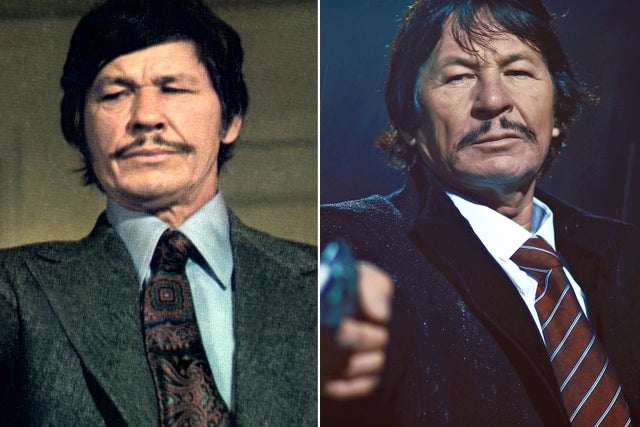
American actor Charles Bronson & the “Hungarian Charles Bronson”, actor Robert Bronzi.
Hungarian born performer Robert Bronzi is world traveled actor and professional horseman with a love for the wild west and classic American film. Bronzi has worked as a Carpenter, Horsetrainer, Musician and former Military Service Member. Professionally Trained Actor at Maria Mezey Theatre School (Budapest) as well as stuntman, acrobat and Judo Player. Robert speaks multiple languages including English, Spanish and Hungarian.
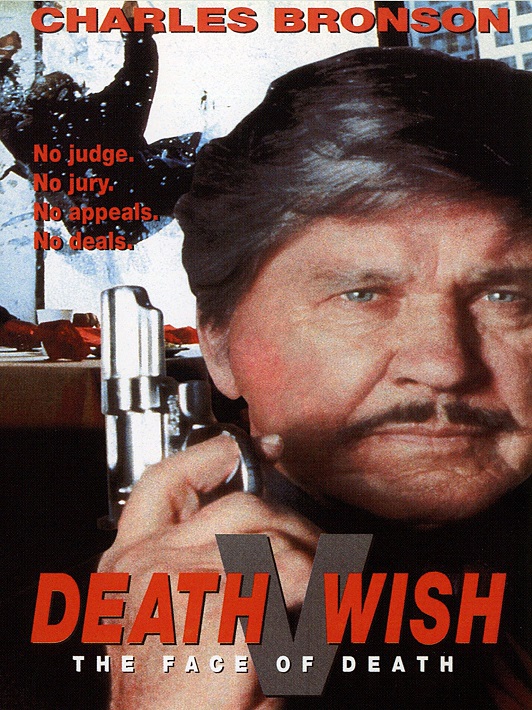
Charles Bronson was one of, if not the most, hardcore action stars ever. His gruff demeanor, no-nonsense delivery, and ruthless attitude inspired a whole generation of butt-kicking actors. Sadly, Bronson passed away in 2003, but a Hungarian actor is attempting to continue the late actor’s legacy. Of course, it doesn’t hurt that he happens to look exactly like the Death Wish star.
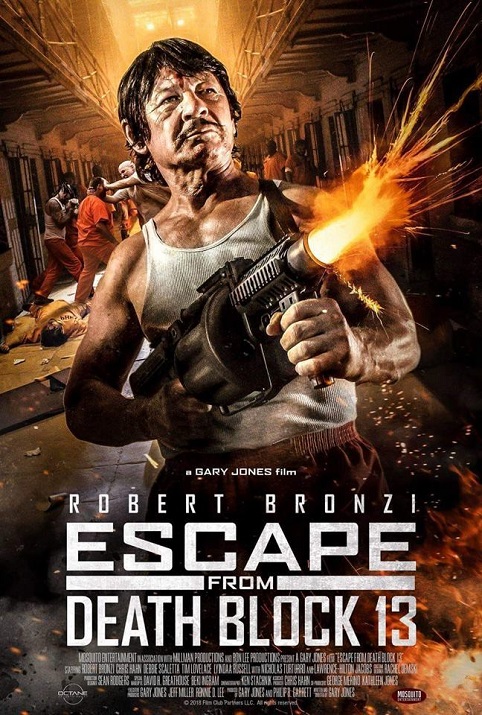
Robert Kovacs, AKA Robert Bronzi, made the leap from European Wild West stage shows to Hollywood after Puerto Rican film director Rene Perez spotted his photo on the wall of a bar in Spain and thought it was a still of Bronson from some mystery movie. Perez met with Bronzi and ended up bringing him to America to star in the 2017 horror western From Hell to the Wild West. Since then, Bronzi has appeared in a number of action films where the main selling point has been his uncanny likeness to Bronson. Last year there was the Death Wish-like revenge film Death Kiss and western Once Upon a Time in Deadwood, and up next he’ll star in the prison escape action Escape from Death Block 13.
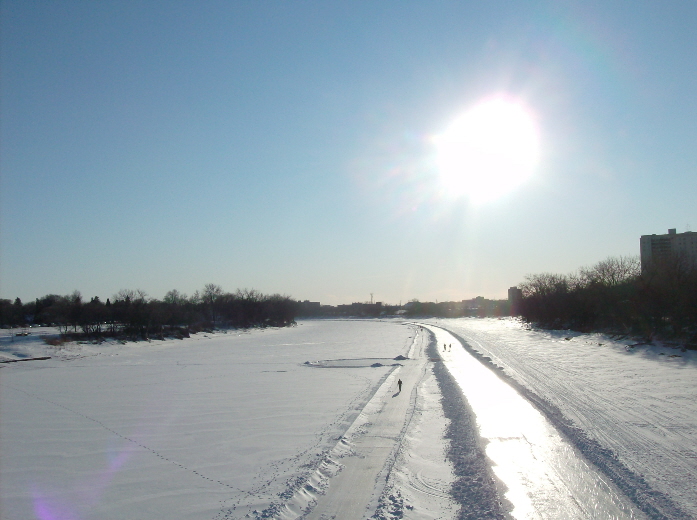
The sunny side is always so much better than the shaded side.
Seen the carnival at Rome Had the women, I had the booze All that I can remember now Is little kids without no shoes
So, I saw that train and I got on it With a heartful of hate and a lust for vomit Now I’m walking on the sunnyside of the street
Stepped over bodies in Bombay Tried to make it to the U.S.A. Ended up in Nepal Up on the roof with nothing at all And I knew that day I was going to stay right where I am On the sunnyside of the street
Been in a palace, been in a jail I just don’t want to be reborn a snail Just want to spend eternity right where I am On the sunnyside of the street
As my mother wept it was then I swore To take my life as I would a whore I know I’m better than before I will not be reconstructed
Just want to stay right here The sunnyside of the street The sunnyside of the street The sunnyside of the street The sunnyside of the street
Yang Kyoungjong (c. 1920 – April 7, 1992) was a Korean soldier who fought during World War II in the Imperial Japanese Army, the Soviet Red Army, and later the German Wehrmacht.
In 1938, at the age of 18, Yang was in Manchuria when he was conscripted into the Kwantung Army of the Imperial Japanese Army to fight against the Soviet Union. At the time Korea was ruled by Japan. During the Battles of Khalkhin Gol, he was captured by the Soviet Red Army and sent to a labour camp. Because of the manpower shortages faced by the Soviets in its fight against Nazi Germany, in 1942 he was pressed into fighting in the Red Army along with thousands of other prisoners, and was sent to the European eastern front.
In 1943, he was captured by Wehrmacht soldiers in Ukraine during the Third Battle of Kharkov, and was then pressed into fighting for Germany. Yang was sent to Occupied France to fight in a battalion of Soviet prisoners of war known as the “Eastern Battalion”, serving in a battalion located on the Cotentin peninsula in Normandy, located close to Utah Beach. After the D-Day landings in northern France by the Allied forces, Yang was captured by paratroopers of the United States Army in June 1944. The Americans initially believed him to be Japanese in German uniform, and he was placed in a prisoner-of-war camp in the United Kingdom. At the time, Lieutenant Robert Brewer of the 506th Parachute Infantry Regiment, 101st Airborne Division, reported that his regiment captured four Asians in German uniform after the Utah Beach landings, and that initially no one was able to communicate with them. Yang later emigrated from Russia to the United States, where he lived until he died in Illinois in 1992.
Yang Kyongjong (left) in Wehrmacht attire following capture by American paratroopers in June 1944 after D-Day__
Died
April 7, 1992 Illinois, United States
Allegiance
Empire of Japan Soviet Union Nazi Germany
Years of service
Imperial Japanese Army: 1938–1939 Soviet Red Army: 1942–1943 Wehrmacht: 1943–1944
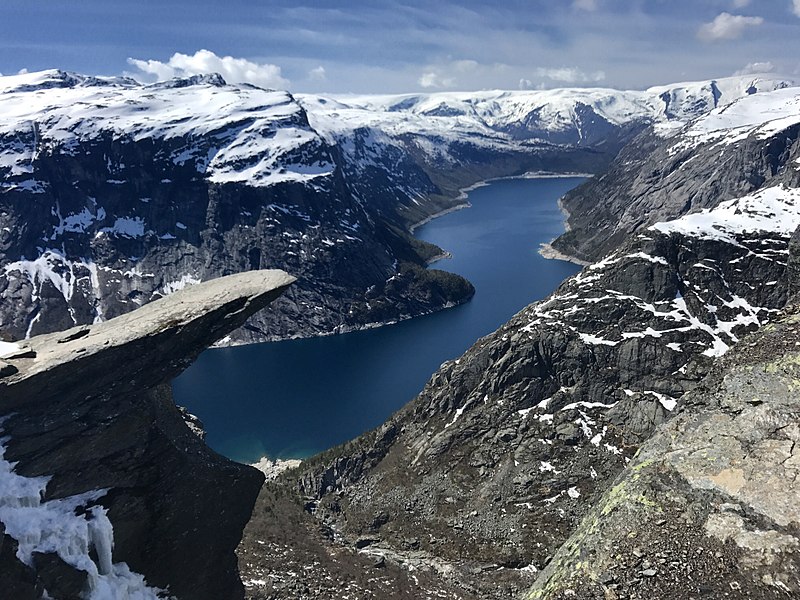
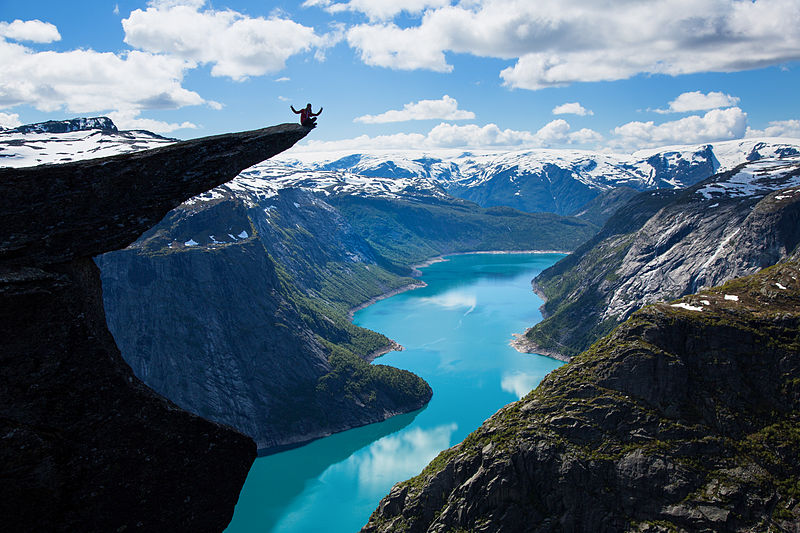
Trolltunga (“Troll tongue”) is a rock formation situated about 1,100 metres (3,600 ft) above sea level in Ullensvang Municipality in Vestland county, Norway. The cliff juts horizontally out from the mountain, about 700 metres (2,300 ft) above the north side of the lake Ringedalsvatnet.
Popularity of the hike to Trolltunga and rock formation itself has exploded in recent years. The increased popularity has turned Trolltunga into a national icon and a major tourist attraction for the region. Until 2010, fewer than 800 people hiked to Trolltunga each year. In 2016 more than 80,000 people hiked[3] the 27-kilometre (17 mi) round-trip from the village of Skjeggedal, making it one of Norway’s most popular hikes.
This is a very challenging hike, at least 10 hours on rough terrain. There are no shelters on the hike route and no places to buy supplies. However, there is a plan to build a lodge roughly halfway where hikers can rest.
Access
Trolltunga is located 17 kilometres (11 mi) from the town of Odda. The city of Bergen, is about 190 kilometres (120 mi) from the site via main roads.
The trailhead is located by a small parking area with toilet facilities at Skjeggedal, about 7 kilometres (4.3 mi) from Norwegian National Road 13 in Tyssedalen, near the dam at the end of Ringedalsvatnet. Parking costs 500 kr per day for the lower car park (approx. 62 USD or 52 EUR).
The hike from the parking area to Trolltunga and back again is a 27-kilometre (17 mi) round-trip distance with a 1,100-metre (3,600 ft) gain in elevation, and it takes approximately 10–12 hours, including breaks.
Near the parking area at Skjeggedal there is a funicular called Mågelibanen (it is not in operation). The trail to Trolltunga begins here, on the left side of the funicular. It is marked with red Ts painted in the terrain, and signs along the route that marks the distance left to Trolltunga and to the starting point at Skjeggedal.
For the first 1.5 kilometres (0.93 mi), up to the Måglitopp, the trail rises about 450 metres (1,480 ft). From here the track surfaces slightly out before it gets steep again, rising another 330 metres (1,080 ft) up from Gryteskaret to Trombåskåret. This section is the steepest part on this hike. But in recent years this section have been improved by Nepalese sherpas, making it easier to traverse.
After this 4-kilometre (2.5 mi) steep climb from the parking area, the next section slopes down towards Store Floren. The trail continues over Hesteflåene and the dried out river Endåno, before it gets steeper up to Endanuten and crosses the dried river to Tyssestrengene. From here the trail goes on past glacial potholes, then continues past Tysshøl, and finally approaches Trolltunga, about 13.5 kilometres (8.4 mi) from the starting point at Skjeggedal.
Safety
Thousands of tourists visit Trolltunga during the four summer months, a number which has greatly increased from 500 per year to 80,000 between 2009 and 2016. No safety railing has been constructed on the edge of the cliff so as not to harm the natural beauty of the cliff, although a few small metal hooks have been installed as footholds to climb down to the rock.
On 5 September 2015, a 24-year-old Australian woman fell to her death off Trolltunga. It is believed to be the first recorded death from a fall there.
There are widely publicised photos of people hanging off the cliff or doing a hand stand on it. Most often they are manipulated. The elite climber Magnus Midtbø suspended himself from Trolltunga wearing a safety harness, but a version where the rope was erased has been spread in media.
The approach to and retreat from Trolltunga is a demanding hike, and 10–12 hours are needed for the round trip. In later years there have been up to 40 rescue actions annually. Surprisingly not because of the dangerous cliff, but due to the demanding hike back to Tyssedal. People get lost in fog or get injured during the hike or don’t have the endurance for such a demanding hike.
It is planned to build a lodge halfway between Trolltunga and Tyssedal, which will provide accommodation for hikers en route from Trolltunga.
Personally I wouldn’t go anywhere near that ledge.


















 Empire of Japan
  Soviet Union
  Nazi Germany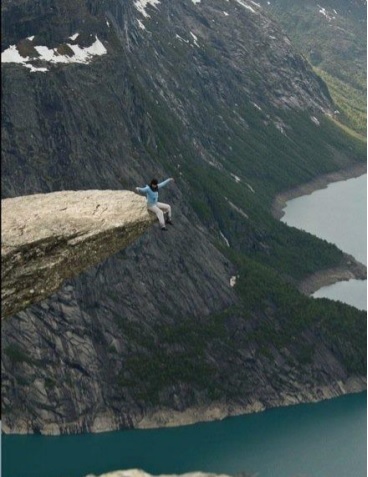

 The MarkoZen Blog