


BBC
BBC

To clarify. In the early Star Wars movies the Empire Storm Troopers couldn’t hit the broadside of a barn with their laser guns. Terrible shots.
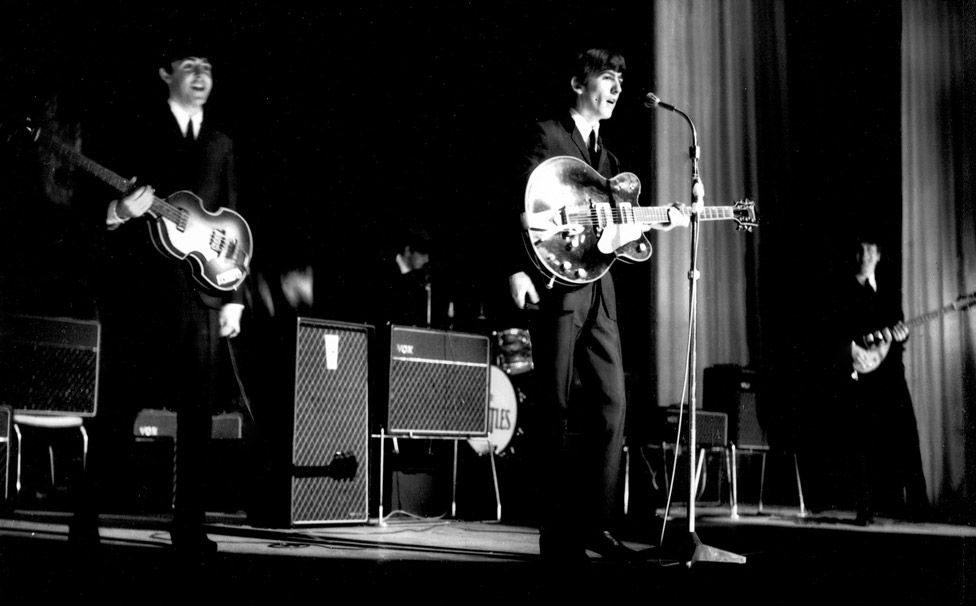
Photographer Ian Wright was just 18 when he captured The Beatles on stage on 22 November 1963. But the photos never made it into his newspaper because of an event half-way around the world.
The Beatles had just played their first set at the Stockton Globe to 2,400 screaming girls, and another 2,400 were making their way in for the night’s second performance when the frontman of the support band heard a newsflash on his transistor radio.
“He had a clapped-out trannie that was held together with chewing gum and elastic bands, and he used to tie the little aerial around one of his cymbal stands,” recalls Wright, who was hanging around backstage.
“He was tuning in to Radio Luxembourg to find out who was in the top 10. All of a sudden there was a crash. He’d dropped the cymbals. He came out and looked completely gaunt and ashen. He mumbled something but you couldn’t grasp what he was saying.
“And then he composed himself and he said, ‘It’s just been on Radio Luxembourg. The president of the United States of America has been assassinated.’
“It was surreal. The place just went silent.”
Wright’s paper the Northern Echo, under the direction of legendary editor Harold Evans, immediately turned out a special edition that went on a fleet of lorries to London in an attempt to beat the national titles to the following morning’s commuter trade.
The day of the gig also saw the release of The Beatles’ second album With The Beatles, but the paper’s exclusive story about the world record 350,000 advance orders went by the wayside, as did Wright’s photos from that night – which remained unpublished for almost half a century.
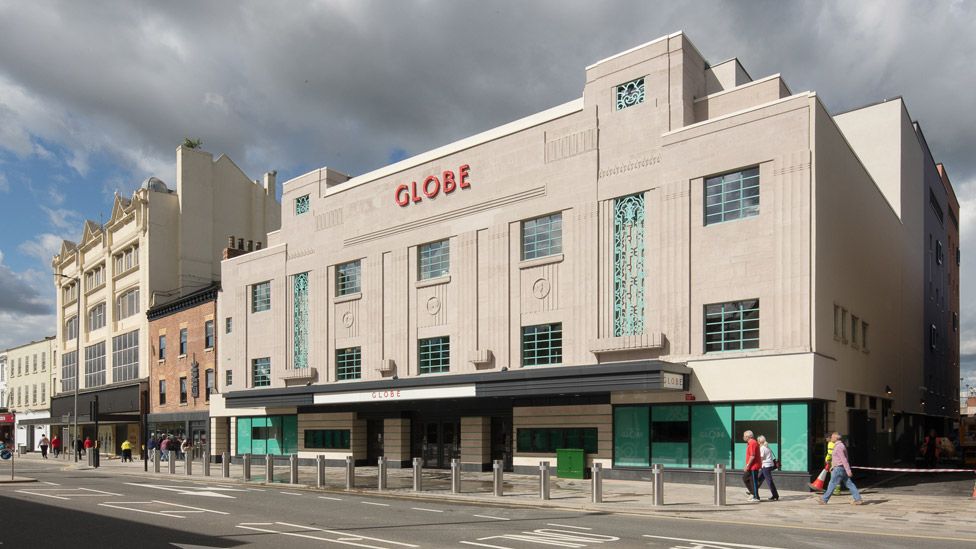
The Stockton-on-Tees venue shut in 1975 and did not operate as a music venue for almost half a century, until it reopened after a £28m renovation (delayed and way over budget) earlier this month.
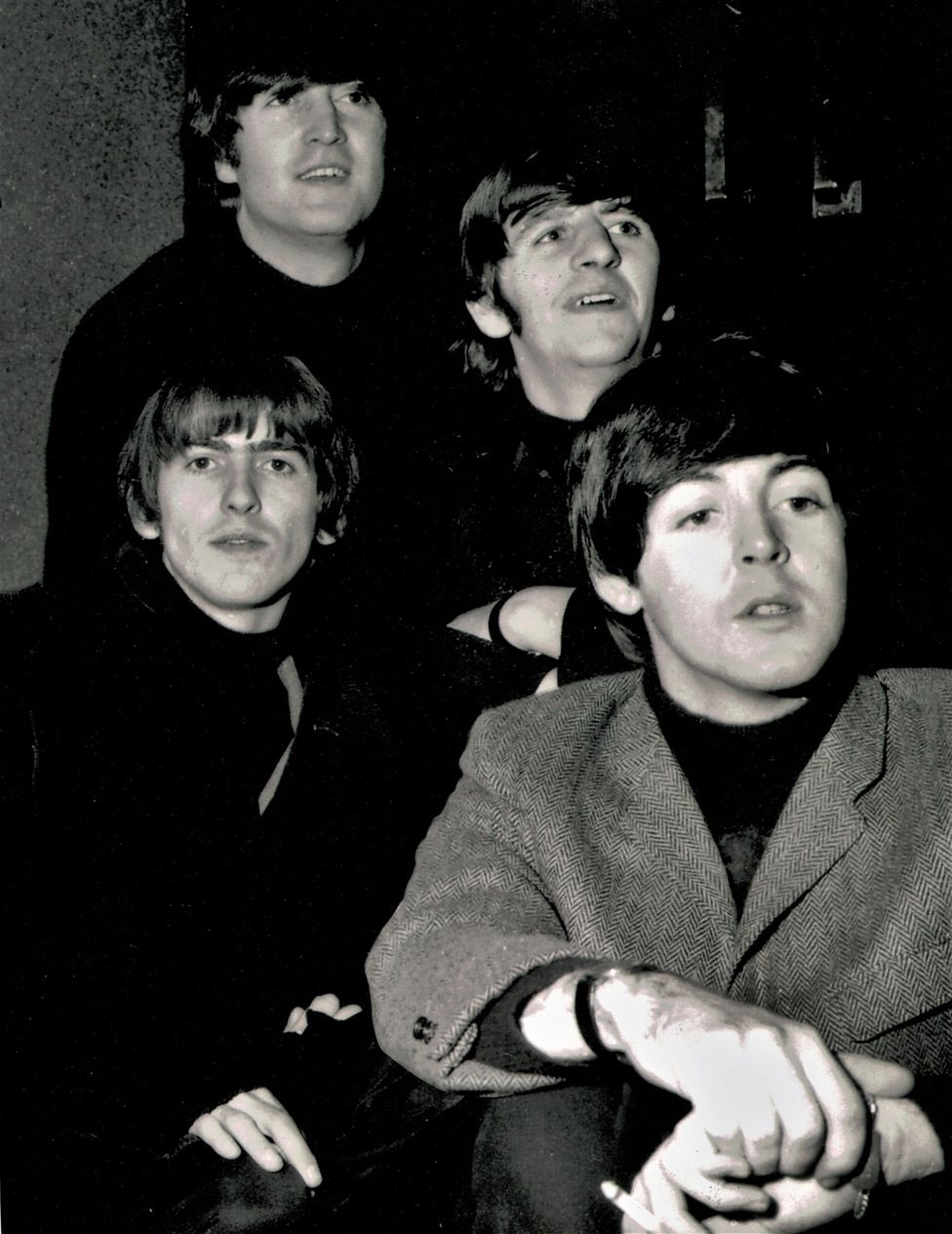
Wright’s photos of The Beatles and other iconic artists who performed there in the 60s, many of which have never been seen, have now gone on permanent display at the venue, as well as being included in a new book.
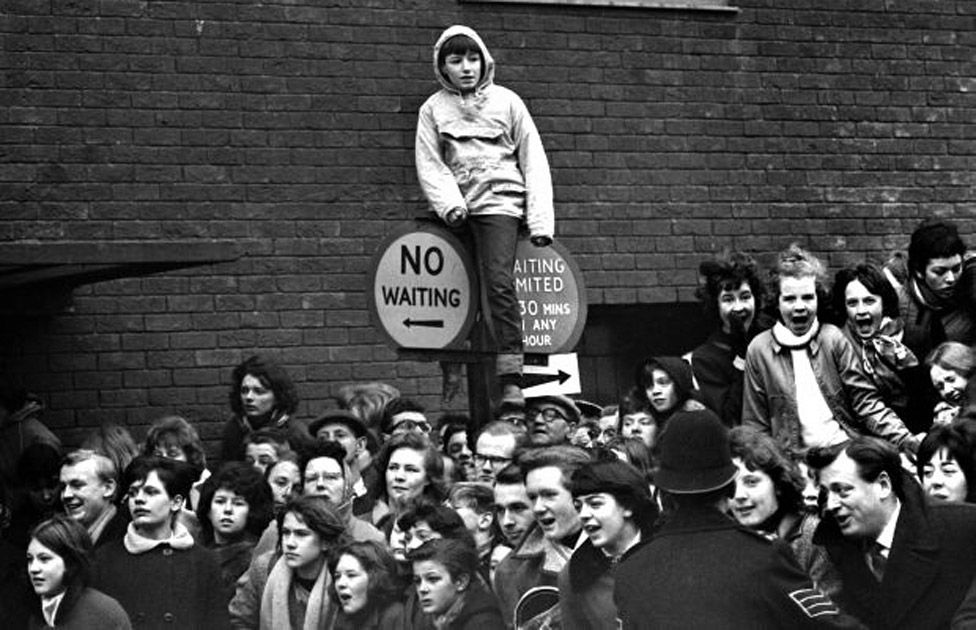
Wright got to know the bands while hanging out at venues including the Globe, taking photos from the orchestra pit.
“McCartney said, ‘What do you hear down there?'” Wright says. “I said, ‘It’s very surreal because it’s like a seashell. If I turn this way, I can hear you perfectly on stage. If I go the other way, all I can hear is a cacophony of screaming girls wetting their knickers.'”
As well as the crowds inside the venue, thousands more blocked the high street outside.
When the news began to spread about US President John F Kennedy’s assassination in Dallas, Texas, there was an eerie atmosphere, Wright says.
“When we went out into the streets, it was sheer silence. You could hear a pin drop. Many young girls were hugging each other and consoling each other. Nobody knew what to do next.
“Over the road was the parish church, and somehow the dean managed to pull all his campanologists together, and all of a sudden the bells started to toll. It was absolutely incredible. And then slowly…” He imitates the crowd’s spontaneous applause. “That’s what happened.”
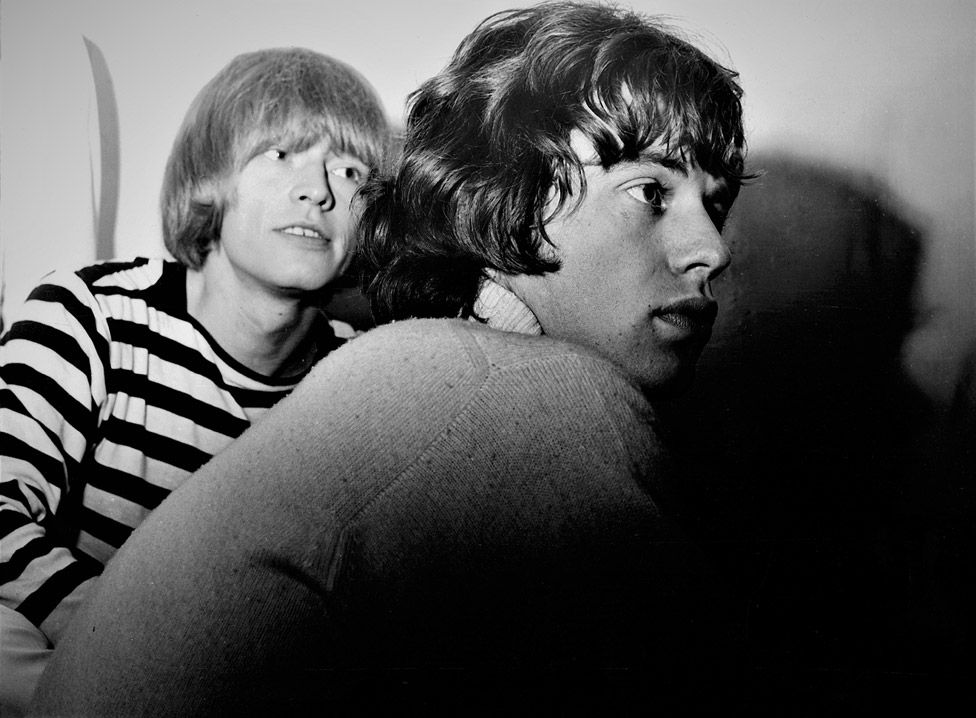
Nevertheless, The Beatles’ second performance of the night went ahead as planned, and Wright photographed them again when they returned the following year.
One year after that, the Stones visited the County Durham town – and this time there was a very different atmosphere.
“There was a feeling of menace in the air. Something was going to happen, you knew it,” Wright recalls.
“I hadn’t been there more than about two songs into the Rolling Stones set when all of a sudden a nine-inch spanner whistled past my head, landed on the stage, pinged off the cover of a footlight and hit Charlie Watts’ drums.
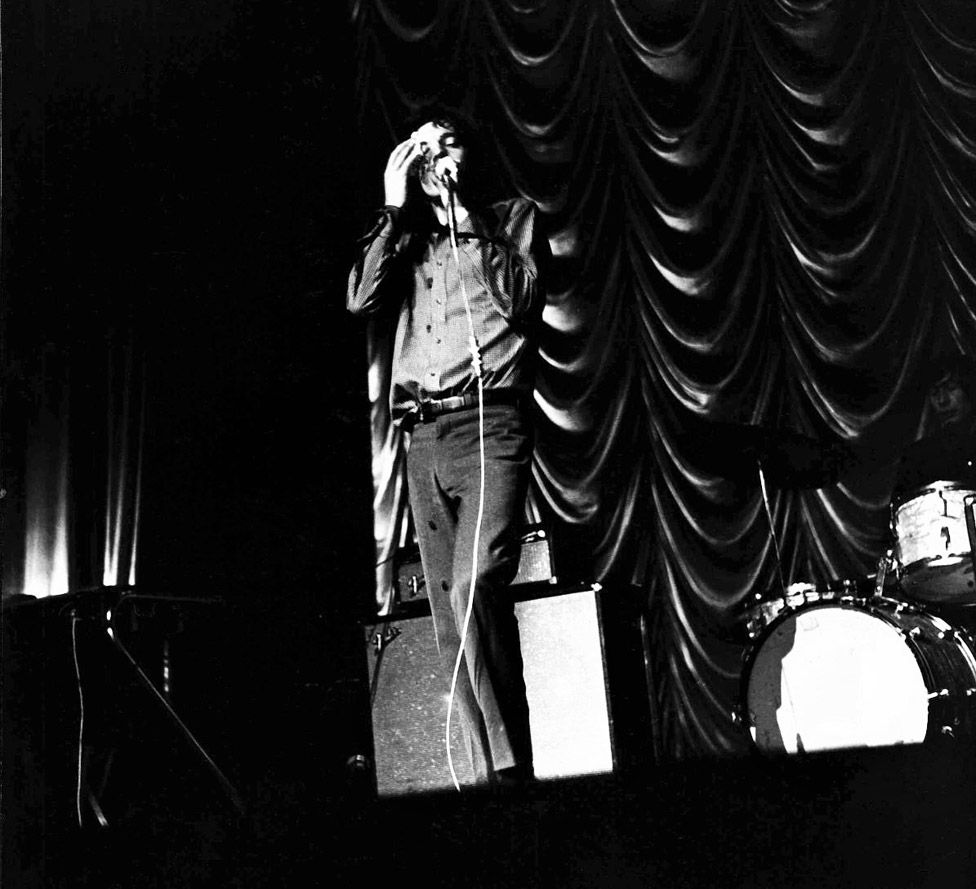
“The next thing, all of a sudden [Mick] Jagger jumped, span in the air and had his back to the audience. He carried on singing and all the time he was fumbling in his pocket. He brought out this crisp handkerchief and then turned to the audience, and there’s blood pouring down his face.
“It’s on his shirt, it’s down his trousers, it’s on his shoes. He finished the song, and he walked off. And they brought down the curtain.”
Rolling Stones gigs were occasionally marred by violence, and the singer had been hit by a sharpened coin thrown by Teddy Boys in the crowd, according to the photographer. “This one was half an inch above his eye, otherwise he’d have been blinded.”
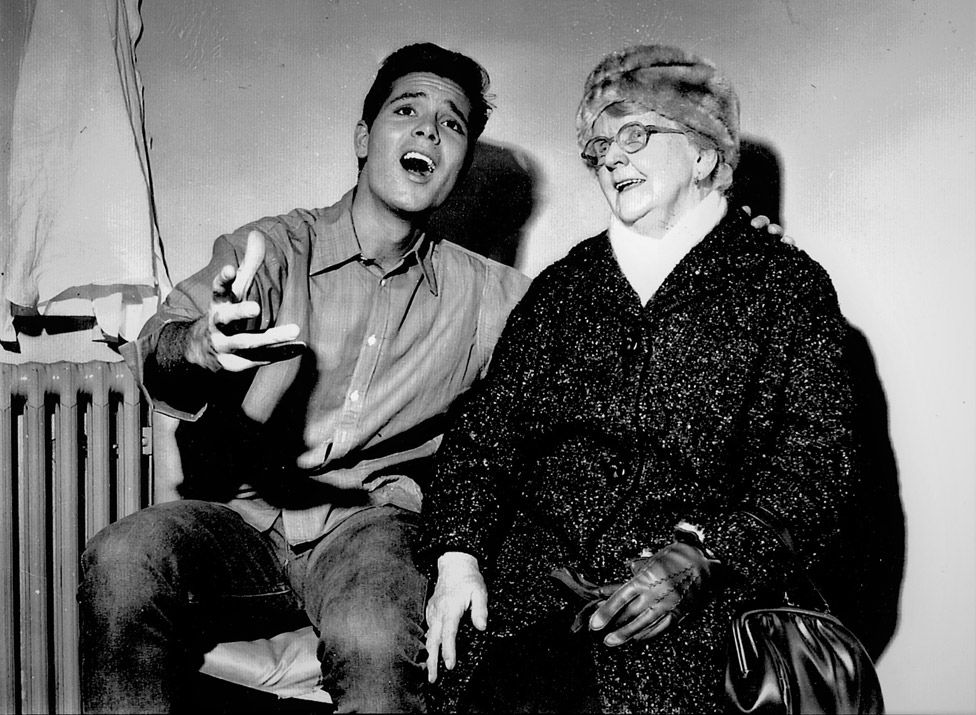
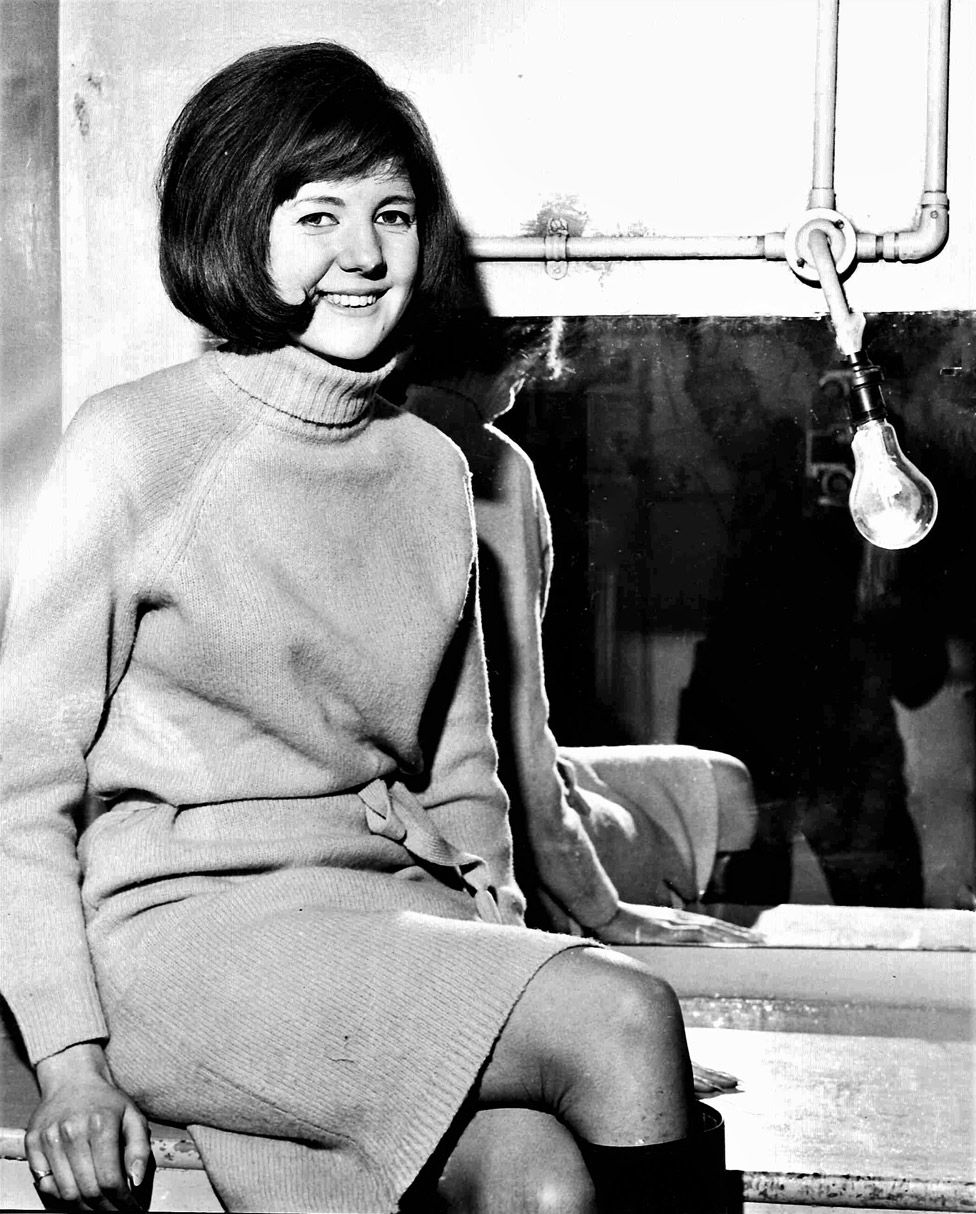
Wright also captured stars like Cliff Richard, Cilla Black, Roy Orbison and Ike and Tina Turner on stage and in their dressing rooms.
Many of those photos can now be seen on the walls of the venue, which reopened with a McFly concert on 6 September.
Wright, now 76, returned on Tuesday to give a talk about his memories – and says he was transported back to that night when The Beatles came to town.
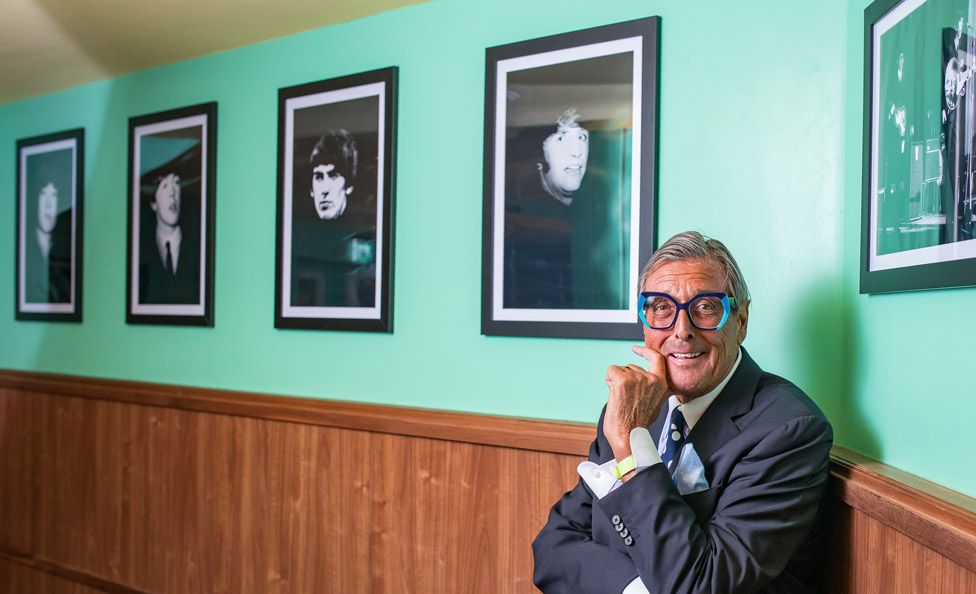
“We were doing a run-through and they put the photographs up on the screen, and they put The Beatles on the sound system, and I said, ‘This is where I was standing when I took this photograph.’
“And all of a sudden, when the picture came up, the whole atmosphere in the theatre went cold, it went tingly, and everybody stopped. It was dead quiet. They were like spirits.”
BBC
T.G. Hamilton was one of Winnipeg’s stranger characters to say the least. He held many seances in his Henderson Hwy home. It is near Hespeler. Sherlock Holmes author Sir Arthur Conan Doyle made a visit to the house in the early part of the century.
Below are some pictures taken at the house of ectoplasm. To me it looks like early photo-shop.
Thomas Glendenning Hamilton (November 27, 1873 – April 7, 1935) was a Canadian doctor, school board trustee and member of the Manitoba legislature. He is best known however for the thousands of photographs he took during séances held in his home in Winnipeg in the early 1900s. His wife, Lillian May Hamilton, and his daughter, Margaret Hamilton Bach, were co-researchers and continued this enquiry into life after death after he died.
Ectoplasm is a term coined by Charles Richet to denote a substance or spiritual energy “exteriorized” by physical mediums. Ectoplasm is said to be associated with the formation of ghosts, and asserted to be an enabling factor in psychokinesis.


At first T.G. and Lillian’s investigations into the paranormal were held in secret. But T.G. went public in 1926, delivering a lecture on his research on telekinesis to the Winnipeg Medical Society. From that time until his death, Hamilton delivered eighty-six lectures and wrote numerous articles published in Canada and abroad. His fame spread and the Hamilton family’s work became known in the United Kingdom, Europe and the United States. Canadian Prime Minister William Lyon Mackenzie King and Americans Mina Crandon, the medium known as “Margery,” and her husband L.R.G. Crandon, all travelled to Winnipeg to participate in the Hamiltons’ séances. Among those who worked with Dr Hamilton were Ada Turner and her adopted son Harold Turner. Harold or “Norman” as he is called in the Hamilton records was interviewed by Norman James Williamson about his experience with the Hamilton group in 1982. When Sir Arthur Conan Doyle, author of the Sherlock Holmes series, came to Winnipeg as part of a cross North American tour in 1923, he attended one of the Hamiltons’ home circles. Even after his death, the Hamiltons tried to contact Conan Doyle by mediumship. In 1935, T.G. Hamilton died suddenly of a heart attack. His wife Lillian and his daughter Margaret continued his work. Lillian and her son James Drummond produced a summary of T.G.’s work in the book Intention and Survival, published in 1942. When Lillian died in 1956, her daughter Margaret carried on. She wrote a series of articles in 1957 for Psychic News in England. These thirteen articles were collected in a booklet and also circulated to daily papers throughout Canada. Margaret later produced a second edition of Intention and Survival in 1977; a third edition came out in 1980.
Super cool pic of a young lion cub with Mom.

Dirty Harry can now upgrade to a bigger handgun. The .44 Magnum that Harry used was very powerful. It could take down a punk rapist at 150 meters and if it hit the punk in the head, it would take it clean off. Even if it winged a slimy street robber it would take out such a big chunk, that the robber punk would be neutralized.


But now there is a bigger cannon on the block. The Model 500 from Smith & Wesson is the biggest, heaviest, most powerful factory-production double-action revolver in the world. It’s built on an entirely new and massive S&W frame size. It fires the new .500 S&W Magnum cartridge, which is the most powerful factory load ever developed specifically for handgun use. The gun and the cartridge are both impressive product accomplishments, beyond the industry norm, and both moved together from concept to reality in less than a year.
This gun is 34 percent more powerful than the .44 Magnum. If Dirty Harry used this weapon he could take down a rogue elephant at 200 meters. Or splatter bad boy punk street slime all over the side of a building at 250 meters. This bazooka fires a 50 caliber cartridge. The .500 Magnum would very definitely make Dirty Harry’s day.


The .500 Magnum (top) compared to the .44 Magnum.

Up on a plateau in the remote highlands of northeast Turkey, 45 km away from the Turkish border city of Kars, lies the crumbling ruins of some forty-odd churches, chapels and mausoleums. This area was once a glorious walled city called Ani belonging to the Armenian Kamsarakan Dynasty, who established base here in the 5th century. As the city grew in size, power and wealth, it became an important trading hub, and by the 11th century, the city boasted more than 100,000 citizens. During its heydays, it was known as “the City of Forty Gates” and sometimes “the City of a Thousand And One Churches.”
Ani’s golden age of wealth, peace and prosperity came to an end with the death of the Armenia ruler King Gagik I, after which the city gave way to a string of invaders starting with the Byzantines, followed by a ruthless massacre by the Turks, the Kurds, the Georgians, and then the Mongols who left the city devastated in 1236. Although Ani continued to exist for another six centuries it was little more than a small town. By the time the Europeans discovered Ani, it lay abandoned for nearly a century with great heaps of stones for former buildings. Ani’s most visible monuments today are the dozens of half standing churches.
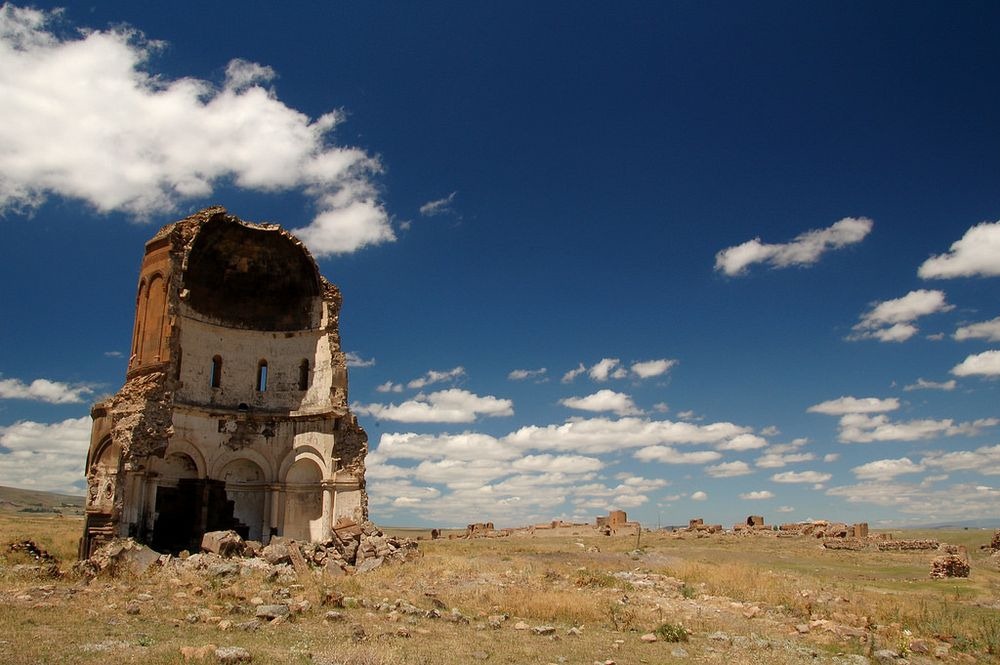
The Church of the Redeemer, completed shortly after the year 1035. It had a unique design: 19-sided externally, 8-apsed internally, with a huge central dome set upon a tall drum. The church was largely intact until 1955, when the entire eastern half collapsed during a storm.


The Cathedral of Ani, built in 989.

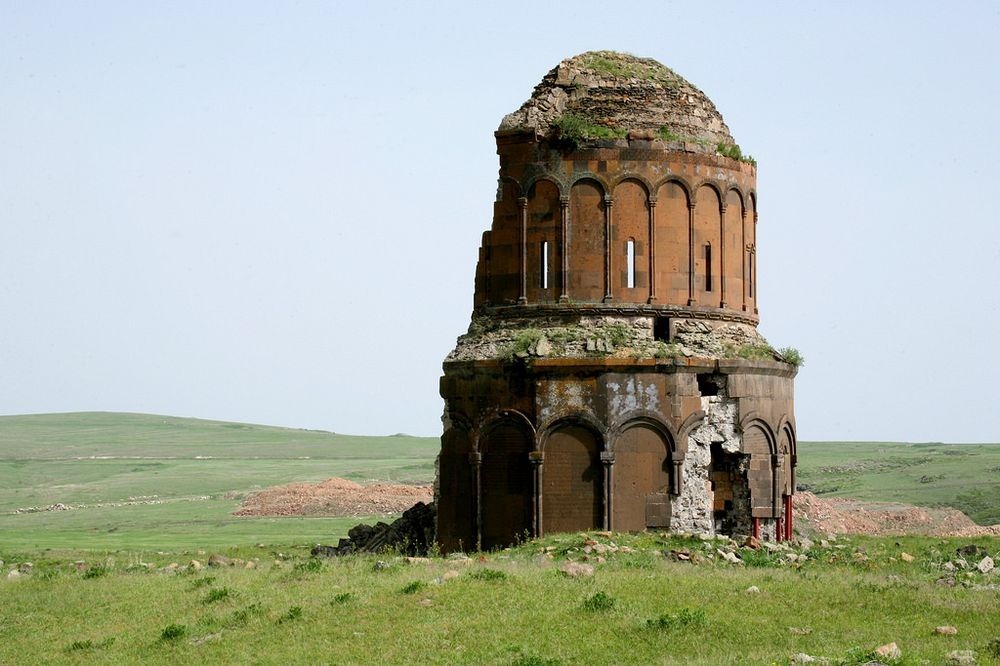
The Church of the Redeemer.

The walls of Ani.

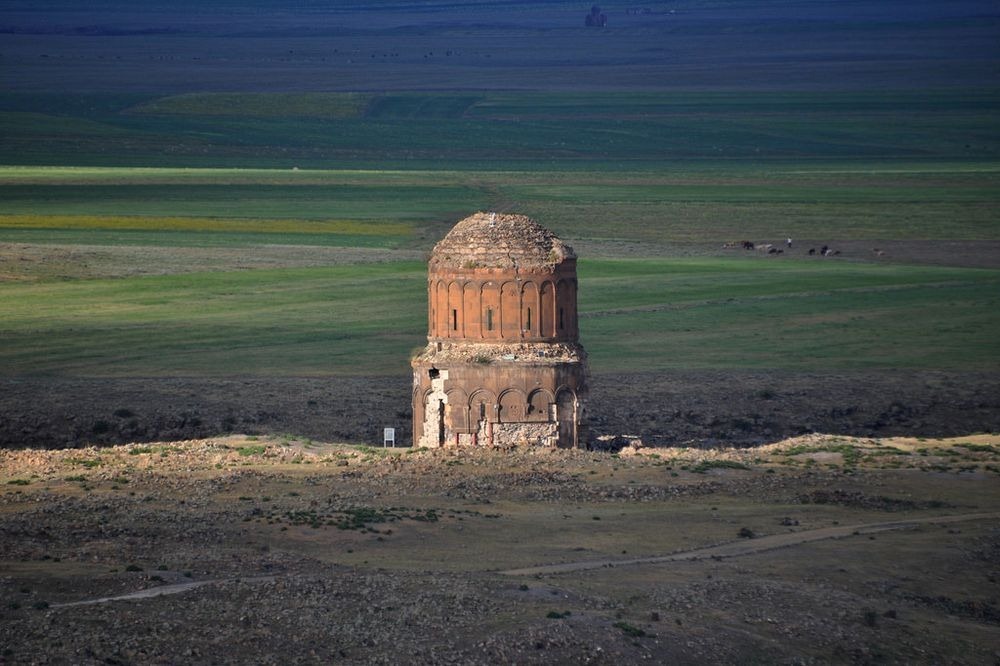


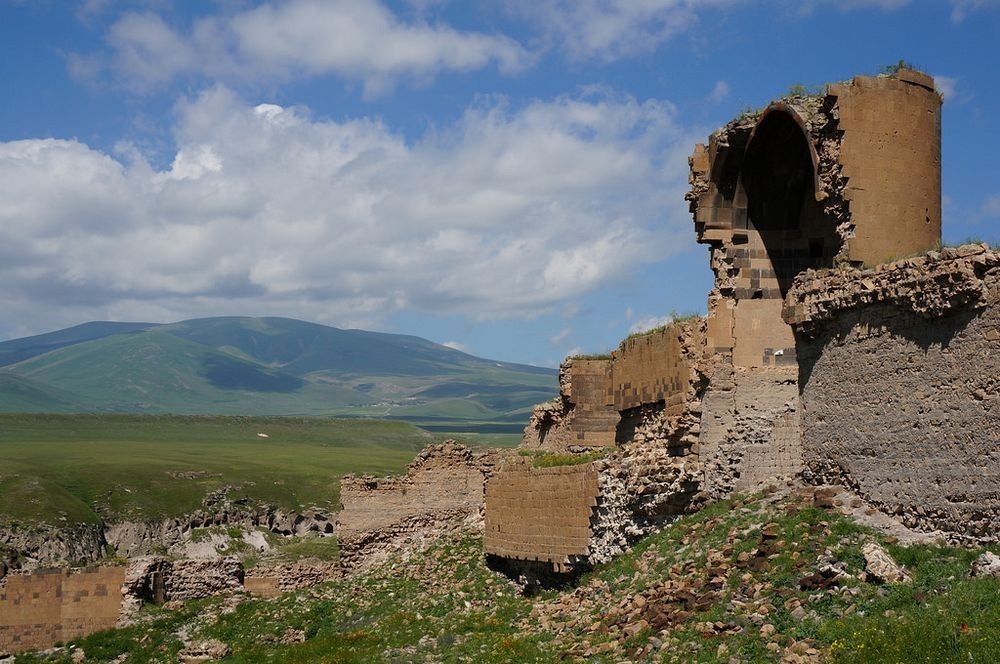
The walls of Ani.


The Monastery of the Hripsimian Virgins, by the Akhurian River.
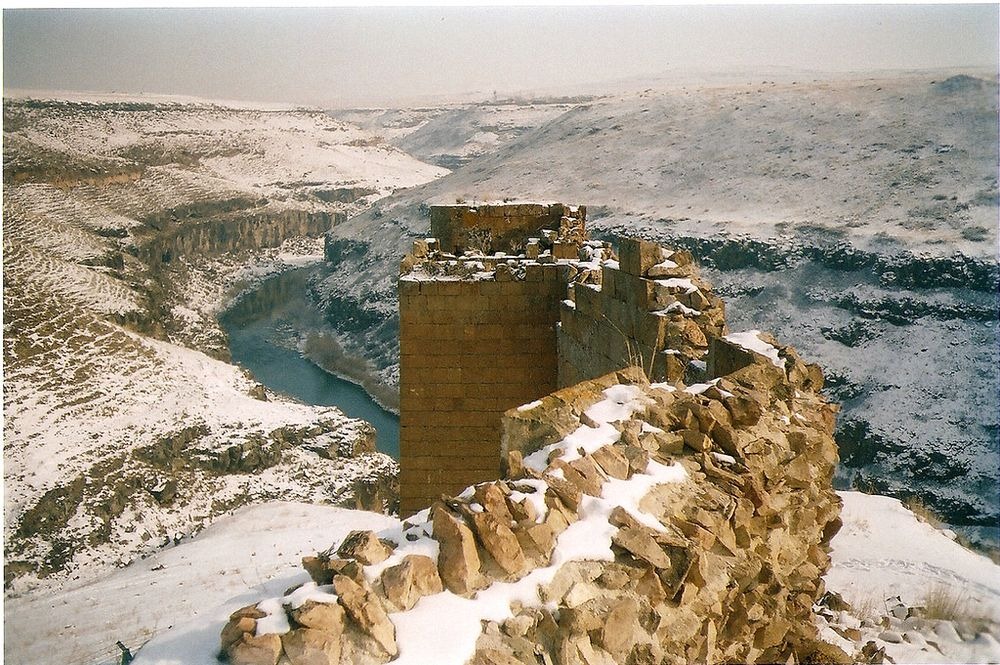
The walls of Ani.
The M65 atomic cannon, often called “Atomic Annie“, was a towed artillery piece built by the United States and capable of firing a nuclear device. It was developed in the early 1950s, at the beginning of the Cold War, and fielded, by 1953, in Europe and Korea.
Picatinny Arsenal was tasked to create a nuclear capable artillery piece in 1949. Robert Schwartz, the engineer who created the preliminary designs, essentially scaled up the 240mm shell (then the maximum in the arsenal) and used the German K5 railroad gun as a point of departure for the carriage. (The name “Atomic Annie” likely derives from the nickname “Anzio Annie” given to a German K5 gun which was employed against the American landings in Italy.) The design was approved by the Pentagon, largely through the intervention of Samuel Feltman, chief of the ballistics section of the ordnance department’s research and development division. A three-year developmental effort followed. The project proceeded quickly enough to produce a demonstration model to participate in Dwight Eisenhower’s inaugural parade in January 1953.
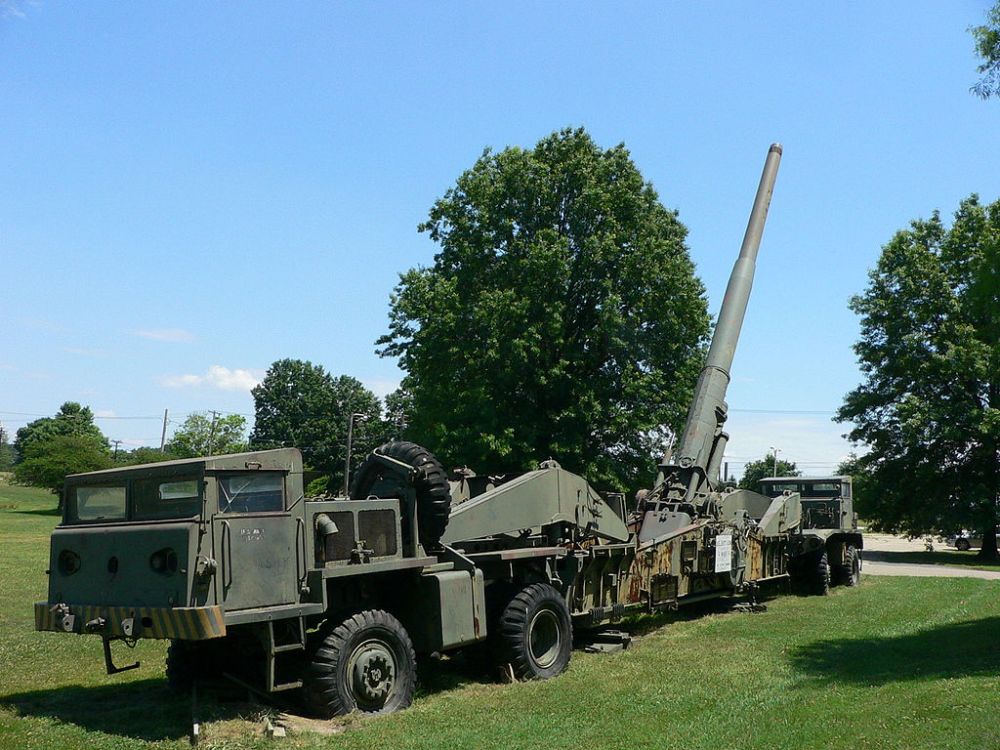
The cannon was transported by two specially designed tractors, both capable of independent steering in the manner of some extra-long fire engines. Each of the tractors was rated at 375 hp, and the somewhat awkward combination could achieve speeds of 35 miles an hour and negotiate right angle turns on 28 ft wide, paved or packed roads. The artillery piece could be unlimbered in 15 minutes, then returned to traveling configuration in another 15 minutes.
On May 25, 1953 at 8:30am, the atomic cannon was tested at the Nevada Test Site (specifically Frenchman Flat) as part of the Upshot-Knothole series of nuclear tests. The test — codenamed “Grable” — was attended by the Chairman of the Joint Chiefs of Staff, Admiral Arthur W. Radford and Secretary of Defense Charles Erwin Wilson; it resulted in the successful detonation of a 15 kt shell (W9 warhead) at a range of seven miles. This was the first and only nuclear shell to be fired from a cannon (the Little Feller 1 test shot of an M388 used a Davy Crockett weapon system which was a recoilless smooth bore gun firing the warhead mounted on the end of a spigot inserted in the barrel of the weapon.)
After the successful test, there were at least 20 of the cannons manufactured at Watervliet and Watertown Arsenals, at a cost of $800,000 each. They were deployed overseas to Europe and Korea, often continuously shifted around to avoid being detected and targeted by opposing forces. Due to the size of the apparatus, their limited range, the development of nuclear shells compatible with existing artillery pieces (the W48 for the 155mm and the W33 for the 203mm), and the development of rocket and missile based nuclear artillery, the M65 was effectively obsolete soon after it was deployed. However, it remained a prestige weapon and was not retired until 1963.

The kind of monstrous weapons the Cold War spurned is mind boggling.

 The MarkoZen Blog