The finicky felines can get a little rattled on the first car ride, but most of them settle in and enjoy the outing.


There is a big world out there!


Buckled up

King of the road

The finicky felines can get a little rattled on the first car ride, but most of them settle in and enjoy the outing.
There is a big world out there!
Buckled up
King of the road
This list of the largest optical reflecting telescopes with objective diameters of 3.0 metres (120 in) or greater is sorted by aperture, which is one limit on the light-gathering power and resolution of a reflecting telescope’s optical assembly.
1.
The Gran Telescopio Canarias (GranTeCan or GTC), also known as the Great Canary Telescope is a 10.4 m (410 in) reflecting telescope located at the Roque de los Muchachos Observatory on the island of La Palma, in the Canaries, Spain.
Construction of the telescope, sited on a volcanic peak 2,267 metres (7,438 ft) above sea level, took seven years and cost €130 million (£112 million). Its installation had been hampered by weather conditions and the logistical difficulties of transporting equipment to such a remote location. First light was achieved in 2007 and scientific observations began in 2009.
The GTC Project is a partnership formed by several institutions from Spain and Mexico, the University of Florida, the Universidad Nacional Autónoma de México and the Instituto de Astrofísica de Canarias (IAC). Planning for the construction of the telescope, which started in 1987, involved more than 1,000 people from 100 companies.
As of 2015, it is the world’s largest single-aperture optical telescope. The distribution of the availability of time to use the telescope meets its financial structure: 90% Spain, 5% Mexico and 5% the University of Florida.

2.
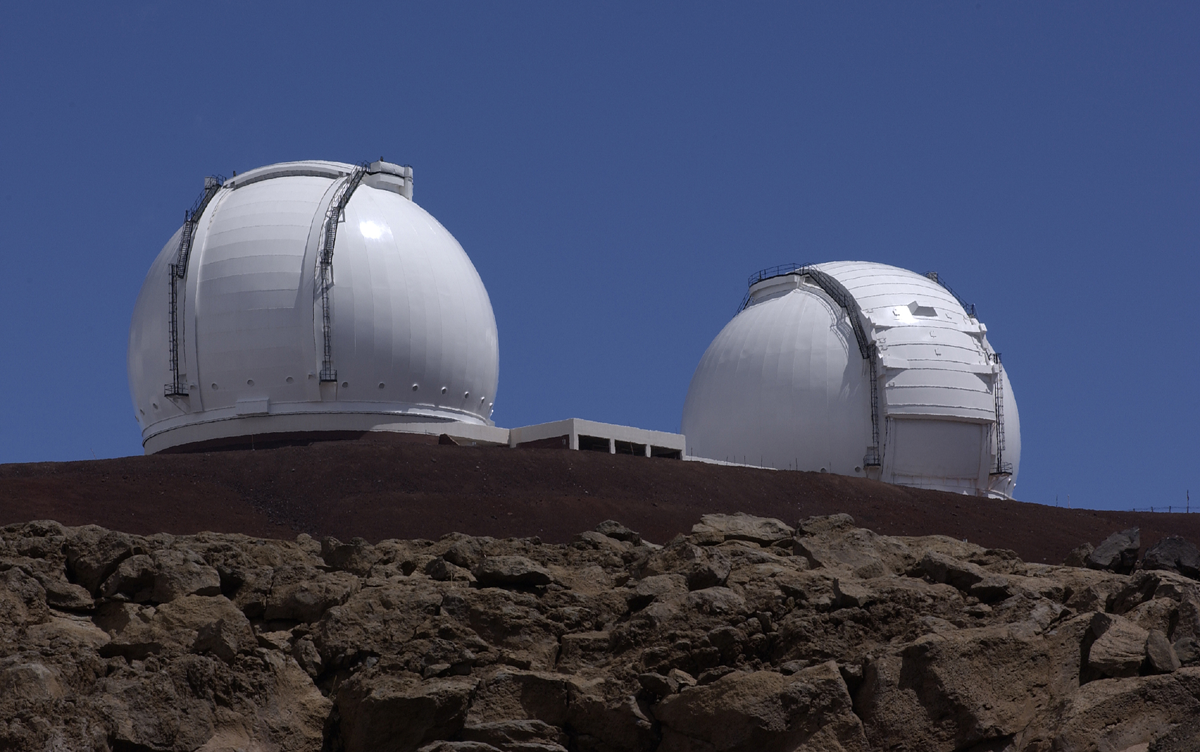
The W. M. Keck Observatory is a two-telescope astronomical observatory at an elevation of 4,145 meters (13,600 ft) near the summit of Mauna Kea in the U.S. state of Hawaii. Both telescopes feature 10 m (33 ft) primary mirrors, currently among the largest astronomical telescopes in use. The combination of an excellent site, large optics and innovative instruments has created the two most scientifically productive telescopes on Earth.
3.
The Southern African Large Telescope (SALT) is a 10-metre class optical telescope designed mainly for spectroscopy. It consists of 91 hexagonal mirror segments each with a 1 metre inscribed diameter, resulting in a total hexagonal mirror of 11.1 m by 9.8 m. It is located close to the town of Sutherland in the semi-desert region of the Karoo, South Africa. It is a facility of the South African Astronomical Observatory, the national optical observatory of South Africa.

4.
The Hobby–Eberly Telescope (HET) is a 9.2-meter (30-foot) aperture telescope located at the McDonald Observatory. It is one of the largest optical telescopes in the world and combines a number of features that differentiate it from most telescope designs, resulting in greatly lowered construction costs. For instance, the primary mirror is constructed from 91 hexagonal segments, which is less expensive than manufacturing a single large primary. Furthermore, the telescope’s main mirror is fixed at a 55° angle and can rotate around its base. A target is tracked by moving the instruments at the focus of the telescope; this provides access to about 70–81% of the sky at its location and allows a single target to be tracked for up to two hours.
The Hobby–Eberly Telescope is operated by The University of Texas McDonald Observatory for a consortium of institutions which includes The University of Texas at Austin, Pennsylvania State University, Stanford University, Ludwig Maximilians University of Munich, and Georg August University of Gottingen.

5.
The Large Binocular Telescope (LBT) is an optical telescope for astronomy located on Mount Graham (10,700-foot (3,300 m) in the Pinaleno Mountains of southeastern Arizona, and is a part of the Mount Graham International Observatory. The LBT is currently one of the world’s most advanced optical telescopes; using two 8.4 m (27 ft) wide mirrors, with a 14.4 m center-center separation, it has the same light gathering ability as an 11.8 m (39 ft) wide single circular telescope and detail of a 22.8 m (75 ft) wide one. Either of its mirrors would be the second-largest optical telescope in continental North America, behind the Hobby–Eberly Telescope in West Texas; as of summer 2014, it would still be the largest monolithic, or non-segmented mirror, in an optical telescope. Optical performance of the telescope is excellent, and Strehl ratios of 60–90% in the infrared H band and 95% in the infrared M band have been achieved by the LBT.
The LBT was originally named the “Columbus Project”. It is a joint project of these members: the Italian astronomical community represented by the Istituto Nazionale di Astrofisica, the University of Arizona; University of Minnesota, University of Notre Dame, University of Virginia, the LBT Beteiligungsgesellschaft in Germany (Max Planck Institute for Astronomy in Heidelberg, Landessternwarte in Heidelberg, Leibniz Institute for Astrophysics Potsdam (AIP), Max Planck Institute for Extraterrestrial Physics in Munich and Max Planck Institute for Radio Astronomy in Bonn); The Ohio State University; Research Corporation in Tucson.

6.
Subaru Telescope is the 8.2 metre flagship telescope of the National Astronomical Observatory of Japan, located at the Mauna Kea Observatory on Hawaii. It is named after the open star cluster known in English as the Pleiades. It had the largest monolithic primary mirror in the world from its commission until 2005.
In 1984, the University of Tokyo formed an engineering working group to study the concept of a 7.5-metre telescope. In 1985, the astronomy committee of Japan’s science council gave top priority to the development of a “Japan National Large Telescope” (JNLT), and in 1986, the University of Tokyo signed an agreement with the University of Hawaii to build the telescope in Hawaii. In 1988, the National Astronomical Observatory of Japan was formed through a reorganization of the University’s Tokyo Astronomical Observatory, to oversee the JNLT and other large national astronomy projects.

7.
The Very Large Telescope (VLT) is a telescope operated by the European Southern Observatory on Cerro Paranal in the Atacama Desert of northern Chile. The VLT consists of four individual telescopes, each with a primary mirror 8.2 m across, which are generally used separately but can be used together to achieve very high angular resolution. The four separate optical telescopes are known as Antu, Kueyen, Melipal and Yepun, which are all words for astronomical objects in the Mapuche language. The telescopes form an array which is complemented by four movable Auxiliary Telescopes (ATs) of 1.8 m aperture.
The VLT operates at visible and infrared wavelengths. Each individual telescope can detect objects roughly four billion times fainter than can be detected with the naked eye, and when all the telescopes are combined, the facility can achieve an angular resolution of about 0.001 arc-second (This is equivalent to roughly 2 meters resolution at the distance of the Moon). In single telescope mode of operation angular resolution is about 0.05 arc-second.
The VLT is the most productive ground-based facility for astronomy, with only the Hubble Space Telescope generating more scientific papers among facilities operating at visible wavelengths. Among the pioneering observations carried out using the VLT are the first direct image of an exoplanet, the tracking of individual stars moving around the supermassive black hole at the centre of the Milky Way, and observations of the afterglow of the furthest known gamma-ray burst.

8.
The Gemini Observatory is an astronomical observatory consisting of two 8.19-metre (26.9 ft) telescopes, the Gemini North and Gemini South at different sites in Hawaii and Chile, respectively. Together, the twin Gemini telescopes provide almost complete coverage of both the northern and southern skies. They are currently among the largest and most advanced optical/infrared telescopes available to astronomers.
The Gemini telescopes were built and are operated by a consortium consisting of the United States, Canada, Chile, Brazil, Argentina, and Australia. This partnership is managed by the Association of Universities for Research in Astronomy (AURA). The United Kingdom dropped out of the partnership at the end of 2012 and the Gemini Observatory has responded to this by significantly reducing its operating costs, so that no new partners are required beginning in 2013.

9.
The Magellan Telescopes are a pair of 6.5 m (21.3 ft) diameter optical telescopes located at Las Campanas Observatory in Chile. The two telescopes are named after the astronomer Walter Baade and the philanthropist Landon T. Clay.
First light for the telescopes was on September 15, 2000 for the Baade, and September 7, 2002 for the Clay.
A collaboration between Carnegie Institution for Science, University of Arizona, Harvard University, The University of Michigan and the Massachusetts Institute of Technology built and operate the twin telescopes.
It was named after the sixteenth-century Portuguese explorer Ferdinand Magellan.

10.
The BTA-6 is a 6-metre (20 ft) aperture optical telescope at the Special Astrophysical Observatory located in the Zelenchuksky District on the north side of the Caucasus Mountains in southern Russia.
The BTA-6 achieved first light in late 1975, making it the largest telescope in the world until 1990, when it was surpassed by the partially constructed Keck 1. It pioneered the technique, now standard in large astronomical telescopes, of using an altazimuth mount with a computer-controlled derotator.
For a variety of reasons, BTA-6 was never able to operate near its theoretical limits. Early problems with poorly fabricated mirror glass were addressed in 1978, fixing the most serious issue. But due to its location down-wind of numerous large mountain peaks, astronomical seeing is rarely good. The telescope also suffers from serious thermal expansion problems due to the large thermal mass of the mirror, and the dome as a whole which is much larger than necessary. Upgrades have taken place throughout the system’s history and are ongoing to this day.


There’s a threat approaching from the stars
All the horrors from Venus and Mars
Everybody’d better be on guard
When the flying saucers land
Watch the skies above the horizon
For the spies who have no flies on
When they appear through the stratosphere
Better lock yourself inside
Flying saucer attack
I’m never coming back
Oh, oh, oh, until it’s over
Laser beams and gamma projectors
There’ll be nothing on Earth to protect us
When they arrive out of the sky
They’ll be frying us alive
Call out the Army and the United Nations
Alert the police and Air Force stations
Tell everybody to run and hide
Because the end is near at hand
Flying saucer attack
I’m never coming back
Oh, oh, oh, until it’s over


I heard the sounds of locomotion
and a whistle’s plaintive cry
of weakness, but the wheels were turning.
Steel on steel the sole reply.
The sounds of force accelerating
rhythmically as drums would play
recalled a light and tender time,
though made of steel the permanent way,
when near a depot long abandoned,
waiting for a passing train,
a child would sit alone for hours
just to hear the steel refrain.
I heard the sounds of locomotion
carrying a longing man
with freight and cargo to a place that
rails of steel alone could span.


“I looked out of the train,
And I suddenly saw the empty station
As we hurtled through, with a hollow roar . . .
‘Harviston End’ . . . It was dark and dead”
A quiet hymn to all that we’ve lost. It’s all here, the sights, sounds and smells of a country station about to close. I’ve searched my railway book shelves to see if Harviston End existed, but it appears not. But the word ‘end’ in the title goes much further than the white-pebbled station name.


I took a freight train to be my friend, O lord,
You know I hoboed, hoboed, hoboed,
Hoboed a long long way from home, O lord,


The Cincinnatian, Baltimore and Ohio steam locomotive 1956.


Belgium Atlantic Class steam locomotive, built 1939 Brussels to Ostend run.

The Mallard. World’s fastest steam locomotive timed at 125 miles per hour, Doncaster, England.


Virginia coal train

Durango Silverton line Colorado
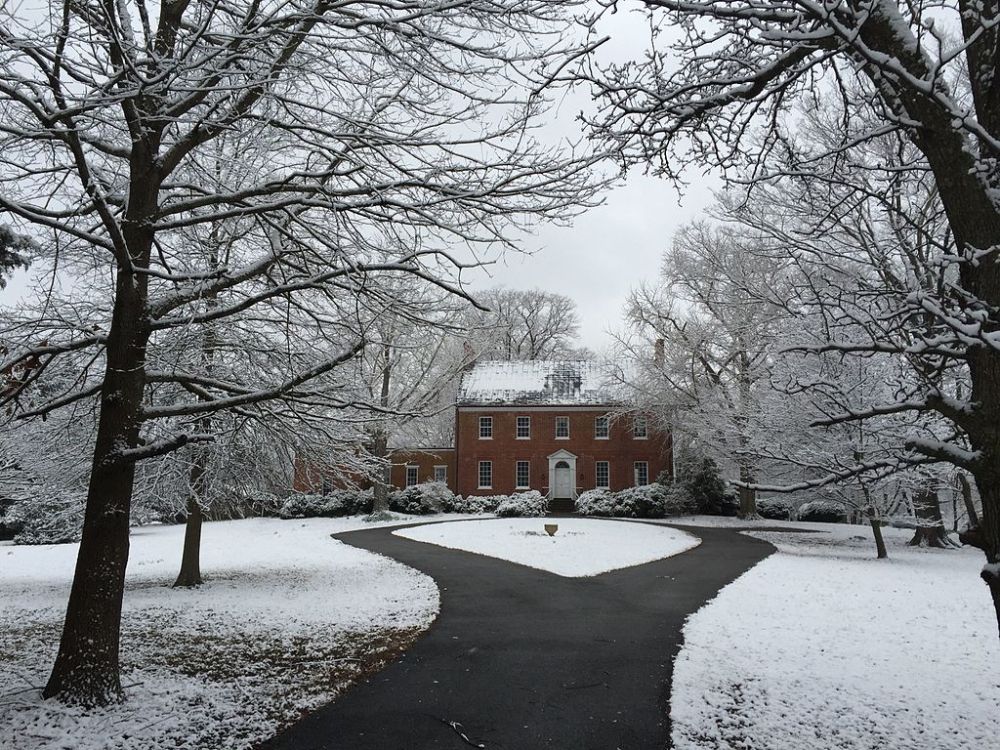
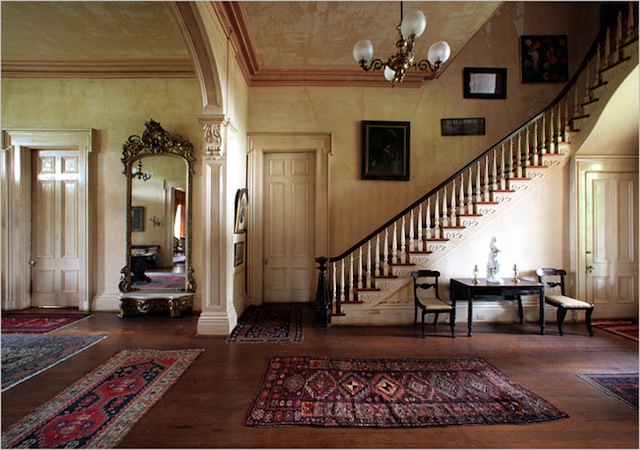
The era of plantation mansion construction in the U.S. South ran roughly from the 1770’s until the outbreak of the Civil War in 1860. The rich plantation owners (farmers that had more than 50 slaves) grew a variety of crops which were for the most part exported to Europe. The main crop however was cotton. The plantation owners built big houses, many of which fall into the category of mansions.
It must always be remembered much of the wealth acquired by these plantation owners came on the backs of Black slaves.

In colonial Delaware, Georgia, Maryland, North Carolina, South Carolina, and Virginia, the earliest plantation houses tended to follow British-derived folk forms such as the hall and parlor house-type and central-passage house-type.
Grander structures during the later colonial period usually conformed to the neoclassically-influenced Georgian and Palladian styles, although some very early and rare Jacobean structures survive in Virginia. Following the Revolutionary War, Federal and Jeffersonian-type neoclassicism became dominant in formal plantation architecture.
When the cotton boom years began in the 1830s, the United States was entering its second neoclassical phase, with Greek Revival architecture being the dominant style. By this point trained architects were also becoming more common, and several introduced the style to the South. Whereas the earlier Federal and Jeffersonian neoclassicism displayed an almost feminine lightness, academic Greek Revival was very masculine, with a heaviness not seen in the earlier styles.
Greek Revival would remain a favorite architectural style in the agrarian South until well after the Civil War, but other styles had appeared in the nation about the same time as Greek Revival or soon afterward. These were primarily the Italianate and Gothic Revival. They were slower to be adopted in whole for domestic plantation architecture, but they can be seen in a fusion of stylistic influences. Houses that were basically Greek Revival in character sprouted Italianate towers, bracketed eaves, or adopted the asymmetrical massing characteristic of that style.




Human/monkey on bicycle relay race

Polar Bear Volleyball


500 meter freestyle swimming relay

Salmon fishing derby Alaska

Tag

Feline underwater race

Skydiving competition

African motocross Zebra 500. In this photo a member of the audience tries to disrupt a competitor.










 The MarkoZen Blog