A fire erupted in the Gulf of Mexico on Friday, after the oil company Pemex suffered a rupture in one of its undersea gas pipelines. Called an “eye of fire” or “portal to hell” by some on social media, the surreal boiling flames were brought under control after about five hours of boats pumping water on it.
Month: July 2021
Rainbow
Caught a rainbow over Winnipeg yesterday.
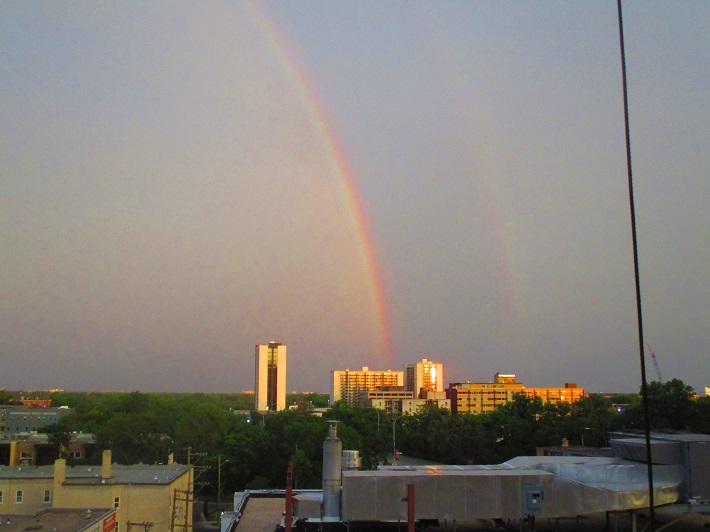

It was a scorching hot humid day in southern Manitoba yesterday.



Blue Origin New Shepard Space Capsule will come down on Land
New Shepard is a vertical-takeoff, vertical-landing (VTVL), crew-rated suborbital launch vehicle that is being developed by Blue Origin as a commercial system for suborbital space tourism. Blue Origin is owned and led by Amazon founder and businessman Jeff Bezos.
The name New Shepard makes reference to the first American astronaut in space, Alan Shepard, one of the original NASA Mercury Seven astronauts, who ascended to space on a suborbital trajectory similar to that planned for New Shepard.
Prototype engine and vehicle flights began in 2006, while full-scale engine development started in the early 2010s and was complete by 2015. Uncrewed flight testing of the complete New Shepard vehicle (propulsion module and space capsule) began in 2015.

The New Shepard Crew Capsule is a pressurized crew capsule that can carry six people, and supports a “full-envelope” launch escape system that can separate the capsule from the booster rocket anywhere during the ascent. Interior volume of the capsule is 15 cubic meters (530 cu ft). The Crew Capsule Escape Solid Rocket Motor (CCE-SRM) is sourced from Aerojet Rocketdyne. After separation two or three parachutes deploy. Just before landing, retro rockets fire.

US Navy conducts first of three blasts in carrier Gerald R. Ford shock trials
WASHINGTON – The U.S. Navy conducted the first of three in-water blasts near first-in-class aircraft carrier Gerald R. Ford, kicking off the full-ship shock trials process on a nuclear-powered flattop for the first time in 34 years.
The Navy’s shock trial event, the first of its kind on any class of ship since 2016, aims to prove the new carrier can withstand a hit in combat. The ship will go through another scheduled blast in July, Lt. Cmdr. Desiree Frame. a Ford spokeswoman, told Defense News.
“In a shock trial, a ship undergoes three 40,000-pound explosive charge detonations which occur successively closer to the ship,” she said. Exact dates for each event are dependent on sea state, weather, marine mammal activity and other factors.
‘Motörhead: The Rise of the Loudest Band in the World’

When it came time for author David Calcano to pen the graphic novel take on Motörhead’s illustriously loud, 40-year career, he, the folks at Fantoons, and illustrator Mark Irwin (fittingly a former art director for Heavy Metal magazine), took the project very seriously. You may recall that Calcano has authored various other music-related graphic novels on artists such as Billie Holliday, and a few eclectic coloring books featuring Frank Zappa and Marillion (!). Calcano’s latest graphic novel, the 144 page Motörhead: The Rise of the Loudest Band in the World, (due on September 7th, 2021), begins Motörhead’s debaucherous story with Lemmy (as it should) back when Kilmister was working as a tutor/instructor at a horse riding school in North Wales. At the time, the teenager and soon-to-be-hellraiser thought working with horses was what he would do for a living. It was, after all, according to Lem, a great way to “get along with women.” To back up this legend about the legendary Lemmy, here is a shot of Lem and his horse friends.

Fukushima disaster: Tracking the wild boar ‘takeover’
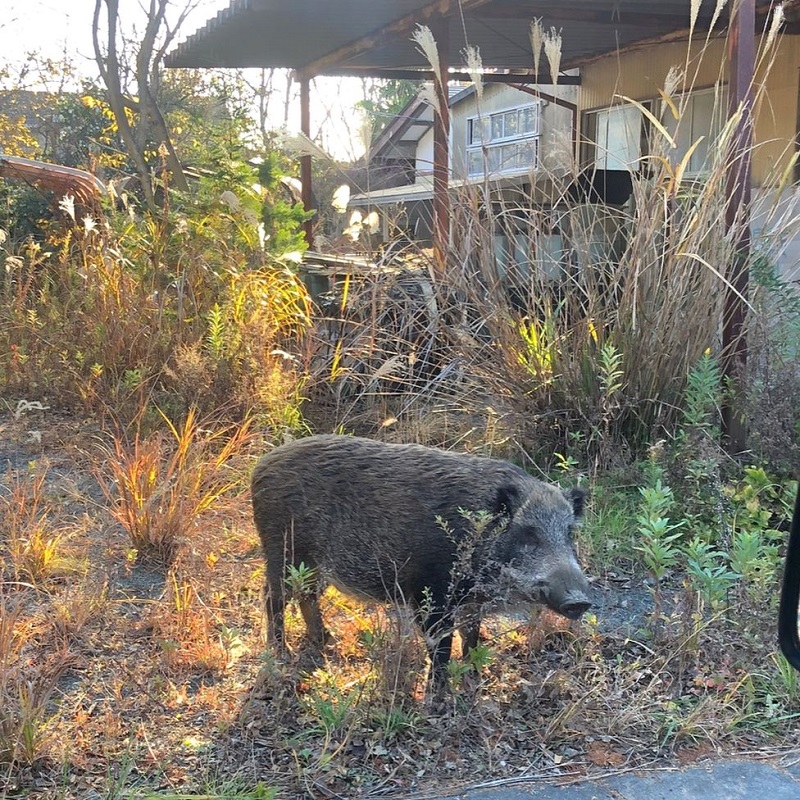
“Once people were gone, the boar took over,” explains Donovan Anderson, a researcher at Fukushima University in Japan.
His genetic study of the wild boar that roam in an area largely abandoned after Japan’s 2011 nuclear disaster – has revealed how the animals have thrived.
Using DNA samples, he also discovered that boar have bred with domestic pigs that escaped from farms.
This has created wild pig-boar hybrids that now inhabit the zone.
“While the radiation hasn’t caused a genetic effect, the invasive domestic pig species has,” Mr Anderson explained.
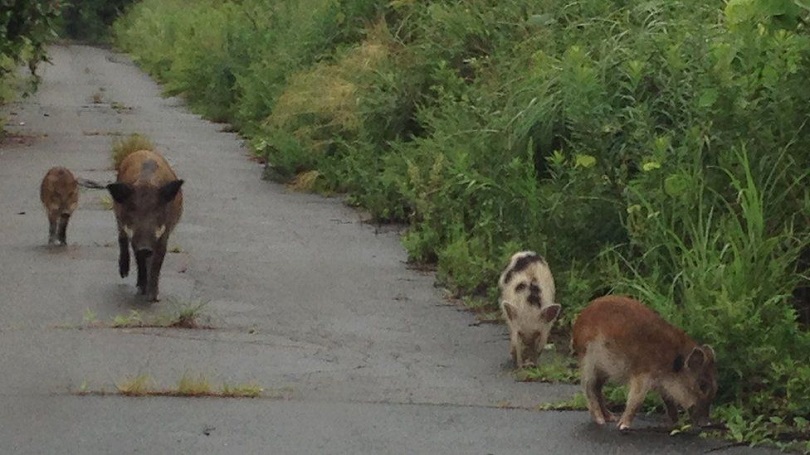
Spotted wild boar are indicative of the interbreeding with domestic pigs following the 2011 disaster
The disaster at Fukushima’s nuclear power plant was caused by the biggest earthquake ever to hit Japan. A gigantic wave surged over defences and flooded the nuclear reactors. Subsequently, a zone surrounding the damaged plant – akin to Chernobyl’s exclusion zone – was evacuated.
The findings, published in the journal Proceedings B, paint a biological picture from a vast experiment that was caused by a nuclear disaster. The scientists used DNA to track the legacy of the event on the landscape – finding out what happens to wild animals in a radiation-contaminated area that is suddenly deserted by humans and, at the same time, invaded by domestic livestock.
Examining the DNA of the wild boar and escaped domestic pigs showed that what researchers called a “biological invasion” could be seen in the boar’s genes.
It also revealed that those domestic pig genes have been gradually “diluted” over time.
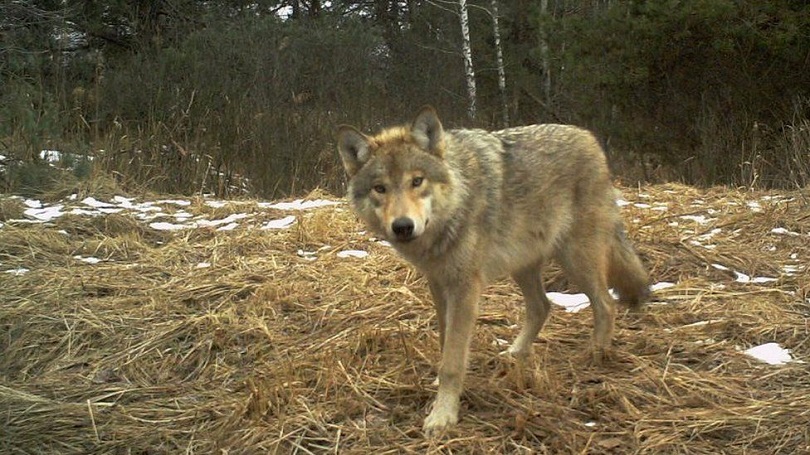
“I think the pigs were not able to survive in the wild, but the boar thrived in the abandoned towns – because they’re so robust,” explained Donovan Anderson.
So, he said, while the evacuated area was the origin of this hybridisation, or cross-breeding, the hybrid pigs then go on to breed with wild boar. As Prof Shingo Kaneko from Fukushima University’s Institute of Environmental Radioactivity put it: “Those invasive genes are disappearing, and the natural situation is coming back.”
Since 2018, people have started to move back into previously abandoned areas near Fukushima.
“Humans are really the only predators for these wild boar,” said Mr Anderson. “So as people come back, it’ll be really interesting to see what the boar do.”
Thankfully no mutations have occurred. Or did they?
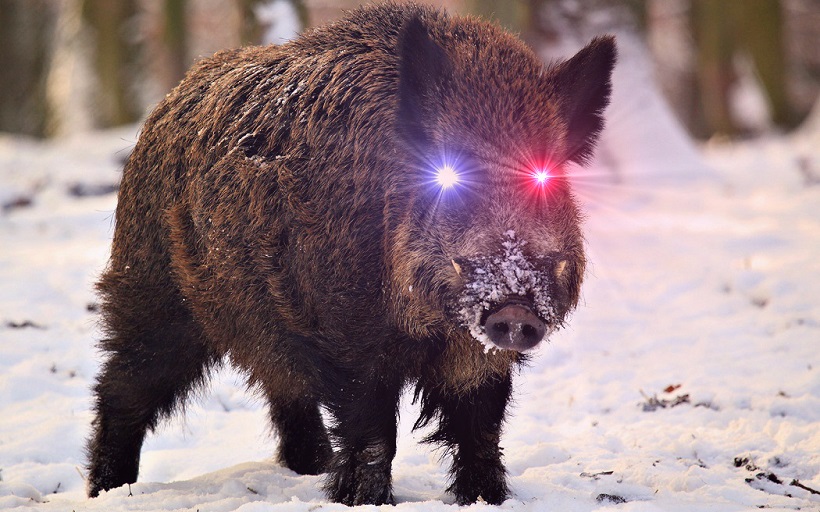
Article from BBC.
Flying Car Prototype Completes Successful Inter-City Test Flight
A Slovakian company working on developing a flying car took a big step forward this week when their prototype successfully completed an inter-city test flight. Dubbed simply ‘AirCar,’ the wondrous vehicle took flight from the city of Nitra on Monday morning and, over the course of 35 minutes, journeyed approximately 45 miles to the Slovakian capital city of Bratislava. Upon landing, the creators of the craft provided a fantastic display of its feasibility by immediately transforming it from an aircraft into a car, which is a process with takes less than three minutes, and then cruising into the center of the city where they were met by reporters.
Powered by a 160 horsepower BMW engine running a fixed propeller positioned at the back of the vehicle, the flying car is the brainchild of inventor Stefan Klein, who heads the company Klein Vision alongside co-founder Anton Zajac. According to the group, Monday’s flight was the latest in a series of milestones for the AirCar, which has already demonstrated the ability to reach an altitude of 8,200 feet and a cruising speed of 118 miles per hour. Klein Vision now hopes to take the insights gleaned from this initial prototype and create a more sizeable second test vehicle that will be equipped with a 300 horsepower engine. “AirCar is no longer just a proof of concept,” declared Zajac in a press release, “it has turned science fiction into a reality.”
While pulling off a successful flight from one city to another is undoubtedly an impressive achievement for the company, one may wish to temper their expectations as far as when the average person might be able to get behind the wheel of a flying car. As one can imagine, there are all manner of challenges that need to be overcome before such vehicles become commonplace, least of which are logistical issues that will come from having skies filled with such craft. That said, given the fact that a working flying car seemingly now exists, that long-imagined symbol of the future just might be closer than we think.
Alternative Universe Movie Posters


Dangerousminds.net
Godzilla vs Megalon


Godzilla vs. Megalon (ゴジラ対メガロ, Gojira tai Megaro) is a 1973 Japanese kaiju film directed by Jun Fukuda, written by Fukuda and Shinichi Sekizawa, and produced by Tomoyuki Tanaka, with special effects by Teruyoshi Nakano. Produced and distributed by Toho Studios, it is the 13th film in the Godzilla franchise, and features the fictional monster characters Godzilla, Megalon, and Gigan, along with the mecha character Jet Jaguar.
 The MarkoZen Blog