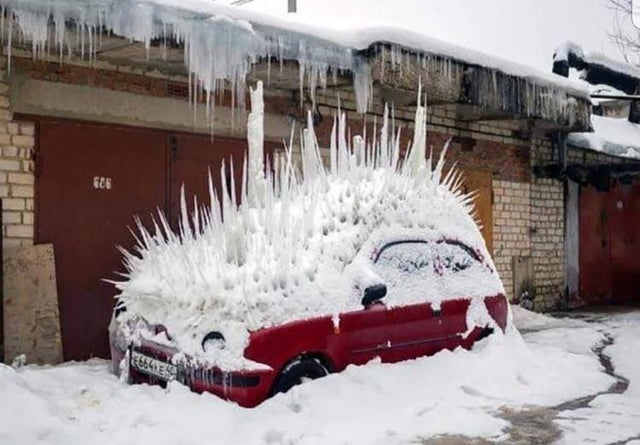
Month: January 2021
Rare Snowfall in Las Vegas, Nevada
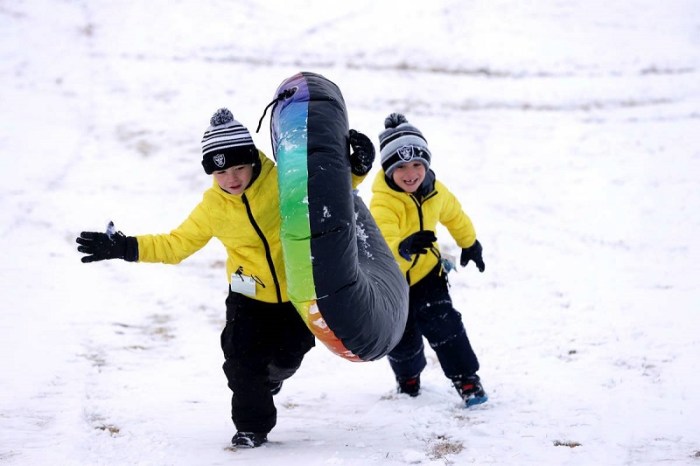
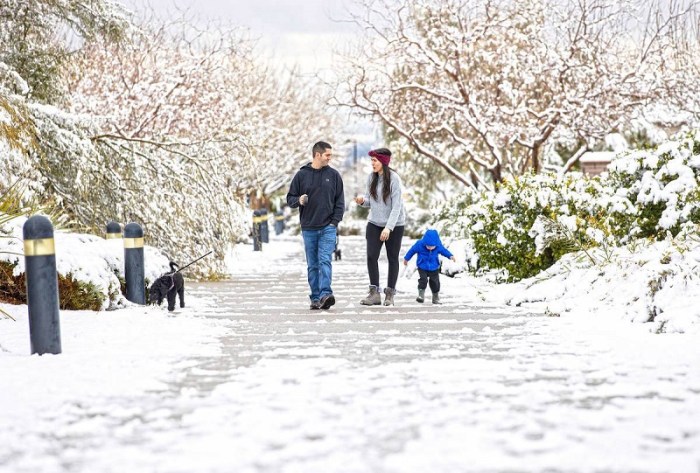
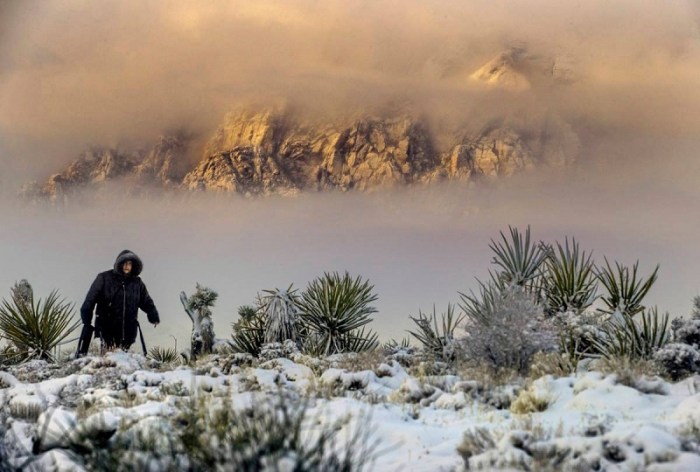
On Thursday Las Vegas had an unusual snowfall. Las Vegas does see snow flurries every couple years but the snow usually melts as soon as it hits the ground. The snow on Thursday was different as in some areas of the Las Vegas valley the snow stayed on the ground for a few hours before it melted away.



Sasquatch Art
Some are belligerent, and some are not. For the record, there are no reported attacks on humans when close encounters have taken place. Some reports state that the creature lets out growls when humans stumble upon them, throw rocks or make charges like gorillas.


Very bad Sasquatch below:

The Yeran, the equivalent that has been reported in China
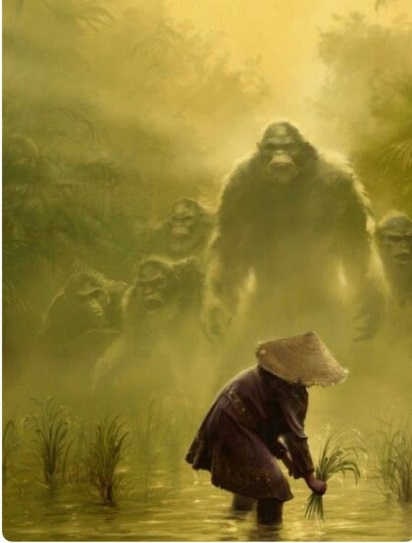
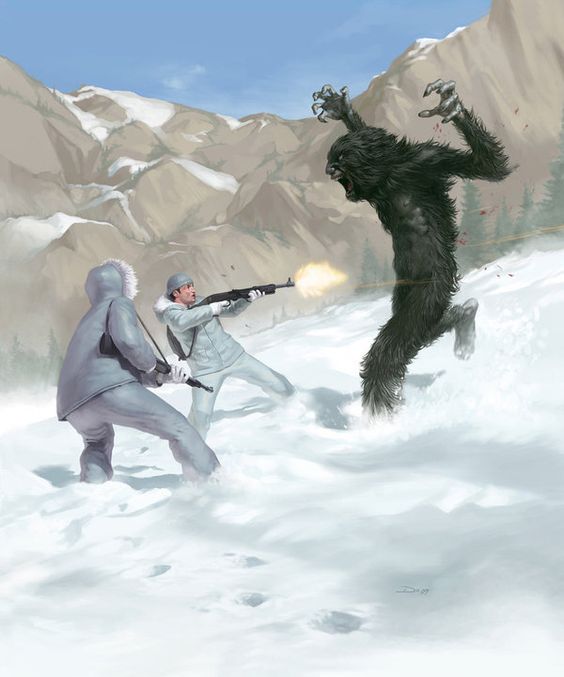

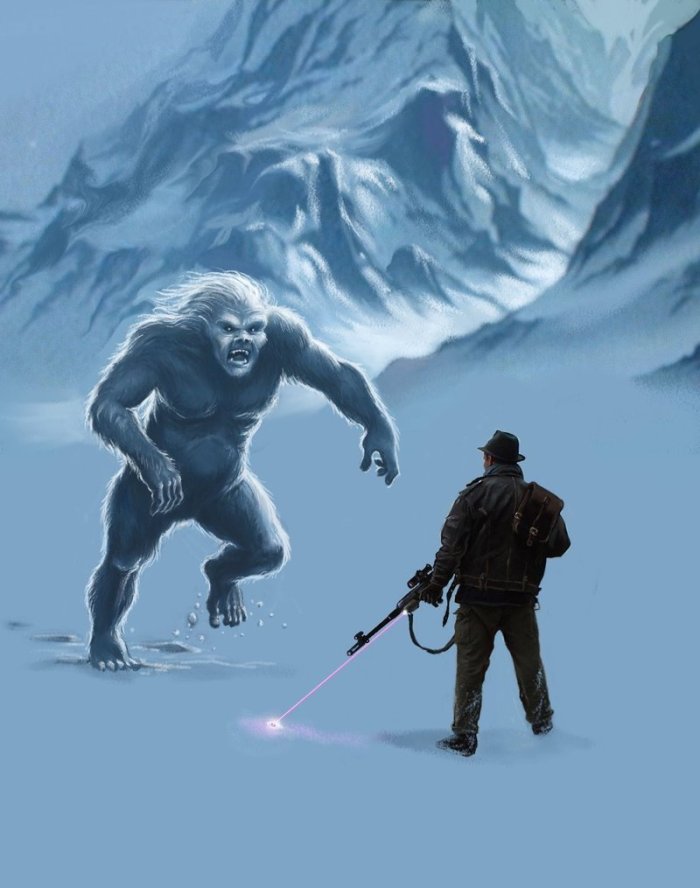
Crazed Yeti, shoot Man!!!

Insurance salesman
The Desert Sasquatch
The Mojave desert lies in south-central California. It is barren with some hills and miles upon miles of desolate sand and cactus. There have been reports of Bigfoot activity in the area. Why would a Sasquatch live in barren open desert? Food would be a problem for one, let alone water. And the scorching summer heat, after all these things reportedly have thick fur coats. But then most experts contend these creatures are nocturnal, the desert gets very cool to cold at night, the creature could rest all day under a huge cactus and hunt at night.
But there is one key reason why these creatures may live in this area. There are virtually no people. Vast swaths of uninhabited territory where the beast can do his thing and not have to worry about ducking away from humans. In the Mojave desert of San Bernardino county near Twenty-Nine Palms Marine Corp base and Joshua Tree National Park it is said the creature known as the ‘Yucca Man’ lurks.

The Yucca Man is a Bigfoot-like creature that supposedly live around Joshua Tree National Park.
Description
The Yucca Man is described as a large and hairy desert beast.
History of sightings
On a cold February night in 1971 a lone guard manned a post outside an armory on the outskirts of the Marine Base near Twenty-Nine Palms. Without warning the otherwise unearthly quiet was suddenly shattered when a large mass appeared out of the dark desert landscape. The guard raised his riffle and commanded the being to “halt”. Much to the young mans surprise the large figure did not stop but instead charged right at him at an inhuman rate. As the figure grew closer the Marine realized what was approaching, rapidly, was not a man at all, but a huge, upright running, hair covered creature. Paralyzed by shock, the young guard stood his ground, too frightened to move.
The mysterious creature threw the young man to the ground rendering him unconscious. When the guard’s relief arrived several ours later they found him almost incoherent with his rifle almost bent in two.
After the incident both the CIA and FBI were called in to conduct an investigation. Much to their surprise, the locals were more than eager to tell their own stories about giant man-beasts in the area.
As a matter of fact, on the very same night as the attack on the guard, two of the creatures were seen roaming through a neighborhood, relatively close to the base. When a local couple took a look outside of their front window to see what was upsetting their dog, they saw the two Yucca Men crossing the front lawn. Then some time later the same creatures were seen near a horse corral some distance away by others in the same neighborhood.
The investigation also revealed that several employees at the Joshua Tree National Monument had seen Bigfoot-like creatures on numerous occasions.
Eight years later, in May of 1979, a young couple were leaving their condominium complex in Desert Hot Springs, north of Palm Springs, when a large harry creature emerged from behind a yucca in front of their car. According to the driver the animal, which had “a chest the size of a refrigerator and arms that hung down below its knees”, was so large that he could only see it from the mid-section down. The beast that reportedly was covered in long tan colored hair disappeared quickly back into the night leaving no footprint evidence.
Also in 1979 a 12-foot-tall Bigfoot made a visit to Hemet, California some distance to the south of Palm Springs twice in a period of a week. This time, however, the creature left a grand total of 17 tracks in the mud along a rural road during its initial visit. These tracks measured 18 inches in length and were spaced some 6 feet apart.
Noted Bigfoot researchers Douglas Trapp and Danny Perez both conducted a investigation of this sighting, even going as far as to perform a “stakeout” of the location where the tracks were found. But alas, the monster did not return.
In 1988 a couple of service men from Twenty-Nine Palms were returning home from a day of fun in the sun at Big Bear Lake at about 9:00 p.m. when they encountered a creature that the locals call the “Cement Monster”, due to the fact that it is said to live near an old cement factory in Lucerne Valley.
As the two men approached the old factory, a large upright running creature moved across the road in front of their car. As was the case 9 years earlier in Desert Hot Springs the animal in question was so large that the men could only see it’s lower half.
In disbelief the two men just looked at each other for a moment before one of them exclaimed “What the Hell was that?” The other replied, “That was the Cement Monster, after him!” The driver hit the brakes while the other reached for a gun that was in the glove box. The two adrenaline filed men searched up and down the road and around the cement factory, but never found any sign of the creature.
The pair came to the conclusion that they had seen some form of prehistoric man and returned to their journey home.
Theories
One possible explanation might include the unusual shape of the Joshua trees themselves, which can appear human in an instance of poor light.
But Joshua trees don’t walk or bend rifles do they?
Sasquatch sightings in California

San Bernardino county bottom right

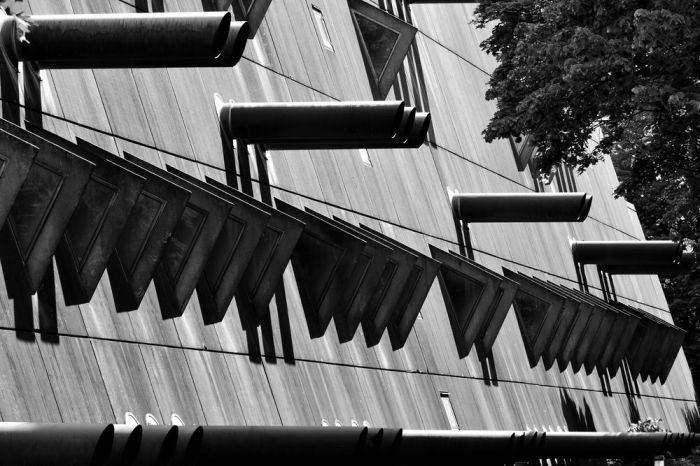
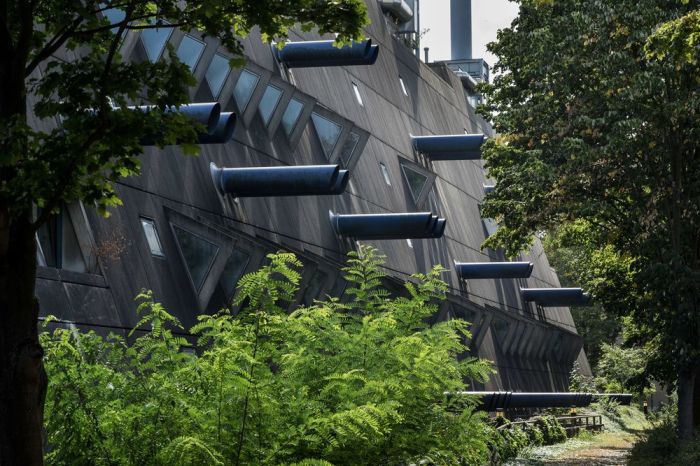
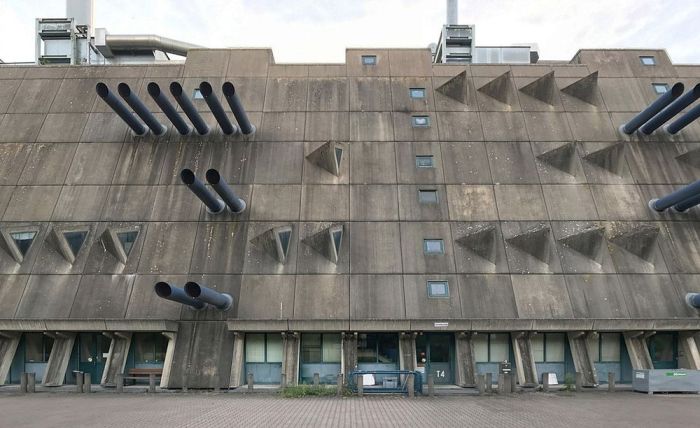
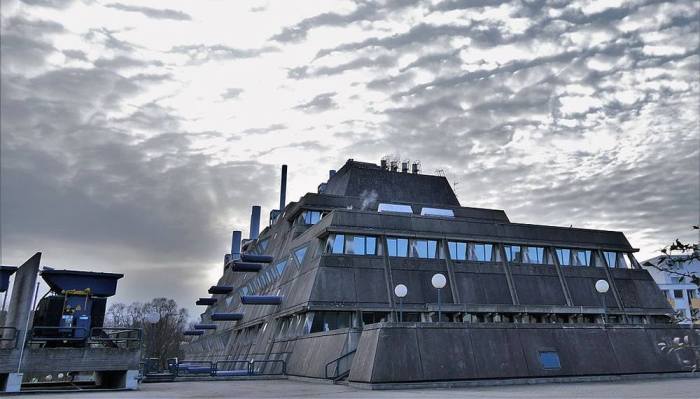
Mäusebunker: Berlin’s Mouse Bunker
This is one very very strange looking building.
Sitting squarely in the middle of Berlin is a monstrous-looking building with façade of solid grey concrete, punctured by long ventilation turrets that sticks out in all direction like some sort of a beached battleship. This is Mäusebunker, or “Mouse Bunker”, a Brutalist former animal research laboratory that at some point held over 45,000 mice and 20,000 rats along with a variety of other rodents.
Officially the Central Animal Laboratory of the Free University of Berlin, the Mäusebunker was completed in 1981 as part of the Institute for Hygiene and Microbiology. It’s connected to the latter via an underground tunnel. The sinister-looking building was designed by the husband-and-wife duo of Gerd and Magdalena Hänska. Construction of the bunker began in 1971, and would have been completed at least three years earlier if cost had not gone spiraling out of control.

The Mäusebunker was built to look like a fortress, although it is more often compared to a warship because of its inclined walls and blue-painted ventilation shafts that protrude from the sides like cannon barrels. The roof is crowned by several large chimneys, and on the side facing the Institute for Hygiene and Microbiology, there are rows of recessed windows that give the impression of a command bridge. The German Architecture Museum in Frankfurt once called Mäusebunker “the most sinister building of German post-war modernism.”
The use of the building is just as uncanny as the threatening appearance of the building: The mouse bunker was built by the Free University to carry out scientific experiments with live animals and to breed the animals required for this on site. For safety reasons, the animal testing laboratories are located deep in the building and are ventilated with cannon-like air intake pipes.

The building was closed in 2010, and since then has been lying vacant. It was long derided as an eyesore and was slated for demolition, along with the Institute for Hygiene and Microbiology building that stands nearby. But a few years ago a couple of residents, architects and other activists launched a campaign against its destruction and successfully stalled the demolition. The building will now be reviewed to explore reuse options.
New Method to Apprehend Bad Guys
It’s called BolaWrap. It is made up of kevlar lines that are shot from a device by law enforcement. It is effective from 10-25 feet. Better than tasers and firearms for sure. Very new product but many police organizations in the United States are now using it.
Why The Soviet Union Exchanged Warships For Pepsi
The American soft drink giant Pepsi has a long presence in Russia dating back to the early 1970s when Russia was still a part of the Soviet Union. It was the first capitalistic product to gain entry into the communist market. At that time rivalry between the two countries was high, so how did an American soft drink company get its foot in the door to build a major market in Russia?

Bottles of Soviet Pepsi at a Moscow-based plant, 1991. Photo: Vladimir Akimov/Sputnik
The story of how Pepsi came to be sold widely in Russia began in 1959, when the then-Vice President Richard Nixon came visiting the Soviet Union for an exhibition in Sokolniki Park, Moscow, and met with Soviet leader Nikita Khrushchev. The American National Exhibition was organized to promote American art, fashion, cars, and capitalism. Among many other things, the exhibition featured an entire model American house filled with modern conveniences and recreational devices such as washing machine, vacuum cleaners and color television. It was there, standing inside the mock-up of an American kitchen, the two leaders had a heated debate on the merits and demerits of communism and capitalism.
“You plan to outstrip us, particularly in the production of consumer goods. If this competition is to do the best for both of our peoples and for people everywhere, there must be a free exchange of ideas,” Nixon told Khrushchev. Later, Nixon led Khrushchev over to a booth dispensing Pepsi and gave Khrushchev a glass of the brown, fizzy, sugary drink that the Russian had never tasted before.

Richard Nixon and Nikita Khrushchev at the infamous “Kitchen Debate.” Photo: National Archives
The Pepsi booth had two different versions of the drink—one made with American water and another made with Russian water. Khrushchev declared that the one made with Russian water was clearly superior and “quite refreshing”. As Khrushchev drank he insisted that his Russian colleagues around him partake in the sugary tonic, and photographers surrounding the small group fired off their flash bulbs.
No amount of advertising spend could have brought Pepsi this much publicity what these photographs brought when they were published all over America and Soviet Russia. It eventually catapulted Kendall from an executive at the Pepsi-Cola Corporation to the company’s CEO in 1965.
Kendall did play a larger role in the events of 1959 than the photos implied. Nixon bringing Khrushchev to the Pepsi fountain and Kendall serving the addictive drink to the Soviet leader was not an impromptu move, after all. It was Kendell’s idea, and so was Pepsi’s participation at the exhibition against the wishes of his superiors, who felt that trying to sell an American product to a Communist country was wastage of effort and money. The night before, Kendall met with Nixon, with whom he shared a long-term friendship, and told him that he “had to get a Pepsi in Khrushchev’s hand.”
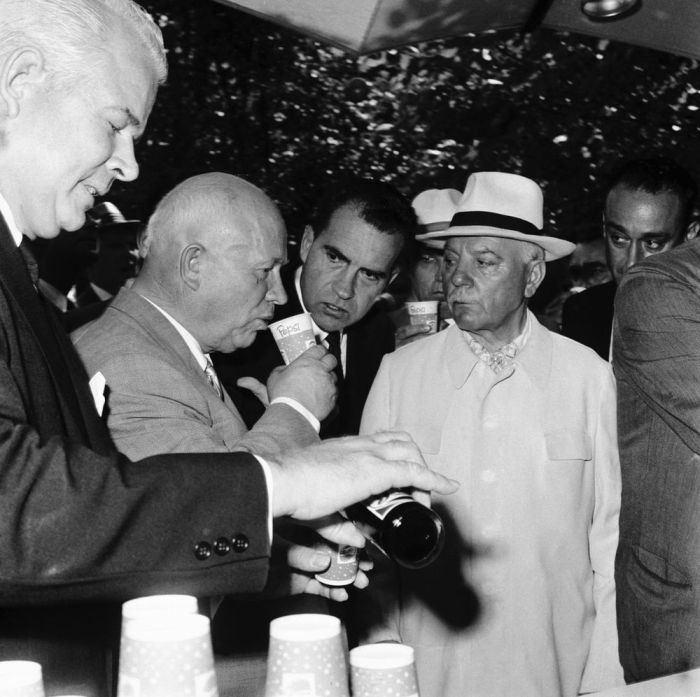
Nikita Khrushchev takes a sip of Pepsi in 1959 at the U.S. National Exhibition in Moscow, while U.S. Vice President Richard Nixon watches and Donald Kendall pours another glass. Photo: Fai/Legion Media
Thirteen years later, in 1972, Kendall scored an exclusive deal with the the Soviet Union shutting out Coke from the communist market. There was, however, a snag—Soviet currency was worthless outside the USSR, because the Soviet ruble did not function like a real currency in a market economy, but more like tokens or company vouchers because the value of the currency was determined by the government and not by market forces. As a result, Kendall had to use an alternative method of payment—the good old barter system.
It was decided that in exchange for the manufacture and sale of Pepsi in the Soviet Union, Pepsi would obtain exclusive distribution rights for Stolichnaya vodka in the US. The company would profit only from vodka sales in the US. It was not to receive any benefit from Pepsi sales in the Soviet Union.

A salesman shows a bottle of Stolichnaya vodka. Photo: Getty Images
Pepsi’s market grew by leaps and bounds and by the late 1980s, the company had more than twenty bottling plants in the USSR, and the Russians were drinking one billion servings a year—far more than the Americans were drinking Stolichnaya vodka. The American vodka market being limited, Kendall began to look for other Soviet products to procure in exchange of Pepsi. What about decommissioned warships? the Soviet Union suggested.
So in 1989, Kendall signed a new agreement, according to which the Soviets would transfer to PepsiCo an entire armada consisting of 17 submarines, a cruiser, a frigate, and a destroyer. Some joked that at that point in time Pepsi owned the world’s sixth largest Navy. On the contrary, these vessels were hardly sea worthy. Pepsi quickly sold them for scrap. Each submarine fetched them $150,000.
“We’re disarming the Soviet Union faster than you are,” Kendall once quipped to Brent Scowcroft, President George H.W. Bush’s national security adviser.
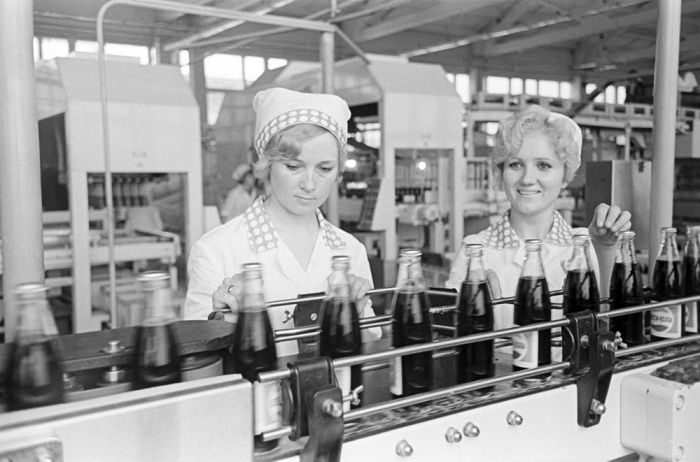
Workers inspect Pepsi bottles at a bottling plant somewhere in the Soviet Union. Photo: N. Arkhangelskiy/Sputnik
The following year, PepsiCo signed an even bigger deal with the Soviet Union, amounting to USD 3 billion worth of soda. As payment, the Soviet Union would build at least 10 ships, mostly oil tankers, which would be sold or leased by PepsiCo on the international market. The deal would have doubled PepsiCo’s sale of its sugary drink in Russia to nearly a billion dollars. A year later, the Soviet Union broke up and the deal fell though.
Russia is still Pepsi’s second biggest market outside of the United States, but most Russians today prefer to drink Coca-Cola instead. Pepsi has a market share of only 18 percent (as of 2013), against their rival Coca-Cola which holds twice as much. Pepsi now sells less than many domestic beverages.

Teenagers celebrate the end of school, Moscow, 1981. Photo: Ivan Vtorov
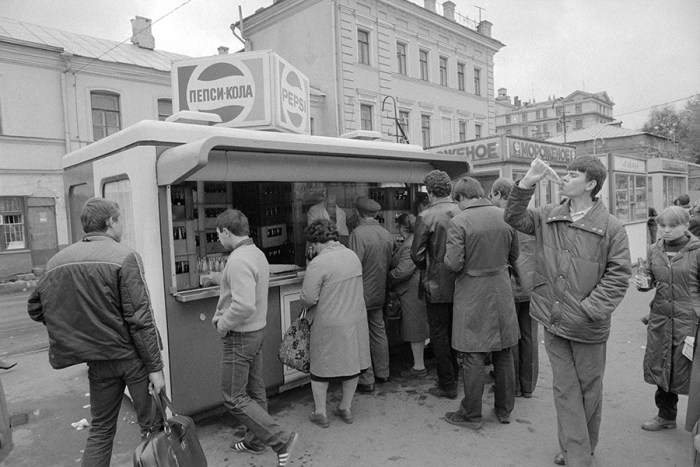
A Pepsi stand in Moscow, 1983. Photo: Getty Images
 The MarkoZen Blog