Automobile safety tips from decades past

Popular Science magazine had many articles devoted to automobile safety back in the 1930’s, 1940’s, 50’s and 60’s.  The car explosion in those decades revealed many problems and concerns as cars became bigger and faster.  Many of the tips Pop Sci brings up from back in the day could be utilized in today’s world of mass automobile use.


Keep your eyes on the road!


If this cover image doesn’t terrify you into driving safely, we don’t know what will. According to the illustrator, driving 30 miles and hour is as dangerous as driving on the roof of a building.

Manitoba Public Insurance should start preaching these same basic rules.  I don’t know about the one of suspecting every pedestrian of suicide.

1. Learn to judge the conditions of the road and the drivers. 2. It isn’t how fast you can go, it’s how fast you can stop. 3. Keep one car length between you and the car in front of you for every 10 miles on your speedometer. 4. Suspect every pedestrian of suicide. 5. Every intersection is a crash point, so slow down. 6. Signal properly. 7. Expect the worst from the other car.


Get those brakes checked regularly


Speed limits in certain States back in 1960 was 30 mph.  That would be about 52 kph.


Keep those tires up to date and checked out regularly

Nordstrom Tower

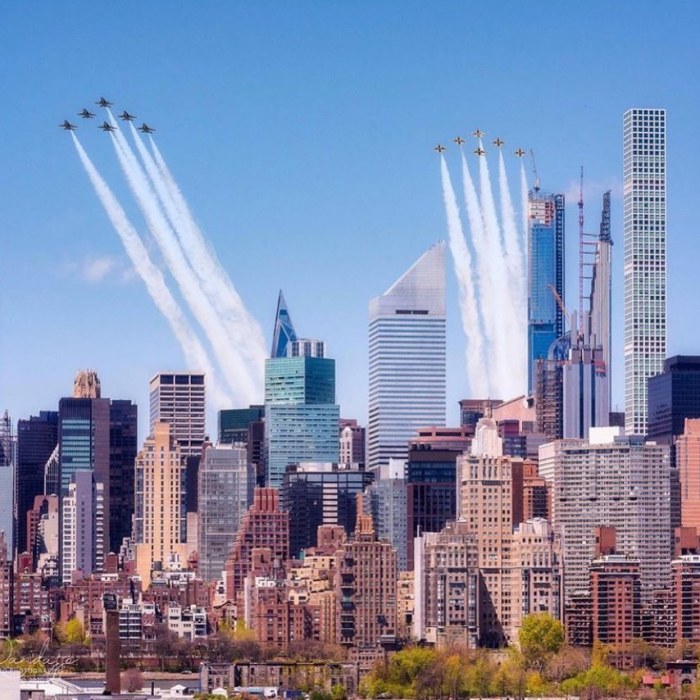
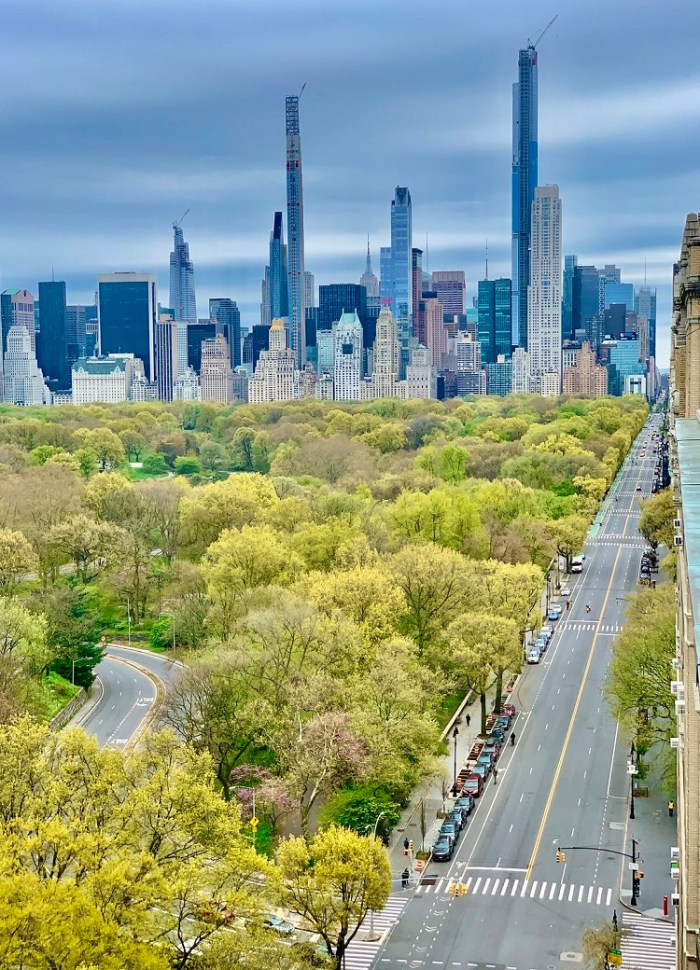
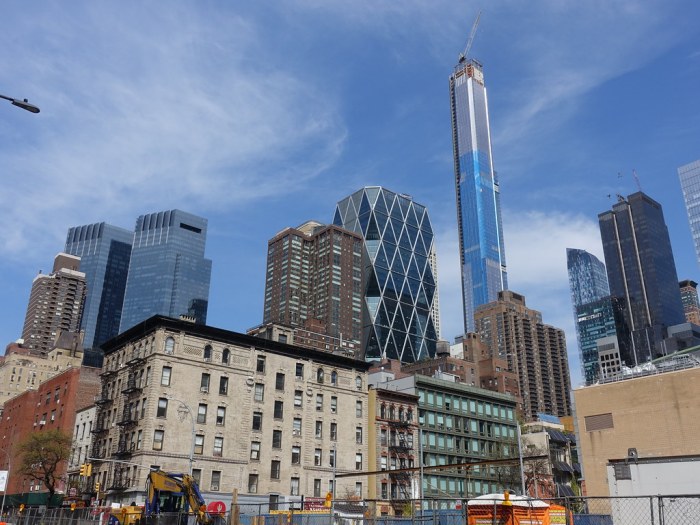
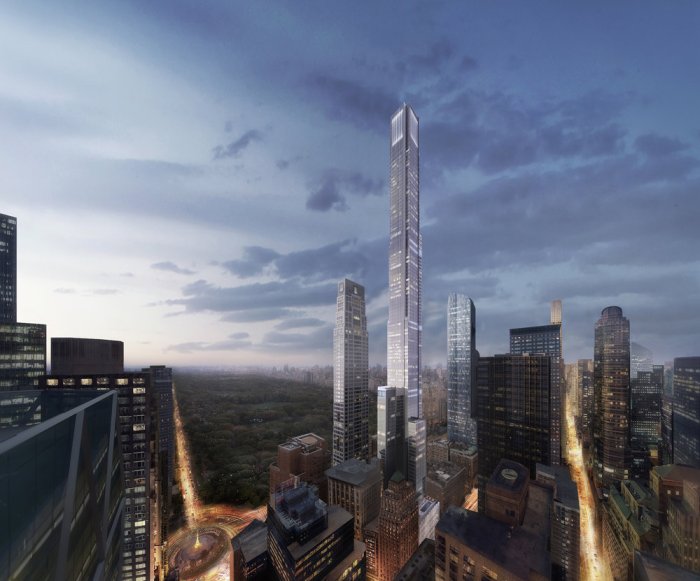
Central Park Tower, also known as the Nordstrom Tower, is a residential supertall skyscraper being developed by Extell Development Company and Shanghai Municipal Investment Group along Billionaires’ Row on 57th Street in Midtown Manhattan, New York City. Designed by Adrian Smith + Gordon Gill Architecture, the building rises 1,550 feet (472 m) and is the second-tallest skyscraper in the United States and the Western Hemisphere, the 15th tallest building in the world, the tallest residential building in the world (the much taller Burj Khalifa in Dubai has 900 residential units, but is mixed-use), and the tallest building outside Asia by roof height.

Above: the US Air Force Thunderbirds and US Navy Blue Angels air demonstration teams flying over NYC.

Artist rendering of the completed building.


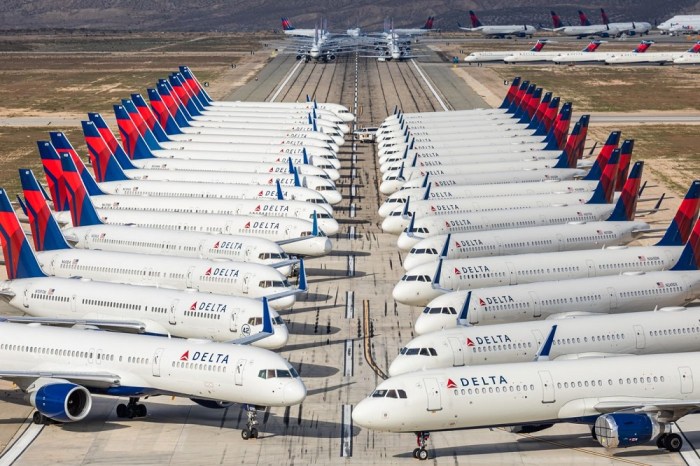
Giant Commercial Aircraft Maintenance Base in Southern California

Southern California Logistics Airport, also known as Victorville Airport, is a public airport located in the city of Victorville in San Bernardino County, California approximately 20 mi (32 km) north of San Bernardino. Prior to its civil usage, the facility was George Air Force Base from 1941 to 1992 which was a front-line United States Air Force base.

The airport is home to Southern California Aviation, a large transitional facility for commercial aircraft. The main activities at the airport are MRO, an aviation term meaning Maintenance and Repair Organization.  Major overhauls of commercial jet airliners are undertaken at Victorville.  It is the largest MRO facility in the world.

victor6


victor7


victor8

With airlines grounding up to 80 percent of their fleets due to covid-19, Victorville has been inundated with dozens of more airliners.

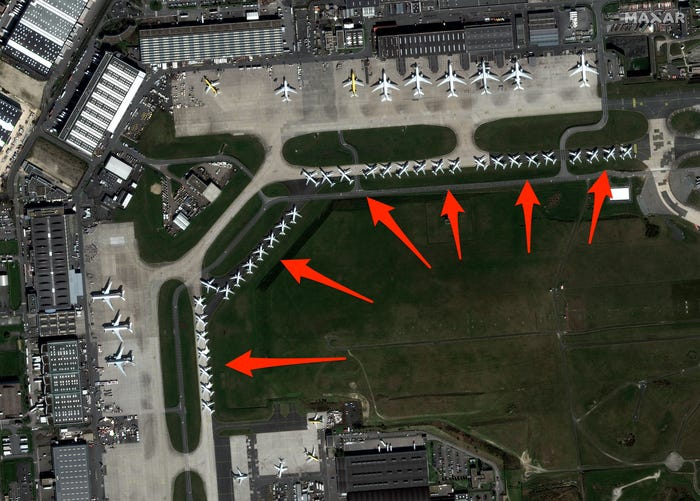
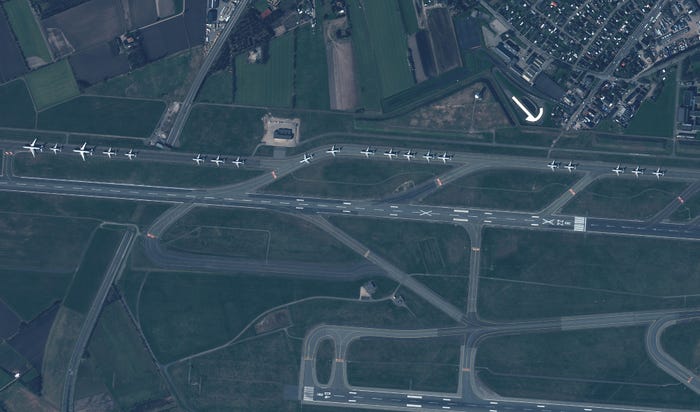
Other international airports are also being used for storage.

Charles De Gaulle in Paris

Copenhagen

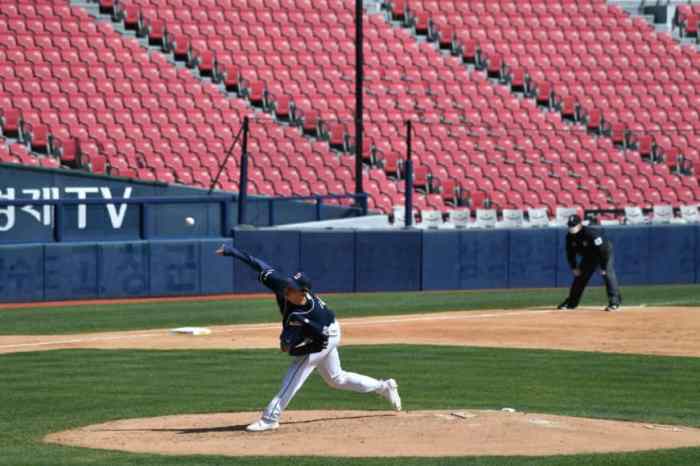
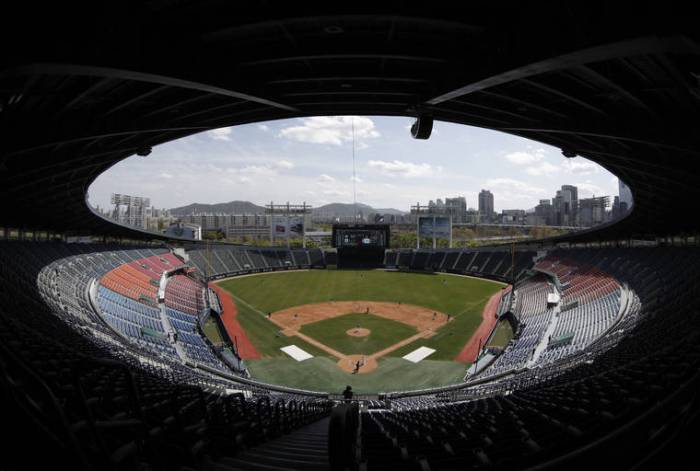
South Korean baseball resumes with preseason game in front of empty stands

Doosan Bears pitcher Lee Young-ha (L) throws a ball in front of empty stands as a referee (R) wearing a face mask looks on during a pre-season baseball game between Seoul-based Doosan Bears and LG Twins at Jamsil stadium in Seoul on April 21, 2020. – Professional sport returned to South Korea on April 21 as coronavirus restrictions ease, with the first pitch thrown in a baseball preseason derby in front of empty stands. (Photo by Jung Yeon-je / AFP)

Professional sport returned to South Korea on Tuesday as coronavirus restrictions ease in the country, with the first pitch thrown in a baseball preseason derby in front of empty stands.

The Seoul-based Doosan Bears and LG Twins are Korea’s biggest rivals in the country’s most popular spectator sport and their shared stadium in the capital’s Jamsil area would usually be packed.

But with fans barred, the stands were empty as the Twins’ Cha Woo-chan threw the first pitch.

Even the cheerleaders — an essential element of firing up the atmosphere at what would normally be a feverish encounter — were also absent.

The stadium was silent except for the continuous clicking of camera shutters from around 50 members of the media, and occasional shouts from the dugouts.

Reporters were not allowed to approach the players.

“Although it is being held behind closed doors, I think it’s good that we can hold these games for the fans who are watching from their homes,” said LG Twins media officer Kim Kwang-hwan.

“We hope that the coronavirus outbreak will be contained soon so many fans can come and enjoy our game just like previous years.”

The Jamsil derby was among the first of 20 preseason games, and the Korea Baseball Organization said Tuesday the regular season would start behind closed doors on May 5.

Strict health guidelines were being enforced.

Players must have their temperature checked twice before the games, with facemasks strongly recommended in all parts of the stadium, except for the field and the dugout during the game, the KBO said.

Players have been asked not to shake hands or exchange high-fives, while spitting is prohibited.

The Doosan Bears were last year’s KBO champions but the LG Twins ran out 5-2 winners in a one-sided encounter.

Even so, more than 700,000 fans tuned in to watch a livestream of the match on Naver, the country’s largest online portal.

Japantimes.com

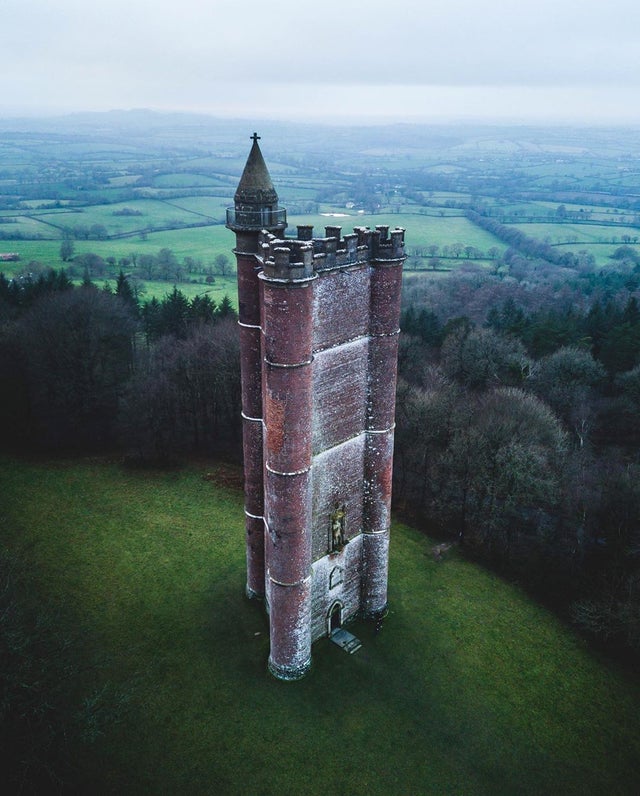
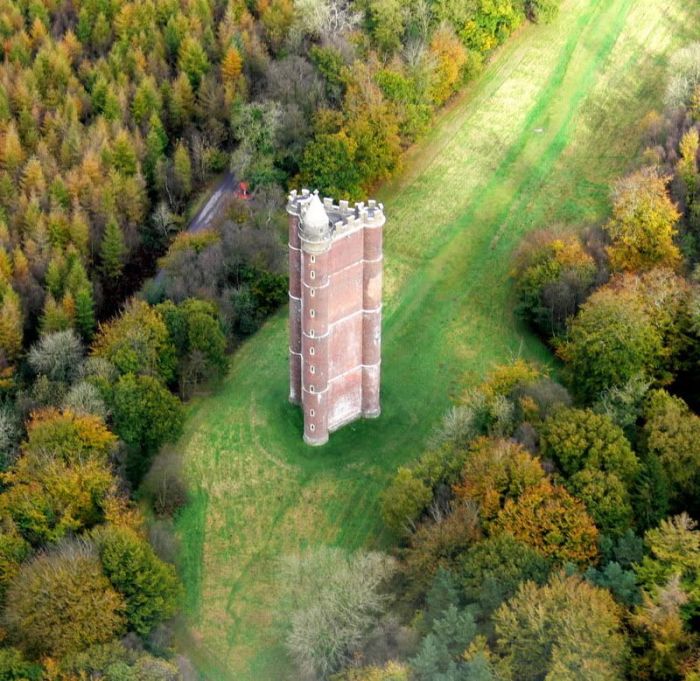
King Alfred’s Tower

King Alfred’s Tower, also known as The Folly of King Alfred the Great or Stourton Tower, is a folly tower. It is in the parish of Brewham in the English county of Somerset, and was built as part of the Stourhead estate and landscape. The tower stands on Kingsettle Hill and belongs to the National Trust. It is designated as a grade I listed building.

Henry Hoare II planned the tower in the 1760s to commemorate the end of the Seven Years’ War against France and the accession of King George III near the location of ‘Egbert’s Stone’ where it is believed that Alfred the Great, King of Wessex, rallied the Saxons in May 878 before the important Battle of Edington. The tower was damaged by a plane in 1944 and restored in the 1980s.

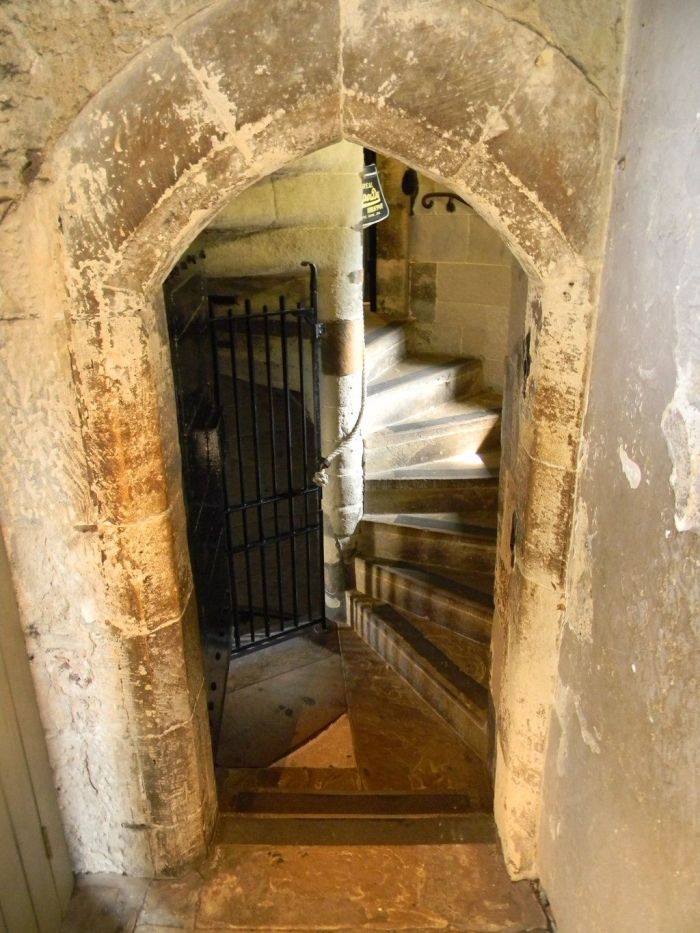
The 49-metre-high (161 ft) triangular tower has a hollow centre and is climbed by means of a spiral staircase in one of the corner projections. It includes a statue of King Alfred and dedication inscription.

The tower stands near the location of ‘Egbert’s Stone’, where it was said that Alfred the Great, King of Wessex, rallied the Saxons in May 878 before the important Battle of Edington (historically known as the battle of Ethandun, where the Danish army, led by Guthrum the Old was defeated. It is the start of the Leland Trail, a 28-mile (45.1 km) footpath which runs from King Alfred’s Tower to Ham Hill Country Park.

The project to build the tower was conceived in 1762 by the banker Henry Hoare II (1705-1785). The tower was also intended to commemorate the end of the Seven Years’ War against France and the accession of King George III.

Alfred’s Tower is a monument to the genius of English landscape, many of whose loveliest haunts it commands, and to a man who certainly deserves to be remembered as among the great benefactors of the English scene. – Christopher Hussey, Country Life, 11 June 1938.
In 1765 Henry Flitcroft, a Palladian architect, designed the tower. Building began in 1769 or early 1770, and was completed in 1772 at an estimated cost between £5,000 and £6,000. There may have been some delay due to difficulty in obtaining the bricks. In addition to the commemorative function, the tower was also intended to serve as an eye-catching focus for those touring the parkland of the Stourhead Estate. In April 1770, when the tower was just 4.7 metres (15 ft) high, Hoare is quoted as saying: ‘I hope it will be finished in as happy Times to this Isle as Alfred finished his Life of Glory in then I shall depart in peace.’

The tower was damaged in 1944 when an aeroplane, a Noorduyn Norseman ironically, crashed into it, resulting in the death of the five aircrew and damage to the highest 10 metres (33 ft). It was designated as a Grade I listed building in 1961. The tower was restored in 1986, which included the use of a Wessex helicopter to lower a 300-kilogram (47 st) stone onto the top. The statue of King Alfred was also restored at this time, including the replacement of his missing right forearm.

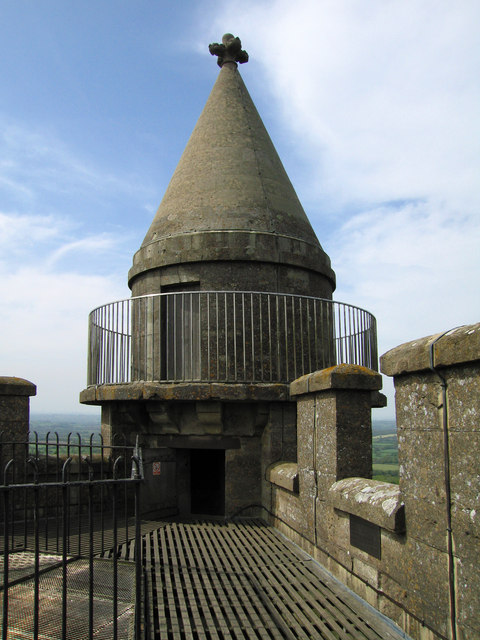
The triangular tower is over 40 metres (131 ft) high with a girth of 51 metres (167 ft). Each of the three corners of the triangular structure has a round projection. The centre of the tower is hollow and to stop birds from entering the space a mesh has been added at roof level. The viewing platform, which has a crenellated parapet and offers a view over the surrounding countryside, is reached by a 205-step spiral staircase at the corner furthest from the entrance. The brick tower has Chilmark stone dressings and is surmounted by an embattled parapet.

The ‘front’ (south-east) face of the tower has a Gothic-arched entrance door, a statue of King Alfred, and a stone panel bearing an inscription (see below). This is the face that most visitors see first when walking from Stourhead garden or from the nearby car park.

The Spanish Cities of North Africa

Unbeknownst to me there are two cities in North Africa that belong to Spain. I discovered this a few days ago. It is European colonization that dates back to the fifteen hundreds. Ceuta and Melilla.

Ceuta is an 18.5-square-kilometre (7.1 sq mi) Spanish autonomous city located on the north coast of Africa, sharing a western border with Morocco. Separated from the Iberian peninsula by the Strait of Gibraltar, Ceuta lies along the boundary between the Mediterranean Sea and the Atlantic Ocean. Ceuta, along with the Spanish exclave Melilla, is one of two permanently inhabited Spanish territories in mainland Africa. It was part of Cádiz province until 14 March 1995 when the city’s Statute of Autonomy was passed.

Ceuta, like Melilla, was a free port before Spain joined the European Union. As of 2011, it has a population of 82,376. Its population consists of Christians, Muslims (chiefly Arabic and Berber speakers), and small minorities of Sephardic Jews and ethnic Sindhi Hindus. Spanish is the official language.

Ceuta

ceuta_desde_el_monte_hacho_2008


Ceuta’s location has made it an important commercial trade and military way-point for many cultures, beginning with the Carthaginians in the 5th century BC, who called the city Abyla; initially, this was also its name in Greek and Latin.  Together with Gibraltar on the European side, it formed one of the famous “Pillars of Hercules”. Later, it was renamed for a formation of seven surrounding smaller mountains, collectively referred to as Septem Fratres (‘[The] Seven Brothers’) by Pomponius Mela, which lent their name to a Roman fortification known as Castellum ad Septem Fratres.


ceuta_melilla


It changed hands again approximately 400 years later, when Vandal tribes ousted the Romans. After being controlled by the Visigoths, it then became an outpost of the Byzantine Empire. Ceuta was an important Christian center since the fourth century (as recent discovered ruins of a Roman basilica show), and consequently is the only place in the Maghreb where the Roman heritage has survived continuously until modern times.

In the 7th century the Umayyads tried to conquer the region but were unsuccessful. Byzantine governor, Julian (described as King of the Ghomara) who was a vassal of the Visigothic kings of Iberia changed his allegiance after the king Roderic raped his daughter, and exhorted the Muslims to invade the Iberian Peninsula. Under the leadership of the Berber general Tariq ibn Ziyad, the Muslims used Ceuta as a staging ground for an assault on Visigothic Iberian Peninsula. After Julian’s death, the Berbers took direct control of the city, which the indigenous Berber tribes resented. They destroyed Ceuta during the Kharijite rebellion led by Maysara al-Matghari in 740.

In 1415, during the Battle of Ceuta, the city was captured by the Portuguese during the reign of John I of Portugal. The Benemerine sultan besieged the city in 1418 but was defeated. Phillip II (King of Spain 1556–1598) ascended the Portuguese throne in 1580 and Spanish kings of Portugal governed Ceuta for 60 years (Iberian Union). During this time, Ceuta attracted many residents of Spanish origin. Ceuta became the only city of the Portuguese Empire that sided with Spain when Portugal regained its independence in 1640, and war broke out between the two countries.

On 1 January 1668 by the Treaty of Lisbon, King Afonso VI of Portugal recognized the formal allegiance of Ceuta to Spain and formally ceded Ceuta to King Carlos II of Spain. However, the original Portuguese flag and coat of arms of Ceuta remained unchanged, and the modern-day Ceuta flag features the configuration of the Portuguese shield. The flag has the same background as that of the flag of the city of Lisbon. The city was besieged by Moroccan forces under Moulay Ismail from 1694 to 1727.

In July 1936, General Francisco Franco took command of the Spanish Army of Africa and rebelled against the Spanish republican government; his military uprising led to the Spanish Civil War of 1936–1939. Franco transported troops to mainland Spain in an airlift using transport aircraft supplied by Germany and Italy. Ceuta became one of the first casualties of the uprising: General Franco’s rebel nationalist forces repressed the citizens of Ceuta, while at the same time the city came under fire from the air and sea forces of the official republican government.

When Spain recognized the independence of Spanish Morocco in 1956, Ceuta and the other plazas de soberanía remained under Spanish rule. Spain considered them integral parts of the Spanish state, but Morocco has disputed this point.


ceuta_spain_crop


ceuta_en


The official currency of Ceuta is the euro. It is part of a special low tax zone in Spain. Ceuta is one of two Spanish port cities on the northern shore of Africa, along with Melilla. They are historically military strongholds, free ports, oil ports, and also fishing ports. Today the economy of the city depends heavily on its port (now in expansion) and its industrial and retail centres. Ceuta Heliport is now used to connect the city to mainland Spain by air.


costa_de_ceuta_espana_2015-12-10_dd_24


Melilla

Melilla is a Spanish autonomous city located on the north coast of Africa, sharing a border with Morocco with an area of 12.3 square kilometres (4.7 sq mi). Melilla, along with Ceuta, is one of two permanently inhabited Spanish cities in mainland Africa. It was part of Málaga province until 14 March 1995 when the city’s Statute of Autonomy was passed.

Melilla, like Ceuta, was a free port before Spain joined the European Union. As of 2011, it had a population of 78,476 made up of ethnic Spaniards, ethnic Riffian Berbers, and a small number of Sephardic Jews and Sindhi Hindus. Both Spanish and Riffian-Berber are the two most widely spoken languages, with Spanish as the only official language.

Melilla is officially claimed by Morocco, which considers it “occupied territory”.


melilla-locator-map


The current Berber name of Melilla is Mřič or Mlilt which means the “white one”. Melilla was an ancient Berber village and a Phoenician and later Punic trade establishment under the name of Rusadir.  Rusaddir was supposed to have once been the seat of a bishop, but there is no record of any bishop of the supposed see, which is not included in the Catholic Church’s list of titular sees. As centuries passed, it went through Vandal, Byzantine and Hispano-Visigothic hands. The political history is similar to that of towns in the region of the Moroccan Rif and southern Spain. Local rule passed through Amazigh, Phoenician, Punic, Roman, Umayyad, Idrisid, Almoravid, Almohad, Marinid, and then Wattasid rulers. During the Middle Ages it was the Berber city of Mlila. It was part of the Kingdom of Fez when the Catholic Monarchs, Queen Isabella I of Castile and King Ferdinand II of Aragon requested Juan Alfonso Pérez de Guzmán, 3rd Duke of Medina Sidonia, to take the city.

In the Conquest of Melilla, the duke sent Pedro Estopiñán, who conquered the city virtually without a fight in 1497, a few years after Castile had taken control of the Nasrid Kingdom of Granada, the last remnant of Al-Andalus, in 1492. Melilla was immediately threatened with reconquest and was besieged during 1694–1696 and 1774–1775. One Spanish officer reflected, “an hour in Melilla, from the point of view of merit, was worth more than thirty years of service to Spain.”

The current limits of the Spanish territory around the fortress were fixed by treaties with Morocco in 1859, 1860, 1861, and 1894. In the late 19th century, as Spanish influence expanded, Melilla became the only authorized center of trade on the Rif coast between Tetuan and the Algerian frontier. The value of trade increased, goat skins, eggs and beeswax being the principal exports, and cotton goods, tea, sugar, and candles being the chief imports.


melilla1


The government of Morocco has requested from Spain the sovereignty of Ceuta and Melilla, of Perejil Island, and of some other small territories. The Spanish position is that both Ceuta and Melilla are integral parts of the Spanish state, and have been since the 15th century. Morocco denies these claims and maintains that the Spanish presence on or near its coast is a remnant of the colonial past which should be ended. The United Nations list of Non-Self-Governing Territories does not include these Spanish territories.

The principal industry is fishing. Cross-border commerce (legal or smuggled) and Spanish and European grants and wages are the other income sources.

Melilla is regularly connected to the Iberian peninsula by air and sea traffic and is also economically connected to Morocco: most of its fruits and vegetables are imported across the border. Moroccans in the city’s hinterland are attracted to it: 36,000 Moroccans cross the border daily to work, shop, or trade goods. The port of Melilla offers several daily connections to Almeria and Málaga. Melilla Airport offers daily flights to Almería, Málaga and Madrid. Spanish operator Air Europa uses nearby Nador International Airport for their connections to mainland Spain.

Many people traveling between Europe and Morocco use the ferry links to Melilla, both for passengers and for freight. Because of this, the port and related companies form an important economic driver for the city.


fence

The Melilla border fence aims to stop illegal immigration into Spain.


melilla


Spanish territories of North Africa

ceuta2


ceuta1

1955 Lincoln Futura: the concept car that would become the original Batmobile

futura1


The Lincoln Futura is a concept car promoted by Ford’s Lincoln brand, designed by Ford’s lead stylists Bill Schmidt and John Najjar, and hand-built by Ghia in Turin, Italy — at a cost of $250,000 (equivalent to $2,200,000 in 2016).

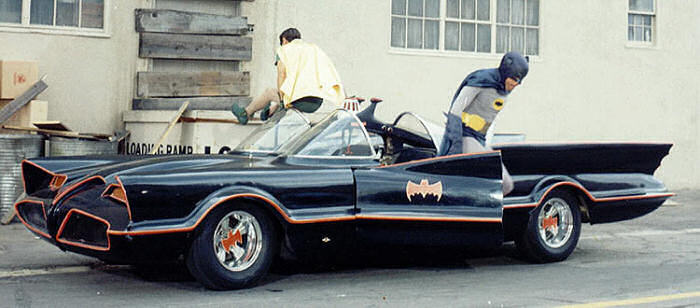
Displayed on the auto show circuit in 1955, the Futura was modified by George Barris into the Batmobile, for the 1966 TV series Batman.

The Futura’s styling was original by 1950s standards — with a double, clear-plastic canopy top, exaggerated hooded headlight pods, and very large, outward-canted tailfins. Nevertheless, the Futura had a complete powertrain and was fully operable, in contrast to many show cars. Its original color was white, and was one of the first pearlescent color treatments, using ground pearl to achieve the paint effect. The Futura was powered by a 368 cubic inch Lincoln engine and powertrain; the chassis derived from a Continental Mark II.

The Futura was a success as a show car, garnering favorable publicity for Ford. It was released as a model kit and a toy, and in a much more subdued form its headlight and tailfin motifs would appear on production Lincolns for 1956 and 1957, such as the Lincoln Premiere and Lincoln Capri. The concave front grille inspired the grille on the 1960 Mercury Monterey and the 1961 Ford Galaxie.


futura3


futura5

The Futura played a prominent part in the 1959 movie It Started with a Kiss, starring Debbie Reynolds and Glenn Ford. For the movie, it was painted red, as the white pearlescent finish did not photograph well.

The concept car was subsequently sold to auto customizer George Barris. Having originally cost $250,000, the Futura was sold to Barris for $1.00 and “other valuable consideration” by Ford Motor Company. As the car was never titled and was therefore uninsurable, it was parked behind Barris’ shop, sitting idle and deteriorating for several years.


futura2


futura


futura6


futura7


futura8


futura9


In 1966 Barris was asked to design a theme car for the Batman television series. Originally the auto stylist Dean Jeffries was contracted to build the car for the show in late 1965, but when the studio wanted the car faster than he could deliver, the project was given to Barris. With the short notice, Barris thought the Futura might work well, and using Jeffries’s initial car, decided that its unusual winged shape would be an ideal starting point for the Batmobile. Barris hired Bill Cushenberry to modify the car’s metalwork. Barris went on to build three fiberglass replicas using the frames and running gear from 1966 Ford Galaxie cars for the show circuit, three of which were covered with a felt-like flocking finish in the 1970s. Barris later acquired a fourth replica, a metal car built on a 1958 Thunderbird.

Barris retained ownership of the car, both after its conversion to the Batmobile, leasing it to the TV studio for filming and after production of the TV series ended, displayed in Barris’ own museum in California. It has also been displayed in the Cayman Motor Museum on Grand Cayman Island.

Barris sold the Batmobile to Rick Champagne at the Barrett-Jackson collector car auction on Saturday, January 19, 2013 in Scottsdale, Arizona for US4.62 million dollars.


futura4