New device puts music in your head — no headphones required

LONDON (AP) — Imagine a world where you move around in your own personal sound bubble. You listen to your favorite tunes, play loud computer games, watch a movie or get navigation directions in your car — all without disturbing those around you.

That’s the possibility presented by “sound beaming,” a new futuristic audio technology from Noveto Systems, an Israeli company. On Friday it will debut a desktop device that beams sound directly to a listener without the need for headphones.

The company provided The Associated Press with an exclusive demo of the desktop prototype of its SoundBeamer 1.0 before its launch Friday.

The listening sensation is straight out of a sci-fi movie. The 3-D sound is so close it feels like it’s inside your ears while also in front, above and behind them.

Noveto expects the device will have plenty of practical uses, from allowing office workers to listen to music or conference calls without interrupting colleagues to letting someone play a game, movie or music without disturbing their significant others.

The lack of headphones means it’s possible to hear other sounds in the room clearly.

The technology uses a 3-D sensing module and locates and tracks the ear position sending audio via ultrasonic waves to create sound pockets by the user’s ears. Sound can be heard in stereo or a spatial 3-D mode that creates 360 degree sound around the listener, the company said.

The demo includes nature video clips of swans on a lake, bees buzzing and a babbling brook, where the listener feels completely transported into the scene.

But even CEO Christophe Ramstein finds it hard to put the concept into words. “The brain doesn’t understand what it doesn’t know,” he said.

In a Noveto demonstration conducted via Zoom from Tel Aviv, SoundBeamer Product Manager Ayana Wallwater was unable to hear the sound of gunshots on a gaming demo.

That’s the point. But she does get to enjoy the reactions of people trying the software for the first time.

“Most people just say, ‘Wow, I really don’t believe it,’” she said.

“You don’t believe it because it sounds like a speaker, but no one else can hear it…it’s supporting you and you’re in the middle of everything. It’s happening around you.”

By changing a setting, the sound can follow a listener around when they move their head. It’s also possible to move out of the beam’s path and hear nothing at all, which creates a surreal experience.

“You don’t need to tell the device where you are. It’s not streaming to one exact place,” Wallwater said.

“It follows you wherever you go. So it’s personally for you — follows you, plays what you want inside your head.”

“This is what we dream of,” she adds. “A world where we get the sound you want. You don’t need to disturb others and others don’t get disturbed by your sound. But you can still interact with them.”

After his first listening experience Ramstein asked himself how it was different from other audio devices.

“I was thinking, ‘Yeah, but is it the same with headphones?’ No, because I have the freedom and it’s like I have the freedom of doing what I want to do. And I have these sounds playing in my head as there would be something happening here, which is difficult to explain because we have no reference for that.”

While the concept of sound beaming is not new, Noveto was the first to launch the technology and their SoundBeamer 1.0 desktop device will be the first branded consumer product.

Ramstein said a “smaller, sexier” version of the prototype will be ready for consumer release in time for Christmas 2021.

“You know, I was trying to think how we compare sound beaming with any other inventions in history. And I think the only one that came to mind is… the first time I tried the iPod I was like, ‘Oh, my God. What’s that?’ I think sound beaming is something that is as disruptive as that. There’s something to be said about it doesn’t exist before. There’s the freedom of using it. And it’s really amazing.”

Amazing Drone Magical Holographic Light Shows in China and the USA

Back in America. Intel dazzled its Folsom audience on July 15, 2018 with a spectacular light show designed to feature 1,500 drones, in an effort to outdo its previous world record of 1,218 Intel Shooting Star drones. The performance displayed multicolored choreography including bright, fireworks-like orbs. A single pilot mans the entire fleet of light-emitting remotely controlled machines.

Nerves of Steel Very High Up

The CN Tower in Toronto has a very  scary attraction, a chance to show you are brave, or in my opinion a chance to just plain show-off and gloat about it to friends by walking around the edge of the tower. 

The tower’s EdgeWalk allows thrill-seekers to stroll outside on the world-famous tower on a 1.5 metre ledge that rings the main pod 356 metres (1,168 feet) above the ground.

Opened in 2011, this walk of wobbly knees sends groups of six to eight people out on the ledge where they walk hands-free while attached to an overhead safety harness.

During the walk, specially trained guides encourage visitors to push their personal limits, even allowing them to lean out 116 storeys above the city.

“Our facilities and engineering team supervised the EdgeWalk project design and build to ensure that it is both exciting and safe,” said CN Tower chief operating officer Jack Robinson in a news release.

“EdgeWalk is both thrilling and unique and pushes visitors to their limits — literally and figuratively,” said Mark Laroche, president and CEO of Canada Lands Company, which owns and operates the CN Tower. The entire EdgeWalk experience takes about 90 minutes, with the walk itself lasting between 20 to 30 minutes.


They give you a breathalyzer before the walk.  To make sure you are not under the influence of alcohol.  Well there goes my opportunity, I would not touch this Edgewalk unless I had gulped down at least 10 ounces of Canadian rye whiskey.

French Atomic Bomb Tests

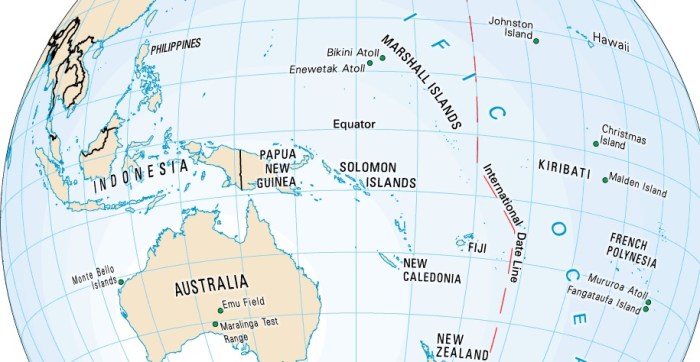
FRENCH ATOMIC BOMB TESTS – 1968 – FANGATAUFA ATOLL

Canopus was the code name for France’s first two-stage thermonuclear test, conducted on August 24, 1968 at Fangataufa atoll in French Polynesia.


In 1966, France was able to use fusion fuel to boost plutonium implosion devices with the Rigel shot. Roger Dautry, a nuclear physicist, was selected by the CEA to lead the development effort to construct a two-stage weapon. France did not have the ability to produce the materials needed for a two-stage thermonuclear device at the time, so 151 tons of heavy water was purchased from Norway and an additional 168 tons from the United States. This heavy water went into nuclear reactors in 1967 to produce tritium needed for the device.

The announcement by France in the late 1960s to test a hydrogen bomb provoked the People’s Republic of China to conduct a full scale hydrogen bomb test of its own on June 17, 1967.

France was to test the new device as part of a 5 shot series conducted at the nuclear testing grounds in French Polynesia. The device weighed three tons and used a lithium deuteride secondary stage with a highly enriched uranium jacket primary.

Fangataufa was selected as the location of the shot due to its isolation in respect to the main base on Mururoa. The device was suspended from a large hydrogen filled balloon. It was detonated at 18:30:00.5 GMT with a 2.6 megaton yield at an altitude of 1800 feet. As a result of the successful detonation, France became the 5th thermonuclear nation.


Chimp is nanny to tiger cub

This two year old chimpanzee called Do Do is showing off a motherly instinct to rival even the most maternal of mankind. They were photographed at Samut Prakan Crocodile Farm and Zoo on the outskirts of Bangkok, Thailand. The farm doesn’t just contain crocodiles. Monkeys and tigers also live there, alongside elephants, lions, horses and hippopotamuses. These adorable images reveal the close bond that has formed between chimpanzee and a two month old tiger cub called Aorn.


Memorable quote from Blazing Saddles movie 1974


The arch villain, Hedley Lamarr, played by Harvey Korman wants to put together a bad crew to attack the good guys.  So he tells the Slim Pickens character:

 I want rustlers, cutthroats, murderers, bounty hunters, desperados, mugs, pugs, thugs, nitwits, half-wits, dim-wits, vipers, snipers, con men, indian agents, mexican bandits, muggers, buggerers, bushwackers, hornswagglers, horse thieves, bull dykes, train robbers, bank robbers, ass kickers, shit kickers, and methodists!
Is there something about Methodists I don’t know?

The Story of the Stuntman who attempted to Zoom over Niagara Falls

Robert Overacker, a 39-year-old man from Camarillo, California, went over the Canadian Horseshoe Falls at approximately 12:35 p.m. October 1st, 1995 on a single jet ski.

Entering the Niagara River near the Canadian Niagara Power Plant, he started skiing toward the Falls. At the brink, he attempted to discharge a rocket propelled parachute that was on his back. It failed to discharge. His brother and a friend witnessed the stunt.

His body was recovered by Maid of the Mist staff. Overacker, married with no children, became the fifteenth person since 1901 to intentionally go over the Falls in or on a device.

NIAGARA FALLS, Ontario (AP) _ An autopsy shows that a California car salesman who tried to ride a Jet Ski over Niagara Falls was not killed in the 180-foot fall but drowned.

Robert Overacker had no broken bones or any other injuries from the fall, Dr. Azim Velji, the pathologist who performed the autopsy, said Monday.

Overacker, 39, of Camarillo, Calif., had been training for the stunt for seven years. During the jump Sunday, he wore a rocket that was to propel him into the air, and he carried a parachute that never opened.

Several tourists said they saw Overacker at the base of the falls moving his arms as if he were trying to swim.

Overacker, who graduated from a California stunt school, apparently was aware of the risks: Just before leaving home last week, he made arrangements for his own funeral.

The Maunsell Sea Forts

The Maunsell Sea Forts were small fortified towers built in the Thames and Mersey estuaries during the Second World War to help defend the United Kingdom. They were named after their designer, Guy Maunsell. The forts were decommissioned in the late 1950s and later used for other activities. One became the Principality of Sealand; boats visit the remaining forts occasionally, and a consortium called Project Redsands is planning to conserve the fort situated at Redsand.

Maunsell sea forts, built in the Thames estuary and operated by the Royal Navy, were to deter and report German air raids following the Thames as a landmark, and attempts to lay mines by aircraft in this important shipping channel.

There were four naval forts:

  • Rough Sands (HM Fort Roughs) (U1)
  • Sunk Head (U2)
  • Tongue Sands (U3)
  • Knock John (U4)


The design was a concrete construction; a pontoon barge on which stood two cylindrical towers on top of which was the gun platform mounting two 3.75-inch guns and two 40 mm Bofors guns. They were laid down in dry dock and assembled as complete units. They were then fitted out — the crews going on board at the same time for familiarisation — before being towed out and sunk onto their sand bank positions in 1942.

The naval fort design was the latest of several that Maunsell had devised in response to Admiralty inquiries. Early ideas had considered forts in the English Channel able to take on enemy vessels.

Knock John sea fort