Month: November 2020
Top secret U.S. carbon fiber bomb-the Blackout Bomb
The U.S. has used this bomb to knock out power grids in Serbia and Iraq. It is currently delivered by F-15 E Strike Eagles.
The BLU-114/B is a special-purpose munition for attacking electrical power infrastructure. Although very little is known about this highly classified weapon, reportedly it functions by dispensing a number of submunitions which in turn disperse large numbers of chemically treated carbon graphite filaments which short-circuit electrical power distribution equipment such as transformers and switching stations. The weapon is sometimes referred to as a “soft bomb” since its effects are largely confined to the targeted electrical power facility, with minimal risk of collateral damage.
This previously undisclosed weapon, carried by the F-117A Nighthawk stealth fighter, was used for the first time on 02 May 1999 as part of Operation ALLIED FORCE strikes against Serbia. Following these attacks lights went out over 70 per cent of the country. The munition was subsequently used on the night of 07 May 1999 to counter Serbian efforts to restore damage caused by the initial attack.
Similar in concept to the “Kit-2” Tomahawk sea-launched cruise missile warhead used in the opening days of Operation DESERT STORM, few details of either weapons can be established on an unclassified basis. The missiles, packed with bomblets filled with small spools of carbon-fiber wire, deprived Iraq of 85% of its generating capacity. During the Gulf War Iraq responded to the use of this type of munition by disconnecting electrical power grid circuit breakers. Attacks on Iraqi power facilities shut down their effective operation and eventually collapsed the national power grid. Coalition planners in the theater initially directed that the switching system be targeted, rather than the generator halls. For the first three days, the ATO explicitly contained specific aimpoints for strikes against electrical production facilities. Subsequently the specific aimpoints were only sporadically included. When wing-level planners lacked specific guidance on which aimpoints to hit at electrical power plants, they sometimes chose to target generator halls, which are among the aimpoints listed in standard targeting manuals.

South Korea has announced plans to build graphite bombs for use against North Korea to paralyse its electric grid in the event of a new war breaking out on the Korean Peninsula, subject to funding from the country’s finance ministry. The weapons have been developed by South Korea’s Agency for Defense Development, Yonhap news agency reported, as one element of the kill chain pre-emptive strike program. Contractors were selected in 2020 and the weapons are intended to be delivered by 2024.

Nasa SpaceX launch: Astronaut crew heads to orbit
 IMAGE
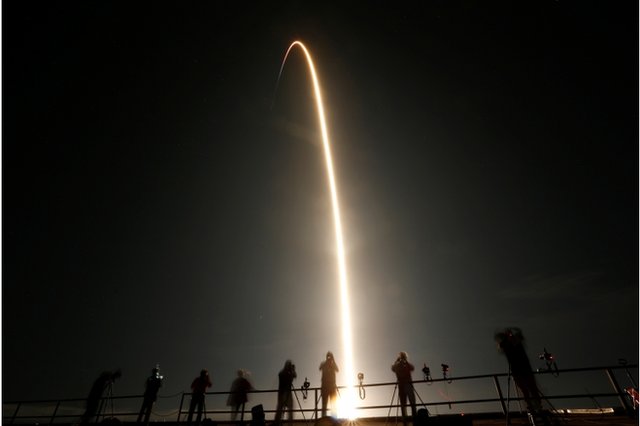
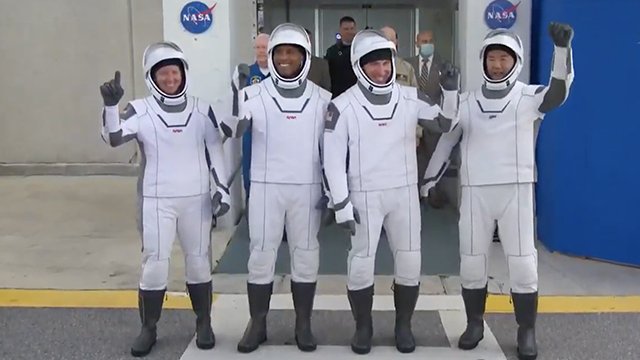
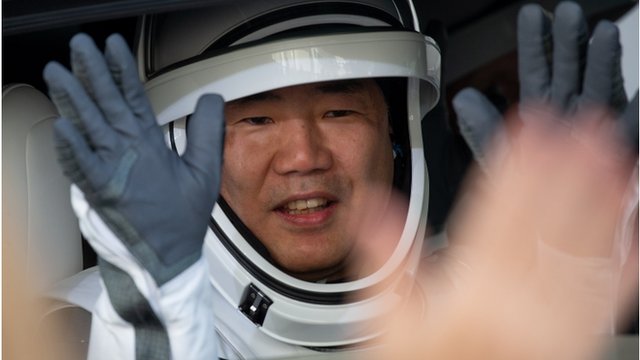
IMAGE Four astronauts – three from the US and one from Japan – have launched from Florida on a mission to the International Space Station (ISS).
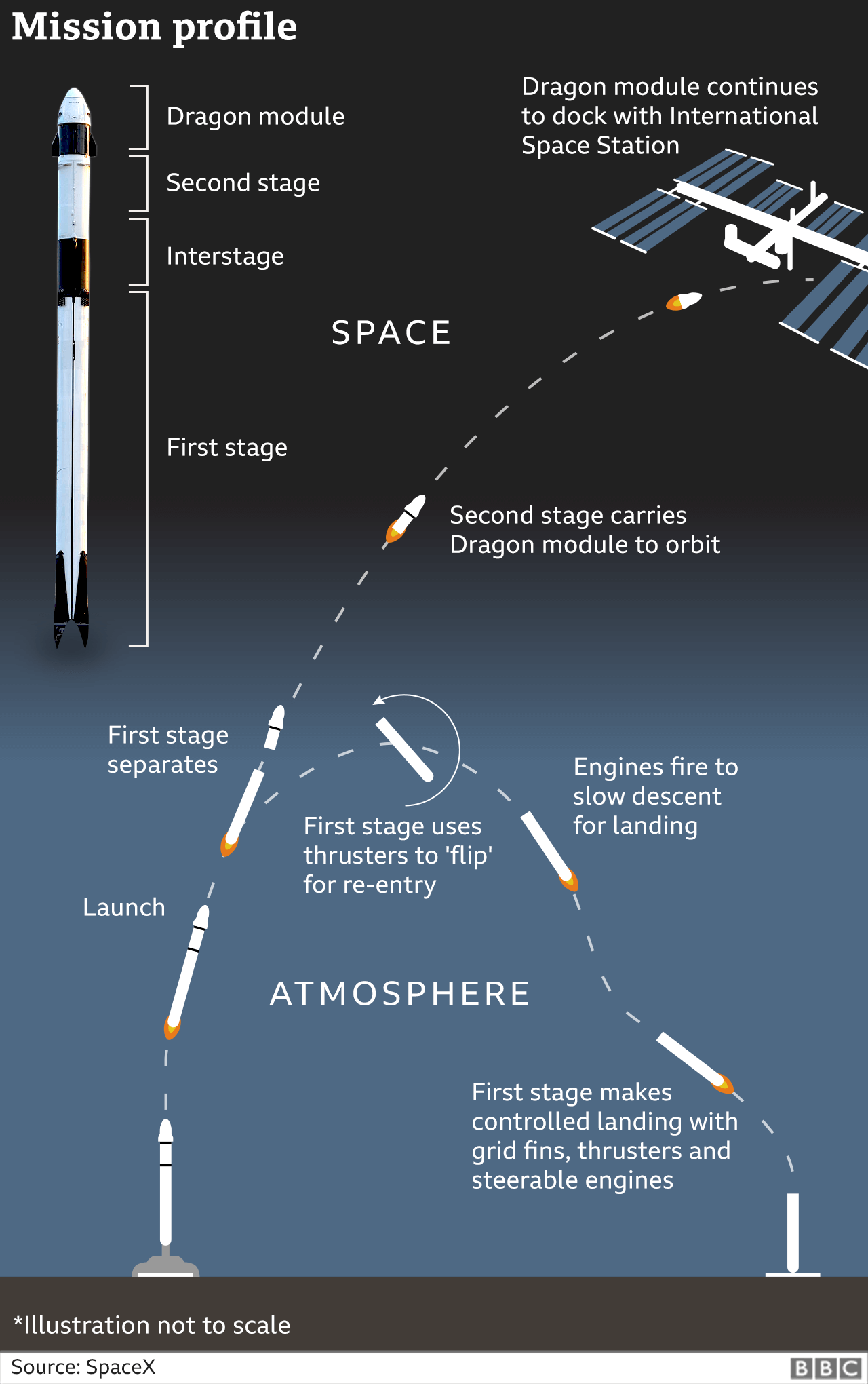
The crew rode to orbit in a rocket and capsule provided by the SpaceX company.
It’s only the second time the firm has supplied the service.
The US space agency Nasa has said it is now entering a new era in which routine astronaut journeys to low-Earth orbit are being conducted by commercial providers.
The four individuals making their way up to the ISS are the Americans Michael Hopkins, Victor Glover and Shannon Walker, and the highly experienced Japanese space agency (Jaxa) astronaut Soichi Noguchi.
By participating in this mission, Noguchi becomes only the third person in history to leave Earth in three different types of space vehicle, having previously flown on Soyuz and shuttle hardware.
 IMAGE
IMAGE 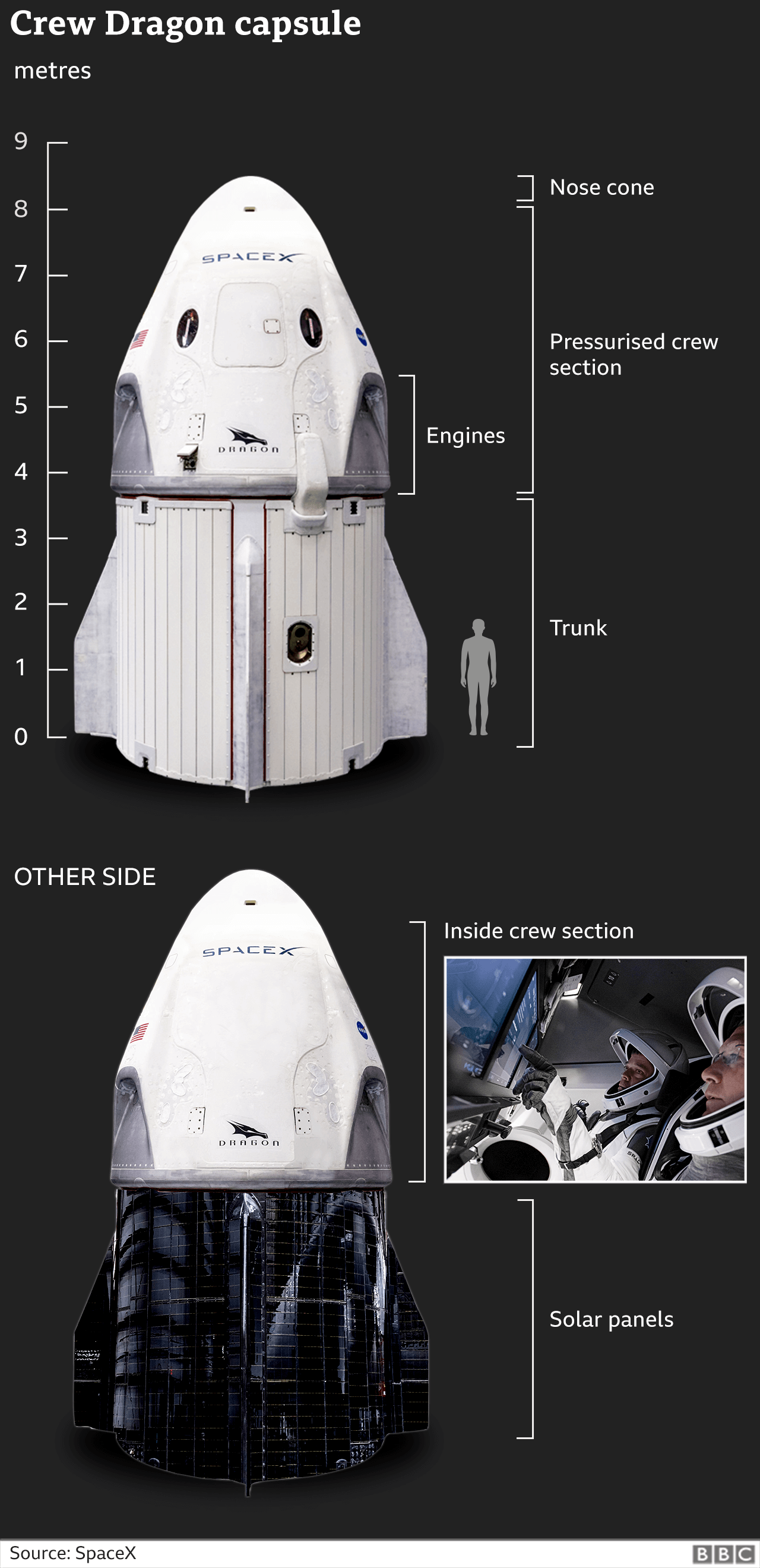

The crew’s Falcon rocket and Dragon capsule left the pad at the Kennedy Space Center at 19:27 local time (00:27 GMT, Monday).
It will take just over a day to reach the station. A docking with the orbiting platform is set for about 0400 GMT on Tuesday.
SpaceX has signed contracts with Nasa valued in excess of $3bn (£2.3bn) to develop, test and fly an astronaut taxi service.
As part of this relationship, the company ran a demonstration mission in May in which astronauts Doug Hurley and Bob Behnken were taken to the station and then returned safely to Earth.
The contracted arrangements also call for six “operational”, or routine, missions – this flight being the first.
Nasa has a similar deal with the Boeing aerospace company, although its service is more than a year behind SpaceX.
The agency says its new model of contracting out transportation to low-Earth orbit is saving billions of dollars in procurement costs.
It intends to use these economies to fund its Moon and Mars ambitions. To that end, Nasa is close to testing the giant new rocket it has commissioned to take astronauts back to the lunar surface, a goal it hopes to attain in 2024, or soon after.
Hopkins, Glover, Walker and Noguchi will stay on the ISS for six months.
Just before they return to Earth, they’ll be joined aloft by another SpaceX-launched crew for a brief handover.
Nasa retired its winged space shuttles in 2011. In the intervening years, it’s been buying seats for its astronauts on Russian Soyuz vehicles.
This purchase option will now close in favour of the new American-sourced taxis. But US astronauts will continue to go to the station on Soyuz from time to time – it’s just that no money will change hands.
Instead, Russian cosmonauts will get flights in the American capsules in exchange.
 IMAGE
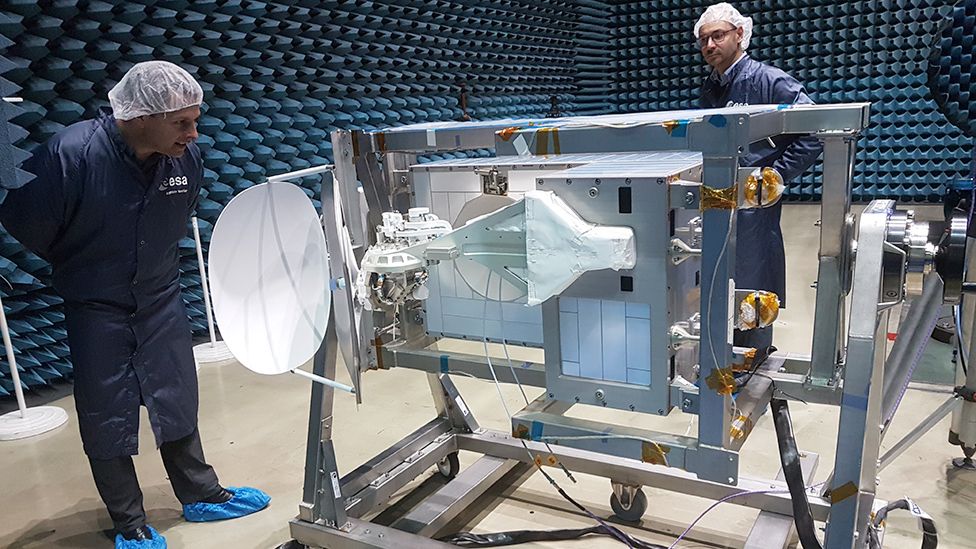
IMAGE The new crew will have at least four spacewalks to perform in their time at the station.
In one of those walks, they will install the first significant UK industrial contribution to the platform.
This is the Colka communications terminal. Made by MDA UK, the radio equipment will enable astronauts to connect with scientists and family on Earth at home broadband speeds.
ColKa will be fixed to the exterior of Europe’s ISS research module, Columbus.
The Only Man to Be Buried on the Moon
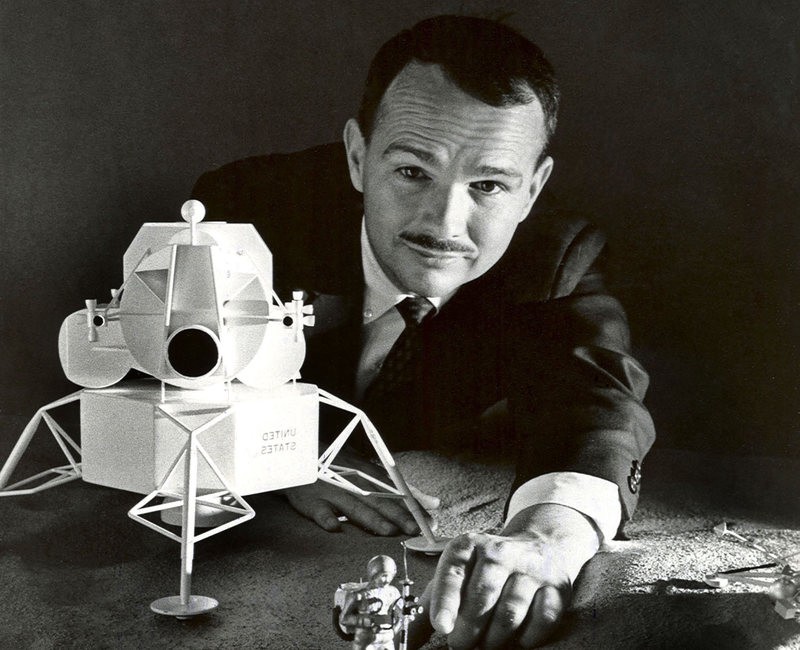
 Humanity has seen only a handful of people that actually had the honor to step on earth’s natural satellite, but at present, there is only one person who is “buried” on an astronomical body orbiting Earth. The name of the soul that now rests on the Moon is Eugene Shoemaker, an astrogeologist who had worked with NASA since the 1960s and became famous when a comet that crashed on Jupiter in 1994 received his name (Shoemaker-Levy Comet).
The reason this comet became so famous is that this was the first time in human history that we had the chance to witness a planetary collision. This event was mainly reported by Eugene Shoemaker and David Levy, hence the two monikers within the comet’s name.
A long-lived passion
As an astrogeologist, he had always been fascinated by space and the idea of humans colonizing the earth’s natural satellite. Eugene was also schooled in the world of geology and this is where he used both of high interests to research the Moon and prepare astronauts for the type of soil/rock they would land on. As much as he loved the idea of traveling to the Moon he always knew that he may not be able to make it as he was the brain and not the muscle of NASA.
He was also very famous in the United States not only due to his intensive studies of craters around the state but also for founding the Program for archeological studies within the US in the 1960s. All of his knowledge was a very valuable element in the success of the Apollo missions and other NASA projects. In fact, the origins of what’s now known as Meteor Crater in Arizona had been uncertain before his Ph.D. dissertation settled the matter. This was the same crater that most astronauts that took part in the Apollo missions were trained in as it was quite similar to the terrain on the Moon.
The better the astronauts understood the terrain they were about to face the better they could get prepared for what was ahead. Getting to the Moon was only half of the mission. As mentioned before, Eugene’s long dream since he first approached astronomy was to go to the Moon to see our beautiful world from a different perspective. However, his focus was on his own work, he knew he was more valuable as an astronomist and geologist than as an astronaut.
Reaching his final destination
Sadly, his life was cut short due to a car accident that took place on the 18th of July 1997. However, this wasn’t going to be Eugene’s final journey. A close work colleague had the idea to actually send his corpse to the Moon as she knew this was his life-long dream. NASA thought that this was a very good idea to show their appreciation for his work over the years. His body was cremated as transporting his ashes would have been much easier than transporting his corpse.
His ashes were loaded on the Lunar Prospector, a rocket which launched on the 6th of January 1998 with the goal of reaching the South pole of the Moon. Eugene Shoemaker’s ashes were inside a special polycarbonate capsule produced by a company called Celestis that was actually specializing in sending dead people to space but never onto the Moon. The outside of the capsule was marked with his name, his date of birth, and date of death as well as a picture of him training astronauts in a geology field trip (the same picture you can see above).
The Luna prospector reached the moon on the 31st of July 1999. On the same day, they launched the capsule containing Shoemaker’s ashes which crashed onto the moon, thus “burying” Eugene Shoemaker in the place he had always wanted to reach.
From: medium.com
Cowboys and Dinosaurs on the Loose!

The Valley of Gwangi is a 1969 American western-fantasy film directed by Jim O’Connolly and written by William Bast. The film is also known as Gwangi, The Lost Valley, The Valley Time Forgot, and The Valley Where Time Stood Still. It was filmed in Technicolor and is known for its creature effects provided by Ray Harryhausen, being the last prehistoric-themed film animated by him.
World’s funniest jokes according to Laughlab

Two hunters are out in the woods when one of them collapses. He doesn’t seem to be breathing and his eyes are glazed. The other guy whips out his phone and calls the emergency services. He gasps, “My friend is dead! What can I do?”. The operator says “Calm down. I can help. First, let’s make sure he’s dead.” There is a silence, then a gun shot is heard. Back on the phone, the guy says “OK, now what?”
The second place finisher and early leader was this joke, submitted by Geoff Anandappa of Blackpool: Sherlock Holmes and Dr Watson were going camping. They pitched their tent under the stars and went to sleep. Sometime in the middle of the night Holmes woke Watson up and said: “Watson, look up at the stars, and tell me what you see.” Watson replied: “I see millions and millions of stars.” Holmes said: “And what do you deduce from that?” Watson replied: “Well, if there are millions of stars, and if even a few of those have planets, it’s quite likely there are some planets like Earth out there. And if there are a few planets like Earth out there, there might also be life.” And Holmes said: “Watson, you idiot, it means that somebody stole our tent.”
While this was the top joke in the UK:
A woman gets on a bus with her baby. The bus driver says: “That’s the ugliest baby that I’ve ever seen. Ugh!” The woman goes to the rear of the bus and sits down, fuming. She says to a man next to her: “The driver just insulted me!” The man says: “You go right up there and tell him off – go ahead, I’ll hold your monkey for you.”
New Barbie Dolls available in ‘curvy, tall and petite’ sizes

Barbie, the iconic plastic toy doll model, is getting three new body types this year.
The US company behind the famous toy, Mattel, is adding “tall, curvy and petite” body shapes to its line-up of the fashion dolls.
Several skin tones, eye colours and hair styles will also be added to the collection, the company said.
Barbie’s figure has come under fire for years, with critics arguing it set an unrealistic body image for girls. With the new body shapes, the toy makers say they are “offering girls choices that are more reflective of the world they see today”.
Last year, the company introduced 23 new dolls to its so-called Fashionistas line with varied skin and hair colours, and a much touted flat foot – replacing Barbie’s signature heels.
With this year’s update, the Barbie Fashionistas line will feature:
- 33 new dolls
- 30 hair colours
- 24 hairstyles
- 22 eye colours
- 14 face shapes
- 7 skin tones
- 4 body shapes – original, plus tall, curvy and petite

Barbie is finally sort of all-inclusive: almost all shapes, heights and races. Way to go Mattel.

However, some people think Mattel hasn’t gone far enough. Since Mattel is trying to include young females from all possible life scenarios, here are some life situations that Barbie experiences that are real and unabashed.

Hot sensuous Barbie

Couch-potato dope smoking plump Barbie.

Sedentary and lethargic Barbie.


Addicted to crack street Ho Barbie.

Barbie and Ken EXPLOSION!
Street Fashions in Tokyo
If you are not in Japan, more precisely in Tokyo, how can you know what’s going on? I have a simple answer to that question – fashion photos from the streets of Tokyo. Each season those styles change, subcultures come and go and brands are born and gone. In a fast moving fashion town like Tokyo, trends may be gone by the time you read about them. Check these pictures to see the latest trends and trend-busters in Harajuku, Shibuya, and beyond.





Groovy Photos of High School Fashion 1969 America


Oh CA rumba!
 The MarkoZen Blog