
Month: June 2020



Cool Mothman Statue
In West Virginia folklore, the Mothman is a creature reportedly seen in the Point Pleasant area from November 12, 1966, to December 15, 1967. The first newspaper report was published in the Point Pleasant Register dated November 16, 1966, titled “Couples See Man-Sized Bird … Creature … Something”. The national press soon picked up the reports and helped spread the story across the United States.
The Mothman was introduced to a wider audience by Gray Barker in 1970 and later popularized by John Keel in his 1975 book The Mothman Prophecies, claiming that there were supernatural events related to the sightings, and a connection to the collapse of the Silver Bridge.
The Mothman appears in popular culture. The 2002 film The Mothman Prophecies, starring Richard Gere, was based on Keel’s book. An annual festival in Point Pleasant is devoted to the Mothman legend.
Point Pleasant held its first Annual Mothman Festival in 2002. The Mothman festival began after brainstorming creative ways for people to visit Point Pleasant. The group organizing the event chose the Mothman to be center of the festival due to its uniqueness, and as a way to celebrate its local legacy in the town.
According to the event organizer, Jeff Wamsley, the average attendance for the Mothman is an estimated 10-12 thousand people per year.
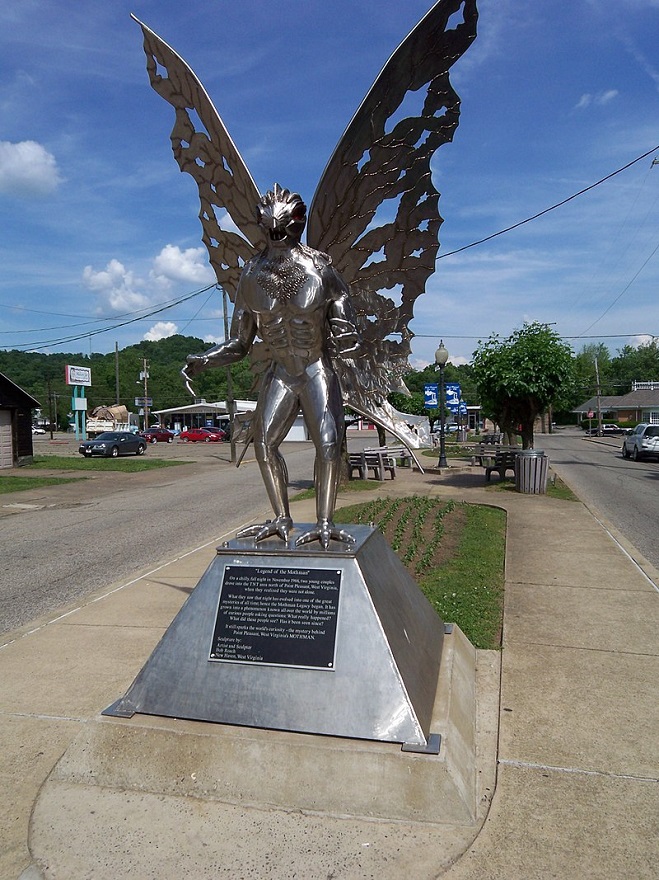
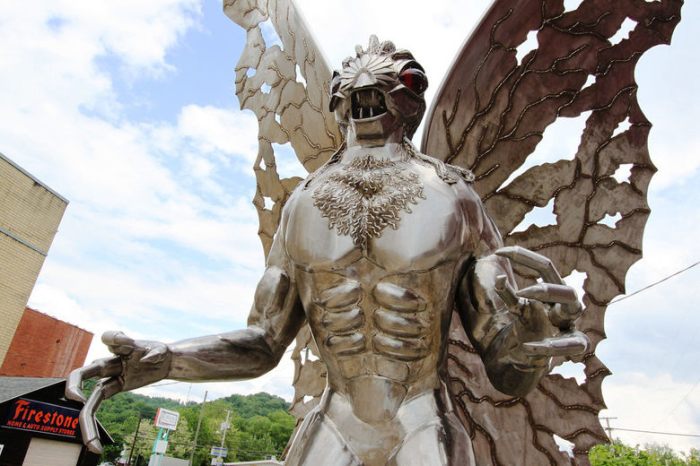
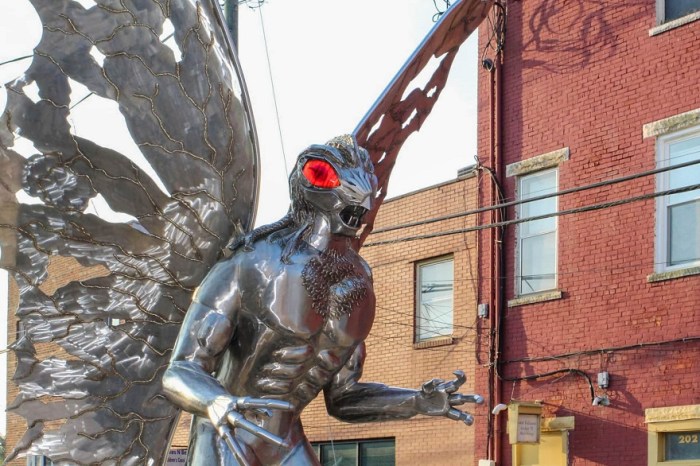
A 12-foot-tall metallic statue of the creature, created by artist and sculptor Bob Roach, was unveiled in 2003. The Mothman Museum and Research Center opened in 2005. The festival is held on the third weekend of every September, hosting guest speakers, vendor exhibits, pancake-eating contests, and hayride tours of locally notable areas.
Danny DeVito in NYC walking his wiener dog that’s wearing a dress
I hope the dog isn’t going through a trans-gender modification process.


No bodyguards?

Not like back in the day.

Trump going ahead with campaign rally
WASHINGTON — Officials in Tulsa, Okla., are warning that President Trump’s planned campaign rally on Saturday — his first in over three months — is likely to worsen an already troubling spike in coronavirus infections and could become a disastrous “super spreader.”
They are pleading with the Trump campaign to cancel the event, slated for a 20,000-person indoor arena — or at least move it outdoors.
“It’s the perfect storm of potential over-the-top disease transmission,” said Bruce Dart, the executive director of the Tulsa health department. “It’s a perfect storm that we can’t afford to have.”

Tiger-Dog and Dog-Pandas, only in China.
The Chinese are a very innovative people. They are known for many inventions. They invented gunpowder, printing, paper and the compass to name a few. Now they have come up with a completely novel innovation. Painting pets to look like other animals. The unsuspecting canine below is an example of this latest craze in the land of the Great Wall.

Here are more painted and strangely groomed critters.


Buffalo/Bison


Horse

Camel

Panda again


Barack and Michelle Obama react to a child in a pope costume and mini popemobile during Halloween

This kid fell asleep during an event at the Obama White House.

The Heavyweight Cattle Breed of The World

The Chianina is an Italian breed of cattle, formerly principally a draught breed, now raised mainly for beef. It is the largest and one of the oldest cattle breeds in the world. The famous bistecca alla fiorentina (‘beefsteak Florentine style’) is produced from its meat.
One of the oldest breeds of cattle, the Chianina originates in the area of the Valdichiana, from which it takes its name, and the middle Tiber valley. Chianina cattle have been raised in the Italian regions of Tuscany, Umbria and Lazio for at least 2200 years.

The Chianina is both the tallest and the heaviest breed of cattle. Mature bulls stand up to 1.8 m (5 ft 11 in), and castrated oxen may reach 2 m (6 ft 7 in). It is not unusual for bulls to exceed 1,600 kg (3,500 lb) in weight. Males standing over 1.51 m (4 ft 11 in) at 12 months are considered top-grade. A Chianina bull named Donetto holds the world record for the heaviest bull, reported by one source as 1,740 kg (3,840 lb) when exhibited at the Arezzo show in 1955, but as 1,780 kg (3,920 lb) and 1.85 m (6 ft 1 in) tall at the age of 8 by others including the Tenuta La Fratta, near Sinalunga in the province of Siena, where he was bred. Cows usually weigh 800–900 kg (1,800–2,000 lb), but commonly exceed 1,000 kg (2,200 lb); those standing over 1.65 m (5 ft 5 in) are judged top-grade. Calves routinely weigh over 50 kg (110 lb) at birth. The coat of the Chianina is white; very slight grey shading round the eyes and on the foreparts is tolerated. The skin, muzzle, switch, hooves and the tips of the horns are black.
At the end of 2010 there were 47,236 head registered in Italy, of which more than 90% were in Tuscany, Umbria and Lazio; it is, after the Marchigiana, the second indigenous beef breed of Italy.

Don’t want one these beasts to get agitated when you are nearby.
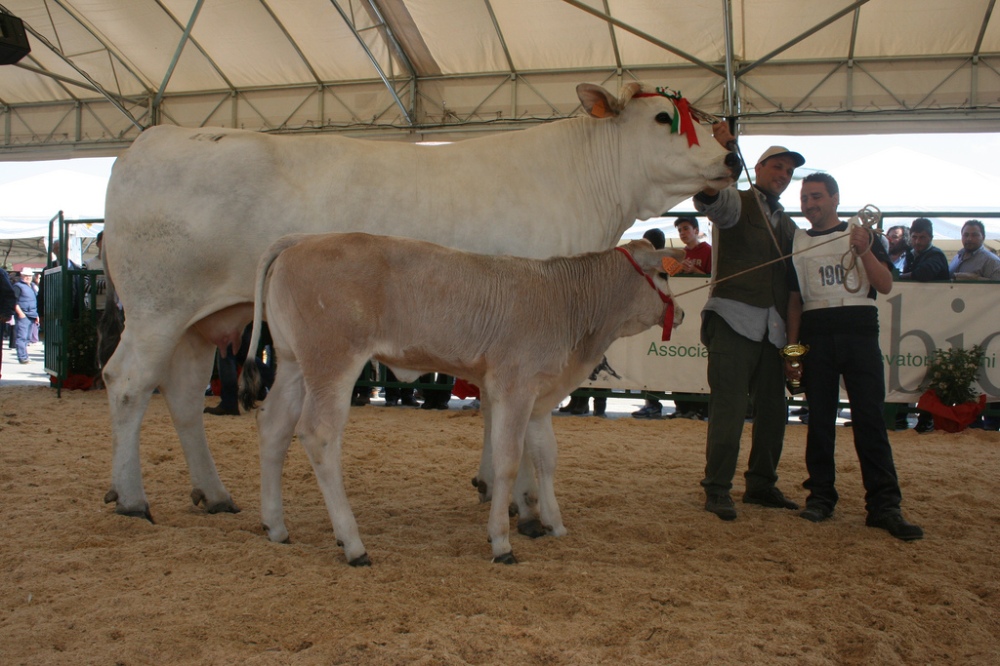

Their history as draft animals means that Chianinas were bred for docile temperaments, as they had to work closely with people. That good disposition is important in a cow as large as the Chianina.

 The MarkoZen Blog