Nordstrom Tower

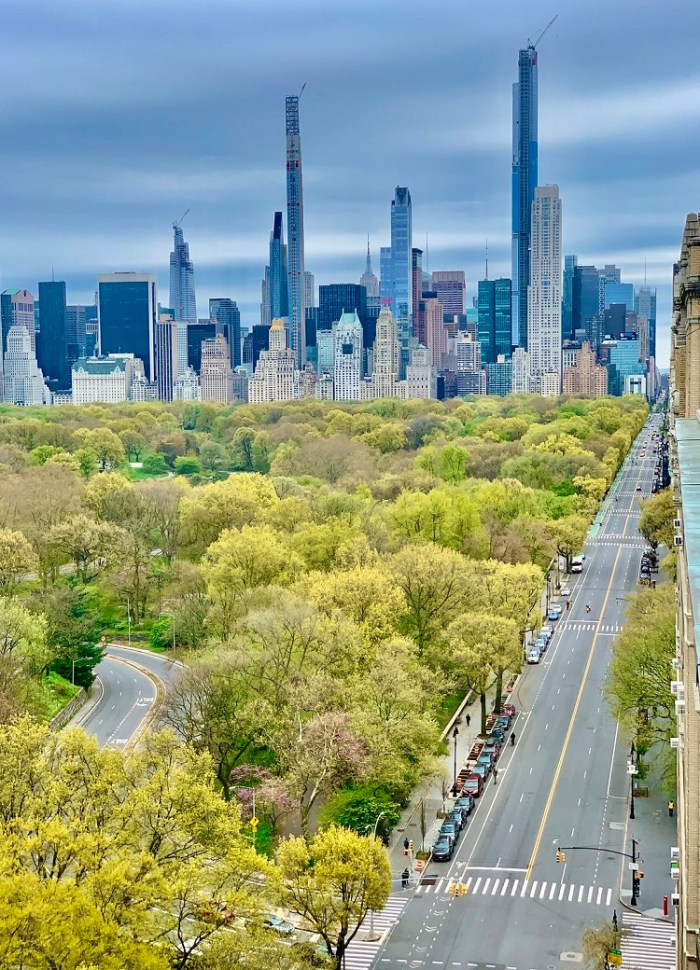
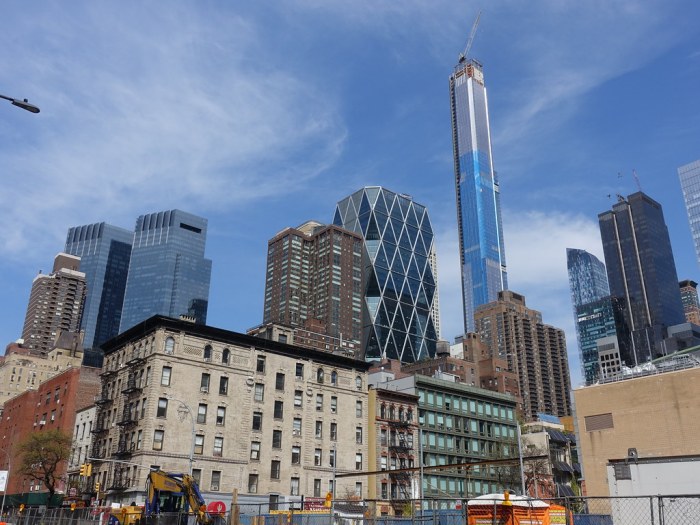
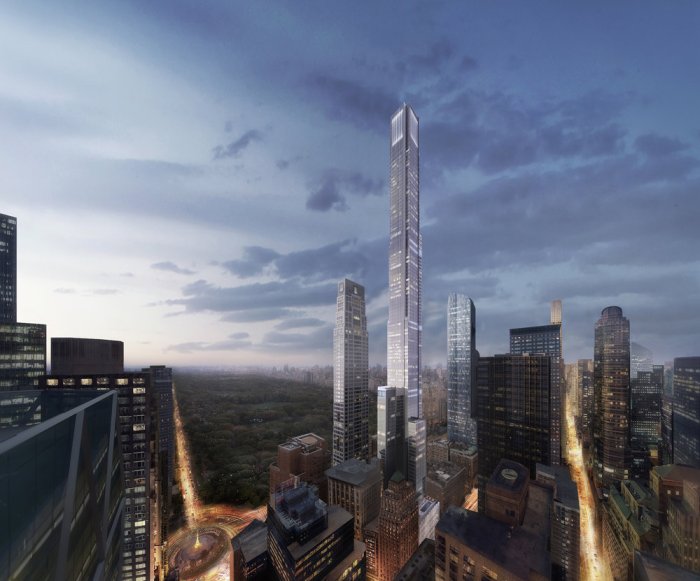
Central Park Tower, also known as the Nordstrom Tower, is a residential supertall skyscraper being developed by Extell Development Company and Shanghai Municipal Investment Group along Billionaires’ Row on 57th Street in Midtown Manhattan, New York City. Designed by Adrian Smith + Gordon Gill Architecture, the building rises 1,550 feet (472 m) and is the second-tallest skyscraper in the United States and the Western Hemisphere, the 15th tallest building in the world, the tallest residential building in the world (the much taller Burj Khalifa in Dubai has 900 residential units, but is mixed-use), and the tallest building outside Asia by roof height.

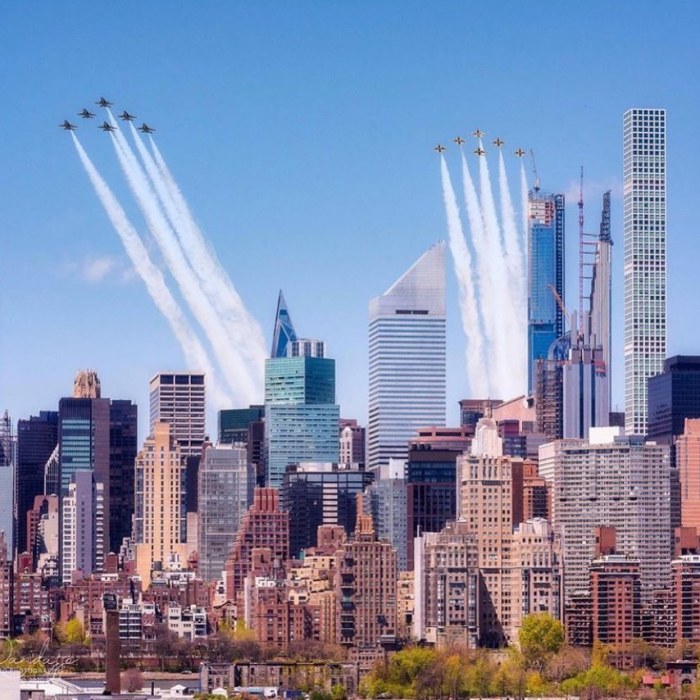
Above: the US Air Force Thunderbirds and US Navy Blue Angels air demonstration teams flying over NYC.

Artist rendering of the completed building.


Giant Commercial Aircraft Maintenance Base in Southern California

Southern California Logistics Airport, also known as Victorville Airport, is a public airport located in the city of Victorville in San Bernardino County, California approximately 20 mi (32 km) north of San Bernardino. Prior to its civil usage, the facility was George Air Force Base from 1941 to 1992 which was a front-line United States Air Force base.

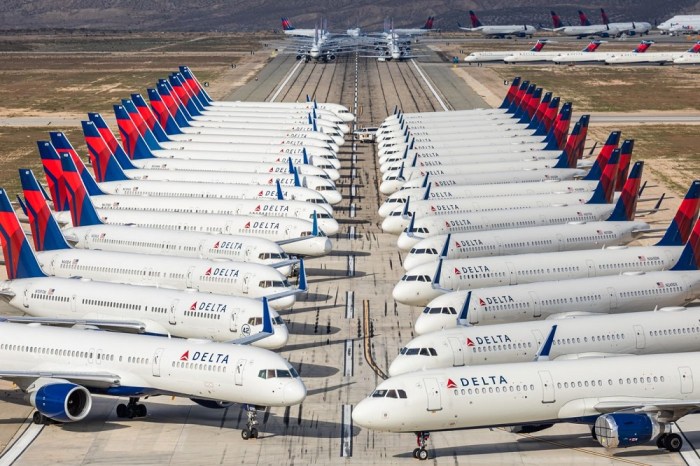
The airport is home to Southern California Aviation, a large transitional facility for commercial aircraft. The main activities at the airport are MRO, an aviation term meaning Maintenance and Repair Organization.  Major overhauls of commercial jet airliners are undertaken at Victorville.  It is the largest MRO facility in the world.

victor6


victor7


victor8

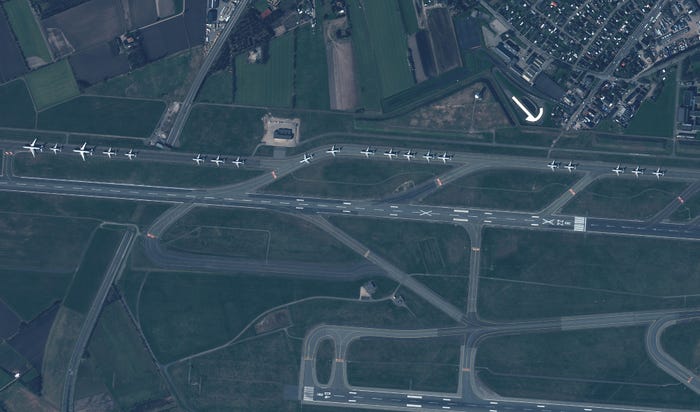
With airlines grounding up to 80 percent of their fleets due to covid-19, Victorville has been inundated with dozens of more airliners.

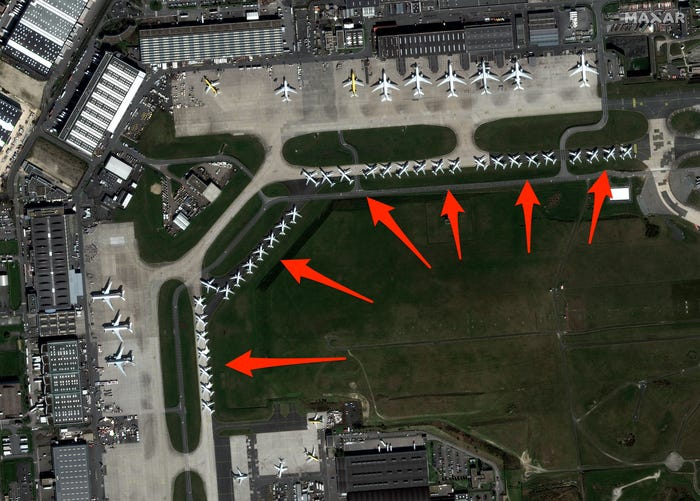
Other international airports are also being used for storage.

Charles De Gaulle in Paris

Copenhagen

South Korean baseball resumes with preseason game in front of empty stands

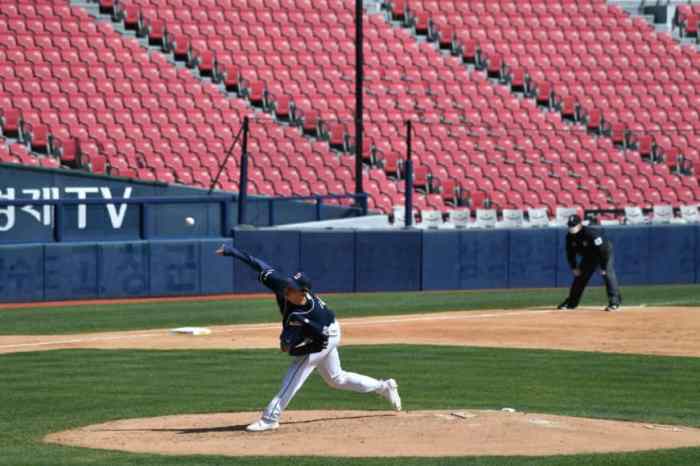
Doosan Bears pitcher Lee Young-ha (L) throws a ball in front of empty stands as a referee (R) wearing a face mask looks on during a pre-season baseball game between Seoul-based Doosan Bears and LG Twins at Jamsil stadium in Seoul on April 21, 2020. – Professional sport returned to South Korea on April 21 as coronavirus restrictions ease, with the first pitch thrown in a baseball preseason derby in front of empty stands. (Photo by Jung Yeon-je / AFP)

Professional sport returned to South Korea on Tuesday as coronavirus restrictions ease in the country, with the first pitch thrown in a baseball preseason derby in front of empty stands.

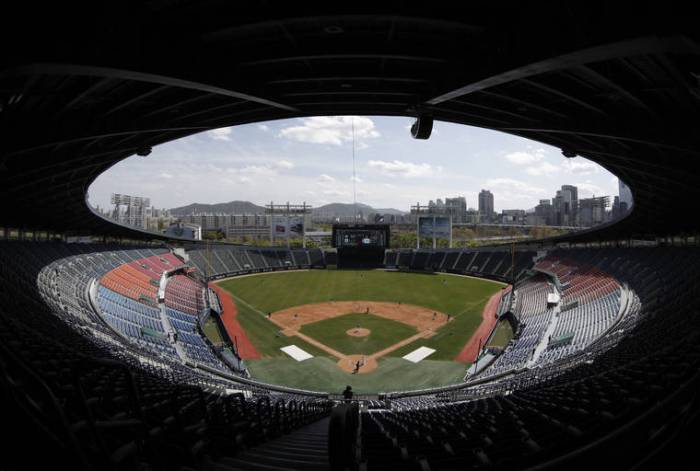
The Seoul-based Doosan Bears and LG Twins are Korea’s biggest rivals in the country’s most popular spectator sport and their shared stadium in the capital’s Jamsil area would usually be packed.

But with fans barred, the stands were empty as the Twins’ Cha Woo-chan threw the first pitch.

Even the cheerleaders — an essential element of firing up the atmosphere at what would normally be a feverish encounter — were also absent.

The stadium was silent except for the continuous clicking of camera shutters from around 50 members of the media, and occasional shouts from the dugouts.

Reporters were not allowed to approach the players.

“Although it is being held behind closed doors, I think it’s good that we can hold these games for the fans who are watching from their homes,” said LG Twins media officer Kim Kwang-hwan.

“We hope that the coronavirus outbreak will be contained soon so many fans can come and enjoy our game just like previous years.”

The Jamsil derby was among the first of 20 preseason games, and the Korea Baseball Organization said Tuesday the regular season would start behind closed doors on May 5.

Strict health guidelines were being enforced.

Players must have their temperature checked twice before the games, with facemasks strongly recommended in all parts of the stadium, except for the field and the dugout during the game, the KBO said.

Players have been asked not to shake hands or exchange high-fives, while spitting is prohibited.

The Doosan Bears were last year’s KBO champions but the LG Twins ran out 5-2 winners in a one-sided encounter.

Even so, more than 700,000 fans tuned in to watch a livestream of the match on Naver, the country’s largest online portal.

Japantimes.com

King Alfred’s Tower

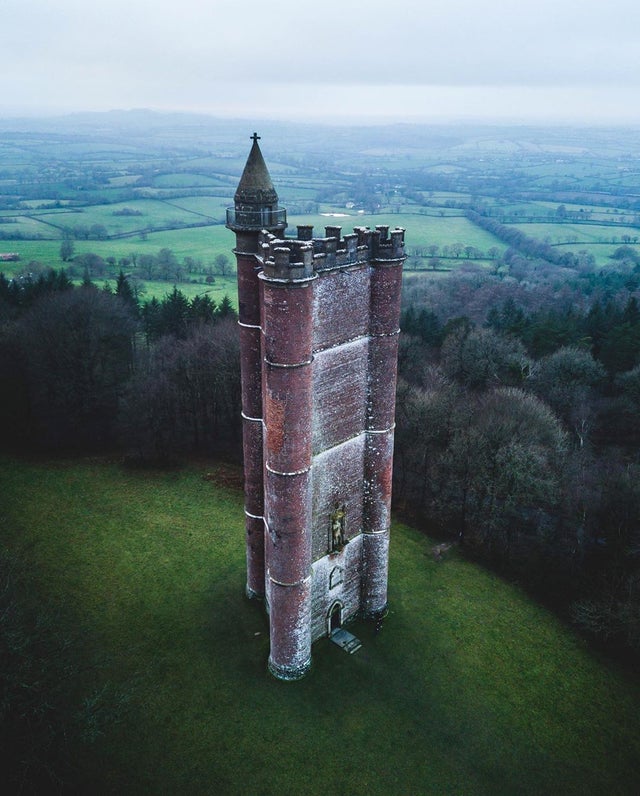
King Alfred’s Tower, also known as The Folly of King Alfred the Great or Stourton Tower, is a folly tower. It is in the parish of Brewham in the English county of Somerset, and was built as part of the Stourhead estate and landscape. The tower stands on Kingsettle Hill and belongs to the National Trust. It is designated as a grade I listed building.

Henry Hoare II planned the tower in the 1760s to commemorate the end of the Seven Years’ War against France and the accession of King George III near the location of ‘Egbert’s Stone’ where it is believed that Alfred the Great, King of Wessex, rallied the Saxons in May 878 before the important Battle of Edington. The tower was damaged by a plane in 1944 and restored in the 1980s.

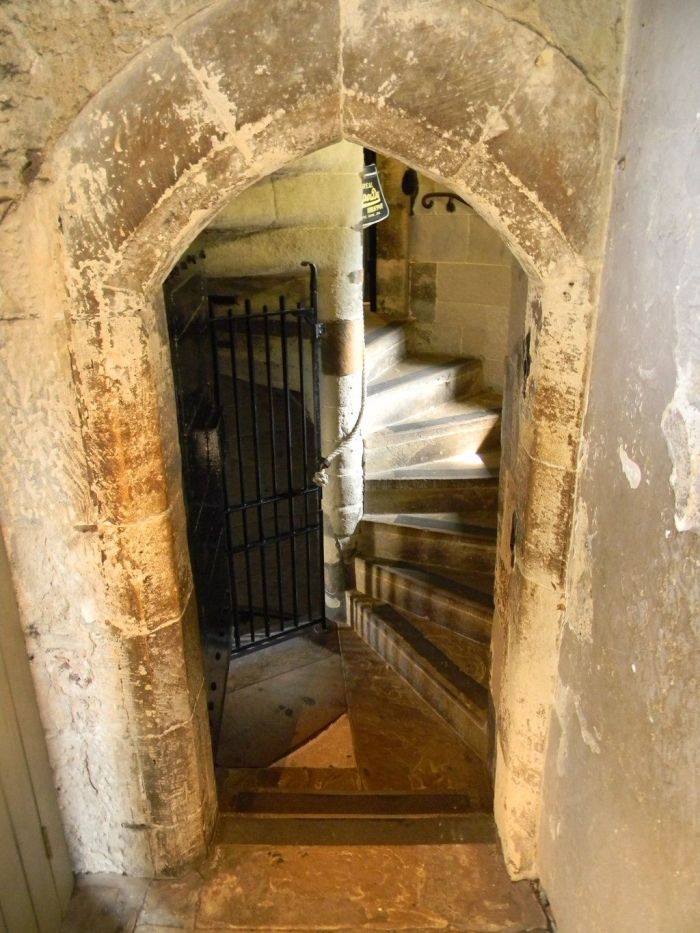
The 49-metre-high (161 ft) triangular tower has a hollow centre and is climbed by means of a spiral staircase in one of the corner projections. It includes a statue of King Alfred and dedication inscription.
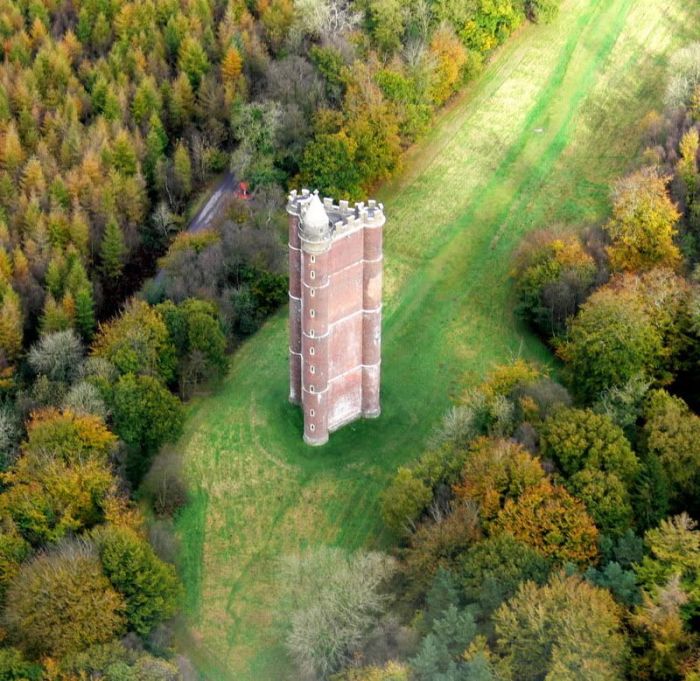
The tower stands near the location of ‘Egbert’s Stone’, where it was said that Alfred the Great, King of Wessex, rallied the Saxons in May 878 before the important Battle of Edington (historically known as the battle of Ethandun, where the Danish army, led by Guthrum the Old was defeated. It is the start of the Leland Trail, a 28-mile (45.1 km) footpath which runs from King Alfred’s Tower to Ham Hill Country Park.

The project to build the tower was conceived in 1762 by the banker Henry Hoare II (1705-1785). The tower was also intended to commemorate the end of the Seven Years’ War against France and the accession of King George III.

Alfred’s Tower is a monument to the genius of English landscape, many of whose loveliest haunts it commands, and to a man who certainly deserves to be remembered as among the great benefactors of the English scene. – Christopher Hussey, Country Life, 11 June 1938.
In 1765 Henry Flitcroft, a Palladian architect, designed the tower. Building began in 1769 or early 1770, and was completed in 1772 at an estimated cost between £5,000 and £6,000. There may have been some delay due to difficulty in obtaining the bricks. In addition to the commemorative function, the tower was also intended to serve as an eye-catching focus for those touring the parkland of the Stourhead Estate. In April 1770, when the tower was just 4.7 metres (15 ft) high, Hoare is quoted as saying: ‘I hope it will be finished in as happy Times to this Isle as Alfred finished his Life of Glory in then I shall depart in peace.’

The tower was damaged in 1944 when an aeroplane, a Noorduyn Norseman ironically, crashed into it, resulting in the death of the five aircrew and damage to the highest 10 metres (33 ft). It was designated as a Grade I listed building in 1961. The tower was restored in 1986, which included the use of a Wessex helicopter to lower a 300-kilogram (47 st) stone onto the top. The statue of King Alfred was also restored at this time, including the replacement of his missing right forearm.

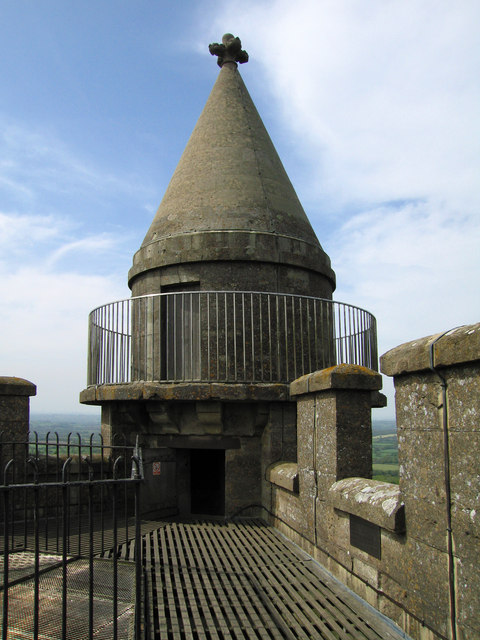
The triangular tower is over 40 metres (131 ft) high with a girth of 51 metres (167 ft). Each of the three corners of the triangular structure has a round projection. The centre of the tower is hollow and to stop birds from entering the space a mesh has been added at roof level. The viewing platform, which has a crenellated parapet and offers a view over the surrounding countryside, is reached by a 205-step spiral staircase at the corner furthest from the entrance. The brick tower has Chilmark stone dressings and is surmounted by an embattled parapet.

The ‘front’ (south-east) face of the tower has a Gothic-arched entrance door, a statue of King Alfred, and a stone panel bearing an inscription (see below). This is the face that most visitors see first when walking from Stourhead garden or from the nearby car park.