The similarities are uncanny!
Month: May 2020
Japanese spa offers ‘exorcism’ for your dog

A Japanese dog spa has taken pet pampering to a whole new level by offering “exorcisms” for their furry guests.
The D+Kirishima spa not only offers the latest in formal kaiseki doggy-owner dinners and spa baths together (yes, together in the same bath), but also a package called the “Pet Dog Exorcism Plan.”
A senior Shinto priest will come to the spa to conduct a ceremonial blessing to rid your pup of bad spirits and pray for its future health.
The ceremony is especially suggested for dogs in their “unlucky health years.”
“Seven-year-old, 10-year-old, and 13-year-old dogs need to be careful of their health, as it’s easier in those years for them to gets diseases of aging,” according to the spa’s pitch for the package.
“The exorcism for your dog is celebrated along with its owner at the Shingariyu shrine within the hotel.”
It only takes 30 minutes, according to the site. And it costs $430 — room and pet-owner dinner included.


The Japanese must have something similar for cats. Some need help.

Animal World
Stare down

Three faces in one

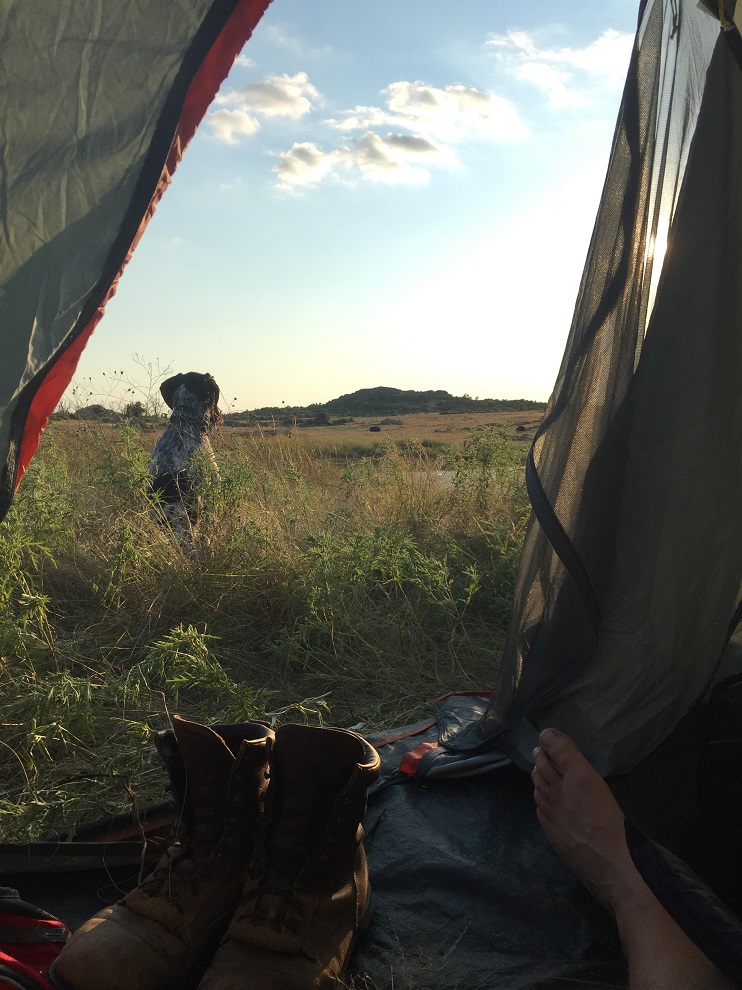
Best friend up early watching the bison
From wet to fluffy

Melissa and Gooch

No comment

Buddies


Great new day

Another load of tourists

Doesn’t even have to get its snout wet

You want to quarantine safely, here is the perfect place.
Sea Fort in the Middle of The Gulf of Mexico
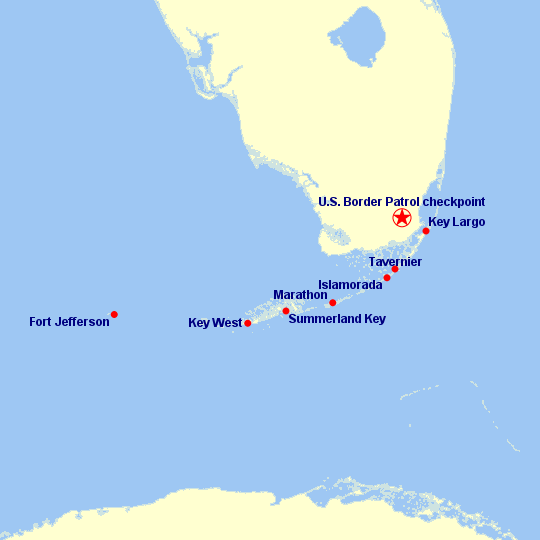
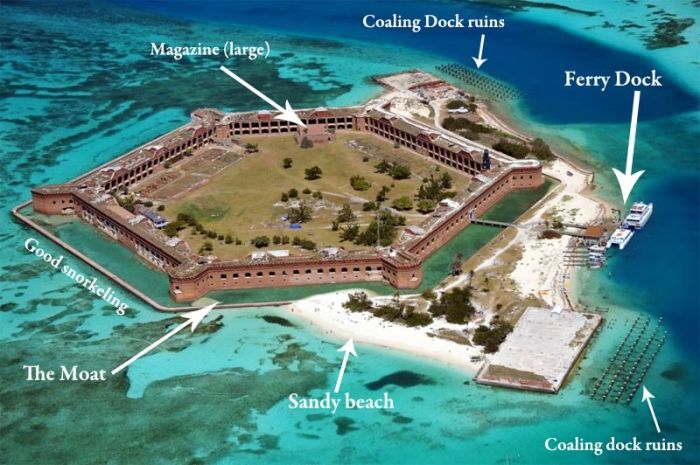
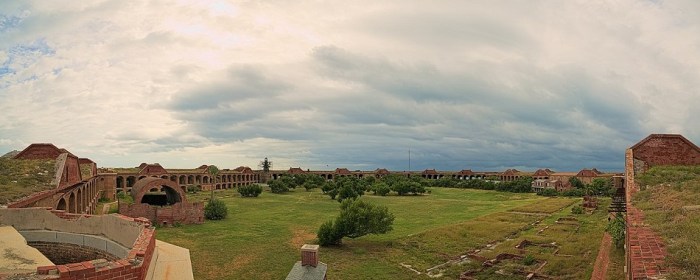
Fort Jefferson is a massive but unfinished coastal fortress. It is the largest brick masonry structure in the Americas, and is composed of over 16 million bricks. Among United States forts, only Fort Monroe in Virginia and Fort Adams in Rhode Island are larger. The fort is located on Garden Key in the lower Florida Keys within the Dry Tortugas National Park, about 70 miles (110 km) west of the island of Key West. The Dry Tortugas are part of Monroe County, Florida, United States.

The fort was built in 1861 and is located 90 miles west of Key West. It’s now a national park.
It was built to maintain an American presence in the Gulf and to scare off pirates. During the Civil War it was mainly a prison. But it looks to me like it would be one great place to set up some tents, crack open the beer and let the festivities begin.



The habitat ranges of very dangerous snakes in the U.S.
I’m glad I live in the middle of the Great White North. No venomous snakes! For some inexplicable reason I had a dream about being in Florida the other night. That sounds like a good dream: Disneyworld, Miami Beach and warm temperatures. But what was odd about this dream was that I was in a semi-swampy area where there were hordes of aggressive, large poisonous snakes. It was a freaky dream, lots of running away from snakes. Having snakes crawl from under couches etc. The last I remember about the dream I was attacking some smaller snakes in a motel room with a spade.
That dream led me to research deadly snakes in the United States. The bastards are all over the place.
The Eastern Diamondback Rattlesnake.


This is a big bitch. Up to 8 feet long and 35 pounds. Some think it is the biggest pit viper in the world. Run into this thing while searching for the golf ball in the scrub and I would instantly meet the maker, and that is without getting bitten. Notice it’s throughout Florida.
Western Diamondback Rattlesnake

Very similar to the Eastern but a lot smaller. Likes the desert as opposed to it’s cousin which likes lush forested areas.
Cottonmouth, also known as the Water Moccasin


This is a nasty little bastard. The cottonmouth is one of the most feared venomous snakes in North America. Its powerful cytotoxic venom is so destructive that it can eat away flesh and result in grisly amputations. Their preference for hiding in water and attacking when least expected means that bites are also relatively frequent. Again, another deadly snake that slithers throughout Florida.
Copperhead


For some reason this snake avoids Florida.
The copperhead is perhaps responsible for the most bites of any snake on this list. It’s not because the snake is inherently more aggressive, but because copperheads tend to “freeze” when met with approaching humans—instead of fleeing like most other, sensible snakes—and will bite when stepped on.
The copperhead also has what is believed to be the weakest venom potency of all pit vipers, which is a happy coincidence for the snake that is otherwise most likely to bite you.
Timber Rattlesnake

I never realized there were so many rattlesnakes in the east. Florida spared again.
Coral Snakes

Eastern coral snakes are very reclusive and are rarely seen, which is great for hunters and hikers across the American Southeast. The eastern coral snake was once seen as the most dangerous snake in the region. While that reputation hasn’t exactly subsided, experts now say that fatalities from this dangerous species are actually very rare. This is thought to be because the coral snake has very little control of how much venom it can inject into a victim.
Massasauga Rattlesnake
Canada isn’t entirely left out

These pesky rattlesnakes go all the way up to the tip of southern Ontario. To the edges of Canada’s number one city Toronto, at least that is what the residents of Toronto think.
Prairie Rattlesnake

More Canadian content here. These critters crawl all the way up to Saskatchewan and Alberta. Florida is spared again!
The Photographer Who Took This Picture Barely Escaped With His Life
Pakistani nature photographer Atif Saeed managed to capture this stunning shot of a lion — just before it leapt at him.

This photograph was snapped by Atif Saeed at a safari zoo park near Lahore. He got out of his jeep to take the photo, but the sound of the lens’s whizzing caught the lion’s attention. Saeed figures the big cat got as close as 10 feet, before he was able to reach the safety of his jeep.

Little Richard R.I.P.
Richard Wayne Penniman (December 5, 1932 – May 9, 2020), better known as Little Richard, was an American singer, songwriter, and musician. An influential figure in popular music and culture for seven decades, he was nicknamed “The Innovator”, “The Originator”, and “The Architect of Rock and Roll”. Penniman’s most celebrated work dates from the mid-1950s, when his charismatic showmanship and dynamic music, characterized by frenetic piano playing, pounding backbeat and raspy shouted vocals, laid the foundation for rock and roll. His innovative emotive vocalizations and uptempo rhythmic music also played a key role in the formation of other popular music genres, including soul and funk. He influenced numerous singers and musicians across musical genres from rock to hip hop; his music helped shape rhythm and blues for generations to come.
Gonna tell Aunt Mary ’bout Uncle John
He claims he has the music
But he has a lot of fun
Oh baby
Yes baby
Wooh baby
Havin’ me some fun tonight, yeah
Well, long tall Sally
She’s really sweet
She got everything that Uncle John need
Oh baby
Yes baby
Wooh baby
Havin’ me some fun tonight, yeah
Well, I saw Uncle John with bald head Sally
He saw Aunt Mary comin’
And he jumped back in the alley
Oh baby
Yes baby
Wooh baby
Havin’ me some fun tonight, yeah
Well, long tall Sally
She’s built for speed
She got everything that Uncle John need
Oh baby
Yes baby
Wooh baby
Havin’ me some fun tonight, yeah
Well, I saw Uncle John with bald head Sally
He saw Aunt Mary comin’
And he jumped back in the alley
Oh baby
Yes baby
Wooh baby
Havin’ me some fun tonight, yeah
We gonna have some fun tonight
Have some fun tonight, wooh
Have some fun tonight
Everything’s all right
Have some fun
Have me some fun tonight
Demon Hoarders
These places will need a Hoarder Psychologist and a couple Exorcists.

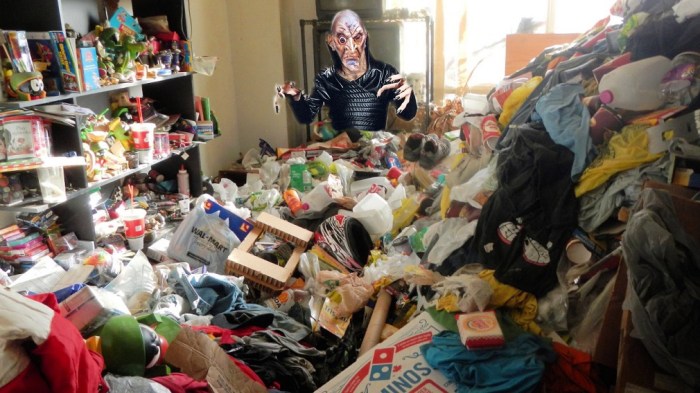
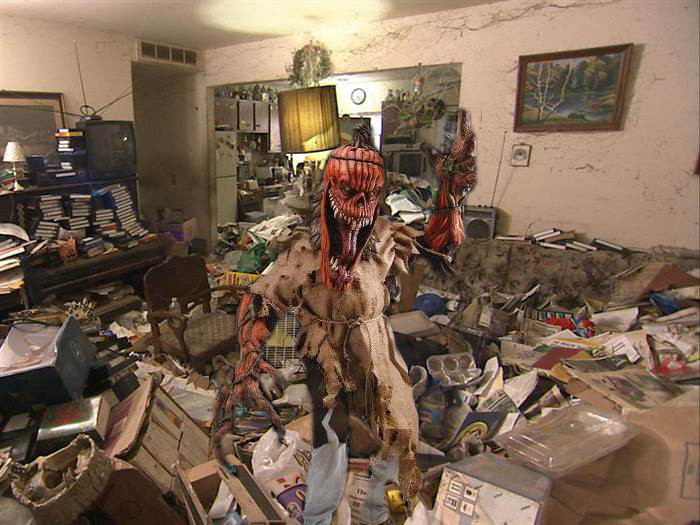

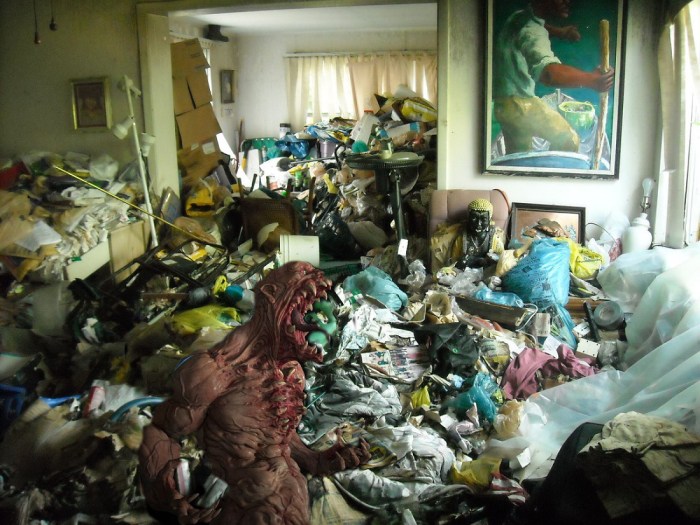
What possesses them to keep all this stuff?
The Soviet Lunar Lander that Never Landed on the Moon

The Soviet lunar program was covered up, forgotten after failing to put a man on the moon.
Soviet scientists were well ahead of their American counterparts in moon exploration before President John F. Kennedy pronounced the U.S. would put a man there first. The Soviets had already landed the probe Luna 2 on the surface of the moon in 1959 and had an orbiting satellite in 1966.
The Soviets developed a similar multi-step approach to NASA, involving a module used to orbit the moon and one for landing. Their version was decidedly less complex and lighter to account for inferior rockets. This photo show the LK “Lunar Craft” lander, which has a similar pod-over-landing gear structure but numerous key differences.

All the activities done by two astronauts is done by one. To make the craft lighter, the LK only fits the one cosmonaut, who was supposed to peer through a tiny window on the side of the craft to land it. After landing the vehicle the pod separates from the landing gear, as with the Apollo Lunar Module, but uses the same engine for landing as it does for take off as another weight savings.
The L2 Lunar Orbit Module designed to transport the LK into orbit around the moon was similarly stripped down. There’s no internal connection between the two craft so the cosmonaut had to space walk outside to get into the LK and head towards the surface. When the LK rejoined the L2 for the return trip home, the now likely exhausted cosmonaut would then climb back out into the abyss of space. The LK would then be thrown away.
Soviet Lunar Orbiter

Soviet Lunar Lander (LK)

There were numerous political, scientific and financial reasons why the Soviets didn’t make it to the moon first, including a space agency with split priorities and therefore not single-mindedly dedicated to this goal. Neil Armstrong walked on the moon first on July 20, 1969, besting the Russians, who were still planning to visit the moon in the upcoming years.
They had the equipment, but they didn’t have the rockets.
Getting to the moon requires launching a command module and a lander. Both are heavy objects and require massive amounts of thrust to get into orbit. The Soviet’s planned to use their N-1 rocket, but two failed launches in 1971 and 1972 destroyed dummy landing and control modules, as well as the rockets themselves, and led to the program being shelved for lack of a proper launch vehicle.
The LK was sent into space for numerous test missions. The first two unmanned flights were successful tests of the vehicle through a simulated orbit. The third flight ended when the N-1 rocket crashed. The fourth test in 1971 was a success, but years later the decaying test module started to return to Earth with a trajectory that would put it over the skies of Australia.
NASA explains in a report on the Soviet space program how they had to convince the Australians it wasn’t a nuclear satellite:
To allay fears of a nuclear catastrophe, representatives of the Soviet Foreign Ministry in Australia admitted that Cosmos 434 was an “experiment unit of a lunar cabin,” or lunar lander
Eventually, the program was deemed too expensive and unnecessary in light of the NASA success. The Soviets moved onto building space labs, successfully, and the remaining parts of the lunar program were destroyed or dispersed, including this amazing collection of parts hidden in the back of the Moscow Aviation Institute.
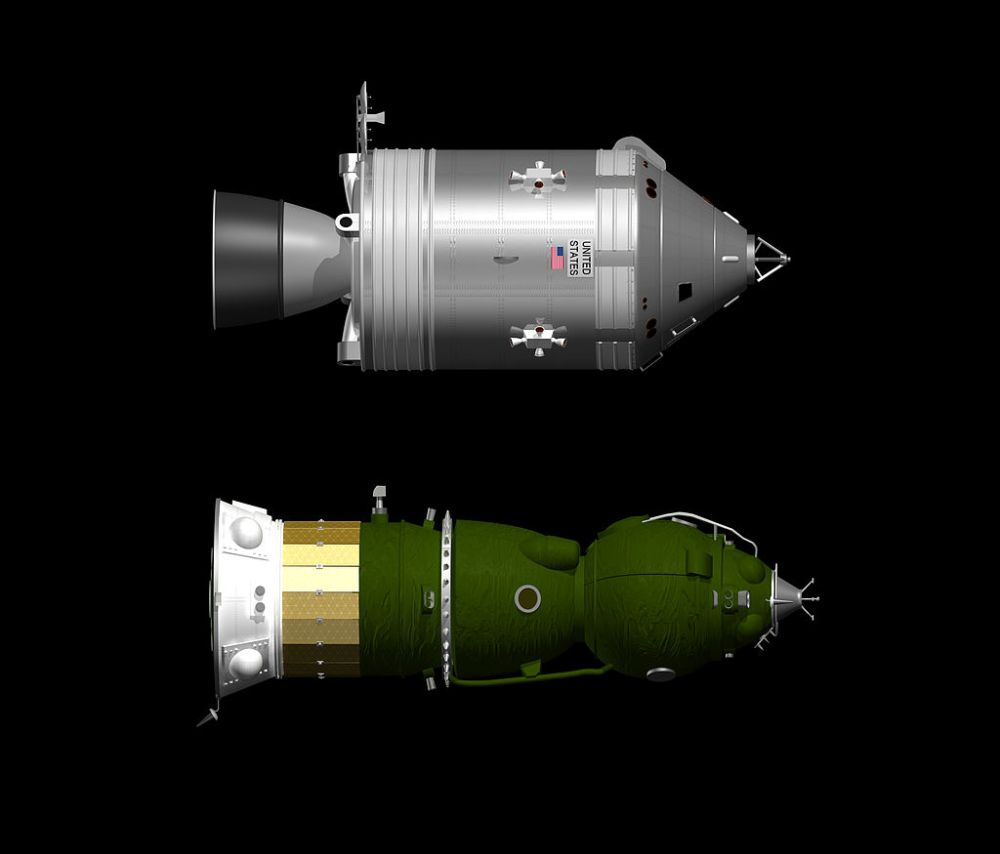
American Lunar Orbiter top, Soviet Orbiter bottom
Soviet Lander ascending from the surface of the Moon, artist graphic.

‘LK Lander and Apollo LM (drawn to scale). Manned Moon landers


Soviet left, American right
Very Large Array

The Karl G. Jansky Very Large Array (VLA) is a centimeter-wavelength radio astronomy observatory located in central New Mexico on the Plains of San Agustin, between the towns of Magdalena and Datil, ~50 miles (80 km) west of Socorro. The VLA comprises twenty-eight 25-meter radio telescopes (27 of which are operational while one is always rotating through maintenance) deployed in a Y-shaped array and all the equipment, instrumentation, and computing power to function as an interferometer. Each of the massive telescopes is mounted on double parallel railroad tracks, so the radius and density of the array can be transformed to adjust the balance between its angular resolution and its surface brightness sensitivity. Astronomers using the VLA have made key observations of black holes and protoplanetary disks around young stars, discovered magnetic filaments and traced complex gas motions at the Milky Way’s center, probed the Universe’s cosmological parameters, and provided new knowledge about the physical mechanisms that produce radio emission.
The VLA stands at an elevation of 6970 ft (2124 m) above sea level. It is a component of the National Radio Astronomy Observatory (NRAO). The NRAO is a facility of the National Science Foundation operated under cooperative agreement by Associated Universities, Inc.
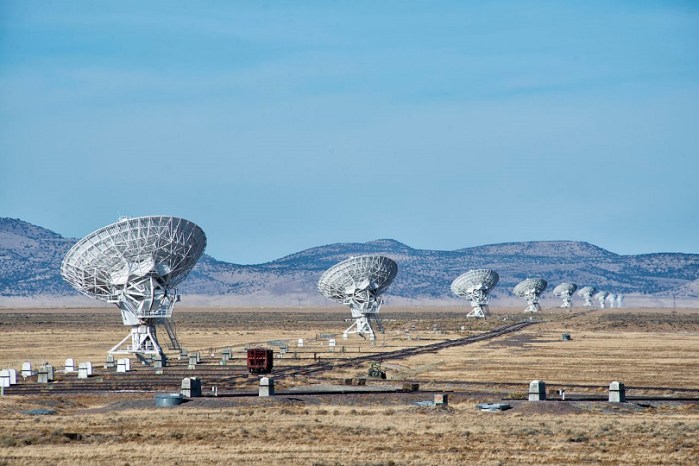
The radio telescope comprises 27 independent antennas, each of which has a dish diameter of 25 meters (82 feet) and weighs 209 metric tons (230 Short tons). The antennas are distributed along the three arms of a track, shaped in a wye (or Y) -configuration, (each of which measures 21 km/13 miles long). Using the rail tracks that follow each of these arms—and that, at one point, intersect with U.S. Route 60 at a level crossing—and a specially designed lifting locomotive (“Hein’s Trein”), the antennas can be physically relocated to a number of prepared positions, allowing aperture synthesis interferometry with up to 351 independent baselines: in essence, the array acts as a single antenna with a variable diameter. The angular resolution that can be reached is between 0.2 and 0.04 arcseconds.
Antenna maintenance building

In 2011, a decade-long upgrade project resulted in the VLA expanding its technical capacities by factors of up to 8,000. The 1970s-era electronics were replaced with state-of-the-art equipment. To reflect this increased capacity, VLA officials asked for input from both the scientific community and the public in coming up with a new name for the array, and in January 2012 it was announced that the array would be renamed the “Karl G. Jansky Very Large Array”. On March 31, 2012, the VLA was officially renamed in a ceremony inside the Antenna Assembly Building.


 The MarkoZen Blog