Month: April 2020
The Traffic Girls of Pyongyang
The capital city of North Korea, Pyongyang (pop. 3,255,388) is one of the most mysterious cities in the world. This is due to the fact that the Communist rulers of North Korea control the country and city with an iron-fisted resolve. No foreign tourists or journalists, and very few diplomats from other countries. Only 6-8 countries have missions staffed with diplomats in Pyongyang.
But one truth has been established about the day-to-day activities on the streets of Pyongyang. The Traffic Girls of Pyongyang.

In these pictures the main characteristic is the lack of traffic. Especially relative to western and other Asian societies. There is virtually no traffic. North Korea is an economic basket case. So only government elites and upper bureaucrats get to drive cars.
Therefore the Traffic Girls must not get to overly stressed out.


The giant monstrosity in the background of this picture is the Ryugyong Hotel. A 105 floor skyscraper that began construction in 1987. Construction was halted for many years but resumed in 2009. It then stopped again in 2014.


Introduced in 2009, some intersections are equipped with traffic control podiums.
Podium features:
– umbrella for shade and rain
– heated pad in base for keeping feet warm
– light for illumination of traffic controller
– reflective paint for visibility

Some basic information on the Traffic Girls.
There are slightly more than 50 posts in Pyongyang.
Each post is assigned six traffic controllers, with the post staffed from 7:00AM to 10:00 PM.
The post’s six traffic police are split into 2 groups which rotate duty.
Each group shift is 2-3 hours. A traffic controller is on duty for 30 minutes at a time, relieved every 30 minutes.
They work 6 days a week, with Sundays off. They also may have to work holidays.
Intersection control
The basic rules are:
If traffic officer is facing you or has back to you, stop do not proceed – cross traffic has right-of-way.
When traffic officer raises baton, a right-of-way change is imminent.
Baton held out indicates a turn through intersection is permitted.
Requirements to be a Pyongyang Traffic Girl:
– unmarried
– attractive
– healthy
– between the ages of 16 – 26
– at least 1.65 meters (5’4″) tall
– high school graduate
The intersections staffed by the traffic police are called ‘posts’.
Inspired by Ed L.
Speeding Car Goes Airborne After Slamming into Roundabout in Poland
A jaw-dropping video from Poland shows a motorist speeding towards a roundabout and failing to turn in time, sending his car flying through the air. The incredible scene, which was captured on film by a traffic camera, reportedly occurred in the village of Rabien this past Sunday. The community’s volunteer fire department subsequently shared the footage on social media as a warning to drivers.
According to their post, the car was so badly damaged that rescue workers had to cut the vehicle open in order to remove the driver, who suffered several serious injuries from the accident. He’s currently recuperating at a local hospital and may wind up facing charges for the mishap as officers on the scene took blood samples from the motorist after detecting the smell of alcohol at the scene.
Strange Airports
Courchevel International Airport (Courchevel, France)

Background:
Getting to the iconic ski resort of Courchevel requires navigating the formidable French Alps before making a hair-raising landing at Courchevel International Airport. The runway is about 1700 feet long, but the real surprise is the large hill toward the middle of the strip.
Why It’s Unique:
“You take off downhill and you land going uphill,” Schreckengast says. He adds that the hill, which has an 18.5 percent grade, is so steep that small planes could probably gain enough momentum rolling down it with no engines to safely glide off the edge. Landing at Courchevel is obviously no easy task, so pilots are required to obtain certification before attempting to conquer the dangerous runway.
Congonhas Airport (Sao Paulo, Brazil)

Background:
Most major cities have an airport, but rarely are they built just 5 miles from the city center, especially in metropolises like Sao Paulo. Congonhas’ close proximity to downtown can be attributed in part to the fact that it was completed in 1936, with the city experiencing rapid development in the following decades.
Why It’s Unique:
While having an airport only 5 miles from the city center may be a convenience for commuters, it places a strain on both pilots and air traffic control crews. “It becomes a challenge in terms of safety to just get the plane in there,” Schreckengast says. “Then you throw on noise restrictions and these terribly awkward arrival and departure routes that are needed to minimize your noise-print and it becomes quite challenging for pilots.” Fortunately, Sao Paulo’s many high-rise buildings are far enough away from the airport that they aren’t an immediate obstacle for pilots landing or taking off.
Don Mueang International Airport (Bangkok, Thailand)

Background:
From a distance Don Mueang International looks like any other midsize airport. However, smack-dab in the middle of the two runways is an 18-hole golf course.
Why It’s Unique:
Schreckengast, who has worked on consulting projects at this airport, says one of the major problems is that the only taxiways were located at the end of the runways. “We recommended that they build an additional taxiway in the middle, from side to side, and they said ‘absolutely not, that will take out a green and one fairway.’” The airport and the course were originally an all-military operation, but have since opened up to commercial traffic. Security threats, however, have limited the public’s access to the greens.
Madeira International Airport (Madeira, Portugal)

Background:
Madeira is a small island far off the coast of Portugal, which makes an airport that is capable of landing commercial-size aircraft vital to its development. This airport’s original runway was only about 5000 feet long, posing a huge risk to even the most experienced pilots and limiting imports and tourism.
Why It’s Unique:
Engineers extended the runway to more than 9000 feet by building a massive girder bridge atop about 200 pillars. The bridge, which itself is over 3000 feet long and 590 feet wide, is strong enough to handle the weight of 747s and similar jets. In 2004, the International Association for Bridge and Structural Engineering selected the expansion project for its Outstanding Structure Award, noting that the design and construction was both “sensitive to environmental and aesthetic considerations.”
Gibraltar Airport (Gibraltar)


Background:
Between Morocco and Spain sits the tiny British territory of Gibraltar. Construction of the airport dates back to World War II, and it continues to serve as a base for the United Kingdom’s Royal Air Force, though commercial flights land on a daily basis.
Why It’s Unique:
Winston Churchill Avenue, Gibraltar’s busiest road, cuts directly across the runway. Railroad-style crossing gates hold cars back every time a plane lands or departs. “There’s essentially a mountain on one side of the island and a town on the other,” Schreckengast says. “The runway goes from side to side on the island because it’s the only flat space there, so it’s the best they can do. It’s a fairly safe operation as far as keeping people away,” he says, “It just happens to be the best place to land, so sometimes it’s a road and sometimes it’s a runway.”
Kansai International Airport (Osaka, Japan)

Background:
Land is a scarce resource in Japan, so engineers headed roughly 3 miles offshore into Osaka Bay to build this colossal structure. Work on the manmade island started in 1987, and by 1994 jumbo jets were touching down. Travelers can get from the airport to the main island of Honshu via car, railroad or even a high-speed ferry.
Why It’s Unique:
Kansai’s artificial island is 2.5 miles long and 1.6 miles wide—so large that it’s visible from space. Earthquakes, dangerous cyclones, an unstable seabed, and sabotage attempts from protestors are just some of the variables engineers were forced to account for. As impressive as the airport is, Stewart Schreckengast, a professor of aviation technology at Purdue University and a former aviation consultant with MITRE, cautions that climate change and rising sea levels pose a very real threat to the airport’s existence. “When this was built, [engineers] probably didn’t account for global warming,” he says. “In 50 years or so, this might be underwater.”

Amazing Photos from Space
Soyuz 23S, “Olympus” docked to the nadir side of the Space Station. This will be our ride back home to planet Earth when our work is complete here. Thought I would tweet this view out of the Cupola, as we were passing over the majestic snow-capped Caucuses. The sun rising and reflecting off the Caspian Sea. Space Photo: NASA, Astronaut Wheelock.

Western Europe


Patagonia, southern tip of South America


Egypt, Israel, Mediterranean Sea and Red Sea.

Our ‘Progress 39P’ unmanned resupply spaceship on final approach for docking. It was laden with food, fuel, spare parts, and much needed supplies for our orbiting outpost. The greatest gift was just inside the hatch…some bags of fresh fruit and vegetables. Such a wonderful treat after 3 months of eating out of tubes and plastic pouches.

Ayers Rock now known as Uluru, Australia. This beast is 2.2 miles long and 1.4 miles wide.

The ‘Cupola’, attached to the nadir side of the Space Station, gives a panoramic view of our beautiful planet. Cosmonaut Fyodor took this picture from the window of the Russian Docking Compartment (Airlock). Here I am in the Cupola preparing a camera for our late evening Hurricane Earl flyover…trying to capture the moment.

Spiderman Theme by The Ramones
Spiderman, Spiderman,
Does whatever a spider can
Spins a web, any size,
Catches thieves just like flies
Look Out!
Here comes the Spiderman.
Is he strong?
Listen bud,
He’s got radioactive blood.
Can he swing from a thread
Take a look overhead
Hey, there
There goes the Spiderman.
In the chill of night
At the scene of a crime
Like a streak of light
He arrives just in time.
Spiderman, Spiderman
Friendly neighborhood Spiderman
Wealth and fame
He’s ignored
Action is his reward.
To him, life is a great big bang up
Wherever there’s a hang up
You’ll find the Spider man.
Major Kong – Survival Kit Contents
Arguably the greatest black comedy ever made, Stanley Kubrick’s cold-war classic is the ultimate satire of the nuclear age. Dr. Strangelove is a perfect spoof of political and military insanity.
Survival kit contents check. In them you’ll find: one forty-five caliber automatic; two boxes of ammunition; four days’ concentrated emergency rations; one drug issue containing antibiotics, morphine, vitamin pills, pep pills, sleeping pills, tranquilizer pills; one miniature combination Russian phrase book and Bible; one hundred dollars in rubles; one hundred dollars in gold; nine packs of chewing gum; one issue of prophylactics; three lipsticks; three pair of nylon stockings. Shoot, a fella’ could have a pretty good weekend in Vegas with all that stuff.
How Coronavirus Emptied The World’s Streets
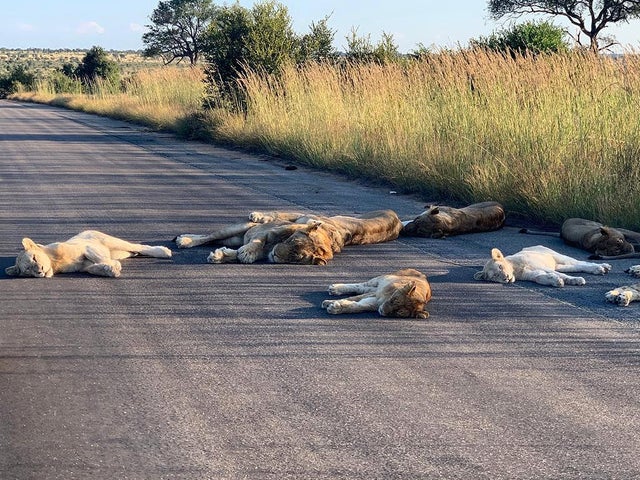
As millions of people around the world lock themselves indoors in order to prevent transmission of the dreaded coronavirus, the world outside looks eerily abandoned. The absence of humans and smoke belching vehicles is having a profound effect on the environment, not seen, perhaps, since the Industrial Age began. The atmosphere has become cleaner with significant drop in nitrogen dioxide pollution. The normally polluted waters of the canals of Venice have become so clear that one can see the bottom. In Sassari, the second-largest town of Sardinia, wild boars are roaming the streets, and in Rome’s many fountains ducks are taking advantage of the lack of tourists. Aside from these occasional visitors, public spaces across the world have become terribly devoid of life.

A scene from Wuhan, the epicenter of Covid-19.
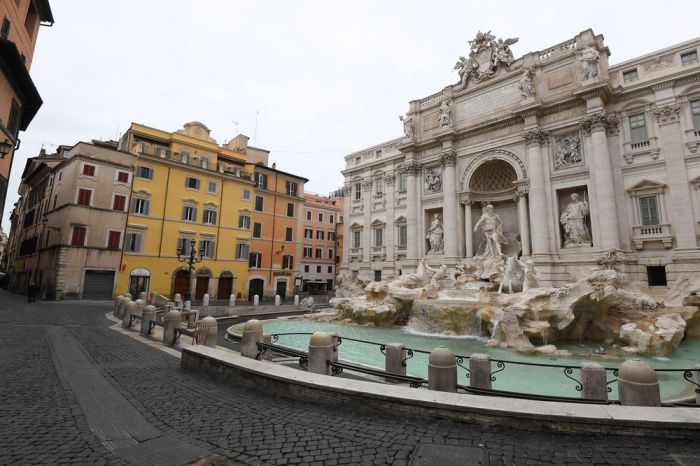
Fontana di Trevi, Rome.
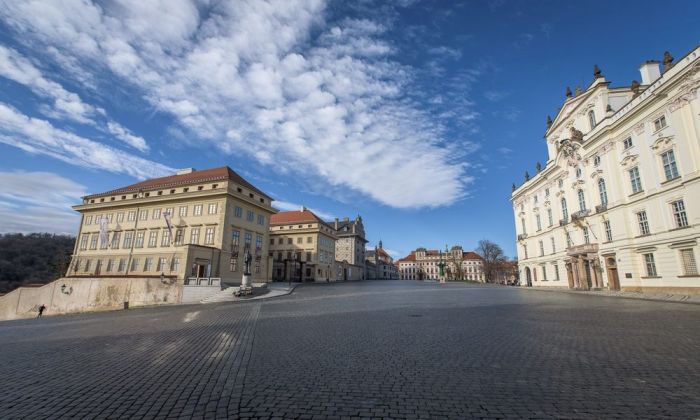
Prague.

Venice

Moscow underground.

Checkpoint Charlie, Berlin. Photo:
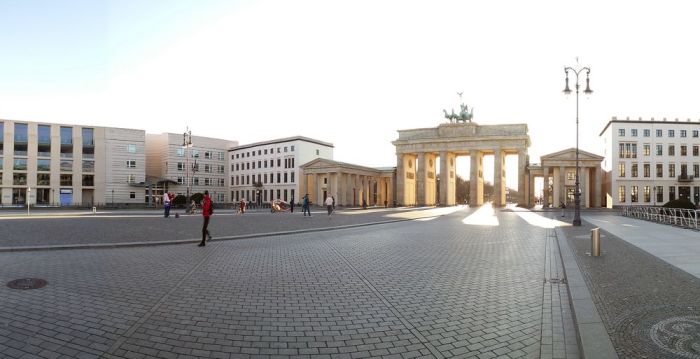
The Brandenburg Gate in berlin. Photo: nope_just_fish/Reddit
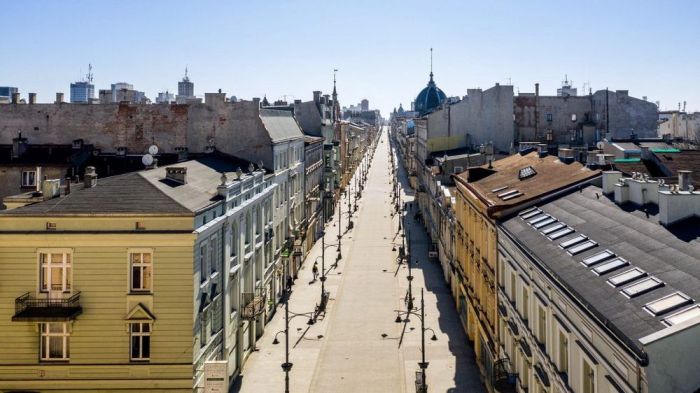
Poland. Photo: EPA-EFE / GREGORY Michałowska

Poland. Photo: EPA-EFE / GREGORY Michałowska
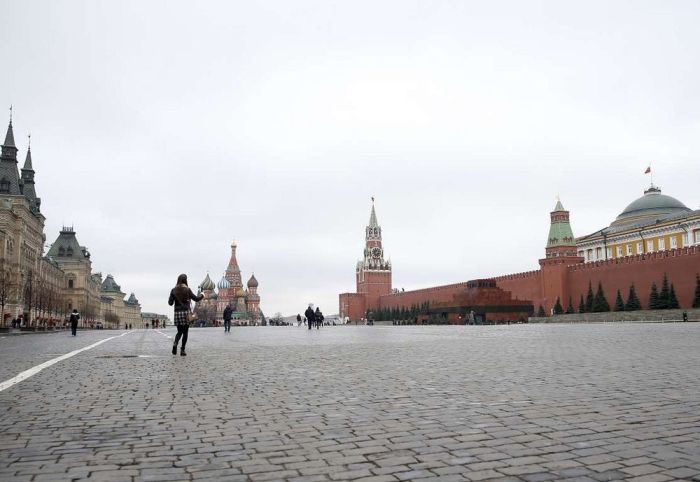
Moscow.
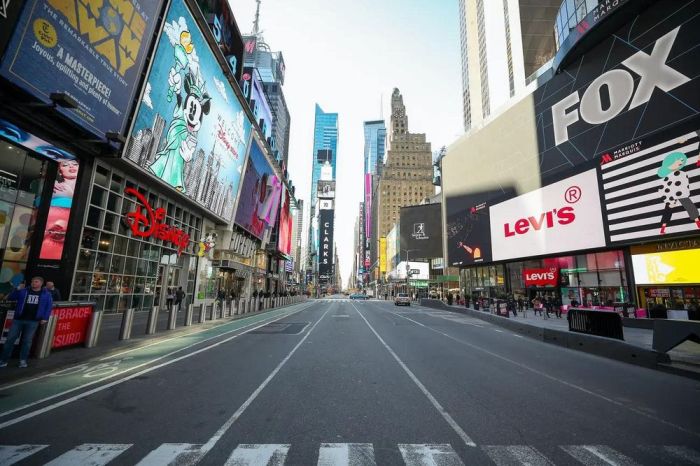
Times Square, New York
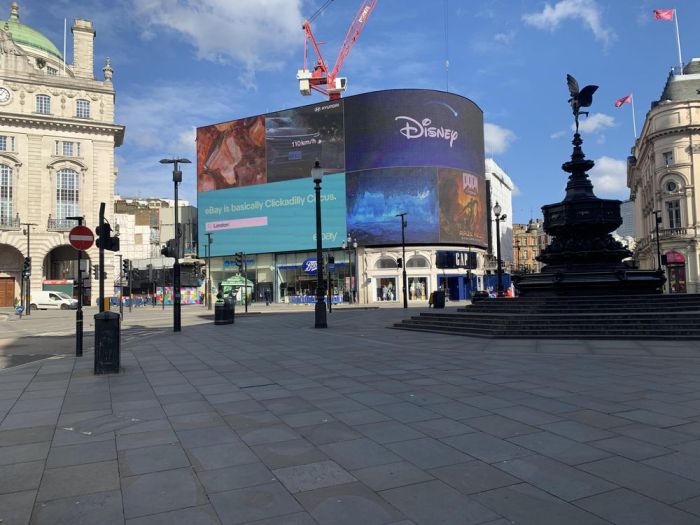
Piccadilly Circus, London, on 21 March 2020. Photo: fridericvs/Reddit

Brooklyn Bridge
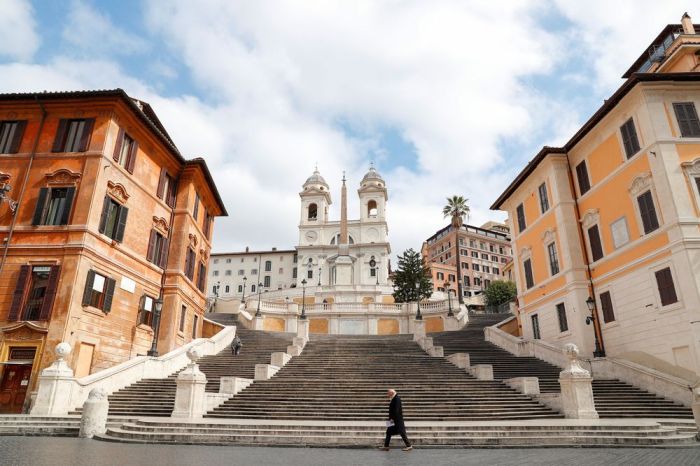
Rome, Piazza di Spagna.
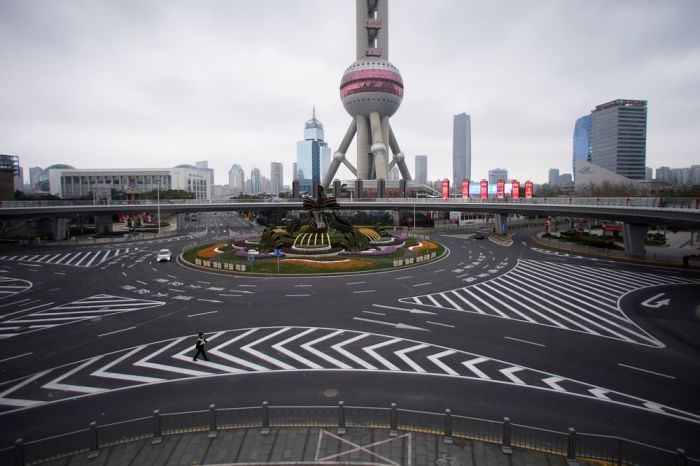
Quiet streets in the Lujiazui financial district in Pudong, Shanghai. Photo: REUTERS/Aly Song

The Eiffel Tower is closed for an indefinite time.
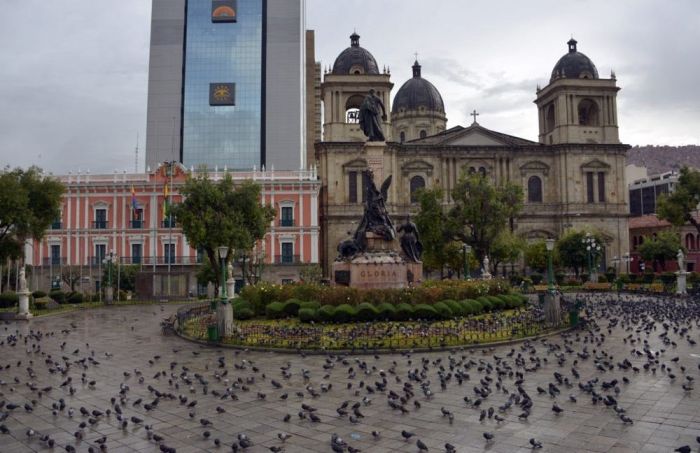
Pigeons thrives in the Plaza de Armas in La Paz, Bolivia. Photo: Aizar Raldes / AFP
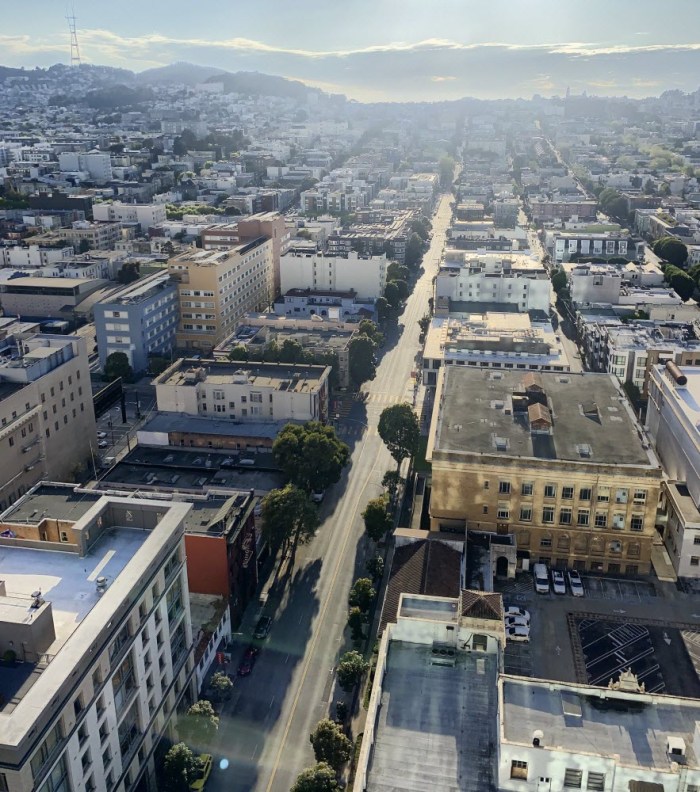
Empty Fell street in San Francisco, 21 March 2020. Photo: brodil/Reddit

Marine Drive, one of the busiest streets of Mumbai is completely deserted on 22 March 2020, after Prime Minister Narendra Modi announced a 14-hour country-wide lockdown. Photo: silent_christ/Reddit
Strange Times
The twin brothers (71) still meets once a week. One lives in Norway, the other in Sweden.

For anybody who had or is yet to have their birthday in quarantine.

Mother keeping it classy in these uncertain times.

None of you are invited

Wealthy man flaunting his riches.

Disinfecting Pericles who died from the plague in 429 B.C.

























 The MarkoZen Blog