‘Ghost Ship’ washed up by Storm Dennis

Earlier this week, an abandoned “ghost” cargo ship was discovered washed up off the coast of County Cork, Ireland, following strong winds from Storm Dennis.

Aerial footage by the Irish Coast Guard showed the 80-metre (260 feet) cargo ship MV Alta stuck on the rocks near the village of Ballycotton.

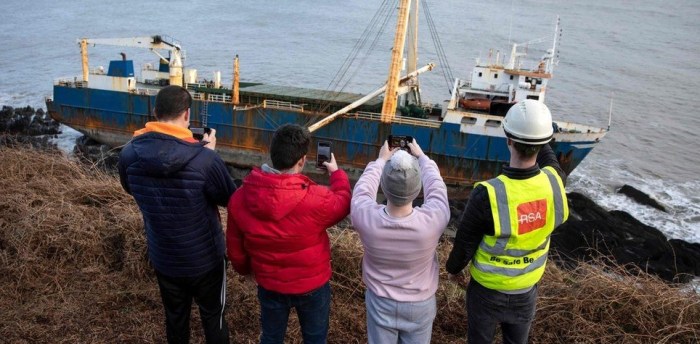
Photographers have now been able to visit the area and capture the dramatic sight of the rusting ship against the Irish landscape.
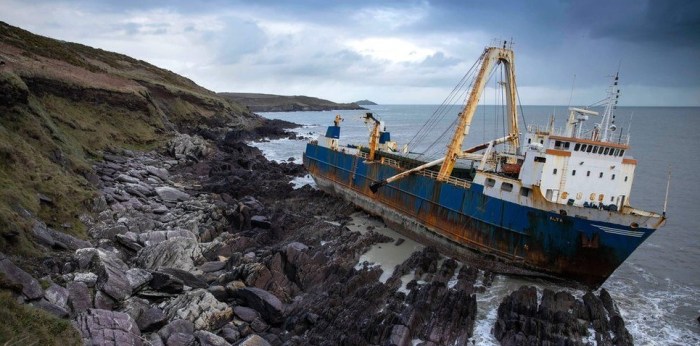
The vessel appears to have drifted thousands of miles over more than a year, from the south-east of Bermuda in 2018, across the Atlantic Ocean.

Previously, the US Coast Guard rescued the crew members in September 2018.

“This is one in a million,” said local lifeboat chief John Tattan.

The head of Ballycotton’s Royal National Lifeboat Institution (RNLI) told the Irish Examiner newspaper he had “never, ever seen anything abandoned like that before.”
Built in 1976, the Alta has had numerous names and owners.

In September 2018 the ship encountered problems when sailing from Greece to Haiti.

A power outage led to the Alta drifting at sea for 20 days around 1,300 miles (2,100km) south-east of Bermuda, according to the US Coast Guard, which became aware of its struggles.

With just two days of food left on board for Alta’s crew, the coast guard air-dropped food and other supplies.

As a hurricane approached, the coast guard decided to rescue the damaged ship’s 10 crew members and take them to Puerto Rico.

Since then the ship has been abandoned. It was last spotted in September 2019 by a British Royal Navy ship in the mid-Atlantic.

On Tuesday, personnel from Cork County Council could be seen boarding the wreck of the ship, below.

There is no visible pollution leaking from the ship, according to environmental scientists who visited Ballycotton on Monday, explained Cork County Council.

Cork County Council, the Irish Coastguard and the Receiver of Wreck will decide what will happen to the ship,

According to the Irish Times, a person claiming to represent the owner of the ship has come forward, with investigations ongoing.

Storm Dennis, which brought the abandoned ship on to the rocks, left thousands of homes, farms and businesses without electricity across the Republic of Ireland.

In the UK, about 1,400 homes and businesses have been affected by the floods in the wake of downpours brought by the storm.

For this Guy Crime Doesn’t Pay

What king of idiot would get this tattoo splattered across his forehead?

An Indiana man with a “CRIME PAYS” tattoo etched across his forehead is headed back to jail after leading officers on a pursuit.

Donald Murray was arrested Monday after leading officers with the Terre Haute Police Department on a short chase. He faces charges of resisting law enforcement, reckless driving, possession of methamphetamine, maintaining a common nuisance and auto theft, the department said in a Facebook post.
This isn’t Murray’s first run-in with the law. Late last year, he was featured on an episode of A&E’s “Live PD” for leading officers on a high-speed pursuit. He crashed into a tree and escaped on foot before eventually being captured.
Following that incident, he was charged with criminal recklessness and resisting law enforcement, NBC affiliate WTWO in Terre Haute. Murray was being held without bail, but was later released on his own recognizance in January.

Murray is being held on a $15,000 bond stemming from Monday’s chase. He is due in court on Friday.

TV Classics

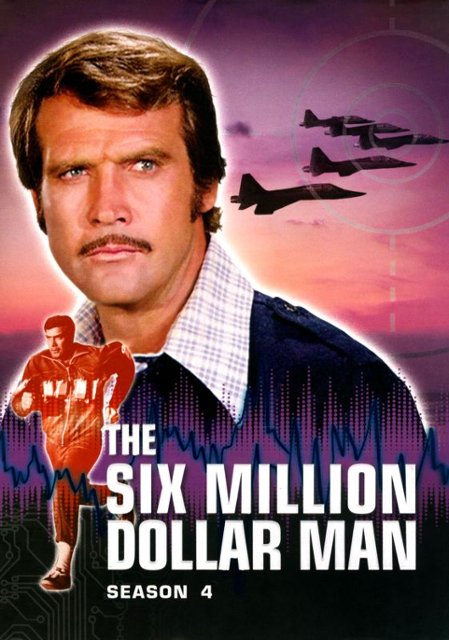
The Six Million Dollar Man is an American science fiction and action television series, running from 1973 to 1978, about a former astronaut, USAF Colonel Steve Austin, portrayed by Lee Majors. Austin has superhuman strength due to bionic implants and is employed as a secret agent by a fictional U.S. government office titled OSI. The series was based on the Martin Caidin novel Cyborg, which was the working title of the series during pre-production.

Following three television pilot movies, which all aired in 1973, The Six Million Dollar Man television series aired on the ABC network as a regular episodic series for five seasons from 1974 to 1978. Steve Austin became a pop culture icon of the 1970s.

A spin-off television series, The Bionic Woman, featuring the lead female character Jaime Sommers, ran from 1976 to 1978. Three television movies featuring both bionic characters were also produced from 1987 to 1994.

Way-out Weather

The biggest dust storm in living memory rolls into Phoenix on July 5, 2011, reducing visibility to zero. Desert thunderstorms kicked up the mile-high wall of dust and sand.


Fortified by a levee, a house near Vicksburg survives a Yazoo River flood in May 2011. Snowmelt and intense rains—eight times as much rainfall as usual in parts of the Mississippi River watershed—triggered floods that caused three to four billion dollars in damages.


Lightning cracks during an eruption of Iceland’s Eyjafjallajökull volcano in 2010.


The eruption of Hawaii’s Kilauea volcano inspires the formation of a waterspout in this undated photo.


A Lake Michigan lighthouse takes the brunt of a frigid winter in Saint Joseph, Michigan.


A  funnel cloud rips through a trailer park near Cheyenne, Wyoming,  in  this undated photo. The photographer snapped this shot from a  quarter  mile away before taking cover in his basement.


A  waterspout parallels a lightning strike over Lake Okeechobee in   Florida. A sister of the tornado, waterspouts are generally less   powerful.

Adding insult to injury, this dangerously large hail rode in on the coattails of a tornado that hit Joplin, Missouri, in 2011.

A tornado heads toward two cars on a country road near Campo, Colorado.


In  a dramatic display of summer atmospheric conditions, lightning marks  the end of an impressively long shelf cloud in the Midwestern U.S.


Dark clouds loom over a beach on Grand Cayman Island.


Landslide  rubble buries a car in northern India’s Doda district in 2011. The  devastating erosion was the result of a downpour that washed soil,  rocks, and other debris onto the Doda-Batote highway.

How the CIA Stole a Soviet Satellite

In a scheme worthy of Mission Impossible, CIA agents hijacked a Soviet spacecraft and probed its secrets.

When did this happen? That’s classified, as is the country where the caper occurred. In the declassified article on the subject in Studies in Intelligence, a CIA journal, much of the text has been blacked out by the agency’s censors.

But the article, released by the National Security Archive watchdog group, is full of tantalizing clues. Not to mention, it’s a great spy yarn.

The theft occurred when the Soviets sent one of their Lunik—also known as Lunasatellites for an exhibition tour of several nations in the early days of the Space Race. The CIA naturally was interested in the Luna probes, of which more than 40 attempted to orbit or land on the moon between 1958 and 1974.

The article in the winter 1967 issue Studies in Intelligence refers to the incident happening “a number of years ago,” so it probably occurred in the early 1960s. The Soviets were scoring propaganda points from their technological prowess by displaying a Luna satellite.

The CIA figured the Soviets weren’t crazy enough to send a real Luna overseas, but they decided to take a peek anyway at an exhibition in one city. With commendable discretion, the article recalls that after the exhibition closed, “a group of intelligence officers had unrestricted access to the Lunik for some 24 hours.”

In other words, American spies sneaked in for an unauthorized private viewing.

American agents were surprised to discover that it was indeed a real Luna, minus its engine and electrical components. Eager to get another look, the CIA sent its industrial experts on another black operation to photograph the craft’s equipment markings, which they hoped would divulge clues about Soviet space production.

But when the exhibition moved to yet another city—one source says it was in Mexico—the satellite had a 24-hour Soviet guard. So much for breaking into the exhibit again.

Ah, but U.S. spies discovered that after the show, the Luna would be transported by a truck to a railroad station and then on to the next city. Could this the break they needed? Maybe divert the freight car onto a railroad siding for a night? Nope, not feasible.

Then how about hijacking the truck on the way to the rail station?

The CIA arranged for the Luna to be on the last truck leaving the exhibition that night. After making sure that Soviet guards weren’t escorting the vehicle, “the truck was stopped at the last possible turn-off, a canvas was thrown over the crate, and a new driver took over.”

What happened to the original truck driver? The CIA history only says that he was “escorted to a hotel room and kept there for the night.” How he was “detained” isn’t clear, but it wouldn’t be surprising if money, liquor or prostitutes were involved.

Fortunately, the Soviet representative at the rail yard waited a little while and then went to his hotel room without raising an alarm.

Now the CIA technicians got to work. Standing on ladders, they broke into the 14-foot-high crate, partially disassembled the spacecraft—including removing 130 bolts from a hatch to the engine compartment—and photographed the insides.

The work began at 7:30 PM. At 5:00 AM, Luna was back on the truck and the original driver delivered it to the rail yard.

When the Soviet representative returned at 7:00 that morning, he found the truck and the spacecraft waiting for him, with no one the wiser.

What did this covert operation obtain? Analysis of the factory markings revealed the “probable identification of this Luna stage, the fact that it was the sixth one produced [and] identification of three electrical producers who supplied components,” as well as other clues to the Soviet space program, according to the CIA article.

Did it make a difference to the outcome of the Space Race? Probably not. By 1967, the Soviet Union was already falling behind, as the U.S. prepared for the Apollo landings two years later.

How the World’s Largest Signature Is Used by NASA to Analyze Satellite Imagery

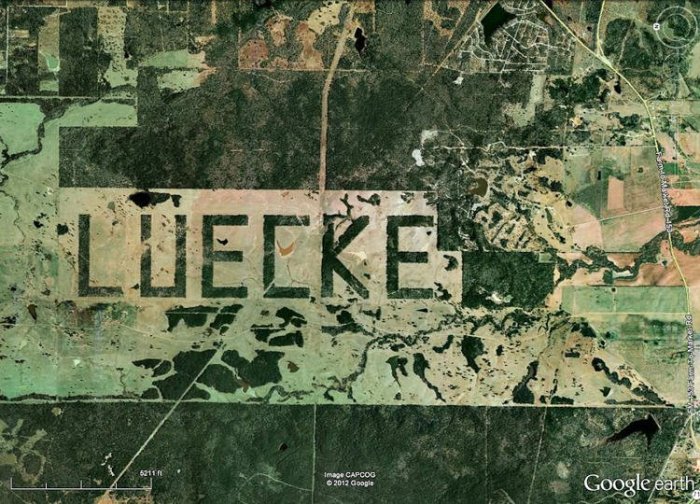
In the late 1990’s, when a Texas farmer decided to clear up some new grazing land for his cattle by leaving up just enough trees to spell his name in giant letters, he probably never imagined that his signature would one day be used by NASA to evaluate the quality of their satellite cameras.

Jimmie Luecke was a young Texas state trooper who left the highway patrol in 1980 to try his luck in the oil business. He was lucky enough to do so during the chalk oil boom, became a millionaire, and invested most of his profits in land outside the town of Smithville. He started raising cattle on it, and by the late 1990’s his heard had gotten so large that he needed to clear up some more of his land of trees for grazing. Only he didn’t just settle for bulldozing all the trees, he decided to write his name in the process, thus creating the world’s largest signature.

Photo: Google Earth

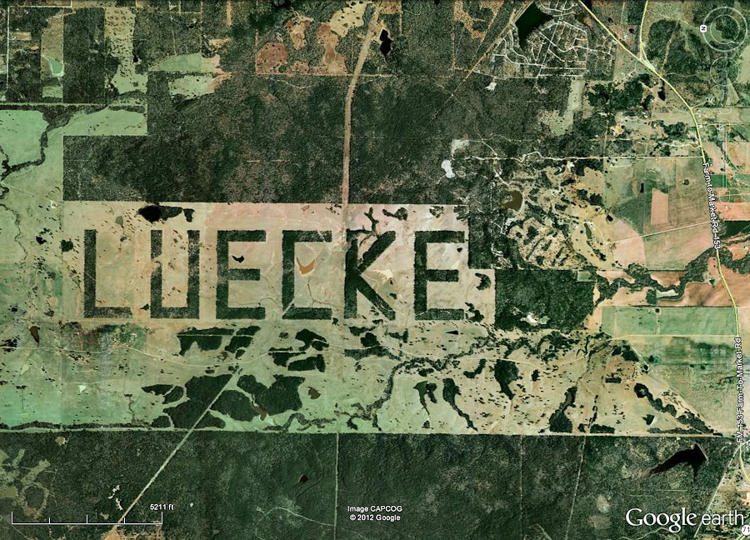
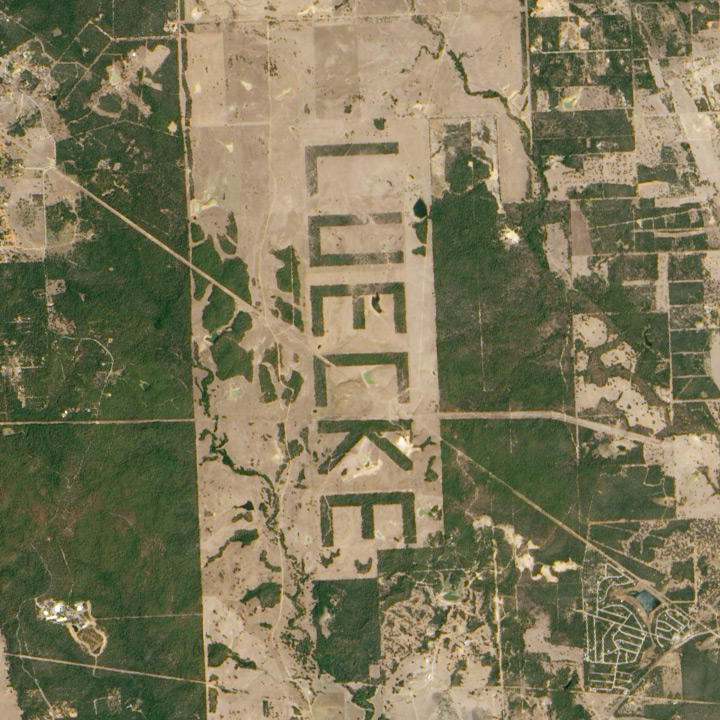
The name LUECKE, written out with trees, stretches about three miles on a plot of land near Buescher State Park, outside of Smithville. Each letter measures thousands of feet high, and there’s no doubt that Jimmie Luecke signed his name on his land out of simple egocentrism, but today his signature actually serves a purpose. A few years back, NASA revealed that the LUECKE signature provides a perfect target for astronauts “to estimate the maximum resolution of cameras aboard the space shuttle”. The strips of trees making up the letters also prevent soil erosion, although they don’t necessarily have to be shaped like letters that happen to spell out the land owner’s name…

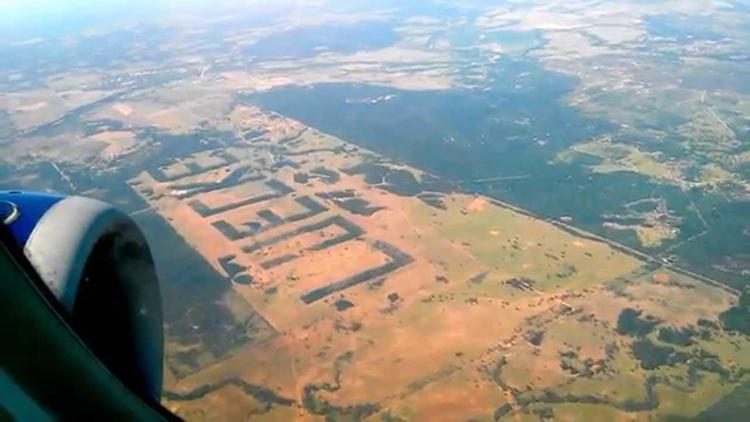
Luecke Farm is located directly along major flight paths, including most westbound flights out of Houston, which makes the world’s largest signature a very popular sight for people flying over it. And with the rise of Instagram, I wouldn’t be surprised if some people got on a plane just so they could snap a picture of Jimmy Luecke’s creation.

Ice makes strange sounds in bizarre new video

Dropping a chunk of ice down a 450ft borehole can produce weird sounds resembling cartoon ricochets.

In a recent Twitter post, isotope geochemist John Andrew Higgins, who is currently working in Antarctica, shared footage of an interesting experiment involving a borehole and a chunk of ice.

“What does a 9 inch ice core sound like when dropped down a 450 ft hole ?” he wrote. “Like this!”

The sounds produced by the falling ice are undeniably bizarre – resembling something like cartoon lasers or gunshot ricochets repeating over and over followed by a heartbeat-like thudding.

This phenomenon was recorded previously by glaciologist Peter Neff who received over 10 million views for his footage of a piece of ice being dropped down a 295ft borehole.

“The first thing you hear as the ice is falling is the pitch of the sound changing,” he said. “That’s the Doppler effect. Then when the ice hits the bottom of the bore hole, the sound doesn’t only come straight up – the sound waves start to bounce off the sides of the hole.”

“That’s why you hear this ‘pew!’ with sort-of a heartbeat sound afterwards.”

You can check out the sounds for yourself in the video below.