The World

I see trees of green, red roses, too
I see them bloom for me and you
And I say to myself
What a wonderful world

I see skies of blue and clouds of white
Bright sunny days, dark sacred nights
And I think to myself
What a wonderful world

Colors of the rainbow are so pretty in the skies
Are also on the faces of people walkin’ by
I see friends shakin’ hands, sayin’, “How do you do?”
They’re really sayin’, “I love you”

I see babies cry, what watch them grow
They’ll learn much more than I’ll ever know
And I think to myself
What a wonderful world

Yes, I think to myself
What a wonderful world

And I say to myself
What a wonderful world

The United States Super-Secret Nuclear Missile Base under the Polar Ice

Project Iceworm was the code name for a top-secret United States Army program during the Cold War to build a network of mobile nuclear missile launch sites under the Greenland ice sheet. The ultimate objective of placing medium-range missiles under the ice — close enough to strike targets within the Soviet Union — was kept secret from the Danish government. To study the feasibility of working under the ice, a highly publicized “cover” project, known as Camp Century, was launched in 1960. Unsteady ice conditions within the ice sheet caused the project to be canceled in 1966.


OLYMPUS DIGITAL CAMERA


ice


Details of the missile base project were secret for decades, but first came to light in January 1995 during an enquiry by the Danish Foreign Policy Institute (DUPI) into the history of the use and storage of nuclear weapons in Greenland. The enquiry was ordered by the Danish parliament following the release of previously classified information about the 1968 Thule Air Base B-52 crash that contradicted previous assertions by the Danish government.


ice2


To test the feasibility of construction techniques a project site called “Camp Century” was started by the United States military, located at an elevation of 6,600 feet (2,000 m) in northwestern Greenland, 150 miles (240 km) from the American Thule Air Base. The radar and air base at Thule had already been in active use since 1951.

Camp Century was described at the time as a demonstration of affordable ice-cap military outposts. The secret Project Iceworm was to be a system of tunnels 4,000 kilometres (2,500 mi) in length, used to deploy up to 600 nuclear missiles, that would be able to reach the Soviet Union in case of nuclear war. The missile locations would be under the cover of Greenland’s ice sheet and were supposed to be periodically changed. While Project Iceworm was secret, plans for Camp Century were discussed with and approved by Denmark, and the facility, including its nuclear power plant, was profiled in The Saturday Evening Post magazine in 1960.


ice3


The “official purpose” of Camp Century, as explained by the United States Department of Defense to Danish government officials in 1960, was to test various construction techniques under Arctic conditions, explore practical problems with a semi-mobile nuclear reactor, as well as supporting scientific experiments on the icecap. A total of 21 trenches were cut and covered with arched roofs within which prefabricated buildings were erected. With a total length of 3,000 metres (1.9 mi), these tunnels also contained a hospital, a shop, a theater and a church. The total number of inhabitants was around 200. From 1960 until 1963 the electricity supply was provided by means of the world’s first mobile/portable nuclear reactor, designated the PM-2A and designed by Alco for the U.S. Army. Water was supplied by melting glaciers and tested to determine whether germs such as the plague were present.

Within three years after it was excavated, ice core samples taken by geologists working at Camp Century demonstrated that the glacier was moving much faster than anticipated and would destroy the tunnels and planned launch stations in about two years. The facility was evacuated in 1965, and the nuclear generator removed. Project Iceworm was canceled, and Camp Century closed in 1966.

The project generated valuable scientific information and provided scientists with some of the first ice cores, still being used by climatologists today.


ice5


According to the documents published by Denmark in 1997, the U.S. Army’s “Iceworm” missile network was outlined in a 1960 Army report titled “Strategic Value of the Greenland Icecap“. If fully implemented, the project would cover an area of 52,000 square miles (130,000 km2), roughly three times the size of Denmark. The launch complex floors would be 28 feet (8.5 m) below the surface, with the missile launchers even deeper, and clusters of missile launch centers would be spaced 4 miles (6.4 km) apart. New tunnels were to be dug every year, so that after five years there would be thousands of firing positions, among which the several hundred missiles could be rotated. The Army intended to deploy a shortened, two-stage version of the U.S. Air Force’s Minuteman missile, a variant the Army proposed calling the Iceman.

Although the Greenland icecap appears, on its surface, to be hard and immobile, snow and ice are viscoelastic materials, which slowly deform over time, depending on temperature and density. Despite its seeming stability, the icecap is, in fact, in constant, slow movement, spreading outward from the center. This spreading movement, over the course of a year, causes tunnels and trenches to narrow, as their walls deform and bulge, eventually leading to a collapse of the ceiling. By mid-1962 the ceiling of the reactor room within Camp Century had dropped and had to be lifted 5 feet (1.5 m). During a planned reactor shutdown for maintenance in late July 1963, the Army decided to operate Camp Century as a summer-only camp and did not reactivate the PM-2A reactor. The camp resumed operations in 1964 using its standby diesel power plant, the portable reactor was removed that summer, and the camp was abandoned altogether in 1966.


ice6


ice4


When the camp was decommissioned in 1967, its infrastructure and waste were abandoned under the assumption they would be entombed forever by perpetual snowfall. A 2016 study found that the portion of the ice sheet covering Camp Century will start to melt by the end of the century, if current trends continue. When the ice melts, the camp’s infrastructure, as well as any remaining biological, chemical and radioactive waste, will re-enter the environment and potentially disrupt nearby ecosystems.


ice7

Got to give it to the Americans, they have big bold ideas. Sometimes not for the betterment of the world however.

Icebergs, Whales and a Football Pitch

reddit1 greenland

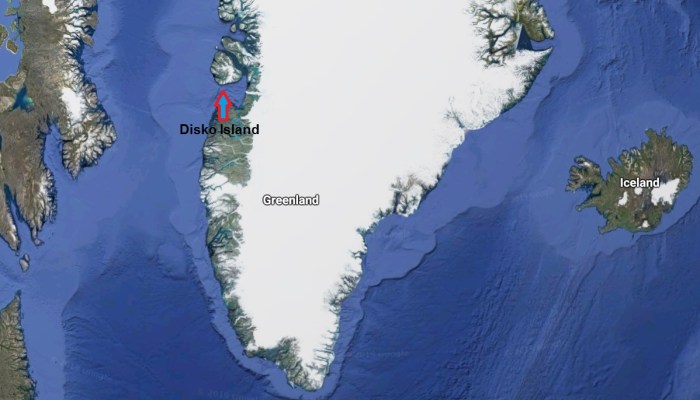
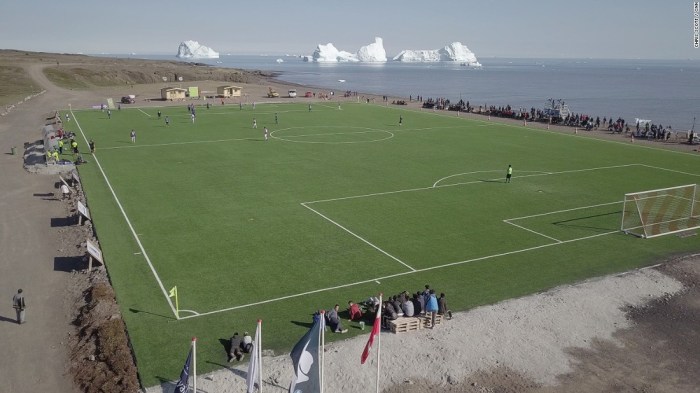
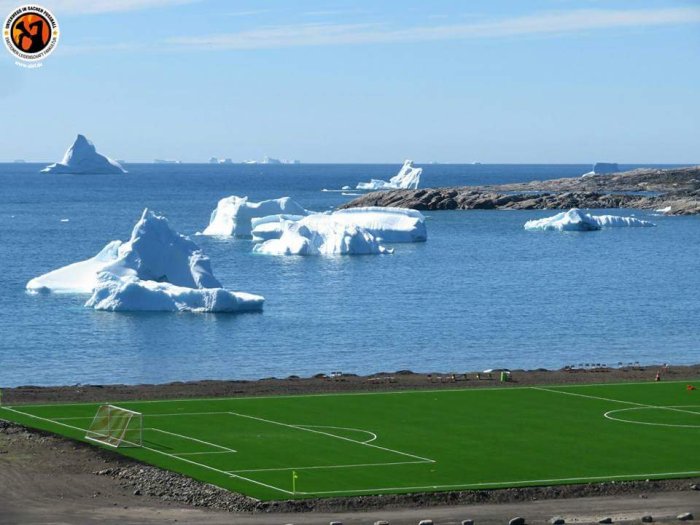
Disko Island is just off the west coast of Greenland. It has a population of approximately 1,200. It has an area of 8,578 km2 (3,312.0 sq mi), making it the second largest island of Greenland (after the main island of Greenland) and one of the 100 largest islands in the world. The vast majority of the landmass is rock. But the soccer hungry people of the island built a top quality football pitch on a beach.

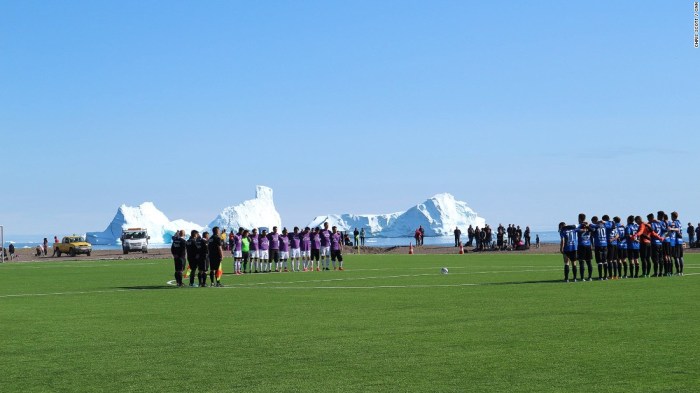
While the soccer game is on spectators can enjoy the beautiful scenery, especially the icebergs just offshore. And every so often whales can be seen breaching the surface and blowing water out of their blowholes.

reddit7

reddit3

reddit4

reddit5

reddit6

Fred Flintstone could get into the Groove

Fred Flintstone is the main character of the animated sitcom The Flintstones, which aired during prime-time on ABC during the original series’ run from 1960 to 1966.

Fred lives in the fictional prehistoric town of Bedrock, a world where dinosaurs coexist with modernized cavepeople and the cavepeople enjoy “primitive” versions of modern conveniences such as telephones, automobiles, and washing machines. Fred’s trademark catchphrase yell is “yabba dabba doo!”, a phrase that was originally his club’s cheer, and later adopted as part of the theme song from the third season on and used in the 1994 live-action Flintstones movie.

Cats, dolphins and one smart raven: the CIA’s secret animal spies

Washington (AFP) – In early 1974, Do Da was top in espionage class, on the way to becoming a high-flying CIA agent: he handled himself better in the rough, carried heavier loads, and could brush off attackers.

But on his toughest-yet spy school test, he disappeared — done in by some of his own kind: ravens.

The bird was a central figure in a decade-long US Central Intelligence Agency program to train animals as agents, helping Washington fight the Cold War against the Soviet Union.

On Thursday, the CIA released dozens of files from its tests on cats, dogs, dolphins and on birds from pigeons to some of the smartest: ravens and crows.

It studied cats as possible loose-roaming listening devices — “audio surveillance vehicles” — and put electrical implants in dogs’ brains to see if they could be remotely controlled.

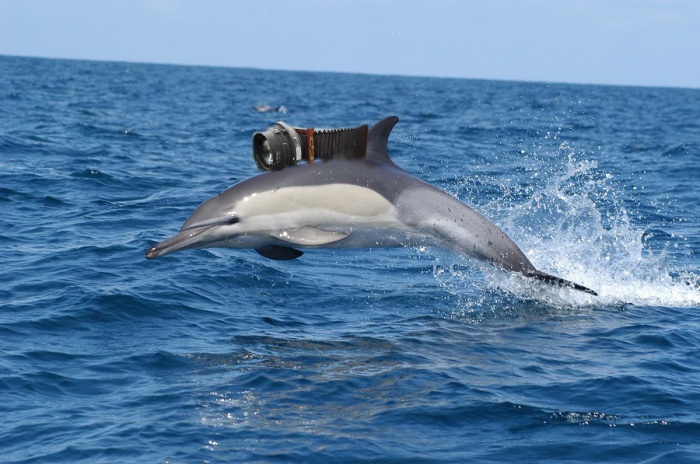
Neither of those programs went very far. More effort was put into training dolphins as potential saboteurs and helping spy on the Soviet Union’s development of a nuclear submarine fleet, perhaps the most potent challenge to US power in the mid-1960s.

Projects Oxygas and Chirilogy sought to see if dolphins could be trained to replace human divers and place explosives on moored or moving vessels, sneak into Soviet harbors and leave in place acoustic buoys and rocket detection units, or swim alongside submarines to collect their acoustic signatures.

Those programs, too, were given up, left to the US Navy which to this day makes use of dolphins and seals.
camerax2

– Hawks and owls –

But what also grabbed the US spy chiefs’ imagination in the Cold War days was birds — pigeons, hawks, owls, crows and ravens, and even flocks of wild migratory birds.

For the latter, the agency enlisted ornithologists to try to determine which birds regularly spent part of the year in the area of Shikhany in the Volga River Basin southeast of Moscow, where the Soviets operated a chemical weapons facility.

The CIA saw the migratory birds as “living sensors” which, based on their feeding, would reveal what kinds of substances the Russians were testing, in their flesh.

In the early 1970s, the CIA turned to birds of prey and ravens, hoping they could be trained for “emplacement” missions like dropping a listening device on a windowsill, and photo missions.

In project Axiolite, bird trainers working on San Clemente island off southern California taught the birds to fly miles over the water between a boat and land.

If the training went well, a chosen candidate would have a tough mission: being smuggled to Soviet Russia, where it would be released secretly in the field, tasked to fly 15 miles (25 kilometers) carrying a camera to snap pictures of a radar for SA-5 missiles, and fly back.

They had red-tailed and Harris’s hawks, great horned owls, a vulture, and a cockatoo.

It was not easy. A cockatoo was “a clever flyer” but “maybe too slow to avoid gull attacks.”

Two falcons died from illness; another promising candidate lost feathers and trainers had to wait for it to molt and grow them back.

– ‘Star’ of the project –

The most promising flyer was Do Da, the raven. In just three months, Do Da went from a successful 3/4-mile trip to six miles from shore to boat, and then four miles back to shore on the same day.

He was the most promising candidate for the Russia mission, the “star of this project,” one scientist wrote, who figured out the right altitudes in the right winds, and acquired “sufficient guile to outwit the native ravens and gulls,” which hid for attacks on him.

But on a training mission he was attacked by “the usual pair” of ravens — and was not seen again.

The scientists were deeply dismayed. “He had a large bag of tricks and was loved by all,” one wrote.

cameraz1

Top 10 Soft drink brands of 2017 – Top Beverage brands

On the list of the top companies in the world are mainly found foods & beverage companies. As a result, the companies coming tops on the lists of the top drinks & beverages companies, by default emerge as some of the largest of all the companies in the world. The Coca-Cola Company has been at the helm for a long time now, and it isn’t going to relinquish that spot any soon. Below are the top 10 soft drink brands in the world in 2017.

1) Coca-Cola

Top 10 Soft drink brands of 2017

Coca-Cola is the most popular soft drink in the world and the most decorated of all the Coca-Cola company products. Commonly known as Coke, the beverage is produced and/or marketed in at least 200 countries. Together with at least 500 other different drinks producers and marketed by the Coca-Cola Company, there is neither a soft drink nor a soft drink company that rivals coca-cola as a whole.

2) Pepsi

Top 10 Soft drink brands of 2017

Pepsi is a cola drink type manufactured by PepsiCo. This carbonated soft drink comes in a number of variants each having its own tastes and flavors. Some of these variants include Pepsi Next, Diet Pepsi, Pepsi Vanilla, Crystal Pepsi, Pepsi Zero Sugar, Pepsi-Cola Made with Real Sugar and Caffeine-Free Pepsi. Pepsi is one of the soft drinks liked because of its low caloric value as compared to other soft drinks. A 12 ounce can of Pepsi contains only about 150 calories. This is pretty low when compared with a number of cola drinks.


3) Red Bull

Top 10 Soft drink brands of 2017

Red Bull energy drink has become the most popular energy drink in the world. It is a non-alcoholic drink that contains vitamin B-complex, carbohydrates, caffeine and amino acid taurine. During physical exertion, the taurine in Red Bull adds to the deficient taurine in your body thus boosting your energy. An average of about 5 billion cans of red bull is sold annually, giving the product a 40% energy drink world market share. It is distinct and hence one of the top soft drink brands in the world.


4) Nestlé S.A

Top 10 Soft drink brands of 2017

Nestle is synonymous with instant coffee, bottled water, crunches and baby food among other food and beverage products. It is the largest food & beverage company in the world, but the fourth when it comes to the beverage segment. It’s Nescafe coffee brand is the leading coffee product on the market, with Nespresso – a home-brewing system brand also being very popular. Nestle Waters is also its other popular product that makes the company appear among the top 10 soft drink brands in the world in 2017.


5) The Gatorade Company

Top 10 Soft drink and beverages brands of 2017

Gatorade drink was invented by University of Florida doctors during the 1960’s with an aim of aiding the hydration of the university’s football team. The team was called the Gators, hence the name. It is for such reasons that the debut Gatorade lemon-lime-flavoured drink is now one of the top sports drinks within the US and beyond.

Today, new beverage brands and flavors have been created by the company. These include the G series for nutrient and fluid need replenishment to professional and collegiate athletes, energy bars & shakes as well as Propel Fitness Water that is vitamin-enhanced. Gatorade is PepsiCo produced.

6) Sprite

Top 10 Soft drink brands of 2017

Sprite is a colorless, lime-lemon flavored, non-caffeinated soft drink manufactured by the Coca-Cola Company. It is normally sold in a translucent green colored bottle that features a yellow-green label. On the other hand, the can always feature aluminum, green, silver and blue. The taste can easily be confused with that of Lemonade but Sprite plays on its own league of carbonated soft drinks.


7) Mountain Dew

Top 10 Soft drink brands of 2017

This is yet another PepsiCo carbonated soft drink. It comes to us in Mountain Dew Soda Flavors, the Energy, Dew Slurpee, and International Variations as well as the Kickstart Flavors. These are produced in hundreds of variants, some of which have been discontinued, with only the best of them all being offered to the markets. Mountain Dew soft drink is currently found in the retail stores in all the continents and more than 100 countries. Mountain Dew is mostly marketed in beautiful green containers that are well designed and branded thus attracting more customers.


8) Pepper Soda

Top 10 Soft drink and beverages brands of 2017

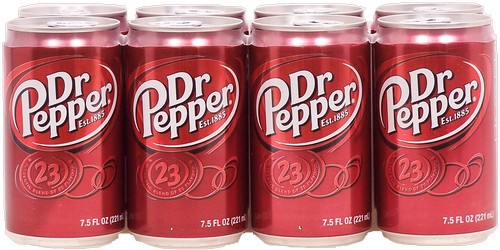
Dr. Pepper is a snap for most of the soft drinkers who are contemplating about the doctor to choose. Dr. Pepper Sodas and Snapple drinks are bottled and distributed by Dr. Pepper Snapple Group. The company served Canada, the USA, and Mexico as its mainstreams, with other countries also highly using its products. Among the company’s products, Dr. Pepper & Snapple is the most popular, the third most popular soda drink in the North American continent.


9) Fanta

Top 10 Soft drink and beverages brands of 2017

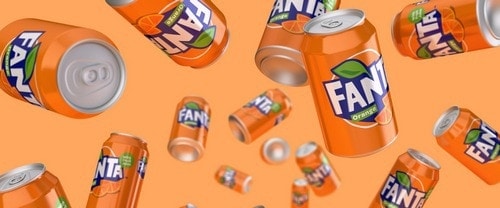
Fanta is yet another popular soft drink beverage produced by the Coca-Cola Company and with a German origin. Today, there are at least 100 different flavors worldwide, with the most popular and common being Fanta Orange. Others are mainly fruit flavored with some of the flavors including citrus, pineapple, strawberry and blackcurrant etc. It is one of the most favorite soda brands for the children and toddlers.


10) Tropicana

Top 10 Soft drink and beverages brands of 2017

Tropicana is a soft drink beverage that has defied the odds to come among the top 10 soft drinks and beverages in the world in 2017, beating other coca-cola and PepsiCo products. The juice, which comes in many flavors but with the orange variant being its main signature, is produced by Tropicana Products Inc. Some of the Tropicana variants include the Tropicana Twister Soda among others.

The juice is one of the healthiest and with very few calories as compared with its other competitors. Its ingredients are mainly natural, with some of the variants being sugar-free and with no artificial in them. With the increase in health awareness and consciousness of the population, don’t underestimate the future performance of the drink and its other sister soft drinks from Tropicana Products Inc.