
Month: April 2017
Very tough trucks indeed
BBC
Five military trucks you can buy … and one you can’t
 Land Rover Defender
Country of origin: Britain
Briefing: Like the scrappy military transport that would become the Jeep Wrangler, the Land Rover Defender has evolved over its 65-year history, but has never jettisoned an ounce of capability. Available in hard-top, double-cab, pickup and bare-chassis configurations, the Defender is found around the globe, with some 55,000 units in active military service.
Price (Britain, exclusive of VAT): From £21,415 (approximately $34,500)
 Renault Sherpa
Country of origin: France
Briefing: Renault’s mighty Sherpa owes its appeal not only to the olive drab versions piloted by French and NATO soldiers, but to the charismatic appearances of the civilian model in the grueling Dakar Rally. Available by special order in Russia, Africa and the Middle East, the non-military Sherpa can be had as an unarmoured station wagon or pickup, or, for war-zone duty, a fully-armoured wagon. Power comes from a deafening 4.76-litre four-cylinder diesel engine. Its 215hp and 590lb-ft of torque reach all four wheels through a six-speed automatic transmission.
Price (UAE): Approximately 1m dirham ($272,000)

GAZ Tigr
Country of origin: Russia
Briefing: That the military Tigr bears a passing resemblance to the American Humvee is, to the Russian truck’s vociferous fans, nothing more than coincidence. Beneath its expansive hood rumbles a 5.9-litre diesel engine, which meets a six-speed manual transmission and permanent four-wheel-drive. Production of the civilian Tigr – which can soften its brutality with the addition of such creature comforts as leather, air conditioning and a thumping audio system – is hardly a top priority for GAZ, and acquiring one is neither simple nor inexpensive, but a successful buyer is fairly guaranteed to be the only Tigr-tamer in his okrestnosti.
Price (Russia): approximately 3.5m rubles ($110,000)
 Mercedes-Benz G63 AMG 6×6
Country of origin: Austria
Briefing: As production vehicles go, the Mercedes-Benz Geländewagen, otherwise known as the G Class, is ancient. Merely revised during more than 30 years of production, this bricklike military machine in a civilian paintjob still manages to capture the imagination of those who dream of traffic parting with their approach – business tycoons, action-film stars, the Pope. Like the “standard” G63 AMG, the new G63 AMG 6×6 packs a twin-turbo 5.5-litre V8 engine producing 536hp and 560lb-ft of torque. The engine meets the six-by-six drivetrain from Mercedes’ hulking Zetros truck, yielding 15.75in of ground clearance – sufficient to ford water as deep as 40in. Getting behind the wheel of this ultimate G Class, unless you happen to be, say, a James Bond villain, will be tricky. The vehicle is not (legally) destined for North America or right-hand-drive countries, and Mercedes has promised that production volume will be “very small”.
Price (Germany, exclusive of VAT): 379,000 euros (approximately $523,000) VAT- Value Added Tax
Price (Russia): approximately 3.5m rubles ($110,000)
Price (UAE): Approximately 1m dirham ($272,000)
Price (Britain, exclusive of VAT): From £21,415 (approximately $34,500)
 Paramount Marauder
Country of origin: South Africa
Briefing: Ten tonnes of South African stoutness, the Marauder is possessed of a double-skin monocoque that helps it resist virtually all forms of light-arms fire, as well as the occasional anti-tank mine. It also, as Top Gear’s Richard Hammond learned, is rather good as a city runabout – provided the pilot steers clear of fast-food drive-throughs.
Price: $485,000
 Oshkosh L-ATV
Country of origin: United States
Briefing: How to replace a fleet of aging Humvees that numbers in the tens of thousands? With a bit of technological derring-do. Wisconsin-based Oshkosh Defense has developed the L-ATV prototype to pick up where the Humvee has left off, carrying a diesel-electric hybrid powertrain that allows the purpose-built vehicle to run near-silent when missions require it. The US government has taken delivery of 22 L-ATV prototypes for testing, but civilian sales do not figure in Oshkosh’s immediate product plans.
Price: N/A

Secret US nuclear bomb videos revealed
The Lawrence Livermore National Laboratory in California has, for the first time, made their archive of approximately 10,000 nuclear testing videos available online.
The Mother of All Bombs
The Massive Ordnance Penetrator (MOP) GBU-57A/B is a U.S. Air Force massive, precision-guided, 30,000-pound (13,608 kg) “bunker buster” bomb. This is substantially larger than the deepest penetrating bunker busters previously available, the 5,000-pound (2,268 kg) GBU-28 and GBU-37.
The U.S. Air Force has no specific military requirement for an ultra-large bomb, but it does have a concept for a collection of massively sized penetrator and blast weapons, the so-called “Big BLU” collection, which includes the MOAB (Massive Ordnance Air Burst) bomb. Development of the MOP is now underway at the Air Force Research Laboratory, Munitions Directorate, Eglin Air Force Base, Florida. Design and testing work is also being performed by Boeing. It is intended that the bomb will be deployed on the B-2 bomber, and will be guided by the use of GPS.
A test release from a B-52 bomber

The push for accelerated deployment is due to the increased perceived nuclear threats from Iran and North Korea. It’s believed that many of their nuclear programs could be in development underground, below levels of current bunker-busting bombs’ range. The Pentagon intends the rapid deployment to send a message that the United States is tweaking strategies to address new threats.


The Air Force took delivery of 20 bombs, designed to be delivered by the B-2 bomber, in September 2011. In February 2012, Congress approved $81.6 million to further develop and improve the weapon.
On 25 June 2010, USAF Lt. Gen. Phillip Breedlove said that the Next-generation Penetrator Munition should be about a third the size of the Massive Ordnance Penetrator so it could be carried by affordable aircraft. In December 2010, the USAF had a Broad Agency Announcement (BAA) for the Next Generation Penetrator (NGP).
Global Strike Command has indicated that one of the objectives for the Next-Generation Bomber is for it to carry a weapon with the effects of the Massive Ordnance Penetrator. This would either be with the same weapon or a smaller weapon that uses rocket power to reach sufficient speed to match the penetrating power of the larger weapon.


Israel doesn’t have military jets big enough to carry the MOP. But they have been working on their own penetrators which are much smaller than MOP, and therefore could be carried by Israel’s F-15I Strike Eagles and Jericho missiles. As one official reported, “You would be surprised at their accuracy” and that the high explosives involved is a special mix of chemical explosives that could conceivably penetrate the Iranian fortifications.

Carrier diplomacy
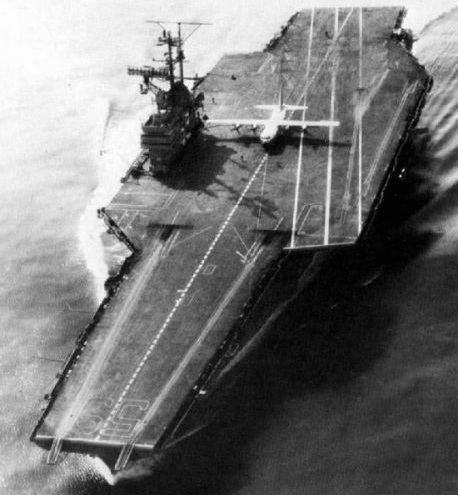
Trump using the carriers to send a message to that Twist in North Korea.














US Intelligence Agency that Sees the Targets Close-Up
The National Geospatial-Intelligence Agency (NGA) is both a combat support agency, under the United States Department of Defense, and an intelligence agency of the United States Intelligence Community, with the primary mission of collecting, analyzing, and distributing geospatial intelligence (GEOINT) in support of national security. NGA was known as the National Imagery and Mapping Agency (NIMA) until 2003.
NGA headquarters is located at Fort Belvoir in Springfield, Virginia, and operates major facilities in the St. Louis, Missouri area, as well as support and liaison offices worldwide. The NGA campus, at 2.3 million square feet (214,000 m2), is the third-largest government building in the Washington metropolitan area after The Pentagon and the Ronald Reagan Building.
In addition to using GEOINT for U.S. military and intelligence efforts, the NGA provides assistance during natural and man-made disasters, and security planning for major events such as the Olympic Games.

NGA Campus East is the headquarters of the agency. The building features trapezoidal windows, color-coded interior sections, and is bisected by an atrium that is large enough to hold the Statue of Liberty.
National Imagery and Mapping Agency (NIMA)
NIMA was established on October 1, 1996, by the National Defense Authorization Act for Fiscal Year 1997. The creation of NIMA followed more than a year of study, debate, and planning by the defense, intelligence, and policy-making communities (as well as the Congress) and continuing consultations with customer organizations. The creation of NIMA centralized responsibility for imagery and mapping.
NIMA combined the DMA, the Central Imagery Office (CIO), and the Defense Dissemination Program Office (DDPO) in their entirety, and the mission and functions of the NPIC. Also merged into NIMA were the imagery exploitation, dissemination, and processing elements of the Defense Intelligence Agency, National Reconnaissance Office, and the Defense Airborne Reconnaissance Office.
NIMA’s creation was clouded by the natural reluctance of cultures to merge and the fear that their respective missions—mapping in support of defense activities versus intelligence production, principally in support of national policymakers—would be subordinated, each to the other.
NGA
With the enactment of the National Defense Authorization Act for Fiscal Year 2004 on November 24, 2003, NIMA was renamed NGA to better reflect its primary mission in the area of GEOINT. As a part of the 2005 Base Realignment and Closure (BRAC) process, all major Washington, D.C.-area NGA facilities, including those in Bethesda, Maryland; Reston, Virginia; and Washington, D.C., would be consolidated at a new facility at the Fort Belvoir proving grounds. This new facility, called the NGA Campus East houses several thousand people and is situated on the former Engineer Proving Ground site near Fort Belvoir. NGA facilities in St. Louis were not affected by the 2005 BRAC process.
The cost of the new center, as of March 2009, was expected to be $2.4 billion. The center’s campus is approximately 2,400,000 square feet (220,000 m2) and was completed in September 2011.

NGA employs professionals in aeronautical analysis, cartography, geospatial analysis, imagery analysis, marine analysis, the physical sciences, geodesy, computer and telecommunication engineering, and photogrammetry, as well as those in the national security and law enforcement fields.

The NGA is one segment of the vast United States Intelligence Community.
The United States Intelligence Community (IC) is a federation of 16 separate United States government agencies that work separately and together to conduct intelligence activities considered necessary for the conduct of foreign relations and national security of the United States. Member organizations of the IC include intelligence agencies, military intelligence, and civilian intelligence and analysis offices within federal executive departments. The IC is headed by the Director of National Intelligence (DNI), who reports to the President of the United States.
Among their varied responsibilities, the members of the Community collect and produce foreign and domestic intelligence, contribute to military planning, and perform espionage. The IC was established by Executive Order 12333, signed on December 4, 1981, by U.S. President Ronald Reagan.
C.I.A. Headquarters

Sixteen agencies:
| Agency | Parent Agency | Federal Department | Date est. |
|---|---|---|---|
| Twenty-Fifth Air Force | United States Air Force | Defense | 1948 |
| Intelligence and Security Command | United States Army | Defense | 1977 |
| Central Intelligence Agency | none | Independent agency | 1947 |
| Coast Guard Intelligence | United States Coast Guard | Homeland Security | 1915 |
| Defense Intelligence Agency | none | Defense | 1961 |
| Office of Intelligence and Counterintelligence | none | Energy | 1977 |
| Office of Intelligence and Analysis | none | Homeland Security | 2007 |
| Bureau of Intelligence and Research | none | State | 1945 |
| Office of Terrorism and Financial Intelligence | none | Treasury | 2004 |
| Office of National Security Intelligence | Drug Enforcement Administration | Justice | 2006 |
| Intelligence Branch | Federal Bureau of Investigation | Justice | 2005 |
| Marine Corps Intelligence | United States Marine Corps | Defense | 1978 |
| National Geospatial-Intelligence Agency | none | Defense | 1996 |
| National Reconnaissance Office | none | Defense | 1961 |
| National Security Agency/Central Security Service | none | Defense | 1952 |
| Office of Naval Intelligence | United States Navy | Defense | 1882 |
Defence Intelligence Agency (DIA) Headquarters

National Security Agency (NSA) Headquarters

The U.S. intelligence budget (excluding the Military Intelligence Program) in fiscal year 2013 was appropriated as $52.7 billion, and reduced by the amount sequestered to $49.0 billion. In fiscal year 2012 it peaked at $53.9 billion, according to a disclosure required under a recent law implementing recommendations of the 9/11 Commission. The 2012 figure was up from $53.1 billion in 2010, $49.8 billion in 2009, $47.5 billion in 2008, $43.5 billion in 2007, and $40.9 billion in 2006.
Wikipedia

An enormous amount of resources is provided to U.S. intelligence. These are life-long professionals who have the best interests of the country at heart. The president-elect should maybe listen to what it has to say.
K-Tel Blast from the past
The founder of K-Tel died today in Winnipeg. Phil Kives started the company selling anything and everything. His big breakthrough was a non-stick frying pan. And this was just the beginning. In the 70’s and 80’s K-Tel sold everything from the pocket fisherman to the vegie-matic, the miracle brush to bionic glue. Any crazy and obscure product he could find out there, Phil would offer it to the world via TV advertising.
But K-Tel didn’t have all the crazy products. The list below has some products even more bizarre than K-Tel’s most outrageous contraptions.

Kush Support
The weight of one massive jug on top of the other has been plaguing big-breasted side sleepers for ages. Or so the makers of this item claim.

Fridge Locker
Contain your lunch and expose your OCD.

The Better Marriage Blanket
Protect yourself from deadly farts with “the same fabric used by the military to protect against chemical weapons.”

The Backup
A bedside gun rack so you can shoot an intruder without hesitating long enough to notice it’s just your girlfriend.

FIR-Real Portable Sauna
Leave a little bit of your ball sweat every place you visit with this traveling torture chamber.
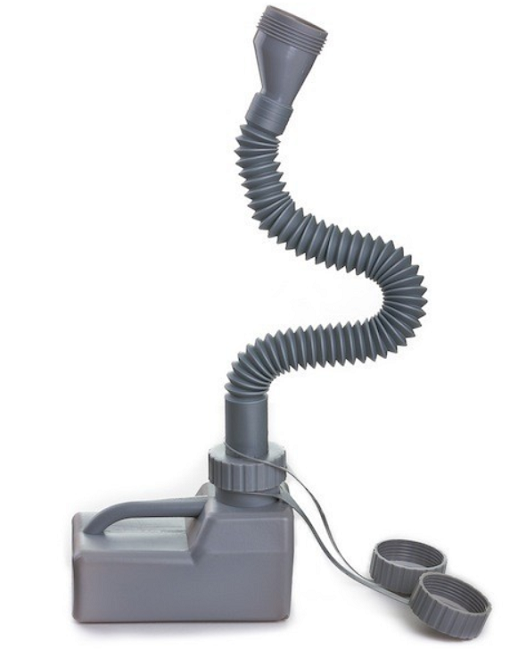
The GoPilot Portable Urinal
This product for the prostate challenged was recently included in a Father’s Day Gift Guide … written by the worst son ever.

Gangnam Style Singing Toothbrush
Hear this maddening tune two times a day for two minutes straight and try not to kill yourself. It’s like Fear Factor.

The Tush Turner
A lazy Suzan for your fat ass that’s guaranteed to make it even fatter.

The UroClub
Douse your friends in urine when you accidentally swing this pee-filled tube instead of your three iron.

The Fat Magnet
Suck the grease—and fun—out of every meal.

Hand Fitness Trainer
Type so hard you break the goddamn keys!

Bigfoot Garden Yeti
A sculpture that ensures a neighbor will never come knocking.

Organic Woombie Baby Swaddle
Finally, a newborn straitjacket!
Irresistible Lily Munster
Lily Munster, Countess of Shroudshire (née Dracula), is a fictional character in the CBS sitcom, The Munsters, originally played by Yvonne De Carlo. The matriarch of the Munster household, Lily is a vampire.
Lily was born in 1827 to Sam Dracula (Grandpa) and his 166th wife (referred to only as “Grandma”). She lived with Grandpa for some time in Transylvania (a region in Romania) before meeting Herman Munster and marrying him in 1865. She, Grandpa, and Herman moved to America sometime before the mid-1940s and adopted her sister’s child, Marilyn. In the mid-1950s, she gave birth to Eddie, her and Herman’s only child.
Her name is presumably derived from the tradition of the lily as a flower of death, or a vague reference to Lilith, a female demon of Jewish mythology.

Lily is the matriarch of the Munster family. She is very close with her niece, Marilyn. She has a werewolf for a brother, who appears in one episode, and a sister who is mentioned a few times who is Marilyn’s mother. Lily is the voice of reason in the Munster household, often relied upon to set problems right, and typically mediates when Herman and Grandpa squabble.

Lily and Herman
Lily also has a fiery temper. While she is deeply in love with Herman (“Pussycat,” as she calls him), she also frequently gets very angry at him (due to his frequent stupidity and occasional selfishness), and Herman often meekly discloses his fear (to others) of being on the receiving end of her wrath. She also has reprimanded her own father (Grandpa) on several occasions for his own foolish actions and stubborn self-righteousness.
Lily is a beautiful and slender woman who appears to be in her middle age years, although she is actually hundreds of years old. A white streak in her hair recalls the monster’s mate from Bride of Frankenstein. Lily usually dresses in an ankle-length pale pink gown that appears faded and old, and she sometimes also wears a scarf. Her necklace features a bat-shaped medallion. When away from the Munster house, she sometimes wears a long silver cape with a hood. In the episode “Munsters Masquerade”, Lily demonstrates the ability to float in the air while dancing.

Gothic Underwear
Herman loves it


 The MarkoZen Blog