The daredevils feeding a dangerous Russian craze

00russkies

A number of young Russians are making names for themselves by posting videos of life-threatening stunts online. What drives these extreme selfie daredevils?

He’s got a camera strapped to his head and he teeters on the edge of the roof in a nine-storey apartment block in Siberia.

“Are you filming?” he asks, as a friend hands him a flaming torch. Orange flames engulf his legs and suddenly he jumps, somersaulting in the air like a stricken warplane before landing with a thud into a deep pile of snow.

Remarkably, he’s unhurt – if a little winded. Police tell a gaggle of onlookers to stop filming, but within hours, footage of this potentially deadly jump goes viral – various videos of the stunt filmed from different angles were watched millions of times on YouTube.

Many people were incredulous, even angry. “Is this the stupidest stunt ever?” screamed one headline.

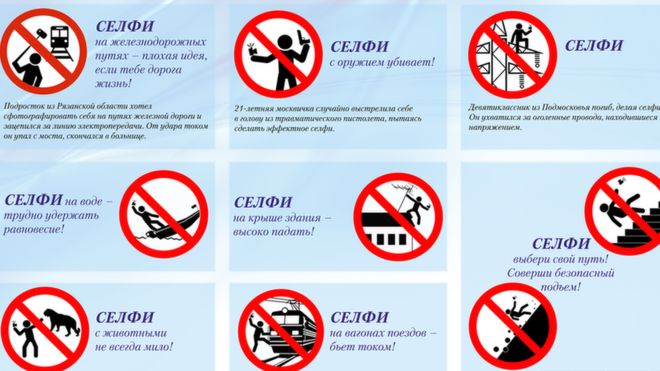
The young man’s appetite for risk is unusual but not unique. In fact a growing number of deaths and injuries, suffered by Russians who among other things have fallen from buildings and moving trains whilst taking pictures, have prompted the Russian Interior Ministry to launch a “safe selfie” campaign.
00000

The Russian Ministry’s safe selfie campaign urges people to, for instance, avoid train tracks and roofs, and be cautious around staircases, wild animals and guns

Despite the deadly peril, some of the risk takers are attracted by fame and the possibility of becoming social media stars. In many places in Russia, tall buildings are accessible and fines for trespassing are low, if they exist at all. And one enthusiastic participant says extreme stunts can alleviate the boredom and pent up energy of many Russian men.

But what really drives some of the most notable Russian selfie daredevils?

00000r

00000r1

The man jumping off of that Siberian apartment block, 23-year-old Alexander Chernikov, lives on the outskirts of Barnaul – 4,000km east of Moscow.

Even though it’s -18C and thick ice cakes the pavements, he’s dressed in a shiny burgundy bomber jacket, jeans and cowboy boots. The place where he made his infamous jump is a dreary, Soviet-era building with rusty balconies covered in satellite dishes.

“Up there you feel that you’re standing on the line between life and death – your life is hanging by a thread – that if something goes wrong you may die,” he says.

Alexander claims he is not afraid of death. “What’s the point of being scared? It’s inescapable. It comes to us all,” he says.

But would he go to such lengths if there were no cameras? “Probably not,” he admits. “I would find a different way to get on in life.”

Alexander sometimes gets temporary work as a labourer on building sites – there are also local jobs in factories or unloading cargo trains. But he dreams of a career as a stunt man or even a film star. He’s desperate to get out of the sleepy village where he still lives with his parents.

Soon after Alexander’s notorious jump, which has been viewed more than 10 million times online, he was invited onto a TV show in Moscow where a film director promised him a screen test. But on the show, he and his family were treated like country bumpkins.

Angela Nikolau

00000r2

The daughter of a trapeze artist from Moscow’s best known circus, Angela has more than 400,000 followers on her Instagram account. Travel firms, fashion brands and camera companies sponsor her dangerous adventures in Russia and beyond.

Like Alexander Chernikov, the 24-year-old art student was invited onto a TV show to talk about her stunts. But unlike him, she was applauded and received a bouquet of pink roses from the presenter.

In one of her most extreme videos, Angela and her boyfriend climb what is said to be the world’s tallest crane in Tianjin, China.

She also climbs high buildings to perform eye-popping feats like a yoga backbend on a narrow ledge, or a ballerina’s arabesque on a turret. Sometimes she is pictured smiling casually under a selfie-stick with the ground hundreds of metres below her.

00000r3

00000r4

Angela says her grandmother was so upset when she first saw her photos, that she pretended they were Photoshopped.

For her, the presence of the camera is a key part of what she calls her art – although few artistic pursuits are as clearly dangerous.

“Sometimes I just climb up a building without a camera just to see a colourful sunrise or sunset,” she says. “But if you are asking why I film myself, imagine an artist painting all alone in his studio – painting, painting, painting for five years until he is practically drowning in his own work. And he thinks who am I doing this for – is there any point in my work? We need an audience – that is just part of the human condition.”

BBC and YouTube.

Top 50 countries by number of business jets registered

The table below presents the top 50 countries by the number of business jets in operation. It will come as no surprise that the number of aircraft registered in the US is far greater than anywhere else in the world. Out of all of the 50 countries below, the US alone accounts for 67 per cent of business jets and 63 per cent of the global fleet.

00gulfstreamg650_aerial_7_1300_580_70

Gulfstream G650. Highest rated business jet

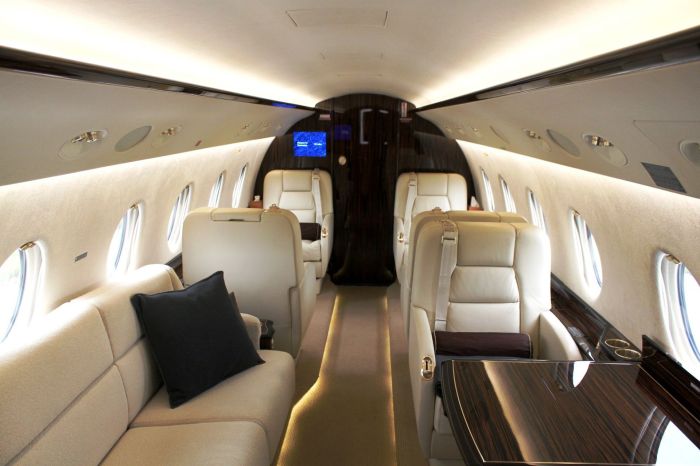
00Gulfstream-G200-private-jet-interior

In sixth position with 264 aircraft, the Isle of Man, located off the coast of the UK, opened for business in May 2007 and is continuing to be seen as a popular and quick place to register aircraft.

Latin American occupies three places in the top 10, with Brazil and Mexico in second and third Venezuela at number 10. Brazil, in particular, is a vast country that takes time to travel across, so the number of smaller aircraft provide businesses with vital links between towns and cities. Although no age analysis is available, the number of older aircraft in both Mexico and Venezuela is noticeable and with little official information available, it is proved difficult to obtain true numbers of aircraft that are still currently active.
Austria’s position at number seven is partly due to a number of aircraft with Russian owners. Russia’s own import duty and tax payable on aircraft placed on the Russian register makes Austria a very attractive alternative country to register aircraft – something that also benefits the Isle of Man.
The number of business jets registered in China excludes aircraft registered in Hong Kong, Macao and Taiwan, each of which appear under their own entries. If we were to consolidate the three countries, China would jump two places in the list to number seven. Hong Kong, in particular, has a large number of aircraft registered and appear at 35th place with 32 business jet on the register.

Most popular private jet registries

Position Registered Country No. of Aircraft
1 United States 12,051
2 Brazil 764
3 Mexico 704
4 Canada 483
5 Germany 387
6 Isle of Man 264
7 Austria 244
8 United Kingdom 241
9 China 203
10 Venezuela 168
11 South Africa 160
12 Australia 154
13 Argentina 142
14 India 140
15 Portugal 138
16 France 132
17 Switzerland 123
18 Bermuda 117
19 Cayman Islands 114
20 Turkey 110
21 Spain 100
22 Italy 99
23 Denmark 62
24 United Arab Emirates 61
25 Saudi Arabia 56
26 Russian Federation 53
27 Luxembourg 48
28 Belgium 45
29 Aruba 45
30 Nigeria 41
31 Japan 36
32 Sweden 36
33 Malta 35
34 Czech Republic 34
35 Hong Kong 32
36 Philippines 32
37 Indonesia 27
38 Netherlands 27
39 Finland 26
40 Morocco 26
41 Thailand 25
42 Ukraine 24
43 Egypt 23
44 Chile 20
45 Serbia 17
46 Bulgaria 16
47 Kazakhstan 16
48 Colombia 16
49 Greece 15
50 Pakistan 15

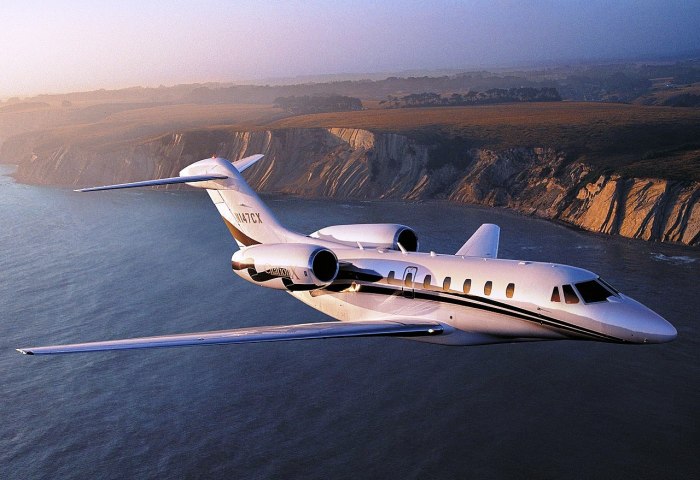
Most popular business jet: Cessna Citation series with over 7000 built

00Cessna-Citation-X

Looking for a smaller aircraft, the Honda Jet

00honda-jet-1

00hondajet_04

North Dakota passes law where if you can read, you can carry a concealed handgun

0pocket

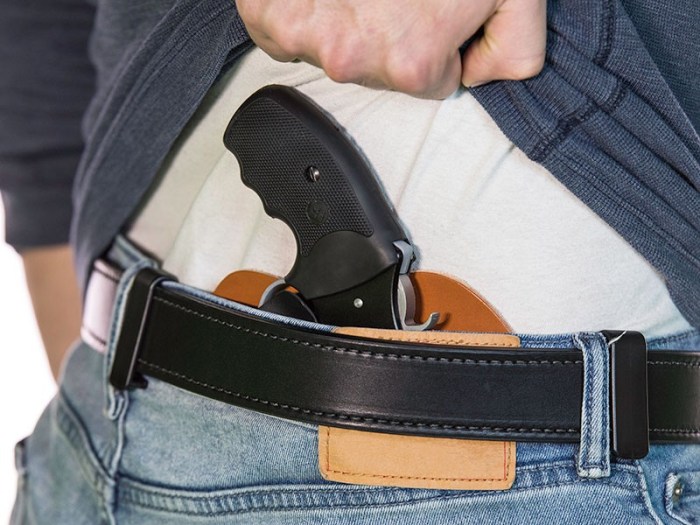
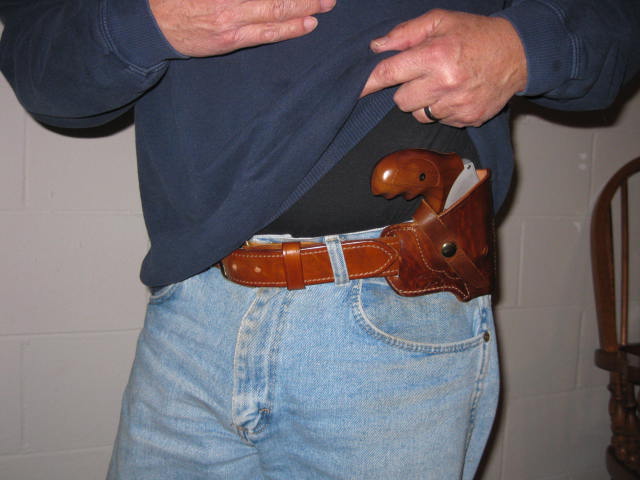
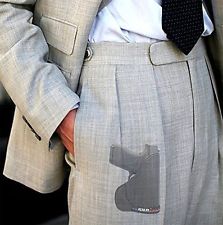
On March 23, 2017, a bill permitting constitutional carry was signed by North Dakota Governor Burgum. Starting on August 1, 2017, people carrying concealed handguns without a concealed weapons license will need to carry a form of state-issued photo ID (driver’s license), must be a North Dakota resident for at least 1 year, must inform police about their handgun upon contact, and must not otherwise be prohibited from possessing a firearm by law. The existing concealed weapons licenses, Class 1 & 2, will continue to be available to allow cross state reciprocity. Open carry of a loaded handgun will still require a permit.

Concealed carry holsters and pocket holsters

0pocket2

As Dave Thompson of Prairie Public Broadcasting reports, “The measure allows people 18 and older to carry hidden firearms without having to undergo background checks or training — as long as they’re law-abiding citizens.” Anyone who is eligible to possess a Class 2 firearm license and has had a valid driver’s license or state ID card for at least a year may carry a concealed firearm. But they don’t need a Class 2 firearm license. They must pass a written exam. Many have pointed out that the exam is not at all difficult.

The 10 states with the lowest homicide rates are: North Dakota, Vermont, Wyoming, New Hampshire, Utah, Idaho, Iowa, Maine, Massachusetts and Oregon.

Nine Incredible Military Aircraft that Never Made it Past the Test Phase

You have to give credit to our American cousins.  They never say never.  The most hair-brained ideas get the go-ahead and millions of dollars will be spent to develop these brainstorms.  But every so often some of these schemes evolve into amazing contraptions that are extremely remarkable. 

Space.com

Ambitious but Flawed Aircraft Concepts

As one would expect, planes have to go through a lot of trial runs before the military is willing to put the money and resources required into their production.

So when an airplane disintegrates in midflight or can only be operated successfully by expert pilots with hours of training, that plane joins hundreds of others that were great in theory, but never made it to mass production. Here we present you with ten of the ambitious and flawed aircraft concepts, and why only a few of them ever got made.


HK-1 Hercules (The Spruce Goose)

While the original idea for the HK-1 Hercules came from Henry J. Kaiser, a shipbuilder during World War II and the U.S. Army, Howard Hughes was the one who brought the ‘Spruce Goose’ into existence in 1947.

The 400,000-pound wooden airplane had a 320-foot wingspan (that’s just 40 feet less than a football field) and was proposed as a way to build a plane that could carry troops and cargo without using precious wartime materials.  The plane had a single large hull, produced thrust with eight engines and by the time it was completed in 1947, had cost the U.S. government $22 million and Hughes $18 million.

Hughes planned for the plane to carry 750 fully equipped troops or one M4 Sherman tank.  The HK-1 was the largest airplane ever built up to that point, in fact, it was three times larger than any plane that came before it. Despite all the money and time that went into its creation, the plane only flew once; it traveled a distance of one mile, at a height of about 33 feet.

HZ-1 Aerocycle

The HZ-1 Aerocycle  – known as the ‘motorcycle of the air’ was one of several single person flying platforms that the U.S. Army looked into during the 1950s and 60s.

The Aerocycle carried a single pilot and its engine on a circular platform, all of which was located just above two 15-foot long rotating propellers.  The craft’s pilot would stand toward the rear of the platform, secured by a tether attached to the steering column.

Single person flying platforms were going to be used for reconnaissance missions. The belief was that they were easy to pilot so little experience was needed to operate one. They learned otherwise during the testing phase when two pilots crashed because the Aerocycle was ‘too hard to steer without experience.

X-13 Vertijet

Its origins sound more like a bet than a Navy contract; the Ryan Company was tasked with seeing if they could develop a plane that could launch from the vertical position like a rocket. The Navy came up with the idea as a way to launch aircraft from a submarine. The nose of the aircraft had a hook on the underside, which was used to hang the Vertijet from the vertical trailer-bed landing platform. From there it was able to take off, achieve horizontal flight and then land back in the vertical position.

The plane was finally tested in 1957, but was never developed further due to a lack of operational requirement. The military simply had no use for it on the battlefield anymore.

XC-120 Packplane

Aeronautic Systems Center History OfficeIn an attempt to create a plane that was easier to unload, Fairchild developed the Packplane, which had removal cargo pods.

The pod was positioned below the fuselage and made getting cargo on and off the plane much quicker – the pod could be removed, a new one placed in and the aircraft would be ready for take off again. The Packplane’s upper component had a flat bottom and could be flown without the cargo hold being attached.

The company only built one XC-120, but the idea was never pursued further as it didn′t really improve that much on airplanes with traditional cargo carrying compartments.

XF-85 Goblin

The XF Goblin resembles a plane you expect to see a video game character piloting. It was conceived during World War Two, and was supposed to be a plane within a plane.

Nicknamed the ‘Flying Egg,’ the Goblin was meant to act as a defender – a parasite fighter – which would be dropped from the bomb bay of the mother ship to deal with enemy fighters while it’s carrier, the Peacemaker B-36, went on its way. Because it needed to fit in the bay of the B-36, there were a lot of size constraints. The Goblin could only be sixteen feet long, and only five feet wide when stowed. Its wings were designed to fold up alongside each side of the fuselage to fit into the B-36.

There were multiple reasons that the Goblin never made it past the testing phases. The little plane was no match for conventional enemy fighters: it was too slow and too lightly armed. In addition, the increasing range of jet escort fighters, thanks to the advent of in-flight refueling, allowed them to accompany bombers on their full missions.

Convair XFY Pogo

Convair’s XFY Pogo looks a lot like a combination between the X-13 Vertijet and the XF-85 Goblin. The Pogo had three wings arranged as a triangle, and three-bladed rotating propellers.

It was an experiment in vertical takeoff and landing. The plane was known as a tailsitter because it launched and landed on its tail.  Its developers believed that this would make it possible to operate them from small warships.

Issues with the Pogo’s design prevented it from leaving the testing phase. Because it was so lightweight and had no spoilers, it lacked the ability to slow down and stop efficiently after moving at high speeds.

Landing also turned out to be a problem. The pilot had to look back behind himself during a landing to properly stabilize the craft. So like the Aerocycle, the Pogo could only be flown by the most experienced pilots.

A-12 Avenger II

Out of all the aircraft on this list, the Avenger II is by far the most futuristic looking. It even looks pretty advanced for today, despite the fact that it was designed 20 years ago.

The A-12 was designed to be an all-weather, carrier-based stealth bomber based from air carriers.  It was shaped like an isocles triangle, with a cockpit at the vertex. Its internal weapons bay would carry smart bombs and other air-to-ground ordnance.

In the end the ‘flying dorito’ as it was nicknamed proved to be too expensive for development. By one estimate the A-12 had become so expensive that it would have consumed up 70 percent of the Navy’s aircraft budget within three years.

F2Y Sea Dart

Disintegrating in midair is a surefire way for an aircraft to be scrapped during the testing phase. Such was the fate of the Sea Dart.

The F2Y was the winner of the Navy’s 1948 competition for a supersonic interceptor aircraft. The Navy was worried about operating supersonic aircraft from the decks of aircraft carriers so the Sea Dart seemed like the perfect solution as it rode on twin hydro-skis for takeoff.

Despite its horrific final flight, the Sea Dart does hold one record as the only seaplane to ever go faster than the speed of sound.

Dyna-Soar

A plane with a name like the Dyna-Soar has to be pretty impressive, and despite never making it beyond a test plane, it was.

Developed in 1957, the X-20 Dyna-Soar (dynamic soarer) was a U.S. Air Force program to develop a space plane that could be used for military missions, such as reconnaissance, bombing, space rescue, satellite maintenance and sabotage of enemy satellites.

While other space planes at that time were based on space capsules, which means they relied on the atmosphere’s drag to slow them down. The Dyna-Soar was much more similar to our space shuttles, which glide to earth under the guidance of a pilot.

The Dyna-Soar never made it beyond a test plane because the Air Force has no clear goal for the aircraft, and its developers were uncertain that the boosters would have the power to effectively launch the plane into space.


Trump White House Experiencing Big Leaks

President Donald Trump’s Treasury Secretary Steven Mnuchin used his first senior staff meeting last month to tell his new aides he would not tolerate big leaks, three sources familiar with the matter said.

And at the Department of Homeland Security (DHS), some officials told Reuters they believe a search is under way for the big leaker of a draft intelligence report which found little evidence that citizens of seven Muslim-majority countries covered by Trump’s now-suspended travel ban pose a threat to the United States.

urination11

Annual Report on Canadian UFO Sightings Released

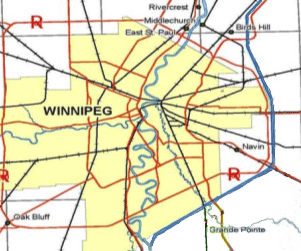
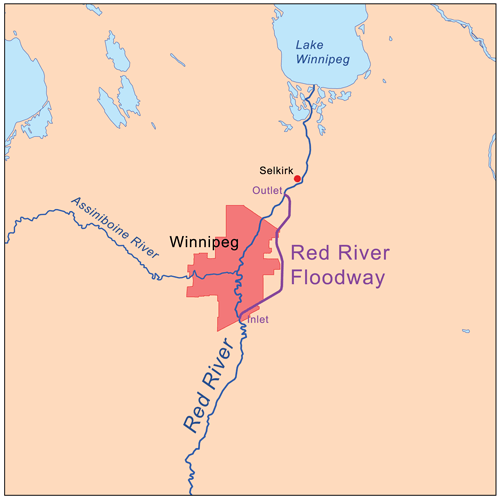
WINNIPEG — Bright lights, airplane near-misses and light-fingered aliens with a penchant for cool shades are all part of the annual report on UFO sightings in Canada.
The 2016 Canadian UFO Survey produced by Winnipeg-based Ufology Research was released this week. In total, there were 1,131 sightings of unidentified flying objects reported across Canada.

In a first for the 28 years the study has been conducted, only four per cent of the sightings could not be explained. Study author Chris Rutkowski said that record-low rating is likely the result of more careful scrutiny of raw report information available.

Summer is the big time of year for UFO sightings and mostly they were simply lights that people saw in the sky.

The provinces with the largest populations had the most reports, so Quebec led the country with 38.5 per cent of the sightings, while Ontario had 26 per cent and British Columbia had 17 per cent.

The most popular shape of UFO reported in 2016 was a simple point source of light (57 per cent). Other shapes reported were triangle (four per cent), ball (nine per cent), cigar (three per cent) and fireball (five per cent). The classic “flying saucer” was only reported 48 times.

ufo

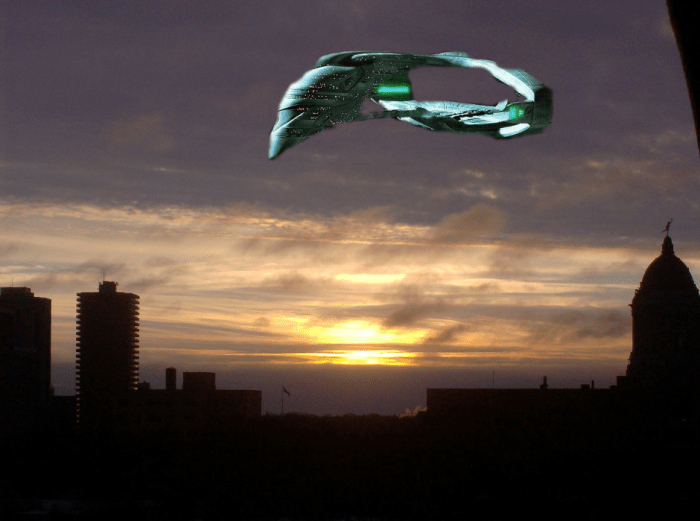
As for what the study calls “unknowns,” they included such cases as the “gigantic, disc-shaped object with searchlights” that was seen moving over the mountains in North Vancouver, and the boomerang-shaped “cluster of stars” that moved across the sky near St. Thomas, Ont.

There was also the commercial airplane over Toronto that had a near miss with an object while on a routine flight on Nov. 14.

“The flight crew noticed an object directly ahead on their flight path. The object appeared to be solid, approximately five to eight feet in diameter and shaped like an upright doughnut or inner tube,” said the study.

“Cabin crew members received minor injuries when evasive action was taken. While the object was not likely a balloon and was suggested to be a drone, it was noted that drones could not fly at that altitude and distance.”

The study said the Transportation Safety Board ruled the incident as “a near collision with an unidentified airborne object.”

Close encounter cases are in the minority, but high on the strangeness scale.

Those included a man in Cornwall, P.E.I., who reported that a thin, six-foot-tall, long-fingered white alien in a black suit spoke to him in his bedroom before leaving by walking through a wall.

A man in Lanaudiere, Que., said he was transported into a field of plants and plunged into a bathtub “where he was surrounded by three green, big-eyed humanoid creatures who communicated with him telepathically.”

Not all close encouters are so dramatic, however. One person in Tecumseh, Ont., reported that an alien stole his sunglasses and belt, while someone from Rimouski, Que., filed a report which read simply: “They contacted me!”

ufo1

Badger buries entire cow

In January 2016, Evan Buechley found one of his carcasses in Utah’s Great Basin had disappeared.

The conservation biologist, who leaves animal corpses out in the desert and sets up cameras to record scavengers, figured a pack of coyotes had dragged the 50-pound calf away.But after a short search yielded no sign of the carcass, Buechley downloaded the camera’s images to see if he could find some clues.What he saw, no one had ever seen before.Over the course of five days, the photos reveal, a single American badger excavated tunnels beneath the calf carcass until the whole thing collapsed into a pit. The badger then covered the carcass completely and constructed a burrow beside it, inside which it feasted on beef for 11 straight daysLater investigation into the scientific literature revealed no one had ever recorded a badger entomb anything larger than a jackrabbit.Found throughout the United States, southern Canada, and northern Mexico, American badgers are known for creating underground food lockers called caches. Such stores keep food safe from competing scavengers and prevent decomposition, thanks to the earth’s natural coolness.Similarly, the corgi-size creatures, which are related to weasels and wolverines, have a number of adaptations that allow them to dig like nobody’s business.For starters, badgers have powerful, heavily muscled forelimbs and long rakes for claws, which allow them to rip through hard, compact dirt. Their heads are cone-shaped, perfect for a life spent scooting around in tunnels. The burrowers also sport a third eyelid, called a nictitating membrane, which helps keep dirt from getting in their eyes.But for all their burying prowess, no one has ever seen a badger tuck away such a large carcass, not to mention one more than two times its weight.