



Schools in the UK Are Removing Analog Clocks Because Students Can’t Tell Time
A head-teachers’ union in the UK recently reported that youths have become so accustomed to using digital devices that they are having trouble correctly reading time on analog clocks, forcing schools to replace them.
According to Malcolm Trobe, deputy general secretary at the Association of School and College Leaders, children and young teens aren’t as good at reading an old-fashioned clock as previous ones. Because phones, tablets and computers play such a huge role in their lives, they are constantly exposed to time in digital format, so seeing the time displayed in analog format in examination halls can be a cause of unnecessary stress for children. For this reason, some schools are removing analog clocks and replacing them with digital ones.

“The current generation aren’t as good at reading the traditional clock face as older generations,” Mr Trobe, a former headmaster, told The Telegraph. “They are used to seeing a digital representation of time on their phone, on their computer. Nearly everything they’ve got is digital so youngsters are just exposed to time being given digitally everywhere.”
Until now, it was assumed that by the time students reach secondary school, they are able to read analog clocks, but Mr. Trobe claims that this is often not the case anymore. His experienced is shared by other teachers, who recently took to social media to complain about this issue.
For example, Stephanie Keenan, head of English at Ruislip High School in north-west London, said that her school decided to replace analog clock in exam halls with digital ones, after it became clear that some year nine, ten and eleven students had difficulties reading an analog clock face.

Cheryl Quine, a head of department at Cockermouth School and chair of the West Cumbria Network, said that some children at her school couldn’t read analog clocks in exam rooms either.
“It may be a little sad if youngsters coming through aren’t able to tell the time on clock faces,” Malcolm Trobe said. One hopes that we will be teaching youngsters to read clocks, however we can see the benefit of digital clocks in exam rooms.”
To make matters worse, earlier this year, a senior pediatric doctor warned that young children are finding it increasingly difficult to use analog writing tools like pencils and pens, due to being exposed to phones and tablets all the time.

“To be able to grip a pencil and move it, you need strong control of the fine muscles in your fingers. Children need lots of opportunity to develop those skills,” head pediatric occupational therapist Sally Payne said. “It’s easier to give a child an iPad than encouraging them to do muscle-building play such as building blocks, cutting and sticking, or pulling toys and ropes. Because of this, they’re not developing the underlying foundation skills they need to grip and hold a pencil.”
All we can do is hope that modern technology never fails, otherwise we’re in big trouble.
Taking on Bigfoot

I don’t think the creatures are malevolent at all.

Vintage Mad Magazine Covers
Mad (stylized as MAD) is an American humor magazine founded in 1952 by editor Harvey Kurtzman and publisher William Gaines, launched as a comic book before it became a magazine. It was widely imitated and influential, affecting satirical media, as well as the cultural landscape of the 20th century, with editor Al Feldstein increasing readership to more than two million during its 1974 circulation peak. From 1952 until 2018, Mad had published 550 regular issues, as well as hundreds of reprint “Specials”, original-material paperbacks, reprint compilation books and other print projects. The magazine reverted back to 1 with its April 2018 issue.

Mad’s mascot, Alfred E. Neuman, is typically the focal point of the magazine’s cover, with his face often replacing that of a celebrity or character who is lampooned within the issue.




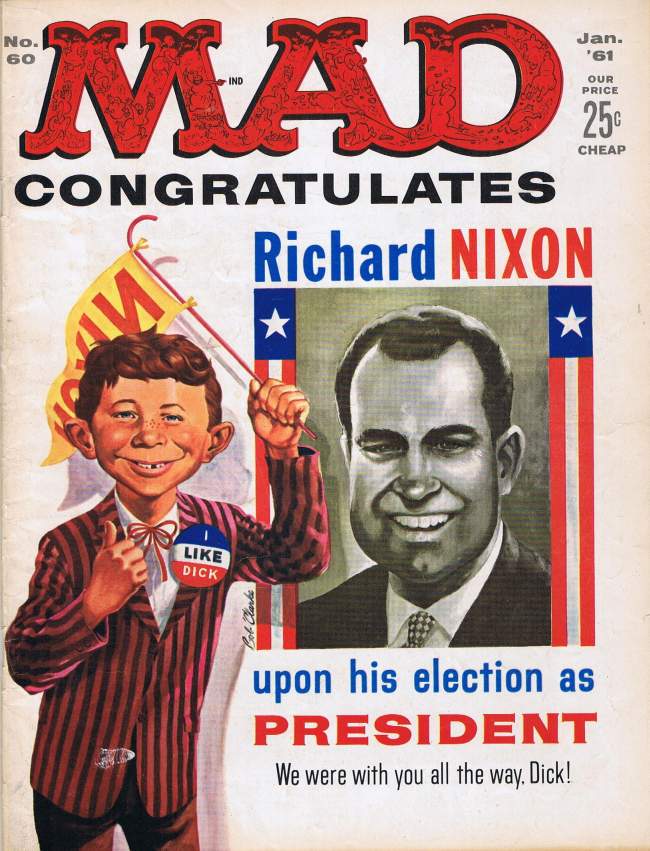
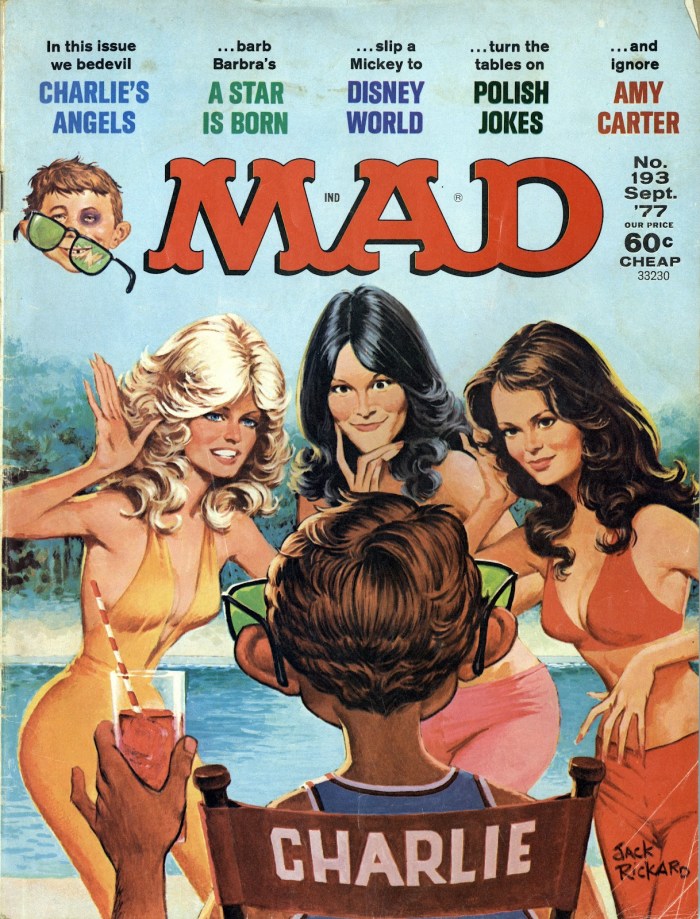
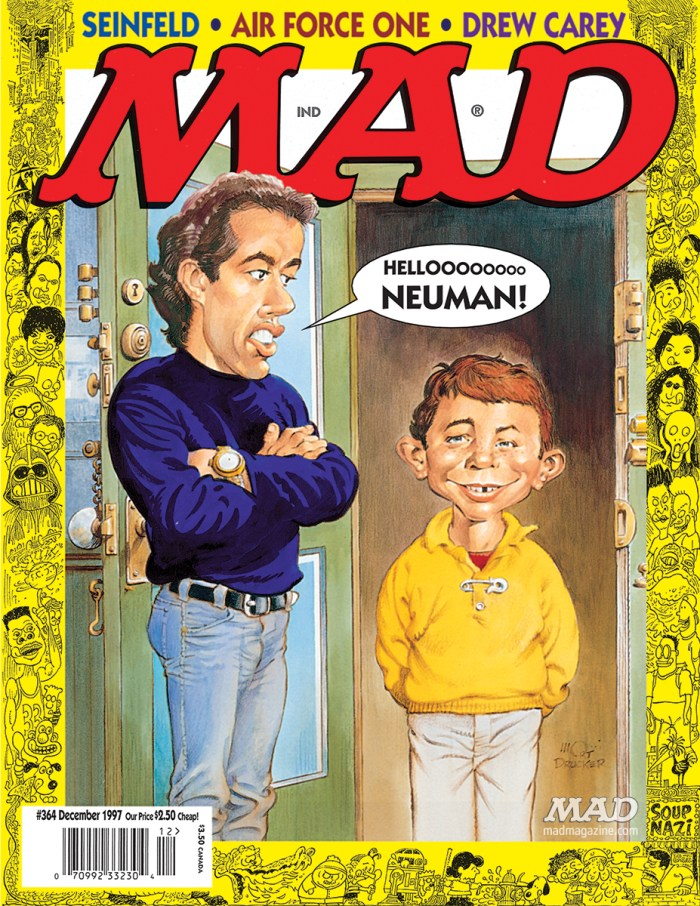




A more contemporary cover


Assiniboine River Ice Flow

The big melt is underway in Manitoba. The Assiniboine River has substantially risen in the last few days. The current is hauling the broken ice on the Assiniboine into the Red River in downtown Winnipeg.




Crystal like ice that looks pretty cool

Royal baby latest news: New prince meets family as world awaits name announcement

Straight off the presses: New Royal baby to be named “Prince Harry Potter”! “Grand Duke of Royal Wizardry.”
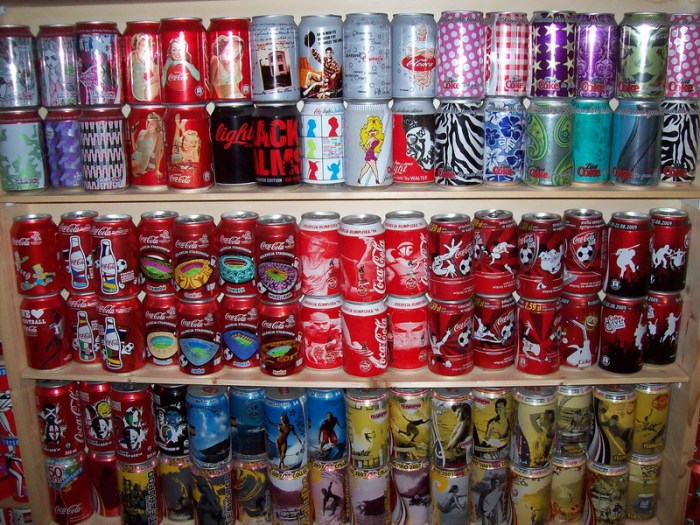
Meet The Man With The World’s Largest Collection of Coca-Cola Cans
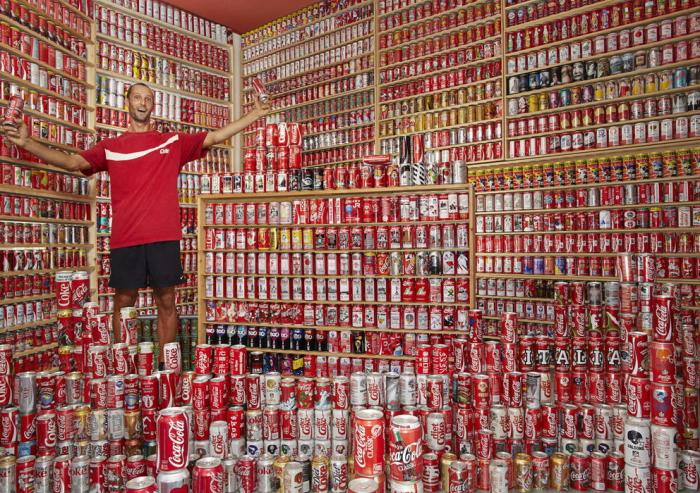
Davide Andreani first drank a Coke when he was six years old. A native of Pesaro, along the Adriatic coast of Italy, Davide doesn’t recall anything special about the beverage at first sip. His father would often travel for business and one of the things he would bring back to his son as a memento would be a special can of Coke. The first one in his collection was from Germany in 1979, featuring the word “Coca-Cola” translated from various languages in the world.
Davide has always been a collector at heart. When he was young, he would seek after unique coins and stamps. Now he is only interested in Coke cans. There isn’t a particular reason for the beverage choice, other than his passion for assemblage and that it is something he got into at an early age. Today, Davide’s collection consists of over 20,000 distinct cans of Coca-Cola.
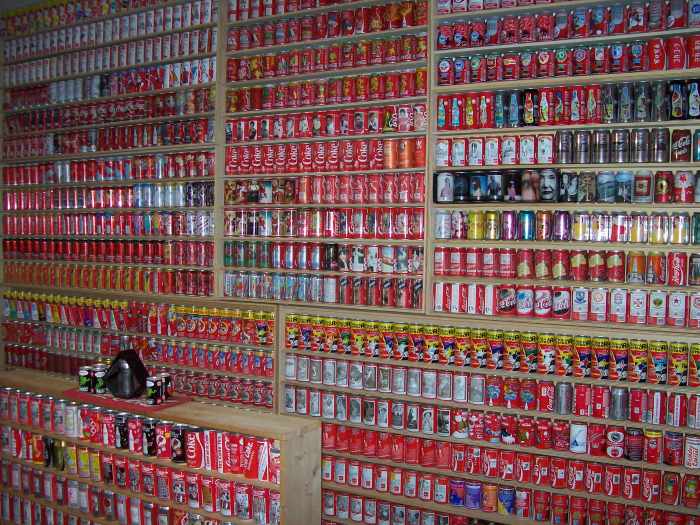
Digging through the garbage for empty cans is not how one develops a surplus like Davide’s. A lifetime of meticulous searching of the globe has brought him to where he is today. The assortment of cans on display in his collection are those that the Coca-Cola company had only released for a limited time, sometimes not available to the public. Unique cans are usually produced for commemorative purposes, such as the celebration of special events like sporting events, Christmas and other holidays, the opening of a new factory, or a presidential election. The rarest and most hard are those that are gold or silver in color, some worth upwards of $500.
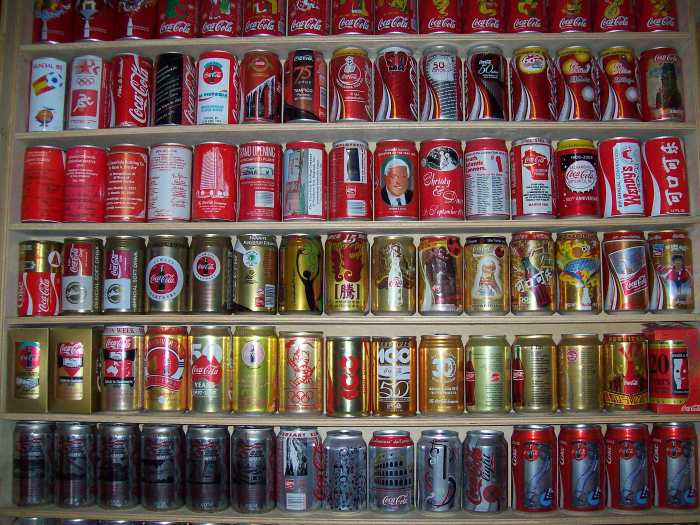
The internet has helped contribute to Davide’s growing soft drink collection. His website is used to display his individual findings and to communicate with others hoping to trade their rare collectibles. He has several duplicates (not included in the total count), which are used to swap with fellow collectors.
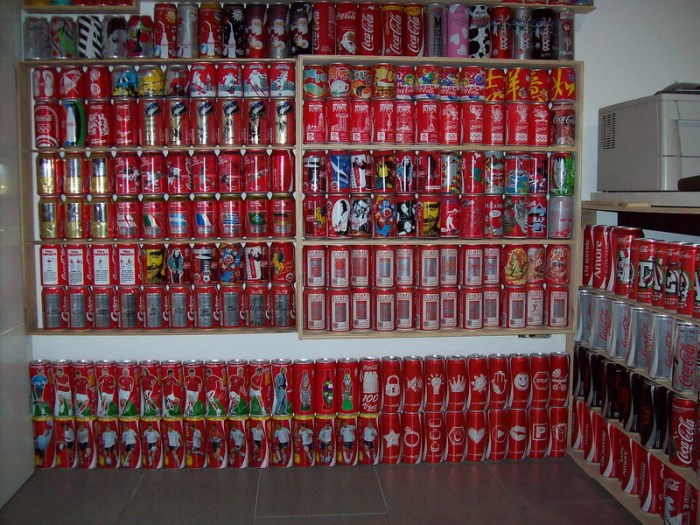
Someday, Davide hopes that his collection will be displayed in a museum. His modest home is where the cans live today, and it is not nearly big enough to showcase all of his findings. Approximately 5,000 cans line his walls and pile up on his floor, with another 15,000 or so catalogued and buried away in the garage. Thus far, the Coca-Cola company hasn’t had much interest in acquiring Davide’s tremendous collection.
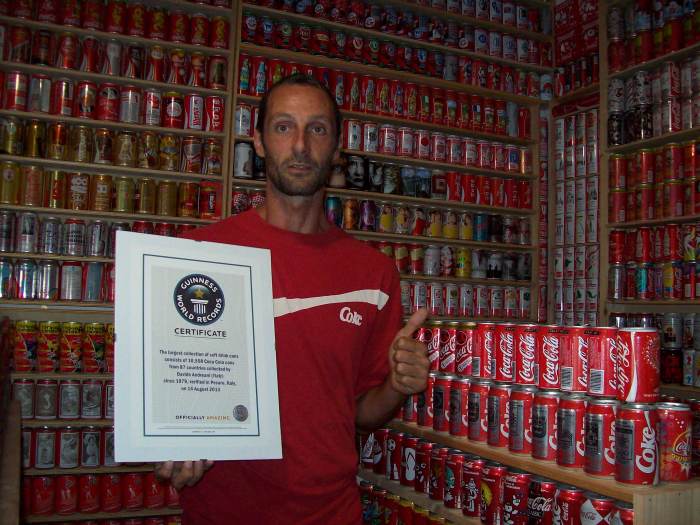
Davide received a Guinness World Record in August of 2013. The award title is “Largest Collection of Soft Drink Cans – Same Brand.” In order to distinguish the title, the GWR judge closed Davide’s home for two days to count every can. At the time of certification, the assortment totaled 10,558 unique Coca-Cola cans from 87 different countries. Davide’s collection, now much larger in size, still holds the Guinness World Record.
Other than his amusing hobby, Davide enjoys playing volleyball, tennis, and working with computers. His dream is to visit every country in the world (all while pursuing the rarest soda cans, I’d presume), but for financial reasons he is content with sightseeing via the World Wide Web. When asked whether he enjoys the taste of the soft drink that inspired his life’s work, Davide responded “I drink Coca-Cola very little.”
Jesus Knows What You Are Thinking

Statue in Poland

