Astronaut Captures Image of Hurricane Barry

NASA astronaut Christina Koch shot a panoramic photo of tropical storm/ hurricane Barry from her perch on the International Space Station and posted it to Twitter on Thursday.

NASA’s Aqua satellite also imaged Barry after it made landfall at Intracoastal City, Louisiana at 2PM EDT on July 13. Barry was a hurricane for about three hours in the late morning and early afternoon on July 13, but weakened to a tropical storm after it passed over land. Nevertheless, the system will likely bring widespread flooding to the area as well as the lower Mississippi Valley. The storm is projected to move into Arkansas into Monday.

Stuntman jumps out of a plane at 25,000 feet without parachute and lands in a net

Skydiver Luke Aikins Sets Record For Highest Jump Without Parachute

luke3

Luke Aikins jumps from a helicopter during his training on Monday, in Simi Valley, Calif. Hong/AP


Luke Aikins on Saturday became the first skydiver to jump from a plane without a parachute or wingsuit and live to tell the story.

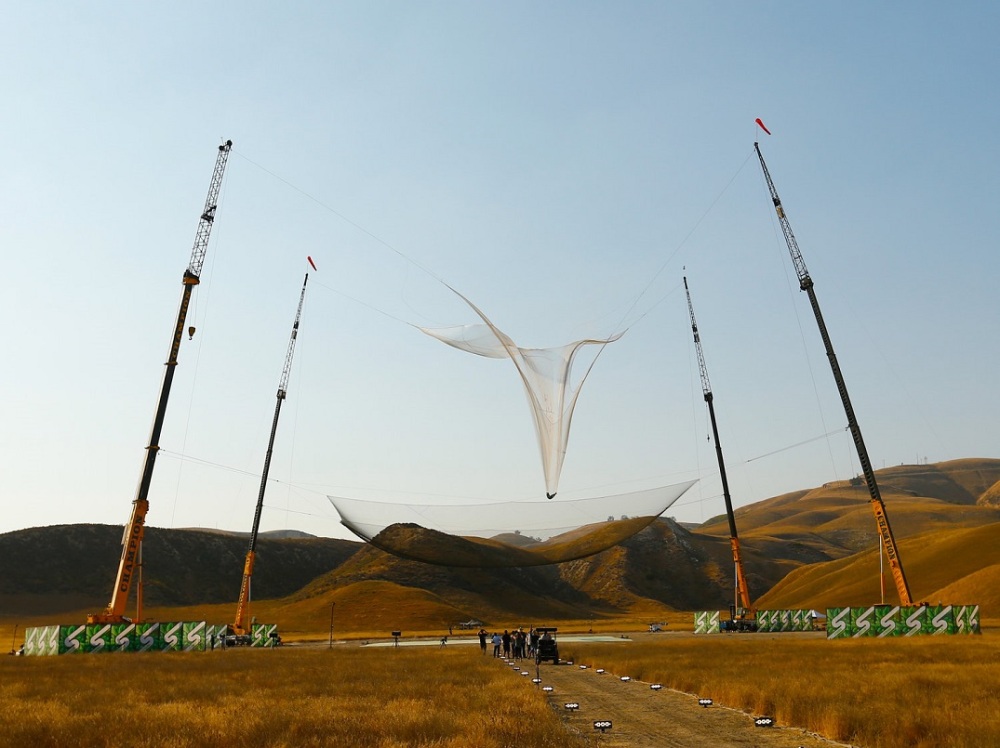
In a stunt called “Heaven Sent,” the 42-year-old daredevil leaped 25,000 feet to Earth — setting a world record. To accomplish this feat, Aikins had to direct his body in free fall using only the air currents around him to land safely on the high-tech 10,000-square-foot net (about a third the size of a football field) laid out to catch him.

The jump was aired live on television via the Fox network during an hourlong special. Aikins fell for about two minutes above the California desert, appearing to soar effortlessly, arms extended, face downward. And as he neared the ground, with a mere second to go, he expertly flipped onto his back and landed without incident.

He then climbed out of the net and embraced his wife, Monica, who was among a cheering group of family and friends, including their 4-year-old son, Aikins’ dad, two brothers and a sister, who’d all anxiously watched the breathtaking spectacle.

Aikins, who said during the broadcast that he’d been preparing for this jump for two years, had previously done 18,000 parachute jumps and performed a variety of stunts, including for Iron Man 3.

“Everyone is calling this my ‘coming-out jump,’ which is ironic considering I’ve been skydiving since the age of 16,” he said in a press release prior to the jump.

In fact, Aikins, whose grandfather co-founded a skydiving school after serving in World War II, is a third-generation skydiver. The family owns Skydive Kapowsin near Tacoma, Wash.


luke1


luke2


Further to his credit, Aikins is a safety and training adviser for the United States Parachute Association (USPA), where he provides advanced skydiving training to elite military special forces.

Early in the broadcast of “Heaven Sent,” there was almost a change in the script that might have taken away a tad of the excitement around Aikins’ jump.

According to The Associated Press, “Just before climbing into a plane to make the jump, Aikins said he had been ordered to wear a parachute but indicated he wouldn’t open it. As the plane was climbing to 25,000 feet above the drop zone he said the requirement had been lifted and he took off the chute.”

The Doomsday Jet

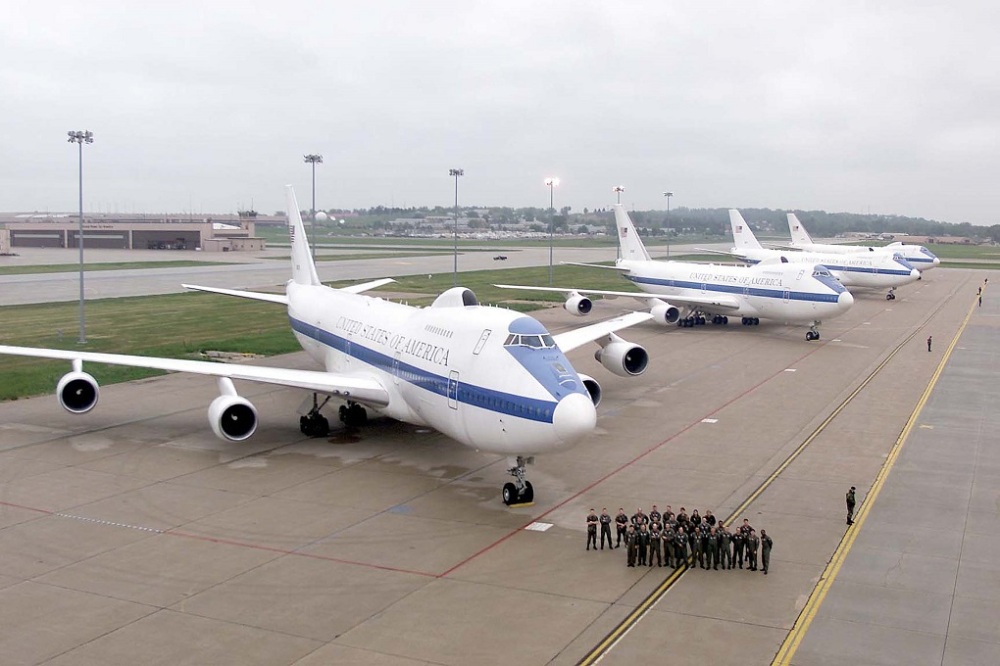
The Boeing E-4 Advanced Airborne Command Post, with the project name “Nightwatch”, is a strategic command and control military aircraft operated by the United States Air Force (USAF). The E-4 series was specially modified from the Boeing 747-200B. The E-4 serves as a survivable mobile command post for the National Command Authority, namely the President of the United States, the Secretary of Defense, and successors. The four E-4Bs are operated by the 1st Airborne Command and Control Squadron of the 55th Wing located at Offutt Air Force Base, near Omaha, Nebraska. An E-4B is denoted a “National Airborne Operations Center” when in action, it is to be a command platform in the event of nuclear war.


e41


The E-4B is designed to survive an EMP with systems intact and has state-of-the-art direct fire countermeasures. Although many older aircraft have been upgraded with glass cockpits, the E-4B still uses traditional analog flight instruments, as they are less susceptible to damage from an EMP blast.[

The E-4B is capable of operating with a crew up to 112 people including flight and mission personnel, the largest crew of any aircraft in US Air Force history. With in-flight aerial refueling it is capable of remaining airborne for a considerable period (limited only by consumption of the engines’ lubricants and food supplies). In a test flight for endurance, the aircraft remained airborne and fully operational for 35.4 hours, however it was designed to remain airborne for a full week in the event of an emergency. It takes two fully loaded KC-135 tankers to fully refuel an E-4B. The E-4B has three operational decks: upper, middle, and lower.


e44


E-4b


In January 2006, Secretary of Defense Donald Rumsfeld announced a plan to retire the entire E-4B fleet starting in 2009. This was reduced to retiring one of the aircraft in February 2007. The next Secretary of Defense, Robert Gates reversed this decision in May 2007. This is due to the unique capabilities of the E-4B, which cannot be duplicated by any other single aircraft in Air Force service, and the cancellation in 2007 of the E-10 MC2A, which was considered as a successor to the EC-135 and E-8 aircraft, and could also perform many of the same tasks of the E-4B. As of the 2015 federal budget there were no plans for retiring the E-4B. The E-4B airframe has a usable life of 115K hours and 30K cycles, which would be reached in 2039; the maintenance limiting point would occur some time in the 2020s.

All four produced are operated by the U.S. Air Force, and are assigned to the 1st Airborne Command Control Squadron (1ACCS) of the 55th Wing at Offutt Air Force Base, Nebraska. Maintenance and crews are provided by Air Combat Command. Operations are coordinated by the United States Strategic Command.

When the President travels outside of North America using a VC-25A as Air Force One, an E-4B will deploy to a second airport in the vicinity of the President’s destination, to be readily available in the event of a world crisis or an emergency that renders the VC-25A unusable. When the President visits Honolulu, Hawaii, an E-4B has often been stationed 200 miles away at Hilo International Airport on Hawaii Island.


e43

Battle Staff Cabin


e47


E-4_advanced_airborne_command_post_EMP_sim

A right front view of an E-4 advanced airborne command post (AABNCP) on the electromagnetic pulse (EMP) simulator for testing.

e48

e49


An electromagnetic pulse (EMP), also sometimes called a transient electromagnetic disturbance, is a short burst of electromagnetic energy. Such a pulse’s origination may be a natural occurrence or man-made and can occur as a radiated, electric or magnetic field or a conducted electric current, depending on the source.

EMP interference is generally disruptive or damaging to electronic equipment, and at higher energy levels a powerful EMP event such as a lightning strike can damage physical objects such as buildings and aircraft structures. The management of EMP effects is an important branch of electromagnetic compatibility (EMC) engineering.

Weapons have been developed to create the damaging effects of high-energy EMP. These are typically divided into nuclear and non-nuclear devices. Such weapons, both real and fictional, have become known to the public by means of popular culture.

THE LURID WORLD OF CULT MOVIE POSTERS

‘The Pit” aka Teddy (Canada 1981)


‘Andy Warhol’s Dracula poster’


Jesse Franco’s ‘Lorna the Exorcist’ (France, 1976)


‘Invasion of the Love Drones’ (USA, 1977)


‘Desperate Living’ Italy


‘Reform School Girls (1986)


A nicely creepy image for Roman Polanski’s ‘The Tenant’ (France 1976)


‘Polyester’ (UK)


‘Night Tide’ (1961)


‘Confessions of a Teenage Peanut Butter Freak’


‘The Seduction of Amy’


‘Sexual Kung Fu in Hong Kong’ (1974)

Dangerousminds.net

U.S. is developing new Super-Drone

DARPA is building a drone to provide ‘persistent’ surveillance virtually anywhere in the world


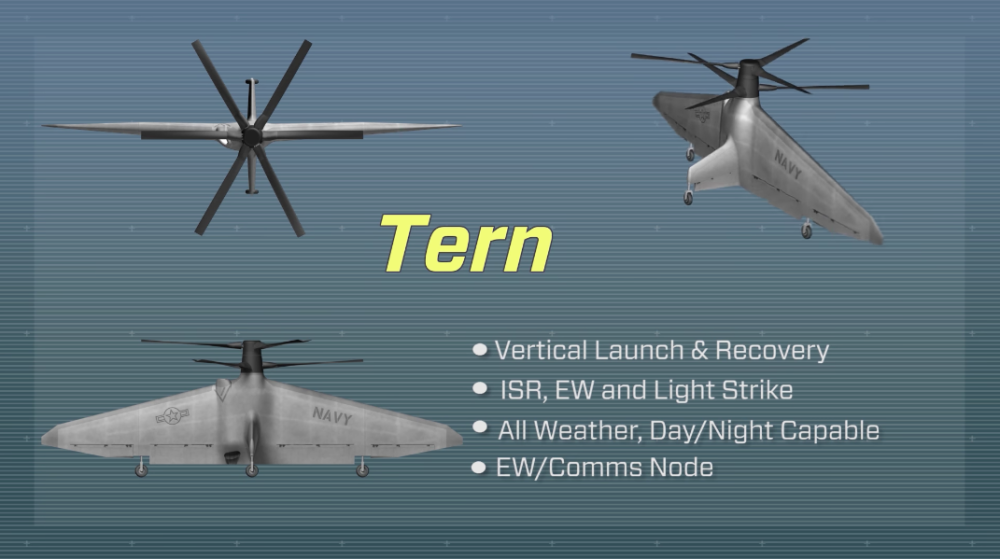
DARPA (Defense Advanced Research Projects Agency) is on track to unveil a working prototype of its “Tern” drone system in 2018 that could eventually give the Navy and Marines persistent surveillance and strike targeting “virtually anywhere in the world.”

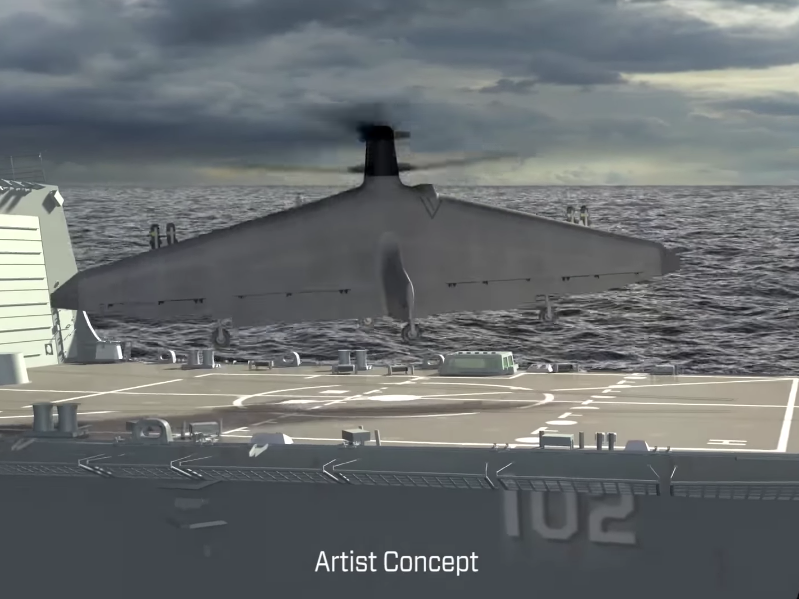
If it’s implemented, the Tern program would see fully-autonomous drones on small-deck ships throughout the world that can take off and land vertically. Once in flight, they transition to wing-borne flight at medium 

altitude and become the eyes and ears for its ship for long periods of time.

Among the things the Navy wants is a drone that can provide surveillance capability and strike targets, but with greater range than a traditional helicopter. It also would likely be used to gather signals intelligence from foreign adversaries — one of the main missions for US submarine forces.


drone


Tern, short for Tactically Exploited Reconnaissance Node, is a joint program between the Office of Naval Research and DARPA, the Pentagon’s research and development arm. The agency just funded a second Tern test vehicle for the next year that’s being built by Northrup Grumman.

If all goes to plan, Tern will move to ground-based testing in early 2019, before being tested at sea later in the year.

“We’re making substantial progress toward our scheduled flight tests, with much of the hardware already fabricated and software development and integration in full swing,” Brad Tousley, director of DARPA’s Tactical Technology Office, said in a statement.

“As we keep pressing into uncharted territory—no one has flown a large unmanned tailsitter before—we remain excited about the future capabilities a successful Tern demonstration could enable: organic, persistent, long-range reconnaissance, targeting, and strike support from most Navy ships.”


drone1


Tern isn’t the only drone program DARPA is working on. The agency has also been working on something called “upward falling payloads,” a program that would station drones in water-tight containers around the world’s oceans until they are called to the surface.

Here’s a concept video of how Tern is supposed to operate:

John Glenn Military Flight History

john_glenn_portrait


John Herschel Glenn Jr. (July 18, 1921 – December 8, 2016) was an American aviator, engineer, astronaut, and United States Senator from Ohio. In 1962 he became the first American to orbit the Earth, circling three times. Before joining NASA, he was a distinguished fighter pilot in both World War II and Korea, with six Distinguished Flying Crosses and eighteen clusters to the Air Medal.

Glenn was one of the “Mercury Seven” group of military test pilots selected in 1959 by NASA to become America’s first astronauts. On February 20, 1962, he flew the Friendship 7 mission and became the first American to orbit the Earth and the fifth person in space. Glenn received the Congressional Space Medal of Honor in 1978, was inducted into the U.S. Astronaut Hall of Fame in 1990, and was the last surviving member of the Mercury Seven.

After he resigned from NASA in 1964, Glenn planned to run for a U.S. Senate seat from Ohio. A member of the Democratic Party, he first won election to the Senate in 1974 where he served through January 3, 1999.

He retired from the Marine Corps in 1965, after twenty-three years in the military, with over fifteen medals and awards, including the NASA Distinguished Service Medal and the Congressional Space Medal of Honor. In 1998, while still a sitting senator, he became the oldest person to fly in space, and the only one to fly in both the Mercury and Space Shuttle programs as crew member of the Discovery space shuttle. He was also awarded the Presidential Medal of Freedom in 2012.


Photograph of John Glenn in the cockpit his F8U-1P Crusader during the "Project Bullet" record breaking transcontinental flight, 1957

Photograph of John Glenn in the cockpit his F8U-1P Crusader during the “Project Bullet” record breaking transcontinental flight, 1957


John Glenn was born on July 18, 1921, in Cambridge, Ohio, the son of John Herschel Glenn, Sr. (1895–1966) and Clara Teresa (née Sproat) Glenn (1897–1971). He was raised in nearby New Concord.

After graduating from New Concord High School in 1939, he studied Engineering at Muskingum College. He earned a private pilot license for credit in a physics course in 1941. Glenn did not complete his senior year in residence or take a proficiency exam, both requirements of the school for the Bachelor of Science degree. However, the school granted Glenn his degree in 1962, after his Mercury space flight.

When the Japanese attack on Pearl Harbor brought the United States into World War II, Glenn quit college to enlist in the U.S. Army Air Corps. However, he was never called to duty, and in March 1942 enlisted as a United States Navy aviation cadet. He went to the University of Iowa for preflight training, then continued on to NAS Olathe, Kansas, for primary training. He made his first solo flight in a military aircraft there. During his advanced training at the NAS Corpus Christi, he was offered the chance to transfer to the U.S. Marine Corps and took it.

Upon completing his training in 1943, Glenn was assigned to Marine Squadron VMJ-353, flying R4D transport planes. He transferred to VMF-155 as an F4U Corsair fighter pilot, and flew 59 combat missions in the South Pacific. He saw combat over the Marshall Islands, where he attacked anti-aircraft batteries on Maloelap Atoll. In 1945, he was assigned to NAS Patuxent River, Maryland, and was promoted to captain shortly before the war’s end.

Glenn flew patrol missions in North China with the VMF-218 Marine Fighter Squadron, until it was transferred to Guam. In 1948 he became a flight instructor at NAS Corpus Christi, Texas, followed by attending the Amphibious Warfare School.


F4U Corsair

glenn2


During the Korean War, Glenn was assigned to VMF-311, flying the new F9F Panther jet interceptor. He flew his Panther in 63 combat missions, gaining the nickname “magnet ass” from his alleged ability to attract enemy flak. On two occasions, he returned to his base with over 250 holes in his aircraft. For a time, he flew with Marine reservist Ted Williams, a future Hall of Fame baseball player for the Boston Red Sox, as his wingman. He also flew with future Major General Ralph H. Spanjer.

Glenn flew a second Korean combat tour in an interservice exchange program with the United States Air Force, 51st Fighter Wing. He logged 27 missions in the faster F-86F Sabre and shot down three MiG-15s near the Yalu River in the final days before the ceasefire.

For his service in 149 combat missions in two wars, he received numerous honors, including the Distinguished Flying Cross (six occasions) and the Air Medal with eighteen award stars.


F9F Panther

glenn1


glenn47

Glenn’s USAF F-86F that he dubbed “MiG Mad Marine” during the Korean War, 1953


Glenn returned to NAS Patuxent River, appointed to the U.S. Naval Test Pilot School (class 12), graduating in 1954. He served as an armament officer, flying planes to high altitude and testing their cannons and machine guns. He was assigned to the Fighter Design Branch of the Navy Bureau of Aeronautics (now Bureau of Naval Weapons) as a test pilot on Navy and Marine Corps jet fighters in Washington, D.C., from November 1956 to April 1959, during which time he also attended the University of Maryland.

Glenn had nearly 9,000 hours of flying time, with approximately 3,000 hours in jet aircraft.

On July 16, 1957, Glenn completed the first supersonic transcontinental flight in a Vought F8U-3P Crusader. The flight from NAS Los Alamitos, California, to Floyd Bennett Field, New York, took 3 hours, 23 minutes and 8.3 seconds. As he passed over his hometown, a child in the neighborhood reportedly ran to the Glenn house shouting “Johnny dropped a bomb! Johnny dropped a bomb! Johnny dropped a bomb!” as the sonic boom shook the town. Project Bullet, the name of the mission, included both the first transcontinental flight to average supersonic speed (despite three in-flight refuelings during which speeds dropped below 300 mph), and the first continuous transcontinental panoramic photograph of the United States. For this mission Glenn received his fifth Distinguished Flying Cross.


F8U-3P Crusader

f-8e_vmf-212_cva-34_1965_cropped


Glenn wasn’t finished. He went on to flying much higher.

glennxx

John Glenn in his Mercury spacesuit